SHELBY OAKS horror movie review

A cautionary tale of when YouTubers confuse content with cinema.
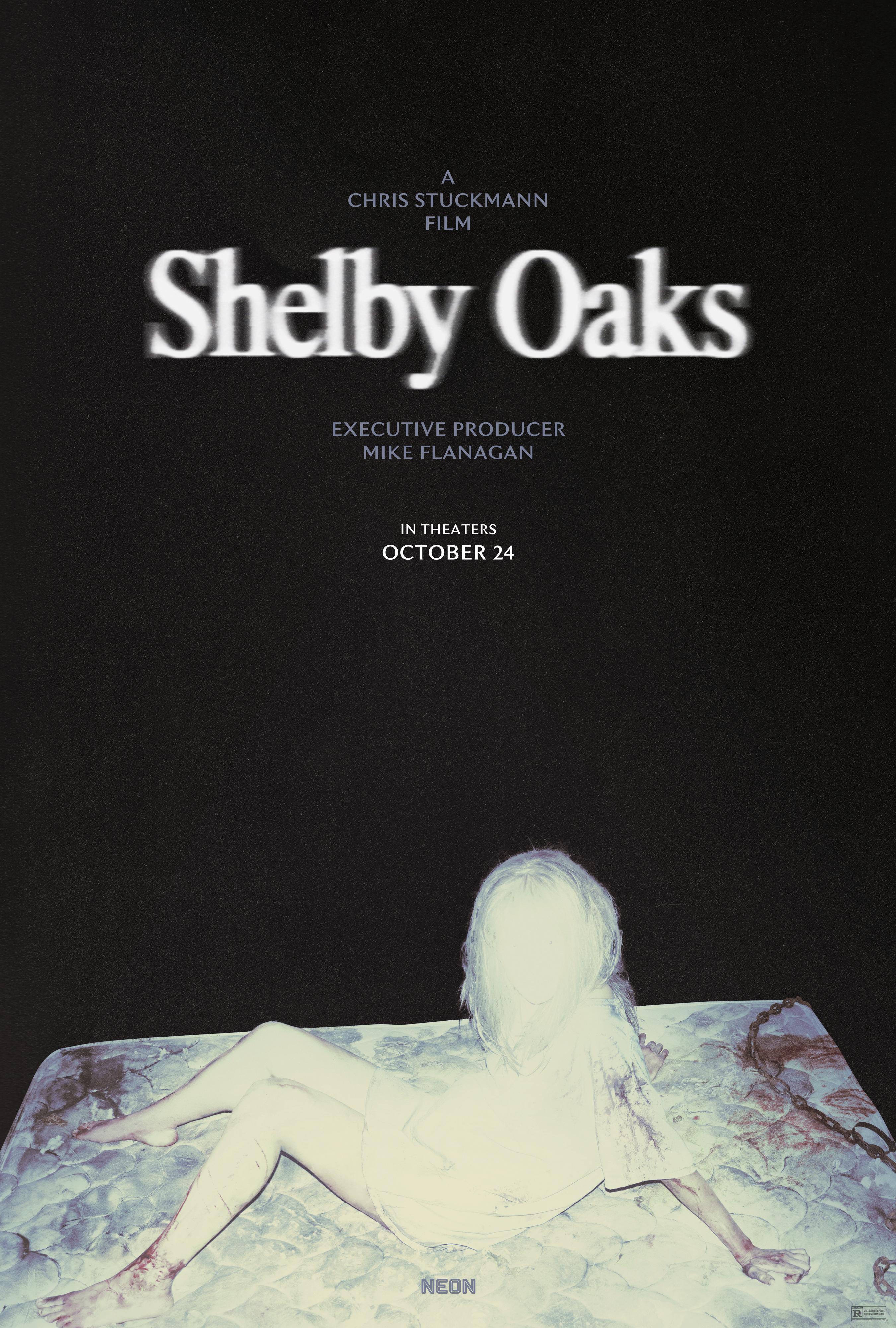
Chris Stuckmann’s Shelby Oaks arrives with all the makings of a breakthrough: (1) it’s one of the most successful Kickstarter-funded indie films ever, and (2) it’s directed by one of YouTube’s most popular influencer-critics. In fact, I’ve used some of his videos in my own classroom—good material: informative, engaging, and accessible for budding cinephiles. But therein lies the rub: informative and engaging does not a motion picture make. The premise, though, is undeniably intriguing—a reimagining of familiar horror tropes with contemporary urgency. Stuckmann delivers a film that has the bones of something potent—think The Blair Witch Project meets Rosemary’s Baby: paranoia, obsession, and the horror of the unseen, all wrapped in a missing-person mystery and topped with a bow of supernatural dread.

Shelby Oaks is about Mia’s search for her long-lost sister and paranormal investigator Riley becomes an obsession when she realizes an event from her past may have opened the door to something far more sinister than she could have ever imagined.

Like many contemporary filmmakers–particularly those that got their start on YouTube–Shelby Oaks excels in technical achievement and marketing. The cinematography is confident and atmospheric, drenched in moody lighting that evokes gothic horror. There is little doubt that Stuckmann clearly understands shot composition, pacing within the frame, even editing in-camera and the importance of visual tone. All the technical elements are quite impressive for a debut feature. And if all a motion picture was–was the visual elements–it’d be easy to admire. But it isn’t. Even Hitchcock knew that. Which is why Hitch never wrote his own screenplays–he generated the idea, even outlined entire scenes and sequences–but he knew that he needed to work with a screenwriter, that understood the material, in order to fully realize his movie idea for the screen. What is greatly lacking in contemporary cinema is an understanding of what makes a great story–plot structure, mechanics, and the emotional substructure.

But Shelby Oaks falters where too many YouTube-born filmmakers stumble—storytelling. Shelby Oaks has a great idea for a movie, but not a fully realized narrative. At its core, the narrative never builds sufficient momentum. Why? Simple–because there’s no real opposition. “Evil,” in the abstract, isn’t conflict. Opposition must manifest into something tangible between the character and his or her external goal, whether that’s a person, a system, or her own inner demons. For all the supernatural activity in the film, there never truly emerges a character of opposition. The result is a macabre mystery that depicts scenes and sequences wherein Mia’s pursuit unfolds, but without the benefit of a tangible sense of escalation or even revelation. Shelby Oaks is more of a proof of concept rather than a complete story.

Stuckmann, for all his film knowledge, seems more comfortable replicating tone and texture than constructing narrative architecture. His background in reviewing movies gives him an eye for what looks right—but not yet the discipline to shape what feels right. He understands what sells, what gets views, and even genre conventions. But sadly, none of the characters, including Mia, possess real dimension or agency. She and the rest of the characters are vehicles for mood rather than emotional engagement.

What works on YouTube—enthusiasm, charisma, and technical dissection—doesn’t automatically translate to cinema. His channel reveals a deep love of horror and a commendable understanding of its visual language, yet Shelby Oaks exposes the gap between appreciating a genre and authoring it. The film lacks what isn’t needed in (and can even get in the way of) YouTube content: storytelling mechanics, structure, and the discipline of narrative design. It’s one thing to analyze story beats; it’s another to build them, to shape character arcs, rhythm, and tension through the grammar of storytelling rather than the syntax of spectacle. Often, YouTube videos have great hooks, but they lack the narrative substance behind the hook.

What’s most frustrating is how close Shelby Oaks comes to working. The concept is rich, and the craftsmanship is undeniably strong. Stuckmann clearly loves cinema, and there’s passion behind every frame. But cinema isn’t content creation—it’s storytelling. And storytelling requires more than aesthetic confidence; it demands structure, development, and resolution.

The YouTube garden is flourishing with emerging directors, cinematographers, and editors—talented creators who’ve mastered the language of cameras, lighting, and cutting for attention. But what it’s not producing are writers. The art—and science—of writing seems to be withering in the age of influencer cinema. Many creators know how to make something look good but not why it should matter. Storytelling requires patience, discipline, and a willingness to think beyond the thumbnail and algorithm. In a culture where speed and spectacle drive engagement, screenwriting—the slow, deliberate architecture of character, conflict, and change—feels almost antiquated. And yet, it remains the soul of cinema. Without writers, we get films that resemble content: sleek, competent, and hollow.

Shelby Oaks stands as a cautionary tale of when YouTubers confuse content with cinema. Furthermore, this movie is an example of the hollowness of contemporary cinema, how cinema is feeling more and more disposable as the months and years pass the silver screen. The tools are there, the ambition is there, but without mastery of story, all that remains are haunting images in search of a heartbeat.
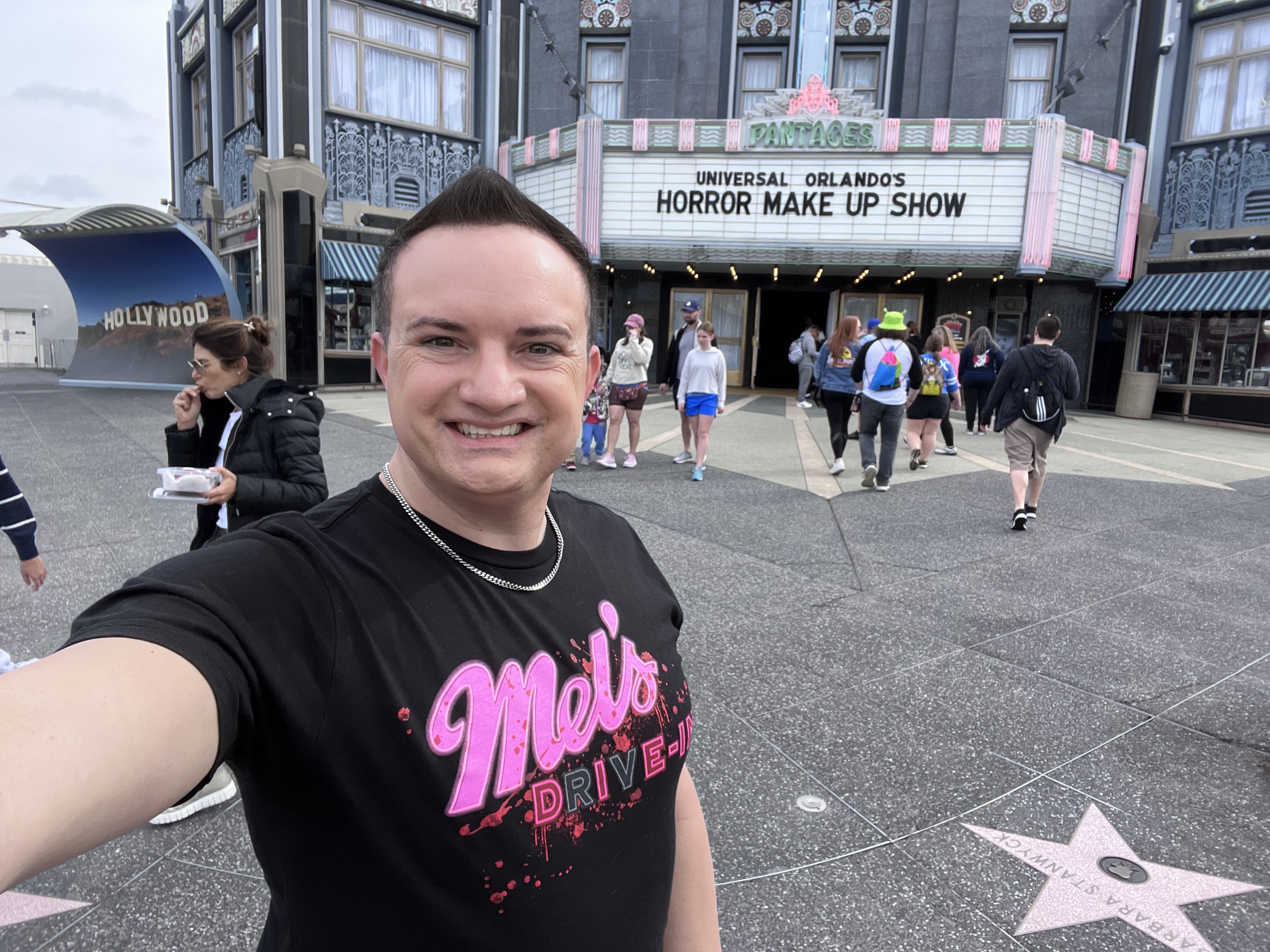
Ryan is the general manager for 90.7 WKGC Public Media in Panama City and host of the public radio show ReelTalk “where you can join the cinematic conversations frame by frame each week.” Additionally, he is the author of the upcoming film studies book titled Monsters, Madness, and Mayhem: Why People Love Horror. After teaching film studies for over eight years at the University of Tampa, he transitioned from the classroom to public media. He is a member of the Critics Association of Central Florida and Indie Film Critics of America. If you like this article, check out the others and FOLLOW this blog! Follow him on Twitter: RLTerry1 and LetterBoxd: RLTerry
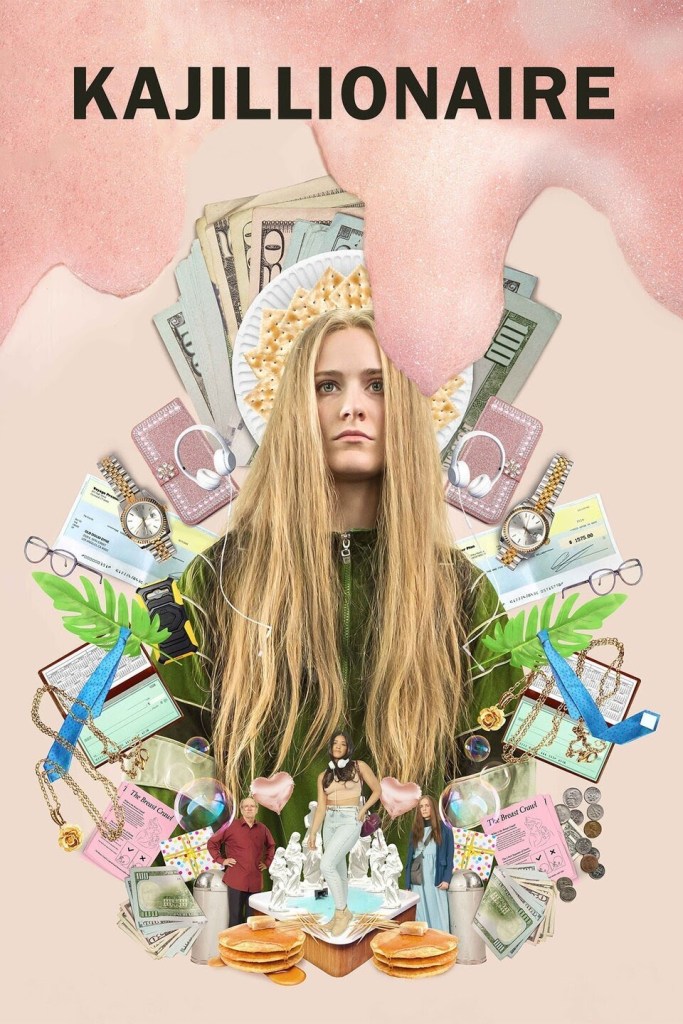
“Kajillionaire” Film Mini-Review

An exercise in how bored can you leave the audience before they fall asleep. Miranda July’s Kajillionaire is a thoughtful story that attempts to explore how one’s family can hold one back from healthy personal and professional development; however, the method of plot execution leaves the audience wondering why they should even care about the story. Had it not been for the compelling performances by the ensemble cast, I would’ve lost completely interest in the film. Kajillionaire desperately wants you to be engaged, but outstanding performances alone cannot keep an audience’s attention for the duration of the runtime. The film is billed as a comedy, but I never found myself laughing or even chuckling. Tonally, the film is all over the place. Had the film committed to striking a consistent tone, then perhaps the comedic elements would have stood out more instead of feeling random and forced. Clearly July set out to craft a motion picture that commented on brainwashing, neglect, and child rearing with a lack of empathy, sexual discovery, and those elements are depicted; but the film delivers a narrative that was so preoccupied with the message, that it forgot that it also needed to be even mildly entertaining. Quite frankly, the film has the personality and dimension of cardboard. Which is unfortunate, considering that the subject matter aims to be thought provoking. This film strikes me as one of those that is tailor-made made for #FilmTwitter to posit as the next great indie darling, when the story and characters are largely forgettable. What I will remember most about the film is the excellent performances delivered by the cast.

PS. I hope to be back to full reviews soon, but assisting the Florida Department of Health with COVID-19 data collection and analysis and writing for Four’s a Crowd Podcast, and of course my academic work at the University of Tampa, leaves me with limited time presently.

Ryan teaches screenwriting and American cinema at the University of Tampa. If you like this article, check out the others and FOLLOW this blog! Ryan is also the creator of the Four’s a Crowd sitcom podcast now streaming on your favorite podcatcher. Interested in Ryan making a guest appearance on your podcast or contributing to your website? Send him a DM on Twitter or email him at RLTerry1@gmail.com! If you’re ever in Tampa or Orlando, feel free to catch a movie with or meet him in the theme parks!

Follow him on Twitter: RLTerry1

“Romeo Kills Juliette” international short film review

German writer-director Leon Zitz is back with his newest short film, which reinterprets the classic story of Romeo and Juliette through a post-modern lens that places Romeo and Juliette in a hopeless, dismal society from which Romeo and Juliette are desperately desiring to escape. Zitz has demonstrated his penchant for auteur filmmaking through his previous shorts Bus Stop, The Applicant, and Time’s Up. His cinematic approach often delivers a stylistically “indie” aesthetic similar to many A24 films. Unfortunately, like with many auteur indie filmmakers, the character development and plot often suffer. While the plot is weak and asks far too much of the audience, the strength of this short is in the cinematography and production design. There are many wonderful shots and sequences in this film; furthermore, Zitz showcases an innate talent for capturing the emotion of a scene. From the lighting to the camera angles, Zitz beautifully demonstrates how to create that cinematic look and feel. Each and every frame is intentionally crafted to deliver a particular mood. Story-wise, this rendition, of the most famous and tragic love story of all time, follows two star-crossed lovers in their will to escape their gritty, grim. depressing hometown. When Juliette unintentionally reveals a secret about Romeo, she seals her fate. Perhaps Romeo Kills Juliette falls short in writing, but it benefits from strong technical elements and overall aesthetic appeal. The potential of this reimagination of Romeo and Juliette is held back by lack of exposition and coherent plotting. Even when I encounter an aspiring filmmaker that shows weakness in an area or two (in this case, screenwriting), I do my best to focus on and highlight what they do well. And Zitz consistently demonstrates a love for the art of motion pictures in terms of the visual appeal. There is a refreshing, unfiltered organic nature to each and every frame in his work. So, show this aspiring filmmaker some love by watching his short today.

Ryan teaches screenwriting and American cinema at the University of Tampa. If you like this article, check out the others and FOLLOW this blog! Interested in Ryan making a guest appearance on your podcast or contributing to your website? Send him a DM on Twitter or email him at RLTerry1@gmail.com! If you’re ever in Tampa or Orlando, feel free to catch a movie with or meet him in the theme parks!

Follow him on Twitter: RLTerry1

“Union Bridge” (2019) Indie Film Review

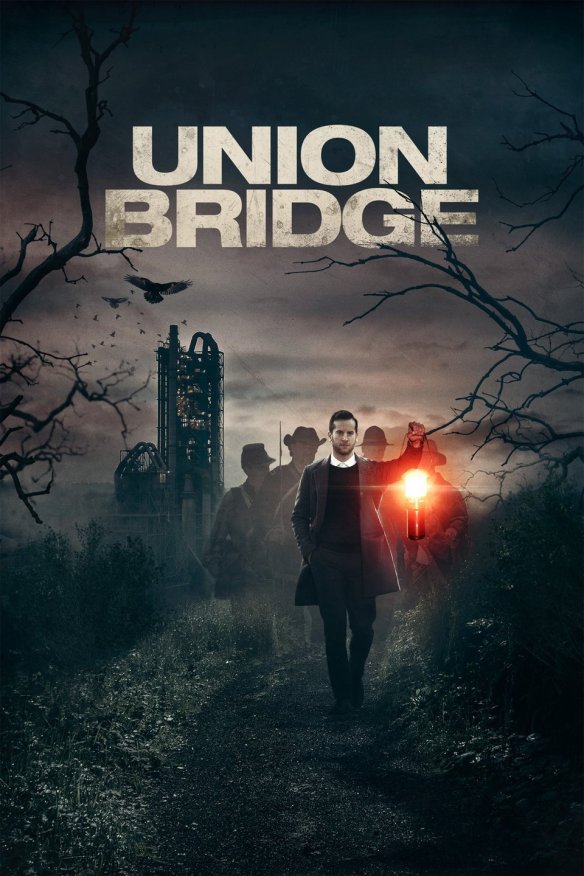
A neo-noir southern gothic directorial debut that delivers overwhelmingly on its foreboding sense of surreal dread, but underwhelmingly on its narrative substance in this slow-burn film. First-time writer-director Brian Levin showcases his command of atmosphere and world-building, but his screenplay lacks focus and direction. Levin certainly demonstrates his keen eye for crafting a haunting ambiance in the vein of David Lynch, but the overall experience suffers diegetically. While the premise is intriguing, the plot is all over the place. Following the central character who has returned to his hometown from the big city, the audience is taken on a surreal psychological journey into the darker side of this otherwise wholesome-looking town. Unfortunately, this journey lacks a destination and ultimately leaves the audience wondering why they should care about anything that happens in the film. Levin’s debut feature strikes the right tone for a neo-noir that teeters towards thriller-adjacency; but despite thriller being in the billing, it never quite reaches that goal. Perhaps screenwriting is not Levin’s strong suit; that said, there is much to be admired in his endeavor. All the mise en scene elements work together seamlessly to create an atmosphere that stimulates the senses and draws you in from the moment that the film opens. Union Bridge has everything else going for it in terms of casting, cinematography, score, editing, and production quality. Which tells me that Levin has what it takes to craft a visually compelling story for the screen, but needs to leave the writing to someone else. Should he pair up with a screenwriter that has a penchant for neo-noir or horror next time, then it is entirely possible that we may be having a different discussion.

Will Shipe (Scott Friend), the scion of a powerful family living near the Mason Dixon line, moves back home after years in the big city. His old friend Nick (Alex Breaux), who still lives in town, is feverishly digging in the land because of a vision he can’t escape. What is buried in this small town and the events around it have repercussions that effect many people. Most of all, Will Shipe, and the past and future of his legacy. Assisted by his high school sweetheart Mary (Emma Duncan), Will must uncover the long-kept family secrets buried beneath the fields of his hometown.

If you go into this expecting a southern gothic thriller, you will be disappointed. Not because it doesn’t feel like a gothic horror, but because it never delivers on the thrill. There really isn’t any suspense either, by Hitchcock definition, because the audience is never supplied with information. Incidentally, the audience will be desperately seeking information to make some sense of what is happening on screen. Levin introduces and sets up some potentially juicy plot devises and backstory, but never revisits any of them in a manner that pays off at any level. We never figure out what the family’s dark secret is, why Will has to return to his hometown (tho, it’s vaguely hinted at), or why Will’s mom’s despises her late husband. Will’s childhood sweetheart is said to be practicing a form of witchcraft, but Levin goes nowhere with that either. The family’s and town’s past and present are only connected because we are, in not so many words, told they are. So many ideas for a southern gothic thriller, but they come off as more of a stream of consciousness or outline than a coherent narrative. Even the romance between Mary and Will goes nowhere of particular interest. And when Will’s childhood friend Nick (spoiler alert) dies, you simply won’t care. This film deeply desires for you to give yourself over to it, but you won’t form an emotional connection with any aspect to the story. Perhaps this “story” can be characterized as the plot to nowhere–speaking of which–I’m still wondering where the “bridge” in the title even comes from; there is simply no bridge, past or present, in this landlocked town.

Okay, now that I got all the negative out of the way, I want to spend time on highlighting what I enjoyed in this picture. I’m often hesitant to be too professor-y or critical with a directorial debut, because I commend anyone, who for the first time, sets out to make a picture and get it distributed. So, I offer congratulations on a job well-done to Mr. Levin on completing something he set out to do. Thousands of people set out to shoot films that are often left incomplete for one reason or another. Where this film fails to deliver is the story–and no mistaking it–that is HUGE; however, Levin can use this as a learning opportunity that teaches him that he has director chops, not necessarily screenwriting chops. Should he choose to work with a different screenwriter, other than himself the next time, then he has what it takes to guide the production from page to screen.

I am a fan of David Lynch, and Muholland Drive and the TV show Twin Peaks are among my favorites of his. Even without knowing from press materials that Levin is also a fan of Lynch, I knew it within with first five minutes of the film. The cinematography, editing, and score are all reminiscent of Lynch, specifically Twin Peaks. Levin successfully blends the macabre and mundane nature of this town in a manner that reveals that the former is contained within the latter. Furthermore, Levin crafts an atmosphere that is familiar yet foreign to Will, and by extension, the audience. Although this story feels like it should have taken place in Georgia or South Carolina, the settings in Maryland were ideally suited for Union Bridge. The factories represent the past whereas Will represents the future (or let’s be real, the present), much in the same way that his mother lives in the past, and resists living in the present. When the past and present come face to face, the blurred area between the two is where this nightmare resides. Levin’s talent for direction is also witnessed in the actors’ performances. All the performances are generally fantastic, especially Breaux’s character of Nick. Each character is right out of a Lynchian film, and works perfectly in Levin’s surreal Maryland town. There are some beautiful nuances to the technical elements that work together to create this idyllic setting surrounded by an emanation of dread. Atmospherically, Levin knows precisely what to do, and I hope to see more of his craft paired with a better story in the future.

Union Bridge is available on a streaming service near you.

Ryan teaches screenwriting at the University of Tampa. If you like this article, check out the others and FOLLOW this blog! Interested in Ryan making a guest appearance on your podcast or contributing to your website? Send him a DM on Twitter or email him at RLTerry1@gmail.com! If you’re ever in the Tampa area, feel free to catch a movie with him!

Follow him!

Twitter: RLTerry1

“Jojo Rabbit” film review

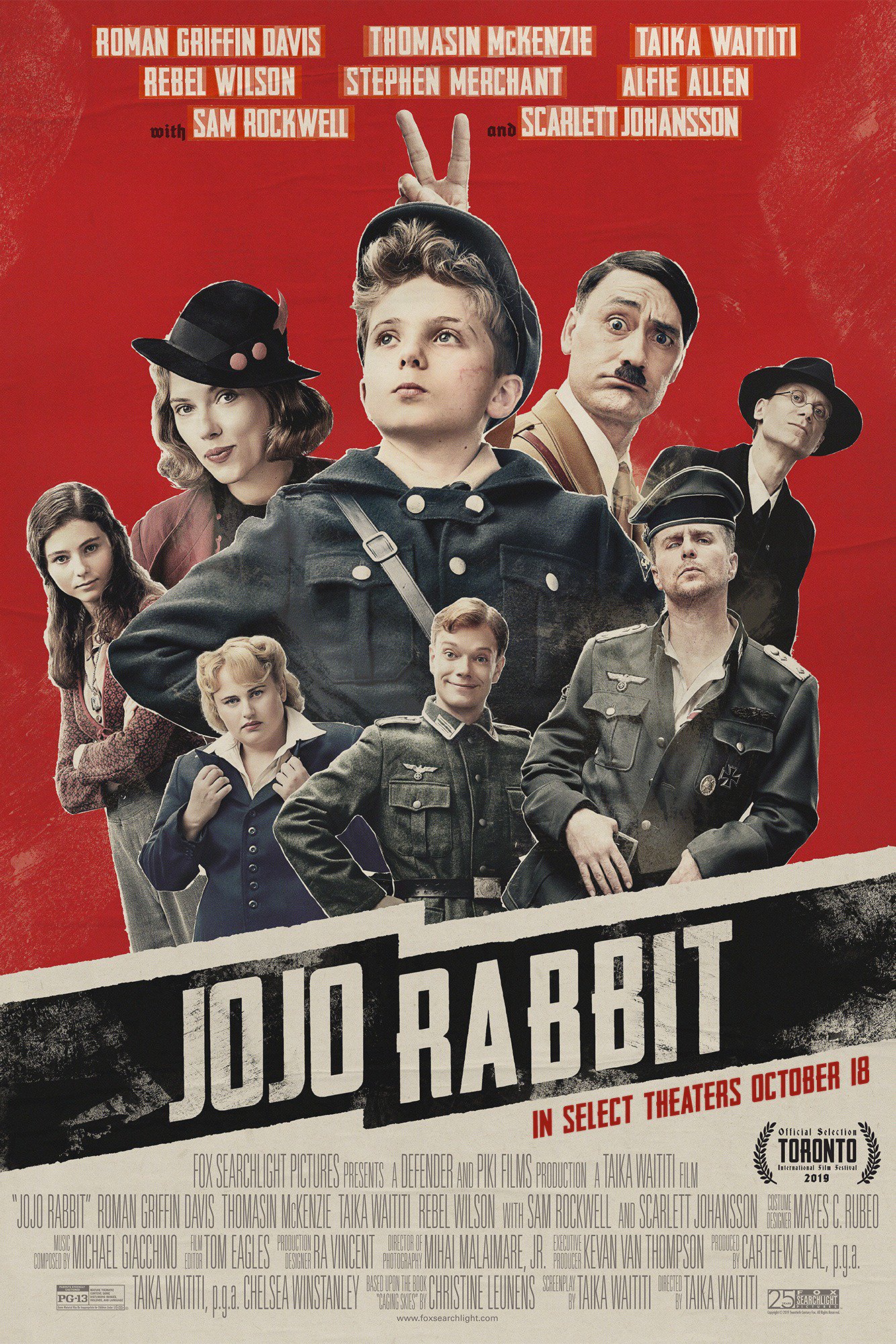
A complex film about a complex subject, but finds a delicate balance between humor and respect for the subject matter. A satire or parody about Hitler and the Nazis isn’t anything new, from Charlie Chaplin in The Great Dictator to Bialystock and Blooms Springtime for Hitler and even Tarantino’s Inglorious Bastards, one of the darkest times in the world’s history has been the source material for motion pictures. While Taika Waititi may not be breaking ground in using the Third Reich in this manner, he is offering a new perspective through the mind of a child of Nazi Germany. And that is where we spend the majority of the film–in the brainwashed mind of a child. His imaginary friend Hitler is a manifestation of the ideals Jojo (our central character) holds dear, misguided as they may be. Just as we interpret reality through our worldview that is shaped by our circles of influence, beliefs, past trauma, and the families in which we were reared, Jojo interprets the world around him in a similar fashion. Only his world was largely shaped by the effective Nazi propaganda that turned Germans against one another, and as you know, the rest is history. On one hand, he is still an innocent child whom cannot even remember to tie his shoes; on the other hand, he has been radicalized to completely buy into the ridiculous portrait of the Jews that the Nazis paint for the youth. On the surface, this film comments on how Jojo’s worldview of the Jews transforms; however, there are nods to other groups that were also seen as undesirables such as gays. The fact that is wasn’t only the Jews whom found themselves targets for annihilation is often forgotten by the masses. If Cabaret depicted the age of innocence that ended with the rise of the Third Reich, then JoJo Rabbit depicts innocence and disillusionment in the final days of the war. Though there are times that Waititi comes close to crossing the fine line that he is dancing, he never crosses it, which allows the film to be enjoyable and comment on coming of age in a rather provocative way.

Jojo is a lonely German boy who discovers that his single mother is hiding a Jewish girl in their attic. Aided only by his imaginary friend — Adolf Hitler — Jojo must confront his blind nationalism as World War II continues to rage on.

Unlike Bialystock and Bloom’s Springtime for Hitler in the brilliant musical The Producers, this satire on Hitler and the Nazis doesn’t quite hit it out of the park as well as Mel Brooks’ hilarious film. However, neither is it a disaster. That is likely to do with just how close to the atrocities of WWII that Jojo Rabbit takes us. If you’re worried about the film being in good taste, you needn’t. It may come close to being in poor taste at times and even questionable in others, but it remains in a position that can find ironic humor while not glossing over the evil actions of the Third Reich. It is imperative that audiences realize and accept that the movie is the manifestation of the propaganda-filled mind of a 10 year old German boy. We ostensibly experience the world through his eyes. Jojo lives in a complex world that is beginning to implode around him. All the while, when we first meet him, he remains committed to that for which the Third Reich stands. Taika Waititi takes a similar path to commenting on the central conflict to that which was followed by Chaplin, one that seeks to deconstruct fascist thinking.

Instead of simply the audience witnessing the events on screen that lead to destroying the foundation of fascist thinking, our central character of Jojo slowly learns just how vile the Nazis are, and that their way of thinking is a threat to humankind. How? For the full effect, you have to watch this film. But for the sake of argument, and not to over simplify, Jojo forms a friendship with a young Jewish girl hiding in the walls of his house. In a way, Jojo is in a similar position as audiences were in when Chaplin’s famous film was released–in a world in which Hitler and the Nazis were ever present. Here is where we have the creative layers that give Waititi’s film so much depth. Just as the world watched as Germans (and other Third Reich sympathizers) began to realize that the Nazis were masters of propaganda that brainwashed their own people, we watch as Jojo goes through a similar journey and transformation. As 21st century citizens of the “western world,” we often wonder just how otherwise intelligent, rational people could believe the ridiculous lies that were fed to them by the Nazis. This film paints an image of just how that worked. For all intents and purposes, if you convince the youth of your world to believe and buy into your radical platform, then the youth grows up to be the adults of your world. Thus, a following and movement is born.

When tragedy hits home, in a mindblowing way, Jojo comes face to feet with the reprehensible, seemingly unstoppable evil of the Nazis. This moment is when he realizes what he has been supporting and advocating. And even in his brainwashed state, even after he said the vile things he said, we still feel great empathy for him. And it’s this moment where he is tested to see if he is capable of growing as a person and thinking as an individual. Jojo’s eyes are opened, for probably the first time ever. He also begins to see how others, that he respects in Hitler’s army, have seen the evils of their ways and are doing what they can to make a difference. It’s also at this point that audiences realize that the captain, Jojo so admires, is gay and his (lieutenant, I suppose) is his lover. The subtext isn’t clear, but Taika tips his hat to this likely being the case. Whereas Jojo may not pick up on the captain’s secret, he is forced to accept that the captain could a sympathizer because he does something that Jojo realizes is not in line with policy and procedure. All throughout the movie, Jojo is challenged. Challenged by Hitler, challenged by the captain, challenged by his mother, and challenged by the Jewish girl hiding in his walls. It is by way of these consistent challenges that he grows as an individual and sees the flawed thinking of the Third Reich.

Jojo Rabbit is a provocative motion picture that provides audiences with a glimpse into the mind of a brainwashed 10 year old Nazi boy whose worldview radically changes through challenges to his identity. It may not be as edgy or as outstanding as we had hoped that it would be, but it is still a solid film that delivers a different perspective on a sensitive subject.

Ryan teaches screenwriting at the University of Tampa. If you like this article, check out the others and FOLLOW this blog! Interested in Ryan making a guest appearance on your podcast or contributing to your website? Send him a DM on Twitter or email him at RLTerry1@gmail.com! You can catch Ryan most weeks at Studio Movie Grill Tampa, so if you’re in the area, feel free to catch a movie with him!

Follow him!

Twitter: RLTerry1

Instagram: RL_Terry