INVASION OF THE BODY SNATCHERS (1956) Throwback Thursday Review

A timeless, terrifying motion picture! Based on the Collier’s magazine serial turned book The Body Snatchers by Jack Finney, directed by Don Siegel, and produced by Walter Wanger (of Cleopatra infamy), this Allied Artists’ motion picture is the single best representation of the fears and anxieties of the 1950s. But the beauty of this particular picture is that its themes including the fear of conformity, loss of identity, dehumanization, loss of individuality, and even vulnerability are still relevant today, perhaps even more so than they were at the time this seminal horror film was released. 

In Santa Mira, California, Dr. Miles Bennell (Kevin McCarthy) is baffled when all his patients come to him with the same complaint: their loved ones seem to have been replaced by emotionless impostors. Despite others’ dismissive denials, Dr. Bennell, his former girlfriend Becky (Dana Wynter) and his friend Jack (King Donovan) soon discover that the patients’ suspicions are true: an alien species of human duplicates, grown from plant-like pods, is taking over the small town.

While this film sits comfortably in the horror/sci-fi subgenre, it shares a lot of characteristics in common with film noir. Between the recurring narration, a central character in over his head, and the fact events do not turn out favorably for the central character, it pulls on the best of the film noir apparatus to craft a highly unnerving cinematic story that prompts one to think about the state of the world around him or her. 

Perhaps in its day, Invasion of the Body Snatchers was a commentary on the threat of communism/socialism on the American republic, but that is not the only subject to which this film can speak to us decades later. Could it still be read as a warning against the threat of communism today? Sure. But, communism doesn’t look or act like it did back in the 1950s. That’s the danger inherent with famous allegorical films such as this one; the well-known danger is pigeonholing it into only ever meaning what it meant back during the days of the Cold War. When in fact, this film can be read as a commentary on a variety of topics, depending on the worldview of the audience member. 

Whatever the form the existential enemy takes, whether you choose to read it as a commentary on communism, socialism, nationalism, or woke-ism (more accurately defined as applied/reified postmodernism), this film speaks to that which is defined as a threat to one’s present existence. When we label what this film is about, we limit its potential to speak to us. So, it’s better to read the film through its various themes versus defining what the enemy is. From beginning to end, the film depicts events and behaviors that rob individuals of expression, identity, competition, entrepreneurship, and choice in exchange for homogeneity, group think, forced societal roles, and emotion. Ostensibly, this film is about an enemy that seeks to dehumanize and force conformity upon everyone—a world in which everyone is equal and exactly the same versus a world in which we are all equal but definitely not the same. The film demonstrates what happens when we are asleep to the threat of the enemy, and it comes in like a thief in the night. And when we finally recognize the threat, it’s all but too late for us, for humanity, for freedom.

The film begins laying the pipe for the second act reveal of the pod people all the way at the beginning. It’s a scene to which many may not pay particular attention; it’s the scene wherein Miles notices that the Grimaldi vegetable stand is no longer open. One of the characteristics of a society that demonstrates a lack of support or simply opposes free enterprise (or by extension the marketplace of ideas), is manifested in this imagery. Farmer Grimaldi abandoned his private farming business in exchange for supporting the planting and harvesting of the alien pods. Other disturbing imagery is the crisis between the second and third acts wherein Miles and Becky are told that the pod people (replicants of their human counterparts) mean them no harm and want to provide a peaceful existence. The real horror here is that the peaceful existence comes at the cost of freedom and one’s unique identity (all the traits that make one a unique man or woman). These pod people are devoid of any genuine emotion, only exhibit the pretense of it, and see individualism as a threat to their existence.

Invasion of the Body Snatchers is a call to action; it’s a wakeup call to all those that watch it to stand vigilant against tyranny, to stand guard against threats both seen and unseen that seek to undermine what it means to be human. Furthermore, the film posits the idea that the deadliest enemy may not be the one that can be viewed with the naked eye; rather, the deadliest enemy is the one that sneaks in unbeknownst to most individuals. Or maybe it comes disguised as something that sounds great on the surface, but only seeks the destruction of uniqueness, freedom of expression, the marketplace of ideas, and the human dimension of existence. 

Due to the timelessness of the message of this terrifying film, we are drawn back to it time and time again. We are reminded to stand guard against an enemy that seeks to destroy our very way of life. It’s a story of survival and the great cost of freedom. A recurring theme throughout the horror genre is the theme of survival, and Invasion of the Body Snatchers is a brilliant exploration of how to survive against mounting odds that appear unstoppable. Horror films have a way of causing us to rally, causing us to come together in support of our right to survive. There is no other genre that inspires us to fight the enemy like a horror film.

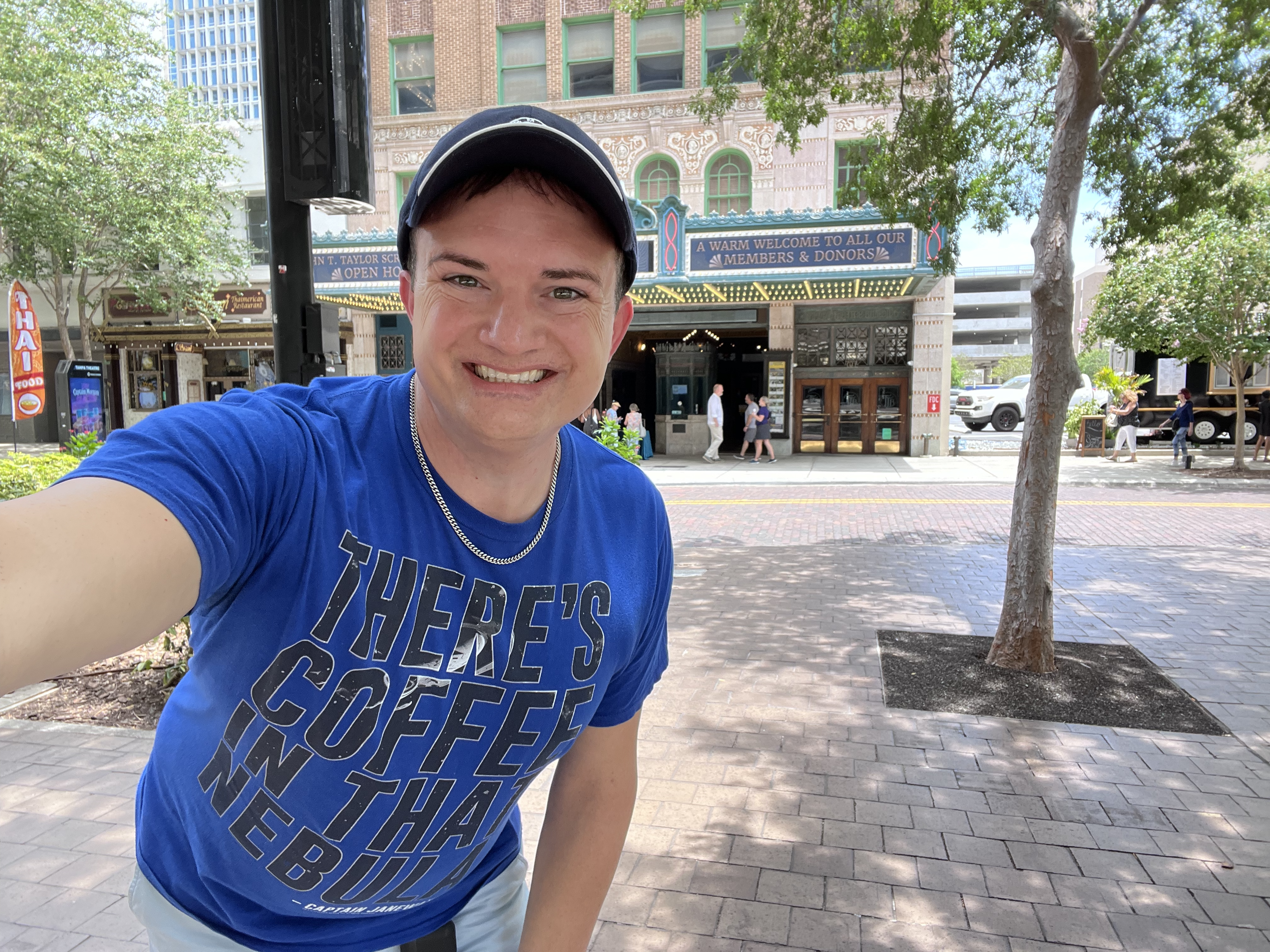
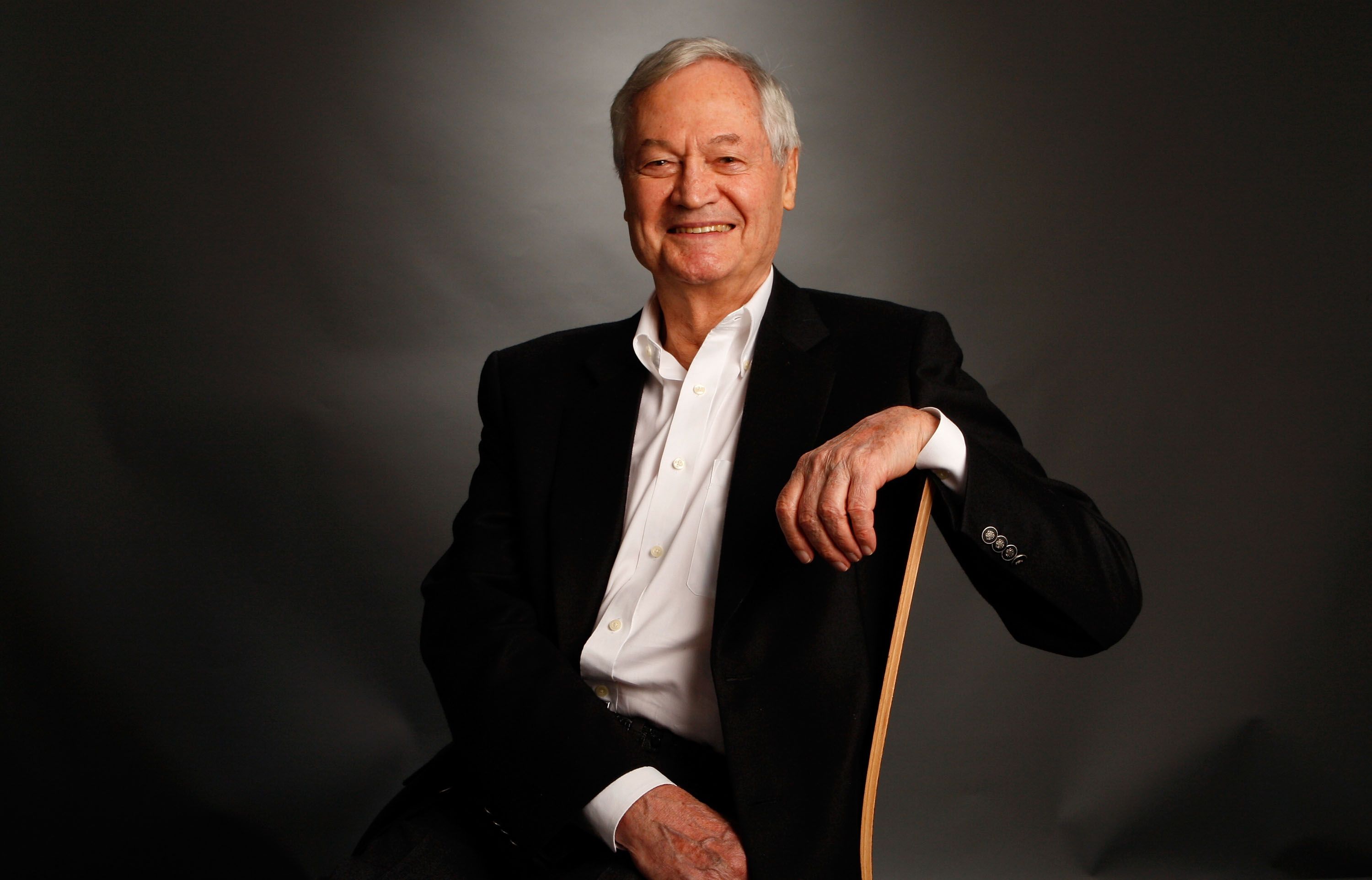
Ryan teaches Film Studies and Screenwriting at the University of Tampa and is a member of the Critics Association of Central Florida and Indie Film Critics of America. If you like this article, check out the others and FOLLOW this blog! Interested in Ryan making a guest appearance on your podcast or contributing to your website? Send him a DM on Twitter. If you’re ever in Tampa or Orlando, feel free to catch a movie with him.
Follow him on Twitter: RLTerry1 and LetterBoxd: RLTerry

ABIGAIL horror movie review

Fangtastic! Universal Pictures’ Abigail is a wildly entertaining, classically-inspired horror movie that you can really sink your teeth into. It delivers old school vampire movie elements with a contemporary sensibility. Ostensibly, it’s the metaphoric child of Dracula (1931) and The Horror of Dracula (1958). From beginning to end, the terror and laughter continually draw you into the story. Tonally, it strikes a great chord. The narrative never takes itself too seriously; however, it never devolves into parody either. It’s an effective blend of the atmosphere and music of an old school Universal monster picture and the increased gore of Hammer studios. Underscoring the blood-curdling outside/action story is an internal story with a redemptive message and even a little heart.

A group of would-be criminals kidnaps the 12-year-old daughter of a powerful underworld figure. Holding her for ransom in an isolated mansion, their plan starts to unravel when they discover their young captive is actually a bloodthirsty vampire.

From the moment the film opens, I was hooked! It opens with a solitary ballerina gracefully dancing on the stage in an empty auditorium; but what makes this scene particularly alluring is the original Dracula score (selections from Tchaikovsky’s Swan Lake) underscoring the entire opening sequence. It’s a deceptively simple scene that draws us into the beauty of the dance and music. Not only does the iconic music play at the beginning, but variations of it serve as a significant part of the movie’s score. This scene could be made greyscale, and edited to look like it was shot on 1930s 35mm film stock, and I’d almost buy that it was shot nearly 100 years ago.

While the movie may start out in the city, it doesn’t take long to venture into the countryside where a foreboding Tudor style estate serves as the main location for the events of the film. Again, Abigail is channeling Universal’s roots in classic horror by placing our relatively small cast in an isolated expansive estate that could’ve very well been used in a Carl Laemmle/James Whale motion picture. All that was missing was the eerie setting being draped in a dense fog rolling off the moors. As the characters wander through the imposing countryside mansion, the movie effectively established the rules by which the film will live by as it delivers its screamtastic narrative.

Without getting into plot specifics, I can tell you that it’s a simple plot with complex characters–so the best kind of cinematic story! Each and every character is sufficient developed, and quickly. The movie wastes no time at any point. It’s a lean, mean script that snaps, crackles, and pops. Not only is the world build, complete with rules, but the logic of the movie follows the rules and boundaries that it setup for itself during the first act. And while the movie does adhere to many classic vampire tropes, it also subverts some expectations. But not too many. There is one, in particular, to which I feel that it should’ve adhered but identified a way around it for dramatic purposes. But otherwise, I like that it pretty much stuck to the vampire playbook that has been used since Bram Stoker penned the seminal novel.

While there is a lot of blood, I wouldn’t say that it is a particularly violent picture. When the violence and gore hit–they hit–but it’s not gratuitous to the point of exhaustion from the visceral gore and projectile blood. I’d say it’s along the lines of Ready or Not levels of violence/gore. It’s never delivered in a manner that feels disturbing or disgusting; like with the tone, there is a consistent tongue-in-cheeky quality in the fighting or kill scenes. There are some fantastic skills and scenes that I hope make their way into the HHN (Halloween Horror Nights) house that this movie is destined to become this year or next.

the comedy is effectively delivered scene after scene. There is a great combination of humorous dialogue and visually-driven humor. Lots of hilarious image juxtapositions and an over-the-top quality to much of what is experienced. The movie is full of exaggerations, twists, and reversals. Whether the punchline is delivered in an argument or a sight gag, it’s done incredibly well by writers and directors that care. There is one scene that I particularly enjoyed, and it’s the vampire dancing with a headless corpse to the Dracula score. It’s just so ridiculous that you will undoubtedly laugh!

Despite the wildly entertaining qualities of this movie, it is not without some heart. One of the characters learns that constantly feeling like the victim of their circumstances is not constructive, and sometimes the best thing to do is move forward, freeing oneself from the prison of victimization. It was a nice touch that didn’t feel forced, but rather earned by the character.

You don’t want to miss seeing Abigail on the big screen, because the experience will not be the same at home. If you’re a fan of both Universal and Hammer horror, then you’ll want to make sure to watch Abigail in cinemas.

Ryan teaches Film Studies and Screenwriting at the University of Tampa and is a member of the Critics Association of Central Florida and Indie Film Critics of America. If you like this article, check out the others and FOLLOW this blog! Interested in Ryan making a guest appearance on your podcast or contributing to your website? Send him a DM on Twitter. If you’re ever in Tampa or Orlando, feel free to catch a movie with him.
Follow him on Twitter: RLTerry1 and LetterBoxd: RLTerry

GHOSTBUSTERS: FROZEN EMPIRE movie review

Spooktacular! Nonstop action and laughs from beginning to end. Nicely written and directed with a fantastic mix of legacy and new Ghostbusters elements. Demonstrates connective tissue the soul of the original two Ghostbusters movies whilst delivering plenty of new ideas! With a cast of lead and supporting players that share fantastic chemistry, both legacy and new characters are completely at home in and part of the world of the Ghostbusters. The character dynamics are as sharp and engaging as ever, with moments of humor and camaraderie that work collaboratively to balance the tension with the supernatural threats. With its sleek storytelling and spectacular visuals, you don’t want to miss seeing this movie on the BIG screen.

The Spengler family returns to the iconic New York City firehouse where the original Ghostbusters have taken ghost-busting to the next level. When the discovery of an ancient artifact unleashes an evil force, Ghostbusters new and old must unite to protect their home and save the world from a second ice age.

The rich world-building combined with the well-developed characters and meaningful conflict, Ghostbusters: Frozen Empire will whisk you away to an immersive world of frozen landscapes and ancient ruins. Relying, not only on CGI, but incorporating practical effects gives the movie a sense of depth and naturalism. Concerning the practical effects–which I wish it had relied upon more–but I digress, I loved the moments with Slimer (and another bookish apparition) because Slimer was back in all his optical effects glory (for the most part anyway). It was like being transported back to the original Ghostbusters to greet the lovable menace. While not practical, we do get moments with the Staypuff marshmallowies too!

A surprising narrative strength demonstrated by the movie is its thematic depth. Through interpersonal conflict, the movie explores rich themes such as redemption, the challenges of growing up, and hubris. While the outside/action plot is a classic good vs evil setup, the inside/emotional story delivers many substantive layers that enrich the humanity of the characters and the story itself. The movie’s deceptively simplistic packaging surrounds a complex narrative that keeps the audience engaged.

One of the character-driven subplots of the movie provides a great opportunity to explore isolation and loneliness even when surrounded by people. Humans are designed to desire companionship, whether that companionship is romantic or platonic. And I appreciate the movie exploring what it’s like to feel alone within your on family. On the topic of family, the movie also provides an exploration on one’s family of origin and one’s found family.

For all it’s spooky hilarity, Ghostbusters: Frozen Empire is a family melodrama that touches your heart whilst the more thrilling elements of the movie seek to wildly entertain you.

Ryan teaches Film Studies and Screenwriting at the University of Tampa and is a member of the Critics Association of Central Florida and Indie Film Critics of America. If you like this article, check out the others and FOLLOW this blog! Interested in Ryan making a guest appearance on your podcast or contributing to your website? Send him a DM on Twitter. If you’re ever in Tampa or Orlando, feel free to catch a movie with him.
Follow him on Twitter: RLTerry1 and LetterBoxd: RLTerry

Dario Argento PANICO documentary review

Informative but bland. For a director who’s responsible for some of the most vibrant and stunning films that continue to influence and captivate audiences decades after their initial release, comes a documentary about Dario Argento that is ultimately underwhelming and lifeless. From his hypnotic, phantasmagorical, symphony of terror in Suspiria to his nightmarish Opera and his quintessential giallo in The Bird with the Crystal Plumage, Argento has been crafting cinematic sensory explosions for over 50 years. But this documentary plays more as a podcast, for it leans more heavily into talking heads (one of which is Argento himself) than it does incorporating behind the scenes or footage of his movies. Argento is visually driven storyteller, but this documentary is such that you can turn off the screen and get nearly the same experience listening to the stories.

The documentary starts off very well. Argento is bring driven by the documentary filmmaker to an Italian countryside hotel. Underscoring this scene is mysterious music, and as Argento looks out the window, we see memorable clips from from Suspiria. Suzy arriving at the Freiburg train station. The forest with the dance academy student frantically running for her life. And ad he is pulling up to the hotel, we cut to the vibrant crimson Tam Dance Academy arrival scene from Suspiria. That opening intercut with scenes from Suspiria set me up to enjoy a fantastic, engaging documentary. Unfortunately, the opening of the doc overpromised because the rest of the documentary underdelivered.

While the documentary provides family history and his early days as a writer and producer, most of the doc concerns itself with his feature films from The Bird with the Crystal Plumage to his most recent work. The films that receive the lion’s share of attention are Bird, Inferno, and Opera. No, you didn’t misread that, nor did I forget to include it, but Suspiria represents a small part of the feature-length doc, even though it is inarguably Argento’s greatest motion picture and the one that is best known worldwide. It’s be like a documentary on Spielberg that spent little time with Jurassic Park or with Batman Returns in a documentary about Tim Burton. I am left with questioning the documentary filmmaker on why Argento’s most well known film only has a place in the doc when that iconic, hypnotic Goblin score is the subject.

The documentary continues through Argento’s incredible career, both in Europe and the US. The section on Opera delivers the most footage from behind the scenes, and is fascinating to watch. But throughout much of the documentary, where there should (or could have been) footage, there was a talking head(s). Granted, the talking heads consisted of heavy hitters like Guillermo del Toro, but even that wasn’t enough to make the interviews more engaging. In terms of variety of personalities in the doc, the filmmakera brings together industry professionals and members of Argento’s family, including his ex-wife and daughters.

Panico is certainly informative, but lacks any visual or experiential appeal. All that said, I am thankful that Argento is still around to participate, because it was wonderful to hear from him as his movies and legacy are being expressed through a documentary.

Ryan teaches Film Studies and Screenwriting at the University of Tampa and is a member of the Critics Association of Central Florida and Indie Film Critics of America. If you like this article, check out the others and FOLLOW this blog! Interested in Ryan making a guest appearance on your podcast or contributing to your website? Send him a DM on Twitter. If you’re ever in Tampa or Orlando, feel free to catch a movie with him.
Follow him on Twitter: RLTerry1 and LetterBoxd: RLTerry

THANKSGIVING (2023) horror movie review

I know what you did last Thanksgiving! Eli Roth’s Thanksgiving is IKWYDLS meets Jaws with a dash of Scream in a scathing critique of toxic, insatiable consumerism that is destined to be an instant holiday horror fave! Complete with great kills and stuffed with laughs, it’s a highly entertaining slasher!

An axe-wielding maniac terrorizes residents of Plymouth, Mass., after a Black Friday riot ends in tragedy. Picking off victims one by one, the seemingly random revenge killings soon become part of a larger, sinister plan.

The slasher has a formula, and Eli Roth is serving it up in heaping helpings that simultaneously check all the boxes for the horror stable yet find ways of seasoning it with style and flare. While some non-slasher fans may get hung up on all the nods to classic slashers, it’s how Roth uses the homages and references that express his original recipe for this future holiday horror classic. Beyond the cleverness of the screenplay, Eli Roth has crafted a horror movie that is entertaining from the first course to dessert. It’s a sheer blast that demonstrates the art of identifying the balance between comedy and horror. Even though it isn’t a horror-comedy per se, it is a horror movie that takes the story seriously but punctuates it with laughter to form a fantastic roller coaster of a ride.

For the most part, Thanksgiving has remained the only major U.S. holiday largely untouched by the horror genre. In fact, I can only think of the absurd Thankskilling (2007) and its even worse sequel (2012). There are endless holiday horror examples for Halloween, but we also have Valentines Day (My Bloody Valentine), St. Patrick’s Day (Leprechaun), Easter (Night of the Lepus), Independence Day (IKWYDLS and Jaws), Christmas (Black Christmas, Silent Night, Deadly Night, Krampus), another exhaustive list), but Thanksgiving has been a rather conspicuous absence from that holiday horror library. Not anymore! This movie has it all, turkey dinner with all the trimmings, including blood and guts, some male-sploitation abs, and an axe-wielding masked killer.

From The House with a Clock in its Walls to Green Inferno, Roth’s horror library is stratified from the whimsy to the horrific. And on that spectrum, I’d place Thanksgiving somewhere around the middle, which is right where it needs to be. It’s neither too dark nor does it play it too safe, and it has a healthy level of intentional camp. Despite being set in our present day, it has the soul of a 90s slasher in the vein of IKWYDLS. The holiday theming works to the movie’s advantage because it provides both opportunities to provide commentary on our society and integrate some subversive whimsical elements as well.

Audiences are queued into the type of horror movie they are about to watch at the very beginning. Simply stated, the first act of Thanksgiving is incredibly effective at setting the tone and thesis for the movie. While he may not be going for scares in the conventional sense, he is going for some–and what I characterize as–more deeply troubling scares. His critique of toxic consumerism (as represented by Black Friday monsters–uhh-I mean, shoppers) is simply scathing, and oh so effective! Even before the killer shows up, there is bloody mayhem at the hands of the people of Plymouth themselves. And it’s not just the physical harm befalling the shoppers, but the emotional and psychological suffering is spotlighted.

We witness a mob outside of a (not Walmart) store that is all clamoring for door buster sale items and behaving inexcusably. Perhaps Roth is exaggerating for illustrative purposes, but it’s honestly not that far removed from how awful, greedy, and thankless shoppers are often times, especially on Black Friday. If everyday people can cause this kind of harm, that liminal space between killer and victim begins to blur. And that is more terrifying than any masked slasher. Eli Roth challenges audiences to ask themselves to what extent will they devolve in order to get 50% off a waffle iron.

The movie additionally spotlights the disruption to family time around the Thanksgiving table by greedy corporations that insist on starting Black Friday sales on Thursday night and the horrendous, deplorable behavior by the consumers that feed these corporations with their insatiable, selfish behavior. Roth isn’t trying to scare people, in the conventional sense, with his holiday horror offering, but rather scare them into behaving like human beings and remembering to be grateful for what we have instead of being greedy and selfish with time and resources. After watching this movie, you may think twice before supporting a store on Thanksgiving Day; moreover, you may find yourself behaving more civilly during the Black Friday sales.

All the kills are over-the-top and creative, typically underscored with dark humor, which removes them from reality. The comedy is very much character-driven, with some slapstick sprinkled throughout. It’s primarily a cozy (throwback-style) slasher with a side of gore, so the gore will be a little more intense than in a classic 80s or 90s slasher, but because of its punctuated nature, it is not nearly as gnarly or grotesque as in say Roth’s Hostile. Suffice it to say, Roth thankfully leans far more into the slasher subgenre than he does the torture porn subgenre.

Thanksgiving is a well-written and directed holiday slasher that delivers a clever story, thoughtful plotting, and fun characters. I can totally see the John Carver mask becoming one that you may very well see on Halloween along with Ghostface, Jason, Michael and the rest.

Ryan teaches Film Studies and Screenwriting at the University of Tampa and is a member of the Critics Association of Central Florida and Indie Film Critics of America. If you like this article, check out the others and FOLLOW this blog! Interested in Ryan making a guest appearance on your podcast or contributing to your website? Send him a DM on Twitter. If you’re ever in Tampa or Orlando, feel free to catch a movie with him.

Follow him on Twitter: RLTerry1 and LetterBoxd: RLTerry