“Poltergeist” (1982) Retrospective Film Review

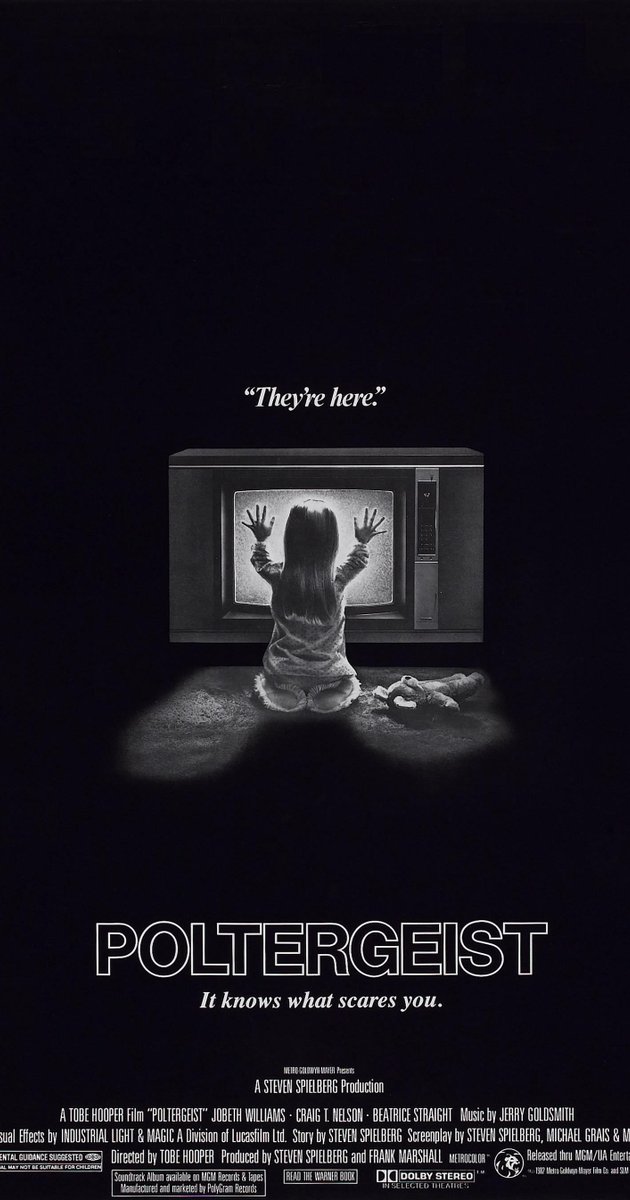
“They’re [still] here!” 35 years later, Stephen Spielberg and Tobe Hooper’s Poltergeist still terrifies audiences today. Coming off the successes of Spielberg’s Jaws & Close Encounters of the Third Kind and Hooper’s Texas Chainsaw Massacre, this powerhouse producer-director team (note: Hooper received the official director credit) crafted a horror film that became an instant classic then, and still holds up today. With Spielberg heading up the story and Hooper in the director’s chair, both cinematic geniuses combined their talent for generating material for nightmares to take the “haunted” house film sub-genre of horror to the next level. Storytelling and cinematic elements aside, another primary reason the film still haunts and intrigues audiences today is the lore of a lengendary curse attached to this film. For audiences back in 1982, and possibly still to this day, following watching the film, friends may have found themselves only venturing by an alleged haunted house on a dare. The film’s impressive ability to take the haunted house concept up to a level never seen before–in fact–it essentially created the modern haunted house genre seen in today’s horror films. In short, Poltergeist is an icon, and stands alongside films such as PsychoThe Exorcist, and The Shining. Probably the most terrifying element of all is the setting–mundane upper middle class America suburbia. No longer where “haunted” houses confided to old mansions or hotels, but could be located next door to you. That is, if your neighborhood is also built upon a burial ground.

At the end of the day, regardless of who actually directed this film, Poltergeist remains one of the strongest films in either Spielberg’s or Hooper’s canon. And the legend of a curse certainly doesn’t hurt the strong fanbase of this horror classic. Curse and directorial authorship aside (though, the latter is a valid topic for discussion), the brilliance of this film is almost self-reflexive in that it displays quite the dichotomy while commenting on the secularized versions of heaven and hell as seen in the film due to both having their due screen time. This bifurcation paves the way to read past the ghostly apparitions and (real) skeletons, to the root of what I feel Spielberg and Hooper were foreshadowing as the real threat to a traditional familial bond–that box in your living room with moving images flickering on the screen. The way the movie opens and closes are very much book ends to one another as it attempts to deal with the quandary of an inability to “choose between life and death, when [we’re] dealing with what is in between.” The foreshadow of the seemingly one-sided conversation between Carol Ann (the late Heather O’Rourke) is a great depiction of how families are today. The kids are entertaining themselves by and form connections with characters seen on the TV while mom and dad are in their own world getting lit. That is not unlike what is seen today. Now, keep in mind, televisions are not responsible for fracturing the nuclear family; but the television is often relied upon as a babysitter and becomes the object that receives the most attention to the point that some get sucked into the moving picture world. Perhaps there is a lesson here in that the television should not be the center of attention in a household.

Poltergeist has much in common with a roller coaster at a theme park, and that metaphor can can aid in explaining why a film with such a simple plot and one-dimensional characters was and still is so incredibly successful in terms of cultural references and the fan base today. Why do most people go see a horror film? Is it the complex plots and multi-dimensional characters with brilliant on screen chemistry and excellent development? Not particularly, as great as those things are AND are often found in the best horror films. The pacing of this film reminds me of the pacing of a roller coaster at a theme park because of the lift at the beginning, the plummet into danger, the feeling that it’s almost over, followed by one final plunge into the twists and turns before pulling into the station. Compared to films such as The ConjuringAmerican Psycho, and Nightmare on Elm Street (not to mention many others), the plot is somewhat nonsense; however, the film is–without argument–sensationally effective, terrifying, memorable, and the horror imagery is beautiful–filled with metaphor and familial commentary. It’s an impressive array of haunting visual effects juxtaposed against a typical American family living in the suburbs. That, and ever since this movie, static on a TV is frightening! If you can find it anywhere anymore. With all channels on 24hr programming now, I suppose that the ghosts have to find another way into our world.

The innocence of the characters is also an intriguing and atypical part of this movie that aids in the frightening imagery and nightmarish inducing apparitions. It’s atypical because the victims of death, haunting, or injury in a horror film are usually horny teenagers who are sexually promiscuous, adults who have skeletons in the closet, played God, broken the law, or just plain old sociopaths. Not true with this family. Everyone in the Freeling household are wholesome family members from the hardworking father who wants the best for his family to stay-at-home mom who loves her kids, and even the siblings who appear to get along just fine. Almost too picturesque, and ultimately a bit unrealistic. Despite the tight, healthy nuclear family, the Freelings are thrown into chaos when Carol Ann gets sucked into the world that exists between life and death behind a thin veil. That innocence helps to uncross the level of terror in the movie because it hits members of the audience that no one is safe from the reigns of evil. The fact that everything in the film happened to a normal family creates added anxiety in the minds of the audience as many go home to a similar world first depicted in the movie. Looking back, Middle American must’ve been completely shocked when a family, not unlike its own, was plunged into a world of hellish gateways, ghosts, and ghouls and other circumstances out of its control.

There is something for everyone in this film. Because it is likely that most in the audiences then and now are afraid of something in the film: unexplained physics-defying phenomena, clowns, the underside of the bed, ghosts, closets, scary trees, pools, or subdivisions. Perhaps the relatability to the characters or the scary elements of the film are what help to connect new audiences to this classic horror film. There is a wittiness about the film that reminds me of something that Alfred Hitchcock may have developed for the screen had he ventured into paranormal movies. As nightmares go, Poltergeist is thoroughly enjoyable because you know your an always wake up from it and none of the characters are permanently damages at the end of the film. Eerie, beautiful, gruesome. That’s why this film still holds up today and will continue to haunt audiences for many years to come.

Full Review of Howl-O-Scream at Busch Gardens Tampa

“Enjoy it while YOU last!” Howl-O-Scream (HOS) opened at Busch Gardens Tampa this past weekend! With two new houses, new scare zones, and the Fiends show’s new venue, it’s definitely an exciting event to attend this Halloween season, and one you don’t want to miss. More apparent than in years’ past, HOS is definitely growing in production value as it continues to draw upon the same visitors and locals in central Florida as HHN does. I’m often asked which event is better. And there is no one answer or even a simple answer, at that, with which to respond. The truth is, both events are equally enjoyable; but, it’s important to note that they are really two different experiences. What I appreciate year after year at HOS is the scare-factor. I’m consistently more scared at HOS than at HHN. Since Busch Gardens knows that they cannot compete with Universal on familiar TV and movie IPs that Universal can license, they choose to focus on the element of the jump scare–and it’s successful. If you’re like me, you’ll find yourself jumping more at HOS than you will at HHN. On the topic of IPs and by extension, production value, HOS has delivered some excellent houses that are on the verge of being on par with the HHN original IPs. Once Busch Gardens is able to license a familiar horror/suspense/thriller television show or motion picture, it will be quite the rival for HHN. Another area that HOS has capitalized on moreso than HHN is the availability of full bars. HHN does not offer full bars at the event (instead they have specialty drinks and beer). HOS offers several full liquor bars during the event, so you can get basic cocktails and such to enjoy while you scream your lungs off. With the addition of Reoccurring Nightmare tickets, HOS now offers the equivalent to the Rush of and Frequent Fear passes at HHN.

Like with HHN, there is no better night to experience HOS than opening night! The scare-actors are at full energy, the houses are at full nightmare status, and you get to experience the horrors with others who comprise the fan base of theme park Halloween events. Since Busch Gardens does not replace all the houses each year, I usually like to start with the new ones. This year, Busch Gardens Howl-O-Sceam debuted Demented Dimensions and Undead Arena LIVE. Both are excellent! The first house my friends and I visited was Demented Dimensions. Since Demented Dimensions is located in the Pantopia area of the park, we had to brave the streets of a deadly old folks home and a sinister circus. We got the biggest kick out of seeing actual senior members of our community put on bloody garbs and scary masks and haunt our steps through their scare zone. Good for them! This is a sign that BG HOS seeks to involve anyone who wants to spend the evening scaring park guests. Following a daring escape from the dentureless jaws of the hoard of old folks, we proceeded to brave the insidiously fun Carnie Camp. Quite the freak show, this circus will have you narrowly escaping the sinister carnies as you make your way through the three rings. Lastly, we had to pass through Wasteland (a scare zone reprise from last year) that looks like something out of a nightmarish Mad Max world). Following our emergence from Wasteland, we crossed over into another dimension–a demented dimension. Demented Dimensions, taking the place of Zombie Mortuary, is filled with a sensory overload of twists, turns, and physics-defying spectacles as you walk though this homage to that which only exists in your nightmares. Having arrived before the majority of the crowd, my friends and I had the house to ourselves. The best part about that is being the target of every scare-actor in the house. The theme of the house was quite fluid and continually immersed me within the multi-dimensional experience.

From Demented Dimensions to the treacherous high seas, the next house on our agenda was Black Spot, the pirate themed house from last year. Largely unchanged, this house is still a top notch one and has a near-Universal quality about it. Feels like what you would experience if Magic Kingdom’s Pirates of the Caribbean ever became haunted. Such an enjoyable thrill! I enjoyed it as much this year as I did last year. Like with Demented Dimensions, we had this one to ourselves too, so the scare-actors were out in full force to frighten us as we navigated the dark seas. After making it safely back to shore, we decided to take in the first showing of Fiends now located in the Stanleyville Theatre in the round stage. Even before the show started, I was nearly convinced that this experience was going to be even better than last year because of having a more traditional house layout as opposed to the dining hall feel of Dragon Fire Grill. Prior to the show and between the trivia on screen, the audience is reminded that if you are easily offended by anything that you may want to sit out of Fiends. And that is quite valid. I’ve often thought that Fiends would benefit from taking the adult humor up a notch and taking that envelope and pushing it even further. That is exactly what you get with this year’s show. Having been a part of HOS for all 19 years, each year is a riff on pup culture much in the same vein as the Bill and Ted show at HHN. Fiends returns from the dead funnier than ever! With excellent writing, a hilarious cast, and strategic riffs on pop culture, you have got to make time to see this show when you go to HOS.

After laughing to death at Fiends, we had to face the haunted circus once again. On our way to Death Water Bayou we spotted a motel off the main drag on a side street. Looked quite lonely, sitting on the side of the road with its exterior that seemed frozen in the 1950s. The Motel Shellburn is home to Motel Hell, a house that debuted last year at HOS, and still my favorite house this year. What sets this house apart from the rest of the lineup is the attention to detail and storytelling. From the entrance to the exit, this house IS definitely of an HHN quality. Unless I am mistaken, the exit for this year is different from last year. When you exit the motel, you’ll find yourself in a memorial garden of sorts. And watch out, because you’ll encounter terrifying scare-actors in the cemetery too. Located not far from Motel Hell is the merky depths of Death Water Bayou. If you read my review of this year’s HHN, you’ll remember that I commented on how Universal essentially copied this house for their Dead Waters. Getting to compare the houses back to back, I am convinced that the HOS version of this concept is definitely scarier and just more enjoyable. However, Dead Waters is a little longer than Death Water Bayou. Like with some of the other houses, this one stands out to me because of, like with Motel Hell, the theming outside of the house. I like how it looks like we are walking though a bayou and into a shanty in the back waters of Louisiana. The story of the house begins to immerse you even before entering in through the shadowy front door.

One great aspect to Busch Gardens’ Halloween event is coasters in the dark! All the coasters are open this year at HOS–even newly refurbished Kumba. While a lot of the park guests are there for just the haunted houses, that leaves many of the queues sparsely populated, which means walking right onto the coasters! After leaving Louisiana, we flew to Egypt for Cobra’s Curse and my personal favorite Montu! Nothing beats riding a coast at night! At HHN, for traditional roller coasters, other then Revenge of the Mummy, you have to go from Universal Studios Florida over to Islands of Adventure. Fortunately, Busch Gardens has your coaster need taken care of with all six thrill rides open! That includes Montu, Cobra’s Curse, Kumba, Shiekra, Cheetah Hunt, and Falcon’s Fury. If you arrive early enough to HOS, you will definitely have time for the houses AND the rides! We certainly did. Well, we went to all the houses except Zombie Containment Unit. Wasn’t a big fan of it last year nor the year before, so didn’t want to wait for it this year. The Playground scare zone returns for another disturbingly frightening year, and you’ll have to pass through it’s haunts when you walk from the Moroccan area back towards Pantopia.

From coasters alive with excitement, to one that is a ghost of its former self, we returned to unearth something evil. Unearthed is now in its third year but still just as thrilling as it was when it debuted in 2015. The animatronic tree you pass before entering into the excavation chambers is still so incredibly impressive! Unearthed is another house that encroaches upon HHN quality. Although the house is not new this year, I am pretty sure that there were some extra scares in it this year as opposed to years past. The last house on our agenda was another new one. Just like with the Ringling Bros. circus, Circus of Superstition also closed after last year. But, Gwazi field is still bustling with live undead entertainment at Undead Arena LIVE. In the vein of the circus, this house takes a classic approach to haunts in that it really does feel like a traditional fun house, completely with dead ends, mirrors, and getting split up from your group. If you are more than a group of two, then the carnie barker will split you up into two separate groups as you make your way through the maze. There are scares round every corner as you desperately attempt to find your way out of the mind bending labyrinth of undead terrors.

Well, there you have it! A comprehensive review of Howl-O-Scream 2017. I hope you decide to face your fears at Busch Gardens’ annual event. HOS is going on now through October 29th (last Sunday of October). Tickets are reasonably priced but vary depending on when you choose to go. Consider upgrading to the Reoccurring Nightmare ticket to enjoy all nights of the event.


Review of Halloween Horror Nights XXVII at Universal Orlando

“Here’s Johnny!” Experience some of your favorite horror films and television shows as Halloween Horror Nights 27 (HHN27) at Universal Studios Florida showcases the iconic and contemporary in one terrifyingly fantastic celebration of the macabre. Be sure to catch Bill and Ted’s Excellent Halloween Adventure‘s final tour as they riff pop culture and relive some of the best moments in the popular comedy show for the last time. This year’s houses include a selection of movie-based houses and original concepts; furthermore, be sure to visit the scare zones as well! The movie or TV-based houses are: The Shining as the big headliner this year, American Horror Story (Asylum, Coven,  & Roanoke), Saw, The Horrors of Blumhouse, and Ash v. Evil Dead; the original IPs are: The FallenDead WaterScarecrow: the Reaping, & Hive. You’ll also find scare zones featuring familiar elements and scenes from The Purge and Trick’r Treat in the lineup as well as a nod to classic alien films from the 1930s-50s. From several park guests, the general consensus was that this year was solid, offered precisely what most were looking for and successfully brought nightmares to life.

For the full review, please visit Thrillz!

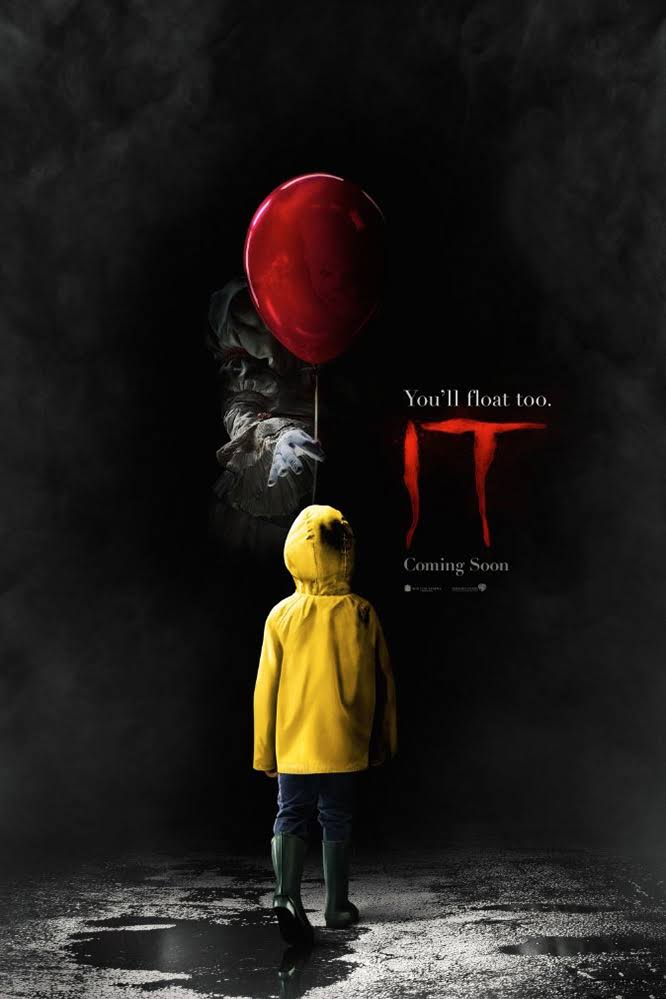
“IT” (2017) film review

IT’s hauntingly fantastic! From the first to the last scene, the Stephen King adaptation directed by Andres Buschietti is nothing less than a horror masterpiece that does both the original novel and the TV mini series (1990) justice. The brilliance behind the adaptation is found in the excellent cast. So organic, so relatable. A common trope in King novels (and by extension the movie adaptation) is the tried and true narrative structure of the “coming of age” story. Although Stand By Me typifies the “coming of age” subgenre, IT may serve as a horror film for shock value on the outside; but beneath the nightmare-inducing exterior, beats the heart of a heavy drama with a great message about growing up, friendship, teamwork, and facing one’s fears. Few horror films reach iconic status, but this one is surely destined to be counted among films like: The Shining, Friday the 13th, Nightmare on Elm Street, Halloween, Texas Chainsaw Massacre and others. For all the previous King adaptations, Buschietti may have directed the best adaption we have ever seen. Kubrick’s The Shining may still win the award for most artistic and cinematic; however, 2017’s IT takes the words from the pages and successfully translates them to the silver screen along with impressive set design, special/practical effects, and a blood curdling score.

Derry, Maine may seem like a picturesque idealistic version of Americana, but it has a problem. Every couple of decades, children and teenagers vanish without a trace. After Georgie disappears while playing with a paper boat in the rain, his brother Billy (Jaeden Lieberher) becomes determined to solve the mystery and find his brother. Met with opposition from his father, Billy teams up with his long-time friends Eddie (Jack Dylan Grazer), Richie (Finn Wolfhard), Stanley (Wyatt Oleff), and new friends Beverly (Sophia Lillis), Mike (Chosen Jacobs), and Ben (Jeremy Ray Taylor) to unravel the mystery surrounding the town of Derry. In their wildest nightmares, no one could have anticipated the evil that lies beneath the streets, in the dank sewers of the Maine hamlet. When faced with what terrifies each of them the most, the group of young people must band together in order to conquer their fears and destroy Pennywise, the evil dancing clown (Bill Skarsgard).

The local movie theatre’s marquee displays Wes Craven’s A Nightmare on Elm Street 5; and the fact it is that particular film serves a more important purpose than simply to establish the period (which it does brilliantly, by the way). That particular movie is quite symbolic, and in many ways, parallels the events that unfold in Derry, Maine. Both Nightmare and IT take place in small towns; and furthermore, the ensemble cast is comprised of young people who must face fears and band together in order to conquer the evil that threatens their very lives. Although this version of Pennywise is a little less playful than the iconic original Tim Curry Pennywise, the dancing killer clown has a very Freddy Kruger quality about him. Many of the qualities that aid in (in my opinion) making Freddy the most terrifying of all the classic slashers and icons, is his playful attitude followed by moving in for the kill in a very showman way. Both Pennywise and Freddy are born out of and prey upon deep childhood fears and quite literally become the manifestation of the evil in the world. As such, there are many reasonable ways for IT: Chapter 1 to spawn several sequels in the same way that A Nightmare on Elm Street did.

As nightmarish as the majority of the movie is, it does struggle here and there to connect all the scenes together whilst maintaining a solid rhythm. The overall sense of dread is carried through for the most part, but there are times that the film fails to increase the level of anxiety which could have been accomplished by spending more time in Derry’s history and the traumas and secrets that were buried over the decades. I would have liked to have seen the sewers that the kids search through be more symbolic of the very plumbing that transports the deep seeded fears that are ignored or flushed away by the people of Derry. IT certainly accomplishes its goal of being a high quality horror film but it falls short of going as deep as it could have. The overall experience of the film rivals that of other great horror films that have gained iconic status. Greatly contributing to this success is the balance between establishing nostalgic connections between it, the original IT, and the audience members, and the excellent 21st century hair-raising effects. The relatable cast seems to have been taken right out of Netflix’ Stranger Things, and will work wonders for attracting a younger audience who may not be familiar with the novel or original mini series.

There are two films in IT: the horror film and dark drama. Both are well executed but have a few flaws in the nearly perfect recipe. It’s both a nostalgic coming-of-age story and a Wes Craven Freddy-like slasher. Having an ability to be a dark drama masquerading around as a horror film will do very nicely at the box office. Perhaps if this film were a little more like Nightmare and we saw a little less of Pennywise, he would be more terrifying. As it stands, the more we see Pennywise, the less scary he becomes. Still, he is pretty terrifying! Buschietti may not wind up with the same cache as Kubrick, Hitchcock, or Craven, but he has emulated much of what the aforementioned masters of suspense, terror, and horror pioneered many years ago.

One thing’s for sure, this is a great way to kick off the Halloween season of films! After a mostly lackluster August, I am glad that the cinema is bustling with great films to see. IT this week, Mother next week, followed by the remake of Flatliners, September is shaping up to be a terrifyingly brilliant month for films. Should you choose to venture to Derry, Maine this weekend, you won’t be disappointed with the remake of a classic. If you really want to have some fun, bring along a friend who has a phobia of clowns.

“It Comes at Night” movie review

The Doore of Red Death. A24’s highly anticipated horror film It Comes at Night by writer-director Trey Edward Shults looks beautiful and beckons for attention, but fails to live up to the storytelling and payoff of A24’s The Green Room. Another A24 film in the vein of It Comes at Night is 2016’s The Witch, which was ultimately a failed attempt to capture the magic of a horror/mystery film and leave audiences with too many unanswered questions. The only “terrifying ambiguity” (to quote The Huffington Post), in this film, is just how terrifying it is to realize you just dropped money on a film that works better for Netflix, and the ambiguity comes from the plethora of underdeveloped plot elements. Essentially, It Comes at Night reminds me of a bad M. Night Shyamalan film (before he made his outstanding comeback with The Visit and Split) and after the successes of The Sixth Sense and Lady in the Water. Like the aforementioned era of ehh Shyamalan films, the wind up is excellent but the delivery lacks any emotional impact and you’re left with realizing that you never truly cared about any one of the characters. Character development is lacking, and the third act is incredibly weak. However, there is something in particular that I find very interesting; and after reading other reviews, it seems to be something that has escaped most (if not all) the critics at this point. That is the striking similarities between this film and the timeless classic short story The Masque of Red Death by the brilliant Edgar Allan Poe. From the painting on the walls of the house depicting the bubonic plague to the ominous red door, there are quite a few parallels between It Comes at Night and The Masque of Red Death.

Nestled deep in the woods is a secluded boarded up house belonging to a family of three seeking refuge from an unknown threat. Whatever has caused this family to live off the grid and fend for their very survival is tasteless and odorless. Forced to wear gas masks whenever venturing out into the woods and even around their own home, the family is forced to take drastic measures to ensure there ability to avoid coming into direct contact with the disease. With only now way in or out of the house guarded by a red door, the family has stopped at nothing to protect themselves. One night, the family’s house is broken into and they must decide what to do with the man and his family. Having dispensed with courteousness and generosity in order to guard against any and all possible threats, the family must decide whether to listen to the man or kill him right then and there. Their decision will spark a fire that spreads into their deepest fears.

*spoiler alert* But, the analysis is fascinating.

Okay, now I know that the preceding paragraph describes what should be a brilliant horror film, but the problem lies in the greatly flawed poor storytelling, development, and realization. Lack of connection to any one of the characters is also partly responsible for the lackluster experience of watching this horror-thriller with a hint of mystery and dystopia. The only saving grace the film has is the connection to elements of Poe’s Masque of Red Death. For starters, the camera draws the audience’s (and diegetic POV) attention to a painting of a depiction of the bubonic plague (or black death). At first, I was puzzled as to why this painting. Then as I go through the movie, I realize why. Between the constant reference to and runtime spent on talking about and showing the red door, it hit me that this film reimagined Poe’s short story and set it in a dystopian or post-apocalyptic time and place. If you are unfamiliar with The Masque of Red Death, then I encourage you to read it or watch it on YouTube. It is allegory on the inevitability of death no matter how  hard you protect yourself, how much money you have, or how powerful you are. It also contains allusions to the seven deadly sins and the fate of those who party in the wake of mass death among a lower class of people. Although I find the short short to be a stronger narrative than Shults’ variation on this reimagination of the classic tale.

Both the short story and this film contain people hiding out in a fortress. Whereas The Masque of Red Death‘s Prince Prospero is held up ins abbey with his wealthy and noble friends while the red death is killing off the rest of the kingdom, A24’s It Comes at Night features a typical American family living off the land and secured in their rather tutor-looking mountain lodge. Like in Red Death, the family in It Comes receives an uninvited guest one night. Here’s where we see some difference. In Poe’s story, the guest is dressed to attend the masquerade ball and in this film, the guest attempts to break into the home. Although both stories take different approaches to the second act, once thing is in common. And that is the taking in of an outsider. All through the second act, there are hints at something not being right–a constant uneasiness. That apprehension and anxiety regarding the unknown works in the respective stories favors. The emotional impact and psychological payoff differs between the short story and film. Yes, the endings are very similar but feel incredibly different. You’ll just have to read The Masque of Red Death and watch It Comes at Night to know for yourself.

If you’re searching for a thriller to watch this weekend, as it is rain in many parts of the country, then perhaps you should watch Universal Pictures’ The Mummy instead. However, if you are curious about how well It Comes at Night parallels Poe’s short story, this definitely check it out. Not entirely sure why it’s rated R, but in case that’s important to you. To quote Dr. Ian Malcolm, “well, there it is.”