“A Monster Calls” movie review

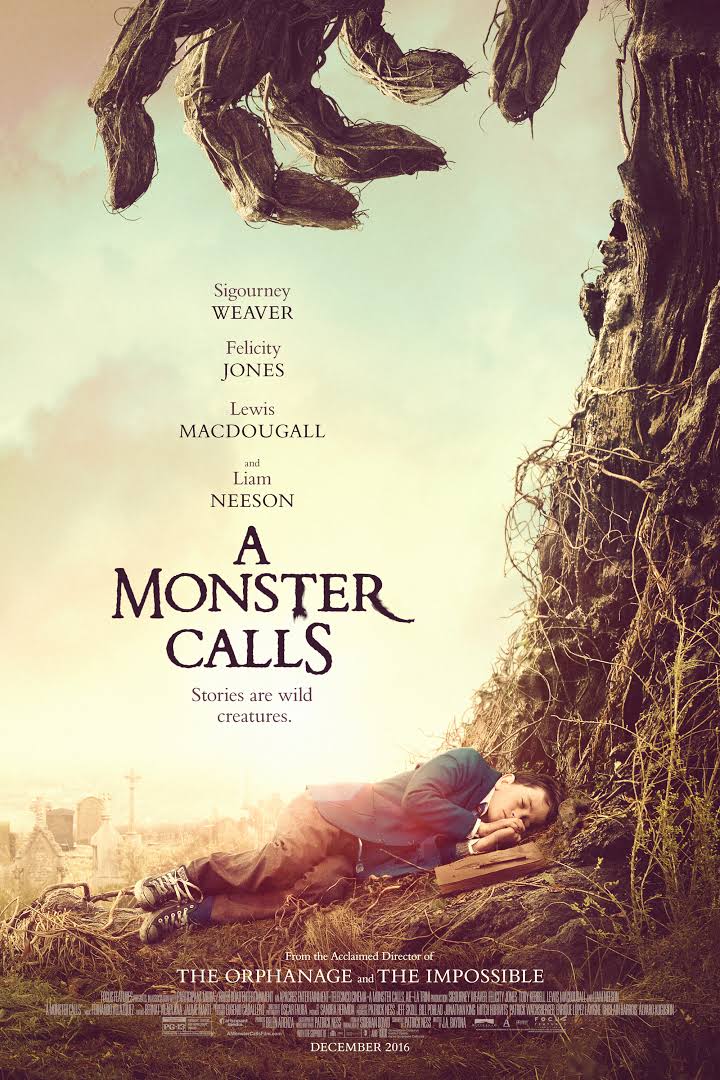
monstercallsA breathtakingly beautiful and dynamic film that typifies the art of visual storytelling in the gothic style. Focus Features’ A Monster Calls directed by J.A. Bayona is nothing short of a Terms of Endearment, in theme anyway, for a new generation. You are certain to laugh and cry your way through the film. Based upon the novel by the same name, written by Patrick Ness and illustrated by Jim Kay and conceptualized Siobhan Dowd, Bayona’s adaptation of the novel plays out to be a deep, rich story that will touch the hearts and minds of each and everyone in the audience. For anyone going through the stages of grief, this film will especially ring true and perhaps bring about comfort. Although the protagonist Connor, played by Lewis MacDougal, is twelve years old, this dark melodrama with a plot revolving around terminal illness is not typically something that will appeal to kids of Connor’s age. Despite the fantasy elements and the young protagonist, A Monster Calls is more suited for older teens and adults; however, by the same token, the movie isn’t entirely going to initially appeal to adults since the protagonist is quite young. I screened the movie last night in an auditorium filled with patrons of all ages and there was not one dry eye in the audience. Looking at the film from the outside and analyzing the plot and cast, it would appear that it may not attract droves of people because of the gothic fantasy nature, typically aimed at kids and young teens, with content and theming best suited for older audiences; however, the film truly transcends age barriers and stereotypes to touch those who are young or young at heart.

While most twelve year old boys are busy with school and learning to develop socially or even romantically, or just simply playing video games and having Stephen King type adventures, Connor (MacDougal) is dealing with far more than a kid should every have to deal with. Connor’s mother (Felicity Jones) is very ill and Connor is forced to grow in many ways kids should not quite quickly to take care of her. Not entirely going through this terminal illness alone, Connor has a grandmother (Sigourney Weaver) who looks in on him and his mother–a grandmother with whom he shares little in common. With Connor’s father settling down in Los Angeles, Connor feels very much alone while dealing with his mother’s illness. Expressing his emotions and thoughts through water color and sketch artwork, Connor uses his penchant for beautiful art as a form of therapy. Just when all seems lost, an unexpected ally in the form of a rather gothic tree-like monster (Liam Neeson) appears in his window one night. Apprehensive at first, Connor befriends the monster who guides him on a journey of courage, truth, and faith that combine in a powerful fusion of imagination and reality.

This is certainly a year for fantastic monsters and fantasy, isn’t it? However, A Monster Calls is definitely not your typical fantasy. It deals with deep emotions, dark themes, and material usually better suited for adults. Why then choose such a young protagonist? Perhaps the author Patrick Ness wanted to reach those kids who are going through tough times and who are dealing with situation that most kids won’t face until they are much older. Some kids are just forced to grow up more quickly than others. It’s important that cinema and literature not forget them because words on pages or moving pictures may be the only source of comfort, escape, or allegory. Director J.A. Bayona appears to have successfully translated the novel to screen–from what I know. Interesting that the movie opens with the narrator describing Connor as being too old to be a kid but to young to be an adult. By extension, that is precisely where this movie fits in. It’s too “old” to be a kid’s movie but too “young” to be an adult movie. And that’s okay. Growing up is hard, and when faced with a family member or close friend with a terminal illness, life is exponentially more difficult emotionally and even psychically. Unconventional as it may seem, this film is powerful and transcends the age spectrum to provide a strong emotional journey that audiences can appreciate and from which people may receive comfort. If for no other reason, having a kid starring in a melodrama brings audiences of all ages together–many who may be going through something similar as the child, parent, spouse, or lover of someone who is terminally ill. It’s okay to grieve and let go.

From the opening credits alone, I was confident that this was going to be a visually stunning movie. The water color animation and brushstrokes are reminiscent of the story of the three brothers in Harry Potter. Absolutely beautiful. Much in the same way Kubo and the Two Strings was an innovative animated film, A Monster Calls also contains unconventional and innovative methods of telling its story. Similar to how the animated story of the three brothers in Harry Potter was integrated into the diegesis of a live action movie, so it is with this film. The more I thought about the technical and emotional elements of A Monster Calls, it is clear that it’s truly a dynamic means of cinematic art. Dynamic in that there are three different types of storytelling methods used diegetically each highlighting a different form of art: (1) motion pictures (2) visual art (3) oral storytelling. It’s been said that the novel is an extension of oral storytelling, the play an extension of the novel, and motion pictures an extension of the play. At the root of all those methods of communicating through art is the very concept of storytelling. And A Monster Calls has the art of storytelling in spades. There are so many levels to the diegesis in this film; much like an onion or matryoshka doll, this film has a message of how to deal with grief at its core but there are many different routes to get to that central theme. Each layer teaches Connor and the audience something different and valuable. The cinematic storytelling elements of direction, cinematography, editing, and score are all equally beautiful.

Structurally, A Monster Calls is an intimate story reinforced and surrounded by artistic German expressionism calling attention to its own artifice. From the exterior shots to interior rooms, the various sets appear to be meticulously constructed on a stage and the wardrobe much like perfect costumes. The art tells the story effectively with little exposition required. Fernando Velazquez’ score is so incredibly moving that you may find yourself listening to the score as it too truly assist in the overarching means of telling this story. The design of the monster is brilliant and ominous all at the same time. Almost animatronic in nature, the tree plays out like there is a puppeteer on the inside articulating the movements. The monster feels just as much like an actor as the actors playing the human characters. Liam Neeson was a perfect choice to cast as the tree’s voice. His deep bass is comforting, warm, and wise-sounding. But just who is the tree (in the story)? Although we are never told whose spirit inhabits the tree that has seen thousands of years go by, there are a couple of hints as to who it might be if you pay close enough attention to subtleties in the film. At the end of the day, whether it’s the spirit of someone or the personified life of the tree itself, it is of little consequence to the movie. Still, its definitely fun and interesting to talk about as my friend and I did after the film.

If you enjoy movies such as The Iron GiantThe Giving Tree, or Terms of Endearment, then you will immensely enjoy this film. Presently in advanced screenings and limited releases, you may need to wait a few weeks before it is at a theatre near you. Although slated for a January wide-release, it may make its way through many markets before then. Originally set for an October release, it makes since to have held it until Oscar season since this is one of those films that could grab the attention of the academy. Definitely bring your tissues.

“Nocturnal Animals” movie review

nocturnalanimalsA meta-thriller that is equally shocking, seductive, bizarre, and beautiful all at the same time. Tom Ford’s adaptation of the best-selling novel Tony and Susan (1993) will either repulse or intrigue you from the opening credit sequence. There is definitely a pronounced shock value in this cinematic erotic mystery that includes an incredible amount of symbolism and theming just eager to be interpreted and dissected. Not typically found in mainstream cinema, the avant-garde seems to be the inspiration for many films this year. Nocturnal Animals is one of those films that is destined for discussion in a film or media studies graduate class. With solid acting, writing, and cinematography, you will be sucked into this twisted mystery within the world that the wealthy live in and the real world that most of us live in. You will likely find yourself thinking about what everything means, how it might apply to you, or simply appreciate non-linear storytelling. Although the film certainly rests upon the flashback as a chief storytelling method, Ford plays his cards right and creates a film in which all three stories are equally interesting. You may have heard it said–even by me–that some good movies are poor films; but, this is a case of a good film but a poor movie. That is usually the case with films that fall into the artistic or avant-garde stylistic way of conducting a visual story that contains a strong emotional impact.

Susan Morrow (Amy Adams) is an incredibly successful art gallery owner in Los Angeles. However, the marriage to her second husband is not nearly as successful. He’s often away on business trips to New York. One evening, Susan receives a manuscript written by her first husband (Jake Gyllenhaal)–a once struggling writer and graduate student turned college professor and now professional author. She finds the novel gripping and disturbing. As she continues to pour over the pages dripping with intrigue, she is impacted on a personal level as she uses the world of the novel as a mirror on her own life. Taking her to dark places in her past, Susan finds herself on a path of self-evaluation as she is presently going through emotional and financially hard times.

Cognitive cinema. Focus Features’ Nocturnal Animals is one of those films that requires higher thinking in order to truly appreciate the symbolism and theming. Not that it cannot be enjoyed as a beautifully dark and disturbing story, but there is so much that can be analyzed in this film. From the sequence of obese nude females dancing with sparklers, ringmaster hats, and cheerleader regalia to the reoccurring imagery of crosses and death–both in terms of emotional and physical–director Tom Ford provides audiences with a film that can only be characterized as a mystery that is meta-thriller meets hints of erotica. Even now, I am analyzing the symbolism and theming as I write this review. There are so many elements to talk about. And I think that is the best part about a movie like this. Don’t watch it alone. Not because it is too intense or scary but because you will want to talk to someone about the theming or emotional commentary. I find myself with a deep desire to analyze the film with someone, but none of my friends or colleagues have seen it yet. Visually driven. Even without the dialog, Ford’s Nocturnal Animals can be understood through the imagery in and of itself. Trace amounts of Tom Ford’s legacy as a high fashion designer can easily be seen in the design of this film. And I am not just talking about Adams’ stunning wardrobe and hair/makeup. In many ways, this film–as a whole–is symbolic of high fashion clothing. It can be read in some of the same ways fashion is read and appreciated. Because this is only the second feature length film from Ford, there are elements of the story that give the impression that his talent for visual storytelling is still in the development process as there are times that his method of directing is that of an observant student or scholar of cinema.

There are three distinct narrative threads in this film. (1) is the main story that we open up to at the interpretive and conceptual art exhibit establishing Susan, her gallery, her husband, and lavish lifestyle (2) is the narrative of her first husband Edward Sheffield (Gyllenhaal)’s novel Nocturnal Animals and (3) is the story of the rise and fall of the relationship between Susan and Edward. Juggling three plots is no easy task. Contrary to how it may appear, the narratives are not confusing or incoherent. Each plays an important role in the overarching theme and story of the film. The incoherency is found in the interpretation and analysis of what everything means. It’s as if the film is providing the audience with puzzle pieces that can be arranged to depict something different for everyone. Perhaps you want to read the film as commentary on the relationship between Susan and Edward. Maybe you view it as symbolic of the estranged relationship between Susan and her current husband. Or maybe the novel is self-reflexive of the life Susan has created for herself.

Each story is stylized in such a way that they complement one another–do not necessarily correlate or match each other, but the narratives are complementary. Although the audience is asked to draw their own respective conclusions to the story, presumably Susan’s once lavish and charmed life will continue to rot and crumble as her husband is likely cheating on her just like she cheated on Edward. Still, there is a lot left up to interpretation in the best possible way. The Roger Ebert website review of this film commented that there are parallels between this film and Alice Through the Looking Glass. Fascinating take on this film. That is probably the best analogical interpretation of Nocturnal AnimalsLooking at the film in such a way that Susan is Alice and the two other narrative threads are her adventures in Wonderland opens a whole new window through which to view the events as they unfold. On the surface level, there is a clear theme of revenge woven throughout the plot. This is indicated by a painting that catches Susan’s attention on her way to a board meeting. The metaphysical thrilling aspect to the subplot of revenge is the revenge the past has on the present and the present on the past. In a manner of speaking, Susan is listed by ghosts of her past, present, and future. Okay, perhaps not in the same way Scrooge was visited, but there are certainly some commonalities.

If you enjoy films that make you think, then this is definitely one to watch! As it was on a limited release until this weekend, you may not have heard of it but look for it at your local movie theatre. Fans of Blue Velvet will likely enjoy this film as well. Intriguing writing, solid acting, and beautiful cinematography make this a fascinating movie to prompt deep discussions afterwards.


“Kubo and the Two Strings” movie review

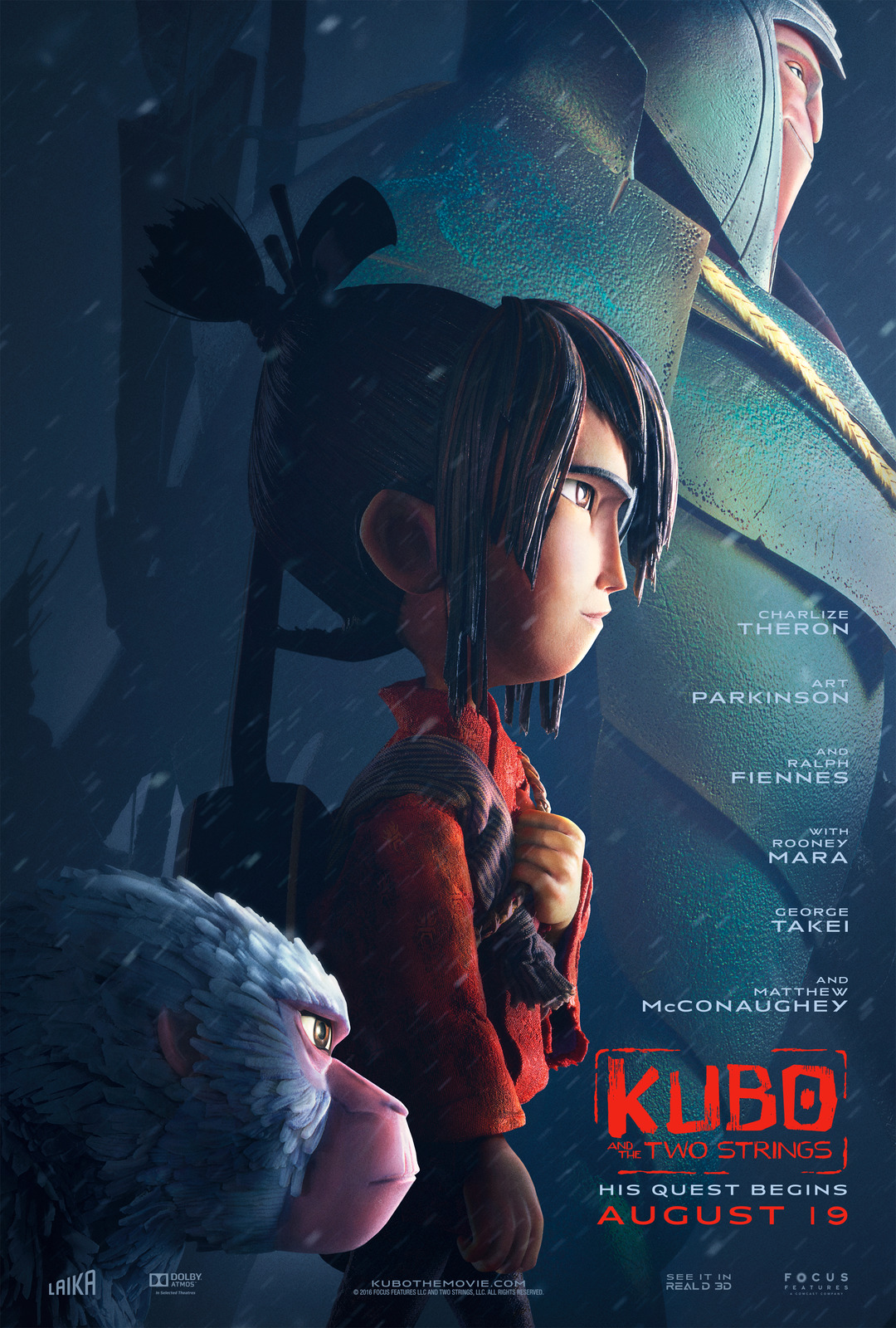
kuboAbsolutely beautiful! A dazzling display of the best that cinema can be! Laika and Focus Features’ Kubo and the Two Strings is truly a testament to the art of motion pictures! Brilliantly animated in an eye-catching stylistic way, this film provides audiences with a simple and intimate journey through a dynamically epic world of adventure, laughter, and tears. Directed by Travis Knight, from the opening to the final fade to black, Kubo is arguably the best animated feature length film to hit theaters in a long time. It contains the incredible storytelling that few films, live-action or animated, strive for but often fail to accomplish. Rarely, do audiences witness a perfect film, but this one comes very close to being perfectly written, directed, acted, shot, edited, and produced. With an A-list of vocal talent behind the characters in this immaculately animated world, Kubo will surely impress all those who watch this fantastical story. In some ways, I could argue that this film displays signs of being self-aware. Self-aware in that this simple but effective visual story is all about the very concept of storytelling. Cecil B. DeMille said, “the greatest art is the art of storytelling;” and this film proves that, in a world of high concept blockbusters that are produced to simply generate revenue at the sacrifice of storytelling, there are films with beautiful imagery, writing, and even a great message that hold true to the very idea what launched more than 100 years of cinema.

Following a daring escape from an unknown enemy across a treacherous ocean of tsunami sized waves, a young women survives a nearly fatal crash and washes upon the shore of a beach in the shadow of an imposing mountain with her infant. Many years later, Kubo (Art Parkinson) has grown up to be a young man with a passion for storytelling that he learned from his mother. Never having fully recovered from the accident, so many years ago, Kubo has the responsibility to take care of his mother. Harnessing his talent for magical origami, a stringed instrument, and storytelling, Kubo makes a little money each day for him and his mother. Little did Kubo know that his mother’s warning to not stay outside of their home after dark was for good reason. Soon, Kubo will find himself on an epic journey to unlock a secret legacy that he could have only dreamed of. Along his journey, he meets up with a monkey (Charlize Theron) and a man-beetle (Matthew McConaughey) who protect and teach him along the way. Don’t blink, even for one second, because you may very well miss something of grave importance.

The first thing you will observe in this movie is the exquisite and stylistic combination of two different animation methods. Claymation, which most are familiar with, and the lesser used papermation. Although typically used by themselves to tell an animated story, the brilliant combination of both methods to concurrently tell this epic story will leave a lasting impression upon you. There is a beauty in this film unmatched by any other in recent times. In many ways, the visual appeal of this movie reminds me of the early Walt Disney and Pixar animated films. Audiences can easily witness the absolute passion in every movement, detail, and landscape. I was completely sucked into Kobo’s fantastic world of Japanese influence. In addition to outstanding technical achievements in animation, lighting, and cinematography, Kubo is a film that is equally outstanding in its ability to tell a simple but inspirational story. It is the epitome of an ideal relationship between artists and engineers. This film successfully combines an artisan handcrafted charm with the precision of sophisticated visual storytelling technologies in a dazzling display of cinematic art that will surely be cherished for a lifetime.

Simple. The plot is so simple but yet very much profound. While so many studios are cranking out franchises, adaptations, complex plots, and young adult dramas, the Laika production company chose a different route. It chose a route that proves that the mastery of visual storytelling that showcases the art of cinema is still alive. In a world of the business of moviemaking, Kubo returns us to the art of filmmaking. Not confined to art house theaters in Greenwich Village or West Hollywood, this film is evidence that truly artistic masterpieces are still desired by the American audience. “The art of making art, is putting it together” (Sunday in the Park with George). Knowing that just the leaf ship sequence at the turning point between the first and second acts took 19 months to create, design, and produce, it is clearly apparent that a tremendous amount of time, love, and energy went into every frame of this stunning movie. As someone who has a passion for the very concept of storytelling, this film brought tears to my eyes because of the sheer beauty of the film and the experience of watching it on the big screen. Although it is an endearing film filled with love and adventure, it is also quite scary during some of the intense conflict between Kubo and those who wish to do him harm. From Kobo’s magical origami birds and samurai warrior to the playful banter between Monkey and Beetle, I was awestruck at the brilliance of the film in both writing and visuals.

I highly recommend this film for those who have not seen it yet. I only wish I had made it to the movie before last night. After hearing what others have said and written about this movie, I have come to the same conclusion that many have voiced: this film is exceptional by any known measurable means of evaluating a film. If any animated film this year is destined for an Oscar nomination or win, this one is it.

Ryan teaches screenwriting at the University of Tampa. If you like this article, check out the others and FOLLOW this blog! Interested in Ryan making a guest appearance on your podcast or contributing to your website? Send him a DM on Twitter or email him at RLTerry1@gmail.com! You can catch Ryan most weeks at Studio Movie Grill Tampa, so if you’re in the area, feel free to catch a movie with him!

Follow him!

Twitter: RLTerry1

Instagram: RL_Terry