“The Purge: Election Year” movie review

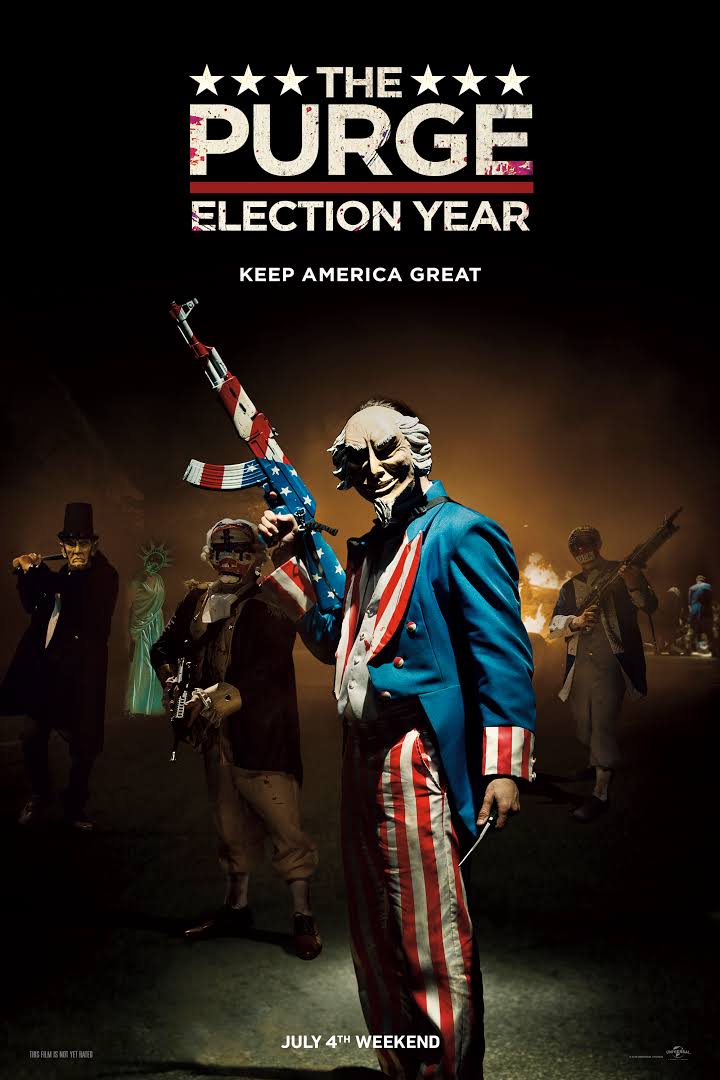
PurgeElectionElection results are in! Get ready once again for this year’s annual purge. From Universal Pictures and Blumhouse, The Purge: Election Year is a cinematic rollercoaster of espionage, action, revenge, campaigns, and of course the trade mark unbridled violence. Horror is one of my favorite genres to discuss because this genre often includes fantastic themes and subtext that act as social commentary on gender, politics, religion, economics, sex, or technology. Going into this movie, I was already prepared for the political themes, but there are many more themes for one to discuss with this film. In many ways, I am not even sure how to proceed with analyzing it. Cinematically, or from a technical perspective, the movie is fantastic. Yeah, a little campy at times but that is par for the course. Contains just the right amount of comedy, albeit dark, to balance out the darker or heavier elements. The fact that this movie is truly prompting me to think about its content is fascinating. Often times, I have a good idea of how I am going review a movie while I am driving home from the theatre; but this one is definitely requiring me to think about it more than I typically need to. I suppose that entire articles could be written on any one theme in the movie, but I only have 1000-1500 words to analyze it. Haha. The biggest question is whether or not this movie is actually counterproductive.

Two ideas of how life should be in the United States are at war, or at least that’s how it plays out on the debate stage. Minister Edwidge Owens (Kyle Secor) and Senator Charlie Roan (Elizabeth Mitchell) are going head to head over the purpose and necessity of the annual purge as started and supported by the reigning New Founding Fathers of America (NFFA) regime. Just two days before the annual event, the NFFA makes the decision not to exempt anyone, not even government officials ranking 10 or higher, from this year’s purging. After an inside job threatens the life of Senator Roan in her own home, she and her trusted chief of security bodyguard Frank Grillo (Leo Barnes) must seek safety. With only Senator Roan standing in the way of the NFFA winning another election, the NFFA and hires assassins will stop at nothing until she is defeated. After a chance meeting with supporters of Roan, Frank and Senator Roan team up with the small band of rebels to survive the night at an attempt to end the chaos and win the election.

Although the first movie did not exactly have much in the way of social commentary themes beyond greed, Purge: Anarchy and this present installment are certainly drenched with rich themes that could fuel discussions for hours. One could surmise that the principle theme of the second installment in this thriller franchise was rich v poor. A very apropos theme considering the US economy was only-then emerging and beginning to grow from the worst financial crisis since the Great Depression. Walking into this movie, I was prepared for political themes; but politics was only a principle element in the plot by extension and used as a highway to get from beginning to end. Not even in subtext, but the predominant theme of Purge: Election Year is clearly white v black. I find this concept and theme is dangerously and carelessly carried out because it really serves to perpetuate the idea that there is a difference between whites and blacks in the Unites States. Instead of the movie showing audiences what could, albeit unlikely, happen in a future America if not challenged or changed, it serves to add fuel to the fire that there is a difference. Furthermore, I find that the movie is unfair to both whites and blacks. It’s unfair to whites because it shows most of them having a hatred from blacks and nearly unanimously in favor of the purge while it depicts the predominant demographic of violent offenders as blacks. Now, I am sure the intention of the movie is not to be counterproductive or perpetuating a negative idea, after all it is produced to be entertaining; however, it’s difficult to watch the movie without wondering if it really is counterproductive in message and theme.

Beyond the social commentary on white v black, the movie also spent a lot of time on the perversion of organized religion. Although the religious aspect to the NFFA was included in the previous installment on a minor level, Purge: Election Year spends a great deal of time connecting a perverted organized version of warped Christianity (very much Catholic or Anglican in structure) to the driving forces behind the NFFA’s passion for and dedication to the annual purge. Just like I feel that the producers and writers of this movie crossed the line with the white v black violence, I feel that this version of organized religion only serves to perpetuate the idea that those in organized relation (mostly Christianity) are hate mongers. Obviously, most people know that this isn’t the case; however, that idea is certainly out there because of differing views on some socio-political areas of community and life in general. Perhaps the movie is commenting on how different groups of people may perceive one another. If that is the case, then the groups of people depicted in the movie can gain a better understanding of how an opposing side views them. Sometimes seeing your actions through another’s eyes helps to ignite positive change. I think that is a beauty in a film like this. It can be read in so many different ways and dissected to support one theme or another.

Quite the antithesis of the U.S. holiday most will be celebrating in one way or another this weekend, The Purge: Election Year paints a picture of a fractured country. In light of the recent massacre at Pulse in Orlando and other massively violent acts around the world, I am not entirely sure how well this movie will do over the weekend. Certainly around here, it may not be well-attended since I live in the Central Florida area and have been there many times myself. Universal Studios Florida is even revisiting the inclusion of The Purge as a house at this year’s Halloween Horror Nights. If for no other reason, this movie stirs may emotions whether they are motivated by race religion, or socio-economics. Like with most horror movies, I suggest watching this one with a friend or two. That way you can have fun discussing it afterwards.
“Rat Race” movie review

RatRaceTalk about a throwback movie this week! Ordinarily, most Mondays each week are reserved for Macabre Movie Monday with some friends of mine. We screen a horror movie and talk about it. It’s a tradition that began with an American Horror Film graduate class I took as part of my M.A. at the University of South Florida. However, my roommate is not terribly fond of horror movies and I know he grows tired of them week after week. Haha. So, we agreed to watch a comedy this past Monday. I cannot remember how, but when we thought of a fun comedy to watch, my friend Dani and I almost in unison shouted Rat Race. Such a star-studded comedy. And other than SmashMouth, it really still holds up today. Well, SmashMouth and the fact that airport security is vastly different than it was when this was shot. Although I watched it when I was a kid, it’s amazing to look at it now and wonder why my parents allowed my sister and I to watch it. Well, I am glad they did because I have always thought of this comedy as one of my favorites. If you have never seen it, and enjoy watching comedies for which you can turn off your brain and laugh until you cry, then definitely watch this one. Let’s go back to 2001 and talk about Paramount Pictures’ Rat Race.

What do you get when you combine greed, money, Las Vegas, manipulation, the ticking time bomb plot, and a star-studded ensemble cast? You get Rat Race! Eccentric casino tycoon Donald Sinclair (John Cleese) selects 6 ordinary people (and by extension, their families) to race against each other for great fortune in Silver City, New Mexico. $2Mil is stashed in a locker in an old train station and there is only one rule for the lucky 6, “no rules.” Unknown to the lucky six, Sinclair is monitoring their every move with some of the biggest high rollers in the world who love to bet on any and everything. From the famous Venetian to Silver City, this group of people will stop at nothing to get their respective hands on the money first. Whether it’s commandeering a rocket car or crashing a WWII memorial service dressed as Hitler, there is little that will come between a contestant and the fortune that awaits!

Ensemble cast films are nothing new. They’ve been around as long as the medium itself. So, the fact that Rat Race is an ensemble movie is nothing unique or special; however, the fact that it is so incredibly successful in combining the subplots and individual adventures of the six racers with the main plot is something to be admired about this film. Each of the six (and their families) have a story within the main story of the film. The writers did an excellent job at spending just the right amount of time with the individual stories without sacrificing time spent with the main plot of the film. As I have mentioned in reviews before, whether film or television, no story exists without conflict; likewise, no comedy exists without “drama.” Many film scholars and writers describe the comedy genre as drama in disguise. Let me clarify a little bit. When the casual movie-goer thinks of drama, they typically think of a film that is rather heavy, primarily dialog driven, and mostly serious. Those same casual movie-goers would likely describe comedy as funny movie with lovable characters, witty dialog, lots of laughable moments, with little degree of seriousness about it. Well-developed and written comedies are those films who integrate humor into the conflict-driven drama between two or more people. In other words, a drama is primarily focussed on the drama of a situation whereas comedy is primarily focussed don the humor of a situation. The best comedies are those that have prolific conflict between characters, but a humorous twist is added to the mix. Why did I say all this? Because in order to understand the brilliance of Rat Race it is important to recognize that it holds up so well because it’s full of drama that has irony, satire, and facetiousness thrown into the mix.

Besides the writing, this film also successfully continues to cause uncontrollable laughter because of the fantastic cast. Just look at this list of leading talent: Rowan Atkinson, John Cleese, John Lovitz, Whoopi Goldberg, Cuba Gooding Jr, Breckin Meyer, Seth Green, and Kathy Najimy. In addition to that amazing list, you also have a great group of chief supporting players and an A-list cameo: Amy Smart, Wayne Knight, Dave Thomas, Dean Cain, Vince Vieluf, Paul Rodriguez, and Lanei Chapman, and special appearance by Kathy Bates as the squirrel lady. There were also many others extras and atmospheric players that helped pull together this brilliant comedy including the performance by 90/2000s hit band SmashMouth. All the elements are here for a successful comedy! Between the writing, directing, and this phenomenal cast list, how could this movie not do well??? On that note, the movie did not fair so well with critics then and even now; scores poorly on MetaCritic, Rotten Tomatoes (no surprise there), and IMDb. However, I argue that any comedy that can still hold up and significantly create a room full of laughter over and over, is a successful comedy. Comedies are seldom going to win awards, significantly contribute to the world of the arts, or serve as inspiration for someone; but Rat Race offers an escape from the doldrums of reality and whisks you away to an over-the-top world of money, hookers, gambling, crazy exes, a buss full of Lucys, and Nazis. It offers an incredibly entertaining journey that still has a heartwarming ending.

I think it’s the utter unashamed ridiculousness of the whole plot that keeps me entertained. Furthermore, it does such a good job of telling a funny story that is both clever and well-paced. One of the best parts of watching this movie is getting to feel like at least one of the leading or supporting characters. Each have a unique set of traits that can identify with someone of a similar personality. You’ll probably also see some of your friends as one or more of the characters. These characters are so much fun to watch and just when you think it can’t get anymore ironic, unfortunate, or satirical, it surprises you. Trying to remember the first time I watched it, and even to some extent this time, I remember thinking that it really isn’t that predictable. Not predictable in that it is so ridiculous! But that’s what I love about this comedy film. It sticks to a tried and true ticking-time-bomb plot with characters that are unconventional and unpredictable in every way. Well, mostly anyway. Haha. I think my favorite part of the movie is the Pear family crashing onto the stage at the WWI Vets convention in Hitler’s car with Randy (Lovitz) trying to speak but the cigarette lighter burnt his tongue and he has a Hitler mustache caused by Eva Braun’s dark lipstick. I know, right?!?

If you are ever looking to just kick back and enjoy a comedy that is guaranteed to make you laugh hysterically, then check out Paramount Pictures’ Rat Race (2001). Whether you just want to see some of your favorite Oscar, Golden Globe, or Emmy winners in an over-the-top comedic race to the finish or just a fun movie that will keep you entertained, this one is a winner!

“On Cinema and Theme Parks” part 4

My Book

Continued from Part 3

One medium being the extension of, or exhibiting a direct connection to, another medium is not a new concept. In fact, this concept of media convergence has been around for as long as multiple mediums have existed. In order to better understand the convergence or synergy that exists between cinema, in particular horror film, and theme parks, it is crucial to understand how we arrived at this point. One thing that film and themed entertainment both have in common is that each tells a story—in a different manner. But, the narrative is often quite similar. Prior to theme parks and cinema (film), there were plays, novels, and oral stories/traditions. The novel is an extension of the oral story, the play is an extension of the novel, cinema is an extension of the play, and the theme park is an extension of cinema. According to Dr. Henry Jenkins, “there has been an alarming concentration of the ownership of mainstream commercial media, with a small handful of multinational media conglomerates dominating all sectors of the entertainment industry” (2004, p1). This is clearly seen in the acquisition, exhibition, and development of theme park attractions based upon movies and, to a lesser extent, television shows.

The first cinemas were setup more like attractions than actual theatres. Perhaps more than coincidentally, theatres began springing up at the same time Coney Island opened its turnstiles around the beginning of the twentieth century; and at this time, cinema itself was still very much viewed as an attraction (Gunning, 1986). According to Tom Gunning (1986), “it was precisely the exhibitionist quality of turn-of-the-century popular art that made it attractive to the avant-garde” (1986, p66). So this concept of the convergence of cinema and theme park (or attraction) is one that dates all the way back to the early 1900s. Since some of the earliest films were of a surreal or horror nature, it is of no surprise that horror played a large role in the development of the cinema attraction. Much in the same way that early cinema was essentially a variety show, in essence, lacked a continuous diegesis, or narrative, the convergence of cinema and theme parks offers a variety of cinema-based attractions that are, indirectly at best, connected to each other. However, instead of the film, itself, being the attraction, cinema-based theme parks and attractions use the narrative provided by a work of cinema and uses elements of that film that can be translated into a real-world experience.

But as with any media convergence, there are also pitfalls to such a synergy between two powerful media. In order to best understand the pitfalls and promises in such a meeting, it is imperative to discuss convergence of two media in and of itself. Understanding the concept of convergence will better prepare filmmakers and themed entertainment designers to select the best elements of films to translate into themed attractions based on movies, in particular horror or action. According to the leader of research into the area of media convergence Henry Jenkins (2004), “media convergence is more than simply a technological shift. Convergence alters the relationship between existing technologies, industries, markets, genres, and audiences. Convergence refers to a process, but not an endpoint” (P1). Over the years, the relationship between cinema and theme parks has shifted. Before, cinema was the attraction; and now, the attraction is infused with cinema. And the handful of multinational media conglomerates own both methods of the exhibition of creativity. With the exception of the Walt Disney Company, many of the other media conglomerates have prominent interests in theme parks and film and television studios; and some also have interests in Broadway productions (i.e. Universal Studios’ Wicked and Sony Pictures’ Spider-Man).

Crossing over into new arenas of revenue requires access to vast media libraries, and that is what many of media conglomerates have at their disposal. This ability to converge areas of media interest in order to generate more revenue is something that contrasts with old Hollywood. Jenkins (2004) remarks that “old Hollywood focused on cinema, [and] the new media conglomerates have controlling interests across the entire entertainment industry” (P34). This convergence greatly influences the way society consumes media and entertainment (everything from movies to theme parks to music to toys and games). More than a cross-promotion of entertainment and media products, the convergence of cinema and theme parks is “a reconfiguration of media power and a reshaping of media aesthetics and economics” (Jenkins, 2004, P35). This reconfiguration comes in many shapes and forms. And, the horror film has found a place within the new configuration of entertainment media synergy. Specifically, the horror film has been used instrumentally in this reconfiguration; evidence of this can be seen in the prolific number of television shows (most popularly zombie shows), movies, and horror/Halloween themed events at theme parks (e.g. Busch Gardens’ Howl-O-Scream and Universal Studios’ Halloween Horror Nights). In these events, horror films provide a vast heritage from which theme parks can draw characters and plots to create temporary attractions to generate more income for the media company. Looking at many of the opening day attractions at movie-based theme parks, horror films were the first films to be translated into themed entertainment.

Part 1

Part 2

Part 3

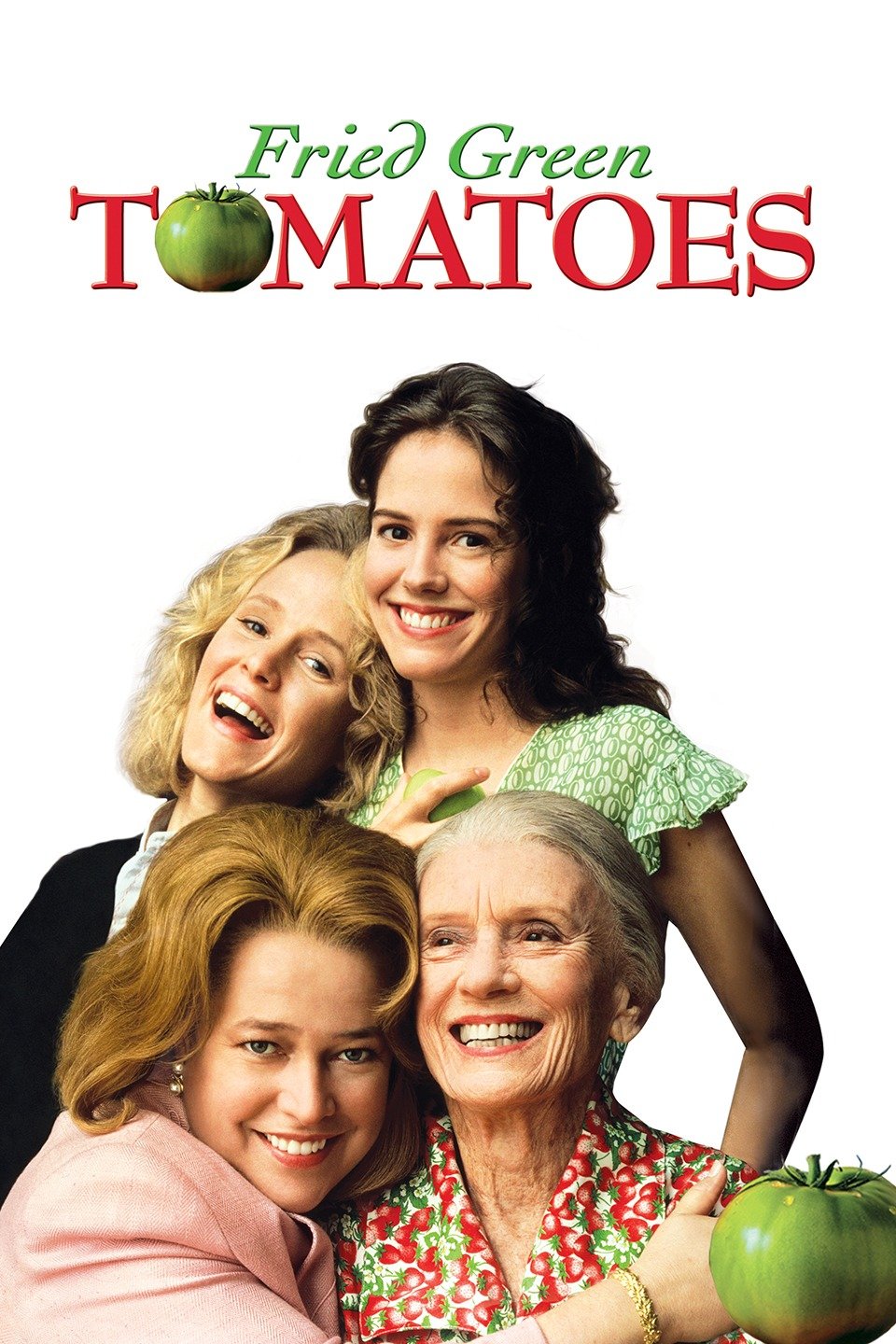
“Fried Green Tomatoes” full movie review

Towanda! Universal Pictures’ quintessential American cinema classic Fried Green Tomatoes based on the bestselling novel by Fannie Flagg (whom also wrote the screenplay) is a heartwarming unapologetically sentimental film that reminds us that the best thing in life is “friends, best friends.” The film is also an early breakthrough for queer cinema because it contains a subtextual world of queer thematic elements and symbolism. In Flagg’s novel, there was an explicit romance between two of our main characters; but the film toned it down in order to attract a wider audience at the time. Moreover, this film also takes on the important task of providing commentary on racism and sexism. A message that was as important then as it is now. Fried Green Tomatoes is the type of drama that will leave you feeling inspired to be the kind of friends that you see in the film. The film contains two important storylines (present and past) that are woven seamlessly into one another by theme and plot derived from character. Each story is captivating! Because of the two stories being told concurrently, it takes a little while for this film to grab hold of you; but when it does, you will be hooked on the homespun humanity, intimacy, romance, and yes even a murder mystery. Of course, it’s a murder that Angela Lansbury could solve in her sleep. Twenty-seven years later, this film is still charming the bees, and continues to be a favorite among those who love a heartwarming story with deep meaning and impact.

A woman learns the value of friendship as she hears the story of two women and how their friendship shaped their lives in this warm comedy-drama. Evelyn Couch (Kathy Bates) is an emotionally repressed housewife with a habit of drowning her sorrows in candy bars. Her husband Ed barely acknowledges her existence. One week, while waiting out Ed’s visit of his aunt at the nursing home, Evelyn meets Ninny Threadgoode (Jessica Tandy), a frail but feisty old woman who lives at the same nursing home and loves to tell stories. Over the span of several months, she spins a whopper about one of her relatives, Idgie (Mary Stuart Masterson) and her friend Ruth (Mary-Louise Parker). Idgie and Ruth are two unlikely friends that form a strong friendship in 1930s Alabama; together they face an abusive marriage, open a business, and find themselves involved in an unsolved murder. Evelyn finds herself looking forward to her weekly visits with Ninny, and is inspired by her story to take a new pride in herself and assert her independence from Ed.

Not sure about you, but I am not entirely a fan of movies that feature a couple of people sitting around in the present and talk about a story from the past. And, all the while, we get flashbacks to that earlier story. What is the point? Why not just tell the story from the past and let that be your movie? I don’t get it. There are some exceptions…take Citizen Kane for instance–it worked! But contrary to my predisposed dislike for movies that principally rely upon flashbacks to tell the story, this movie surpasses all expectations! The story in the present features Mrs. Ninny Threadgoode and Evelyn Couch. Evelyn encounters Ninny by accident while visiting her husband’s mean-tempered aunt. The confident Ninny and the plump, unhappily married Evelyn develop a fast friendship, one that helps Evelyn escape the doldrums of her early 1990s domestic married life by learning to care deeply about a relative stranger. Ninny tells Evelyn a story from her hometown that follows Idgie and Ruth through a wide range of bittersweet events that test their loyalty to each other. In the process, it also offers a portrait of a lulling, rustic, Klan-ridden Alabama in which the characters’ willful innocence often gives way to harsh racial realities. The film tries to develop some suspense around the question of how these two plots are connected, but the answer will strike no one as a surprise. One of the reasons Director Jon Avnet’s Fried Green Tomatoes survives the flashback structure is that it devises an interesting character to be the listener to the long-ago tale. In a manner of speaking, the audience is asked to be a participant in the film.

Although the screenplay is very close to the original novel, there is one element conspicuously missing from the movie–well, directly anyway. It’s presented very clearly in the novel that Idgie is a lesbian and she and Ruth are a couple despite the mores in the South at the time (and still to this day somewhat). The movie brings these elements out indirectly through powerful subtext that is not exactly trying to hide, interestingly enough. Because the movie was released prior to films showing healthy homosexual relationships as just as normal as heterosexual ones, the film got creative in how to acknowledge it while not polarizing audiences at the time. By in large, the small town of Whistle Stop was certainly not small-minded. Showing the progressive nature of this “knock-about place” in how it largely feels about minority communities, the town accepts the two of them and no questions are ever asked about their relationship. Idgie and Ruth in particularly display extremely progressive ideals, for the day, because two of their closest friends are members of the town’s black community. Big George and Sipsy (played by Cicely Tyson) are important to Idgie and Ruth, and both would do anything for them.

The stories from the past and present are both full of social-commentary, containing an  important message for women or anyone who feels that they cannot be progressive, independent, and successful because of the antiquated ways of a relationship or society. With Ninny and her stories as inspiration, Evelyn learns that she can be more than her girdle-wearing, dinner-making, frumpy dress self. Evelyn is so fired up by Ninny’s stories of Idgie’s escapades, that she begins to take control of her life. She gives up her candy bars for aerobics, stops trying to please her misogynistic redneck of a husband and begins a career as a Mary Kay sales professional. Through her many visits to spend time with Ninny, she also becomes as passionately devoted to Ninny as Ruth was to Idgie, with this one being truly platonic friendship.

If you enjoy great dialog and excellent character development, you will fall in love with this movie even if you have yet to do so. Fried Green Tomatoes was based on the novel Fried Green Tomatoes at the Whistle Stop Cafe by actress-turned-author Fannie Flagg. The four leading ladies deliver outstanding performances! It is of no surprise that this movie has stood the test of time. Clearly, this is one of the best movies about strength, character, and friendship ever produced.