“The Secret Life of Pets” movie review

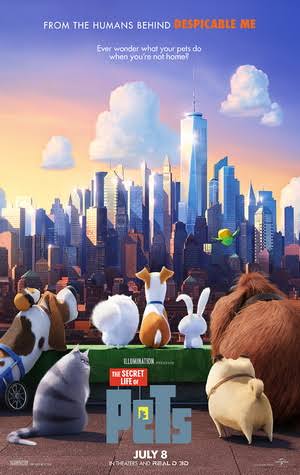
SecretLifePetsWhen well-developed setups lead to brilliantly executed gags, throw in some adorable house pets and endearing street animals and you get Universal Pictures and Illumination Entertainment’s answer to what toys do when the owners aren’t around, The Secret Life of Pets. More precisely, this movie could be described as Toy Story meets Oliver and Company meets Homeward Bound. Backed by an exquisitely talented cast of voice actors and excellent writing, The Secret Life of Pets could be what ushers Illumination Entertainment (an NBCU company) into the ring with Disney-Pixar. Prior to this movie, Illumination/Universal certainly created some fantastic animated films including The LoraxDespicable Me, and others; but this film is the first to really be on par with the Disney-Pixar quality that many of us have come to love and expect. Fast-paced and comedically timed very well, this movie is sure to entertain and warm the hearts of anyone who sits down to watch it. Is it quite as endearing as Toy Story? Not exactly; but it is very close and serves as evidence that we should come to expect this quality and higher of animation from Universal/Illumination. Although the movie is marketed to kids and teenagers, there is certainly enough comedic subtext, easter eggs, and nods to films that adults will greatly appreciate as well. One of my personal favorites is in the Millions short film before the feature. One of the minions is wearing a hat that states “let it grow” while he’s cutting the grass.

When Max (Louis C.K.), a spoiled terrier living in a New York City apartment building with a beautiful view meets his new roommate, his perfect world is rocked. New roommate Duke (Eric Stonestreet), a giant rambunctious dog, mixes as well with Max as oil does with water. They are complete opposites in nearly every way. Max soon gets the idea to set Duke up for failure by sabotaging the house. Unfortunately that idea backfires and just serves to stoke the fire of animosity. After a prank in the park takes a turn for the worst, both Max and Duke are lost in the seedy underbelly of New York City. One step forward and two steps back is exactly the pace of the journey home for both canines. Following a run-in with a street gang led by the ferocious but cute bunny Snowball (Kevin Hart), Max and Duke find themselves in Brooklyn after escaping the hoard of animals bent on their destruction. Along the journey home, Max and Duke are forced to work together and support one another in order to have any hope of returning to their comfy apartment.

The Secret Life of Pets‘ success is in-part due to the successful setup and payoff of gags. This can be a dangerous platform on which to build an animated comedy because there is a high risk of the narrative primarily resting upon the gags instead of the gags enhancing the diegesis. Fortunately for audiences, this film successfully pairs a well-developed and paced narrative that will keep your attention and deliver laughs for the entire runtime. Sometimes comedies, whether animated or live action, can spend too much time in the development of gags rather than on the visual storytelling. For instance, some movies write the gags first and then try to integrate a story that attempts to tie all of them together. What I appreciate about The Secret Life of Pets is the strong story inclusive of sight gags and double entendre humor to satisfy a diverse audience from different backgrounds and ages. In addition to the writing, the vocal talents are also instrumental in the success of this animated feature. Leading the “pack” are of course comedians Louis C.K. and Kevin Hart, but the entire cast is perfectly pairs with his or her animated persona. For the cat lovers out there (and yes, I am one of them), there are deftly come good comedic jabs at dogs. But the dogs also get in some good ones on the cats. Haha.

The setting of the movie is New York City, or an idealistic surreal New York City slightly augmented to fit the pacing, genre, and feeling of the film. I’d like to know what job Katie has to be able to live by herself in an apartment with such a beautiful view. But I suppose it’s just as well that we don’t since the focus is on the dogs. On the view from the apartment, though. Much like the view from Frasier’s upscale urban trend-setting apartment in Seattle faced a view of the Seattle skyline that doesn’t actually exist, unless you are looking at downtown from the surrounding mountains and hills, I am not entirely sure the view from Katie’s Manhattan apartment exists either. The view of the city seen from Frasier’s apartment was selected in order for the Space Needle to have a prominent placement in the skyline. In the same vein, I believe that the unrealistic view from Katie’s apartment was selected in order for the Freedom Tower to have a strong presence. I know, I am analyzing an element that doesn’t really have an affect upon the film; but since the film is actually very well done, I thought it would be fun to look at the setting of the movie.

Although I can almost guarantee you that his film won’t see an Oscar nom in the animated feature category, much less a win, since the Academy believes that only Pixar can create Oscar-worthy animated films, I find The Secret Life of Pets to be a fantastic animated feature filled with action, adventure, comedy, and some touching moments as well. All around, it is enjoyable for the whole family and will cause many owners to wonder what their pet does while he or she is away at work. One of my favorite parts of the movie is the musical sequence at the sausage factory. So much symbolism to discuss. Haha. So, yes. This movie even includes a musical number worthy of–I am sure–many memes to come over the next few months.
“Finding Dory” movie review

Finding_DoryA cute but ultimately emotionally static sequel to a beloved animated film. Disney-Pixar’s highly anticipated sequel Finding Dory makes a splash this week. Following the critically acclaimed success and continued popularity of Finding NemoFinding Dory hopes to find a place in your heart as well. Unfortunately, this film struggles to leave as lasting an impact as the first movie. Many film and Disney enthusiasts, approaching this film, knew that it was most likely going to be either a Cars 2 or a Toy Story 2; it falls somewhere between the two, but closer to the former. Not straying too far from from the plot of its predecessor, Finding Dory‘s message about disabilities turned strengths get a little lost in the emotionally static feel and somewhat forced turning points and dialog. The film certainly has its moments of laughter and surprise, but those are few and far between. Using its predecessor as an example, it is highly unlikely that Ellen DeGeneres could have been replaced by any other voice actor and the character of Dory still remain as endearing; however, honestly in this film, not just Ellen, but any of the other voice actors could have been replaced and the characters and plot play out just the same. A film needs to be a roller coaster of sorts–have its ups and downs–but Finding Dory pretty well stays rather somber the entire time. But yes, it does have some funny and pull-at-your-heart-strings moments. All in all, this movie feels like a forced sequel that wasn’t entirely necessary but produced in response to the high demand for a return to the world of Dory, Marlin, Nemo, and their friends.

Many years before Dory (Ellen DeGeneres) and Marlin (Albert Brooks) bumped into each other, Dory was just a baby fish with two loving parents. Struggling with short-term memory loss from an early age, Dory’s parents worked with her everyday to learn and grow. One day, she found herself all alone and couldn’t find her parents. And over the course of years searching, she found her way to the reef where she encountered a frantic dad searching for his son; and well, the rest is history. Moving up to present day. With an inability to shake the feeling that she keeps forgetting something really important, Dory finally remembers that she lost her parents. Although the memories are vague and spotty, she knows for certain that she needs to find them. After begging Marlin to go on another adventure out past the drop off, Marlin and Nemo agree to partner with Dory in search of her parents. From one side of the ocean to the other, nothing will stop Dory from locating her long lost parents to reunite as a family.

Like with Zootopia as well as other Disney films, there is usually a message in the subtext of its animated features and shorts. Finding Dory clearly has a message about perceived disabilities. Perceived in that, what is otherwise a physical or emotional disability, can be used to develop strengths. Most of the characters that you will encounter in this movie have some kind of disability. Dory and her memory is the main one, but there are definitely others. I don’t want to give much away, so we’ll just leave it at that. Although I feel the approach to writing this message into the diegesis of the film was a bit forced or heavy-handed, it doesn’t take away from the fact that it was handled very well and is mostly seamlessly integrated into the plot and mild character development. The two characters who offer the audience the most, in terms of character arc and development are Dory and her septopus friend Hank (Ed O’Neill). What’s a septopus? Just watch the film and find out. Both characters are mildly entertaining but lack that magical spark that was so much a part of Finding Nemo. One area that sequins sometimes find themselves in, is pulling from the first movie so much that you leave the sequel wondering why it was even necessary. Thankfully, that really isn’t the case with Finding Dory. But you’ll be happy to know that you will see some familiar faces from the first one, including everyone’s favorite sea turtle and stingray. Among the new characters in the movie, my absolute favorite was Becky!! Such a hot mess and quite possibly a little disturbing. Those eyes, though. She was so instrumental in my enjoyment of the movie!

I had the fortune of screening the film with one of the lead vocalists from Disney’s Animal Kingdom’s Finding Nemo the Musical. And I won’t disclose who it was, but he “totally” eats, breaths, and sleeps Nemo and his friends. This was a fantastic opportunity to include an analysis of, not only my point of view on the film, but someone else’s who has a lot of time and energy vested in this property. I half expected him to disagree with me after the movie ended when we began discussing it. But, it turns out that he feels very much the same as I do. He was able to point out some elements that were actually taken from the show at Animal Kingdom, which was really cool! It’s a show that I watch fairly often as well, as I am a former Cast Member myself and current Annual Passholder. Having the ability to discuss Finding Dory in regards to how it fits in with not only its predecessor but the live show was fantastic! He echoes many my same opinions on the movie, but also adds that the kid behind us told their mom that it was amazing. So, in terms of how well this film plays out for children, it does a great job. Many of the young people are about the same age I was when I saw the first one. I think what I missed most in Finding Dory as opposed to Finding Nemo is the lack of comedy. There is definitely some funny moments in the film but the comedic timing and structure simply doesn’t hold a candle to its predecessor. Reminds me of a quality just above a straight to DVD/BluRay or a commercial-free Disney Channel Original Movie. Let’s remember this: Toy Story 2 was also a fairly week sequel–albeit entertaining and heartwarming–and then it came back with the phenomenal tear-jerker Toy Story 3, so it is entirely possible that the Nemo property will go through the same evolution.

Competing against Central Intelligence and a handful of limited releases, Finding Dory is sure to beat out the competition this weekend. And for what it’s worth, it is a fun movie that warms those of us in our 20s and 30s with childlike nostalgia of when we first saw Nemo. Is this destined to be the next great Disney-Pixar film? Probably not. However, that doesn’t mean that you cannot enjoy it with your friends or family. Certainly, it is a wonderful movie to be enjoyed with those who love seeing familiar characters and meeting new ones. I just wouldn’t go into the movie looking for an excellent and dynamic story.

“The Conjuring 2” movie review

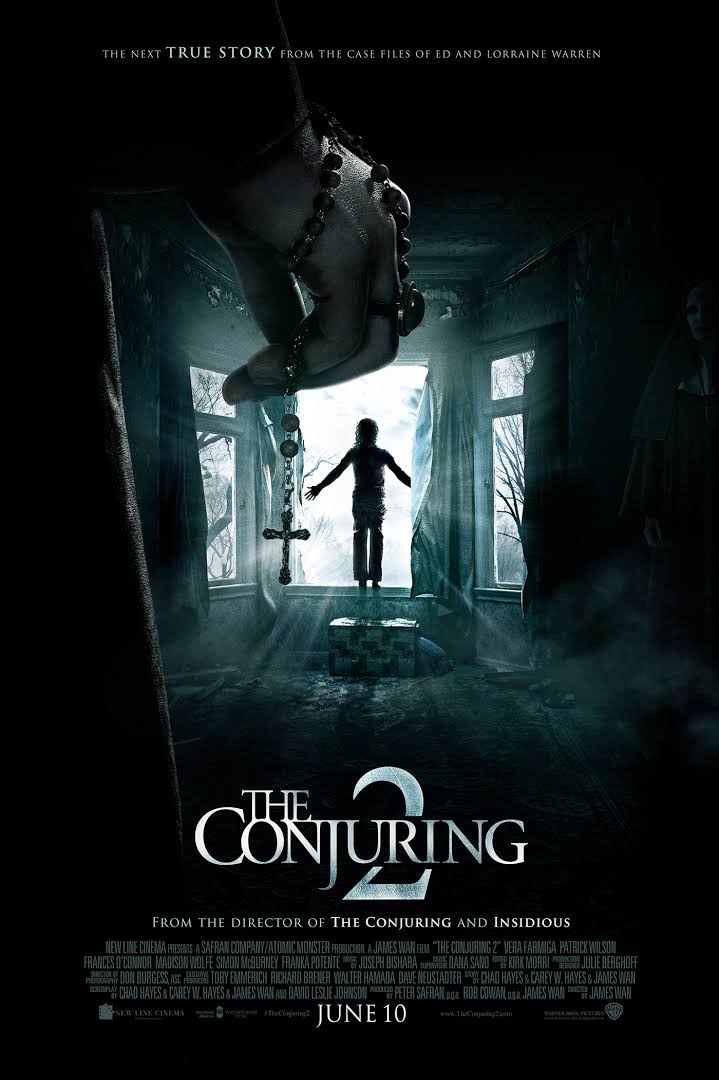
Conjuring2Outstanding horror film! Director James Wan has once again provided audiences with a brilliant work of the macabre and supernatural. From the writing to the directing to the acting and cinematography, Conjuring 2 is on par with, if not better than the first. Sometimes the best stories are true ones. And, although elements of the story have to be fictionalized in order to construct a cinematic narrative, grounding the Conjuring movies in the real work of Ed and Lorraine Warren (Patrick Wilson, Vera Farmiga) infuses a dynamic emotional response that directly impacts the increased frightening nature of these films. One of the observations that I appreciate most about, not only this but the predecessor, is not relying upon the jump-scare to curdle the blood. Are jump scares part of the movie? Well, of course! What fun would a horror film be without the entire theatre gasping for breath, jumping, or screaming together??? But Wan goes beyond the jump scare and channels his inner Hitchcock to build suspense and intrigue. The horror film is best appreciated in a group setting. It is a genre that specifically engages the audience on a visceral level. Wan is truly a master at his craft; and I love witnessing how he continues to prove his ability to develop creative horror films.

Ed and Lorraine Warren are back; and have been called upon, by the Catholic church, to investigate the, what’s been dubbed as the “Amityville” of London. Following a self-imposed sabbatical after the investigation of the infamous Amityville haunting on Long Island, Ed and Lorraine fly to London’s Enfield neighborhood to evaluate a reported haunting and possession. Struggling single mother of four Peggy Hodgson hopes that Ed and Lorraine will be able to drive the evil out of her home, and more specifically her youngest daughter Judy. In an effort to discover the truth behind the well-documented alleged demonic haunting and possession, Ed and Lorraine find that they have also become a target. Facing their most challenging case, Ed and Lorraine are determined to help the Hodgson family and drive the evil from the house.

Following the increasing trend for a film, including but not limited to horror, to begin with an elaborate prologue, Conjuring 2 starts with a fantastic moving shot of the famous eyelet windows of the 112 Ocean Avenue house in Amityville. Often filmed from the outside, this shot sequence takes place inside the attic. A much more intimate feel, this was an excellent choice for establishing the case that launched Ed and Lorraine Warren into the public eye. There have been numerous movies and documentaries based on the arguably most infamous haunting in the United States, so it was not necessary for Wan to spend too much time on it. It is, however, a very important scene because the plot/case of Conjuring 2 is directly related to the experience that the Warrens went through during the Lutz investigation. Beyond the establishing a connection between the Amityville and Enfield cases, beginning with the Warrens in the middle of the 112 Ocean Avenue investigation allows for Wan to visually show how and why the Warrens would seek a self-imposed sabbatical from supernatural and demonic investigations. Moreover, this sequence of events that provides copious amounts of plot development material are also instrumental in significant contributions to character development. Although this prologue lasts less than ten minutes, it contains prolific information vital to the plot of Conjuring 2.

It should not be of surprise that Wan uses the camera very strategically to tell this visually driven story. From the rule of thirds to lighting to creative use of angles and movement, the camera is instrumental in setting the macabre mood of the film. One of the visual storytelling elements that Hitchcock was most known for, especially in Psycho, is using the camera’s placement and angle to foreshadow something or someone. Wan takes a page from the Hitchcock handbook and utilizes the camera movement in such a way that you are predisposed to feeling certain that something or someone is about to appear or emerge from the shadows but your game is thrown off when that doesn’t happen–but then totally happens when you least expect it! Throughout the diegesis, you will encounter moment when the characters are faced with inner demons that parallel or symbolize the actual evil entities in the film. Having this subplot concurrent to the foreground aids in creating and maintaining an emotional connection to the characters. Shocking the audience both emotionally and physically. By eliciting dynamic and comprehensive responses to the horror on screen, the film becomes an immersive experience–that is the brilliance behind this dark and sinister tale.

Beyond the exceptional direction by Wan, part of what makes the Conjuring franchise so successful is the exquisite casting. Patrick Wilson (Insidious) and Vera Farmiga (Bates Motel) are perfectly cast in these films. From what I have read about the real Ed and Lorraine Warren, Wilson and Farmiga respectively stay true to the real-life people they are portraying while adding in the necessary acting skills necessary to increase the impact and believability of the film. The quality of the acting that Wilson and Farmiga bring to the film is outstanding. Sometimes, a horror film can have an compelling plot but the actors are so uninteresting that it prohibits the story from making the impression that it should. Wilson and Farming make the characters of Ed and Lorraine Warren interesting to watch and add a performance quality to the film that keeps your attention the whole time. The degree to which they add a sincere care for the victims of hauntings to their respective characters is refreshing and will stay with yowling after the movie closes. As the Warrens are reoccurring characters in the Conjuring franchise, it is vitally important that they are as interesting to watch as the plot itself since their cases are the inspiration for the whole franchise, at least put to this point.

If there is one negative element in the film, it is the weak showdown. Not weak in that it was anticlimactic or uninteresting, but that it felt a little rushed. At 2hrs and 15mins, the film is longer than the average horror film, so it was not necessary to rush the climax of the film. It certainly does not mitigate the experience of the movie, but I feel that it could have been a little more intense. That being said, if you are looking for an excellent movie to kickoff your weekend, then this one is it! At last check, it out-performed both Now You See Me 2 (which should’ve been entitled Now You Don’t) and Warcraft. Even if you have not seen the first Conjuring, you will still enjoy this installment. However, seeing the first one will help you to better understand the Warrens and their unconventional line of work. Can’t wait to see where James Wan and the Warrens take us next!

“Pawn Sacrifice” movie review

Pawn_SacrificeOf chess and men. Pawn Sacrifice is based on the true story of chess prodigy Robert “Bobby” Fischer and his quest to become the world’s greatest chess player. The game at the center of the movie takes place during the height of the cold war against the USSR. Director Edward Zwick crafts a gripping story complete with beautiful cinematography and a brilliant cast. Toby Maguire brings a neurotic charisma and acute anger to the infamous chess player that few could have done so successfully while staying true to the real life Bobby Fischer. Although watching a chess game sounds like it would make for a dreadfully boring and static story, screenwriter Steven Knight (et al) provides a screenplay reeling with intense psychological “chess” moves while remaining focussed on the game that “captured” the eyes of the world. Not surprisingly, the pretentious and unrevealing title kept general audiences from watching it, even though it was initially released during the autumn movie graveyard of September. If there was ever a mystery as to why Fischer’s mental stability greatly suffered as a result of the tournament, this movie sheds light on the obsessive compulsive struggles of a man who was focussed on beating the Soviets at their own game.

American and world-renown chess legend Bobby Fischer faces his greatest challenge yet: the world’s best chess grandmaster Soviet Boris Spassky. From the time he was 12 years old, Fischer began to capture the attention of the chess community of New York and soon the whole country. It was clear that Fischer was truly a prodigy who was destined for greatness in the strategic calculating game. In addition to having a brilliant mind for planning, predicting, and observation, he equally suffered because of his strength. Finding it nearly unbearable to tolerate anything that even slightly aggravated him, Fischer became as notorious as he was talented. Representing the United States, Fischer sees this as a strategic opportunity to outsmart and beat the Soviets, as the game is symbolic of the actual cold war that both countries were involved in. Follow his personal journey of triumph and defeat as he must play the most important game of his life with millions of people watching–some wanting him to succeed while others want him to fail.

The greatest strength in this bio pic is that it takes an otherwise boring game to watch; and creates an atmosphere of intrigue and suspense that parallels both the Cold War itself and the personal/interpersonal relationships between Fischer and his staff, family, and the public. What’s even more astonishing is that this somewhat fictional counterpart to the documentary on Bobby Fischer was able to be sourced for a feature-length narrative film. Unlike the documentary, Pawn Sacrifice goes back to the childhood and adolescent years of the prodigy in order for the audience to make a better connection with his character than can typically be done in a documentary. While the famous 21-match game takes up nearly half the screen time, there is still sufficient material, focussing on the development of Fischer, that it creates an atmosphere that draws you into the game in the latter half of the movie. Although the movie is about Fischer and chess, the degree to which Fischer shows dedication, immense passion, and uncompromising intellect can serve to make a connection with anyone who is passionate about a lifelong dream or aspiration.

One of the elements of Fisher’s upbringing that played a huge role in his anti-communistic paranoia is his mother’s communist activism. Sadly, that part of his life is merely touched upon and not explored very much. Spending more time on his mother’s activism and his hatred of anything remotely communistic could have provided more support for his bizarre behaviors during the tournament against the Soviets. While Fischer is at the center of the movie, he has two excellently written side kicks: (1) a patriotic attorney who attempts to keep Fischer on the right track as an American symbol and (2) a chess grandmaster priest who coached Fischer when he was younger and one of the only players to ever beat him. The character dynamics make the group intriguing to watch. Each so very different, but require the other in order to journey towards the chess world championship. It took amazing determination and long-suffering resilience to attempt to contain the unpredictable and extremely temperamental Bobby Fischer.

If you are looking for a movie to inspire you to be a better chess player, then you may be a little disappointed because you will see much more slapping of the time clocks than the movement of the pieces on the board; however, Zwick does cinematically work in some movements and strategy into the diegesis of the film. Thankfully the movie is shot beautifully and possesses an excellent pacing with strong diegetic structure. There is also some wonderful production and set design that will likely get overlooked since the game is really the focus and mostly occurs in very nondescript rooms. Pawn Sacrifice highlights one of the most famous chess games in all of modern history while getting a glimpse into the mind of a genius turned expat in the end.

“Captain America: Civil War” movie review

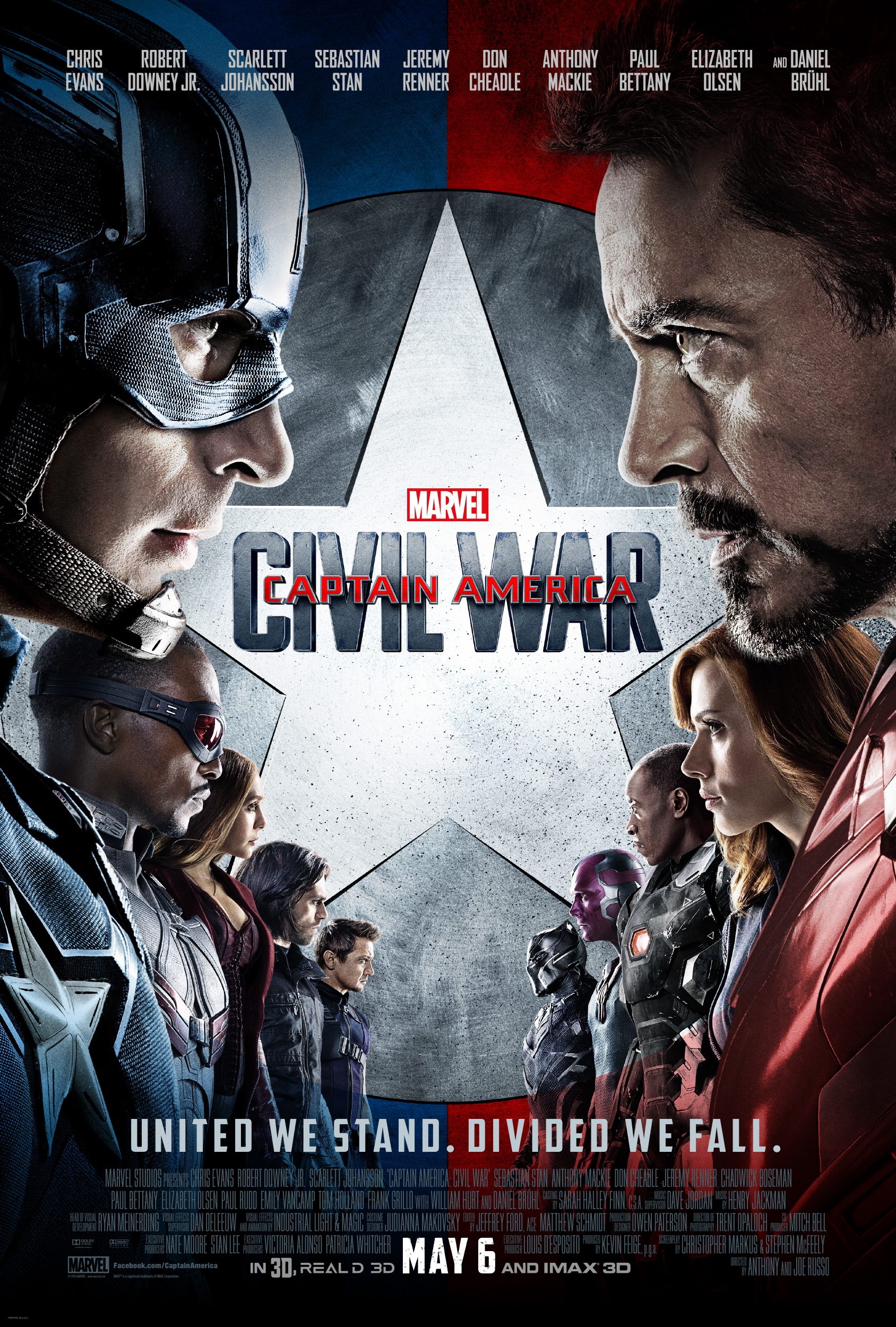
Civil_War_Final_Poster‘Marvel’ous! Nearly a complete departure from the conventional comic book superhero movie genre. Avengers 2.5 is a politically-charged superhero movie that will catch you off guard and provide you with a mostly non-cartoonish plot filled with well-developed conflict and character development. Witness some of your favorite Marvel superheroes secede from the Avengers and oppose those who they once fought side-by-side. Along the way, you also get to meet some new additions to the team that will provide some awkward comedic sequences in this otherwise serious movie. Deep dark secrets come to the surface that threaten the very possibility of the team ever having any hope of reunification. Captain America: Civil War is a brilliantly produced film that will have even those who typically do not care for most superhero films leaving the theatre satisfied and anticipating the next installment in the series. Although it is really an Avengers movie, there is still enough focus on the title character to support the choice of titles for this action-packed epic adventure.

Captain America: Civil War takes place not long after the catastrophic events at Sokovia and following another destructive battle, the United Nations and U.S. Government decide to intervene and put The Avengers in check. Opposing the team signing onto an international agreement defining how this group of “vigilantes,” Captain America (Chris Evans) falls away from the group and seeks his own destiny frocked with vengeance and misplaced allegiances. With the once unified team fracturing, a covert former Soviet operative is plotting the destruction of The Avengers from the inside out. Much in the vein of the American Civil War, The Avengers are split and Captain America forms his team while Iron Man (Robert Downey Jr) attempts to hold the team together and honor the agreement with the United Nations. The once inseparable Black Widow (Scarlett Johansson) and Hawkeye (Jeremy Renner) must choose sides and decide where allegiances truly lie.

It isn’t often that a genre typically filled with high concept, shallow plots can surprise you with a narrative radiating with anthropological and political themes and subtext. The brilliance of Captain America: Civil War is that it provides the audience with equal parts action-packed fight choreography and well-developed dramatic plot with prolific amounts of character conflict. Furthermore, the story will exceed your expectations of the ability to tap into one’s superficial response to action-packed stimuli and activate the deeper emotions of allegiance, betrayal, and self-preservation. For those who have not seen the previous movies in the Captain America series–another admirable element of this installment, is not causing those who have yet to watch the previous CA movies to feel left out of the excitement. Provided you have seen the preceding Avengers movies, this one will keep you trekking along with your favorite Avengers universe characters. There are certainly minor elements or past relationships that are introduced in the previous CA movies, but most likely you will be able to pick up on the aforementioned as you watch Civil War.

Another observation of this installment in the Captain America/Avengers franchises respectfully, is the movie’s success in both including current characters and introducing new ones without the film ever feeling too crowded, as it was with Batman v Superman. In addition to the Avengers minus Hulk and Thor, the audience is introduced to an adolescent Spider-Man (Tom Holland) and are re-acquainted with Ant Man (Paul Rudd). As I am not familiar with the comics, I cannot comment on this Spider-Man in respect to staying true to the comic, but I found this incarnation of Spider-Man to be on the verge of annoying. Perhaps that is how he is suppose to be, but it did not fit in with how he has been historically portrayed in cartoons and movies. However, the inclusion of both the respective characters did not feel forced as it so easily could have. Since the film primarily focussed on Captain America and secondly Iron Man, the large cast of characters was handled efficiently. The writers could include all these characters in one narrative, but shift the focus from character or character thus never overstimulating or overwhelming the audience with the development of such a dynamic ensemble cast.

Ordinarily, I do not speak so highly of superhero movies; but this film left me feeling quite satisfied and pleased with how well the film played off as a serious movie complete with plenty of opportunity for emotional connections. That being said, the one sequence of the movie that I did not find as entertaining or fitting is the elaborate “civil war” battle on the tarmac. Was it choreographed well? Yes. Was it instrumental in moving the plot forward? Yes. Did it effectively fit in with the rest of the mood and pacing of the film? No. Moreover, that entire sequence of scenes just felt awkward. And, that is mostly due to the inclusion of the naivety and immaturity of Spider-Man and witty/sarcastic/near-juvenile antics of Ant Man. Perhaps if only one adolescent-like character had been added, that part of the film would not have felt so awkward. As to not give away the reasons for the solemn mood of the film, I cannot go into much detail; but, the manner which this scene was written and directed just felt out of place and interrupted the otherwise excellent pacing and mood of the story. I agree that most serious movies need comedic relief in order to generate an emotional rollercoaster, but this was just a little too funny with respect to the rest of the film.

The summer blockbuster season is officially underway with the undoubtedly successful opening weekend of Captain America: Civil War aka Avengers 2.5. Unlike last year’s Avengers: Age of Ultron, this installment will take you on fantastic journey of emotional mountains and valleys of character and plot development. This film proves that a superhero movie can be both fantastically action-packed and dramatic. The political subtext will also provide friends and family countless hours of discussion and analysis. Although this is not an adult superhero movie in the way Deadpool was, there is still language and violence that may not be appropriate for young kids. Still, one of the earmarks of a summer blockbuster is a movie that can attract and please both teens and adults, and this is definitely a great example. Hopefully, this movie is an indicator of an exhilarating summer season at the cinema.

PS. Notice the nod to Disney’s D23 Club? I did!