AMERICAN PSYCHO: a retrospective analysis

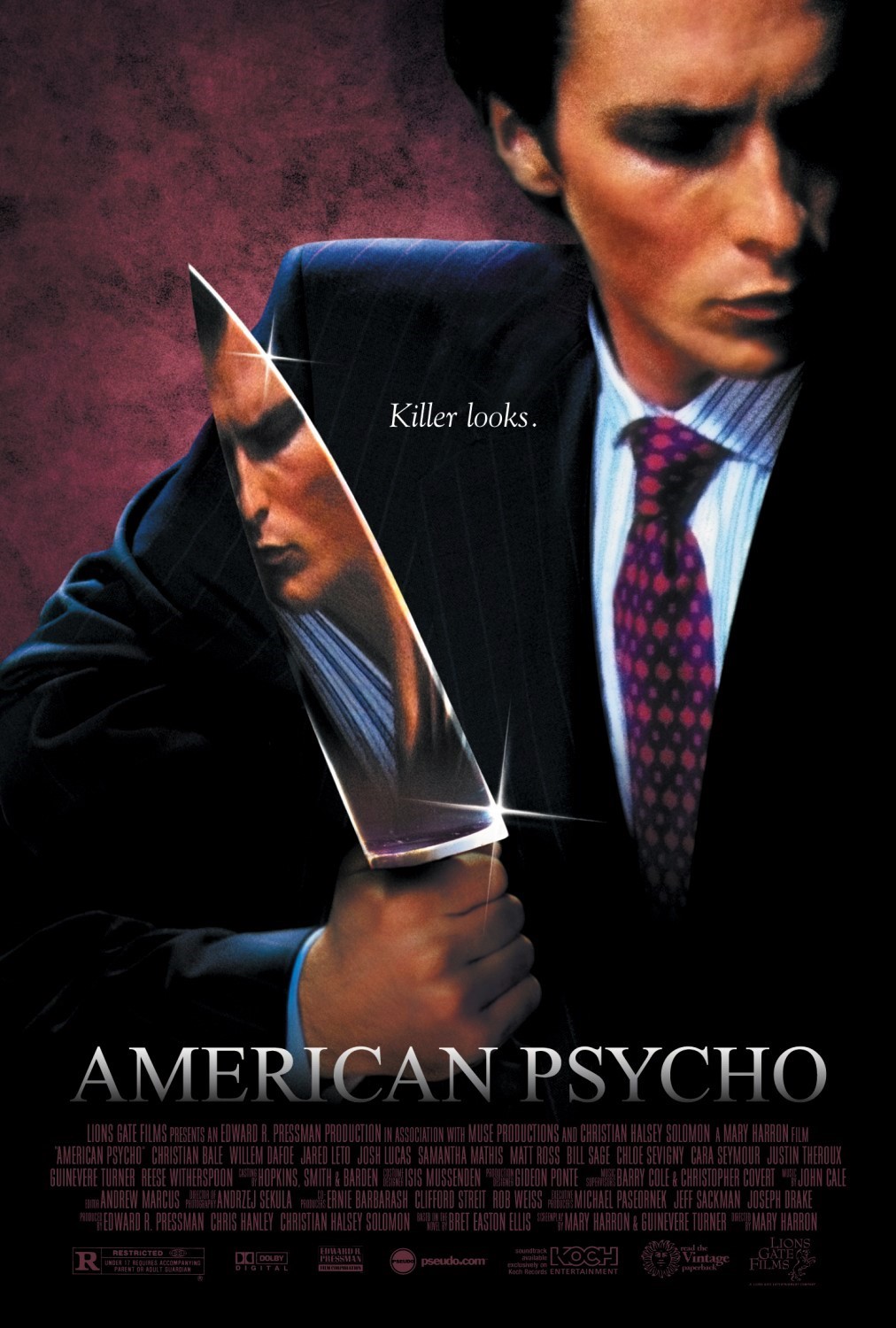
We all go a little mad sometimes. Once nearly banned on bookshelves, American Psycho (2000) is the film adaptation of a book about materialism, narcissism, yuppie culture, and the inter-personal empty feeling that comes along with it. Interestingly, despite this film commenting on and taking place in the 1980s, it also holds strong relevance for the 2020s. Except, if this movie were made in the 2020s, its social commentary would be on toxic consumerism, social media influencer culture, and political polarization.

Even though the central character of Patrick Bateman (Christian Bale) reeks of snobbery and pretension, Mary Herron’s brilliant horror-meets-dark comedy motion picture is raw, gritty, and unapologetic. The movie that was once protested by women was, in fact, directed by a woman. It’s a candid, fantastical exploration of the state of humanity when it loses its identity in exchange for the facades of prestige, money, and power. Herron externalizes all the emotions and thought processes she is exploring through the actions of Bateman. It’s a visual representation of what happens when we become so consumed with the image we project to others that we lose ourselves and are left feeling empty.

Not only is this a great horror film, but a great film period. Equal parts horror and comedy, this film can be characterized as a motion picture that forces us to reconcile our aspirations for wealth, power, and what happens when we fail to make genuine emotional connections with other individuals because we are completely consumed by image and status. Furthermore, there is a fascinating character study here on trying to fit into a society that you really don’t want to fit into, but don’t know what the other options are. Therefore you act on impulses instead of recognizing them in order to critically analyze if they indeed are the right things to do.

One of the qualities of the experience of watching a horror film compared to other genres is the power it has to force us to face our fears, look in the mirror (pun intended), and question the world around us. Moreover, it allows us to explore hard-to-talk-about subjects because it approaches them in creative, visual ways. that force us to think about some societal observation or construct in new and different ways.

In many ways, Patrick Bateman is us; the us we are when no one is looking. Perhaps most of us are not serial killers, but we certainly have a running commentary on the world around us. Also like Bateman, if we are not careful, we can fall prey to our own animalistic, self-centered instincts. I also love how this movie parallels the vicious nature of Wall Street with the murder sprees of Bateman. In this movie, it’s Wall Street, but it could very well be any number of work places. Perhaps there is little relatability to the characters on the surface, but dig a little deeper and this film is quite the microcosm of the world we live in.

American Psycho provides audiences a complex central character whose existence is more indebted to the dire strife of his reality than to the antagonism or conflicts posed by others. It’s an internal conflict that manifests itself in the elaborate, personal murders as well as the masturbatory discussions of dinner reservations and business cards. Through all of this, Bateman tries to feel something because society’s expectations have made him numb to humanity.

Although the topics of materialism, narcissism, and yuppie culture are explored in the film, the core of the film is actually about one’s self-identity. And much like Bateman’s iconic character, society in the 2000s (and by extension, the 2020s), was and is also concerned with issues of identity and where to find it after the transitional 1990s. The world of Bateman is hermetically sealed, yet there is a yearning to be set apart as an individual within this otherwise homogenous world of high rises, offices, business cards, and physical fitness. Efforts to be recognized as an individual are not limited to Bateman, but can be found in his colleagues. Moreover, any effort made by our officious, pretentious characters to be individuals within the confines of the depicted toxic culture, are shunned, ridiculed, and even ostracized.

These trivial assets are used as a means to form something resembling a personality, but so benign and meaningless that they can’t be anything other than a shallow, soulless facade, lacking any substance. There is an arbitrary box that everyone must fit into, but it’s merely a device to validate one’s existence. Validation through some arbitrary societal contract that somehow defines what one is supposed to be and how one is suppose to act WHEN people are looking. Sounds a lot like social media in the 2010s and 20s.

Many horror films began to incorporate more overt socio-political arguments and conflicts that paralleled during and emerged after the terrorism events of 9/11. The source of the terror in the real world was transported into the fictional diegesis of the horror film. This era of horror was much darker and more disturbing than its 80s and 90s counterparts. More than merely an increase in the viciousness on screen, additionally, this era of horror was socially aware of the cultural context that gave birth to it. By 2004, the news was filled with stories of enhanced-interrogation techniques that came under scrutiny from some anti-war and human rights groups. And this idea found its way from the news media into horror media.

One of the great mysteries of American Psycho is whether or not Bateman has actually committed any of the murders and violent acts in the movie. There are hypotheses that suggest that it’s all in his head, that we as the audience have witnessed the imagery of his mind and not his actions in real life. While the book American Psycho doesn’t leave anything to the imagination, Harron chose to withhold dramatic information from the audience in order to afford the audience the opportunity to form images in the mind, which can sometimes (and often are) more potent and powerful.
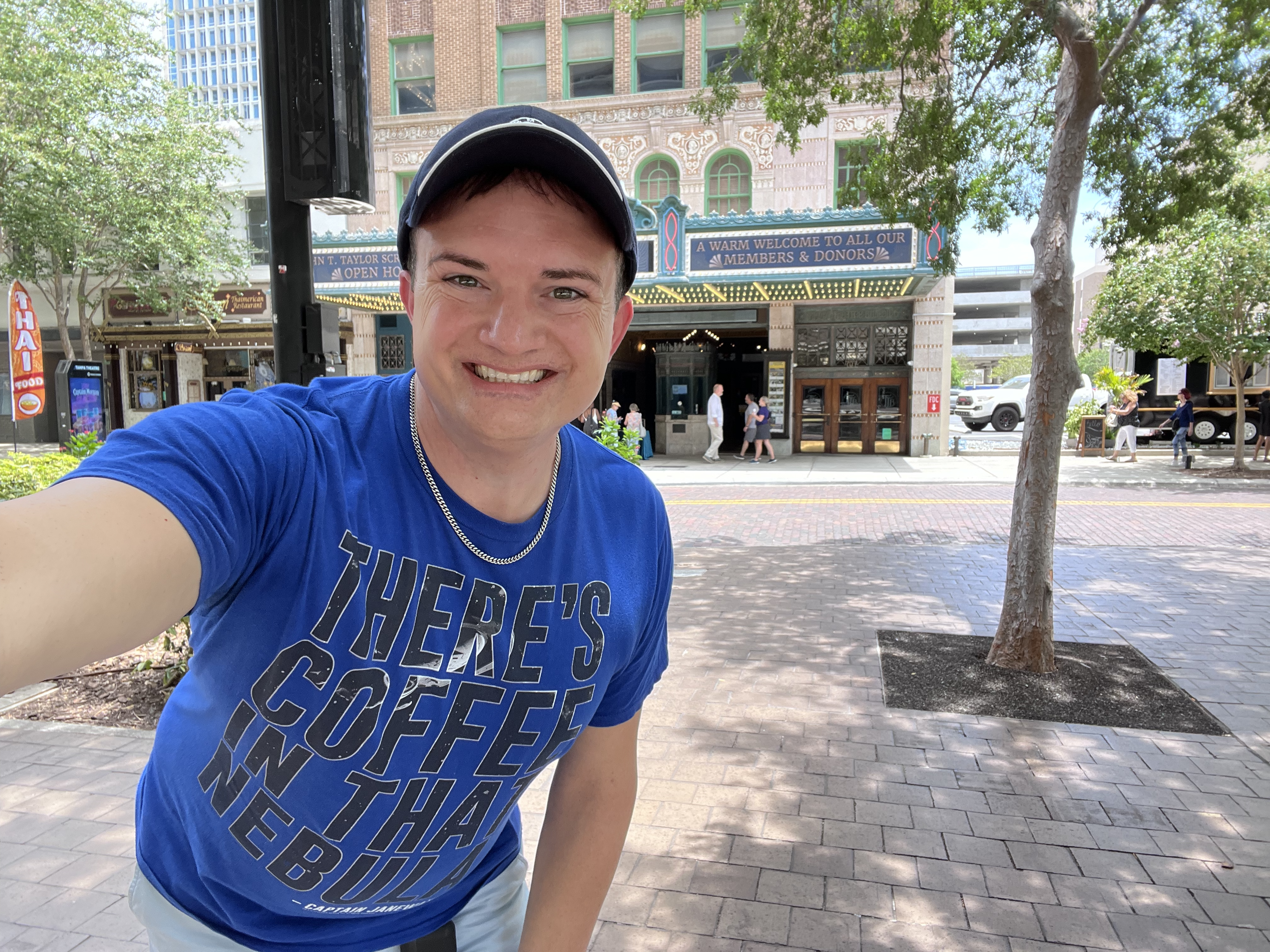
Ryan teaches Film Studies and Screenwriting at the University of Tampa and is a member of the Critics Association of Central Florida and Indie Film Critics of America. If you like this article, check out the others and FOLLOW this blog! Interested in Ryan making a guest appearance on your podcast or contributing to your website? Send him a DM on Twitter. If you’re ever in Tampa or Orlando, feel free to catch a movie with him.

Follow him on Twitter: RLTerry1 and LetterBoxd: RLTerry

INSIDE OUT 2 movie review

An entertaining and thoughtful exploration of the complexities of the human condition. And one of the best hockey movies ever! Disney-Pixar’s Inside Out 2, the highly anticipated followup to 2015’s Inside Out, builds upon the original to deliver a far better movie! At best, I find the original mediocre, so I was not anticipating to like the sequel. I was wrong. I had such a great time with this movie because it’s full of many laugh out loud moments. And not just that. But this movie delivers much stronger plotting and character development compared to the first movie and that which has been released by Disney/Pixar in the last several years. I find myself sending most of what Disney releases to the penalty box anymore these days, but not so with Inside Out 2. Perhaps this movie demonstrates a return to simple plots with complex characters that strike the right balance between humor and insight. Much better than its predecessor, this movie truly personifies the emotional complexities we develop as we get older. While our central character of Riley may be a 13 year-old girl, the lessons we learn from the movie are relevant for teens and adults alike. Between the thoughtfulness of storytelling the moments of hilarity, and the commentary on human emotion, this is a fantastic movie.

Joy, Sadness, Anger, Fear and Disgust have been running a successful operation by all accounts. However, when Anxiety shows up, they aren’t sure how to feel. Meanwhile, Riley is faed with the challenges of transitioning to high school and the desire to secure a place on the hockey team.

Inside Out 2 excels where Inside Out failed to deliver. Everything that transpires in this movie feels authentic, feels like an organic cause and effect sequence of events. Whereas in the first movie, clearly there was an overt attempt to elicit emotionally manipulative responses from the audience. The challenges Riles faces when learning her closest friends are going to a different high school and the desire to (1) land a spot on the high school hockey team and (2) build relationships that she can lean on when entering the world of high school, all feel close enough to reality to be believable yet there is still a whimsy about them. Where many movies fail these days is in proper plotting and pacing. Inside Out 2 satisfies both, and does so very well. We have a clearly defined central character with a clearly defined external goal motived by a clearly defined internal need, both of which are met with a character(s) of opposition. Yes, there is an emotional journey, which we have in the first one, but this one defines a measurable, external goal that Riley will either achieve or fail to achieve, thus raising the stakes.

One of the biggest changes between the first movie and this one is the degree to which humor is integrated into the story to balance out the more emotionally challenging moments. In fact, there are truly some laugh out loud comedic bits that I think adults will find even funnier than kids and teens. I won’t reveal any of those to you because I want you to experience them for yourselves, but there is a recurring gag that delivers every time. And the honesty about the emotions we all have and when they develop is also responsible for some of the humor. There is a refreshing candor about the expression and personification of emotions in the movie that makes the movie accessible for anyone, no matter where they are on their emotional journey.

This film also reminds us of the complexities of the human condition. There are so many areas of life that are not clear cut, black and white, right and wrong, and as such, these grey areas make life challenging. While the movie may not formalize this concept, as it is designed to be most accessible by kids and teens, one of the theses in the film posits that as we grow up, our ability to discern and reason are increasingly important as there are times we are faced with decisions that demonstrate no clear right or wrong direction, but both will have their own respective sets of consequences, both good and bad. The journey on which Riley and her emotions find themselves teaches them that both positive and negative experiences, successes and failures, and that which we regret are all needed to form our personality and value system.

Inside Out 2 is entertaining and thoughtful! Should you choose to watch it, I’m confident that you will find it as enjoyable as did I.

Ryan teaches Film Studies and Screenwriting at the University of Tampa and is a member of the Critics Association of Central Florida and Indie Film Critics of America. If you like this article, check out the others and FOLLOW this blog! Interested in Ryan making a guest appearance on your podcast or contributing to your website? Send him a DM on Twitter. If you’re ever in Tampa or Orlando, feel free to catch a movie with him.

Follow him on Twitter: RLTerry1 and LetterBoxd: RLTerry

FURIOSA: A MAD MAX SAGA

A meandering cinematic spectacle. FURIOSA: A MAD MAX SAGA delivers on immersive scale and scope, but fails to deliver on a compelling narrative. It’s an exhausting, endless chase through a desert wasteland that’s as devoid of life as the plotless story itself. Clearly writer-director George Miller demonstrates a love for the dystopic universe of Mad Max, but the narrative lacks focus and direction. However, he makes excellent use of world-building and drawing the audience into the high octane action. The problem is, that perpetual high octane action results in a disconnect between the audience and the characters and plot because interest in action alone isn’t sustainable. Ultimately, the spectacular visuals do not compensate for strength of story.

Snatched from the Green Place, young Furiosa falls into the hands of a great biker horde led by the warlord Dementus. Sweeping through the Wasteland, they come across the Citadel, presided over by the Immortan Joe. As the two tyrants fight for dominance, Furiosa soon finds herself in a nonstop battle to make her way home.

The setup of this saga in the Mad Max universe works quite well. In fact, I was pleasantly surprised during the first few minutes of the film because it begins as a character-driven narrative. Unfortunately, that feeling wouldn’t last long. After a fantastic start, the first act slows to a crawl, with only the chase across the desert to provide any kinetic energy. It would’ve worked quite well had there been a balance between the action and character moments, or the inclusion of emotional resets. But once that chase begins, it pretty much does so without ceasing for the remainder of the 2.5-hour movie.

At is most basic elements, well-written story features a well-defined central character with an external goal, and opposition to that goal. In Furiosa, the external goal is setup to be Furiosa returning home (to the Green Place), but then it changes direction to become something else. The something else to which it changes is no longer substantively supported by the setup of the movie and character of Furiosa. Related? Yes. But I do not feel that the movie that began, is the movie that finished. The something else to which it changes could have very well been incidental to achieving the goal of returning home, but instead the movie goes in a different direction in order to match up to Fury Road.

The scale and scope of the film, and immersive atmosphere is truly commendable. The lengths that Miller and his cast and crew had to go in order to film in such a desolate environment was not easy. And the hard work of crafting a world out of a wasteland is exceptional. It is entirely possible that the weakness of story is a result of Miller being director, producer, and writer. Often times, when there lack sufficient checks and balances between writer and director, the story suffers. Simply stated, sometimes a story makes sense in the mind of the director, but they aren’t as gifted at capturing and supporting that story on paper as a writer. And the same can be said for writers whom try their hand at directing. Just because it works on the page, doesn’t mean it works on the screen.

Ryan teaches Film Studies and Screenwriting at the University of Tampa and is a member of the Critics Association of Central Florida and Indie Film Critics of America. If you like this article, check out the others and FOLLOW this blog! Interested in Ryan making a guest appearance on your podcast or contributing to your website? Send him a DM on Twitter. If you’re ever in Tampa or Orlando, feel free to catch a movie with him.

Follow him on Twitter: RLTerry1 and LetterBoxd: RLTerry

THE FALL GUY action movie review

Explosive fun! Universal Pictures The Fall Guy is one wild ride that connects with audiences! The thoughtful blend of self-referential humor and over-the-top, if not cheesy, action sequences work in tandem to entertain and thrill audiences. At the heart of this movie is a throwback-style romcom that is destined to warm even the most cynical of hearts. Moreover, this action-picked motion picture serves to spotlight the unsung heroes of many movies, the stunt performers, without whom we would not have the high stakes, death defying action sequences that we have today. And not just today, stunt performers have played a significant role in filmmaking since the beginning. The Fall Guy is a lively movie that whisks you off for the ride of your life that stumbles a little along the way, but sticks the landing.

After leaving the business one year earlier, battle-scarred stuntman Colt Seavers springs back into action when the star of a big studio movie suddenly disappears. As the mystery surrounding the missing actor deepens, Colt soon finds himself ensnared in a sinister plot that pushes him to the edge of a fall more dangerous than any stunt.

Such a crowd-pleasing cinematic spectacle! The summer blockbuster season is off to a strong start with this bombastic movie. Since I rarely watch trailers, I was unsure of what to expect, but I had a delightful time with this movie. The humor is mostly character-driven, but there are slapstick moments and almost camp-levels of action sequences that also serve as fuel for laughter. It’s a fun, popcorn flick that makes you laugh and smile all while being enthralled by the high-octane action. Some action movies that are devoid of humor or a romantic subplot can feel exhausting or shallow. Not the case with this one! This is both due to the strong writing and performative dimension.

More than an action/romcom, it also serves as a backstage movie, because of being set on a film set. And even more specifically, the technical achievement by camera operators, special effects technicians, and stunt performers. The movie spotlights the real danger that stunt performers face on set and the innate risks that come with this under-appreciated line of work. There is a human dimension to stunt work that so often goes overlooked, and The Fall Guy demonstrates the intrinsic value of stunt work and the real people that push their bodies to the limit to achieve action with dimension instead of simulated action in a computer.

The characters and the performances thereof elevate the entertainment value of the movie. Which is an important element because the screenplay does falter here and there from poor pacing. Some scenes are a little longer than they need to be while others are perhaps a little shorter than what they ought to be, which impacts the effectiveness of the exposition. But where the screenplay struggled, the cast makes up for the shortcomings! That’s not to say it’s a poorly written movie; quite the contrary, it’s mostly solidly written, just stumbles here and there. Emily Blunt and Ryan Gosling demonstrate excellent chemistry, and their relationship mountains and valleys feel genuine. They both share fantastic comedic and dramatic timing that crafts characters with dimension.

There is one particular line, that many may interpret as a throwaway or lacking in significant value, that I feel compelled to highlight. A character at a club states something to the effect of “movies try to be real, whilst cartoons know they aren’t real.” And the character prefers cartoons for that reason. This line was smartly written and delivers a important if not self-referential (or meta) message. Very little about The Fall Guy is supposed to feel real; it’s supposed to look like a fantasy set in the real world. What the movie is, is naturalistic. Everything happening in this film feels at home within the world of the movie. And yes, many, if not most, contemporary movies try so hard to not look fake or unbelievable. When movies should feel comfortable to take us to unbelievable heights to thrill us with entertaining, heart-warming, or scary stories. Being realistic is vastly overrated. There is a time and a place for it, but movies like The Fall Guy remind us of the value of a good story, regardless if it feels realistic in the real world.

Ryan teaches Film Studies and Screenwriting at the University of Tampa and is a member of the Critics Association of Central Florida and Indie Film Critics of America. If you like this article, check out the others and FOLLOW this blog! Interested in Ryan making a guest appearance on your podcast or contributing to your website? Send him a DM on Twitter. If you’re ever in Tampa or Orlando, feel free to catch a movie with him.
Follow him on Twitter: RLTerry1 and LetterBoxd: RLTerry

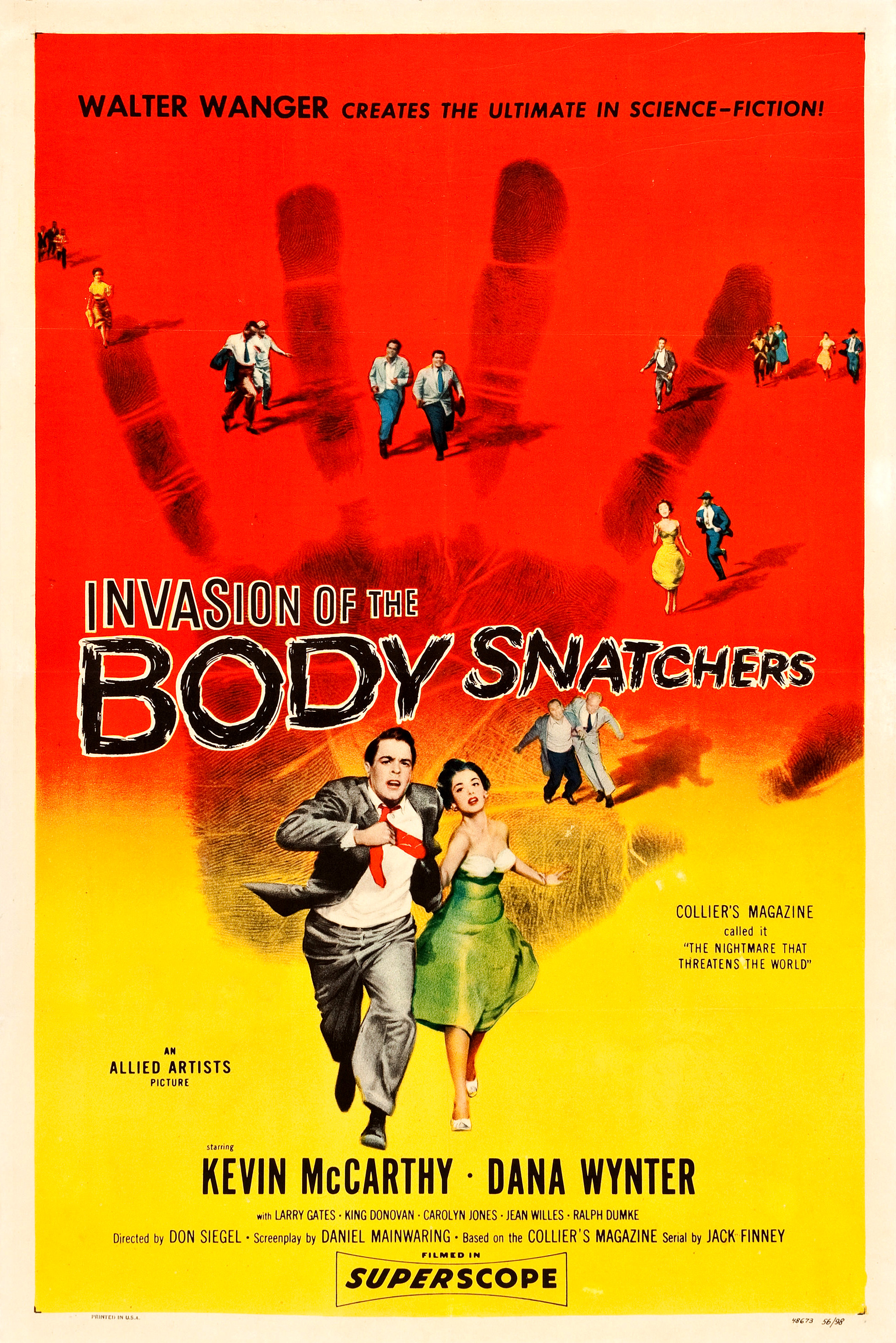
INVASION OF THE BODY SNATCHERS (1956) Throwback Thursday Review

A timeless, terrifying motion picture! Based on the Collier’s magazine serial turned book The Body Snatchers by Jack Finney, directed by Don Siegel, and produced by Walter Wanger (of Cleopatra infamy), this Allied Artists’ motion picture is the single best representation of the fears and anxieties of the 1950s. But the beauty of this particular picture is that its themes including the fear of conformity, loss of identity, dehumanization, loss of individuality, and even vulnerability are still relevant today, perhaps even more so than they were at the time this seminal horror film was released. 

In Santa Mira, California, Dr. Miles Bennell (Kevin McCarthy) is baffled when all his patients come to him with the same complaint: their loved ones seem to have been replaced by emotionless impostors. Despite others’ dismissive denials, Dr. Bennell, his former girlfriend Becky (Dana Wynter) and his friend Jack (King Donovan) soon discover that the patients’ suspicions are true: an alien species of human duplicates, grown from plant-like pods, is taking over the small town.

While this film sits comfortably in the horror/sci-fi subgenre, it shares a lot of characteristics in common with film noir. Between the recurring narration, a central character in over his head, and the fact events do not turn out favorably for the central character, it pulls on the best of the film noir apparatus to craft a highly unnerving cinematic story that prompts one to think about the state of the world around him or her. 

Perhaps in its day, Invasion of the Body Snatchers was a commentary on the threat of communism/socialism on the American republic, but that is not the only subject to which this film can speak to us decades later. Could it still be read as a warning against the threat of communism today? Sure. But, communism doesn’t look or act like it did back in the 1950s. That’s the danger inherent with famous allegorical films such as this one; the well-known danger is pigeonholing it into only ever meaning what it meant back during the days of the Cold War. When in fact, this film can be read as a commentary on a variety of topics, depending on the worldview of the audience member. 

Whatever the form the existential enemy takes, whether you choose to read it as a commentary on communism, socialism, nationalism, or woke-ism (more accurately defined as applied/reified postmodernism), this film speaks to that which is defined as a threat to one’s present existence. When we label what this film is about, we limit its potential to speak to us. So, it’s better to read the film through its various themes versus defining what the enemy is. From beginning to end, the film depicts events and behaviors that rob individuals of expression, identity, competition, entrepreneurship, and choice in exchange for homogeneity, group think, forced societal roles, and emotion. Ostensibly, this film is about an enemy that seeks to dehumanize and force conformity upon everyone—a world in which everyone is equal and exactly the same versus a world in which we are all equal but definitely not the same. The film demonstrates what happens when we are asleep to the threat of the enemy, and it comes in like a thief in the night. And when we finally recognize the threat, it’s all but too late for us, for humanity, for freedom.

The film begins laying the pipe for the second act reveal of the pod people all the way at the beginning. It’s a scene to which many may not pay particular attention; it’s the scene wherein Miles notices that the Grimaldi vegetable stand is no longer open. One of the characteristics of a society that demonstrates a lack of support or simply opposes free enterprise (or by extension the marketplace of ideas), is manifested in this imagery. Farmer Grimaldi abandoned his private farming business in exchange for supporting the planting and harvesting of the alien pods. Other disturbing imagery is the crisis between the second and third acts wherein Miles and Becky are told that the pod people (replicants of their human counterparts) mean them no harm and want to provide a peaceful existence. The real horror here is that the peaceful existence comes at the cost of freedom and one’s unique identity (all the traits that make one a unique man or woman). These pod people are devoid of any genuine emotion, only exhibit the pretense of it, and see individualism as a threat to their existence.

Invasion of the Body Snatchers is a call to action; it’s a wakeup call to all those that watch it to stand vigilant against tyranny, to stand guard against threats both seen and unseen that seek to undermine what it means to be human. Furthermore, the film posits the idea that the deadliest enemy may not be the one that can be viewed with the naked eye; rather, the deadliest enemy is the one that sneaks in unbeknownst to most individuals. Or maybe it comes disguised as something that sounds great on the surface, but only seeks the destruction of uniqueness, freedom of expression, the marketplace of ideas, and the human dimension of existence. 

Due to the timelessness of the message of this terrifying film, we are drawn back to it time and time again. We are reminded to stand guard against an enemy that seeks to destroy our very way of life. It’s a story of survival and the great cost of freedom. A recurring theme throughout the horror genre is the theme of survival, and Invasion of the Body Snatchers is a brilliant exploration of how to survive against mounting odds that appear unstoppable. Horror films have a way of causing us to rally, causing us to come together in support of our right to survive. There is no other genre that inspires us to fight the enemy like a horror film.

Ryan teaches Film Studies and Screenwriting at the University of Tampa and is a member of the Critics Association of Central Florida and Indie Film Critics of America. If you like this article, check out the others and FOLLOW this blog! Interested in Ryan making a guest appearance on your podcast or contributing to your website? Send him a DM on Twitter. If you’re ever in Tampa or Orlando, feel free to catch a movie with him.

Follow him on Twitter: RLTerry1 and LetterBoxd: RLTerry