
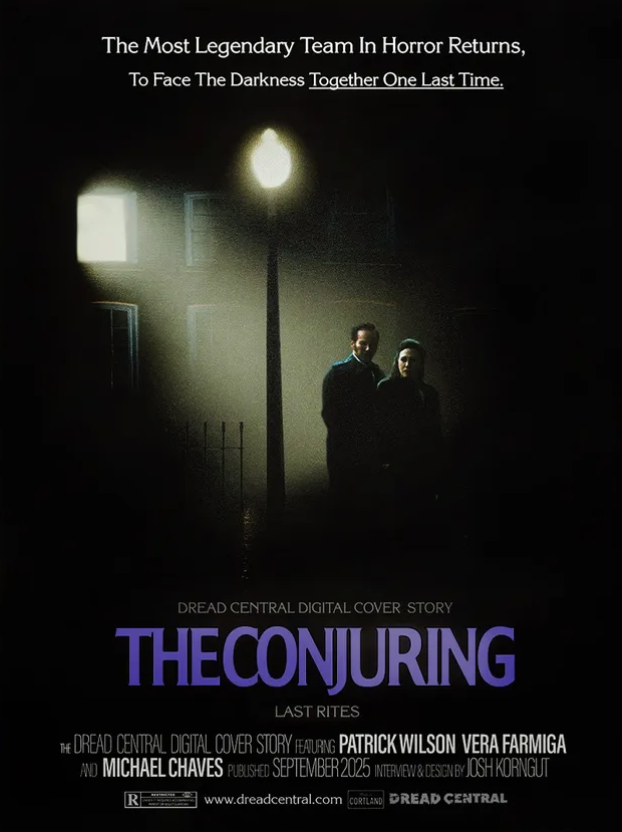
THE CONJURING: LAST RITES horror film review

The screenplay should be exercised of the demons plaguing the narrative. While The Conjuring: Last Rites offers initial intrigue and a moderately compelling performative dimension, what substance the story had was undercut by a proliferation of monstrous encounters.

In 1986, paranormal investigators Ed and Lorraine Warren travel to Pennsylvania to vanquish a demon from a family’s home. This case would prove to be their last.

At its outset, the film suggests a promising return to the roots of this dozen-year-old horror franchise that began in 2013, hinting at a chilling and intimate confrontation with the supernatural. The mood is suitably dark, and the premise—while familiar—has just enough mystery to draw the viewer in for what would appear to be tapping into its desire to be in the same vein as The Exorcist. For a time, it even teases the prospect of a measured, atmospheric entry into the Warrens’ saga. Unfortunately, the promise of the first act quickly gives way to a chaotic barrage of hollow frights and set-piece monsters that smother any narrative tension the film might have cultivated.

The greatest asset in the film is, without question, the lead casting of (returning) Patrick Wilson and Vera Farmiga and the addition of Mia Tomlinson as daughter Judy Warren and Ben Hardy as her fiancé Tony. Farmiga and Wilson remain the heart of the franchise–they are the soul reason this franchise continued for as long as it did. Their impeccable chemistry continues to play a vital role in lending credibility and weight to this story and the others in the franchise that would otherwise struggles to stay grounded. Combining Farmiga and Wilson with Tomlinson and Hardy, their collective performances carry an emotional authenticity that suggests a deeper, more resonant film lurking beneath the surface–too bad it was largely kept beneath the surface of the picture. Additionally, the supporting players, too, offer moderately compelling turns, doing what they can with material that rarely allows for nuance.

Where Last Rites falters most egregiously is in its writing—particularly in the second and third acts. What begins with threads of intrigue quickly unravels into a tangle of formulaic plot beats, ill-defined stakes, and a near-total abandonment of narrative discipline. The dialogue oscillates between expositional over-explaining and perfunctory banter, never achieving the kind of earnestness that made earlier entries memorable. By the climax, the story feels more like a theme park attraction than a descent into the occult. (Speaking of which, The Conjuring-verse would make for a fantastic Halloween Horror Nights House if an agreement between New Line Cinema and Universal Parks and Resorts could ever be reached).

Equally troubling is the film’s shallow and often misguided treatment of spiritual warfare. While The Conjuring-verse has historically dabbled in theological and metaphysical ideas, this installment offers only a cursory exploration—at times bordering on ignorance. Themes of faith, redemption, and evil are reduced to ornamental set dressing rather than being woven meaningfully into the narrative. Fundamental tenets of spiritual warfare are neglected: Scripture teaches that “demons tremble at His name” and that they cannot force a person, calling on the Lord, to take their own life or that of another—tempt, yes; coerce, no. This misunderstanding undercuts the stakes, turning spiritual conflict into spectacle rather than a profound struggle. Even William Friedkin’s The Exorcist handled these dimensions with reverence and gravity, whereas here they are clumsily exploited for empty shocks.

From a film craft perspective, the overreliance on CGI monsters is perhaps the final nail in the coffin for this horror franchise and universe. Where practical effects could have imbued the film with texture, tangibility, and dread, we are instead subjected to a parade of vapid, weightless apparitions. Without giving way to spoilers too much, there is a scene in which Lorraine is staring in to a sink that overflows with blood–CGI blood. If Kubrick could pull off the bloody elevator scene in The Shining then this movie could have used practical effects for this scene. I am not suggesting that practical effects alone would have “saved” the soul of this movies, but an increase in the degree to which practical and mechanical effects were integrated into the narrative certainly would’ve helped the movie feel more tangible. The jump scares—frequent and rarely earned—feel like mechanical interruptions rather than organic outgrowths of fear. It is horror by checklist, and it shows. By the time we arrive at the third act, nearly every scene or sequence has a series of jump scares that are predictable at best and lazy at worst. More character-driven moments and dramatic conflict would’ve been a great tool for emotional resets and plot/character development.

In the end, The Conjuring: Last Rites is neither the triumphant sendoff nor the atmospheric chiller it aspires to be. It is a film at war with its own instincts: part haunted house, part monster mash, and ultimately, part missed opportunity. All that said, it’s not a bad movie–it’s better than many of the other installments. But a franchise that needed to end with an Annabelle: Creation would up ending with an Annabelle.
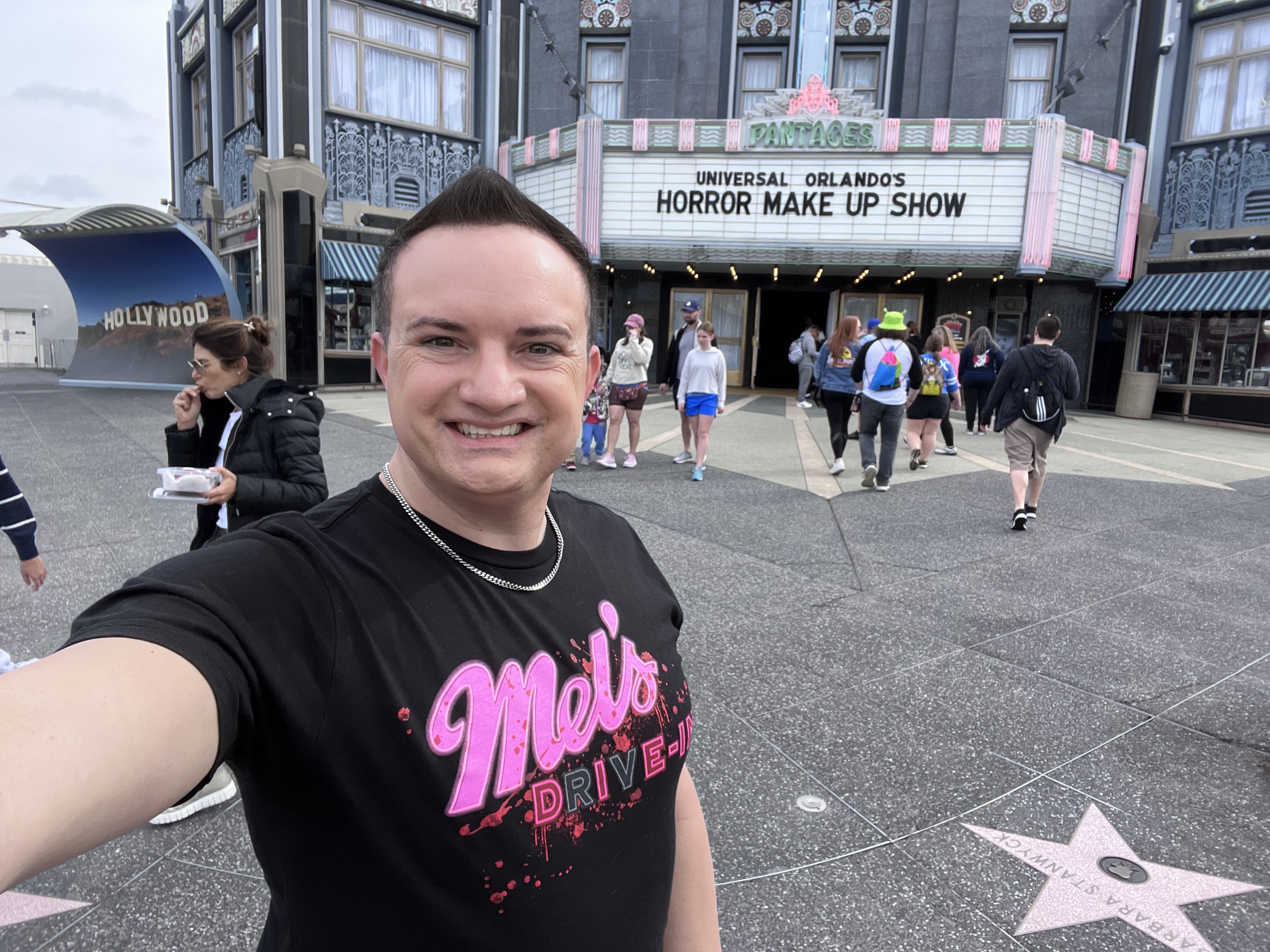
Ryan is the general manager for 90.7 WKGC Public Media in Panama City and host of the public radio show ReelTalk “where you can join the cinematic conversations frame by frame each week.” Additionally, he is the author of the upcoming film studies book titled Monsters, Madness, and Mayhem: Why People Love Horror. After teaching film studies for over eight years at the University of Tampa, he transitioned from the classroom to public media. He is a member of the Critics Association of Central Florida and Indie Film Critics of America. If you like this article, check out the others and FOLLOW this blog! Follow him on Twitter: RLTerry1 and LetterBoxd: RLTerry

“The Nun” Horror Movie Review

Well, it’s not the worst horror movie ever. Universes are popping up everywhere, and why should The Conjuring not follow in suit? Based on the real-life paranormal work of Ed and Lorraine Warren, there is certainly enough material from which to build a universe; but if this is a universe and the movies are planets, then perhaps The Nun will go by way of Pluto. Sometimes it’s included, sometimes it’s not. One may even go so far as to say that The Nun is truly unholy–an unholy hot mess of a movie. That’s not to say that it isn’t fun to watch. Like with horror movies, in general, it is a fun watch with a large group of people all reacting at the same time. While recent horror films focus on creating an atmosphere of dread and developing characters that the audience cares about, and then crafting twisted moments of terror such as A Quiet Place or Hereditary, this movie follows bad horror movie tropes that may aid in getting you to jump here and there, but ultimately fail at delivering anything truly scary or horrific. With German expressionism being at the very roots of the American horror film, as seen in NosferatuPhantom of the Opera, and DraculaThe Nun seems like such a missed opportunity to produce a terrifying gothic horror movie.

When a nun at a cloistered abby in the hills of Romania is discovered as having committed suicide by hanging, the Vatican calls upon the service of Father Burke (Birchir) to investigate the occurrence to determine if there is any unholy work at play. Under the advisement of the Vatican, Father Burke is asked to work with Irene, a young nun from a Catholic school because she has the gift of visions that may aid in their mission. Although Irene has yet to take her final vows, she agrees to accompany Father Burke to Romania to uncover why one of her sisters would commit suicide. Father Burke and Sister Irene soon discover that a most unholy spirit lives within the castle, and that the abby’s convent of nuns were protecting the world against a malevolent demon who must be sent back to the depths of hell.

Like many of you, I too was initially optimistic for this origin story as the glimpses of The Nun in the Conjuring movies are terrifying. Partly, these glimpses are creepy because we see very little of the nun. The demon nun suffers from some of the same problems that are witnessed in the Insidious movies. When the demon was shadowed, barely visible–but just enough to frighten you–he was scary; but then he turns into Darth Maul and loses that level of fright he had through most of the first movie. Simply stated, we saw too much of him. To the point that he almost became a parody of his former self. Likewise, the nun’s exaggerated features, yellow eyes, and jagged teeth quickly transition from scary to almost funny. Funny in that it felt campy or over the top. Director Corin Hardy obviously does not know the power of subtlety. Diegetically, the plot of The Nun plays out as incredibly predictable. The nun or another ghoulish apparition appears right when and where you expect it to happen. No surprises here. In an era that arthouse horror is attracting mainstream audiences–and making bank at the box office–it’s quite upsetting that a movie that had the setting and characters for arthouse horror decided to go the “paint by the numbers” route instead of joining other trailblazers.

A grossly underused setting. The movie begins in candle-lit hallways in a medieval castle in the foggy hills of Romania. Visually, the movie appeared to be setting up a story and setting that would have that beautifully dark gothic feel and look; however, it quickly turns into another generic haunted house movie. We begin with an incredibly effective foreboding atmosphere complete with everything you want to see in a gothic horror film, then scrap it for unimaginative rooms and cheap exploitation. Gothic horror films possessed an ability to depict terrifying stories with minimal dialogue. Dialogue was an extension of the plot; it did not force the plot. The Nun had all the right elements for a frightening horror film but failed to deliver the Conjuring universe movie we wanted or expected. It’s like, you can buy all the ingredients to make an exquisitely delicious dish you had at a French restaurant; but if you do not know or choose to ignore the proper amounts and order of the ingredients, then your dish will most likely fail to meet your expectations. Moreover, there were many moments that felt gimmicky, felt forced.

With such an amazing setting, the german expressionistic and gothic roots should have ben channeled more effectively. Whether you are familiar with the term or not, you are likely familiar with what it looks like–especially if you are a horror junkie like myself. The antithesis of French impressionism (art displaying authentic life), German expressionism sought to reflect real life but through metaphor, allegory, and symbolism. An indirect representation of observations of real-life. Expressionism allows the filmmaker to visually explore themes such as death, life, sex, institutions, religion, and more. The beauty is its ability to provide social commentary without being overt. Examples of German expressionism can be found in older films such as Nosferatu and The Cabinet, Dr. Caligari, mid-century films like Psycho and The Exorcist, but also found in newer films such as Batman Returns and Crimson Peak. Mostly associated with film noir, german expressionism is foundational to the looks and feel of horror films as well. Visually, German expressionism is characterized by exaggerated architecture, shadows, twisted landscapes, and sharp edges. The very look of it is creepy. German expressionism takes many visual queues from gothic architecture. It’s that gothic looks and feel that was mostly ignored in the setting and actions of The Nun even though it was a perfect candidate for it.

This movie will undoubtedly do well at the box office over the next couple of weekends as even “ehh” horror is bankable. Before I allow myself to get too discouraged, I look to how the sequel to Annabelle was fantastic after the first installment was a let down. If Annabelle Creation can improve upon its predecessor, then the forthcoming Nun sequel can do the same thing under the right direction with the right screenplay.