“The Girl on the Train” movie review

girlonthetrainA tastes great, less filling, David Fincher-esque flick. DreamWorks Pictures and Reliance Entertainment’s The Girl on the Train directed by Tate Taylor and starring Emily Blunt is the much anticipated film adaptation of the best-selling novel of the same name written by Paula Hawkins. With a slow windup and quick delivery, the suspense thriller plays off as a knockoff combination of Alfred Hitchcock’s Rear Window, Fincher’s Gone Girl, and George Cukor’s Gaslight. Despite the wild success of the novel, this film adaptation appears to have jumped the tracks. In fact, fans of the novel may find that this translation from page to screen is a bumpy ride. The film is not without its high points; the plot is certainly intriguing and Blunt’s portrayal of the protagonist is excellent; however, her outstanding performance is simply not enough to carry the weight of an otherwise flawed film. The film fails to truly create that sense of dread and heighten the anxiety levels of the audience. There were many missed opportunities to tighten up the writing during the windup and spend more time on a successful nail-biting punch during the third act. It’s one of those films that feels like Act I is 2/3 of the movie with Acts II/III being 1/6 each. Lots of verbal exposition when exposition through showing would have been more effective. Don’t get me wrong; it was a fun suspense thriller and the plot twist and turning point from Act II to III was quite the shocker; but, the film just never seemed to move beyond the surface level.

Rachel Watson (Emily Blunt) is not adapting to life as a divorcee very well. She has a pronounced drinking problem and cannot seem to hold a job. Rides the train into New York City from the countryside everyday, passing her old neighborhood. Starring into not only her old house but the house of a couple she feels are the embodiment of love, Rachel develops an unhealthy obsession with the characters that appear outside of the window as sh narrates their lives. When she learns that the young woman who lives in the house two doors up from where she used to live, has gone missing, she place herself in the midst of the investigation. Not having dealt with her own sordid past, Rachel begins to obsess over the mystery because of the empathy she feels for the missing girl. Once the authorities feel that Rachel has crossed the line too many times, they begin to look her direction. Determined to solve the case of the missing girl, Rachel must put together puzzle pieces that she never thought she would have to face again.

If I had to sum up the film adaption of The Girl on the Train, I would concisely put it this way: under-developed. From the locations themselves to the writing (screenplay) to the plot and characters, this mystery-thriller-suspense movie fails to impact the audience and truly elicit a strong emotional response. Tapping into emotions and affecting anxiety levels is paramount for suspense-thrillers. After such a long, drawn-out wind up and the rushed showdown, this film does not live up to the hype that the novel generated. Having not read the novel, I cannot comment on differences or even how the movie could have been done better; but screenwriter Erin Cressida Wilson could have done a better of job of creative a cinematic story fit for the silver screen. The flaws of the film so not stop with the writing, but director Tate Taylor’s vision, for the best-seller, should be checked because it appears as though he may need glasses. If it was not for Blunt’s commitment to the character of Rachel, the film would have had very little entertainment value. This is one of those films that was saved by attaching excellent talent.

This film falls into the same sub-genre as Gone Girl. But, what made Gone Girl so successful was the exceptional direction from David Fincher and simply the fact that author Gillian Flynn also wrote the screenplay. If an author can be trained to write the screenplay of the film adaption of their literary work, then that is always the best approach because they know the characters and plot better than anyone. Fincher also includes many WTF moments and treats the camera more than lens through which to witness a visual story but creates magic that takes the audience out of the threats and transports them into the movie. The Girl on the Train has a great premise and intriguing plot. The foundation IS there for a great movie adaptation. The writing not only doesn’t do the book justice, from what I have read, but fails to create a cinematic experience as well.

Other than Rachel, the rest of the cheaters are two-dimensional. We are given just enough information to make them mildly interesting, but the character development just isn’t there. Much like the detective in Gone Girl was as interesting to follow as the main cast, Detective Riley should have been just as well developed for this film. Rachel’s ex-husband, his wife, their nanny, and the nanny’s husband have the makings of a cast of characters filled with lies, deceit, betrayal, dark secrets, and intrigue (and to some extent, that comes across in the movie); however, all those elements are touched on but never truly fleshed out. Do those elements have a place in the plot of the film? Yes. But, do they play a dynamic a role as they could have? Not particularly. Most everything in the film is very surface level. All the makings are there for a film that could be nearly as thrilling as Gone Girl, but it’s all superficial. When location scouting for a film that relies upon houses, transportation, and proximity that are intricate to the plot, it is important to treat them AS cast. The two main houses and the train in this movie almost feel like they were selected out of convenience. Nothing about the locations or train grabbed me or generated a significant emotional response. However, I liked the proximity of the train to the houses and how the lake is on one side and the neighborhood on the other.

If you’re looking for a fun suspense-thriller to watch this weekend, then this one may fit the bill. But, you won’t get nearly the ‘train’ ride that you experienced in Gone Girl. Emily Bunt demonstrates a dynamic acting prowess compared to other characters that she has brought to life. Whether you choose to watch this film in a local cinema near you or wait for it to be on iTunes, Google Play, Amazon Prime, or HBO, the experience will be the same. At the end of the day, it’s a good movie but a poor film.


Lights, Camera, MotionGate! A Look into Dubai’s Newest Theme Park

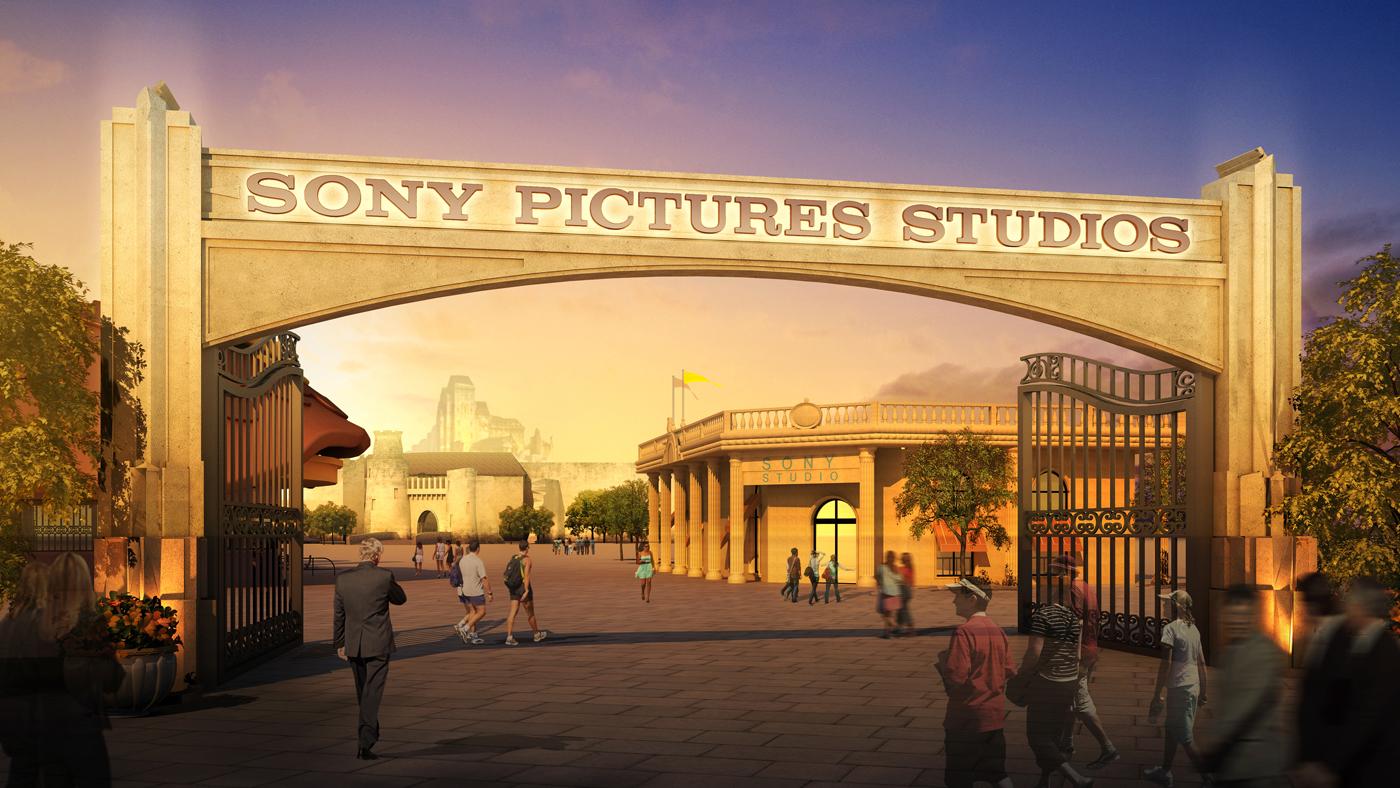
Dubai_Parks_mapWhile the themed entertainment industry continues to explode with new lands and attractions at the US’ biggest players, the luxury destination Dubai, UAE is throwing its hat into the ring. MotionGate may just be the competition that Disney and Universal were not expecting. Primarily including intellectual property (IP) from Sony Pictures, LionsGate, and DreamWorks Animation (now owned by Comcast), MotionGate will boast some of the most advanced attractions in the world. Starting out the gate with 27 attractions and shows based on some of the most well-known IP from the worlds of cinema and television, this brings the total attraction numbers to more than 100 when added to the existing offerings at Dubai Parks and Resorts (a government owned themed entertainment holdings company).

motiongate_image.fw_Unlike the public-private partnership of the parks in China, the government of UAE is uniquely positioned to capitalize on the wealth of the nation. That allure and wealth has driven millions of tourists from around the world to their nation as it is; factor in a world-class leading theme park, and those numbers will increase exponentially. This influx of revenue may actually pave the way for the non-wealthy classes of people to be able to enjoy the Dubai Parks and Resorts as additional flights, hotels, and transportation methods will be added. One of the biggest advantages that MotionGate has over its Disney and Universal competitors (Fox will soon be added to that as well) is that it is being constructed amidst digital, wireless, and multimedia technologies. Whereas the big boys have to modify existing technologies in attractions as they change, these parks are built with the latest technology which directly impacts efficiency of operation.  This same idea of being late to the game but a quickly asserted leader can be seen in nations like South Korea who only recently, relatively speaking, have had access to wireless internet technologies. As they did not have to adapt or modify existing legacy infrastructure, they built on current communications technologies and have a much faster, reliable, cheaper, and efficient ‘internet of things’ than the United States.

MotionGate_DubaiIn the vein of Walt Disney World and Universal Orlando, Dubai Parks and Resorts is a themed entertainment complex featuring separately themed parks. Specifically, MotionGate bares a striking design modeled after Magic Kingdom in that it is ONE theme park that contains five distinctly different themed lands that all center in and around the concept of motion pictures, filmmaking, and live entertainment. Each land, much like the ones at Magic Kingdom, has its own gateway, themed rides, restaurants, shows, and landmarks. Also, keeping with the Magic Kingdom layout, MotionGate contains the hub and spoke system. Unlike Universal Studios, Islands of Adventure, SeaWorld, or Busch Gardens, MotionGate employs the hub-and-spoke system in order to make maneuvering the park user-friendly and aesthetically pleasing to the eye. This provides opportunities for centralized entertainment offerings and landmarks. Prepare for the glitz, glamour, nostalgia, and excitement of the lands: Studio Central, LionsGate, DreamWorks, Sony Pictures, and the Smurfs’ Village. What makes this concept additionally interesting is the fact that MotionGate includes IP from different studios that are self-contained. Instead of taking the IP from the different companies and integrating them in more generically themed lands, each IP is contained within its respective land.

sony-motiongateOne cannot help but notice that the concept of Dubai Parks and Resort’s flagship theme park MotionGate resembles the original Universal Studios Florida or to a lesser extent Disney-MGM Studios. How so? If you are not familiar, both Universal Studios Florida and then Disney-MGM Studios were theme parks inspired by the idea of “what lies beyond the fifth dimension” (Tower of Terror, Disney); moreover, the story that exists outside of the frame–beyond mise en scene. In addition to attractions and shows inspired by filmmaking or theatre, both parks were also east coast counterparts to the Hollywood stages. Universal/Nickelodeon and Disney produced major motion pictures and television shows in the sound stages that are all but gone (or turn into conventional  attractions) in the 1980s and mid to late 90s. By 2000, most filmmaking and television production operations ceased because it was cheaper to move operations back to Hollywood and to other places like North Carolina and now Georgia. MotionGate goes back to the drawing board to resurrect a dying idea of turning filmmaking into an attraction. It truly holds up Geoff King’s studies and theories of “the cinema of attractions.” Universal founder Carl Leammle knew there was more to filmmaking than making movies. That’s why he opened his movie making ranch outside of Los Angeles to day guests to be entertained by special effects and stunt shows as well as watching the magic behind the camera.

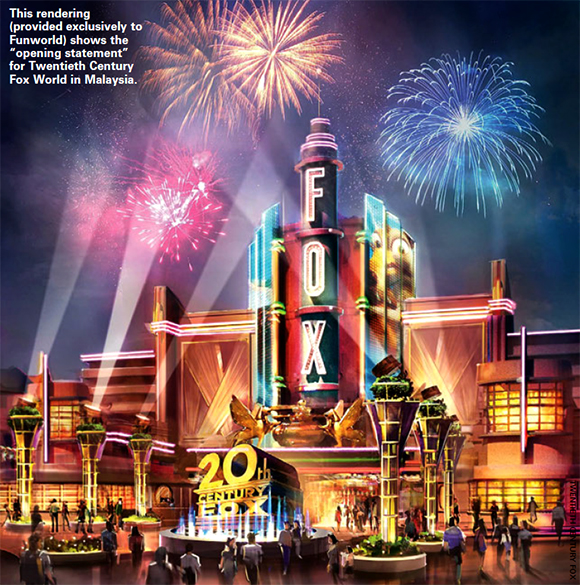
20thCenFoxWorldIt is an exciting time for the themed entertainment and motion picture industries. For the longest time, Disney and Universal (Comcast) were the kings of cinema and TV based theme parks. Now, Dubai is becoming a heavy hitter and once MotionGate opens in October, the landscape has the potential to shift drastically. Now, the parks in the US will not only be competing against each other, but against heavy competition on the other side of the world in an area with much deeper pockets. All the while the word is focussed on the Word of Pandora, The Reign of Kong, Cobra’s Curse, Mako, Star Wars Land, Toy Story Land, and the unnamed new theme park under construction for Universal’s third park (not counting the forthcoming water park), MotionGate will open and create a whole new atmosphere of innovation amongst the chief players. In addition to the parks in Dubai, Fox is also entering into the game with their 20th Century Fox World opening in Malaysia in 2017. Also on the books is the 20th Century Fox World expansion to Zoo Miami AND another indoor Sony theme park in Wisconsin. With all these parks opening, there are more and more opportunities for careers in either cinema or themed entertainment. Or, a career that spans both (which is what yours truly is trying to do). I just love all the new completion because it will drive continued innovation. However, it’s also nice to see that we have a new park that is getting back to the roots of what started it all: motion pictures.

“Bridge of Spies” movie review

BridgeofSpiesA spy movie with very little in the way of intrigue and espionage. Touchstone, DreamWorks, and 20th Century Fox’s Bridge of Spies is a very traditional biographical film. There is nothing innately wrong with it, but there lacks anything truly remarkable or memorable either. Tom Hanks plays a very Tom Hanks character and Spielberg provides us with a very classy historic movie. Perhaps it is all just as well because the Cold War was a war of information and not high powered action. And, that is pretty well what you get in this movie. The most thrilling scenes are ones that are already in the trailer. Even James Donovan’s (Hanks) testimony before the U.S. Supreme Court was anti-climactic. Despite the fact it is based on a true story, for cinematic purposes there should have been more emotionally trying scenes or surprise. We seldom get Cold War era movies, so this is a nice addition to historic/bio pictures. Although the descriptive “thriller” has been attached to this movie, I do not find sufficient evidence in the movie to support such a claim. It is a moderate drama–neither heavy nor lite. Perhaps if John Grisham had written a book on this event and that book adapted for the screen, the film would play off more accurately as a spy thriller. As it stands, it is a historic drama. Nothing more, nothing less.

Bridge of Spies is about a Cold War era spy swap in the late 1950s in East Berlin. Suspected Soviet spy Rudolph Abel (Mark Rylance) is apprehended by the FBI in New York and placed under the counsel of successful insurance attorney James Donovan (Hanks). In an effort to show due process, even to suspected spies, the U.S. government provides Abel with a trial by his peers. Following a conviction, Hanks persuades the sentencing judge to allow Abel to live in the event they need him as leverage to trade for captured suspected American spies in Soviet Europe and Russia. Quite the brilliant move because an Air Force pilot and graduate student were both captured by the Soviets shortly after the apprehension of Abel. Follow Donovan as he makes his way to one of the most dangerous parts of Europe during the height of the Cold War in an effort to successfully negotiate a spy swap.

There really isn’t much to add besides what I have already mentioned in my opening. This movie is very par for the course. Hanks and Spielberg provide us with the quality that we are accustomed to receiving from them. I was never bored during the movie, but I was never on the edge of my seat either. Typically, I look to espionage movies for some sense of surprise or intrigue; but, this one plays it like a typical drama based on a true story. As this is not a story or event that many Americans likely know about, it provides insight into what many of the operations during the Cold War may have been like. I do feel that the dialog and character development were lacking. Hanks and the rest of the cast pretty much remain static through the whole movie. Often in movies based on true stories, I like to see dynamic character arcs or redemptions. What I find in this movie is a realistic depiction of this event that likely felt more intense at the time than what is shown of the screen. Perhaps that is it. Maybe, I would have liked the movie a lot more had there has been a pronounced thrilling nature or contained emotionally intense scenes.

If you are looking for a thrilling movie of government espionage, then this is not it. If you are looking for a well-produced biographical movie based on a true story, then this is it. I am certain that Tom Hanks plays the role of Donovan accurately and I commend him for bringing this real-life American hero alive for the screen. At the end of the day, this is a good example of an accurate biographic motion picture and Spielberg proves that he can deliver a classy true story as well as he can an action-adventure movie.

Home (2015) Review

HomeWhile there have been many live-action and animated movies in the alien encounter/invasion genre, 20th Century Fox and DreamWorks’ Home is a family-oriented colorful and fun addition to the pantheon of alien-based films. Although messages such as conquering fear, understanding others, and commitment are commonplace in the friendlier variety of alien movies, this film combines the fanciful plot with rich subtext that acts as social commentary on issues such as ethnocentrism, imperialism, and colonization. These social issues are as real today as they were centuries ago. Just like Dr. Seuss was a master at breaking down complex adult issues into a form that a child could understand and adults could appreciate, DreamWorks provides us with a movie that pairs a comical narrative with real-life societal issues from which we may be able to gain a better understanding of what it’s like to be the nation invaded by another for a supposed greater good.

Home is about an alien race, known as the Boov, who has decided to invade earth and relocate the human ace to Australia. The Boov are running from another alien race, known as the Gorg, and need to find a new home. Upon invading earth, the Boov setup new neighborhoods on the Australian continent and relocate all the “humans persons” to their new “home” as the Boov move in to claim this new planet for their own. Evading the forced human transport, Tip (voiced by Rihanna) hides from the alien race in an effort to buy time so she can develop a plan to find her mom (Jennifer Lopez). Whilst on her mission, Tip encounters an outcast Boov named Oh (Jim Parsons) who is running from his own race because of a massive eVite he sent out to the entire galaxy for his “warming of house” party. Unfortunately, this eVite is also sent to the Gorg. Hot on the trail of Oh is traffic cop Boov Kyle (voiced by the incomparable Steve Martin). During their respective missions, Oh and Tip must learn to tolerate one another and understand one another if they are ever going to find Tip’s mom and Oh stop the Gorg from invading planet Earth.

Home is the type of animated alien movie that will likely evoke nostalgic memories of Disney’s Lilo and Stitch and possibly, to some extent, DreamWorks’ Shrek. However, after How to Train Your Dragon 2 lost to the lesser film Disney’s Big Hero 6 at the Academy Awards BUT won against it at the Golden Globes, the embattled DreamWorks needed its only offering for 2015 to come in like, not to quote Miley Cyrus, a wrecking ball. Instead, it played it safe; and in doing so, it did not capture the imaginations and attentions of audiences like it should have. DreamWorks needed Home to be its Lilo and Stitch. But, instead, it will likely go by way of the Croods. Somehow, a lonely Hawaiian girl and ill-tempered koala bear-like alien creature found its way into the hearts of audiences but Home will not likely do the same. This is probably because Home plays too close to Lilo and Stitch instead of breaking new ground and living on the edge.

On the surface level, it is all too easy to see Home as a movie that is a tastes great but less filling version of Lilo and Stitch, but a closer look will reveal subtext that the Disney classic could only dream of. While both films deal with the idea of understanding one another and learning to cooperate, Home provides us with a deeper meaning behind the one-dimensional, vapid plot. It takes the idea of learning to understand one another and friendship development further by allowing us to view the invasion/encounter from both sides. In an effort not to spoil the twist at the end of the movie, I will no go into great detail. But, it is very clear to see that this movie can be read as social commentary on the U.S. invasion in the various middle-eastern countries. Note: this movie is not suggesting it is wrong to fight those who aim to harm you, but it is suggesting that in an effort to do good that there are sometimes negative consequences that may occur to a people or society. Sometimes, while a nation believes it is BRINGING civilization to a people, seen as lesser, it is entirely possible that they are actually TAKING from the native people instead. For the anthropologists in the audience, you will greatly enjoy the themes in the movie that will likely get missed by the typical movie-goer.

After the previews of Home built up a general interest and excitement for the animated movie, it will unfortunately disappoint most movie patrons who choose to see it this weekend. However, it is still a very cute movie that will keep you and your kids mildly entertained for the appropriate runtime of an hour and a half. I hope that after this movie does not perform as well as projected, that it inspires DreamWorks to rethink their approach to the next movie. I’ve seen great potential in the stories DreamWorks tells, and many of them are better cinematically than the Disney-Pixar ones; but, they need to bring the creative geniuses at their studio together to focus on rebranding despite the fact the Oscars always favor Disney-Pixar just because of the brand.