
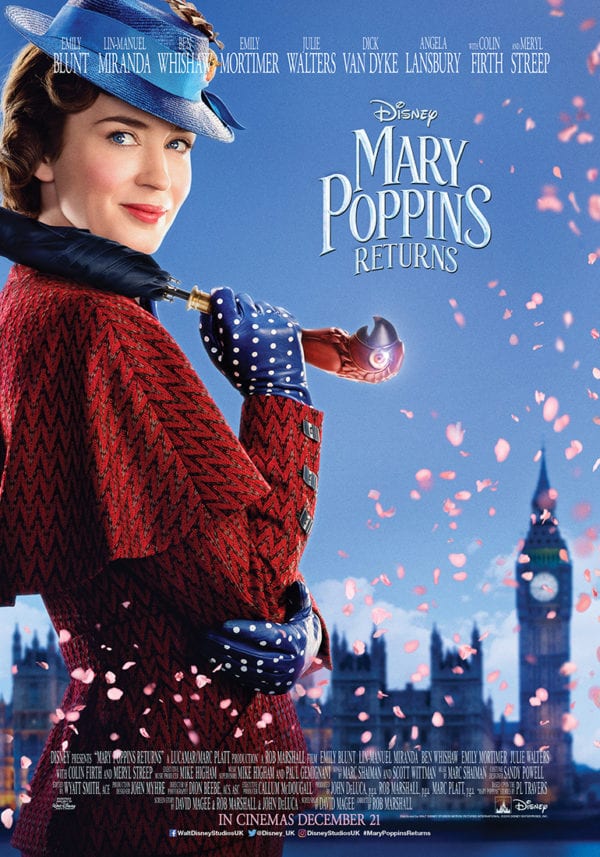
“Mary Poppins Returns” full film review

A spoonful of nostalgia isn’t enough to make the narrative go down. The highly anticipated Mary Poppins Returns hits theatres this week. Unfortunately, this film gets lost in nostalgia, neglecting the need to tell a new story. Instead, we get more than half a movie full of frivolity that lacks any coherent meaning or substance that is more concerned with hitting the same plot beats with similar songs at the same moments in this version as it was with the original. Visually, the movie is flawless and the animation sequences were a welcomed visit from the past. Reminded me of, if the animation from Bedknobs and Broomsticks and Mary Poppins got together, this is what you’d get. When creating a sequel that doubles as a remake, connections to the original are important but should not be at the diegetic forefront. Mary Poppins Returns exists in a gray area that is neither a sequel nor a remake. Had Mary Poppins Returns been a full-on sequel or remake, then perhaps the narrative would have faired better. As it stands, it sits uncomfortably in the middle and suffers from a bit of an identity crisis. Perhaps this version is lacking in critical value and complex characters, but it ranks highly in entertainment value. There isn’t anything particularly memorable about it except for the special appearances by Dick Van Dyke and Angela Lansbury, but the movie offers a couple hours of whimsical fun.

In depression-era London, the Banks family faces one of the greatest hardships a family can face–losing their home. Compounding the present state of affairs, the family is also coping with the recent loss of Michael Banks’ wife and mother of their three children. With help from the family’s longtime maid/cook Ellen and Michael’s sister Jane, the family hopes for the best while planning for the worst. With only five days until the house is repossessed, Michael remembers that his father left him shares of that infamous bank from his childhood; but when certificates of shares in the Fidelity Fiduciary Bank turn out to be missing, all hope seems lost until Michael, his children, and Jane get the surprise of a lifetime. Mary Poppins returns! Michael and Jane’s beloved nanny from their childhood returns to look after the family during this crisis. In true Mary Poppins fashion and accompanied by the lamplighter Jack, she whisks Michael’s children into a fun-filled adventure through the streets of London and into a world of imagination.

At the bedrock of the original are these lessons that must be learned. In many ways, Mary Poppins was a teacher to both Jane, Michael, and George. Although the lessons varied by character, they had one common denominator: life’s priorities. And there were no true villains–that is–evil or villainous out of malcontent or cruelty. And the songs had strong meaning, not just fun, creative lyrics to a show-stopping accompaniment. Furthermore, there was strong character development in the central characters. The character arcs of George and the kids were measurable. Even Mr. Dawes Sr. demonstrated measurable change. There are the elements of substance that make the original a timeless classic that transcends the decades and generations to remain a beloved film. Mary Poppins Returns fails to deliver any of these elements to the audience. Instead, chooses to get lost in the nostalgia of the original. Relying on the abstract of nostalgia to carry this remake-sequel.

While Michael’s lesson is clearly to learn to be a child again, his children learn the lesson to be quasi adults by teaching their father and working to solve the family’s financial crisis. Those two idea are in direct contradiction. Mary Poppins is no longer acting like a teacher but she seems more concerned with being an actual nanny moreso than the governess that was the original. If the lesson to be learned was to have the imagination or hope of a child, then that should have been taught, not two different lessons in direct contrast. George Banks may have been had his priorities in the wrong place, but he was not evil, nor was Mr. Dawes Sr. evil–he too had his priorities all askew. In Mary Poppins Returns, Colin Firth’s Mr. Wilkins is downright cruel for no reason other than simplistic greed. Simple motivators are a good place to start but should be developed to be more complex to add to the conflict. Firth’s character is completely uninteresting.

Talk about memorable songs in the original; I imagine you can recite most lyrics by memory, unlike this version with lyrics so convoluted and complex that they are largely forgettable. At the time of listening, the lyrics are poignant and work at the given emotional or plot beat, but then they are mostly forgotten. The songs in this one seem to exist only for the amusement of the audience. And the vaudeville number. Let’s talk about that for a moment. For starters, I love Mary’s wig that she borrowed from Catherine Zeta Jone’s Chicago costume. The music and lyrics in that number were incredibly entertaining–but–these same lyrics are quite risque in places. I was shocked that they were in a movie aimed at kids (despite the PG rating). And comparing the songs from the original to the ones in this version, each and every song in Mary Poppins Returns sounds similar AND comes at precisely the same beat as they did in the original. Each and every song in this one is an answer to the counterpart in the original. With one conspicuous exception, there is no equivalent for the Sister Suffragette. With Jane’s heavy involvement in workers’ rights (much like her mother’s women’s rights), it seems odd that she was not given a song since were were giving everyone else songs equivalent to the original. Yes, I am aware that Sister Suffragette is not in the Broadway musical, but it should have had a place in Mary Poppins Returns.

Structurally, the first two acts are all over the place. Fortunately, the film finishes with a strong third act. Everything seems so forced, rushed. Pacing matched the original. It’s as if the emotional beats and plot points from the original were mapped out and a “new” story was conformed to fit the old diegesis. There are even moments that can be completely removed from the story and not effect the outcome. For example, the entire Meryl Street scene has no impact on the realization of the narrative. Screenwriting 101 teaches us that each and every scene should point the audience toward the end–each scene should culminate in something important. Think of each scene as a paragraph in a larger story and each line of dialogue as a sentence in a larger paragraph. Each paragraph has a beginning, middle, and end; just like a story has a beginning, middle, and end. If a scene does not advance the plot, then it should be reworked or removed. We never revisit the cracked pot or truly embrace the idea of giving oneself a new perspective from which to view life. The song is fun, but that is all I can say about that scene. And there are other scenes in the movie that do little to advance the plot, but this is the most obvious one.

The movie is not without its entertainment value. If you are looking to escape reality for a couple of hours, then you are in the right place. You will be delighted with the whimsy and magic of this story. Perhaps the screenplay is poorly conceived, but everything else (from a technical perspective and performance perspective) works very well. If you enter the film with a heavy heart or some degree of sadness, the movie will help you forget your troubles for a moment and put a smile on your face and maybe even a tear or two in your eyes. Emily Blunt may not be a perfect Mary Poppins but she is practically perfect as the beloved nanny.

Ryan is a screenwriting professor at the University of Tampa. If you like this article, check out the others and FOLLOW this blog!

Follow him!

Twitter: RLTerry1

Instagram: RL_Terry

Thrillz (theme parks): Thrillz.co
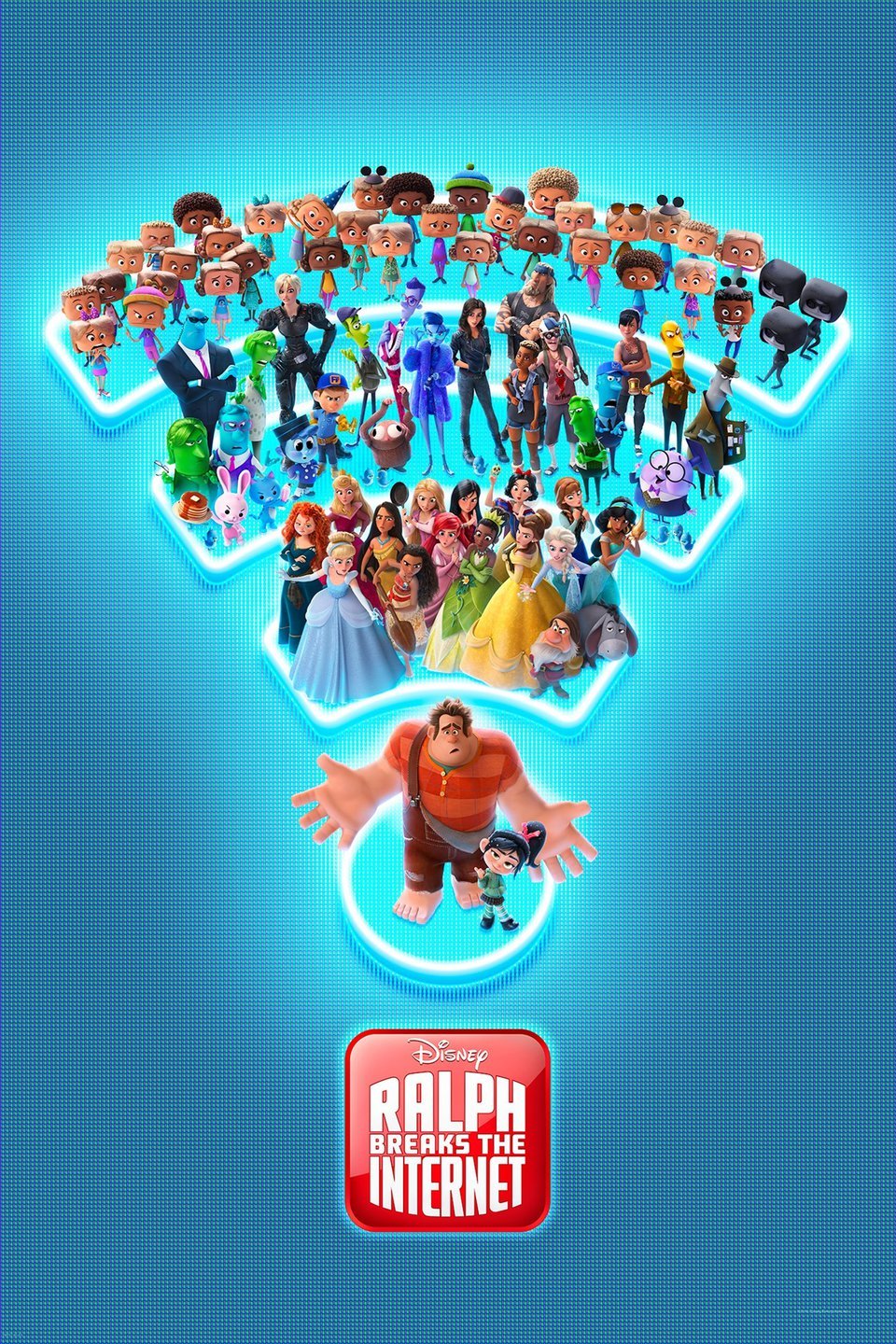
“Ralph Breaks the Internet” Full Review

It’s cute and entertaining. The highly anticipated sequel to the Oscar-nominated Wreck It Ralph hits theatres everywhere today. Much like the first film, this sequel relies heavily upon nostalgia and familiarity with pop culture more than it it does a strong narrative. All too often, it’s more concerned with making you laugh than it is delivering a meaningful narrative. However, no mistaking it, you’ll have a fun time watching this film. And sometimes an entertaining story for the whole family is all that is needed to accompany your holidays. Ralph Breaks the Internet took what the Emoji Movie attempted to do, but failed, and delivered a heartwarming story that comments on our usage of and fascination with the internet. Return to the brightly colorful animated world of Ralph and Vanellope for a highspeed adventure that takes them from the 8bit world of 80s video games to the immersive world of a visualized, stylized internet. If it’s gone viral on the internet, then you’ll likely find it in this movie. What we see in terms of abstracts or constructs, this film creatively translates that which only exists in 0s and 1s into something far more tangible. For all that Ralph Breaks the Internet did right, and that constitutes a lot aesthetically, it appears as though the writers were far more concerned with cramming every bit of Disney, pop culture, and digital media into the movie than developing a compelling narrative. And that was the part that I found obnoxious, the amount of time we spent on the Disney brands. It became self-serving instead of plot-serving. That being said, this uplifting movie accomplished what other animated films attempted, making what users do on the internet interesting. Must in the same way that Searching brilliantly captured screen-life, Ralph delivers a sensory explosion of what a visualization of the internet may look like. But who would’ve known that we were all POP Vinyls???

Vanellope is bored with her game Sugar Rush. In order to change the tracks up and give Vanellope a new experience to revive her love of her game, he builds a new track! Unfortunately, this means that Vanellope ostensibly takes control of the game’s steering wheel causing the user to break it off when trying to correct Vanellope’s car. When the arcade owner is unable to find a replacement steering wheel on eBay within his budget, he decides to shutter the game. Unbeknownst to him, he forcibly displaces the citizens of Sugar Rush. With no home to return to, the citizens of Sugar Rush are relocated to other games and the racers are adopted by Felix and Sgt. Calhoun. Ralph and Vanellope are determined to replace the steering wheel by exploring the unknown world of the internet where eBay is located. Upon arrival, it is clear that both of them are way in over their heads. They must rely upon intuition, wit, and the citizens of the internet to help them on their quest to make enough money to buy the steering wheel. Their journey soon leads them to Yesss, the head of the algorithm of BuzzTube, the most popular video sharing site, to guide them through turning likes into cash.

Central to this film are the (1) theme of friendship (2) one’s identity with home or work and (3) commentary on one’s insecurities. A nice trifecta of themes and concepts upon which to build the plot. But there is something missing. Something that is a fundamental to any screenplay. And that is clearly defined opposition to the goal represented or manifested by a character. In other words, there lacks a “villain” in this story. The villain in this story is the friendship shared by Ralph and Vanellope. Suffice it to say, it is not a requirement to have a physical villain (or more precisely, a character of opposition), but when abstracts, constructs, or concepts are the villain, it is advisable to select a character from the story to represent the true enemy. Take Jaws for example. The villain is NOT the shark; it is the folly of man. And in order to visualize this opposition, the screenplay uses the character of the mayor to personify it. Looking at Ralph Breaks the Internet, we go nearly the entire movie before we have a true character of opposition. A central character(s) is only as interesting as the character of opposition. Sometimes, the character of opposition is even more interesting than the central character.

There is also very little struggle experienced by Ralph and Vanellope. Vanellope nearly out races Shank of Slaughter Race the first time and Ralph’s first video and all his subsequent videos go viral. Not having a well-denied villain paves the way for Mary Sue characters. Just good at everything. This ease of success takes away from the ability to empathize with the struggle. That being said, after Ralph and Vanellope have their falling out over Ralph’s obsession with what he feels is best for Vanellope, their friendship is called into question and forced to face the fact that their friendship is evolving. And fighting with friends is something with which we can all identify. When Ralph’s insecurities manifest themselves in the form of a virus that takes over the internet, the movie finally has a villain that we can see, hear, and experience. The lack of a villain in this story affects the ability for the story to be as compelling or interesting as it could have been. One of the dangers of not having a villain in a story such as this one is the risk of disjoined subplots. Without a villain, the central characters have to work exponentially harder to get the audience interested in them. As it is, the audience is far more likely to find the internet setting, product placement, and mentions more interesting than our two central characters. The takeaway: make sure your screenplay has a CHARACTER of opposition.

But Ralph Breaks the Internet is not without well-developed characters. More specifically, a well-developed character in Ralph. Two of the film’s themes are manifested in Ralph. The themes of personal/interpersonal insecurities and evolution of friendship are witnessed in the actions of Ralph and Vanellope, but Ralph in particular. Audiences of all ages easily identify with him because they can observe traits, characteristics, and idiosyncrasies that have likely been experienced by each and every member of the audience at one time or another. How many among us do not depend on some sort of external validation in order for us to feel confident in what we do, what we wear, or where we go. We empathize with Ralph when his demonstrably gentle, generous soul gives way to self-destructive behaviors that form a wedge in the friendship between him and Vanellope. And that leads us into the third main theme of this film, and that is the theme of the evolution of friendship. There is no questioning the strength and loyalty of the six-year-long friendship between Ralph and Vanellope. There have been many movies that comment on the state of or evolution of our best friendships, but none quite so creative as this one. However the plot may be lacking in its ability to be truly compelling, the mountains and valleys of the central friendship are ones that many of us can identify with. It’s also a great opportunity to teach kids how their lives may go in different directions from their friends but that doesn’t mean that the friendship has to die or become burdensome. Children (and all of us, really) learn that sometimes when you love someone so much that you have to let them go to pursue their own dreams because that’s what friends do–selflessly support one another’s dreams.

Despite the inundation of recognizable brands and incessant, obnoxious Disney product placement, Ralph Breaks the Internet is an entertaining animated movie that finds a way through the underwhelming plot and constant reminders that we are in a visualized world of the internet into our hearts to brighten our holiday weekend.

Ryan is a screenwriting professor at the University of Tampa. If you like this article, check out the others and FOLLOW this blog!

Follow him!

Twitter: RLTerry1

Instagram: RL_Terry

Thrillz (theme parks): Thrillz.co

Theme Park or IP Park?

With all the recent, present, and future changes coming to the legacy theme parks of Central Florida and Southern California, are we witnessing the next evolution in theme parks? I’ve been tossing around the idea of exploring this trend, and those same feelings were echoed recently on the No Midnight Podcast (a Disney-centric podcast that unpacks history and discusses current happenings in the parks). After listening to the episode, it’s become clear that this anecdotal observation I’ve made is shared by others. As I love exploring the history of the parks from a scholarly perspective (as evident in my past articles and book), this is a topic that deserves consideration.

In order to truly explore this trend that some of us in the theme park blog and podcast communities have observed, it’s important to take a brief look at the development of the very concept of a theme park. And before you think that Disneyland was the first theme park concept, think again. Contrary to popular belief, Universal Studios Hollywood was the first to pioneer the idea of a theme park. More than 40 years before Disneyland was opened, the founder of Universal Studios (studio) German immigrant Carl Laemmle, opened his 250-acre-movie-making ranch, just north of Los Angeles, to the public for a mere $0.25. More than side income for the trailblazing studio, most well-known for its pioneering of the horror film, the original studio tour began on the outdoor backlot in March 1915. Laemmle desired to immerse guests into the magic behind the screen. The happy marriage, however, was not to last very long. Upon the introduction of cinema sound, Laemmle was forced to close the studio “park” to the not-so-quiet guests in order to facilitate appropriate recording sound for the motion pictures. The Universal Studios tour would remain closed to the general public for over 30 years. But, in 1961, the studio would once again open its gates to a new generation of movie lovers through the still world famous studio tram tour.

Combining inspiration from what Laemmle began 40 years prior, visionary Walt Disney made the decision to create an entire land that would immerse guests into the world (or land) of Disney. More than an amusement park, Walt Disney set out to create a multi-dimensional experience complete with continuous coherent storytelling from the architecture to the attractions and restaurants themselves. Even before the park would open its doors in 1955, Walt Disney produced a television special that sought to energize enthusiasm for the groundbreaking concept that took the stories, settings, and characters from the screen and translated them to exist in the real world. Disneyland was so popular that Walt began to develop an idea that would forever change the theme park business forever. The “Florida Project,” as it was called, would eventually become Walt Disney World. Sadly, Walt passed away before the park would open, but Walt Disney World is the manifestation of Walt’s ultimate dream. Disneyland was first and is the park that Walt built, but Disney World is truly what Walt envisioned when he dreamt his innovative idea inspired by his imagination.

In the mid 20th century, Universal Studios Hollywood, Knott’s Berry Farm, Busch Gardens parks, SeaWorld parks, and later in the 20th century Universal Studios Florida were all opened to eager crowds! Each of these parks had a distinct theme, a specific story into which guests were immersed. With the cases of Busch Gardens and SeaWorld parks, the storytelling was also accompanied by a conservation message. Attractions were built that matched well with the theme of the respective land. It’s important to note that, for the most part, there was significant thought put into an attraction fitting into the design (architecture) of the land in order to never take the park guest out of the overarching theme of the area FIRST and the whether or not a particular intellectual property (IP) works in that land second. Make the attraction fit the theme, not retheme the area to match the attraction. Whereas I am oversimplifying this practice or concept, the point is to get you thinking of how theme parks processed new attractions for the longest time; that is, until Universal Studios Islands of Adventure redefined themed entertainment.

Entire volumes of articles could be written on how Islands of Adventure (IOA) redefined themed entertainment; but for the sake of argument, the impact will be streamlined. Prior to IOA, theme parks, including Disney and Universal, were largely built with theme first and properties second. Now, themed entertainment designers are busy taking major IPs, placing them in the park, and then rethemeing around it. Each land or area is themed to the attraction versus the attraction designed to fit the theme of the park area. But in doing so, does this negate the very concept of a theme park, traditionally speaking? What happens when the movie is no longer relevant?

Unlike the other theme parks, at the time, Universal’s IoA was different in that it took popular IPs with entire universes (or worlds) if you will, and built vast lands in which there are attractions based on the movies/books represented. Prior to this, the closest examples were Disney-MGM Studios and Universal Studios. But even with the two aforementioned examples, they weren’t concerned with lands of the movies, but integrating the movie properties into the backlot look and feel of the park. With Disney-MGM (now Hollywood Studios, until it changes again) and Universal Studios Florida, the theme was a combination of Hollywood and the magic of motion pictures. So individual movie or TV properties were included as part of the them park experience, and guests were prevued to studio audience opportunities or the ability to audition to be on a show (think Nickelodeon Studios). The theme was “the movies” or “Hollywood.” From the architecture, to street names, to real-life locations, both of these parks that incorporated different movies or TV shows into the layout and design. The location was largely Hollywood, but could include New York City, San Francisco, a canyon in Arizona, or Amity Island. The attractions were built into the existing landscape versus selecting a property then changing the environment to match the IP. As these “movie parks” have been moving away from the magic of moviemaking to more immersive experiential environments, the “theme” has been changing rapidly. One could draw the conclusion that the “theme” of these parks is now an anti-theme. An anti-theme in that there are a variety of experiences that do not exist within a themed landscape that connects them together.

The theme of Islands of Adventure was just that, islands of adventure. Each island around the lagoon was a different land inspired by a different IP. Personally, Jurassic Park, Harry Potter, and Seuss Landing are my favorite islands! Arguably, Jurassic Park was the centerpiece of the then-innovative concept as it was the biggest fandom represented. Today, that crown rests on the Wizarding World of Harry Potter (since 2010). Not only was IoA the first to pioneer this concept of individual themes within the park, it was the first to create an immersive world in extreme detail. And it was the Wizarding World of Harry Potter that completely changed the theme park game, rewrote the rules, and began the trend away from “theme” parks to IP parks. Instead of a collection of attractions around a shared theme (or collection of themes), now parks are trending toward a park that is a collection of disconnected IPs. While Magic Kingdom has the different themed lands, the overall theme of magic kingdom was largely fantasy and adventure not connected to any specific singular IP. And in each of the lands, there were attractions that fit the theme of the lands, some of which had movie counterparts. But the focus was not on the individual movies as much as it was the idea of escaping to, being transported to a world of high flying adventure or whimsical fantasy.

Ever since the Wizarding World of Harry Potter opened, Disney and Universal parks (mainly) but also joined by Movie Park Germany and MotionGate Dubai are principally concerned with attaching movie and literary IPs to the park for the guests. Reminiscent of the space race between the US and Russia of the mid 20th century, the race for theme parks is for IPs for the parks. This pattern continues into the film distribution and production company interests for new content–content that will lend itself to successful translation from screen to park. It’s more important than ever for media conglomerates and umbrella companies that have theme park and distribution interests to know what movies or entire franchises make for viable theme park lands and attractions. I cover this very topic in my study and book On the Convergence of Cinema and Theme Parks, which you can buy an Amazon! Just because a movie or entire franchise is popular, does not mean that it is material for a theme park. For more on that topic, checkout the book.

While building entire lands based upon a popularly established IP to create an immersive environment looks and sounds like a great idea to draw the enthusiastic crowds and significantly increase revenue, there is a darker side to this that will not be realized or observed for years down the road. With the more traditional theme park design, attractions can be changed out of the show buildings far more easily than having to retheme and rebuild an entire land. But why would thinking about the ability to change a land be important? Because it is not unreasonable to arrive at the conclusion that a particular IP may not continue to be popular after an IP has had its run. Although not as big as Star Wars or Harry Potter, the former A Bug’s Life is an example of the lengths a park has to go to to remove and rebuild. Razing to the ground and rebuilding is always more costly than building a’fresh. But this does not seem to detour the parks from moving from the traditional theme park concept to an IP park. A collection of IPs that a company either owns or licenses. In the concept of a collection of IPs, is there actually an over all theme? There appears to be more evidence to suggest that theme, in the traditional sense, is lost when focusing on attaching IPs.

With the continuing trend to focus on IP acquisition instead of original themes, it would appear that the traditional theme park may be dying in exchange for IP park. Take Disney’s Hollywood Studios for example. The theme was “Hollywood” or movie-making. What is the theme now? Well, to be honest, the answer that query is vague at best. You’ve Star Wars land on one side of the park, Toy Story in the middle, and a little bit of Hollywood in the front. No consistency in theme. With the Twilight Zone Tower of Terror and Aerosmith being licensed from CBS (Sony), and the facade of the Chinese Theatre licensed from TCL, the theme is NOT Disney IPs. Same with Universal Studios, the theme is not Universal IP because other than the first two installments, all others are Paramount. Not to mention that Simpsons is Fox. Even the headliner Wizarding World of Harry Potter is Warner Brothers (AT&T). Looking at the Disney and Universal parks, I am left in a state of confusion when attempting to understand the theme of the respective parks. So, since a consistent and coherent theme cannot be identified, I am left with the conclusion that there is no theme–just a collection of original and licensed IPs.

While many may not see the differences between the concepts of a theme and IP park because, on the surface, they both look indifferent from one another, the difference seems to be the story or the diegesis of the park, as a whole, from entry gate to back of the park. So, it’s not a matter of semantics. Going from IP to IP, the experience is disrupted, and reminds you that you have not actually been transported to any of these worlds. Part of what makes the traditional theme park a powerful conduit of creating an experiential continuous story is the ability for the park to consistently suspend your disbelief. To understand the difference a little better, think of it this way: the trending IP park concept is a series of “theme parks” joined together by a unifying gate. Instead of the overarching unifying theme that connects all the areas of the park together in one coherent, continuous story, the IP park is a concourse that takes you to different themed lands. So, the importance is not in the theming of the park as a whole, but in the individual lands within the gate. Think of it as a mall. A mall is a “single gate” structure (whether indoor or outdoor mall) that has many different stores. No two stores are the same (even if carrying similar products). The entryways and hallways/concourses are glorified conduits for transportation to and from the various anchor and supporting stores. That’s not unlike the IP park. Wizarding World of Harry Potter Diagon Alley and Hogsmeade, Toy Story, Pandora, and Star Wars lands are examples of your anchor stores with the other areas as supporting stores.

There is a magic that is lost in transitioning from the theme to IP park. Not that the newly emerging IP heavy lands are lacking in a great experiential factor–obviously, that is not the case–but the park as a whole demonstrates a perpetual identity confusion. If you cannot state the theme of a park in a single statement (much like the logline of a movie), then it is does not have a theme, but a collection of IPs with individual themes. Each of the IPs (whether original or licensed) are incredibly fun, immersive, and innovative, but just because you have a collection of IPs does not mean they make a theme park. More like a theme mall. Whatever the case, it appears that there is a trend away from the conventional theme park to the emerging IP park and any studio-based theme park is transitioning away from any connection to Hollywood or the magic of moviemaking. We are at a transitional stage in themed entertainment, and we will see an increasing number of separate IPs housed around a series of concourses to each experience.\

Ryan is a screenwriting professor at the University of Tampa and works in creative services in live themed entertainment. He’s also published prolifically on theme parks and produced a peer-reviewed study. If you like this article, check out the others and FOLLOW this blog!

Follow him!

Twitter: RLTerry1

Instagram: RL_Terry

Thrillz (theme parks): Thrillz.co

“Bohemian Rhapsody” full film review

Ready Freddie? Adapted from the Queen Wikipedia article, comes the anticipated tribute film Bohemian Rhapsody. Mostly directed by Bryan Singer, but after his unexpected departure, directed by Dexter Fletcher, this could be one of the first films to almost not be a film at all, yet produce an Oscar-worthy performance in Malek’s Freddie. It’s a good thing that your favorite Queen songs are sort of in the movie because the screenplay is off key. In short, the problem with this biographical film can be traced back to the weak writing and misguided direction. Anytime a film has to change directors in the middle of production (for whatever the reason), the film has a high chance of suffering in the transfer of power. There are exceptions; for instance, Poltergeist was directed by Tobe Hooper and Spielberg, and became one of the best horror films of all time. On the topic of writing, paraphrasing Hitchcock, a writer (or director) should start the scene as close to the end of the scene as possible in order to streamline the plot and keep the focus on conflict moving the scene forward. Unfortunately, this movie starts each scene as close to the beginning of the scene as possible and cuts it off just before the ending. Whereas the camera lingered in A Star is Born in order to allow the emotion of the scene to sink in, this camera lacks focus and moves around the scene in a way to document what is doing on, not show us the story and subtext. Speaking of subtext, Bohemian Rhapsody is very much a textbook example of “on the nose” storytelling. There is a great lack of subtext anywhere in the film.

A celebration of the timeless music of Queen, this film chronicles the band’s beginnings to the famous Live Aid concert. Following the band from playing in bars to headlining sellout concerts at world-famous venues, this film takes you behind the scenes to watch the development of the band and–also–spending some time with Freddie’s personal life. Witness Freddie Mercury defy what his family wanted for him and what popular culture defined as a lead singer, and become the icon that he is.

Although the film is lacking in almost every area of storytelling, there is one standout element that cannot be ignored, despite the poor writing and direction. And that is Rami Malek’s performance as Freddie Mercury. Now, I am not a huge Queen fan; yes, I know the same handful of Queen songs that most people know and really enjoy listening and rocking out to them. But, I do not know enough about Freddie in order to know how close Malek’s performance was to capturing the real man. Mainly because I was a really young when he passed away. However, even not knowing much about the real Freddie, I can still assess a great performance, and Malek’s impressed me from start to finish. I thoroughly enjoyed watching him! The commitment to his character is incredible. Not only does he resemble Freddie, but at no point did I ever feel that I was watching an actor play Freddie, but it was like watching Freddie himself (what I know about Freddie, anyway). It will be interesting to watch to see whether or not he gets an Actor in a Leading Role nomination even though the rest of the film will not likely show up on the Academy’s radar. Perhaps the film would have been better if it had been a Freddie Mercury biopic instead of covering the band as a whole. But due to Queen having so much control over the story, the focus consistently shifts from Freddie to the band so that there is no true direction for the conflict to go in order to deliver a powerhouse of a film.

The storytelling is so incredibly disconnected that there are moments that do not feel like a movie at all. Other than the recreation of the Live Aid performance (with a crowds of bad CGI and real shots of the same group of spectators over and over), the best scenes in the film are during the intimate moments between Freddie and Mary. These are the only times that I feel that the film is diving deep, and attempting to evoke emotional responses from the audience. Even during some of the moments that should have been the most gut-wrenching and impactful such as Freddie’s coming out or when he finds out that he has AIDS, just play off as surface-level; they fall flat. Never once does this film dive deep into anything. As soon as the story is about to hit a home-run, it bunts the ball. Fasts-forward to first base, if you will. I am also shocked at the lack of music in this movie. With the title being Bohemian Rhapsody and being about Queen, I half expected that moments would feel like a rock concert. By no means, did I want to watch a 2hr music video or vicariously attend a concert, but I had hoped that the music would have been a bigger part of the story. And the title song is not a significant part of the movie. Honestly, a more precise title would have sinply been QueenBohemian Rhapsody is never completely performed in its entirety.

If you don’t like to read Wikipedia articles, but want to learn the same information, then checkout Bohemian Rhapsody this weekend. Or if you are a fan of the entire band–not just Freddie–then this movie is for you. Although you get very few songs performed in their entirety, you will hear Under Pressure, We Will Rock YouWe Are the Champions, and others.

Ryan is a screenwriting professor at the University of Tampa. If you like this article, check out the others and FOLLOW this blog!

Follow him!

Twitter: RLTerry1

Instagram: RL_Terry

Thrillz (theme parks): Thrillz.co
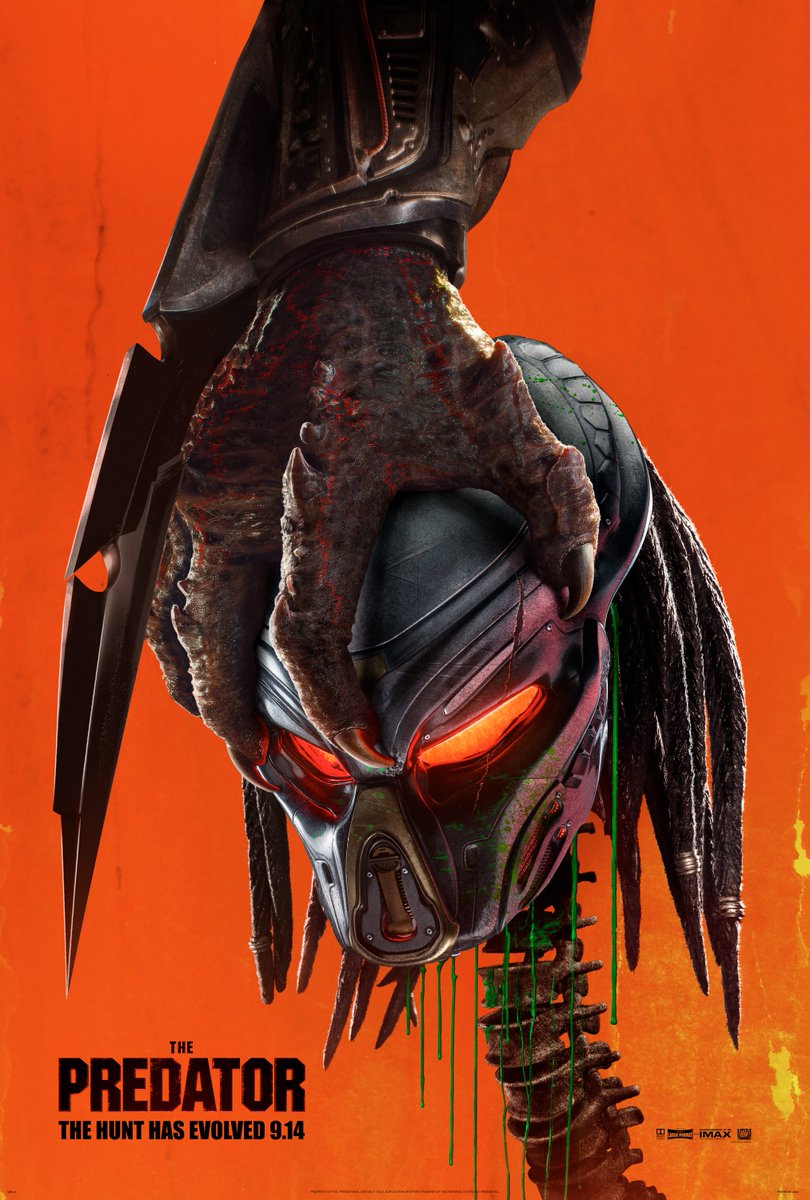
The Predator (2018) Review

A solid reboot/sequel for the Predator franchise! Don’t pay attention to the plethora of reviews from critics who are hating on Shane Black’s The Predator. With an entertaining action-horror plot, fantastic cast, and excellent pacing, this is the Predator that we wanted and got! And I am not alone in this, several podcasts and even the Roger Ebert site agree on Black’s Predator. The tone of the movie feels like a throwback to the original, while acknowledging the other movies to maintain just enough continuity where you don’t question where this film falls of what has happened prior. I went into this movie with moderately low expectations because of what I read in the initial reviews, but I was completely surprised by how much I enjoyed it. And not only me, all of my friends who were with me between Rounds 1 and 2 of Halloween Horror Nights opening weekend. You get it all, grizzly action, humor, and entertaining kills. Unlike past movies that tried to “improve” on their 80s predecessors, this quintessential action-horror takes us back to what made the 80s horror endure the test of time. Instead of building the movie around the title character, it builds it around the lead human cast. And a memorable cast of characters, at that. Where some reviewers have found irreverence or offensiveness in the fact that many of the characters demonstrate cognitive and emotional disabilities, this is actually what works well for the film. Furthermore, it highlights how emotional, physiological, or cognitive disabilities do not determine someone’s degree of courage, determination, empathy, or sense of humor. Each of the lead and supporting characters in the ensemble cast overcome any obstacles that stand in their way, whether the obstacle comes from within or from the outside. It is a fun, exhilarating horror movie that will keep you entertained!

“From the outer reaches of space to the small-town streets of suburbia, the hunt comes home. The universe’s most lethal hunters are stronger, smarter and deadlier than ever before, having genetically upgraded themselves with DNA from other species” (IMDb). When US Ranger McKenna (Boyd Holbrook) discovers a crashed space ship and loses his crew to a mysterious alien with futuristic weaponry, he salvages what he can find from the wreckage and mails–in Dr. Henry Jones fashion–it in order for it to not be confiscated by the US government. Unbeknownst to McKenna, the US government is aware of these Predators, and has one sedated for testing in a secret facility. When the US government gaslights McKenna and believes him to be maliciously upholding an investigation, he is thrown onto a bus of other veterans, whom the government does not want to deal with, to be taken to a mental hospital. When the Predator escapes the facility, McKenna teams up with his fellow soldiers on the bus to take down the alien killer before more harm can be done. Meanwhile, the situation is complicated when a boy accidentally triggers the return to Earth of an even bigger Predator, and only McKennas’ ragtag crew of ex-soldiers and an evolutionary biologist can prevent the end of the human race.

Since there isn’t much to analyze here, I am going to keep this one short. What I find most interesting about The Predator, is what it was NOT more so than what it was. It wasn’t another reboot of a past franchise that overly injects vapid dialogue and self-aware humor or a complex plot. The Predator heeds the maxim “simple plot, complex characters.” Moreover, it also wasn’t a parody or satirical piece that was making fun of the genre or source material as if it was no longer relevant to audiences. It would have been far too easy for Black to have made a mockery of this franchise or wrote-directed something that was just complete schlock; but he did what many thought was impossible with this horror creature feature. He revived what we loved about the original, made a few tweaks, and gave us a strong reboot/sequel that was incredibly entertaining to watch.

After watching the movie, I am left with the conclusion that Black was able to recapture what made the first one work so well and actually repeat it, with some exchanges of grizzly violence for humor. But why does this movie work so well? Black started with characters, then derived a plot from those characters with incredible precision and strategic pacing. The tone and rhythm of this movie are remarkable. Yes, remarkable. Black was able to achieve what fans of great action movies love and take for granted, but is highly difficult to pull off effectively. The placement of dramatic beats. The reason the plot of this movie works so well is because Black knew where to place the emotional and action beats, and how to build up to them, and drive them home. He connects to these beats through character-driven development through which plot is derived.

For fans of the franchise, this truly IS the Predator movie that you were hoping for. Even those who are new to the franchise will enjoy the movie because it works as both an homage to and a pioneer in rediscovering the attraction of this iconic creature feature.

Ryan is a screenwriting professor at the University of Tampa. If you like this article, check out the others and FOLLOW this blog!

Follow him!

Twitter: RLTerry1

Instagram: RL_Terry

Thrillz (theme parks): Thrillz.co