“Huntsman: Winter’s War” movie review

HuntsmanWintersWar“Let it go” Universal, Disney already has dibs on the Snow Queen. Prepare for the unnecessary prequel/sequel Huntsman: Winter’s War this weekend. It won’t take long for you to realize that you have seen this story before. Albeit, a more family friendly and Disney’d version, but this plot nevertheless. However, after researching the actual Hans Christian Andersen fairly tale The Snow Queen, it is clear that Universal Pictures does a more accurate job of adapting the fairy tale’s words than Frozen did. The problem with this attempt is that it feels like it’s coming around a little too late. With one-dimensional characters and a predictable plot, Huntsman attempts to tell the “real” story of the Snow Queen that appeals to teens and adults, but it looks so incredibly “Frozen” that it leaves you feeling like you’ve done this all before. Although there are increased action and romance scenes in the film, the whole idea of close sisters having a falling out, the one heading to the frozen north, while the other remains in the south with the north creeping on its doorstep, and love melting frozen hearts, is the foundation of the narrative and feels like a bad case of deja vu with little to add.

Travel back to the land of Snow White, and come face to face with a little known story that has yet to be told. Before poison apples and dwarfs, Queen Ravenna (Charlize Theron) and her sister were running the kingdom after the death of the good king (Snow White’s father). Ravenna’s younger sister Freya (Emily Blunt) falls in love with a man promised to another woman but has come to bare his child. After Freya finds her lover having set fire to the nursery and the innocent child, Freya becomes acutely overcome with anger, grief, and hatred and suddenly displays powers of ice and snow. Unable to control her anger and power, Ravenna send her sister to the north to find a kingdom of her own. After having her child murdered, Freya decides to raise a kingdom by making love illegal and taking children from villages and raising them up as warriors known as huntsman. When she finds that two of the huntsman Brighton (Chris Hemsworth) and Sara (Jessica Chastain) have committed the unpardonable sin of falling in love, Freya steps in to put a stop to their forbidden love. Banished from the kingdom of the frozen north, Brighton is contacted by Snow White’s kingdom to retrieve the infamous mirror filled with dark magic before it falls into the wrong hands.

Every once in a while, I come across a movie that really doesn’t require a lengthy description of the critical elements of the film; and this is one of those. Just felt very much under-developed and forced. Anyone who has seen Frozenand let’s face it, that’s practically everyone whether they wanted to or not–will instantly pickup on the parallels between both movies. Huntsman: Winter’s War is definitely geared towards an adult audience but it still feels like it stole many elements from Frozen. Even the coloring and costuming are very similar. For those who have examined Frozen from a critical perspective and read up on the development of the blockbuster, you may be familiar with the evolution of the script: it starts out as an adaptation of The Snow Queen but then the writers scrapped that idea for more of a contemporary Disney animated feature story. But then the writers didn’t like that direction either, they essentially took the first half of the first draft of the script and spliced it together with the second half of the second draft, added in some catchy music and boom! You have FrozenHuntsman is similar to what you would have got in Frozen had the first draft been the produced movie.

On the plus side, this film contains some beautiful imagery and simple but stunning visual effects. The goblins are extremely well done–too bad you get so little time with them in a scene that is completely removable from the rest of the film. That scene and others were clearly under-budgeted and under-developed. Despite the fact that you can watch this movie in D-Box and IMAX, there is really no reason to spend the extra money. Watching it in a standard auditorium will suffice perfectly. If you want to get a better idea of the darkness of the original Hans Christian Andersen fairy tale before Elsa and Anna, then you may enjoy this movie. However, if you would rather wait for it to be on Amazon Prime or iTunes, then that works too.
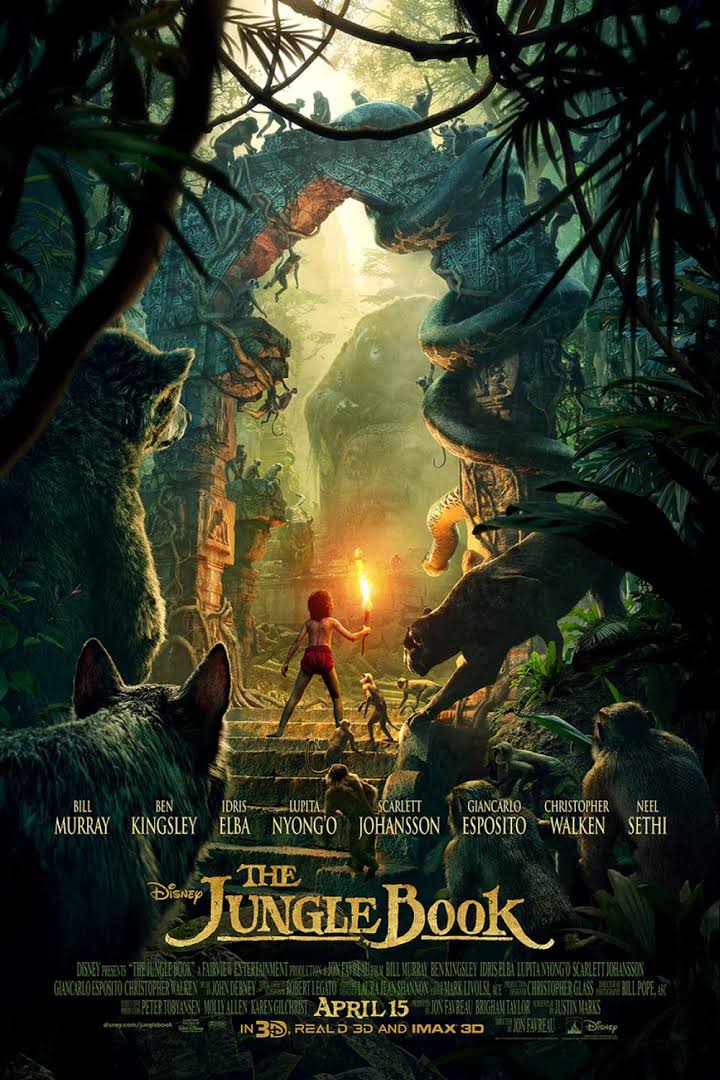
“The Jungle Book” (2016) movie review

JungleBookDisney Nature meets beloved animated classic! Disney’s newest live-action remake of an animated classic surprisingly plays out very well. Unlike last year’s CinderellaThe Jungle Book strikes a perfect balance between creating a new more visceral experience of a familiar story and paying homage to the best of what the animated version had to offer–the essence of what made it “Disney.” As I was sitting in the theatre, I was amazed at how much the film truly felt like a classic Disney masterpiece that just happened to include beautiful cinematography, incredibly well engineered CG animals, and a plot; albeit, not a dynamic, thrilling, or deep plot, but a coherent plot nevertheless. That’s more than I can say about the original. Even though, I too like the classic. After the Cinderella cinematic schlock, I was not expecting much out of this film. But, I stand (or sit, rather) corrected. The Jungle Book is encouraging in that it proved to me that Disney can still tell a good story that is great for a wide audience and includes the core of the magic of an animated classic but successfully translates the narrative into a live-action movie.

Deep in the Indian jungles, an orphan human infant is found by a wise and caring panther named Bagheera (Ben Kingsley). Knowing he would die alone, Bagheera took him to a pack of wolves to be raised as one of their own. Being given the name Mowgli (Neel Sethi) spend his childhood as a wolf. When Shere Kahn (Idris Elba), a vengeful bengal tiger, threatens the wolf pack and the rest of the jungle, Mowgli decides to leave the pack and head for the man village–the jungle is no longer a place for a man cub. Guided and guarded by Bagheera, Mowgli must begin to adapt to his soon to be new life, but is having the most difficult of time. Throughout his journey through the misty jungles, Mowgli will encounter animals and beats he has never seen and even make some new friends along the way, including the lovable Baloo (Bill Murray). All the while, he must avoid an encounter with Shere Kahn while pressing on his journey of self-discovery and wild adventure.

Writer Justin Marks and director Jon Favreau demonstrate that a live-action remake of an animated Disney classic can be the best that a modern cinematic general audience movie can be and still hold onto the magic that has made it a story to stand the test of time. As I have not read the Rudyard Kipling work of literature upon which The Jungle Book is based, I’d like to imagine that this version of Mowgli, Bagheera, and Baloo’s adventures does the words of the English journalist and author justice. Unlike the original beloved movie devoid of any real coherent or conventionally structured plot, this remake tells a visual story supported by a simple but effective narrative complete with proper turning points, twists, and events. The pacing is also well-engineered, which creates a pleasant journey for the mind as well as the eyes. Using mostly on location jungle shots, supported with subtle sound stage sets gives this film a natural beauty that feels like something right out of a Disney Nature documentary. Contrary to how some CG animals can look, these creations were fantastically real–like you could reach out and stroke Bagheera’s ebony hair. Newcomer Neel Sethi is impressive to watch as Mowgli. He embodied the lovable characteristics of the animated version whilst adding in a modern twist. One of my favorite ways to evaluate an actor, in a genre such as this, is if he or she looks like they are having fun. And, Sethi definitely showed that he was having fun bringing this story to live-action cinema.

One of the reasons I was disappointed with the remake of Cinderella is that I missed the magic of the timeless music. Realizing that this was the first attempt to remake an animated classic (not a reimagination as is the case with Maleficent), it is entirely possible that Disney decided to make sure the next remake included the core of what made the animated version so beloved. And you will definitely find echoes of the original Jungle Book in this live action film. Most of the characters you remember from the original are also reprising their respective roles. Some of the roles are modified to either be more or less prominent, but it’s all very effective in building the story. One of the characters that is not as prominent in this version is the bola constrictor Kaa (Scarlet Johansson). But, in the relatively short amount of screen time, she delivers an exceptional performance, inclusive of the hypnotism, and through her interaction with Mowgli, Kaa reveals his backstory that adds to why Shere Kahn has vowed vengeance on his life. Just like in the original, King Luis (Christopher Walken) want to be just like Mowgli and possess the red flower.

There are certain elements of the original that are not included in the live-action version, but they are elements that did not fit in the world Favreau created for this film. Suffice it to say, I do not think that you will greatly miss those parts of the original because this Jungle Book holds onto the original magic and brings it into 21st century cinema. What about the talking animals??? Like with many movies, I did not read up on this one too much because I wanted to be surprised. Needless to say, I did not look up the voice actors so I was not prepared for the animals to speak. When Bagheera first began to speak, I was definitely caught off guard. However, I quickly accepted that the articulating mouths on the animals speaking perfectly good English in the jungles of India were as natural as the luscious green trees and crystal clear water or as natural as Mowgli’s ability to communicate with nearly every creature. The UN must have implanted Mowgli and his friends with those instant translator devices. But, because of the quality of the production, the adherence to the Disney magic that made the original memorable, and the solid writing, I was more than willing to engage in the suspension of disbelief in order to enjoy the movie to its fullest extent.

If you enjoyed the music, characters, and story in the original, then you are definitely going to enjoy this live-action remake. I am excited to see that the essence of the original animated classic is alive and well in this film. I hope this is what we are to expect from the next live-action adaptation of a Disney animated classic.

“On Cinema and Theme Parks” (part 8)

My Book

For the movie studio (or media conglomerate), the theme park provides a seemingly limitless opportunity to cross-promote imagery and narratives from the screen into the park. This accomplishes the desire to advertise new movies and television programs and to sell merchandise pertaining to the various movies and themes that the park showcases. Either way, this two-fold process generates income to sustain the endeavors of the company (Davis, 1996)

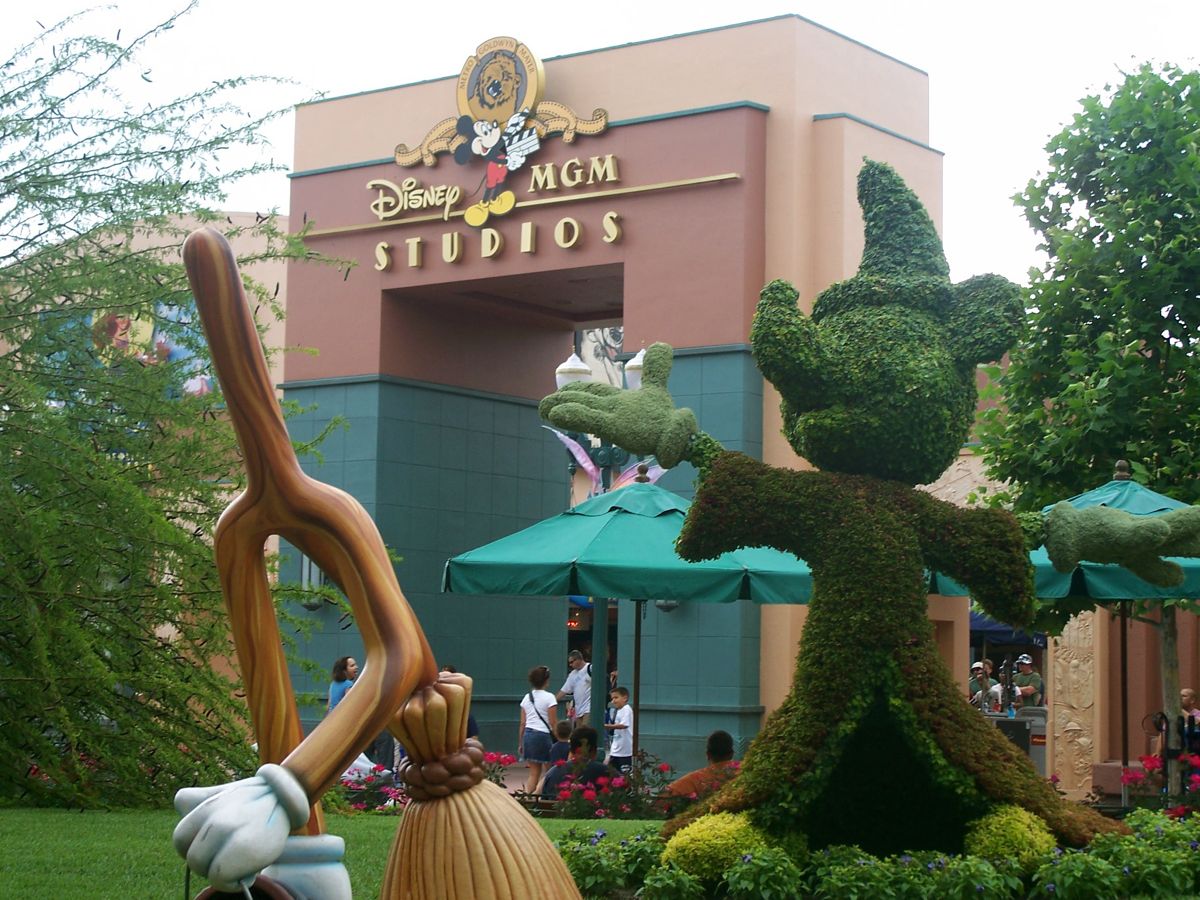
Unlike SeaWorld Parks and Entertainment and Cedar Fair (parent company to Cedar Point), Disney and Universal use their parks for more than cross-promotion and merchandising opportunities. Until the late 1990s/early 2000s, they also used their parks as production studios and offices that acted as a counterpart to the Hollywood divisions (StudioCentral.com). The television channel Nickelodeon also operated two sound stages plus production offices at Universal Studios Florida (Riley, 1998). So, in addition to using the intellectual property provided by the movie and television studios, the two media giants used their parks as production facilities to create new media and entertainment content and create production jobs in Central Florida (Milman, 2001). Beyond MGM’s timeless logo featuring the Latin inscription ars gratia artis (art for art’s sake) surrounding Leo the Lion, the cinematic works and television programs can be converted from visual art to commodities because they now have a material place to exist in the real world accessible by millions.

DisneyMGMIn essence, the entertainment elements and advertising materials are so thoroughly fused that it is nearly impossible for the average park guest to tell them apart. Beyond the surface level of movies and theme parks, there is evidence that, when planning a blockbuster movie, the studio has it in its mind whether of not this movie would be good to ride or be used as a theme in a park for shows and other attractions. Susan Davis (1996) explains that the media conglomerates, that primarily run the theme park industry, can pull from other media resources by way of acquisitions, partnerships, and licensing in order to grow and widen audiences and park guests. A classic example of this is the (no longer active) partnership Disney had with MGM Studios. Disney’s licensing deal with MGM allowed the company to use the iconic MGM logo and pull from its film library.

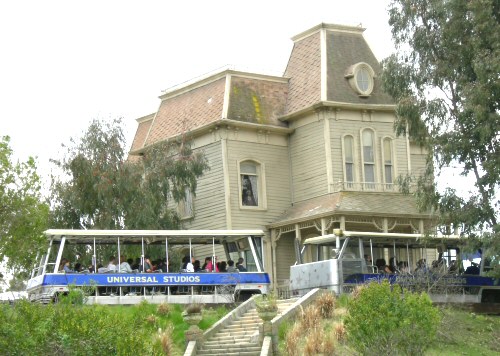
2006_psychotramIt’s well established that theme parks are an outlet for the parent companies that own them, and the movie studios they also own, to act as conduits for one another: the end result being cash flow. But, there are different ways of utilizing the cinema to benefit the theme park experience (Riley, 1998). Whereas Disney uses the characters in its movies to bolster the parks’ influence, Universal Studios (Hollywood and Florida) took a different approach (although, Universal is trending toward the Disney model in recent years). Universal Studios uses its studio tour(s) to blend labor with spectacle (Murdy, 2002). This offers the park guests a glimpse into how films are made. In recent years, this has provided less of a pull since it is common knowledge that a large portion of filmmaking exists within a computer. Universal Studios presents cinema and television history, production techniques, and special effects to impress the audiences and guests. So, one could assess that Universal Studios parks are self-reflexive in their choice of entertainment. At least this was true until park guests demanded more thrill rides and less education and appreciation for film and television art and history (Murdy, 2002).

Find out what you missed by buying my book on AMAZON!

To return to the beginning of this series, click HERE

“On Cinema and Theme Parks” (part 7)

My Book

In the current business model of theme parks, the park itself serves as an instant and rapid income generator for the larger parent corporation. “Immediate profits are made in much the same ways as in other mass entertainment industries, such as movies, rock concerts, and mass sports events” (Davis, 1996, p402).  However, the theme park differs from the amusement park because it depends on a narrative around which to build the rides, shows, shops, and restaurants (Herwig, 2006). And this is where the movie studio branches of these large corporations come into play. The movie (usually an epic, horror, or adventure) provides the narrative for the theme park (Herwig, 2006). Instead of the amusement park concept of hiring random performers, “the theme parks, by contrast, specialize in experiential homogeneity (Bristol, 1996). Simply stated, the theme park carefully crafts the types of performers that will be there. Ordinarily, the performers are in live shows directly associated with a work of cinema [e.g. Beauty and the Beast: Live on Stage (Walt Disney World), Beetlejuice Graveyard Revue (Universal Studios), or Grinchmas (Universal Islands of Adventure)]. While, midway performers and carnival workers or the golden age of the circus or roller-coaster parks are a hodgepodge of different ideas, the theme park is centrally produced and conceptualized for an experience that transcends from the superficial down to the core (Block, 2012).

If a theme park is designed well, the park guests can easily describe the theme. For instance, Disneyland’s theme would be the Magic Kingdom of Disney fantasy; the guests at Universal Studios can easily understand the theme is the movies. Not all parks are able to draw on a vast film heritage (e.g. Six Flags, Cedar Point, SeaWorld Parks and Entertainment). However, the parks with a direct connection to the cinema have consistently out performed their respective counterparts (IAAPA, 2014). There are exceptions to this rule of thumb, though. SeaWorld Parks and Entertainment does not have direct access to a vast film heritage (like Universal or Disney), but it perfected how to capitalize on theming from a historical perspective (as did Busch Gardens Williamsburg) and from a zoological perspective (as did SeaWorld Parks and Busch Gardens Tampa Bay) (Davis, 1996). However, in recent years, SeaWorld Parks and Entertainment has tapped into the franchises of DreamWorks Pictures and Sesame Street because of the instant association with cinema and television entertainment (Niles, 2013).

Before tackling this paper’s over-arching concept of analyzing the convergence of theme parks and movies, the question of “why media conglomerates” needs to be explored. It is important to note that in her article entitled The Theme Park: a Global Industry, author Susan G. Davis (1996) tackles this very subject. She suggests that the short answer is the simple fact that well-produced and directed theme parks are extremely profitable in the short-run. But, the fact they are highly profitable quickly does not take away from the fact that they are a massive financial expenditure for years prior to opening the gates to audiences turned guests. Once up and running, these mass entertainment behemoths provide an extraordinary source of virtually endless income for the media conglomerates. This income is used to produce the movies that will eventually wind up in the parks, and are also used for park improvements as technology and public taste or opinion changes (1996).

The acquisition of an existing or development of a new park is a perfect way for media conglomerates to enter into the tourism industry, thus providing a greater array of diversification. By gaining access to the tourism industry, media conglomerates can not only continue to make the movies they want, but can license or operate cruise ships, golf courses, restaurants, hotels, and resorts. In effect, by entering into the tourism industry, the media conglomerate can essentially create an entire entertainment district that acts as the fabled goose that laid the golden egg.

You can always find out what you missed by buying my book on Amazon.

To go back to the beginning of the series, click HERE.

“On Cinema and Theme Parks” (part 6)

My Book

Successful movie-themed attractions (stage shows or rides) create an atmosphere that is often built upon a foundation consisting of confrontation and direct simulation rather than long, sustained narratives. Whether watching a show on a stage or experiencing a ride-like attraction, the park guest is subjected to a series of physical and/or emotional shocks throughout the abridged narrative. Physical movement is also a strong element in an effective and successful movie-themed attraction design. This creates the illusion that the audience member is not only watching the action or horror take place, but part of the story as well. Implementing the use of special effects such as lighting effect or water also improve the guest experience by bringing the narrative to life.

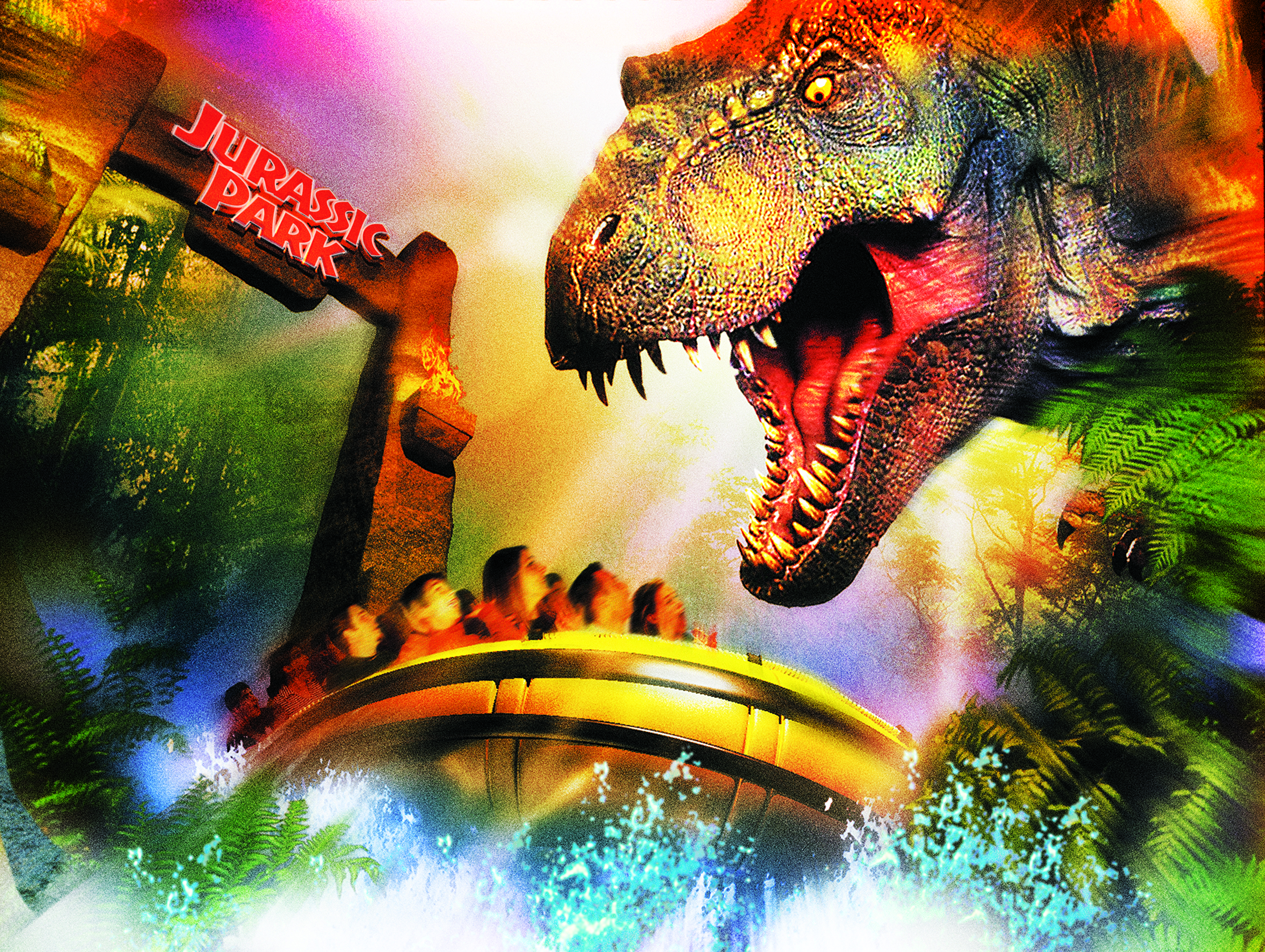
jurassic_park_river_adventureIn the contemporary theme park model, designers seek to create a relationship between the narrative and the audience (or park guest); this is what Geoff King (2000) refers to as “the cinema of attractions.” The park guests want to be transported from a world in which they are spectators to a world in which they are participants in the story. But, themed entertainment has come a long way from its inception into modern society. How the film theme has been fused with theme park attraction design has evolved over the decades to create the convergence and synergy that exists today. This is mostly due to the understanding of spectacle versus narrative. Although these two elements work seamlessly together in a themed attraction, they are not synonymous with one another. An excellent example of a horror/action film that is both spectacle and narrative, and furthermore, is both a film and a ride is Jurassic Park.

A similar example of the infusion of the aforementioned is Jaws. Just as the use of digital special effects (or visual effects) has evolved in film, the use has also evolved in theme parks. Digital (or visual) effects is a broad term, as it covers a range of possibilities that include computer-based or computer-generated effects (Wood, 2002). The “spectacle” of film and theme park rides possesses the ability to transform the narrative, thus adding an extra dimension to the story progression. However, ultimately within the full-spectrum of the elements that make up a film or ride based on a movie, spectacle is subordinate to narrative. Spectacle is needed to dazzle and simulate, but is essentially lifeless without the narrative. (Wood, 2002). Unlike a narrative, which can have great depth, spectacle “is often understood as a particular kind of extended special dimension…depthless, or as having an excess of surface…more image-full than mise-en-scene (meeze-on-syn) everything that appears before the camera and its arrangement, composition, blocking, and lighting] as it accumulates ever more details” (Wood, 2002, 373).

mise en sceneSpectacle should never be relied upon to carry a narrative, but should be considered a useful tool in enhancing the visceral experience of the narrative. Spectacle possesses the ability to be used to create a dynamic time and space through which the narrative expands and can sometimes be manipulated (Wood, 2002). Digital effects can be used to advance the story or comment on the relationship between characters and their respective environments. In terms of theme park attractions, specifically those based on movies, adding spectacle to the narrative of the ride serves to enhance the overall experience of the park guest. The use of spectacle enables the settings, events, and characters to come to life for the park guests experiencing the live movie-based narrative. Effectively used, the guests should feel as though they get transported from the real world to the world of the movie. Theme parks offer escapes from reality; this is also true of most movies. So, by utilizing the tangible benefits of both narrative and spectacle, the designers are successful in creating the illusion that the guest is either witnessing or part of the story.

University of Central Florida professor Andy Milman (2001) further explores this relationship between cinema and theme parks in his writings in the Journal of Tourism (2001). Exploring the infrastructure of the movies, theme parks, and the convergence of the two is a complex research area that is increasingly becoming more important as the movie studios turn to theme parks for revenue, and the theme parks depend on the movie studios for creative direction and expansive guest experiences. In the article Movie Induced Tourism, authors Roger Riley, Dwayne Baker, and Carlton S. Van Doren (1998) explain that movies provide both the objective and subjective material that capture peoples’ gaze and influence them to travel to the places depicted in movies.  The concept of traveling to locations where movies were made has a direct relationship with the concept of designing theme parks based on movies and showcasing the magic behind the movies (Riley et al, 1998). This concept can be seen in some of the most visited parks in the world. One of the goals of a studio like Warner Bros. is to get the fans of the Harry Potter books and movies to the Wizarding World of Harry Potter at Universal Studios Florida; and, by way of the flip side of the coin, one of the goals of the theme parks (mainly Disney and Universal) is to turn park guests into movie audience patrons (Milman, 2001).

You can always find out what you missed by buying my book on Amazon!

Return to the beginning of this series by clicking PART 1