Some movies soar on broomsticks; this one never quite gets off the ground.
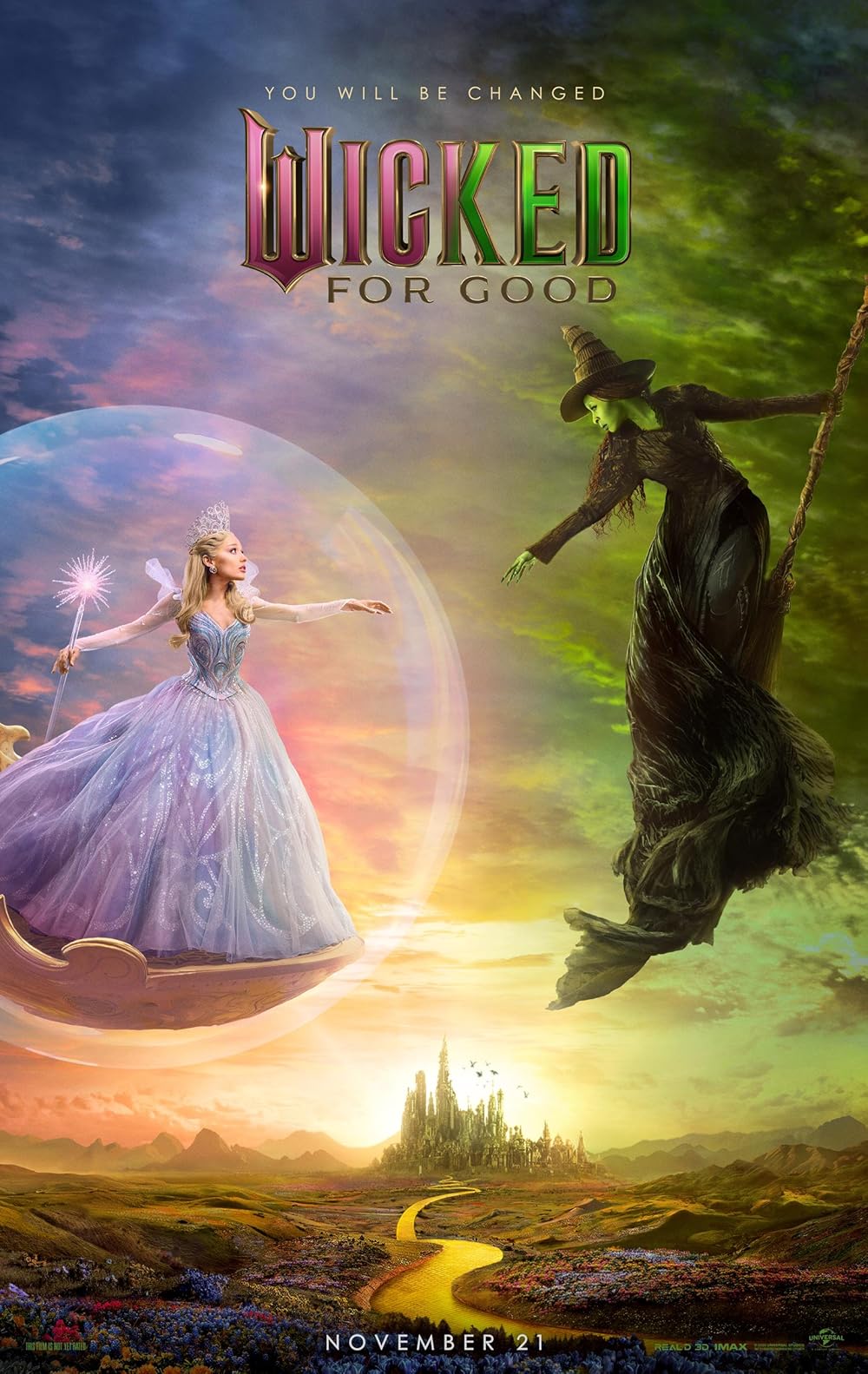
Wicked: For Good arrives with sky-high expectations, a beloved Broadway pedigree, and a cinematic world forever shaped by the 1939 Wizard of Oz. And while the heart for the material is undeniably present—director Jon M. Chu’s affection radiates through nearly every frame—the execution is fraught with problems that prevent the film from casting the spell it so eagerly attempts. It’s a movie overloaded with spectacle yet starved of narrative discipline, regrettably proving that sometimes a production can have all the right ingredients and still mix the potion incorrectly. There’s no question Jon M. Chu loves this material—his enthusiasm is evident. But passion alone isn’t enough. The film desperately needed stronger producing and organizational forces to ground the project, refine its pacing, and balance its emotional register. Instead, we get a production that feels at once over-managed and under-shaped.
Now demonized as the Wicked Witch of the West, Elphaba lives in exile in the Ozian forest, while Glinda resides at the palace in Emerald City, reveling in the perks of fame and popularity. As an angry mob rises against the Wicked Witch, she’ll need to reunite with Glinda to transform herself, and all of Oz, for good.
The most glaring issue in this movie is the pacing. This story never needed to be two movies. One Broadway show, one complete screen adaptation—simple math. Instead, Wicked and Wicked: For Good, collectively, feel like a single narrative forcibly stretched and compressed simultaneously. Scenes either end abruptly or linger with self-importance, giving the whole film a stop-and-start rhythm that betrays any emotional momentum. Moments that should breathe are suffocated, while others that should be tightened sprawl endlessly. Narratively, the film leans heavily on contrivances rather than character and plot development. Plot turns feel telegraphed or unearned, creating a sense that events are happening because the script demands it—not because the characters have earned the journey. Emotional beats are pushed rather than developed; the film tugs at heartstrings it hasn’t taken the time to weave. Many sequences feel manipulative instead of meaningful, leaving the viewer aware of the strings being pulled rather than swept up in the melody.
The film maintains the emotional equivalent of flooring the accelerator from beginning to end. Everything is heightened, everything is urgent, everything is presented at maximum volume. Without quieter resets, the story becomes exhausting rather than exhilarating. The lack of modulation leaves little room for nuance, making even potentially impactful moments blur together into one extended crescendo.
And then there’s the Oz problem itself–it was bad enough in the first movie, but this one amplifies all the flaws in this picture. From the opening Universal logo and Wicked title card, both stylized to resemble their 1930s counterparts, it’s clear the film wants to position itself adjacent to the classic Wizard of Oz. (And yes, I am aware that the Broadway show is based on books and not the 1939 classic, but this is a screen adaptation that is going to by default be connected spiritually and literally to the events, imagery, and characterizations of the original movie, but I digress). Whenever Wicked intersects with that iconic imagery, the visual and narrative disconnect is jarring. Tonally, textually, and aesthetically, nothing matches. Two of the most egregious examples are the Wicked Witch of the West’s castle, a location fundamentally misaligned with its 1939 counterpart in both history and design, and Glinda’s bubble. Hello??? She is clearly a magical being and travels by a magical bubble. To rob her of those elements is to rob her original characterization. For a film so eager to evoke some level of nostalgia, its disregard for consistency with cinema’s most beloved fantasy feels baffling.
The editing is among the film’s most distracting flaws—awkwardly timed transitions, uneven scene construction, and moments that feel spliced for convenience rather than cohesion. The cinematography dazzles with color and movement but contributes little to storytelling. It’s all flash, no narrative substance: beautiful images that ultimately amount to little more than digital confetti. And we cannot talk editing without addressing teh cringe CGI–the kind of digital spectacle that feels less like movie magic and more like a rough animatic accidentally exported at full resolution. Emerald City looks less like a tangible place and more like a high-end screensaver—everything polished to a rubbery sheen, with no texture, grit, or atmospheric depth. Characters often appear detached from their surroundings, as if composited into a digital diorama rather than inhabiting a lived-in world. Instead of mixing practical sets with digital enhancements, the film leans heavily on full-CG environments and even characters, resulting in octane-fueled and intimate moments feeling artificial. It’s like looking upon a world of fantasy that feels more like a giant animated backdrop with actors placed within versus a world that feels tangible.
Not even the presence of Michelle Yeoh is enough to elevate the film’s sense of class or gravitas. Although, it’s hard to blame her, given that she’s phoning in a performance built on scraps of narrative substance. In this second installment, her character is little more than an ornament of prestige, offering neither meaningful development nor any real impact on the story. Jeff Goldblum, likewise, delivers a surprisingly muted turn, coasting on his trademark charisma without ever fully engaging. When two performers known for commanding the screen seem this disengaged, it speaks less to their abilities and more to a film that gives them virtually nothing with which to work.
Wicked: For Good reaches for greatness but ultimately fails to stick the landing. It’s a film overflowing with heart yet undercut by structural missteps, contrived plotting, mismatched continuity, and a visual approach that prizes spectacle over substance. For a story about defying gravity, it’s ironic that this adaptation never quite lifts off the ground.
Ryan is the general manager for 90.7 WKGC Public Media and host of the show ReelTalk “where you can join the cinematic conversations frame by frame each week.” Additionally, he is the author of the upcoming film studies book titled Monsters, Madness, and Mayhem: Why People Love Horror. After teaching film studies for over eight years at the University of Tampa, he transitioned from the classroom to public media. He is a member of the Critics Association of Central Florida and Indie Film Critics of America. If you like this article, check out the others and FOLLOW this blog! Follow him on Twitter: RLTerry1 and LetterBoxd: RLTerry
A cautionary tale of when YouTubers confuse content with cinema.
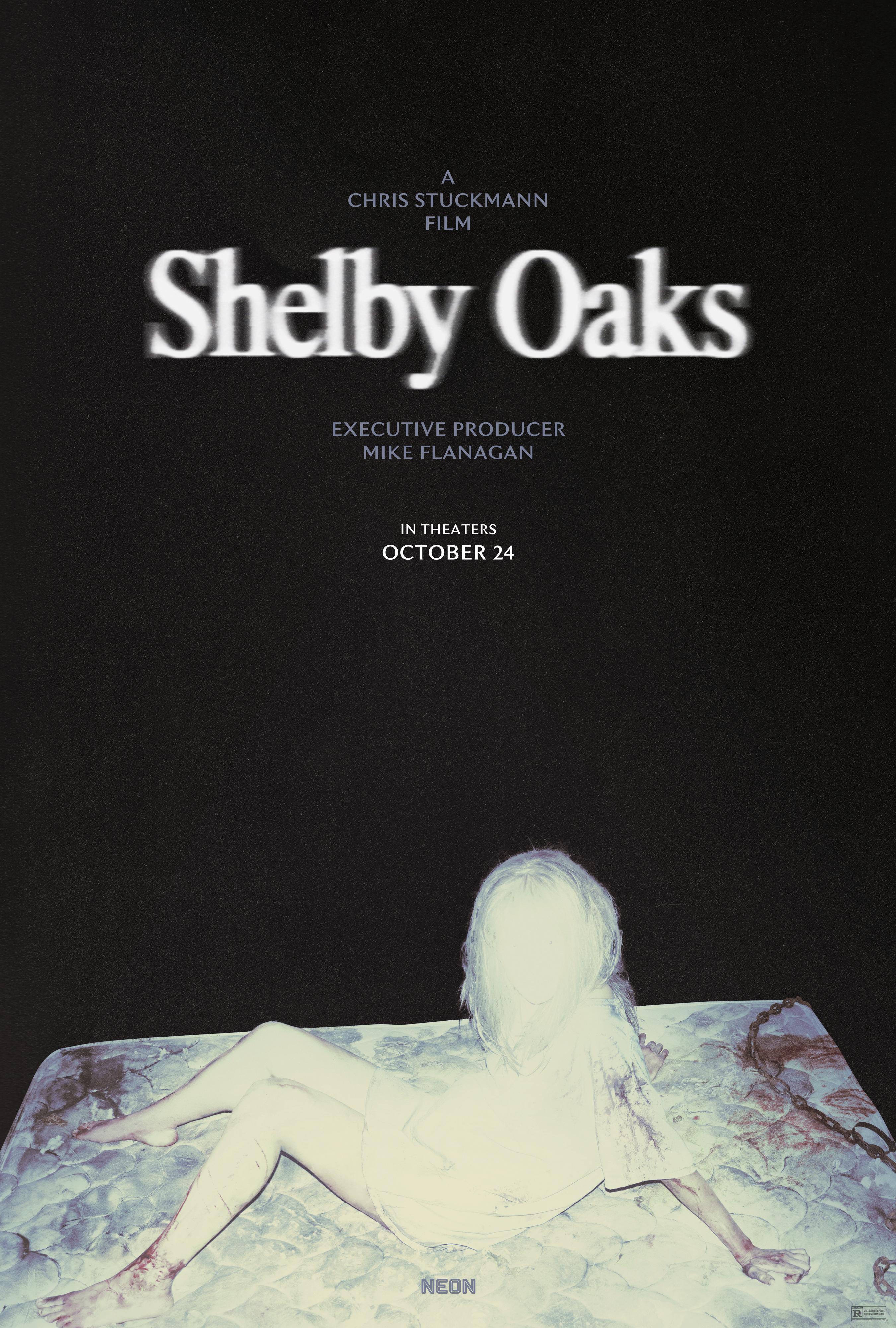
Chris Stuckmann’s Shelby Oaks arrives with all the makings of a breakthrough: (1) it’s one of the most successful Kickstarter-funded indie films ever, and (2) it’s directed by one of YouTube’s most popular influencer-critics. In fact, I’ve used some of his videos in my own classroom—good material: informative, engaging, and accessible for budding cinephiles. But therein lies the rub: informative and engaging does not a motion picture make. The premise, though, is undeniably intriguing—a reimagining of familiar horror tropes with contemporary urgency. Stuckmann delivers a film that has the bones of something potent—think The Blair Witch Project meets Rosemary’s Baby: paranoia, obsession, and the horror of the unseen, all wrapped in a missing-person mystery and topped with a bow of supernatural dread.
Shelby Oaks is about Mia’s search for her long-lost sister and paranormal investigator Riley becomes an obsession when she realizes an event from her past may have opened the door to something far more sinister than she could have ever imagined.
Like many contemporary filmmakers–particularly those that got their start on YouTube–Shelby Oaks excels in technical achievement and marketing. The cinematography is confident and atmospheric, drenched in moody lighting that evokes gothic horror. There is little doubt that Stuckmann clearly understands shot composition, pacing within the frame, even editing in-camera and the importance of visual tone. All the technical elements are quite impressive for a debut feature. And if all a motion picture was–was the visual elements–it’d be easy to admire. But it isn’t. Even Hitchcock knew that. Which is why Hitch never wrote his own screenplays–he generated the idea, even outlined entire scenes and sequences–but he knew that he needed to work with a screenwriter, that understood the material, in order to fully realize his movie idea for the screen. What is greatly lacking in contemporary cinema is an understanding of what makes a great story–plot structure, mechanics, and the emotional substructure.
But Shelby Oaks falters where too many YouTube-born filmmakers stumble—storytelling. Shelby Oaks has a great idea for a movie, but not a fully realized narrative. At its core, the narrative never builds sufficient momentum. Why? Simple–because there’s no real opposition. “Evil,” in the abstract, isn’t conflict. Opposition must manifest into something tangible between the character and his or her external goal, whether that’s a person, a system, or her own inner demons. For all the supernatural activity in the film, there never truly emerges a character of opposition. The result is a macabre mystery that depicts scenes and sequences wherein Mia’s pursuit unfolds, but without the benefit of a tangible sense of escalation or even revelation. Shelby Oaks is more of a proof of concept rather than a complete story.
Stuckmann, for all his film knowledge, seems more comfortable replicating tone and texture than constructing narrative architecture. His background in reviewing movies gives him an eye for what looks right—but not yet the discipline to shape what feels right. He understands what sells, what gets views, and even genre conventions. But sadly, none of the characters, including Mia, possess real dimension or agency. She and the rest of the characters are vehicles for mood rather than emotional engagement.
What works on YouTube—enthusiasm, charisma, and technical dissection—doesn’t automatically translate to cinema. His channel reveals a deep love of horror and a commendable understanding of its visual language, yet Shelby Oaks exposes the gap between appreciating a genre and authoring it. The film lacks what isn’t needed in (and can even get in the way of) YouTube content: storytelling mechanics, structure, and the discipline of narrative design. It’s one thing to analyze story beats; it’s another to build them, to shape character arcs, rhythm, and tension through the grammar of storytelling rather than the syntax of spectacle. Often, YouTube videos have great hooks, but they lack the narrative substance behind the hook.
What’s most frustrating is how close Shelby Oaks comes to working. The concept is rich, and the craftsmanship is undeniably strong. Stuckmann clearly loves cinema, and there’s passion behind every frame. But cinema isn’t content creation—it’s storytelling. And storytelling requires more than aesthetic confidence; it demands structure, development, and resolution.
The YouTube garden is flourishing with emerging directors, cinematographers, and editors—talented creators who’ve mastered the language of cameras, lighting, and cutting for attention. But what it’s not producing are writers. The art—and science—of writing seems to be withering in the age of influencer cinema. Many creators know how to make something look good but not why it should matter. Storytelling requires patience, discipline, and a willingness to think beyond the thumbnail and algorithm. In a culture where speed and spectacle drive engagement, screenwriting—the slow, deliberate architecture of character, conflict, and change—feels almost antiquated. And yet, it remains the soul of cinema. Without writers, we get films that resemble content: sleek, competent, and hollow.
Shelby Oaks stands as a cautionary tale of when YouTubers confuse content with cinema. Furthermore, this movie is an example of the hollowness of contemporary cinema, how cinema is feeling more and more disposable as the months and years pass the silver screen. The tools are there, the ambition is there, but without mastery of story, all that remains are haunting images in search of a heartbeat.
Ryan is the general manager for 90.7 WKGC Public Media in Panama City and host of the public radio show ReelTalk “where you can join the cinematic conversations frame by frame each week.” Additionally, he is the author of the upcoming film studies book titled Monsters, Madness, and Mayhem: Why People Love Horror. After teaching film studies for over eight years at the University of Tampa, he transitioned from the classroom to public media. He is a member of the Critics Association of Central Florida and Indie Film Critics of America. If you like this article, check out the others and FOLLOW this blog! Follow him on Twitter: RLTerry1 and LetterBoxd: RLTerry
Don’t answer the call—best to let go to voicemail.
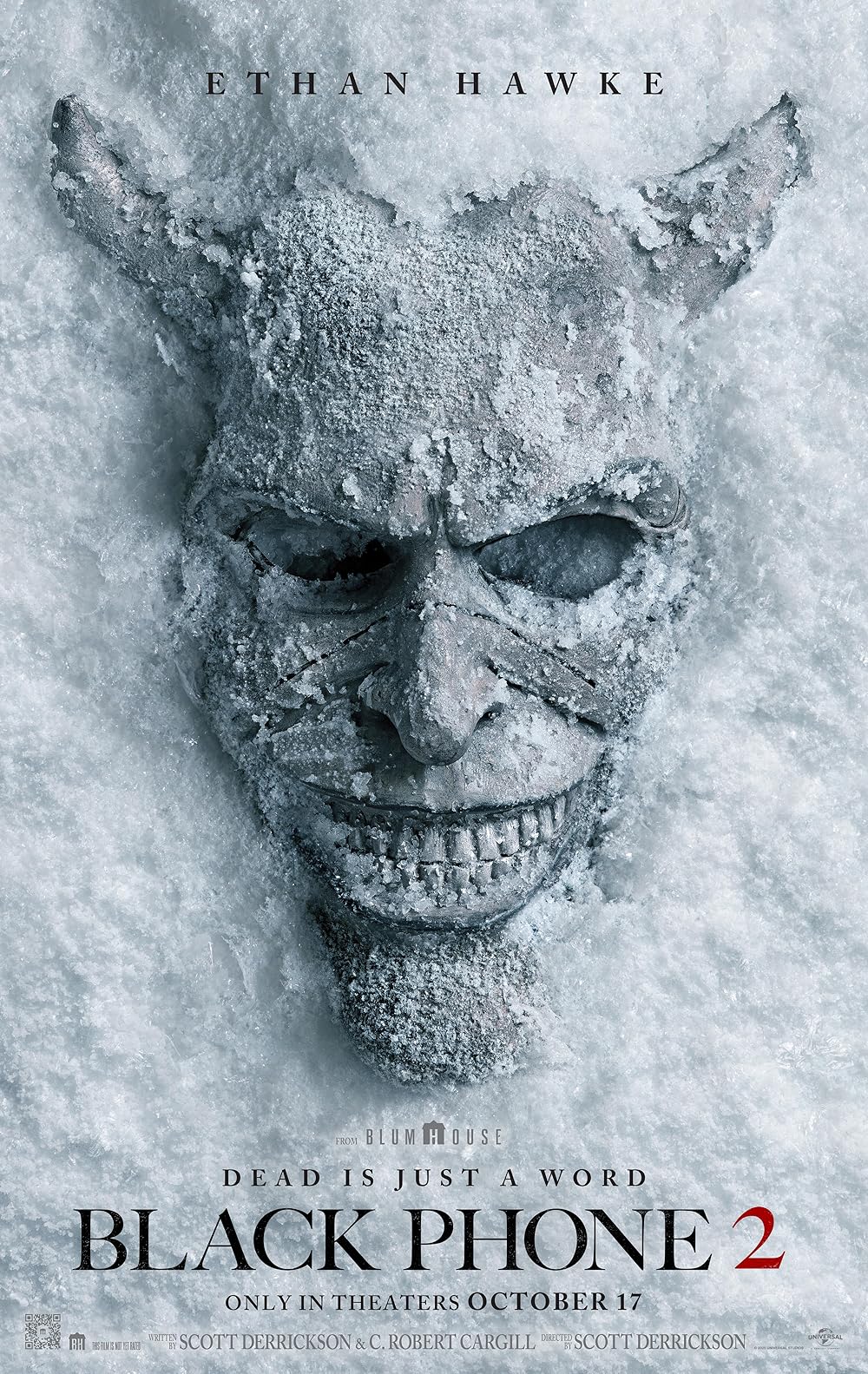
Atmospheric but empty. Black Phone 2 may ring with eerie potential, but what you’ll hear on the other end is mostly static. You just as soon use a telegraph service to form a connection between the big screen and audience than the calls this movie desperately makes. Derrickson demonstrates that he can certainly direct the heck out of a horror movie, but it might be time for someone else to write the next call–or at the very least, he should perhaps stop hiring his friend as a writing partner. While the film succeeds in delivering a chilling, oppressive atmosphere, reminding us that Derrickson remains one of horror’s more visually articulate directors, it also reinforces the unfortunate truth that he’s a far better director than writer. What we have here is another casualty of the writer-director syndrome; which is to suggest that one can be a stylistic filmmaker or even auteur without need to wear both hats. Some filmmakers are better directors, some better writers–and that’s okay! While Black Phone 2 begins with promise, it quickly devolves into a frustrating exercise in squandered ideas, tonal inconsistency, and narrative disarray.
Bad dreams haunt 15-year-old Gwen as she receives calls from the black phone and sees disturbing visions of three boys being stalked at a winter camp. Accompanied by her brother, Finn, they head to the camp to solve the mystery, only to confront the Grabber — a killer who’s grown even more powerful in death.
The film ambitiously sets out to expand upon the supernatural mythology introduced in the 2022 original. Derrickson clearly wants to explore the dream world as a deeper psychological battleground—echoing the meta-horror energy of A Nightmare on Elm Street III: Dream Warriors. But instead of capturing that sequel’s inspired creativity and emotional cohesion, Black Phone 2 feels more like a discount version of a superior brand. The screenplay introduces a fascinating set of “rules” for how this dream realm operates, only to immediately ignore or contradict them, leaving the audience confused rather than intrigued. Internal logic is sacrificed for jump scares and contrived character beats that go nowhere.
And speaking of characters—if you can call them that—most are little more than human wallpaper. Half the ensemble feels like a collection of movie people consisting of broadly sketched types that serve a single plot function before fading into irrelevance. Others border on offensive caricature, perpetuating inaccurate and disparaging stereotypes. For all intents and purposes, about three-and-a-half characters can be removed from the movie, and the story play out much the same. Why that half-character? Because, they do help develop the plot in a measurable way–albeit a modicum of development. When a film’s supporting cast functions more like furniture versus people, no amount of spooky atmosphere can save it. The best written and developed character was Demián Bichir’s Armando.
Still, there are moments, scenes, and even entire sequences that remind us of Derrickson’s undeniable craftsmanship. His camera captures dread beautifully; his sense of timing and space within the frame conjures genuine unease. There are glimpses of a haunting, emotionally resonant movie buried somewhere beneath the fractured structure and incoherent script. Unfortunately, those glimpses are fleeting. And that’s the great tragedy here—not just for Black Phone 2, but for a growing trend in contemporary filmmaking: the writer-director who insists on doing it all, in the name of authorship.
Once upon a time, filmmakers understood that collaboration was the lifeblood of cinema. Directors directed. Writers wrote. And when both crafts worked in harmony, we got films that not only looked great but meant something. Somewhere along the line, “auteur” became synonymous with “solo act,” and too many directors convinced themselves that to have a voice, they had to pen the script too. The result? Movies that look immaculate but feel hollow—visual symphonies built on shaky foundations.
Derrickson is a perfect example (another is Jordan Peele). As a director, his command of tone and atmosphere is nearly peerless; his work in horror often hums with intelligence and mood. But Black Phone 2 exposes the limits of his pen. The foundation for a compelling story is here—the bones of something rich and psychologically resonant—but the film never benefits from a writer who truly cares about character, motivation, or thematic depth. It’s as though Derrickson fell so in love with his own concept and craft that he forgot to ask whether the story itself deserved that devotion.
A gifted director needn’t be the writer to be an auteur. In fact, some of the greatest auteurs—Hitchcock, Spielberg, even Fincher–are those who know the value of letting a skilled screenwriter shape the clay before they bring it to life. Black Phone 2 might have been a haunting triumph had Derrickson trusted someone else, other than his friend, to write the words for the world he so clearly knows how to visualize. Instead, we’re left with a reminder that even the most talented filmmaker can’t build a cathedral on a cracked foundation.
By the time the credits roll, Black Phone 2 feels like a series of individually thoughtful scenes strung together by a story that never quite finds its pulse. It’s a patchwork of ideas that might have worked—had they been developed, connected, or earned. The result is a film that looks and sounds like a horror movie, but never feels like one worth the cost of time.
Ryan is the general manager for 90.7 WKGC Public Media in Panama City and host of the public radio show ReelTalk “where you can join the cinematic conversations frame by frame each week.” Additionally, he is the author of the upcoming film studies book titled Monsters, Madness, and Mayhem: Why People Love Horror. After teaching film studies for over eight years at the University of Tampa, he transitioned from the classroom to public media. He is a member of the Critics Association of Central Florida and Indie Film Critics of America. If you like this article, check out the others and FOLLOW this blog! Follow him on Twitter: RLTerry1 and LetterBoxd: RLTerry
Celebrating the 75th anniversary of All About Eve and the 30th anniversary of its descendent Showgirls.
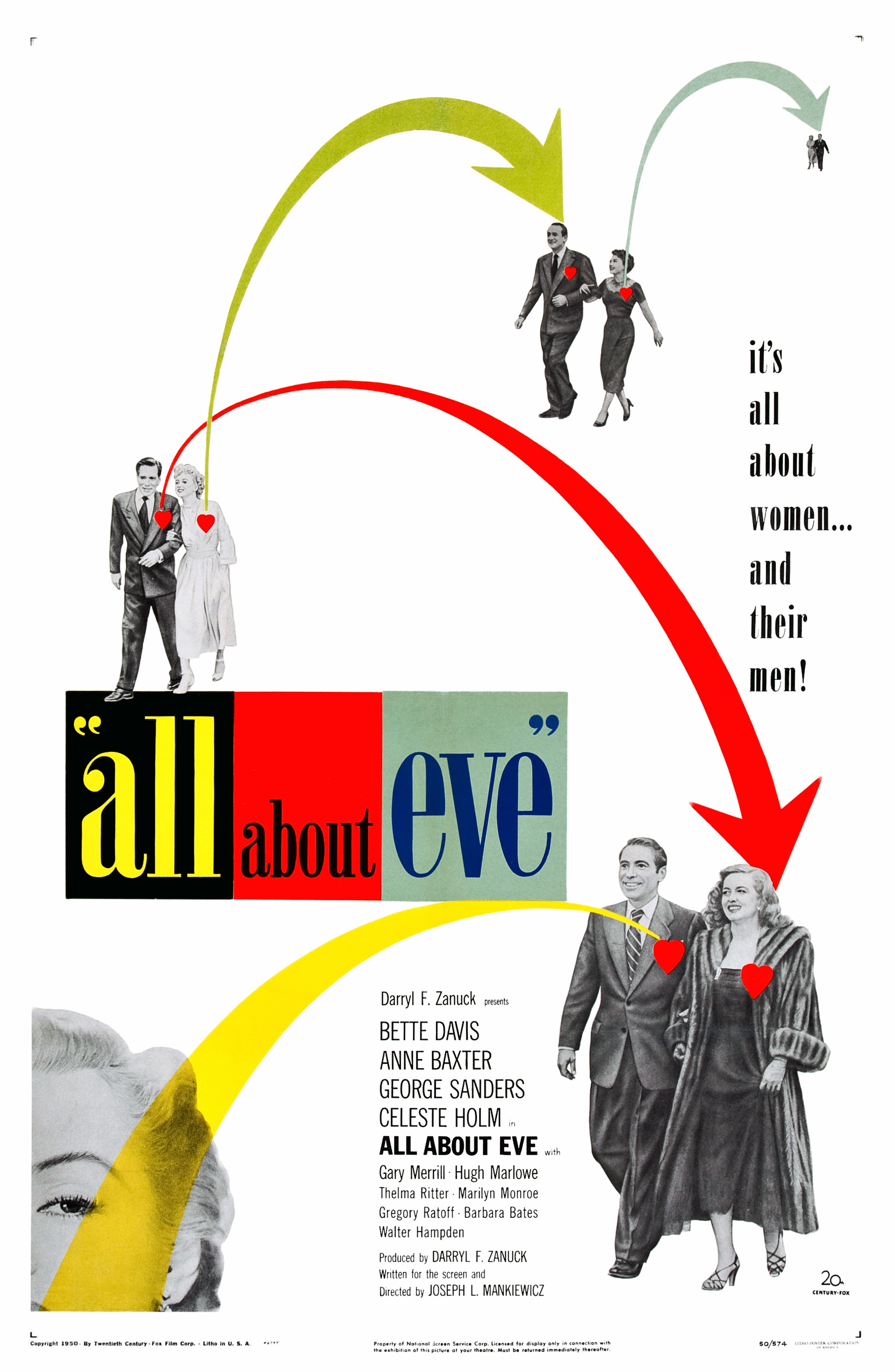
“Fasten your seatbelts, it’s going to be a [gripping read].” All About Eve is celebrating 75 years of cinematic excellence, and its audacious descendant Showgirls is marking 30 years of—well—let’s call it a complicated legacy (but I like to think of it as a misunderstood masterpiece). Whether you’re among those who believe Showgirls was simply ahead of its time or still see it as a camp disaster, one thing is undeniable: without All About Eve, it likely wouldn’t exist at all. For 75 years, All About Eve endures as both a pinnacle of Hollywood storytelling and a cautionary tale about the intoxicating—and corrosive—nature of ambition. Its exploration of fame, manipulation, and the cyclical hunger of show business feels as sharp and relevant today as it did in 1950, resonating in an era where social media stardom and viral fame echo the same relentless pursuit of the spotlight.
Joseph L. Mankiewicz’s Oscar-winning classic, based on Mary Orr’s short story The Wisdom of Eve, has captivated audiences for 75 years with its seamless blend of timeless entertainment and biting critique. More than just a backstage melodrama, All About Eve dissects the intoxicating allure—and devastating cost—of stardom and ambition with wit as sharp as a perfectly aimed dagger. Its dialogue remains some of the most quotable in film history, its characters as vivid today as they were in 1950, and its observations about the ruthlessness of fame feel eerily prescient in our age of viral sensations and manufactured celebrity.
Since its release, All About Eve has inspired countless films and remains a cornerstone of Hollywood storytelling. But what does it mean to you? What makes it special or stand out after all these years? Perhaps you regard it simply as an iconic classic; or perhaps you find in it something more personal—an echo of ambition, vulnerability, or the razor’s edge of success. From its sparkling, acidic dialogue to some of the most quoted lines in cinema including the immortal “Fasten your seatbelts. It’s going to be a bumpy night,” Margo Channing’s spirit lives on. So much for her fear of being replaced by “the next bright young thing;” she is as alive today as she ever was. Serving as both a love letter to and critique of the theater and the entertainment industry, Mankiewicz’s film exposed the timeless cost of ambition and the ruthless cycles of celebrity—lessons that still resonate in an era obsessed with youth and virality. Arriving at the twilight of Hollywood’s Golden Age, this masterpiece continues to epitomize the glamorous yet perilous dance between artistry and stardom. Beyond its historical and industrial significance, it endures because it connects—visually, emotionally, and thematically—with anyone who has ever feared obsolescence or dared to reach too high.
Part of what still fascinates audiences is the film’s layered structure and the magnetic performances at its heart. Bette Davis’ Margo Channing is so perfectly pitched that viewers often forget they are watching a performance at all–there is a lot of Davis in Channing much in the same way there was a lot of Gloria Swanson in Norma. Neither legendary actress was their respective screen personas, but there were parallels that empowered genuine, sincere deliveries. Mankiewicz wove aspects of Davis’ own persona—her wit, her commanding presence, her refusal to fade quietly—into Margo’s characterization, yet Davis was both exactly Margo and not her at all. Much in the same way Gloria was both Norma and not at all–at the same time, as both iconic films were released in 1950. Davis seized the role as a triumphant reinvention, turning what could have been a caricature of the “aging diva” into a fully realized, vulnerable, and dangerously sharp woman. Like Margo, Davis had weathered the changing tides of the industry. But in true Bette Davis fashion, rather than retreat into the past, Davis embraced this role as an opportunity to reassert her dominance in the art form she loved.
If you’re looking for a real-life “Margo Channing,” aside from the real-life individuals on which Mary Orr based her original short story published in Cosmopolitan magazine, you’ll find shades of her in many stars of the era who feared being replaced by someone younger and hungrier, yet few carried that fear with the same poise and theatricality as Davis. Her performance reminds us that the ghosts of obsolescence do not have to haunt you if you learn to wield them as power instead of surrendering to them. Davis did exactly that, continuing to reinvent herself on stage, screen, and television for decades to come. All About Eve endures not because it is frozen in the amber of classic cinema, but because it still speaks—cuttingly, wittily, and poignantly—to the ever-revolving stage of fame and the cost of staying in the spotlight.
Who, then, were the real-life figures that inspired Mary Orr’s original story? While Orr never definitively identified the proud theatrical star and the manipulative upstart who became the templates for Margo (originally “Margola”) and Eve, her own comments—and those of her contemporaries—point to a blend of influences. Viennese actress Elisabeth Bergner and Broadway legend Tallulah Bankhead are often cited as inspirations for Margo, while actress Irene Worth and a “terrible woman” (Bergner’s own words) named Ruth Maxine Hirsch—who performed under the stage name Martina Lawrence—are believed to have shaped the character of Eve: the fan-turned-assistant-turned-understudy-turned-star. Though no single pair of women can be pinpointed as the Margo and Eve, the fact that these characters emerged from a patchwork of real events and personalities only deepens the story’s enduring intrigue.
All About Eve endures as timeless because at its core, it is less about a particular moment in Broadway’s Golden Age and more about ambition, ego, and the ruthless pursuit of relevance—dynamics that still fuel the entertainment industry today. Strip away the mink coats, rotary phones, and cigarette smoke, and the story of a hungry ingénue inserting herself into the life of an aging star could just as easily unfold in the Instagram era, where image management and backstage maneuvering are just as cutthroat. The barbed wit of Mankiewicz’s script remains startlingly fresh. Its sass, frankness, and playful cruelty dance along the liminal space between youth and experience, sincerity and manipulation, still lands with a sting. With only a few cosmetic updates, All About Eve could be set in present-day Hollywood, Broadway, or even influencer culture, and it would be no less thoughtful, provocative, or entertaining.
The themes of All About Eve find a striking mirror in today’s social media and influencer culture, where the pursuit of fame and relevance plays out in real time before millions. Just as Eve Harrington ingratiates herself into Margo Channing’s circle to climb the theatrical ladder, influencers often build careers by aligning with established figures—sometimes with genuine admiration, other times with calculated opportunism. The tension between youth and experience, central to the film, is equally present online, where younger creators often supplant veterans by capturing fleeting trends, while older figures wrestle with maintaining relevance in an environment that prizes novelty.
Whether set in the past, present, or in projections of the future, explorations of image versus reality resonate powerfully, including in today’s digital landscape wherein curated personas can mask ambition, manipulation, and insecurity. Even the razor-sharp verbal sparring of All About Eve has its equivalent in the witty clapbacks, subtweets, and public callouts that fuel today’s digital drama. In both cases, the stage—whether Broadway or Instagram—is a battleground where applause, followers, and validation dictate survival.
This enduring clash between performance and reality underscores how stories of ambition and rivalry are continually reimagined across eras and mediums. From the lights of Broadway to the doom scrolling of Instagram, the hunger for validation and the willingness to deceive—or be deceived—remains constant. It’s no surprise, then, that later films would tap into similar veins of that which run through All About Eve, though with radically different tones and settings.
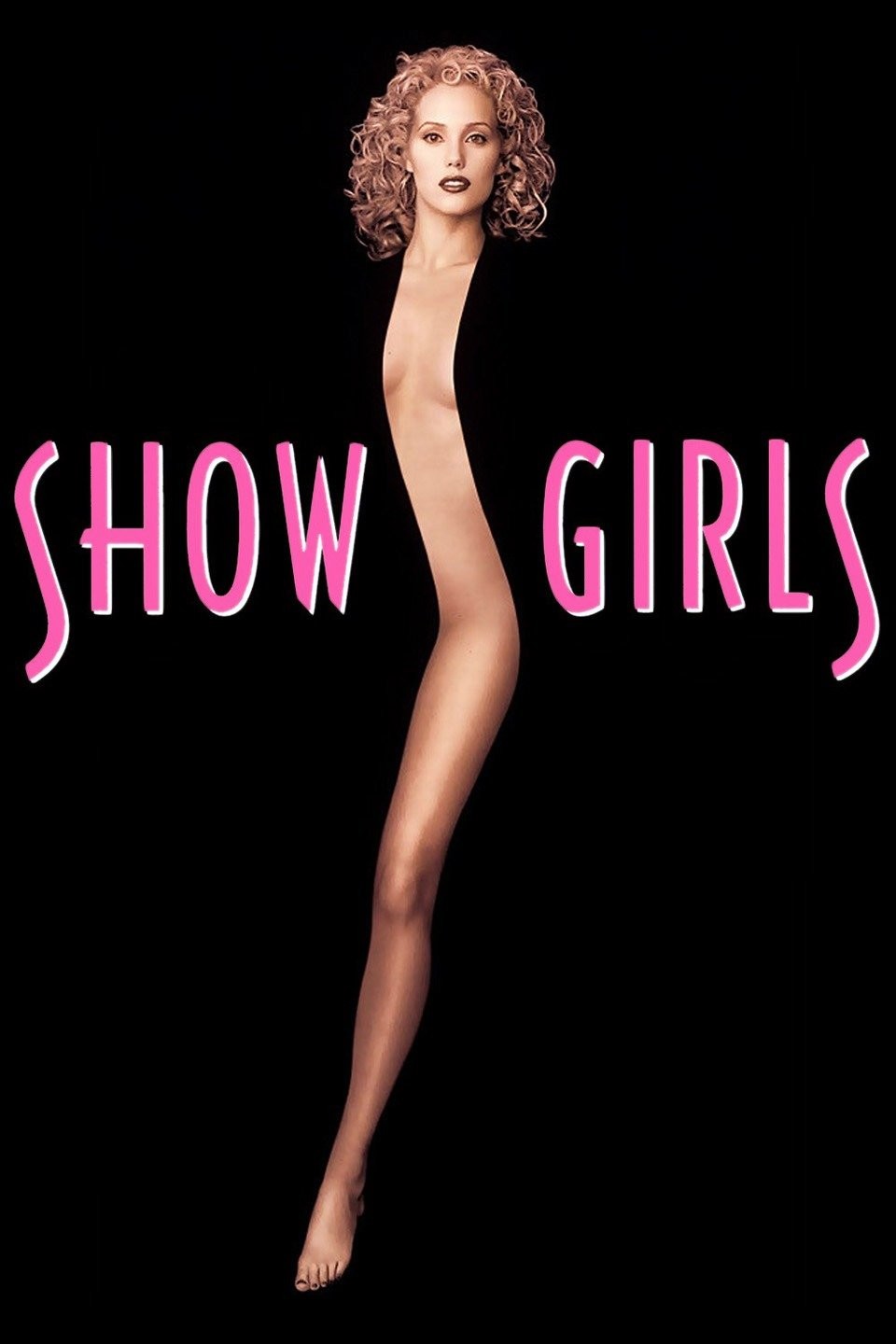
Over the decades, Paul Verhoeven’s notorious Vegas fever dream Showgirls has been labeled everything from a misunderstood masterpiece to one of the worst movies ever made. What was initially dismissed by critics as vulgar excess has since been reappraised by some as a biting, if over-the-top, satire of the entertainment industry’s exploitation of women, ambition, and sexuality. Its brash depiction of the climb from obscurity to stardom mirrors that of All About Eve, though filtered through neon lights, gratuitous spectacle, and camp sensibilities. That tension—between tawdry sensationalism and incisive critique—is precisely what keeps Showgirls alive in the cultural imagination, ensuring its legacy as both a cautionary tale and a cult phenomenon.
Showgirls operates as a satire of entertainment culture and the performers who are both consumed by and complicit in its machinery. Where Eve Harrington’s quiet scheming exposes the ruthless politics of the theater, Nomi Malone’s raw ambition lays bare the transactional underbelly of Las Vegas spectacle. Both films hinge on the same unsettling truth: in an industry where visibility is power, identity itself becomes a performance. What distinguishes Showgirls is how it weaponizes vulgarity and excess as a form of critique. Its glitter, nudity, and violence were long dismissed as gratuitous, yet in hindsight these elements function as deliberate provocations; it can be read as an aesthetic that is designed to mirror the gaudiness and cruelty of the world it depicts. Seen today, the film feels strangely ahead of its time, anticipating the rise of influencer and social media culture where personas are manufactured, scandals are commodified, and fame can be won or lost overnight. Reconsidered in this light, Verhoeven’s so-called disaster reveals itself as a smart, if abrasive, cultural text: one that understands spectacle not as decoration, but as the very language of modern celebrity.
At its core, Showgirls dramatizes the hollow cost of chasing celebrity. Nomi’s relentless climb through Las Vegas’s entertainment machine is marked by betrayal, objectification, and the constant demand to reinvent herself in service of spectacle. Each rung of success—dancing at the Stardust, becoming the star attraction—promises fulfillment, yet delivers only greater alienation. Verhoeven underscores how ambition, when tethered exclusively to validation and visibility, erodes one’s sense of self until little remains beyond the performance itself. By the film’s conclusion, Nomi is left with the trappings of stardom but no genuine connection, no lasting satisfaction, no identity untouched by the corrosive gaze of the industry.
In this way, Showgirls finds an unlikely kinship with All About Eve. Where Margo Channing wrestles with the costs of aging in an industry that worships youth, Nomi embodies the illusion that ascension itself will satisfy the hunger for recognition. Both films reveal the same truth: the spotlight is never enough. Whether in the refined milieu of Broadway or the gaudy spectacle of Vegas, ambition without grounding in humanity becomes corrosive, leaving its pursuers hollow even in triumph. It’s that shared cynicism—and tragic insight—that makes Showgirls more than the vulgar provocation it was dismissed as, and positions it as a worthy, if wildly flamboyant, descendant of Mankiewicz’s classic.
Seventy-five years after its release, All About Eve still cuts to the heart of what it means to seek validation under the bright lights, and thirty years on, Showgirls shows us that the hunger has only grown more voracious, more theatrical, and perhaps more desperate. Both films, in their vastly different registers, remind us that the pursuit of fame is never simply about talent or opportunity—it is about the sacrifices made along the way, and the hollow victories waiting at the top. If All About Eve gave us the blueprint for understanding the price of ambition, Showgirls showed us what happens when that price is paid in full. And as long as there are stages to stand on—whether Broadway, Las Vegas, Hollywood, or TikTok—the lessons of both films will remain hauntingly, and uncomfortably, relevant.
For the companion radio/podcast episode to this article, check out my show ReelTalk on WKGC Public Media. You can listen through Apple, Spotify, or wherever you get your podcasts. Links provided below or, in your podcast service, search WKGC Public Media.
Ryan is the general manager for 90.7 WKGC Public Media in Panama City and host of the public radio show ReelTalk “where you can join the cinematic conversations frame by frame each week.” Additionally, he is the author of the upcoming film studies book titled Monsters, Madness, and Mayhem: Why People Love Horror. After teaching film studies for over eight years at the University of Tampa, he transitioned from the classroom to public media. He is a member of the Critics Association of Central Florida and Indie Film Critics of America. If you like this article, check out the others and FOLLOW this blog! Follow him on Twitter: RLTerry1 and LetterBoxd: RLTerry
The magic of Sunset Boulevard is still capturing the “eyes of the world” from all those “wonderful people out there in the dark” seventy-five years later.
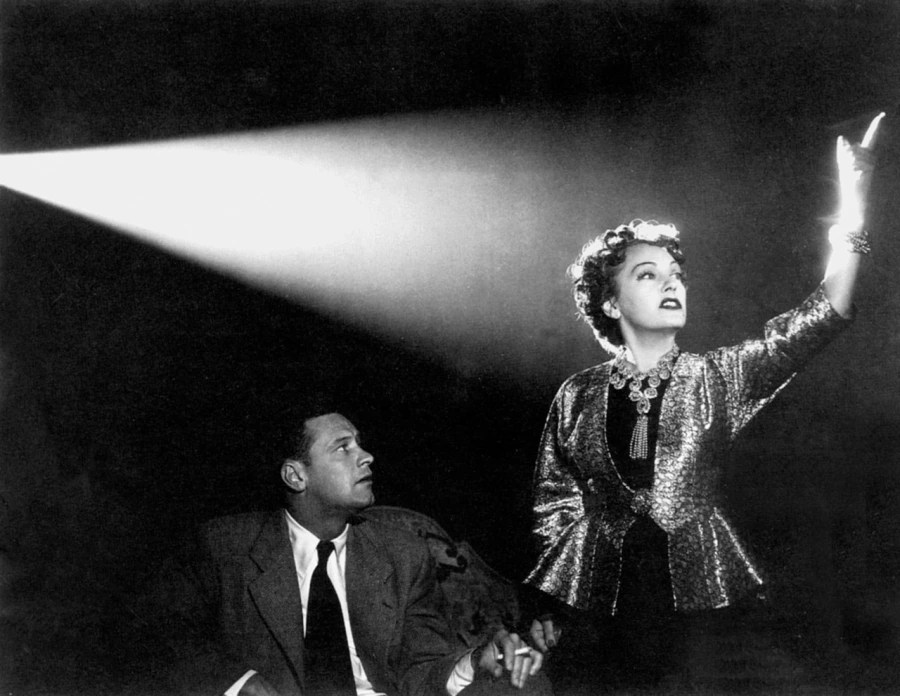
There is little question that Billy Wilder’s masterpiece Sunset Boulevard still captures the eyes, hearts, minds, and souls of audiences seventy-five years later. It continues to stare unblinking into the soul of Hollywood—and, perhaps uncomfortably, into the faces of all those people out there in the dark. Billy Wilder’s mordant masterpiece starring Gloria Swanson as Norma Desmond endures not only because of its sharp wit, noir elegance, and unforgettable performances, but because it remains a mirror for an industry—and an audience—forever tempted to trade substance for novelty. Its barbed satire of fading stars, disposable talent, and a studio system eager to discard the past feels eerily prescient in an era when algorithms decide what stories are worth telling and studios recycle intellectual property like celluloid scraps. Watching it now, one realizes the film is not merely a relic of old Hollywood’s cynicism—it is an indictment of the complacency of contemporary audiences and the short-term greed of the modern industry. Sunset Boulevard has not grown old; it’s the world around it that has refused to grow up.
Since its release on 10th of August in 1950, it has been the inspiration to countless films. But what does it mean to you? What makes it special or stand out to you? Perhaps you just see it as an iconic film; or just maybe, you see it as representing something personal to you. From classic noir cinematography to some of the most quoted lines of all time, Norma Desmond’s spirit lives on. So much for Joe Gillis’ line about her “still waving proudly to a parade that has long since passed her by;” she is still as alive today as she ever was. Serving as a mirror to the current state of Hollywood, Billy Wilder’s film shed light on the darker side of celebrity that still haunts to this very day. This timeless movie provoked Hollywood to take a cynical and honest look at itself, and the dangerous price of stardom–especially when the star is fading into obscurity. Poignantly arriving near the end of the Golden Era (or Studio System), this cinematic masterpiece continues to be the epitome of a Hollywood and anti-Hollywood film for all eternity. Beyond what it meant historically or industry-wise, it holds meaning and significance for many who watch it. One of its strengths to withstand the test of time is the fact is its ability to connect with people visuals and emotionally. That, combined with solid technical aspects, makes for a dynamic cinema experience.
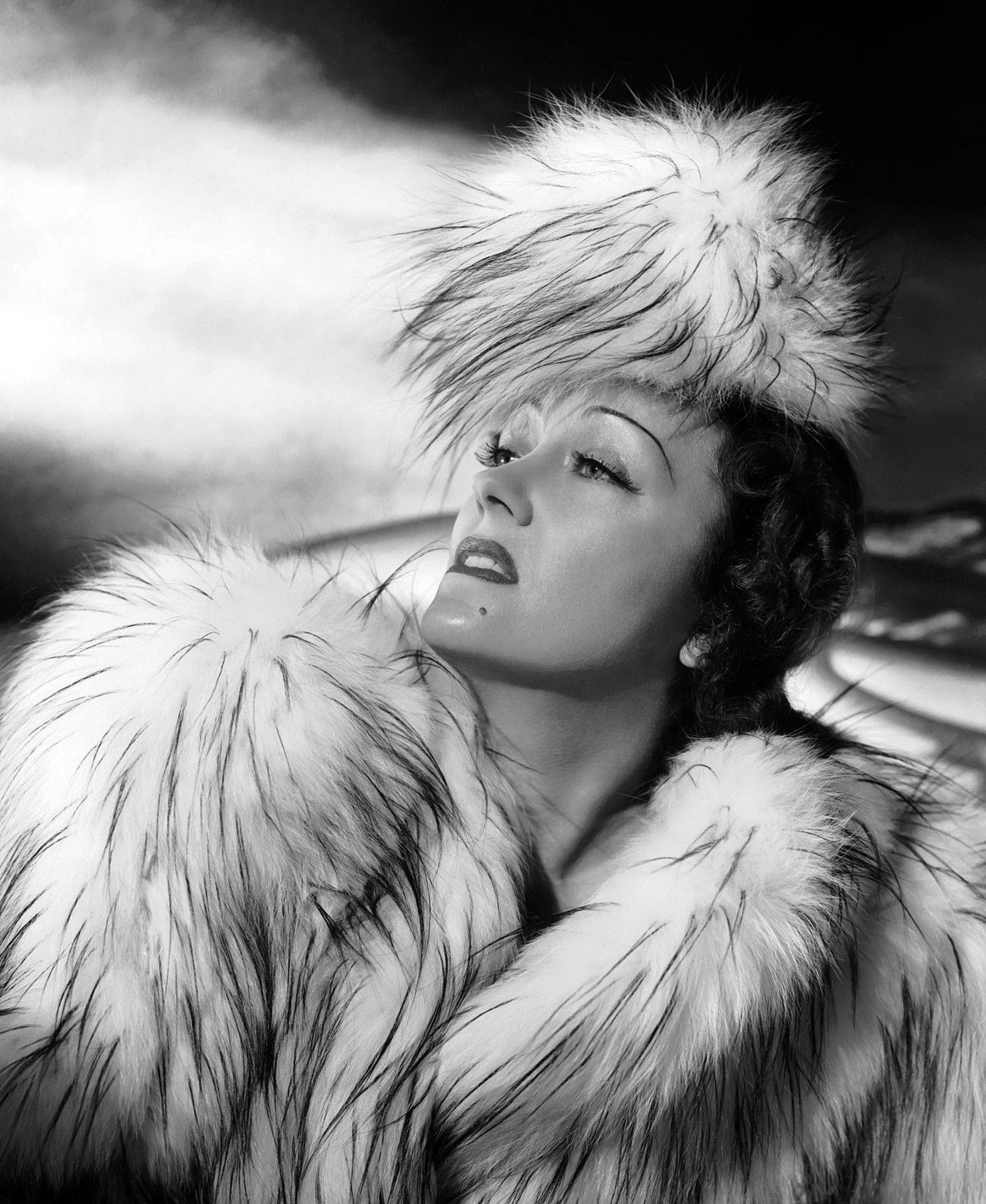
Part of what still beckons the “eyes of the world” is the movie’s ability to tell the story within a story. Gloria Swanson’s performance as Norma Desmond is so perfectly calibrated that audiences sometimes forget she was playing a role at all. Billy Wilder and Charles Brackett deliberately wove elements of Gloria Swanson’s real life into Norma’s backstory, yet the parallels are only part of the truth. Swanson was both exactly Norma Desmond and nothing like her—especially when you consider her remarkable adaptability and forward-thinking nature. She saw greatness in the character and the film, and saw this as her triumphant return to the screen in an important picture. In many ways, Gloria took a role that was essentially making a mockery of everything she once stood for. Like Norma Desmond, Swanson was one of Hollywood’s highest paid performers from the teens until the early 1930s. Following the advent of talkies in 1927 and the changes in the studio system thereafter, her career floundered. Yet, she carried herself with poise, theatricality, and unapologetic glamour—qualities that translated naturally into Norma’s imperious, otherworldly presence. If you’re looking for a real life “Norma Desmond,” then look to silent film actress May Murray—she did live in the past after her star faded, and was reported to have been rather eccentric. Gloria, however, proved that those ghosts didn’t have to haunt you if you kept moving forward. Which she did—in radio, television, theatre, fashion, and even technology.
1941: American actress Gloria Swanson (1899 – 1983) plays glamorous film star Leslie Collier in ‘Father Takes a Wife’, directed by Jack Hively. (Photo by Ernest Bachrach)
The role of Norma Desmond was originally offered to Mae West and then Mary Pickford, but both turned it down. Pickford recommended Gloria. Suffice to say, the role cannot be imagined to have been brought to life by anyone else. No one could capture the character of Norma Desmond like Gloria Swanson. Throughout the movie, we witness the psychological breakdown of a woman who is already seriously afflicted with chronic depression and even agoraphobia. I feel as though many actors, and even some industry professionals who are not performers, can truly understand what must have been going through the mind of Norma Desmond. Actually, even for those who are not involved in entertainment or media can still see someone who felt betrayed and left alone to drift away. We’ve all been there. Feeling like we have so much to give the world, our community, or to the arts, and no one to take or acknowledge it. Norma isn’t going through anything that we have not been through. Essentially, Norma’s significant other, or partner, was her celluloid self, the studio, the industry. And when her partner left her, never to return, she developed serious psychological and cognitive disorders. Each person who chooses to watch her downward spiral into insanity, should be able to identify with her on some level regarding something in their life. For Norma, it was being back on screen again. For you, it may be something else.
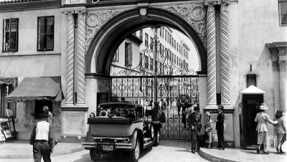
Fascinating elements of this story include the bewildering world of what lies between the glory and the fall of a celebrity who feels as though she built Hollywood, more specifically Paramount Studios. Never before had there been a movie that was developed around the idea of what happens to a star after they are rejected by the very business that created them. Serving as the inspiration to the opening scene of American Beauty nearly 50 years prior, Wilder set the standard in the dead body of the protagonist narrating the film. Like the fog over London, Gillis’ spirit hovers over the entire movie, narrating the course of events that lead to his demise. Joe gets to do what any of us would enjoy doing–getting to observe what happens after we die and how everyone reacts. Just like having a soundtrack to your life would be amazing, getting to narrate your story after you die would be equally, if not more so, enamoring.
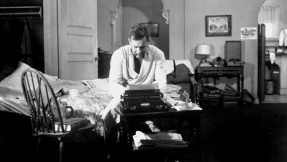
William (Bill) Holden’s character of Joe Gillis is the prime representation of a starving artist. He lives in a tiny apartment, has a few credits to his name and is in danger of having his car repossessed. That describes many artists today, thus allowing other aspiring screenwriters and filmmakers to identify with his frustrations. Like a true film noir, the ending is tragic for the protagonist. Part of the suspense is wondering just when will he meet his end and why. For those who are trying to make it in the industry as a screenwriter, the grief and depression Joe must been feeling is something with which aspiring screenwriters can empathize.
Sunset Boulevard contains something for everyone: elements of mystery, action, romance, and deceit are woven meticulously throughout the film. This allows for the story to transcend decades of movie evolution and maintain such a high regard in the minds of all the “people out there in the dark.” And, even land a spot on the Great White Way in Andrew Lloyd Webber’s Sunset Boulevard Broadway musical. It’s been rumored that Paramount plans to make a movie version of the Broadway show, but that rumor has been floating around Hollywood for years. As much as the the musical is a tribute to the original, the movie will always be more impactful because the stage simply cannot bring you as close to eyes of the actor as the screen can. And, Norma “can say anything with [her] eyes.” But, thanks to Barbra Streisand keeping the songs alive, “With One look” and “As if We Never Said Goodbye” are brilliantly written to capture the feelings and state of mind of Norma.
Regarding the screenplay itself, it is not a matter of what’s going to happen as much as it is how’s it going to happen. This pioneering non-linear structure served as yet inspiration for another film that would not be produced for nearly 60 years. Along with All About Eve and Citizen Kane, Sunset Boulevard played an instrumental role in the development of the 1994 blockbuster Pulp Fiction. A lesser known 2001 movie borrows many plot points from Sunset Boulevard including the movie title being a street name, entitled Muholland Drive starring Naomi Watts, Justin Theroux, and Laura Harring. Sort of a neo-noir, this is a more modern twist on the foundation Wilder laid with his masterpiece. On that note, now-a-days, non-linear films aren’t necessarily anything special, but at the time, Sunset Boulevard broke ground that would be the standard in abandoning traditional story structure. To me, the screenplay was written in such a way that many people can find his or her own story in the screenplay. Perhaps, someone feels like they are Norma–all but forgotten. Perhaps, there is a starving artist out there who can understand the predicament Joe Gillis was in–just trying to get ahead. To a lesser extent, there may be Betty Schaefer’s watching the movie who feel they have a lot of talent, but very little is recognized and want to find a creative outlet.
Unlike previous films, this movie was also ahead of its time in terms of including dark sarcasm and humor as chief elements in the film. Other aspects that capture the ears of the world, to Miss Desmond’s disapproval, are the famous lines from the movie. Ironically, Desmond despised dialog; however, her movie possesses the coveted numbers 7 and 24 spots on AFI’s Top Movie Quotes list. At number 24, “…I am big! It’s the pictures that got small;” and at number 7, ranking above “Louis, I think this is the beginning of a beautiful friendship” and “what we have here, is a failure to communicate” is the often misquoted “Alright Mr. DeMille, I’m ready for my closeup.” There are many other more obscure, yet brilliant lines of dialog and exchanges between characters, landing the screenplay in the WGA’s Best Screenplays of All Time list at number 7! It’s important to now only appreciate the movie as a movie, but to appreciate the story itself. Let us never forget that “someone sits down to write a picture” and fool ourselves into thinking that most of the time the “actors make it up as they go along.” Part of what makes this a timeless classic, and even a sort of Bible if you will, is the brilliant writing.
“[Cinema] is BIG. It’s the [movies} that got small.” In Sunset Boulevard, Norma Desmond’s defiant declaration—“I am big. It’s the pictures that got small”—was meant as a lament for the silent era’s fall to talkies; but in 2025, it resonates as a prophecy for cinema in the age of streaming. Norma wasn’t just talking about herself; she was articulating a truth about the grandeur, spectacle, and communal magic of the movies—an art form designed for towering screens and shared gasps in the dark. Today, as streaming platforms flood audiences with bite-sized content, algorithm-churned thrillers, and disposable franchise spin-offs, the scope of cinema has been compressed to fit living rooms and phone screens. Norma was right: cinema is big, but it’s the movies that have been miniaturized—scaled down in ambition, craft, and cultural weight—until they often feel like little more than moving thumbnails. The tragedy isn’t Norma’s inability to adapt, but that the industry has stopped aspiring to be as big as she was.
One of the elements that stands out in the movie is the meticulous placement of lighting. Film Noirs are one of the best examples of how effective lighting can be in playing an intricate part of the storytelling process. Lighting can show us whether or not someone may have two personalities, whether someone is dark and sinister. Since films did not have access to color, in the same way we do today, lighting in a grayscale movie was very important. Since colors could not be distinguished, lighting played that role. In many ways, the lighting in a film noir is like the Norma of the movie itself. Color has caused lighting to be used in a different way. For more practical reasons that aren’t always artistic in nature. Furthermore, another element that makes a film noir a film noir is the cinematography. After all, the term noir is French for dark. So, essentially film noir simply means dark film. It holds up to the definition due to the physically dark scenes; and furthermore, the state of being psychologically dark. The 9-time Academy Award nominated cinematographer John F. Seitz is responsible for creating the haunting visuals and shadows that dominate most of the movie.
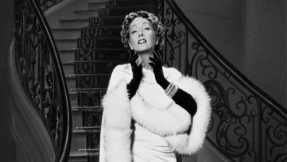
One of the shots that is the most puzzling is how Wilder was able to shoot Joe Gillis’ floating body in the pool. Now-a-days, that is simple enough–even YouTubers do it–but in 1950, how does one accomplish such a special effect? The use of mirrors in the film went beyond macabre and haunting set pieces; a mirror was also used to shoot this scene. Seitz placed a mirror at the bottom of the pool and shot facing down towards the mirror while Holden floated in the water with the police officers around the deck. This gave the illusion the camera was in the water facing up.Thanks to the iconic cinematography, the mansion “stricken with a creeping paralysis” appeared lonely and massive. There is no better example of this than when Gillis descends the grand staircase to a party where he and Desmond are the only guests on an expansive tile dance floor recommended by Rudolph Valentino.
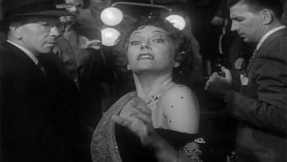
“Alright, Mr. DeMille, I’m ready for my closeup.”
Some of the most memorable cinematography comes at the end of the movie. Wilder and Seitz chose to shoot parts of the finale in slow motion to create an uneasy feeling in the minds of the audience. As Norma begins to descend the grand staircase one final time, she is shot in slow motion, as if it were Norma’s dream coming to life–her big come-back. Pardon, she never left; the pictures left her. In her mind, she is playing princess Salome entering the palace; when in all reality, it’s not movie cameras, but news cameras documenting her psychological decline into insanity. With her famous line “I’m ready for my closeup,” she encroaches upon the camera operator determined to get the closeup she wants, even though it is fixed at a medium shot. The audience, she is so desperate to connect with again, is tragically out of her reach.
Sunset Boulevard serves as a haunting reminder that cinema’s survival depends on more than novelty—it thrives on depth, craft, and stories that demand to be remembered. Wilder’s film shows us a Hollywood already willing to discard its own history for the next marketable thing, a cycle that feels alarmingly familiar in an age of streaming debuts and algorithm-curated “originals” designed for convenience over impact. Norma Desmond’s tragic insistence that she is still “big” speaks not just to her own faded glory, but to the enduring power of cinema when it aspires to grandeur rather than pandering to trends. The film urges today’s audiences to resist the allure of quick, disposable entertainment and to champion works that challenge, inspire, entertain, and linger in the mind. If we let convenience replace artistry, aesthetics to replace great storytelling, we risk playing our own part in the slow fade-out of the movies we claim to love.
Sunset Boulevard means a lot of things to a lot of people. And, each person may have their own respective reasons as to why this film holds a special place in the minds and heart of those who love cinematic art. This movie truly embodies the latin inscription around Leo the Lion in MGM’s logo “Ars Gratia Artis.” Art for Art’s Sake. To me, it is one of the purest examples of artistic cinema. It also served as a mirror, to the dismay of the big producers of its day, highlighting the state of the industry at that time. People still remain mesmerized at this timeless feature because of all it has to offer. This is partly due to the fact that it as relevant today as it was in 1950. It’s entirely possible that there are Norma Desmonds today in their decaying estates watching their movies on TCM or AMC under the delusion that they remain stars that command the attention of the world.
Regardless if you are a filmmaker or a connoisseur of movies, Sunset Boulevard captures the eyes of the world today. And, it will continue to be a source of inspiration and entertainment for decades to come.
Ryan is the general manager for 90.7 WKGC Public Media in Panama City and host of the public radio show ReelTalk “where you can join the cinematic conversations frame by frame each week.” Additionally, he is the author of the upcoming film studies book titled Monsters, Madness, and Mayhem: Why People Love Horror. After teaching film studies for over eight years at the University of Tampa, he transitioned from the classroom to public media. He is a member of the Critics Association of Central Florida and Indie Film Critics of America. If you like this article, check out the others and FOLLOW this blog! Follow him on Twitter: RLTerry1 and LetterBoxd: RLTerry

 R.L. Terry ReelView