THE FLASH movie review

Electrifying! From beginning to end, The Flash is a highly entertaining, funny, well-written thrill ride with a tremendous amount of heart! In an oversaturated superhero/CBM (comic book movie) live-action cinema landscape, dominated by MCU (and MCU-adjacent) movies, comes a breath of fresh air that works both visually and narratively.

Worlds collide when the Flash uses his superpowers to travel back in time to change the events of the past. However, when his attempt to save his family inadvertently alters the future, he becomes trapped in a reality in which General Zod has returned, threatening annihilation. With no other superheroes to turn to, the Flash looks to coax a very different Batman out of retirement and rescue an imprisoned Kryptonian — albeit not the one he’s looking for.

Andy Muschietti delivers a superb superhero motion picture that defies expectations set for anything the DCEU had to offer audiences. Christina Hodson’s fantastic screenwriting paired with John Francis Daley, Jonathan Goldstein, and Joby Harold’s story, provides a solid foundation upon which Muschiette crafts the motion picture for the screen. Nearly everything about this picture works incredibly well, except the CGI battle sequence at the end that felt right out of an early 2010s video game. In addition to the compelling visual storytelling, Muschietti and Hodson successfully, and organically) pay homage to Tim Burton, Zach Snyder, and even Richard Donner. Never before has a superhero multiverse been explored so well! Where other multiverse movies struggle narratively, this one excels in both form and function. And of course, the movie features THE definitive Batman Michael Keaton in a triumphant return to the screen as the Burton-verse caped crusader! While many other films in recent times have placed far less emphasis on plotting than visual composition, The Flash delivers on both.

Just when the general public and critics alike were genuinely wondering if there was anything left in the DCEU, The Flash is the strongest cinematic story to come out of this universe of characters since Wonder Woman, and perhaps the most fun superhero movie since Batman Returns. I know, positively using The Flash in the same statement as Batman Returns is high praise, as it’s my opinion that Batman Returns is the best comic book (or superhero) movie of all time. While The Flash isn’t as campy as the Batman 1960s TV series or the Schumacher movies, it strikes a balance between camp and melodrama in the same vein as Batman Returns struck a brilliant balance between camp and gothic romance. Wherein character expression may lean into camp. The Flash delivers heartfelt thoughtfulness in character interpersonal dynamics and plot. We empathize with Barry Allen’s obsessive plight to save the life of both his mother and father.

Simple plot, complex characters. That is precisely what you get in this movie. I know, what must he be thinking equating a multiverse setup with simple plot. That’s because the plot can be boiled down to when Barry Allen realizes that he has the ability to travel back in time, he returns to stop the death of his mother, but in doing so, unleashes a cataclysm of effects throughout the space-time continuum that must be corrected. There is one plot: save the life of his mother and father, whom is on trial for the death of his mother. Everything that Barry/The Flash does revolves around the central plot of stopping the death of his mother which will keep his father from being accused of her murder. No matter where we go in the multiverse, the external goal motivated by the internal need never changes.

The complexities in the narrative are character-driven. Barry Allen (Sr.) is hyper-focused on stopping the murder of his mother, no matter the cost, Bruce Wayne/Batman is wrestling with his identity as the caped crusader in a world that doesn’t need him anymore (or so it seems), and Barry Allen (Jr.) is struggling to find his place in the world as he is caught between childhood and adulthood. And the central plot connects all these characters and forces them to grow emotionally and psychologically. Apart from the central plot, none of the character growth would occur. Never once does the focus of the story shift, but the central themes of identity, overcoming trauma, and the dangers of obsession with control allow the movie to explore deeper meanings in the otherwise high concept story.

The central cast is fantastic! Never having seen The Flash TV show, I cannot comment on that expression of Barry Allen/The Flash, but Ezra Miller delivers a compelling performance of the lightning-fast superhero struggling with anxiety. We haven’t has a superhero that feels this genuinely human and vulnerable since Tim Burton’s Bruce Wayne/Batman played by Keaton. While they express their humanity differently, both play their respective everyman identities and super-alter egos with equal charisma and authenticity that is maintains its own identity depending on if they are wearing their respective masks. The idea of and meaning of the masque is something that entire books have been written on, but for the sake of argument, the masque represents a different identity and should be expressed differently unless, for dramatic purposes, the character’s humanity peaks through the superhero masque.

Miller’s portrayal of Allen/Flash is one that is unapologetically relatable and without pretense. Furthermore, I appreciate the inclusion of an individual struggling with anxiety, social awkwardness, and comes from average beginnings with no superhuman characteristics other than the ones bestowed through the electrical/chemical accident.

Many articles and podcasts have been published on Michael Keaton’s Batman, so I won’t spend too much time on him; however, we cannot talk The Flash without acknowledging the impact of the definitive Batman and Bruce Wayne returning to the big screen in a big way! At very first sights of Keaton, the Batcave, and the iconic Burton Batmobile, there were waves of applause and cheering from the audience, but nothing compares to the sheer deluge of cheering, shouting, and applauding for Michael Keaton when he appears in his Batman uniform for the first time since 1992. If this was a live performance in front of a studio audience, then all action would have stopped on stage for several minutes as the audience showed their affection for Keaton’s Batman. Even though he is not the central character, he factors heavily into the second and third acts of the movie. And you know what? He’s still got it!

Where the film simultaneously delivers and falters is in the integration of heavy CGI. The CGI works very well in the various effects of The Flash’s super speed and when exploring the multiverse; where the CGI is conspicuously unrealistic is in the final battle scenes. This is where and why the Tim Burton Batman movies will forever be timeless, but prolific use of CGI will date a film. You cannot replace the way real light bounces off real objects into the camera lens. There is a sense of real danger when practical effects, stunts, and pyro is used–it’s REAL–the danger is real. There is a dimension to practical sets and effects that CGI will never be able to replicate. Simply stating, the CGI in the battle sequences at the end takes the audience out of the film. However, the film doesn’t cheapen out on anything at Wayne Manor, the Batcave, Batmobile, or Batplane.

The score for The Flash is excellent, especially when Danny Elfman’s iconic Batman theme is integrated into the original score for this film. While I could have gone for the film to lean a little more heavily into the Elfman Batman theme, I appreciate the nuance of the theme when anything Burton-verse is on the screen. Outside of the Elfman Batman theme, the orchestration feels like an extension of each scene that never becomes the center of attention, but is always present.

About the cameos. Yes, there are some great cameos, but I am not going to disclose them as you need to experience them for yourself. What I will divulge on that subject is the conspicuous absence of Michelle Pfeiffer’s definitive Catwoman. Even though she’s stated in interviews that she hasn’t been asked to reprise her career-defining role, even thought she admittedly would love to wield the whip again, I thought that perhaps is was all a ruse and she would surprise us in this movie. But with the unparalleled positive response from audiences concerning Keaton’s return to the Batsuit, then perhaps we will get the incomparable Michelle Pfeiffer as Catwoman one last time.

Thrilling and fun for the whole family, I highly recommend watching The Flash. It was certainly the most fun I’ve had at the cinema all year.

Ryan teaches Film Studies and Screenwriting at the University of Tampa and is a member of the Critics Association of Central Florida and Indie Film Critics of America. If you like this article, check out the others and FOLLOW this blog! Interested in Ryan making a guest appearance on your podcast or contributing to your website? Send him a DM on Twitter. If you’re ever in Tampa or Orlando, feel free to catch a movie with him.

Follow him on Twitter: RLTerry1 and LetterBoxd: RLTerry

SPIDER-MAN: ACROSS THE SPIDER-VERSE movie review

Oh, what a tangled web [they] weave…with this cacophony of story threads. The highly anticipated sequel to the Best Animated Feature Oscar-winning Into the Spider-verse opens this week, but unfortunately, it suffers from a bad case of sequelitis brought on by a gluttonous consumption of excess. Spider-man: Across the Spider-verse works in title only–and all too well, as it were. The title says it all, and that is precisely what audiences get in this comic philhar-tragic symphony in the key of overindulgence.

After reuniting with Gwen Stacy, Brooklyn’s full-time, friendly neighborhood Spider-Man is catapulted across the Multiverse, where he encounters a team of Spider-People charged with protecting its very existence. However, when the heroes clash on how to handle a new threat, Miles finds himself pitted against the other Spiders. He must soon redefine what it means to be a hero so he can save the people he loves most.

Across the Spider-verse is what happens when a story idea doesn’t pass the elevator pitch litmus test (wherein an idea can be explained sufficiently enough in three-minutes or less). Quite simply, there is such a proliferation of story webs that there is virtually no plot–there is certainly no resolution before the (and this isn’t a spoiler) cliffhanger ending. Story webs lead into story webs that leads into even more story webs. Suffice it to say, it’s as if writers and producers took every incarnation of Spider-man comic series, threw them into a blender, and served the concoction o audiences. Unless you are read up on decades of Spider-man comics, you will be hard-pressed to follow any storyline. Perhaps the better expression of a collision of Spider-verses would have been in a television series that could have explored a different thread of comics each season.

Clearly, Sony took the extremely positive reception of the first one, focussed on recurring praises, and amplified those to the nth degree. Never mind that more than the visual expression of the story, plotting is crucial to structure, pacing, and coherency. The animators and artists are showcasing brilliance in animated filmmaking, but the clear evidence of screenwriting is nowhere to be found. Without a well-defined central character, a well-defined external goal, and a well-defined character of opposition between the central character and the goal, there is no plot–merely a sequence of loosely connected scenes or fragments of ideas. A fever dream, if you will.

While Across the Spider-verse suffers narratively, it certainly excels in the art of animation. The stylistic animation and editing is outstanding! Much like with the first movie, this one takes the emotive detail found in a single frame of a comic book (or graphic novel) and combines that approach with hand-drawn inspired motion picture animation. There are certainly problems with the story (or stories, as it were), but Sony Pictures Animation has demonstrably shown commitment to the boundless imagination and capabilities of animation. Across the Spider-verse, in how it is expressed in this movie, can only happen within the world of animation. In no way could this movie be expressed in a live-action way. Perhaps the writers were asleep at the wheel, but the animators gave each universe of Spider-man characters its own color palate and animation style.

Make sure to watch Across the Spider-verse in a premium format at your cinema, because the strength in this animated movie has little to do with the story as much as it does the stylistic animation. When a film, animated or live action, strikes a balance between style and substance, it can be enjoyed on the big or small screen without detracting from the storytelling; but when the movie struggles narratively but excels in form, then experiencing it on the big screen is the best approach.

Ryan teaches Film Studies and Screenwriting at the University of Tampa and is a member of the Critics Association of Central Florida and Indie Film Critics of America. If you like this article, check out the others and FOLLOW this blog! Interested in Ryan making a guest appearance on your podcast or contributing to your website? Send him a DM on Twitter. If you’re ever in Tampa or Orlando, feel free to catch a movie with him.

Follow him on Twitter: RLTerry1 and LetterBoxd: RLTerry

SHAZAM! FURY OF THE GODS movie review

Sufficiently entertaining. SHAZAM! Fury of the Gods starts and ends well, but the middle wanders aimlessly with the only goal to inflate runtime. After the explosive first act, the second act mostly serves as filler material to augment the narrative by making it about twenty to thirty minutes longer than it needed to be. Fortunately, the third act delivers a climatic showdown, which greatly aids in the audience experience. But the movie struggles narratively between the inciting incident (at the beginning) and the showdown at the end. Clearly, there was a good superhero movie in there, but it gets lost during the meandering developmental stage. To the movie’s credit, though, it’s the enthusiastic cast that ultimately saves the audience from complete disengagement. This is especially true with Helen Mirren and Lucy Liu, playing our villains, and Jack Dylan Grazer in his well-played comedic relief. While it’s not terribly memorable superhero movie, neither is it a bad movie.

Bestowed with the powers of the gods, Billy Batson and his fellow foster kids are still learning how to juggle teenage life with their adult superhero alter egos. When a vengeful trio of ancient gods arrives on Earth in search of the magic stolen from them long ago, Shazam and his allies get thrust into a battle for their superpowers, their lives, and the fate of the world.

If you have not seen the trailer, DON’T. While I have not seen the trailer myself, I’ve read that the BIG cameo at the end of the movie is spoiled. So, do yourself a favor and do NOT watch the trailer. As I stated in the beginning, it is sufficiently entertaining; moreover, I honestly enjoyed myself more than I thought I would for a movie aimed at kids and young teens. When I say aimed at kids and young teens, I do not use that as a pejorative or as a tool to belittle the movie. In fact, I am glad to see that there is a superhero movie that is aimed at kids. Seems like the majority of superhero movies nowadays are inappropriate for developing minds. It pleases me that we have a movie here that is suitable for the whole family.

Ryan teaches Film Studies and Screenwriting at the University of Tampa and is a member of the Critics Association of Central Florida and Indie Film Critics of America. If you like this article, check out the others and FOLLOW this blog! Interested in Ryan making a guest appearance on your podcast or contributing to your website? Send him a DM on Twitter. If you’re ever in Tampa or Orlando, feel free to catch a movie with him.

Follow him on Twitter: RLTerry1 and LetterBoxd: RLTerry

THE BATMAN Pop-up Exhibition

On a four-city tour, fans of Batman got to see the new costumes and Batmobile for the upcoming film The Batman! Fortunately, one of the stops was right here in Tampa! Contributor Danielle Mescall attended this past weekend, and you can checkout her writeup and photos below!

On Saturday February 19th, locals from Tampa had the chance to check out “The Batman special event,” where people got a sneak peak into the newest film adaptation in the Batman franchise.
As crowds lined up to see this exhibit for the new film releasing on March 4th, it is clear that the love for the caped crusader is still very strong and people from all generations are excited for this film.

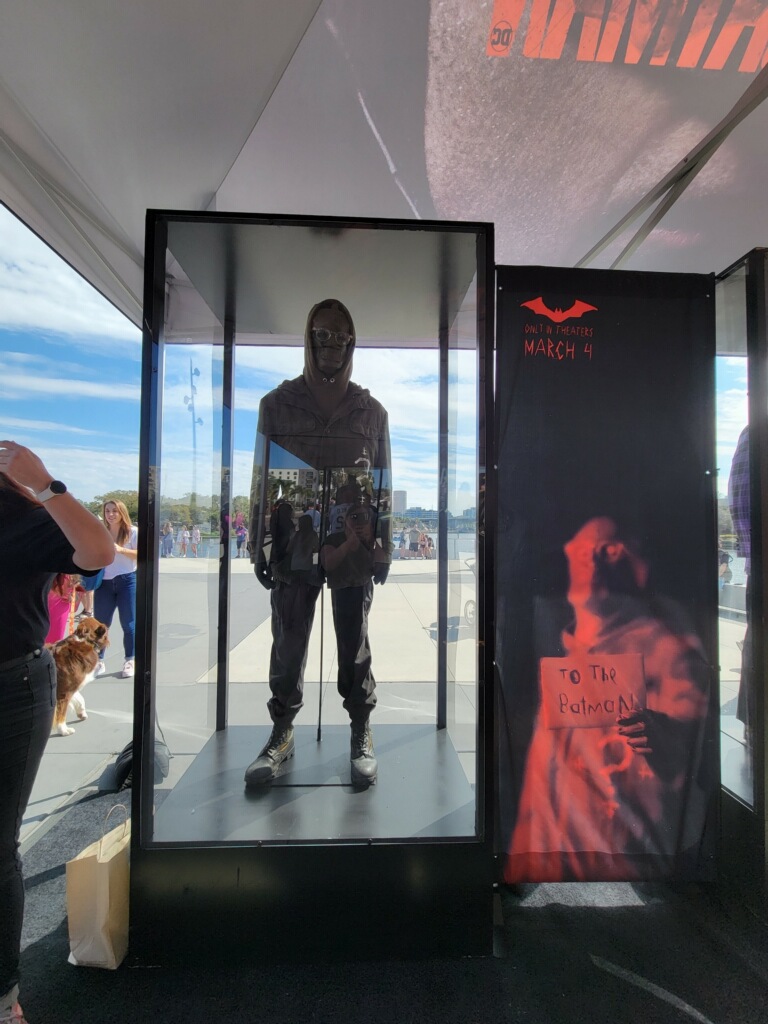
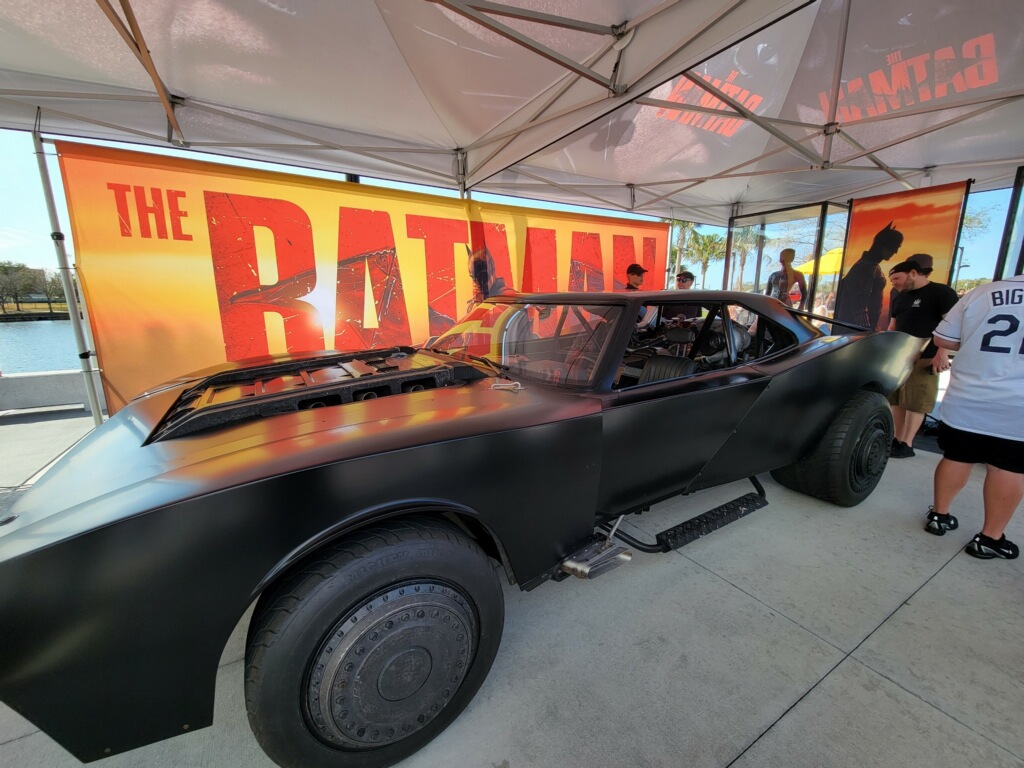
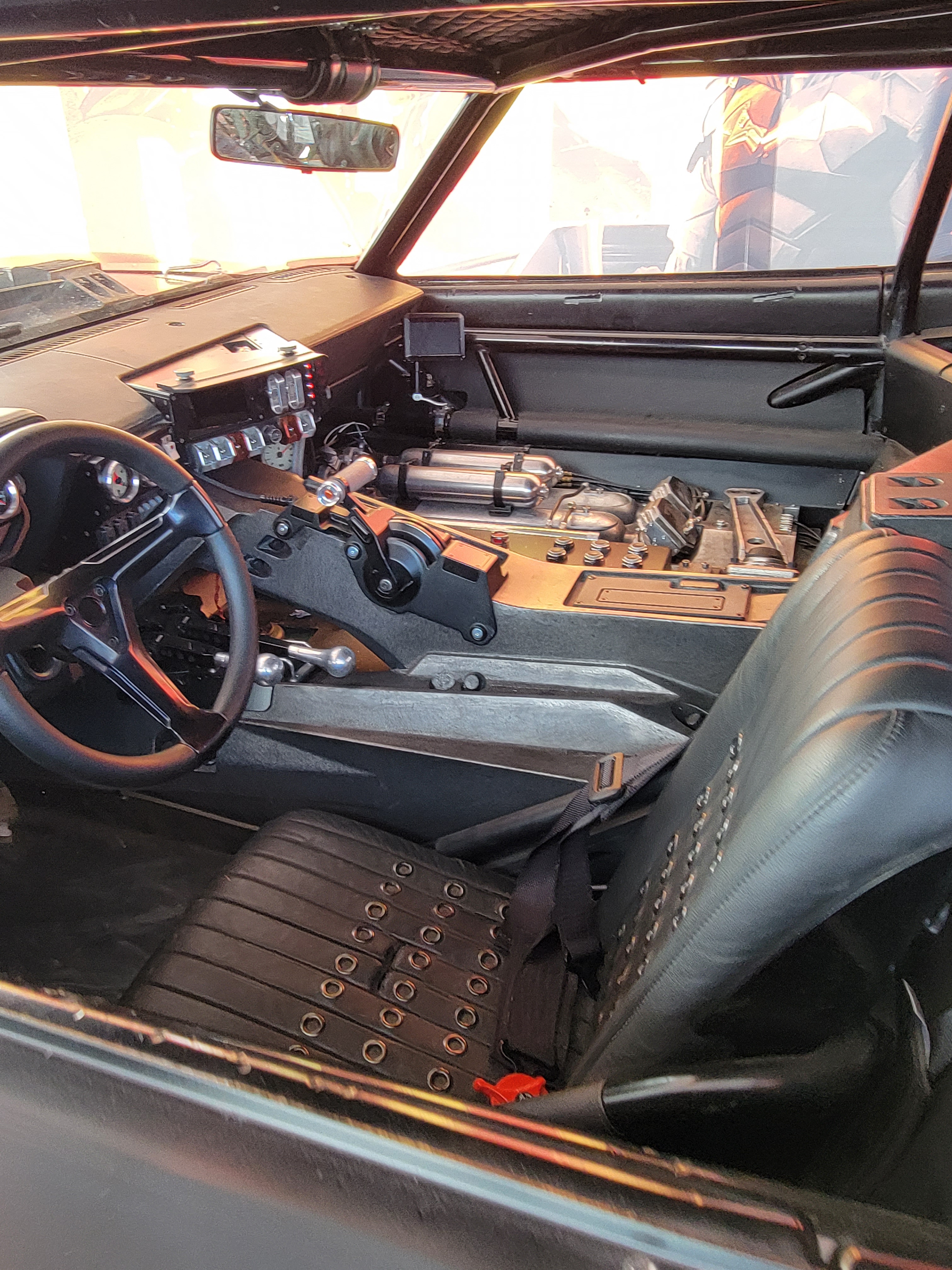
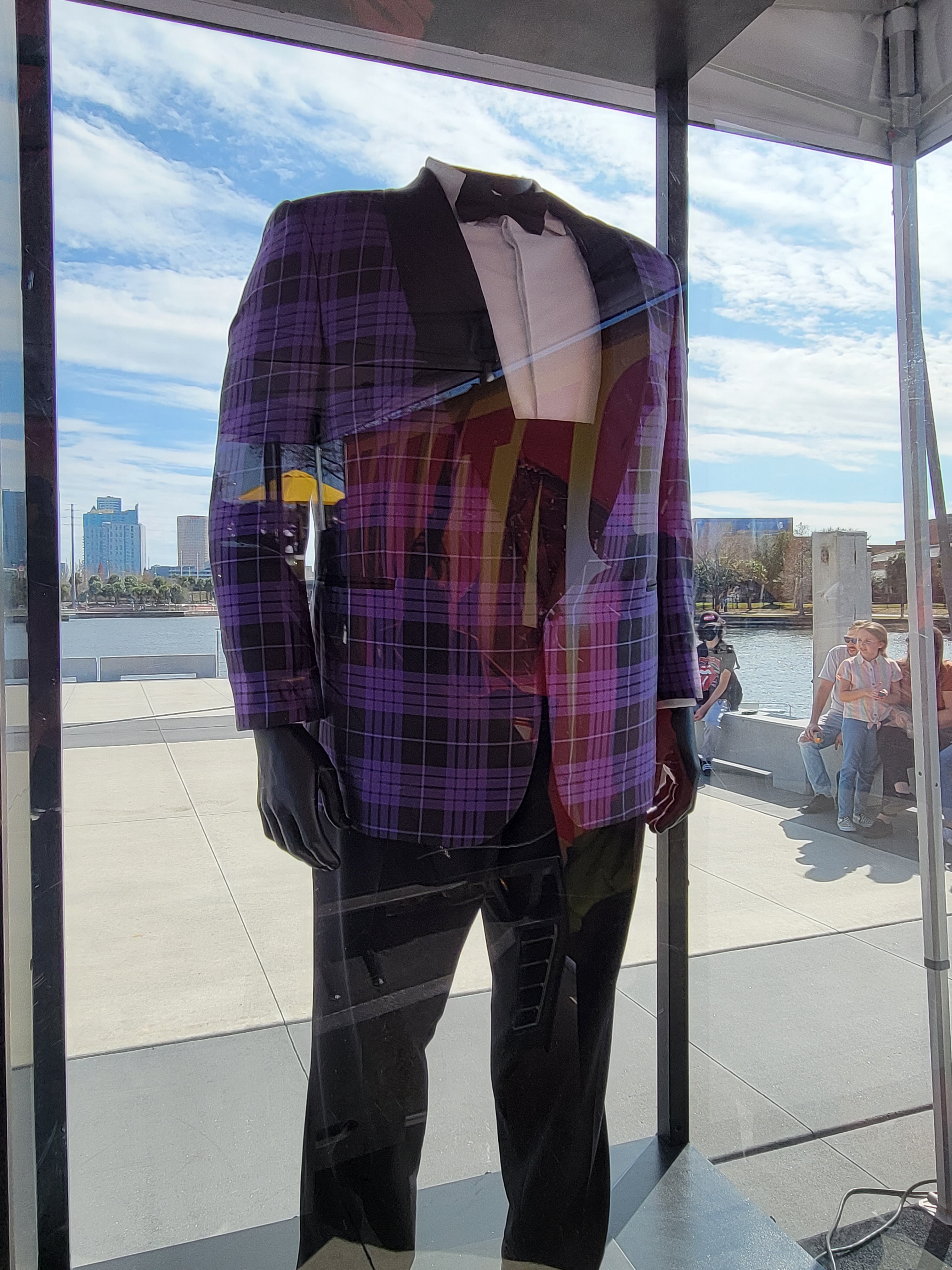
At this event, you get the chance to see the newest Batmobile along with costumes for Batman, Selina Kyle, The Riddler, and The Penguin. In addition, you get to play trivia and join in raffles while you wait. Once you are in the tent, you can see the detail that these creators have put into it and it gives you the ability to picture yourself in the action as you look at all of the modern and sleek designs of the suits and the car.

Producer Dylan Clark explained in an interview, “We wanted the Batsuit and the Batmobile to look obviously like it was designed by one man, by Batman himself. The suit is tactical, it’s military, it’s purpose­driven, it’s practical. It’s also iconic; Batman has his own emblem, his cowl, his cape. We chose a design that Bruce Wayne, at 30 years old, would have built.”

After getting the chance to see the exhibit myself and after seeing other people’s reactions and responses, it seems to make the crowds and fans that more excited for March 4th!

The final two stops on this tour are listed below, so make sure to check out the exhibit if you can:
• 2/22 Miami, FL at Dolphin Mall
• 2/25–26 Philadelphia, PA

Batman
Catwoman
The Riddler
The Penguin
The Batmobile (exterior)
The Batmobile (interior)

ETERNALS movie review

An ambitious departure from the previous paint-by-numbers MCU films, but while it will attempt to distract you with impressive visuals (other than the Deviants), it’s a soulless film with a convoluted plot full of neo-liberal woke-pandering. Chloe Zhao’s The ETERNALS is the result of a writer/director concerning themselves far more with satisfying the rubric of check-boxes associated with toxic woke culture than telling a thoughtful or entertaining story. This is MARVEL Studios’ movie to demonstrate, through superficial virtue signaling, that they are onboard the Woke Express. Perhaps the idea of this movie sounded innovative in the echo-chamber meetings, but the execution leaves much to be desired. Diegetically, the prolific world building, MCU connectivity, and character development this movie needed to do, even the more than 2.5hr runtime isn’t sufficient, and ultimately feels like a DCEU-style rush job. Between the chaotic plotting, bad CG (those Deviants look like something right off the SyFy Channel), cosplay uniforms, dialogue lacking in any subtext, and the gross neglect for any nuance to the storytelling whatsoever, this movie is the product of an assortment of post-modern critical theories and not the imagination of a filmmaker. Clearly Zhao has an eye for cinematic composition, but her skills as a storyteller are not nearly as fine-tuned–certainly not for such a gargantuan superhero spectacle.

The Eternals, a race of immortal beings with superhuman powers who have secretly lived on Earth for thousands of years, reunite to battle the evil Deviants.

Dramatize don’t tell. This is the No.1 principle I teach in my film studies and screenwriting classes. And this important convention is broken at the very beginning of The Eternals. Very few movies have demonstrated that scrolling text in a prologue can pay off dramatically (i.e. Star Wars). It works in Star Wars because that is how the world was first introduced to the mammoth intellectual property, therefore, it becomes part of its branding (and is missed when it doesn’t happen). Moreover, there was no frame of reference prior to A New Hope; and since we were being plunged into the middle of the action, it was necessary to preface the story that was about to unfold. Audiences aren’t being introduced to the MCU–they’ve been in the MCU ostensibly since Paramount’s Iron Man. Therefore, this demonstrates a lazy approach to providing exposition that could have otherwise been integrated more thoughtfully into the main action story. Furthermore, this lack of dramatic exposition is problematic, not only at the beginning, but throughout the movie.

If there was a social media campaign or outcry about it in the last few years, you will find that box checked off in this movie. As I watched this movie (in IMAX, btw), I couldn’t help but envision a rubric, not unlike the kind many professors use for grading papers. Personally, I don’t use a rubric in my classes because satisfying requirements in that fashion does not tell me how you can apply what you learn in class to your topic; but rather, that you know the bare minimum you need to do in order to get the point(s). Think of it as a typical test. A typical test only demonstrates to the professor how much you can remember NOT how much you know or your level of wisdom (the application of knowledge). It’s as if Zhao held meetings with MARVEL Studios executives and staff to outline every woke box that needed to be checked in this progressive movie. I won’t go into all the examples because that would take up a paragraph in and of itself, but if there has been a push for representation, then you will find it here. And all those characters in one place means that most are not developed sufficiently and feel more like one-dimensional tokens than characters crafted by a writer who cares. That’s the problem here. Increased representation across the spectrum of humanity in cinema is very important, but not when it comes at the expense of the integrity of the characters themselves.

One of the hottest topics of discussion to come out of this movie is the inclusion of a PG-13 sex scene, which is long overdue in a cinematic universe such as this one, which is filled with HOT male and female characters in form-fitting uniforms. More than demonstrating to audiences that the MCU movies have grown up with their initial audience of teens and 20-somethings, this scene is important because it shows that these immortal beings have some humanity in them. Superheroes and supervillains are often not thought of as human, and even though we learn that these immortal beings aren’t exactly human, they do take on many characteristics of humans, and this scene is a refreshing reminder that superheroes have erotic passions just like the rest of us. There is a vulnerability about them.

Because of all the piping that is being laid in this movie (enough for at least two or three movies), the story feels incredibly rushed. It reminded of how the DCEU tried to complete with MARVEL, years after MARVEL had been in the MCU. The result was hurried world building. It took MARVEL years to build the MCU, but the DCEU tried to accomplish the same in a year or two. We have five stories here (1) its creation myth and early Mesopotamia (2) the time in Babylonian Empire (3) the time in the Aztec Empire (4) the Greco-Roman Empire, and (5) the present-day story. Each of these is incredibly important to the main action plot of The Eternals, and yet these otherwise rich settings are reduced to flashback fodder. There are easily three thoughtful movies that could have come out of the five aforementioned stories. The result is a single plot that cannot possibly accomplish everything that it needs to in order to effectively tell the story and do it justice. I’m still not entirely sure why the Deviants were attacking the Eternals; oh it was sort of explained, but like with much of the rest of the film, it wasn’t thoughtfully developed either.

If you are familiar with Middle Eastern or Greek mythology, you will enjoy the integration of some of the mythological stories with which you are likely familiar. From the Epic of Gilgamesh to Ikaros to Athena, you will learn that it’s the Eternals that inspired these stories. While we may never know precisely what inspired these stories in real life, they were likely inspired by real individuals, much like legends and lore are to this day. So, knowing that these powerful, immortal beings have been secretly living on earth makes since, and can be appreciated both through a historic lens and through the backstory of the main action plot of the movie.

There are two end-credit scenes, each setting up a new characters. I won’t spoil it (but don’t look at the IMDb either). One scene in at the beginning of the credits and the other is a post-credit scene.

Ryan teaches American and World Cinema at the University of Tampa. If you like this article, check out the others and FOLLOW this blog! Interested in Ryan making a guest appearance on your podcast or contributing to your website? Send him a DM on Twitter or email him at RLTerry1@gmail.com! If you’re ever in Tampa or Orlando, feel free to catch a movie with him.
Follow him on Twitter: RLTerry1