CLUE: LIVE ON STAGE play review

“I. Am. Your singing telegram (POW!)” here to tell you that you do not want to miss the hilarious hijinks of CLUE: Live on Stage! It successfully channels the film whilst crafting a new experience. And yes, all the iconic, quotable lines and slapstick moments are in the show!! It’s a laugh out loud riot that will uplift the human spirit!

Playing the Straz Center in Tampa now through June 2nd.

Designed for fans of the cult classic, complete with all the camp, but can still be appreciated by all! This stage adaptation of the beloved star-studded film owes its success to the playwriting that retained the soul and memorable moments of the film yet injected new dialogue, scenes, comedic irony, and physical comedy that together craft a familiar yet fresh experience. From the moment the play opens with the original theme music, you know that you will be in for an uplifting time at the theatre. Some stage adaptations of films neglect to include so much of what makes their respective film source beloved, such as the score, quotable lines, or slapstick humor; not true with CLUE. This is one of the best stage adaptations of a film that I have ever witnessed.

One of the subtle strengths of the playwriting is the inclusion of some meta humor such as characters carrying around the original board game detective notepads and even the game board. Other elements that elevate the meta humor of the play include musical cues and slight fourth wall breaking as if to nod to the audience that “we know you know.” The stage design is fantastic! Every inch of space is used efficiently and effectively to achieve the feeling of a vast mansion on a single stage. Furthermore, the design retains that beautifully gothic atmosphere that we associate with the iconic board game and campy film.

With such great cast/character chemistry in the film, I was curious if this adaptation would be able to capture even half of the magic. It pleases me to report that the cast’s chemistry is fantastic! And while they certainly recreate notable moments from the film, each of them puts their own spin on the expression of those moments. From “Let us out, let us out; let us in, let us in” to “Fla, fla, flames, flames on the side of my face” to “I. Am. Your singing telegram,” all those memorable moments are part of the stage production!

And if you were curious if the multiple endings from the film are included, that they are! But, the solution(s) are different than the film, so don’t think that you have it figured out. Even this faithful adaptation throws curve balls that will keep you on the edge of your seat.

I had such an incredibly enjoyable time with this play, and I know you will too. CLUE: Live on Stage is currently touring the country, so look for a showing near you! CLUE is playing the Straz Center in Tampa now through June 2nd, but checkout the CLUE website for when it will be touring in your area.

Ryan teaches Film Studies and Screenwriting at the University of Tampa and is a member of the Critics Association of Central Florida and Indie Film Critics of America. If you like this article, check out the others and FOLLOW this blog! Interested in Ryan making a guest appearance on your podcast or contributing to your website? Send him a DM on Twitter. If you’re ever in Tampa or Orlando, feel free to catch a movie with him.

Follow him on Twitter: RLTerry1 and LetterBoxd: RLTerry

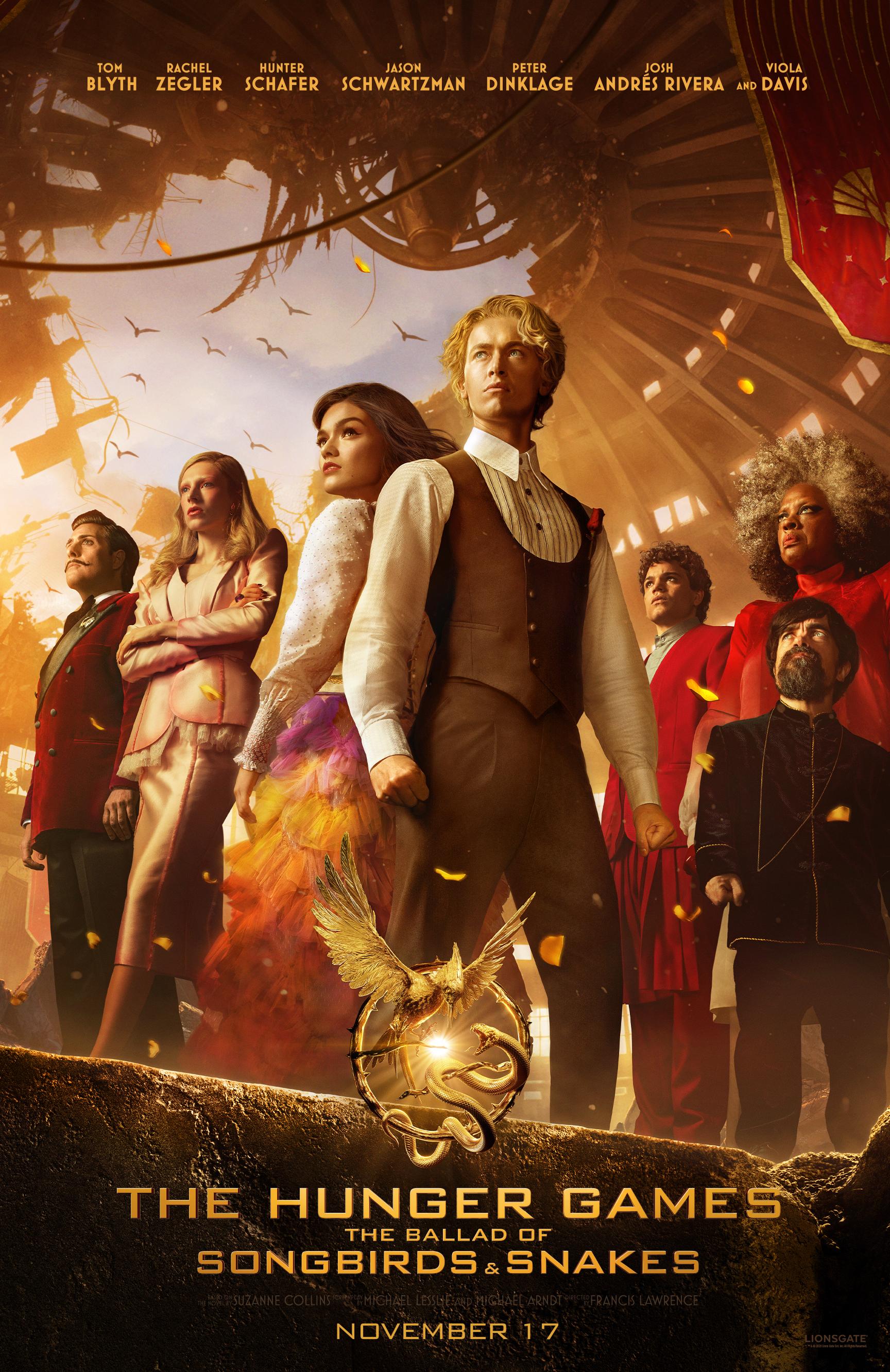
THE HUNGER GAMES: THE BALLAD OF SONGBIRDS & SNAKES movie review

Starts strong, ends off-key. Return to the gritty world of Panem in The Ballad of Songbirds & Snakes. What we have here is too much story crammed into a single movie, which results in poor pacing and forced character and plot development. Despite the uneven screenwriting, there is no doubt that you will be completely enthralled by Rachel Zegler’s (West Side Story) charismatic and courageous Lucy Gray! Moreover, you will also be charmed by her excellent chemistry with Tom Blyth’s (future President) Snow. But the performance that stands out the most is Viola Davis’ campy, delightfully ruthless Dr. Gaul (Game Maker)! In contrast to the struggling third act, the first two acts are well-written, but the third act desperately tries to keep your attention. Ultimately, there is enough material both presented and hinted at, in the film, to support two or even three films. Perhaps audiences were hungry for more Panem, but this movie leaves audiences feeling overstuffed, with little room to breathe and digest the story.

Years before he becomes the tyrannical president of Panem, 18-year-old Coriolanus Snow remains the last hope for his fading lineage. With the 10th annual Hunger Games fast approaching, the young Snow becomes alarmed when he’s assigned to mentor Lucy Gray Baird from District 12. Uniting their instincts for showmanship and political savvy, they race against time to ultimately reveal who’s a songbird and who’s a snake.

Come for the event-like movie, but stay for Davis’ and Zegler’s performances. I don’t know if Zegler’s Lucy Gray felt like she came from District 12 or not, but her command of the character is fantastic! And how could Zegler be cast in the Hunger Games and not take advantage of her beautiful voice? If she ever wants to switch careers or add to her entertainer resume, she can add country singer to it, because her country singing should be opening for the likes of Dolly, Reba, or Shania. I am confident that she could own that country stage for an entire set, and audiences would be ecstatic! Beyond the singing, her Lucy Gray feels human. And by that, I mean both strong and vulnerable, with deep convictions for how she treats others. While many will be drawn to her character’s confidence and independence, I am drawn more to her flaws and vulnerabilities, because it is that with which we struggle that makes us most human.

Viola Davis’ Dr. Gaul steals every scene in which she appears. I cannot think of this role belonging to any other actor after witnessing her bring this sinister character to life. I know nothing of this character from the book, as I have not read it, but it feels like a role that was written for Davis. Even though there is a significant element of camp in her performance and physical appearance, she isn’t always over the top–in fact–there is a great deal of emotive nuance to her character. And that’s in part of what makes her character great–she strikes a perfect balance between camp and playing it straight. As diabolical as President Snow is in the original trilogy, her character is far more terrifying and dangerously sly. She doesn’t simply enjoy the Hunger Games, she is the Hunger Games. Suffice it to say, she slays with this role, and the film benefits greatly from her immense screen presence.

Not to be overlooked, Blyth’s Coriolanus Snow is a complex character, with whom the audience will empathize. Granted, the character isn’t quite as likable as he should have been, to achieve the full effect of the struggle of empathizing with him now with the foreknowledge of whom he becomes, but he does connect with the audience. Blyth’s performance is mildly uneven, but not so much so that it isn’t sufficiently compelling. It’s really in the third act that the performance is hit or miss, but that blame is partly laid upon the poor screenwriting in the last act. When he is on screen with Zegler or Davis, his performances shines best. The chemistry he shows with Zegler is solid, as is his interactions with his closest friend.

Since we are familiar with the games from the original trilogy, this movie is more of a character study and origin story for future President Snow than it is about the history of the games. After the prologue, which takes place one year before the first Hunger Games, the rest of the movie takes place during the tenth anniversary of the games. Ever since Disney’s Maleficent, there has been a trend to give villains origin stories so we can understand why they are how they are. And I am on the fence about this, as I believe that some people are born predisposed to sociopathy or psychopathy; and some system is not to blame, but rather it is a heart and mind struggle within that individual. But I digress. It is established that Snow comes from a once proud, well-to-do Capital family, but in the wake of his General father’s death, the family struggles to keep their house and food on the table. Coriolanus Snow struggles with needing to provide a future for his cousin and grandmother, but not lose his humanity in the process. Unfortunately, we’ve seen the original trilogy, so we know what happens. Lucy Gray and Dr. Gaul may steal steal the scene, but no mistaking it, this story is about the emotional and psychological development of future President Snow.

And I’d be remiss not to mention that it was a treat to see that Peter Dinklage still “drinks and knows things” (for my fellow Game of Thrones fans).

If you’re interested in returning to Panem, definitely catch The Hunger Games: the Ballad of Songbirds & Snakes on the big screen. I saw it in Dolby Cinema at the screening. As I honestly, could take or leave the exhausting YA genre, I do feel there could be another movie or two in this Hunger Games saga. I’d like to see more of Dr. Gaul and future President Snow.

Ryan teaches Film Studies and Screenwriting at the University of Tampa and is a member of the Critics Association of Central Florida and Indie Film Critics of America. If you like this article, check out the others and FOLLOW this blog! Interested in Ryan making a guest appearance on your podcast or contributing to your website? Send him a DM on Twitter. If you’re ever in Tampa or Orlando, feel free to catch a movie with him.

Follow him on Twitter: RLTerry1 and LetterBoxd: RLTerry

BEETLEJUICE THE MUSICAL review

Stick to the movie. While I seldom review stage productions, whenever there is an adaptation from screen to stage, I am interested in reviewing it! Touring the country this year are Broadway versions of Beetlejuice, Moulin Rouge, Mrs. Doubtfire, and Clue. Quite the season for screen to stage adaptations. The film professor and critic in me is curious as to the narrative and experiential success of the stage version of a beloved classic movie. Some movies lend themselves to stage versions such as Moulin Rouge and Clue, but others require a bit more imagination such as Beetlejuice and Mrs. Doubtfire. I went into Beetlejuice with an open mind, as I had not read any of the reviews prior to watching it. Since I rarely watch trailers before I screen a film, I wanted to be as fair as possible to a Broadway show based on a movie. Suffice it to say, Beetlejuice the Musical failed to live up to the experience, reputation, and storytelling of the Tim Burton classic Beetlejuice.

Unfortunately, my impression of the musical was off to a negative start as the performance was delayed by 30-minutes–then compound that with two additional technical problem totaling about 30 more minutes of delays, and the musical was going to have to really work some magic to overcome the hobbling out the gate.

Since I am an expert in cinema (not Broadway), I am going to stick to my opinion of the translation from screen to stage, including narrative, design, and music.

The two areas wherein the show suffers most greatly is in narrative and music. But before I talk about the story and music, I want to focus on what the musical did well. And that is the set desigg, lighting, and effects.

Even though the set design, lighting, and effects may not be directly lifted from the stylized versions created by Tim Burton, there is a distinct style to the designs employed by the musical. All the sets feel like extensions of the movie, but still an original enough expression thereof. We even get the sandworm!! The appearance of the sandworm puppet was incredibly uplifting and brought the biggest smile to my face! Classic Burton designs are steeped in German expressionism, and that doesn’t entirely come through in the set designs; however, there are plenty of exaggerated shapes, harsh shadows, and emotive expressions in the design that remind us that this is a work inspired by the creative mind of Tim Burton. The technical theatre dimension of the show was outstanding! I adored the lighting and other effects that set the atmosphere and ambiance on stage.

The Broadway musical is a near complete departure from the movie version, and in the opening number Beetlejuice acknowledges that this is not the movie–however, it would have benefitted from being closer to the movie. When the musical is aligned with the movie, it works very well! Regrettably, when it departs from the movie, the plotting, characters, and music suffer. The best scenes in the show are the dinner party, the Netherworld, and the finale, all very much inspired by the movie. Throughout the show, there are movie moments recreated, but far too few. At least we got the memorable “I, myself, am strange and unusual” line. The stage Beetlejuice feels like a different character than Michael Keaton’s in the movie.

The dialogue and performative dimension of each character was forgettable. No one feels like they are an extension of the movie version, but a different character altogether. Even the dialogue was awful. I get it: Beetlejuice’s schtick is his crass, crude humor. But in the movie, it was always balanced out by more grounded characters and a tone of whimsy. This Beetlejuice is crass and crude simply to be crass and crude–with little paying off dramatically. While I appreciate some of the additional jokes, most were simply better suited for a standup routine than for a narrative work. The characters were speaking with the voices of the musical’s writers and not the voices of the characters as written for the movie. Each character is trying to be more over-the-top than the previous character, and what we wind up with is a cacophony of loud, boisterous, annoying characters.

The story is dramatically changed from the movie. To call it an adaptation is being generous, because there is little that is the same in both the plots from the movie and stage versions. Perhaps this is what happens when you take a 1.5hr movie and try to write a 2.5hr musical. There is simply an insufficient amount of plot to fill that additional hour. I suppose the foundation is the same, but the narrative is expressed very different in the stage version compared to the movie. When moments from the movie were included in the stage version, I literally clapped–that was about the only times I clapped during the performance. This musical should have stuck more closely to the plotting and characters of the movie instead of trying to improve upon it. Even though I will admit that some of the narrative connective tissue in the movie is a bit weak and some story elements feel disjointed, it’s in far more stable shape than the story from the musical.

Lastly, conspicuously absent from the stage version is the iconic Danny Elfman score. While there are moments in the musical’s songs and score that are somewhat reminiscent of the Elfman score, its absence was sorely felt. Not once did I hear the Beetlejuice theme music, not even in the overture or prologue. Elfman’s music is as stylistic as Burton’s cinematic visions, and this musical could have benefitted greatly from the music of Elfman. I had hoped that the musical numbers would have been like the musical numbers from The Nightmare Before Christmas, but they were not. They felt like generic AI-generated Broadway songs from another non-Burton-inspired intellectual property. Elfman’s music for films such as Beetlejuice, Batman and Batman Returns, and Nightmare Before Christmas cannot be lifted for and used for any other movie or stage production. His music is a tangible extension of the characters, plot, and atmosphere of the story. What we got was generic modern Broadway music and songs.

All in all, I was unimpressed with the musical, but I appear to be in the minority on my opinion of the show. My advice to anyone thinking of seeing this show is to go into it not wanting a stage adaptation of the movie, but rather a reimagination of the characters and concept from the movie.

Ryan teaches Film Studies and Screenwriting at the University of Tampa and is a member of the Critics Association of Central Florida and Indie Film Critics of America. If you like this article, check out the others and FOLLOW this blog! Interested in Ryan making a guest appearance on your podcast or contributing to your website? Send him a DM on Twitter. If you’re ever in Tampa or Orlando, feel free to catch a movie with him.

Follow him on Twitter: RLTerry1 and LetterBoxd: RLTerry
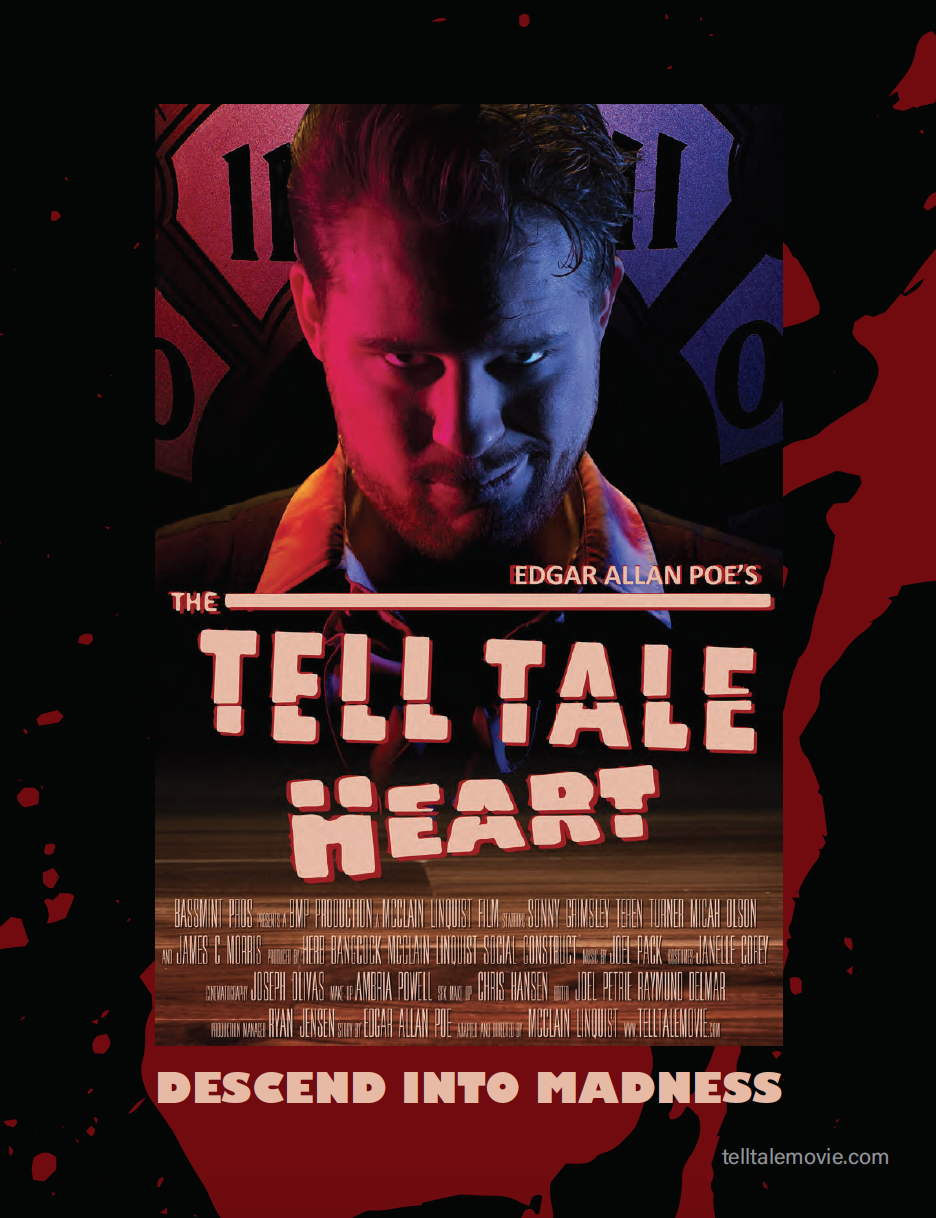
“The Tell-Tale Heart” (2020) Horror Short Film Review

Tell-tale signs of outstanding cinematic talent right here! I don’t often choose to write a formal review of short films for which I receive screeners. Usually, I Tweet my thoughts on the film when I receive a request from an eager filmmaker who’s interested in what Professor Horror, as I’ve come to be known on #FilmTwitter, has to say about his or her motion picture endeavor. Writer-Director McClain Lindquist crafts a wholly original expression of the familiar macabre tale. While there have been many adaptations of Edgar Allan Poe’s The Tell-Tale Heart, this is arguably one of the best and freshest interpretations of the masterful storytelling of Poe. I appreciate this adaptation for its fresh take on a familiar story whilst delivering the visceral horror and intellectually-driven elements of the bizarre tale of murder. Every nuance of Poe’s short story is depicted with sheer reverence for the source material, while delivering an original expression of the timeless literary work.

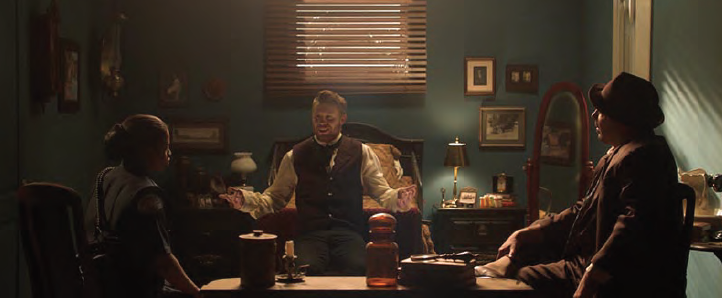
Lindquist reimagines this story through the lens of a David Lynchian approach (with the color pallet of David Fincher), delivering vibes of Muholland Drive. While there are clearly some cracks in the veneer related to the time period in which this story takes place, these cracks are insignificant enough not to detract from the overall cinematic experience. Lindquist should have selected either a modern or gothic period in which to set his adaptation. Actor Sonny Grimsley (what a great last name for horror) not only brings the words of The Narrator to the screen, but he talks to the audience with such incredible sincerity that the utter madness of it all is visualized beautifully. One of the points I hammer in my screenwriting class is dramatize don’t tell. Dramatizing means more than showing the audience the story, it means finding the conflict in every beat of every scene. Fortunately for this adaptation, Grimsley brilliantly dramatizes every word spoken in such a manner that you will be completely enveloped in the twisted tale to which he beckons you to listen.

Both the cinematography and stylistic editing are on point, and compliment the tone wonderfully. Although there are a number of standout moments from the film, I want to highlight how the duality of the narrator was expressed dramatically through the use of costuming and set design as well as a mirror. It would be all too easy for The Narrator to express his duality through verbal exposition (as this is taken from a short story), but the creative choice to couple the words of Poe with these striking images shows a strong knowledge of how to effectively go from page to screen. Often short films suffer from poorly executed technical elements, but I am pleased to report that all technical elements demonstrate an exemplary understanding of the art and science of cinematic storytelling. In addition to the technical elements is the haunting and unsettling score by Joel Pack. Lacking a true score is all too commonplace in many short films; not so with Lindquists’s The Tell-Tale Heart, Pack’s score is a character in and of itself. However, it never steals the scene, which allows the audience to become fully wrapped up in everything The Narrator says and does. I love seeing practical effects in all films, but especially horror. Thankfully, there are plenty of gruesome special makeup effects in this film for even the most insatiable appetite for gore, which never falling into the gratuitous category.

Lindquist certainly knows how to capture the madness in The Tell-Tale Heart. In many of Poe’s works, madness is often represented a lack of sufficient reasoning for committing murder or some other undesirable behavior. Lindquist illustrates The Narrator’s madness through the unreasonable rationale he uses to justify the murder of his roommate. Not only do we hear about the attempt at rationalization, it is dramatized for the screen. The only reason the narrator provides, in an attempt to justify the murder, is the simple fact that the roommate’s blind eye covered with a murky blue film bothers him a great deal–haunts him, even. He goes onto explain that he feels that he is being watched all the time. Being angered by the man’s eye is such a petty reason for the narrator to murder him, which proves that he is mentally unstable. Developing his plan for over a week, his madness is further represented through the meticulous premeditation of the method of murder. Furthermore, when The Narrator initially proposes that the “vulture eye” is his motive for murdering his roommate, he is not even fully certain that this was indeed his reason for committing the murder. And through the direction of Lindquist and the impeccable performance by Grimsley, we get into the mind of a madman in terrifying ways that are sure to induce nightmares.

Lindquist’s The Tell-Tale Heart is evidence of a future successful career as a horror filmmaker. I am eager to follow his filmography as he will hopefully use this short film as a springboard to write and direct original content, because we need more original storytellers in this sea of remakes and reboots.

The Tell-Tale Heart plans to release on select streaming platforms Fall 2020. Checkout the trailer!

  • Director: McClain Lindquist
  • Cinematographer: Joseph Olivas
  • Editors: Joel Petrie & Raymund Delmar
  • Sound Effects: Jacob Proctor
  • Makeup Effects: Ambira Powell
  • Music: Joel Pack

Social Media for The Tell-Tale Heart (2020)

Ryan teaches screenwriting at the University of Tampa. If you like this article, check out the others and FOLLOW this blog! Interested in Ryan making a guest appearance on your podcast or contributing to your website? Send him a DM on Twitter or email him at RLTerry1@gmail.com! If you’re ever in the Tampa area, feel free to catch a movie with him!

Follow him!

Twitter: RLTerry1

Instagram: RL_Terry

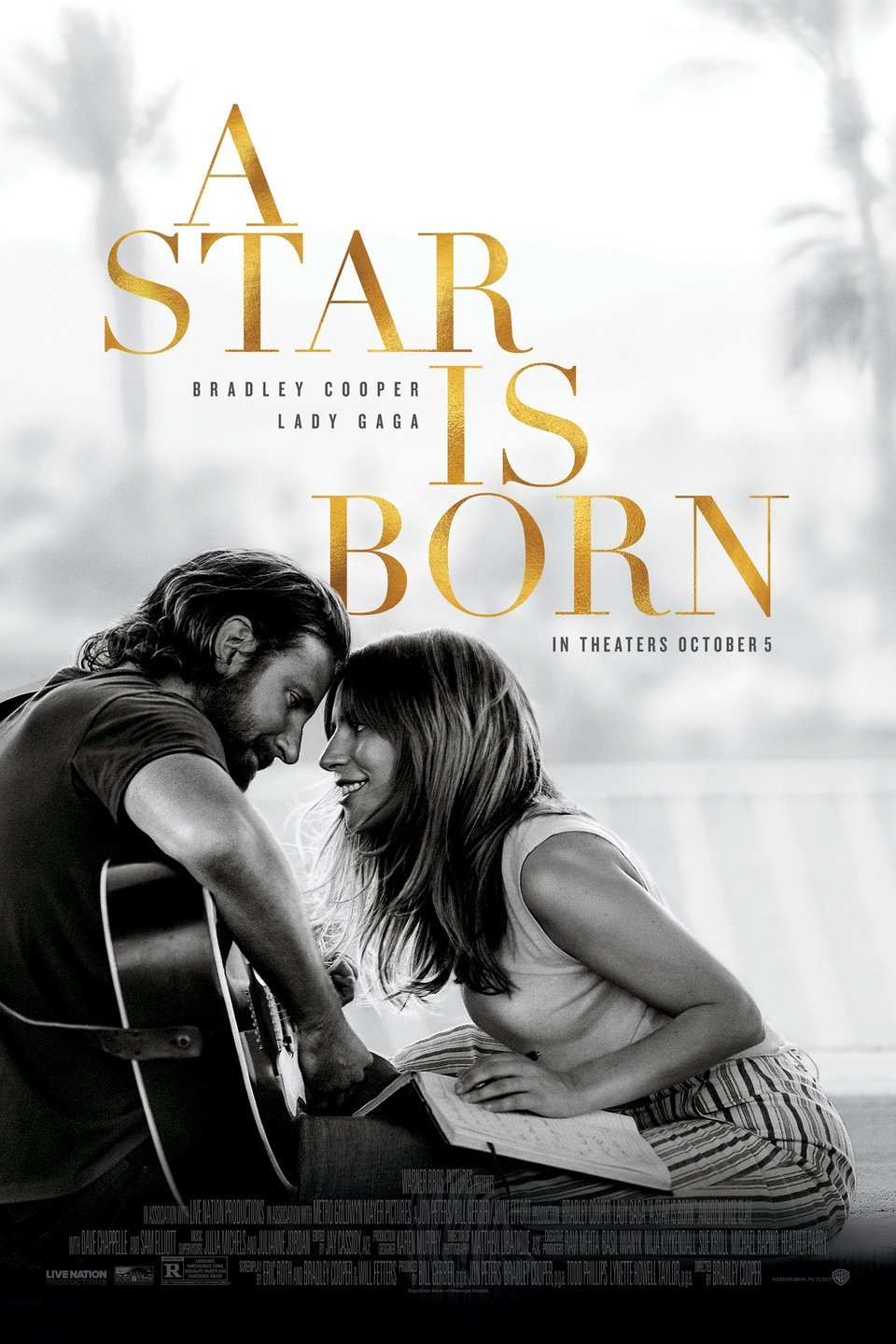
“A Star is Born” (2018) Full Film Review

This “ageless and evergreen” movie musical will move your very soul from “the shallow” to the deep. Bradley Cooper’s A Star is Born is the fourth version of this story, and the strongest of the group. Now, the Streisand version will always have special place in my heart because I’m a lifelong Streisand fan. But other than Streisand herself, the rest of the film is largely forgettable. However, Cooper’s A Star is Born is a mind-blowingly, unapologetic movie musical that delivers a genuine authenticity rarely seen in movie musicals. With all the hype that this film received out of the Venice Film Festival and others during September, there is often the question that IF the film lives up to the hype? The short answer is YES. Fixing some of the plot holes in the Streisand version and providing more comprehensive character development, the screenplay co-written by Cooper harnesses the power of a simple plot with complex characters dealing with the positive and negative affects of stardom on two different people caught in a “bad romance.” With two charismatic performers with outstanding vocals and music plus a gripping story that will have you hooked from the first bar to the last, A Star is Born is an etherial cinematic experience equivalent to that of a shooting star. A star that will shoot its way to the Oscars next year.

Loving the bottle as much as he loves the stage, alt-country rockstar Jackson Maine (Cooper) wonders into a drag bar where he arrives just in time to see the performance of Ally (Gaga). Blown away by her incredible vocals, Maine finds her in the dressing room to introduce himself. Maine is taken back by her street smarts and homespun humility, but sees an undiscovered star. Although Ally has all but given up on her dream, Maine is determined to coax her out onto the stage Determined to provide Ally with the stage she needs to showcase her uncanny ability to create magic with her voice, a magic that has profound, authentic meaning behind it, Maine invites her to join him at a gig. When she refuses the invitation, Maine sends his chauffeur to follow her until she gives in. And gives in, she does. Already smitten with Ally, Maine falls madly in love with her after their voices make incredible music together. Soon, Ally’s career takes off like a shooting star, while Maine deals with his inner demons. Just like careers have ups and downs, so does the relationship between Ally and Jackson Maine.

As a star rises, a comet falls. While the basic plot of this, and the other versions of A Star is Born are similar in nature, this one feels the most cinematic. Cooper’s screenplay takes what the previous versions did well, and then improves where the others did not perform as well. With three previous ones to analyze, Cooper certainly had plenty of source material to pour over. What I appreciate most about this version is the foreshadowing and poetry that provide a rich subtext. One of the most important parts of plot development in a screenplay is the strategic placement and execution of emotional beats. Much in the same way the original songs in the movie drive those emotional beats home, the screenplay follows in suit. Although I will argue that the first half of the movie is stronger than the second half, the story is a powerful one that shies not away from depicting real issues that celebrities, especially in the music industry, face. There is an unapologetic approach to both sides of the stage. The beginning scenes pack a powerful punch. And I was completely sold on Ally’s ability to delicately balance toughness against vulnerability. Jackson Maines character development is gritty and believable. Fortunately, after the 1976 (Streisand) version shifted the focus from Hollywood to the music industry, that shift provided the foundation upon which 2018’s A Star is Born is built. For all this story has going for it, paving the way to a likely Oscar nomination, Cooper is unable to sustain the energy from the first act all the way through the rest of the movie. While the first and third acts are strong (especially the first), the second act lacks the charm and energy of the first but does effectively lead us into the showdown and realization. Whereas the pacing looses footing a little in the middle, there is no mistaking that this is a phenomenal retelling of a classic plot for a new generation, complete with humiliation, redemption, heartbreak, and love.

The cinematography is incredibly strong. While not heavily stylized in a particular manner like other filmmakers, who’s direction is part of that filmmaker’s identity, the cinematography in this film incorporated a variety of approaches from wide shots of real concerts to intimate closeups that work seamlessly together in order to provide the film with an outstanding and comprehensive visual appeal. One of the elements of the cinematography that stood out to me the most was just how natural and relaxed the camera movement felt. There were plenty of moments that I forgot the camera was there because it felt that I was present–in those moments–witnessing the plot unfold. While some directors may have felt the need to approach most of this movie as a music video (instead of a musical), Cooper allows the camera to linger in a moment to drive the emotion of that moment home. During the musical performances, there is certainly a music video feel to it, but it never takes you out of the story, at large. From beginning to end, the cinematography flows naturally across the movie.

Cooper and Lady Gaga’s respective performances are incredible. They will certainly wow you from beginning to end. Not surprising after watching the movie last night, Cooper delivers a command performance that is sure to land him a Best Actor nomination. He looks and sounds like an alt-country rockstar. I had no idea that he could sing! At no point does it ever feel like he’s acting. Such power in subtlety. It’s the little things he does that serves as evidence of his commitment to character and never acting like a Jackson Maine type but legitimately becomes Maine with all his problems with addiction to drugs and alcohol. Because the subject of celebrity addictions leading to untimely deaths has been in the news a lot, this was a great opportunity for Cooper to comment on this issue by depicting how tragic it is, and the affects on others.

Whether you are a fan of Lady Gaga or not, there is no doubt that her acting and vocal performance will leave you speechless. Of course, being speechless never stopped me. Without breaking character or forcing her real-world persona and fandom into the diegesis of the film, there is a nod to her status as a queer icon. One of the early scenes in the film features her at a drag show. This scene fits into the story perfectly, and successfully sets up some of the subtext and commentary later on in the film regarding how the music industry (and Hollywood to an extent) package female performers. The character of Ally allows fans of Gaga to explore a different side to her through most of the film. During the second act, there are moments that remind us of what makes Gaga so popular–very similar to her real-world celebrity self–but these moments never detract from the more organic, intimate ones. Although Ally’s quest for stardom does play out a little cliche as it points us back to the real-world Lady Gaga, Ally’s character finds herself back to her true self at the end of the film. As a side note, I love the nods to the the 1976 one by way of Ally talking about how her nose was considered too big by talent scouts. A brilliant nod to Streisand’s trademark nose.

With a very strong start, mediocre middle, and relatively strong recovery, Bradley Cooper’s A Star is Born is a don’t miss film! If you were worried that the film was not going to live up to the hype of the festivals, no need to worry any longer. From what I have gathered from other critics, members of #FilmTwitter and the #PodernFamily (podcasters), there appears to be an agreement (mostly anyway) that this film is an outstanding work that will be one to watch for this upcoming awards season. Perhaps it won’t be the next Silence of the Lambs and take the Big 5 Oscars, but it will likely still do very well.

Ryan is a screenwriting professor at the University of Tampa. If you like this article, check out the others and FOLLOW this blog!

Follow him!

Twitter: RLTerry1

Instagram: RL_Terry

Thrillz (theme parks): Thrillz.co