
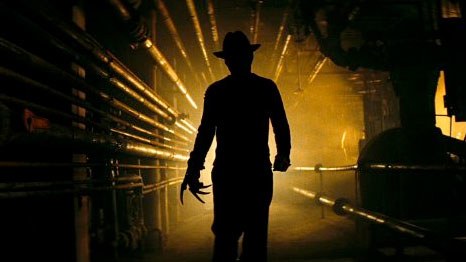
 Summertime often means sleep away camps, beach trips, road trips, and more. So many horror films take place during the summer and others serve as material for ghost stories around a campfire. This summer, I thought I would have a shortrun series on some of my favorite horror films that I’ve titled Sinister Summer. With the Friday the 13th next month falling on the precise day that the original Friday the 13th movie takes place and it being Jason Voorhees’ birthday, I first thought I would take a look at the original movie. But then I figured, why not do a retrospective on other horror films during June, July, and August? First up on the Sinister Summer series is my favorite slasher series A Nightmare on Elm Street featuring my favorite horror icon Freddy Krueger. Unlike with other slasher icons who hide behind masks and never speak, I consider Freddy to be the most terrifying because he can talk to his victims and attack you in your sleep–a time in which you are most vulnerable. Moreover, dreams are a private time and he invades that sacred scape. Furthermore, we don’t pay much attention to the actor behind other icons such as Jason, Leatherface, and Michael but actor Robert Englund is synonymous with Freddy because we get to appreciate the actor’s performance, charisma, and enthusiasm. Let’s get started.
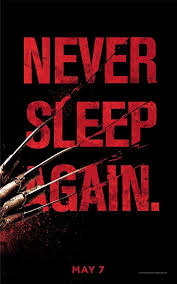 1, 2 Freddy’s coming for you; 3, 4 better lock your door, 5, 6 grab your crucifix, 7, 8 gonna stay up late, 9, 10 never sleep again. If that jingle still sends chills down your spine, you’re not alone. Writer-director Wes Craven’s nightmare on screen has been terrifying audiences for more than 30yrs and has even had a crossover with Jason Voorhees. Beyond the silver screen, the Nightmare on Elm Street (NoES) franchise has been featured at Universal Studios Halloween Horror Nights, interactive media (video games), and Robert Englund reprised his most famous role in the Halloween episode of The Goldbergs [in October 2018]. Inspired by a series of articles in the LA Times; three small articles about men from Southeast Asia, who were from immigrant families, who died in the middle of nightmares—and the paper never correlated them, never said, ‘Hey, we’ve had another story like this.” From that short series of articles came the franchise that we know and love today. But there is so much more to NoES than the fact it was inspired by truly unexplained deaths during nightmares. I’ve written before that the horror genre is the best genre for creatively exploring the human condition, questioning standards and observations, providing different perspectives on sociologically, exploring psychology, heteronormativity, and more, often in terrifying ways to get you to think, and NoES certainly gives us lots of material to talk about. At its core, NoES provides ample opportunity to discuss the distinction between dreams and real life, manifesting in the actions of the teens in the film; furthermore, the events of the film transgress the boundary between imagination and reality that provocatively toy with the audience’s perceptions of the real and imagined. It’s like an episode of The Twilight Zone on crack.
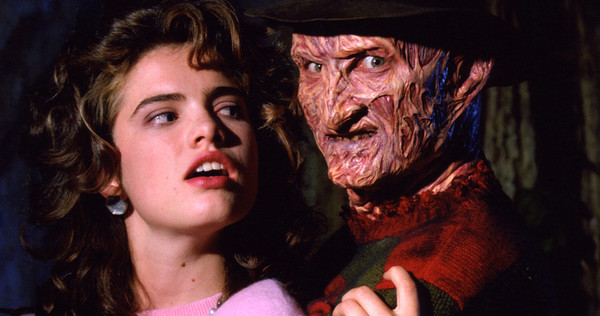 On the surface, it appears that the only motivation of Freddy’s kills and trauma-inducing actions is revenge–plain and simple. After all, he was burned alive by the parents of the Elm Street teens. And so he takes his revenge out on the teens and occasionally their parents. Albeit revenge is a classic motivator, it lacks substance; however, there is much more to Freddy and the NoES series than revenge. What truly separates classic Freddy from new (remake) Freddy and from Michael and Jason is his sick commitment to showmanship. It’s just about the kills, it’s about putting on a show for his own amusement. Almost exclusively attacking teenagers, Freddy’s attacks on the mind and body can be interpreted as being symbolic of the various and often traumatic experiences encountered by young people. Our central character Nancy is the straight-laced strong-willed teenager that experiences social and sexual anxiety around her peers and parents. Clearly she is someone who has had a strong relationship with her parents–especially her father–but that relationship has become strained due to her parents becoming increasingly disconnected from her through abuse of alcohol, pills, or simply not being present. One could go so far as to assess that the parents serve as opposition to the goal of defeating Freddy and survival.
Way before the proliferation of YA movies today and unlike typical slasher films, Craven makes it a point to place the power of survival into the hands of the teenagers. He then transfers the importance of physiological control to psychological control over the unconscious mind and that which induces fear. The ability to defeat Freddy lies within the mind of Nancy. And of course, Dream Warriors places that power into multiple minds. Originally Wes Craven wanted Nancy’s entire experience to be one big nightmare but New Line Cinema wanted a darker, more macabre ending in order to pave the way for sequels because that is there the money is. Just like John Carpenter desired for Halloween to be ONE film, Craven originally desired for NoES to be one and done. Fortunately for us, both have become hugely successful franchises. However, many agree that the originals (or even extended to the first 2-3 films) are the timeless ones.
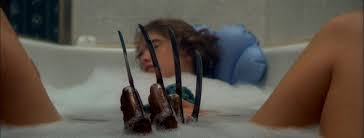 Freudian imagery and analogies are in no short supply in NoES. Even more so than in other horror films where sexual content is common, the manner in which it is used in NoES is symbolic of Freudian themes that are manifested in the manner by which Freddy stalks, toys with, and kills his prey. For the most part, the Freudian imagery is shown through a sexual context in threatening and mysterious ways that play with the teens’ perceptions of their reality versus a nightmarish imagination. Each sexual image or action is representative of some type of trauma to the body that is connected to the mind and thus becomes part of the subconscious that impacts thoughts and actions.
 The various scenes that take place within the dreams of the teenagers quite possibly represent Craven’s own nightmares or perhaps even your own. Just like you might talk to a therapist about a recurring dream or nightmare in order to interpret the imagery and meaning, Craven may be working through his own dreams on the screen. The dreams and Freudian symbolism are what separate NoES from the likes of Halloween. Strip away the dreams, and you have a slasher who kills teenagers. These dreams give NoES depth, and this dimension is what beckons us to face the uncanny and pleasurable unpleasures of this film. Importantly, cinephiles and horror enthusiasts should note that the dreams never end. Evidence of this occurs at the end of the film. In terms of Freudian terminology, there is sufficient evidence in the film to suggest that Freddy represents the id (the part of the mind in which innate instinctive impulses and primary processes are manifest). He acts impulsively, killing those who are connected to the ones who burned him alive in that boiler room after discovering he was a child killer (although the original script refers to him as a child molester). He feeds off fear and comes to life in dreams, full of revenge. Clearly audiences are witnessing a battle between the id, ego, and superego throughout the events of the movie. Unfortunately, there is no real winner in this battle of the mind and body. But there is a winner in the actor Robert Englund. Arguably, he is the biggest single horror genre star since Vincent Price.
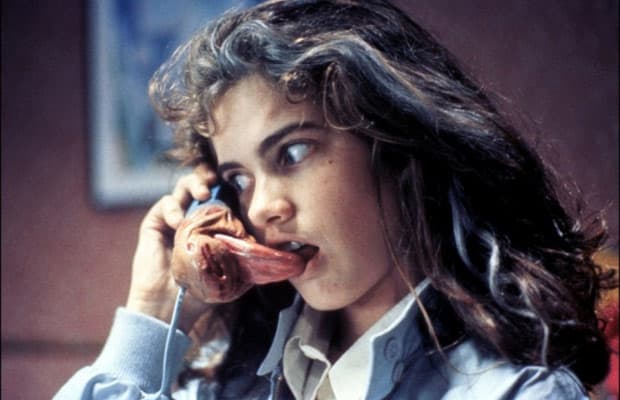 Let’s not forget the comedic components of NoES. Beyond the dreams and thematic depth that sets this film apart from Halloween and Friday the 13th, is the dark comedy. Part of Freddy’s dark comedic charm is the fact that he can talk and toy with his victims in ways that Jason, Leatherface, and Michael cannot. For one simple reason, Freddy is not hidden behind a mask. Freddy has a sense of humor. Strange as it may seem for a slasher, he often integrates humor into his dialogue and actions. This is what makes him fun to watch. The original NoES could be read as the parents being the villains and Freddy being an anti-hero. For all the reasons to be terrified of Freddy, he comes off as a little goofy. As if he just grabbed the first hat, shirt, and pants he saw walking though a rummage sale. His taunting of Tina in the opening scene of the film comes off as taunting, not horrifying. It’s like he’s a cat, toying with his victims because it is way more fun than going in for an immediate kill. Another favorite comedic moment in the movie is when the long, disgusting tongue comes out of the phone when Nancy is talking on it, and Freddy says “I’m your boyfriend now.”
Variety ran a great article on this very subject. Here is what columnist Jason Zinoman stated, “[Freddy] has a weakness for catchphrases (“better not dream and drive”), dopey word play (“feeling tongue tied?,” he asks a victim tied to a bed by tongues) and a predilection for a certain word that makes him sound like a catty teenage girl (“Bon appetit, bitch”; “Welcome to prime time, bitch,” etc). But there’s no denying the star of so many nightmares knows how to deliver a line. He sells his stale material with an admirable professionalism—he’s the Jay Leno of serial killers.”
Looking back at A Nightmare on Elm Street and the legacy it inspired, it is clear that this film and franchise has so much to offer those of us who have been watching for years and those who are beginning to explore the fascinating genre of horror. NoES has it all. Comedy, visceral horror, commentary on the human condition, explorations of the subconscious, and more. It’s this delicate balance of all these elements that bolsters the plot and characters, gives us a horror film of substance. A film that is more than cheap thrills and chills.
Ryan teaches screenwriting at the University of Tampa. If you like this article, please subscribe! Follow Ryan on Twitter @RLTerry1 and Instagram @RL_Terry for more on movies, theme parks, and entertainment news.
 R.L. Terry ReelView