
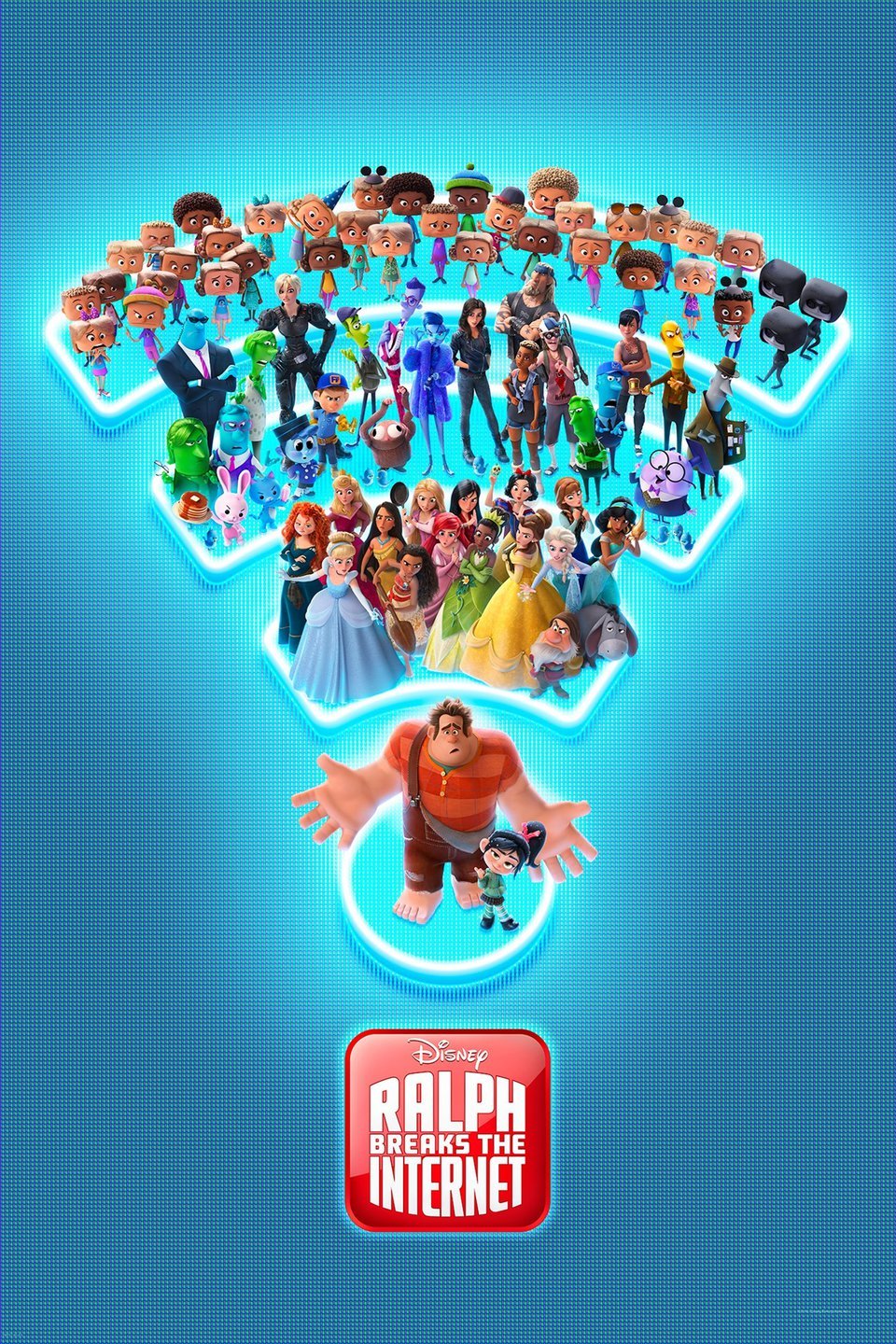
“Ralph Breaks the Internet” Full Review

It’s cute and entertaining. The highly anticipated sequel to the Oscar-nominated Wreck It Ralph hits theatres everywhere today. Much like the first film, this sequel relies heavily upon nostalgia and familiarity with pop culture more than it it does a strong narrative. All too often, it’s more concerned with making you laugh than it is delivering a meaningful narrative. However, no mistaking it, you’ll have a fun time watching this film. And sometimes an entertaining story for the whole family is all that is needed to accompany your holidays. Ralph Breaks the Internet took what the Emoji Movie attempted to do, but failed, and delivered a heartwarming story that comments on our usage of and fascination with the internet. Return to the brightly colorful animated world of Ralph and Vanellope for a highspeed adventure that takes them from the 8bit world of 80s video games to the immersive world of a visualized, stylized internet. If it’s gone viral on the internet, then you’ll likely find it in this movie. What we see in terms of abstracts or constructs, this film creatively translates that which only exists in 0s and 1s into something far more tangible. For all that Ralph Breaks the Internet did right, and that constitutes a lot aesthetically, it appears as though the writers were far more concerned with cramming every bit of Disney, pop culture, and digital media into the movie than developing a compelling narrative. And that was the part that I found obnoxious, the amount of time we spent on the Disney brands. It became self-serving instead of plot-serving. That being said, this uplifting movie accomplished what other animated films attempted, making what users do on the internet interesting. Must in the same way that Searching brilliantly captured screen-life, Ralph delivers a sensory explosion of what a visualization of the internet may look like. But who would’ve known that we were all POP Vinyls???

Vanellope is bored with her game Sugar Rush. In order to change the tracks up and give Vanellope a new experience to revive her love of her game, he builds a new track! Unfortunately, this means that Vanellope ostensibly takes control of the game’s steering wheel causing the user to break it off when trying to correct Vanellope’s car. When the arcade owner is unable to find a replacement steering wheel on eBay within his budget, he decides to shutter the game. Unbeknownst to him, he forcibly displaces the citizens of Sugar Rush. With no home to return to, the citizens of Sugar Rush are relocated to other games and the racers are adopted by Felix and Sgt. Calhoun. Ralph and Vanellope are determined to replace the steering wheel by exploring the unknown world of the internet where eBay is located. Upon arrival, it is clear that both of them are way in over their heads. They must rely upon intuition, wit, and the citizens of the internet to help them on their quest to make enough money to buy the steering wheel. Their journey soon leads them to Yesss, the head of the algorithm of BuzzTube, the most popular video sharing site, to guide them through turning likes into cash.

Central to this film are the (1) theme of friendship (2) one’s identity with home or work and (3) commentary on one’s insecurities. A nice trifecta of themes and concepts upon which to build the plot. But there is something missing. Something that is a fundamental to any screenplay. And that is clearly defined opposition to the goal represented or manifested by a character. In other words, there lacks a “villain” in this story. The villain in this story is the friendship shared by Ralph and Vanellope. Suffice it to say, it is not a requirement to have a physical villain (or more precisely, a character of opposition), but when abstracts, constructs, or concepts are the villain, it is advisable to select a character from the story to represent the true enemy. Take Jaws for example. The villain is NOT the shark; it is the folly of man. And in order to visualize this opposition, the screenplay uses the character of the mayor to personify it. Looking at Ralph Breaks the Internet, we go nearly the entire movie before we have a true character of opposition. A central character(s) is only as interesting as the character of opposition. Sometimes, the character of opposition is even more interesting than the central character.

There is also very little struggle experienced by Ralph and Vanellope. Vanellope nearly out races Shank of Slaughter Race the first time and Ralph’s first video and all his subsequent videos go viral. Not having a well-denied villain paves the way for Mary Sue characters. Just good at everything. This ease of success takes away from the ability to empathize with the struggle. That being said, after Ralph and Vanellope have their falling out over Ralph’s obsession with what he feels is best for Vanellope, their friendship is called into question and forced to face the fact that their friendship is evolving. And fighting with friends is something with which we can all identify. When Ralph’s insecurities manifest themselves in the form of a virus that takes over the internet, the movie finally has a villain that we can see, hear, and experience. The lack of a villain in this story affects the ability for the story to be as compelling or interesting as it could have been. One of the dangers of not having a villain in a story such as this one is the risk of disjoined subplots. Without a villain, the central characters have to work exponentially harder to get the audience interested in them. As it is, the audience is far more likely to find the internet setting, product placement, and mentions more interesting than our two central characters. The takeaway: make sure your screenplay has a CHARACTER of opposition.

But Ralph Breaks the Internet is not without well-developed characters. More specifically, a well-developed character in Ralph. Two of the film’s themes are manifested in Ralph. The themes of personal/interpersonal insecurities and evolution of friendship are witnessed in the actions of Ralph and Vanellope, but Ralph in particular. Audiences of all ages easily identify with him because they can observe traits, characteristics, and idiosyncrasies that have likely been experienced by each and every member of the audience at one time or another. How many among us do not depend on some sort of external validation in order for us to feel confident in what we do, what we wear, or where we go. We empathize with Ralph when his demonstrably gentle, generous soul gives way to self-destructive behaviors that form a wedge in the friendship between him and Vanellope. And that leads us into the third main theme of this film, and that is the theme of the evolution of friendship. There is no questioning the strength and loyalty of the six-year-long friendship between Ralph and Vanellope. There have been many movies that comment on the state of or evolution of our best friendships, but none quite so creative as this one. However the plot may be lacking in its ability to be truly compelling, the mountains and valleys of the central friendship are ones that many of us can identify with. It’s also a great opportunity to teach kids how their lives may go in different directions from their friends but that doesn’t mean that the friendship has to die or become burdensome. Children (and all of us, really) learn that sometimes when you love someone so much that you have to let them go to pursue their own dreams because that’s what friends do–selflessly support one another’s dreams.

Despite the inundation of recognizable brands and incessant, obnoxious Disney product placement, Ralph Breaks the Internet is an entertaining animated movie that finds a way through the underwhelming plot and constant reminders that we are in a visualized world of the internet into our hearts to brighten our holiday weekend.

Ryan is a screenwriting professor at the University of Tampa. If you like this article, check out the others and FOLLOW this blog!

Follow him!

Twitter: RLTerry1

Instagram: RL_Terry

Thrillz (theme parks): Thrillz.co

“Creed II” Full Film Review

A truly heavyweight champion of cinema! Adonis Creed will hit you right in the feels. This brilliant installment in the Rocky/Creed franchise is an exemplary example of the power of cinematic storytelling. Creed II is a knockout! Sylvester Stallone and Michael B. Jordan’s respective performances are outstanding and Steven Caple’s direction is superb. Like with the original Rocky, this is not a film about boxing, it’s not about winning, it’s about going the distance supported by the inner drive to settle old scores, redemption, grief, loneliness, and the relationship between fathers and sons. Furthermore, it calls into question the reasons why we do what we do–the real reasons. So often we try to convince ourselves that we are determined to execute a plan for reasons other than the real ones, because the real reasons are too painful. The Rocky movies could so easily be about the sport of boxing, training, and winning; but they consistently include impactful, relatable, gritty themes that resonate with the audience. Whether you are familiar with boxing or not, this film will hit you with its powerful subtext and messages of redemption that we can all identify with. Whereas the original Creed did not feel highly connected to the Rocky cinematic universe, Creed II reminds us of the connection at every punch, block, and jab. The film also offers social commentary on the fickleness of glory and just how temporary and fleeting it can be. Sylvester Stallone and Cheo Hordari Coker’s screenplay follows the Rocky Way of doing things, much in the same way that Marvel has the well-known manner that Marvel stories are told. Even if you have not seen the Rocky movies or Creed, you will be moved and entertained by this film. Suspenseful, tense, and even comedic at times, Creed II is one to look for when Best Picture nominees are announced.

Recently crowned the heavyweight champion of the world, Adonis Creed (Michael B. Jordan) does the thing that makes him more nervous than the most intense fights–proposes to his girlfriend Bianca (Tessa Thompson). Encouraged by his coach, the former world champion Rocky Balboa (Sylvester Stallone), Adonis takes the leap and asks the love of his live to marry him. And upon a visit to his mother Mary Anne (Phylicia Rashad), Adonis and Bianca find out that they are pregnant. The family time and celebration are short-lived when the son of Ivan Drago challenges Adonis’ title to the fight of the century–the Creed/Drago rematch fight that the world is waiting for. Saddled with a new engagement and the pregnancy of his fiancee, Adonis must decide if he’s willing to risk his life to settle an old score because he knows what it’s like to grow up without a dad. Soon, this date with destiny becomes an obsession that invades Adonis’ every thought and action. Against the wishes of his mom, fiancee, and Rocky, Adonis accepts the challenge from Drago’s son who Rocky describes as a monster because he has nothing to lose, whereas Adonis has everything to lose.

For fans of the Rocky franchise, this is the sequel that you have been waiting for in the Rocky cinematic universe. I liken this sequel to the recent Halloween because it feels connected in every way to the original but provides us a new story within a familiar world told through gripping characters and conflict. Beneath the surface of this high-concept plot, beats the heart of a low-concept family drama that hooks you with its relatability and intense moments that consistently keeps you drawn into the story. Creed II has many heavy moments, and could have felt overwhelming if it wasn’t for the comedic relief provided by Sylvester Stallone’s legendary character of Rocky. There are certainly plenty of somber, heartwarming, and emotionally poignant moments, but Rocky injects a little lightheartedness when it is needed to keep the emotional roller coaster going. The themes of this film are dramatized and paralleled by the training and boxing matches. Heavyweight characters paralleling heavyweight themes. Adonis’ external goal is not to win; it’s to go the distance with Viktor Drago to prove that he is a champion in and outside of the rink and therefore worthy to be a father. But what drives Adonis and Ivan Drago’s son is their need to uphold a legacy–legacies of sons haunted by their fathers. Further subtext of the film suggests that both of fighters are seeking redemption in order to fill a hole in the heart left by varying degrees of loneliness and grief over loss of relationships. In addition to the goals of Adonis, Rocky is also on a journey that is driven by his involvement in the life and training of Adonis. Rocky’s goal is to reunite with his son whom he estranged. Lots of father and son relationship internal needs in this story.

The performances are incredibly authentic. All the way around. Michael B. Jordan is well-known to be a charismatic actor who has a wide range that makes him someone whom is fun to watch on screen. He can communicate so many emotions through his face. Talk about commitment to character. I was completely sold on his character of Adonis both in and out of the rink. Displaying genuine emotion, I cared deeply about his successes and failures. In many ways, I think of him as a superhero in the vein of Captain America. Perhaps he does not have “superpowers,” but he is a hero to his family and to his community. I cared about what happened to him. Interestingly, even Viktor Drago will tug at your heartstrings because of the circumstances from which he comes. He truly is the definition of underdog. While we are rooting for Adonis to win, we cannot help but empathize with Viktor due to his somewhat warped relationship with his father and being abandoned by his mother and the community after his father lost to Rocky. Despite his evil outward appearance and behavior, Viktor is ultimately trying to prove himself to his father, estranged mother, and the Russian people that he is a champion and worthy of their adoration and love. Rocky represents the loneliness and solitude of boxing. Beyond that, he is also the compelling moral compass of Adonis and the “wise old man” teaching our central character how to truly be a winner in both is professional and personal life. In one of the lighter, yet equally heartwarming scenes of the film, Rocky is sitting by Adrian’s grave, talking to her about how he feels like a “chunk of yesterday” who cannot reconnect with their son (and later we learn, grandson). Rocky, Adonis, and Viktor all have ghosts of their pasts that they are battling much like the fights in the rink.

The film is not without its strong female characters as well. In fact, we have two amazing women who provide so much substance to the story. Humanizing Adonis is his fiancee Bianca. Moreover, her role in this film can be likened to the one once filled by Rock’s Adrian. Her performance is excellent, and she steels a few of the scenes. Thompson delivers the same grit, gumption, and emotionally powerful performance that she gave in the original Creed. Thompson’s Bianca acts as the complement to Rocky’s moral compass. She and Rocky represent two different sides of Adonis that need coaching. Adding to the emotional baggage in Adonis and Bianca’s home, Bianca continues to lose her ability to hear and wonders if their new baby will suffer from the same physiological condition. She is a phenomenally strong character who refuses to let her encroaching hearing loss to affect her quality of life. The audience was extremely delighted–audibly so–when Phylicia Rashad appeared on the screen for the first time as Adonis’ mother. Her character never backs down to her son and the deathwish he has. Deathwish in that Ivan killed his father before he was born, leaving Mary Anne a widow and mother. So, death is a real possibility in this fight of the century. She is strong in principle and convictions, and stands up to what she feels is a poor decision. However, when Adonis makes the decision to fight Viktor, his mother is supportive as a mother is even when she disagrees or fears for her son’s life and now a negative outcome from the fight will effect his fiancee and newborn daughter. Her performance is exemplary; there are times that she steels the scene from Adonis. Mary Anne and Bianca deliver moments to the audience that remind us that this film is full of heart and there are moments worth audibly cheering for. Cheering is something that you will likely hear in the auditorium. The energy level was as high as it is likely at a real boxing match.

It’s not about a fight, the film is about what the fight represents in the lives of those affected by it. Beneath the fighting platform and behind the gloves are relatable conflicts and emotional burdens that serve as a foundation upon which the drama is build and plot is driven forward. On the surface, the plot may seem like something that has been done before, and to some extent, there is a lot of Rocky and Rocky IV in this film; but, this plot contains so much depth of character that truly allows the heroes journey to shine. Not all superheroes wear capes. If it was up to Edna Mode, none of them would. Triumphs, failures, and personal and interpersonal growth are experienced by Adonis and Rocky. While so many sequels fall victim to sequelitis, Creed II meets and exceeds expectations! It’s a compelling story that till have you hooked from bell to bell.

Ryan is a screenwriting professor at the University of Tampa. If you like this article, check out the others and FOLLOW this blog!

Follow him!

Twitter: RLTerry1

Instagram: RL_Terry

Thrillz (theme parks): Thrillz.co
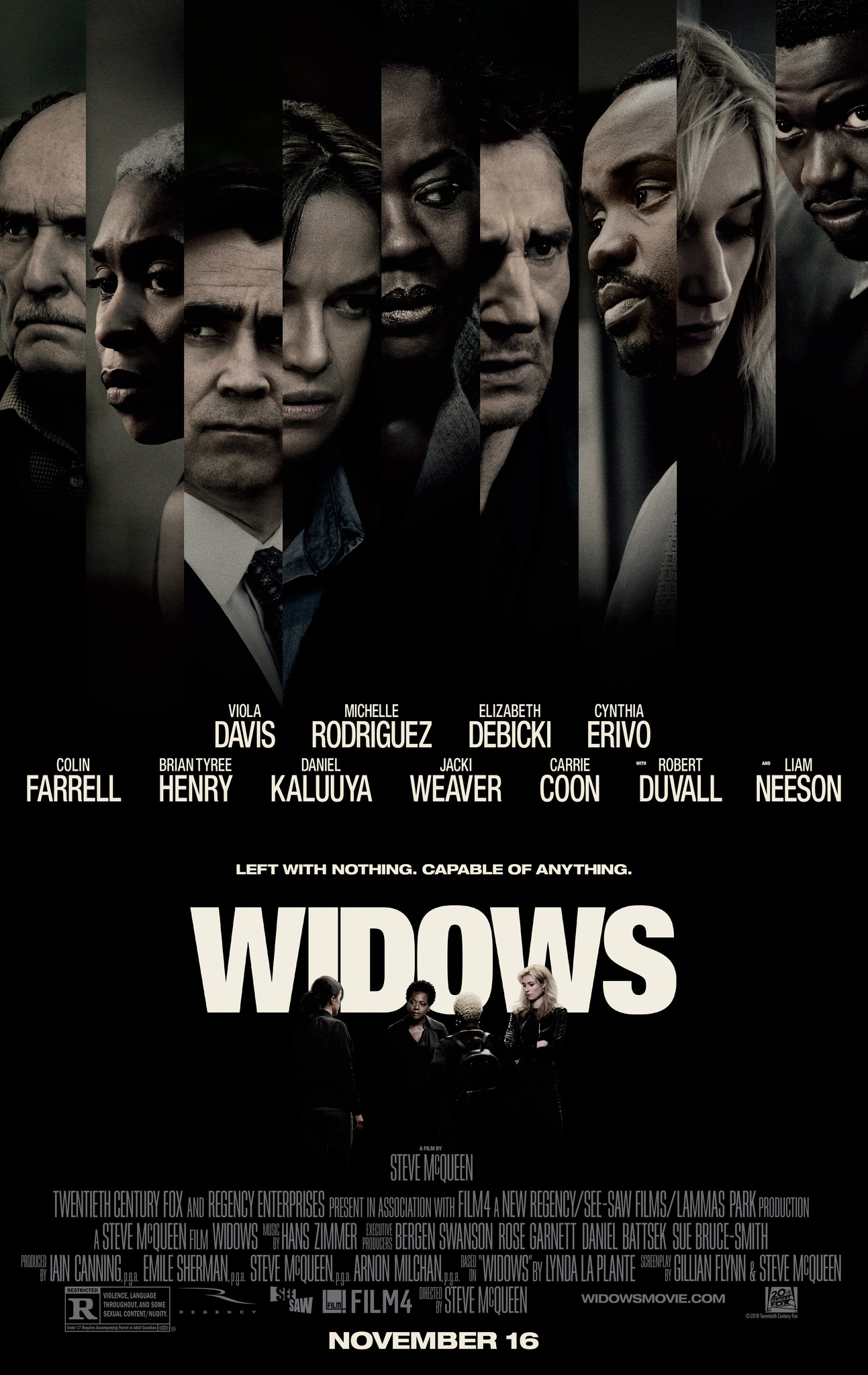
“Widows” full review

Intelligent, emotional, thrilling. Steve McQueen’s Widows is more than a thriller about a heist, it’s a stylish cinematic exercise full of social commentary on racial and social injustice within a city built upon political and business corruption. In a world that is completely exhausted from injustice, McQueen’s masterful direction brings Gillian Flynn’s multi-dimensional screenplay to life. Widows is brilliant in part because the film works on multiple levels simultaneously whilst delivering an edge-of-your-seat drama full of conflict. Not your typical action-packed film, the focus is truly on the central characters and the worlds from which they each come–worlds that collide after a robbery goes terribly wrong. It’s a brutal story with the highest of stakes. Witness a genre that is often not thought of as much more than a good popcorn movie, mature, grow, and exceed what society dictates this genre should be. While the characters themselves break through that glass ceiling, this film parallels the narrative by shattering expectations to create a thought-provoking work of cinema. Whereas a film in this genre seldom tackles such tough topics; and in general, many films that do seek to provoke discussions on race, social injustice, and gender roles come off as preachy, Widows never crosses that line from motion picture to sermon. The visually impactful story hooks you from the opening scene, and delivers command performances that force you to empathize and ask whether or not you would go to such lengths to forge a working relationship with people completely different from you in order save your very lives. What would you do when you are thrust into a situation in which you are way over your head and unprepared? Widows is as entertaining as it is thoughtful.

A heist goes terribly wrong. Very, very wrong. The result leaves four women widows. Four women that have no idea who one another are, or even the extent of their respective husbands dealings within the world of organized crime. These women are left with a debt owed to some powerful people who have a total disregard for human life, and only value money and influence. When Veronica (Viola Davis) is approached by a crooked politician for the $2mil her husband owes, she must devise a plan to deliver the money because her very life is in immediate danger. In order to get the money that she needs, Veronica blindly contacts the other widows in order to pull off the next heist her husband was planning. “The best-laid plans of mice and men often go awry. No matter how carefully a project is planned, something may still go wrong with it.” With little time to train, Veronica and her newly forged partners work tirelessly to plan and pull off the heist with a booty of $5mil.

After listening to the recent Mike Mike and Oscar (MMO) review of this movie, I am determined now more than ever to persuade them to my side of the argument that this is a great movie, and one worthy of the critical and general audience acclaim. There are so many layers to this story that it is difficult to know precisely where to begin my analysis. Before tackling the plot itself, the area where MMO and I agree is the cinematography and editing. McQueens stylistic direction is witnessed clearly in the phenomenal movement of the camera and editing. There are times that the camera feels like a character in and of itself. Without giving any spoilers away, there is one particular scene that was so brilliantly blocked and choreographed that I was legitimately wowed by the cinematography. And that is the gripping opening scene. The camera never misses a beat, and the editing is razor sharp. There are moments that the camera moves so exceptionally that I truly feel like a fly on the wall of the getaway van. Beyond the stellar cinematography and editing in the opening scene explosive action, the camera often lingers on reactions or reveals subtext in other scenes. While the characters may be talking about something innocuous or delivering a expositional dump, the camera is focussed on something entirely different.

The story of Widows is less about the heist as it is a character study on three incredibly interesting women who are forced to work together to achieve a common goal. An external goal of the theft of $5mil because of a mess left by their respective late husbands paired with the internal need to survive. And it in these characters and the conflict experienced by each that the film truly shines as taking this action genre to substantive levels. Much like a screenplay itself is build upon the three act structure, and individual scenes also embrace the idea of a “mini 3-act movie” within each act, the film provides three fascinating characters upon which the conflict and drama are build. Whether short or feature, films contain three acts, each with a specific diegetic purpose. Paralleling this concept of 3s is the central ensemble cast of Veronica, Linda, and Alice. Amanda is also left a widow by the police shootout, but does not play as active a role. Veronica is a character who lives on the wealth of her husband, but turns a blind eye to what he does. She is grieved and frightened of how she is going to cope with life, especially after having buried a teenage son. Linda is an entrepreneurial spirit who trusts that her husband is taking care of the logistics of opening a store but does not make sure bills are getting paid. She is unaware of his habitual gambling and penchant for unethical business ventures. Alice is a timid, shy person as a result of being abused as a child and by her husband. She demonstrates an unspoken relief that her abusive husband is gone, but reluctant to become an escort even though her mother trained her that she only has her looks and nothing else. We don’t learn as much about Amanda except the fact she is a new mother and doesn’t want to be involved in anything. All three of these woman are thrust into a situation in which they are over their heads and rise to the occasion to overcome the fear of impending death to take control of fate to forge their own futures. It requires them to drop walls, cooperate, and use each of their talents to combine together to create a formidable team. Alone, each of them did not have what was necessary to pull off the job, but together they become a solid team.

The stark differences between the three women are important because it allows the story to explore the socio-political and inter-personal affects the conflict has upon them. On the surface level, Widows is a heist movie; but ultimately, the heist itself is irrelevant, little more than a glorified plot device. Steve McQueen took a high concept film and made it low concept, gave it substance and meaning. Crafting this meaningful film out of a popcorn concept demonstrates McQueen’s ability to create something that is incredibly entertaining but never sacrifices character, the cinematic experience, or the important themes and subtext found therein. This is very much a #MeToo era film. It provides a platform for strong female characters to turn the tables on their oppressors, those who take advantage of them, and take back their dignity, self-respect, ambition, and independence. Thematically, the film is incredibly rich. Each of the central women are saddled with burdens of various kinds and to varying degrees however, the common denominator is dictation of place in society. This dictation is accomplished differently for each women, but the result is the same. They are all controlled by the men in their personal and vocational lives. Veronica must shed her codependence on her late husband and even her dog (a metaphor for her dependence on the external in order to function) and successfully cope with and overcome grief. Alice must realize that she is intelligent, has intrinsic value, does not need to rely on her body to generate income, and does require a man in order to survive. Linda is challenged with rising above having her passion business ripped out from underneath her because of a mess her husband left, and provide her children with a quality life while never forgetting her own needs and desires. All of these women are the victims of messes created by men, and leaving the women in their lives to clean up.

McQueen’s Widows gives a voice to the oppressed and downtrodden. Although the central characters are our three women, there are other characters in the film representing different kinds of real people out there who are selfishly creating messes and keeping those who aren’t wealthily, white, privileged on the bottom of the ladder and dependent upon the upper class. This is where different depictions of corruption enter the story. We have political corruption, business corruption, and even corrupted leaders of religious congregations. So much to talk about! It’s in these subplots that the film spends time highlighting and commenting on racism and gender roles. McQueen delivers a white ethnocentric political family who stops at nothing to keep minorities out of city government in order to hold all the control in the longstanding dynasties. Gender roles are analyzed by the manner in which the various women are treated by their male counterparts. Although much of these subplots are conveyed through exposition, there are some brilliant shots with the camera. One particularly powerful scene in which Jack Milligan (Colin Farrell) is driving home from his campaign stop in a predominantly black, poverty-stricken neighborhood to his whitewashed wealthy neighborhood. The distance is a matter of a few blocks, but the stark contrast between the neighborhoods is astounding. Whereas the conversation between Mulligan and his assistant could have been a boring expositional dump, it was dramatized by the setting and the reactions of the black chauffeur. This scene calls out the great divide that we see in our country. A few in power keep others oppressed and in their dictated places. Powerful material.

Gillian Flynn’s screenplay is tight, focussed, and deep. It wastes no moment to advance the plot and develop the central characters who all have well-defined external goals supported by well-defined internal needs. The big event of the heist gone wrong has a wide ripple effect that puts the very lives of the innocent in harm’s way, harm they may even mean eventual death. And it’s not a film that paints the “white male” as the only unscrupulous, unethical, power-hungry entity, it also takes the opportunity to show a black male politician who is just as unethical, power-hungry, and unscrupulous, even to committing murders. The lesson here is just how corrupt business and politics is. Even down to strong arming the religious community. Of course, this also shows that the leader of a religious congregation is not immune to picking up a racket and joining the game. Without ever feeling too preachy, Flynn’s screenplay uses visual juxtaposition to truly drive these points home. While the pacing of her screenplay may be slow compared to an action-driven plot, it is perfectly paced for this character-driven story. To be honest, I do not feel that this screenplay is as brilliant as Gone Girl, it’s still a powerful screenplay that balances the action components against the character ones in order to successfully experiment with the heist genre. For all its cleverness and excitement, of the three acts, the first two are definitely the strongest with a weaker third act closing out the film. Will the third act be what keeps this film from receiving a best adapted screenplay nomination? We will just have to wait and see.

There is so much to like about McQueen’s Widows! Make sure to go in with the right expectations though. If you go into the film seeking the next great heist movie, then you my be disappointed (as was the case with Movie Drone Podcast). Mike Mike and Oscar certainly stick by their impression that it’s just an okay movie all the way around and not the Oscar contender than many Tweeps and Podcasters are saying. After watching it for myself, listening and reading to reviews on both ends of the spectrum, I still feel strongly that this movie is fantastic! It’s a timely movie that gives voices and platforms to those who are often sidelined. From writing to directing and performances, you are in for a thrilling time with Widows.

Ryan is a screenwriting professor at the University of Tampa. If you like this article, check out the others and FOLLOW this blog!

Follow him!

Twitter: RLTerry1

Instagram: RL_Terry

Thrillz (theme parks): Thrillz.co
Christmas at Gaylord Palms 2018 review

Christmas has arrived at Gaylord Palms in Kissimmee near Disney World! The Gaylord resorts are well-known for their world class dining, entertainment, and luxurious rooms, Gaylord Palms presents its annual ICE event featuring the endearing Christmas classic A Christmas Story. In addition to the life-size exquisitely designed ice sculptures, Christmas at Gaylord Palms also offers guests fantastic shows, games, food, Christmas-themed drinks at the bar, a Cirque show, and gorgeous dancing lights display in the main atrium. There is no shortage of events and offerings to uplift your holiday spirits! Fortunately, I had the privilege of attending the media event for this highly anticipated celebration, and I am looking forward to sharing my experience with you in hopes that you make time for this most festive event to brighten all your holidays this season.

When attending an event at the Gaylord Palms, the best way to begin your evening is with a dining reservation at one of the award-winning restaurants. My friend Paula and I made reservations at Old Hickory Steakhouse to start Christmas at Gaylord Palms. I cannot recommend this restaurant enough. From the exemplary service to the steak grilled to medium rare perfection, this dining experience will enhance your Christmas at Gaylord Palms exponentially. Our server recommended bold pinot noir to pair with our center cut fillets along with creamy mashed potatoes and grilled mushrooms. With three atrium designs at the resort, you will get the sensation of dining outdoors in the cool air without the bugs and humidity. Some tips for planning you dining experience at Old Hickory: the meat and seafood sections are sold without accompanying side dishes, but you have the option to select family-style sides including many options from potatoes to mushrooms to vegetables and more. Whether you select a boldly seasoned steak or mouthwatering seafood, you will greatly enjoy and vividly remember your time at Old Hickory.

After dinner, we headed for the St. Augustine atrium to take in the Cirque show and dancing lights! Unfortunately, I misread the schedule and thought that checkin was from 7-8pm, so we missed Cirque. But on the plus side, that gives me incentive to return this season to enjoy the show. Ever since Disney pulled the plug on the Osborne Family Spectacle of Dancing Lights in exchange for shallow map projection shows at Hollywood Studios, I make sure to visit all the dancing light shows in the area because that feeling of being looking at or being surrounded by choreographed displays of thousands or millions of lights cannot be replaced. There is a high degree of immersion, dimension that cannot be replicated by the projection of light onto a building. There are several different musical numbers for the lights, and each one takes full advantage of the space and creates Christmas splendor with each and every twinkle of each and every light dancing during the show.

In the lower level of the convention center, the Alpine Village awaits you! While the Cirque and dancing light shows are complimentary with your evening, the majority of the offerings for Christmas at Gaylord Palms are located in the Alpine Village, which requires additional admission. In this wintery village, you’ll find snow tubing, Santa’s snow throw, Mrs. Claus, the Sweet Shoppe, Christmas market, and the flagship attraction ICE featuring A Christmas Story. Because this was the media event, Gaylord Palms provided us with quite the spread of handcrafted sweets from the artisan chefs at the resort. After sampling the delicious treats that the resort so magnanimously provided for our enjoyment, we decided to try our hand at the snowball throwing midway game! Until I held a snowball in my hand, I would not have believed that was possible given the village is not kept below freezing. But sure enough, I received a bucket of snowballs to throw at the targets. I didn’t hit a’one. Perhaps you will have better luck!

Next to Santa’s Snow Throw is the snow tubing attraction. Up until now, no one had ventured down the slope. So, I decided to break the ice, snow to speak ;). Here’s a tip, in case the ride greeter neglects to tell you to pick up a tube on your way through the queue, pick up one! I literally walked past the greeter twice and they never told me to pickup a tube and neither did they hand one to me. So, thank you ride attendants at the top of the slope for accommodating me by giving me one. Once I slid down the snowy slope, then many more guests flocked over to the snow tubes! For those of us who live in Florida, this is a rare opportunity to have some snowy fun indoors! It is so much fun! So don’t miss out on the slopes in Alpine Village.

Next to the slopes is the Italian ice stand, but my friend Paula and I were still stuffed from dinner and the holiday treats that we had to turn down that offering. I will make it a point to get one when I return. Near the entrance to ICE and close to the Marketplace are Mrs. Claus house and the Sweet Shoppe. Both of these houses offer shows! With Mrs. Claus show being an hour long, we did not have time to enjoy that one, so it’s another offering I want to experience when I return. The show in the Sweet Shoppe wasn’t starting again for over a half hour, so we took this time to experience that movie that plays for 24-48hrs every year on a TV channel. A Christmas Story!.

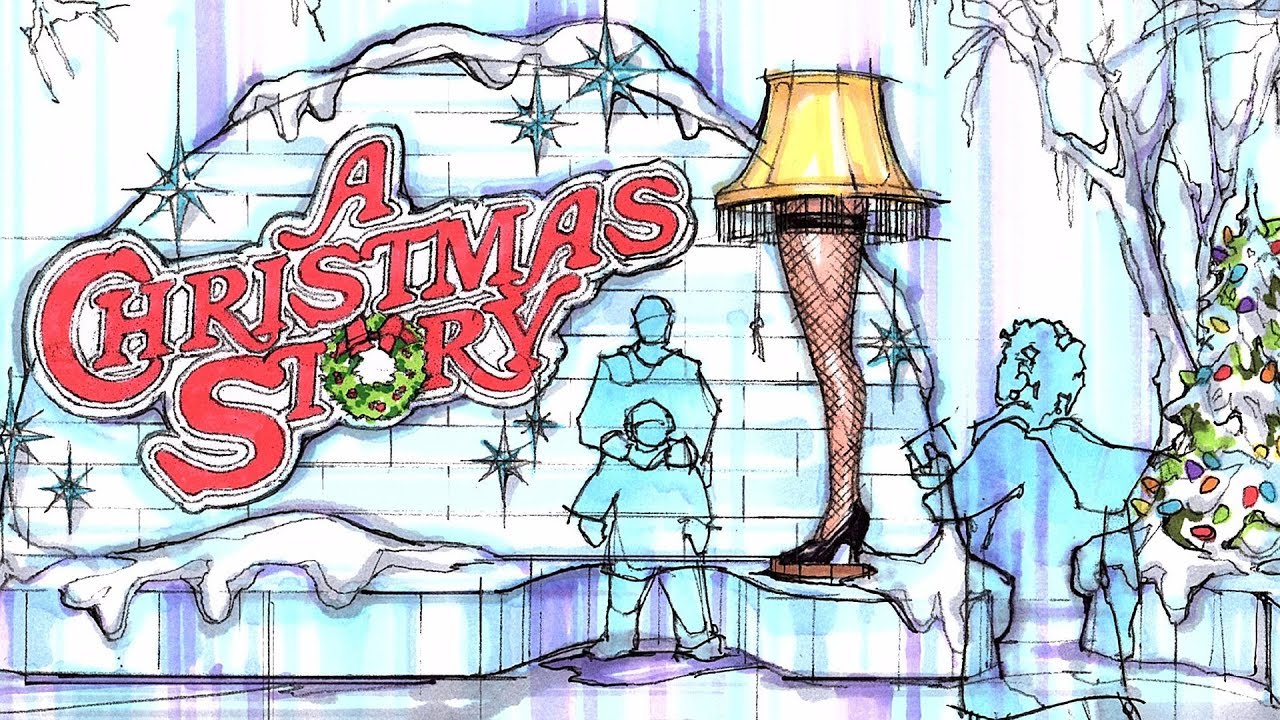
Bring gloves! I always encourage guests to bring gloves because it is incredibly cold. However, as much as I preached to my friend to bring gloves, guess what I didn’t do? Bring gloves. Haha. Pretty much, my hands were completely numb by the time we passed THE END. When I say A Christmas Story, you likely have several individual scenes that instantly come to mind. Fortunately for you, each of those scenes are captured by the artisan ice sculptors. Only Hemingway could find the words to describe the beauty of the experience. Prior to entering the frigid exhibit, you get to learn about how the history of ice sculpting and how the team of sculptors create the amazing sculptures that successfully translate the iconic movie to live experience. Just before walking down the ramp into the arctic temperatures, you will be given a parka; however, I also encourage long pants and warm socks. From the moment you walk into the first room, you will be awestruck by the sheer size and beauty of the ice-tastic creations.  These are not just your average ice sculptures that you may find at weddings, galas, or even theme parks; these are quite literally life size representations of entire scenes (characters, setting props, and all) from A Christmas Story. And not just white or clear ice, these sculptures are in living color! As I walked through the flagship attraction at ICE, I was amazed at how effectively the movie was captured. I really did feel that I was watching the movie from start to finish. Since it’s a movie that also has some memorable lines of dialogue, there are signs with those quotable moments. Returning as the final display on the tour during the experience is the absolutely stunning ice nativity. I’ve seen a lot of still nativities in my day, but this one is always the most beautiful! You may even find yourself singing O Holy Night along with the background music.

Closing out our evening, Paula and I took our seats in the Sweets Shoppe for the live comedy show featuring a hilarious crossover between Babes in Toyland and The Nutcracker as told by two incredibly funny performers as the Sugarplum Fairy and Nutcracker. Highly interactive, I was reminded of the line from a Rocky Horror Picture Show live shadow cast when the live cast yells “this movie sucks without audience partici–” and Dr. Frank responds with “–pation.” Because the show itself is funny, but the entertainment factor is increased ten fold by engaging the performers and playing along. Although you can sometimes tell that an actor is or isn’t having fun in a movie, picking up on how much an actor in a live production is far more noticeable. And these two were having a blast! The Sugarplum Fairy and Nutcracker were genuinely interested in my enjoyment and truly displayed enthusiasm for their show. Do not miss this show. It’s only 20mins, and I imagine it will have multiple showings each evening. I love the addition of a comedy show to Christmas at Gaylord Palms! So much is stunning, inspirational, heartwarming, and more; but you know what, sometimes you just want to laugh too! And you will laugh a lot during this performance! The actors even asked me if I wanted to take a pic with them on stage. How incredibly nice of them! Do yourself a favor, and make time for the show. Oh yeah, don’t forget to say hi to the gingerbread man out front too.

Opening Friday, November 16th, Christmas at Gaylord Palms featuring ICE should definitely be on your list of events to attend this year. If you dine at one of the restaurants, your parking will be validated (and parking is not cheap). You may be familiar with A Christmas Story but you’ve never seen it like this.

Merry Christmas!

Ryan is a screenwriting professor at the University of Tampa and works in creative services in live themed entertainment. He’s also published prolifically on theme parks and produced a peer-reviewed study. If you like this article, check out the others and FOLLOW this blog!

Follow him!

Twitter: RLTerry1

Instagram: RL_Terry

Thrillz (theme parks): Thrillz.co

Theme Park or IP Park?

With all the recent, present, and future changes coming to the legacy theme parks of Central Florida and Southern California, are we witnessing the next evolution in theme parks? I’ve been tossing around the idea of exploring this trend, and those same feelings were echoed recently on the No Midnight Podcast (a Disney-centric podcast that unpacks history and discusses current happenings in the parks). After listening to the episode, it’s become clear that this anecdotal observation I’ve made is shared by others. As I love exploring the history of the parks from a scholarly perspective (as evident in my past articles and book), this is a topic that deserves consideration.

In order to truly explore this trend that some of us in the theme park blog and podcast communities have observed, it’s important to take a brief look at the development of the very concept of a theme park. And before you think that Disneyland was the first theme park concept, think again. Contrary to popular belief, Universal Studios Hollywood was the first to pioneer the idea of a theme park. More than 40 years before Disneyland was opened, the founder of Universal Studios (studio) German immigrant Carl Laemmle, opened his 250-acre-movie-making ranch, just north of Los Angeles, to the public for a mere $0.25. More than side income for the trailblazing studio, most well-known for its pioneering of the horror film, the original studio tour began on the outdoor backlot in March 1915. Laemmle desired to immerse guests into the magic behind the screen. The happy marriage, however, was not to last very long. Upon the introduction of cinema sound, Laemmle was forced to close the studio “park” to the not-so-quiet guests in order to facilitate appropriate recording sound for the motion pictures. The Universal Studios tour would remain closed to the general public for over 30 years. But, in 1961, the studio would once again open its gates to a new generation of movie lovers through the still world famous studio tram tour.

Combining inspiration from what Laemmle began 40 years prior, visionary Walt Disney made the decision to create an entire land that would immerse guests into the world (or land) of Disney. More than an amusement park, Walt Disney set out to create a multi-dimensional experience complete with continuous coherent storytelling from the architecture to the attractions and restaurants themselves. Even before the park would open its doors in 1955, Walt Disney produced a television special that sought to energize enthusiasm for the groundbreaking concept that took the stories, settings, and characters from the screen and translated them to exist in the real world. Disneyland was so popular that Walt began to develop an idea that would forever change the theme park business forever. The “Florida Project,” as it was called, would eventually become Walt Disney World. Sadly, Walt passed away before the park would open, but Walt Disney World is the manifestation of Walt’s ultimate dream. Disneyland was first and is the park that Walt built, but Disney World is truly what Walt envisioned when he dreamt his innovative idea inspired by his imagination.

In the mid 20th century, Universal Studios Hollywood, Knott’s Berry Farm, Busch Gardens parks, SeaWorld parks, and later in the 20th century Universal Studios Florida were all opened to eager crowds! Each of these parks had a distinct theme, a specific story into which guests were immersed. With the cases of Busch Gardens and SeaWorld parks, the storytelling was also accompanied by a conservation message. Attractions were built that matched well with the theme of the respective land. It’s important to note that, for the most part, there was significant thought put into an attraction fitting into the design (architecture) of the land in order to never take the park guest out of the overarching theme of the area FIRST and the whether or not a particular intellectual property (IP) works in that land second. Make the attraction fit the theme, not retheme the area to match the attraction. Whereas I am oversimplifying this practice or concept, the point is to get you thinking of how theme parks processed new attractions for the longest time; that is, until Universal Studios Islands of Adventure redefined themed entertainment.

Entire volumes of articles could be written on how Islands of Adventure (IOA) redefined themed entertainment; but for the sake of argument, the impact will be streamlined. Prior to IOA, theme parks, including Disney and Universal, were largely built with theme first and properties second. Now, themed entertainment designers are busy taking major IPs, placing them in the park, and then rethemeing around it. Each land or area is themed to the attraction versus the attraction designed to fit the theme of the park area. But in doing so, does this negate the very concept of a theme park, traditionally speaking? What happens when the movie is no longer relevant?

Unlike the other theme parks, at the time, Universal’s IoA was different in that it took popular IPs with entire universes (or worlds) if you will, and built vast lands in which there are attractions based on the movies/books represented. Prior to this, the closest examples were Disney-MGM Studios and Universal Studios. But even with the two aforementioned examples, they weren’t concerned with lands of the movies, but integrating the movie properties into the backlot look and feel of the park. With Disney-MGM (now Hollywood Studios, until it changes again) and Universal Studios Florida, the theme was a combination of Hollywood and the magic of motion pictures. So individual movie or TV properties were included as part of the them park experience, and guests were prevued to studio audience opportunities or the ability to audition to be on a show (think Nickelodeon Studios). The theme was “the movies” or “Hollywood.” From the architecture, to street names, to real-life locations, both of these parks that incorporated different movies or TV shows into the layout and design. The location was largely Hollywood, but could include New York City, San Francisco, a canyon in Arizona, or Amity Island. The attractions were built into the existing landscape versus selecting a property then changing the environment to match the IP. As these “movie parks” have been moving away from the magic of moviemaking to more immersive experiential environments, the “theme” has been changing rapidly. One could draw the conclusion that the “theme” of these parks is now an anti-theme. An anti-theme in that there are a variety of experiences that do not exist within a themed landscape that connects them together.

The theme of Islands of Adventure was just that, islands of adventure. Each island around the lagoon was a different land inspired by a different IP. Personally, Jurassic Park, Harry Potter, and Seuss Landing are my favorite islands! Arguably, Jurassic Park was the centerpiece of the then-innovative concept as it was the biggest fandom represented. Today, that crown rests on the Wizarding World of Harry Potter (since 2010). Not only was IoA the first to pioneer this concept of individual themes within the park, it was the first to create an immersive world in extreme detail. And it was the Wizarding World of Harry Potter that completely changed the theme park game, rewrote the rules, and began the trend away from “theme” parks to IP parks. Instead of a collection of attractions around a shared theme (or collection of themes), now parks are trending toward a park that is a collection of disconnected IPs. While Magic Kingdom has the different themed lands, the overall theme of magic kingdom was largely fantasy and adventure not connected to any specific singular IP. And in each of the lands, there were attractions that fit the theme of the lands, some of which had movie counterparts. But the focus was not on the individual movies as much as it was the idea of escaping to, being transported to a world of high flying adventure or whimsical fantasy.

Ever since the Wizarding World of Harry Potter opened, Disney and Universal parks (mainly) but also joined by Movie Park Germany and MotionGate Dubai are principally concerned with attaching movie and literary IPs to the park for the guests. Reminiscent of the space race between the US and Russia of the mid 20th century, the race for theme parks is for IPs for the parks. This pattern continues into the film distribution and production company interests for new content–content that will lend itself to successful translation from screen to park. It’s more important than ever for media conglomerates and umbrella companies that have theme park and distribution interests to know what movies or entire franchises make for viable theme park lands and attractions. I cover this very topic in my study and book On the Convergence of Cinema and Theme Parks, which you can buy an Amazon! Just because a movie or entire franchise is popular, does not mean that it is material for a theme park. For more on that topic, checkout the book.

While building entire lands based upon a popularly established IP to create an immersive environment looks and sounds like a great idea to draw the enthusiastic crowds and significantly increase revenue, there is a darker side to this that will not be realized or observed for years down the road. With the more traditional theme park design, attractions can be changed out of the show buildings far more easily than having to retheme and rebuild an entire land. But why would thinking about the ability to change a land be important? Because it is not unreasonable to arrive at the conclusion that a particular IP may not continue to be popular after an IP has had its run. Although not as big as Star Wars or Harry Potter, the former A Bug’s Life is an example of the lengths a park has to go to to remove and rebuild. Razing to the ground and rebuilding is always more costly than building a’fresh. But this does not seem to detour the parks from moving from the traditional theme park concept to an IP park. A collection of IPs that a company either owns or licenses. In the concept of a collection of IPs, is there actually an over all theme? There appears to be more evidence to suggest that theme, in the traditional sense, is lost when focusing on attaching IPs.

With the continuing trend to focus on IP acquisition instead of original themes, it would appear that the traditional theme park may be dying in exchange for IP park. Take Disney’s Hollywood Studios for example. The theme was “Hollywood” or movie-making. What is the theme now? Well, to be honest, the answer that query is vague at best. You’ve Star Wars land on one side of the park, Toy Story in the middle, and a little bit of Hollywood in the front. No consistency in theme. With the Twilight Zone Tower of Terror and Aerosmith being licensed from CBS (Sony), and the facade of the Chinese Theatre licensed from TCL, the theme is NOT Disney IPs. Same with Universal Studios, the theme is not Universal IP because other than the first two installments, all others are Paramount. Not to mention that Simpsons is Fox. Even the headliner Wizarding World of Harry Potter is Warner Brothers (AT&T). Looking at the Disney and Universal parks, I am left in a state of confusion when attempting to understand the theme of the respective parks. So, since a consistent and coherent theme cannot be identified, I am left with the conclusion that there is no theme–just a collection of original and licensed IPs.

While many may not see the differences between the concepts of a theme and IP park because, on the surface, they both look indifferent from one another, the difference seems to be the story or the diegesis of the park, as a whole, from entry gate to back of the park. So, it’s not a matter of semantics. Going from IP to IP, the experience is disrupted, and reminds you that you have not actually been transported to any of these worlds. Part of what makes the traditional theme park a powerful conduit of creating an experiential continuous story is the ability for the park to consistently suspend your disbelief. To understand the difference a little better, think of it this way: the trending IP park concept is a series of “theme parks” joined together by a unifying gate. Instead of the overarching unifying theme that connects all the areas of the park together in one coherent, continuous story, the IP park is a concourse that takes you to different themed lands. So, the importance is not in the theming of the park as a whole, but in the individual lands within the gate. Think of it as a mall. A mall is a “single gate” structure (whether indoor or outdoor mall) that has many different stores. No two stores are the same (even if carrying similar products). The entryways and hallways/concourses are glorified conduits for transportation to and from the various anchor and supporting stores. That’s not unlike the IP park. Wizarding World of Harry Potter Diagon Alley and Hogsmeade, Toy Story, Pandora, and Star Wars lands are examples of your anchor stores with the other areas as supporting stores.

There is a magic that is lost in transitioning from the theme to IP park. Not that the newly emerging IP heavy lands are lacking in a great experiential factor–obviously, that is not the case–but the park as a whole demonstrates a perpetual identity confusion. If you cannot state the theme of a park in a single statement (much like the logline of a movie), then it is does not have a theme, but a collection of IPs with individual themes. Each of the IPs (whether original or licensed) are incredibly fun, immersive, and innovative, but just because you have a collection of IPs does not mean they make a theme park. More like a theme mall. Whatever the case, it appears that there is a trend away from the conventional theme park to the emerging IP park and any studio-based theme park is transitioning away from any connection to Hollywood or the magic of moviemaking. We are at a transitional stage in themed entertainment, and we will see an increasing number of separate IPs housed around a series of concourses to each experience.\

Ryan is a screenwriting professor at the University of Tampa and works in creative services in live themed entertainment. He’s also published prolifically on theme parks and produced a peer-reviewed study. If you like this article, check out the others and FOLLOW this blog!

Follow him!

Twitter: RLTerry1

Instagram: RL_Terry

Thrillz (theme parks): Thrillz.co