“A Monster Calls” movie review

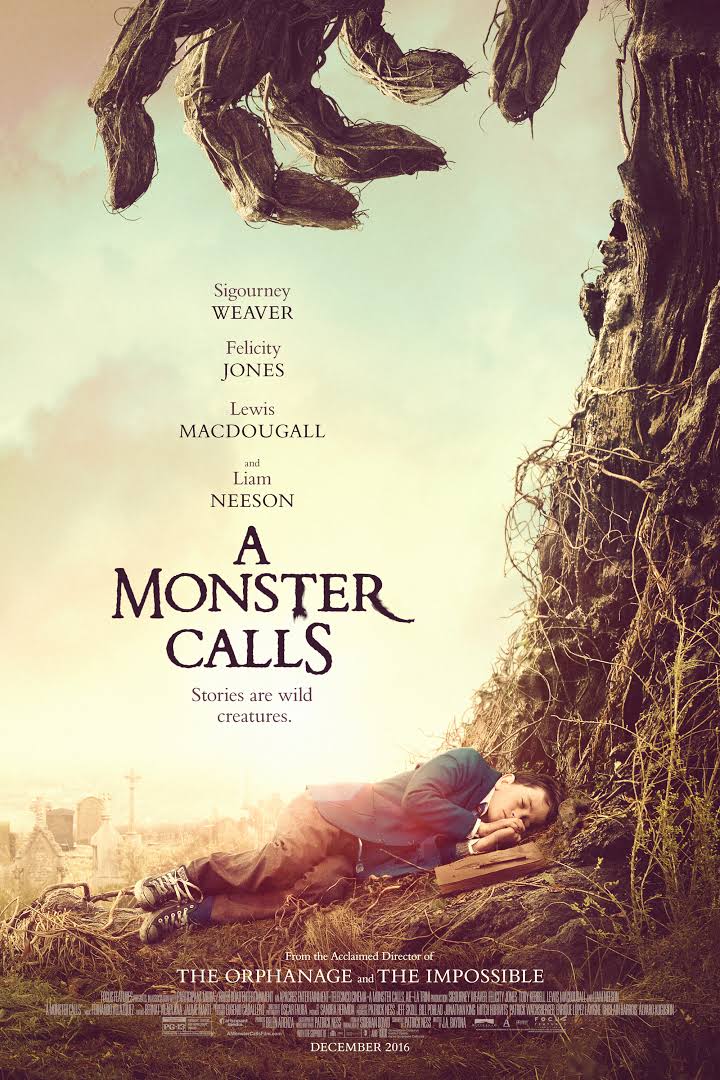
monstercallsA breathtakingly beautiful and dynamic film that typifies the art of visual storytelling in the gothic style. Focus Features’ A Monster Calls directed by J.A. Bayona is nothing short of a Terms of Endearment, in theme anyway, for a new generation. You are certain to laugh and cry your way through the film. Based upon the novel by the same name, written by Patrick Ness and illustrated by Jim Kay and conceptualized Siobhan Dowd, Bayona’s adaptation of the novel plays out to be a deep, rich story that will touch the hearts and minds of each and everyone in the audience. For anyone going through the stages of grief, this film will especially ring true and perhaps bring about comfort. Although the protagonist Connor, played by Lewis MacDougal, is twelve years old, this dark melodrama with a plot revolving around terminal illness is not typically something that will appeal to kids of Connor’s age. Despite the fantasy elements and the young protagonist, A Monster Calls is more suited for older teens and adults; however, by the same token, the movie isn’t entirely going to initially appeal to adults since the protagonist is quite young. I screened the movie last night in an auditorium filled with patrons of all ages and there was not one dry eye in the audience. Looking at the film from the outside and analyzing the plot and cast, it would appear that it may not attract droves of people because of the gothic fantasy nature, typically aimed at kids and young teens, with content and theming best suited for older audiences; however, the film truly transcends age barriers and stereotypes to touch those who are young or young at heart.

While most twelve year old boys are busy with school and learning to develop socially or even romantically, or just simply playing video games and having Stephen King type adventures, Connor (MacDougal) is dealing with far more than a kid should every have to deal with. Connor’s mother (Felicity Jones) is very ill and Connor is forced to grow in many ways kids should not quite quickly to take care of her. Not entirely going through this terminal illness alone, Connor has a grandmother (Sigourney Weaver) who looks in on him and his mother–a grandmother with whom he shares little in common. With Connor’s father settling down in Los Angeles, Connor feels very much alone while dealing with his mother’s illness. Expressing his emotions and thoughts through water color and sketch artwork, Connor uses his penchant for beautiful art as a form of therapy. Just when all seems lost, an unexpected ally in the form of a rather gothic tree-like monster (Liam Neeson) appears in his window one night. Apprehensive at first, Connor befriends the monster who guides him on a journey of courage, truth, and faith that combine in a powerful fusion of imagination and reality.

This is certainly a year for fantastic monsters and fantasy, isn’t it? However, A Monster Calls is definitely not your typical fantasy. It deals with deep emotions, dark themes, and material usually better suited for adults. Why then choose such a young protagonist? Perhaps the author Patrick Ness wanted to reach those kids who are going through tough times and who are dealing with situation that most kids won’t face until they are much older. Some kids are just forced to grow up more quickly than others. It’s important that cinema and literature not forget them because words on pages or moving pictures may be the only source of comfort, escape, or allegory. Director J.A. Bayona appears to have successfully translated the novel to screen–from what I know. Interesting that the movie opens with the narrator describing Connor as being too old to be a kid but to young to be an adult. By extension, that is precisely where this movie fits in. It’s too “old” to be a kid’s movie but too “young” to be an adult movie. And that’s okay. Growing up is hard, and when faced with a family member or close friend with a terminal illness, life is exponentially more difficult emotionally and even psychically. Unconventional as it may seem, this film is powerful and transcends the age spectrum to provide a strong emotional journey that audiences can appreciate and from which people may receive comfort. If for no other reason, having a kid starring in a melodrama brings audiences of all ages together–many who may be going through something similar as the child, parent, spouse, or lover of someone who is terminally ill. It’s okay to grieve and let go.

From the opening credits alone, I was confident that this was going to be a visually stunning movie. The water color animation and brushstrokes are reminiscent of the story of the three brothers in Harry Potter. Absolutely beautiful. Much in the same way Kubo and the Two Strings was an innovative animated film, A Monster Calls also contains unconventional and innovative methods of telling its story. Similar to how the animated story of the three brothers in Harry Potter was integrated into the diegesis of a live action movie, so it is with this film. The more I thought about the technical and emotional elements of A Monster Calls, it is clear that it’s truly a dynamic means of cinematic art. Dynamic in that there are three different types of storytelling methods used diegetically each highlighting a different form of art: (1) motion pictures (2) visual art (3) oral storytelling. It’s been said that the novel is an extension of oral storytelling, the play an extension of the novel, and motion pictures an extension of the play. At the root of all those methods of communicating through art is the very concept of storytelling. And A Monster Calls has the art of storytelling in spades. There are so many levels to the diegesis in this film; much like an onion or matryoshka doll, this film has a message of how to deal with grief at its core but there are many different routes to get to that central theme. Each layer teaches Connor and the audience something different and valuable. The cinematic storytelling elements of direction, cinematography, editing, and score are all equally beautiful.

Structurally, A Monster Calls is an intimate story reinforced and surrounded by artistic German expressionism calling attention to its own artifice. From the exterior shots to interior rooms, the various sets appear to be meticulously constructed on a stage and the wardrobe much like perfect costumes. The art tells the story effectively with little exposition required. Fernando Velazquez’ score is so incredibly moving that you may find yourself listening to the score as it too truly assist in the overarching means of telling this story. The design of the monster is brilliant and ominous all at the same time. Almost animatronic in nature, the tree plays out like there is a puppeteer on the inside articulating the movements. The monster feels just as much like an actor as the actors playing the human characters. Liam Neeson was a perfect choice to cast as the tree’s voice. His deep bass is comforting, warm, and wise-sounding. But just who is the tree (in the story)? Although we are never told whose spirit inhabits the tree that has seen thousands of years go by, there are a couple of hints as to who it might be if you pay close enough attention to subtleties in the film. At the end of the day, whether it’s the spirit of someone or the personified life of the tree itself, it is of little consequence to the movie. Still, its definitely fun and interesting to talk about as my friend and I did after the film.

If you enjoy movies such as The Iron GiantThe Giving Tree, or Terms of Endearment, then you will immensely enjoy this film. Presently in advanced screenings and limited releases, you may need to wait a few weeks before it is at a theatre near you. Although slated for a January wide-release, it may make its way through many markets before then. Originally set for an October release, it makes since to have held it until Oscar season since this is one of those films that could grab the attention of the academy. Definitely bring your tissues.

“Nocturnal Animals” movie review

nocturnalanimalsA meta-thriller that is equally shocking, seductive, bizarre, and beautiful all at the same time. Tom Ford’s adaptation of the best-selling novel Tony and Susan (1993) will either repulse or intrigue you from the opening credit sequence. There is definitely a pronounced shock value in this cinematic erotic mystery that includes an incredible amount of symbolism and theming just eager to be interpreted and dissected. Not typically found in mainstream cinema, the avant-garde seems to be the inspiration for many films this year. Nocturnal Animals is one of those films that is destined for discussion in a film or media studies graduate class. With solid acting, writing, and cinematography, you will be sucked into this twisted mystery within the world that the wealthy live in and the real world that most of us live in. You will likely find yourself thinking about what everything means, how it might apply to you, or simply appreciate non-linear storytelling. Although the film certainly rests upon the flashback as a chief storytelling method, Ford plays his cards right and creates a film in which all three stories are equally interesting. You may have heard it said–even by me–that some good movies are poor films; but, this is a case of a good film but a poor movie. That is usually the case with films that fall into the artistic or avant-garde stylistic way of conducting a visual story that contains a strong emotional impact.

Susan Morrow (Amy Adams) is an incredibly successful art gallery owner in Los Angeles. However, the marriage to her second husband is not nearly as successful. He’s often away on business trips to New York. One evening, Susan receives a manuscript written by her first husband (Jake Gyllenhaal)–a once struggling writer and graduate student turned college professor and now professional author. She finds the novel gripping and disturbing. As she continues to pour over the pages dripping with intrigue, she is impacted on a personal level as she uses the world of the novel as a mirror on her own life. Taking her to dark places in her past, Susan finds herself on a path of self-evaluation as she is presently going through emotional and financially hard times.

Cognitive cinema. Focus Features’ Nocturnal Animals is one of those films that requires higher thinking in order to truly appreciate the symbolism and theming. Not that it cannot be enjoyed as a beautifully dark and disturbing story, but there is so much that can be analyzed in this film. From the sequence of obese nude females dancing with sparklers, ringmaster hats, and cheerleader regalia to the reoccurring imagery of crosses and death–both in terms of emotional and physical–director Tom Ford provides audiences with a film that can only be characterized as a mystery that is meta-thriller meets hints of erotica. Even now, I am analyzing the symbolism and theming as I write this review. There are so many elements to talk about. And I think that is the best part about a movie like this. Don’t watch it alone. Not because it is too intense or scary but because you will want to talk to someone about the theming or emotional commentary. I find myself with a deep desire to analyze the film with someone, but none of my friends or colleagues have seen it yet. Visually driven. Even without the dialog, Ford’s Nocturnal Animals can be understood through the imagery in and of itself. Trace amounts of Tom Ford’s legacy as a high fashion designer can easily be seen in the design of this film. And I am not just talking about Adams’ stunning wardrobe and hair/makeup. In many ways, this film–as a whole–is symbolic of high fashion clothing. It can be read in some of the same ways fashion is read and appreciated. Because this is only the second feature length film from Ford, there are elements of the story that give the impression that his talent for visual storytelling is still in the development process as there are times that his method of directing is that of an observant student or scholar of cinema.

There are three distinct narrative threads in this film. (1) is the main story that we open up to at the interpretive and conceptual art exhibit establishing Susan, her gallery, her husband, and lavish lifestyle (2) is the narrative of her first husband Edward Sheffield (Gyllenhaal)’s novel Nocturnal Animals and (3) is the story of the rise and fall of the relationship between Susan and Edward. Juggling three plots is no easy task. Contrary to how it may appear, the narratives are not confusing or incoherent. Each plays an important role in the overarching theme and story of the film. The incoherency is found in the interpretation and analysis of what everything means. It’s as if the film is providing the audience with puzzle pieces that can be arranged to depict something different for everyone. Perhaps you want to read the film as commentary on the relationship between Susan and Edward. Maybe you view it as symbolic of the estranged relationship between Susan and her current husband. Or maybe the novel is self-reflexive of the life Susan has created for herself.

Each story is stylized in such a way that they complement one another–do not necessarily correlate or match each other, but the narratives are complementary. Although the audience is asked to draw their own respective conclusions to the story, presumably Susan’s once lavish and charmed life will continue to rot and crumble as her husband is likely cheating on her just like she cheated on Edward. Still, there is a lot left up to interpretation in the best possible way. The Roger Ebert website review of this film commented that there are parallels between this film and Alice Through the Looking Glass. Fascinating take on this film. That is probably the best analogical interpretation of Nocturnal AnimalsLooking at the film in such a way that Susan is Alice and the two other narrative threads are her adventures in Wonderland opens a whole new window through which to view the events as they unfold. On the surface level, there is a clear theme of revenge woven throughout the plot. This is indicated by a painting that catches Susan’s attention on her way to a board meeting. The metaphysical thrilling aspect to the subplot of revenge is the revenge the past has on the present and the present on the past. In a manner of speaking, Susan is listed by ghosts of her past, present, and future. Okay, perhaps not in the same way Scrooge was visited, but there are certainly some commonalities.

If you enjoy films that make you think, then this is definitely one to watch! As it was on a limited release until this weekend, you may not have heard of it but look for it at your local movie theatre. Fans of Blue Velvet will likely enjoy this film as well. Intriguing writing, solid acting, and beautiful cinematography make this a fascinating movie to prompt deep discussions afterwards.


Disney’s “A Christmas Carol” (2009) movie review

d_a_christmas_carolAn exhilarating visual array of breathtaking motion-capture animation with a touch of the macabre! Disney’s A Christmas Carol directed by Robert Zemeckis is an outstanding adaptation of the literary classic. Instead of attending the cinema this week, with the box office offerings on the anemic side as we gear up for the bulk of Oscar season heavy hitters, I decided to rewatch Disney’s A Christmas Carol. Charles Dickens’ masterpieces have long sense been a source of inspiration for film adaptations of literature. Specifically, A Christmas Carol was actually one of the earliest films period–let alone adaptations. The first adaptation of A Christmas Carol was a British film in 1901 titled Marley’s Ghost. This classic work has been adapted for film, theatre, radio, and television more than 100 original/separate times, collectively. But why??? Why this novel? Quite possibly, this single work of literature has been brought to life for the stage, speaker, or screen more than any other with only a few possible exceptions. Perhaps, because it is simply timeless–transcends all generations. Writer-director Robert Zemeckis showcases his ability to put his spin on the timeless tale by perfecting the motion-capture animation techniques that made his adaptation of The Polar Express so visually stunning. Although Patrick Stewart’s Scrooge in the TNT original movie from 1999 is my favorite Scrooge, I feel strongly that Zemeckis’ film is closest adaptation to the spirit of the novel and brings it to life in the way Dickens himself may have imagined.

London may be anxiously awaiting the arrival of Christmas Day, but the old miser Ebenezer Scrooge (Jim Carrey) could not care any less. He much prefers the company of his money and micro-managing his humble clerk Bob Cratchit (Gary Oldman) at his counting house. After begrudgingly allowing Cratchit to have Christmas Day off, Scrooge heads home. Upon arrival to his stately but lonely townhouse, Scrooge encounters the ghost of his dead–and there is no doubt about that–business partner Jacob Marley (Oldman). In an effort to spare Scrooge his horrifying fate, Marley informs Scrooge that he will be listed by three spirits (Carrey). The ghosts of Christmas past, present, and yet to come respectively take Scrooge on a terrifying journey through his his life in hopes of transforming his selfish bitterness and embrace the selfless love and joy of Christmas.

Prior to analyzing this adaptation, as it is a story most of us know and cherish, I’d like to look at why. Why has this work of literature been adapted for nearly every storytelling medium? The short answer is that it is a story that is as relevant today as it was in the 1800s. Much like with his other masterpieces, Dickens captures so much about the human condition, in what amounts to a short story. The novel is not terribly long. With many in the U.S. feeling as though, much like in Dickens’ world, that we are being divided up into the rich and poor, this novel rings especially true. In fact, there are definitely high profile people in our economy echoing Scrooge’s words “have we no prisons; have we no work houses???” Not that we have a physical debters’ prison or work houses (in the old fashioned sense), but there are certainly elements of our society which parallel them. The story hits close to home for many. Furthermore, the novel, and subsequent adaptations, are regarded so highly because Dickens encapsulated every aspect by which mankind judges one another: past, present, and future. This is the foundation of a single person or people as a unit. Through Scrooge, Dickens shows us that if we look at our past, present, and future, then we can see the impact we have on those around us and even ourselves. By seeing how we really are, we can make the decisions to develop an approach to change ourselves to be about the business of mankind.

Interestingly, the ghosts show Scrooge how Christmas past was a time of magic (although it ended in heartbreak for Scrooge), Christmas present depicts how commercialism and greed have all but wiped out the magic with a glimmer of hope as shown by Cratchit and Fred, and Christmas yet to come shows Scrooge–and us–a world without the magic of Christmas: a world that we created. Another reason why this story is so powerful is because Dickens wrote the character of Scrooge to be a complex, multi-layered human who acts very much like a mirror to many of us. On the surface, he looks like a stereotypical old miser, but after looking into his past, we are given a glimpse of how he evolved–not unlike many of us. This story is also powerful for those who recognize the religious origins of Christmas or not. The focus of the story is on generosity, hospitality, love, compassion, as well as selfishness, greed, and sociopathy; but, it very much includes and makes reference to the religious underpinnings of this special time of year. Simply stated, this is a dynamic story of redemption that transcends generations of people.

Zemeckis’ adaptation is a beautiful usage of 3D storytelling technology. Ordinarily, I am not a fan of 3D movies, but this one is an exception for sure. I did not watch it in 3D last night, but I remember watching it in 3D when it came out in 2009 at the [then] Downtown Disney AMC. Zemeckis is one of few directors who knows how to use 3D effectively without it seeming like a gimmick. His use of 3D in A Christmas Carol greatly enhances the visceral appeal of the movie. One of the principle differences between this and other adaptations is just how supercharged it is with visual effects, intense chase scenes, and flying through the street of London. But, as Scrooge himself acknowledged, spirits can do anything–they’re spirits. Zemeckis does not hold back on the dark elements of the story. If you have read the novel, you will recognize that there are very dark parts. In many respects, A Christmas Carol is a supernatural horror film. After all, how else was Scrooge going be so scared that he would make a 180 and change his miserly ways???

It’s no surprise that Jim Carrey can be seen in the character of Scrooge; however, it is not as apparent that he is the infrastructure of the look of the characters he voiced, as was the case with Tom Hanks’ characters in Zemeckis’ The Polar Express. And this trend is even less apparent with Firth’s, Oldman’s, and Wright’s, respective characters. I love Zemeckis’ embrace of the macabre mood of the story. So often, adaptations of this story lose the very horrifying elements that absolutely terrify Scrooge. Although I remember hearing parents comment that this version was too scary for their kids, I think that having a version that is skewed towards teens and adults was important. Another great element in this film: the score! Alan Silvestri’s score sneaks in some traditional Christmas carols, but you have to listen for such as “God Rest Ye Merry, Gentlemen” when its distinctive cadences turn sinister during a perilous flight through London.

There are few Christmas movies that capture the spirit of the season better than A Christmas Carol. Zemeckis’ adaptation is my pick for best translation of page to screen. The cinematic excellence of Disney storytelling is woven throughout this film and makes for a thrilling journey. If you are planning to watch some Christmas movies this holiday season, I highly recommend this version of A Christmas Carol. But if you have very young children, it may be a little too scary for them. Whether you are young or young at heart, the magic of Christmas rings all too loudly in this timeless story brought to screen once again.

“Allied” movie review

alliedQuite the duplicitous plot! Robert Zemeckis’ Allied released by Paramount Pictures is a thrilling tale of espionage and love. We have certainly seen a few different “spy” movies over the last couple of years; some more about espionage and others more about the drama that ensues afterwards. Fortunately, Allied feels like a genuine spy movie that actually contains espionage. The production design and costumes are a beautiful throwback to the fabulous 40s. You’ll find yourself reaching for a glass of champagne and swing dancing to Benny Goodman’s timeless big band jazz hit Sing, Sing, Sing. There is one city synonymous with WWII, espionage, and romance and you will appropriately return to that iconic city of Casablanca in Allied. This is definitely not a reimagined Casablanca but there are indirect references to that movie sprinkled throughout this new story. Films like this one require top notch talent, and both Brad Pitt and Marion Cotillard deliver outstanding performances to accompany this staple in film genres. Not limited to the love story between Pitt’s and Cotillard’s respective characters, the movie also includes some deadly shootout scenes and dangerously close encounters with the Nazis behind enemy lines.

Commander and intelligence officer Max Vatan (Pitt) is stationed in the famous city of Casablanca in French Morocco where he teams up with French resistance movement leader Marianne Beausejour (Cotillard). Impressed by her ability to so effectively blend in and create her authentic cover, Vatan soon finds himself falling in love with his partner. Following the assassination of a Nazi ambassador, Beausejour and Vatan flee to London to start their life together. Everything is going beautifully for the happy couple in their second year of marriage with a child when Vatan’s superiors confront him with the suspicion that Marianne is in fact a Nazi spy. Refusing to believe it to be true, Max must now conduct his own investigation into his wife’s history to protect the ones he loves so dearly.

I absolutely adored the look and feel of the film as it echoes the era of the Golden Age of Hollywood. Although this movie plays off a tad listless as a result of failing to elicit a strong emotional response from the audience, it is not without it outstanding elements. It benefits from solid acting and beautiful cinematography as well as some fantastic symbolism. Robert Zemeckis’ talent for visual storytelling is clearly visible in this period film. The weakness in the ability to successfully leave a lasting emotional impact on the audience is in the writing and executive producership of Steven Knight (Eastern Promises). For films that are not as much about the spectacle as they are the drama between characters and the challenges faced therein, it is vitally important that the personal/interpersonal relationships transcend the screen and directly impact the audience. All the makings were there for a deeply moving cinematic story, but it just doesn’t quite make that transition from the mostly superficial and distant.

Mirror, mirror, on the wall…(interesting fun fact: this misquoted line from Snow White is actually “magic mirror on the wall”). But, I digress. The strategic use of mirrors is an  incredible use of visual storytelling and symbolism. For those who have studied film or literary rhetoric, the mirror is a classic means of conveying duplicity (two sides, faces, etc of a character). Even without knowing that this was a spy movie, I would have been able to infer that from how the mirrors are shot and placed within the composition of the 24 frames a second. When using powerful symbolism as part of the visual story, it conveys so much more meaning in a scene than words could actually describe. Mirrors have long sense been a powerful metaphor even before moving pictures. But motion pictures allow for a greater use of the importance it plays in a cinematic story. Not limited to duplicity, mirrors can also be used as a metaphor for self-reflection. Whether talking duplicity or reflection, the mirror aids in conveying so much to the audience in this movie.

Ordinarily, I am not a fan of classic films getting remakes; however, there are always exceptions when the core or essence of the film is held in tact but the production design, direction, and cinematography are brought up to speed with contemporary cinema. If you’re a fan of WWII era films or the timelsss spy movie, then you will definitely enjoy Allied. After witnessing the significance of Casablanca in this movie, I am actually looking forward to a remake if there ever is one. Provided. That the overall look and feel of the movie is in line with classical motion picture storytelling. I could definitely see Robert Zemeckis directing a remake of Casablanca. Occasionally there are directors who can strike the balance between a classic tale told through contemporary technology, and Zemeckis definitely struck that balance in Allied.

Don’t allow the weak writing to dissuade you from watching it; there is actually a lot to enjoy in this film. After the slow burn during the first act, acts II and III are full of intrigue and suspense.

“Fantastic Beasts: and Where to Find Them” movie review

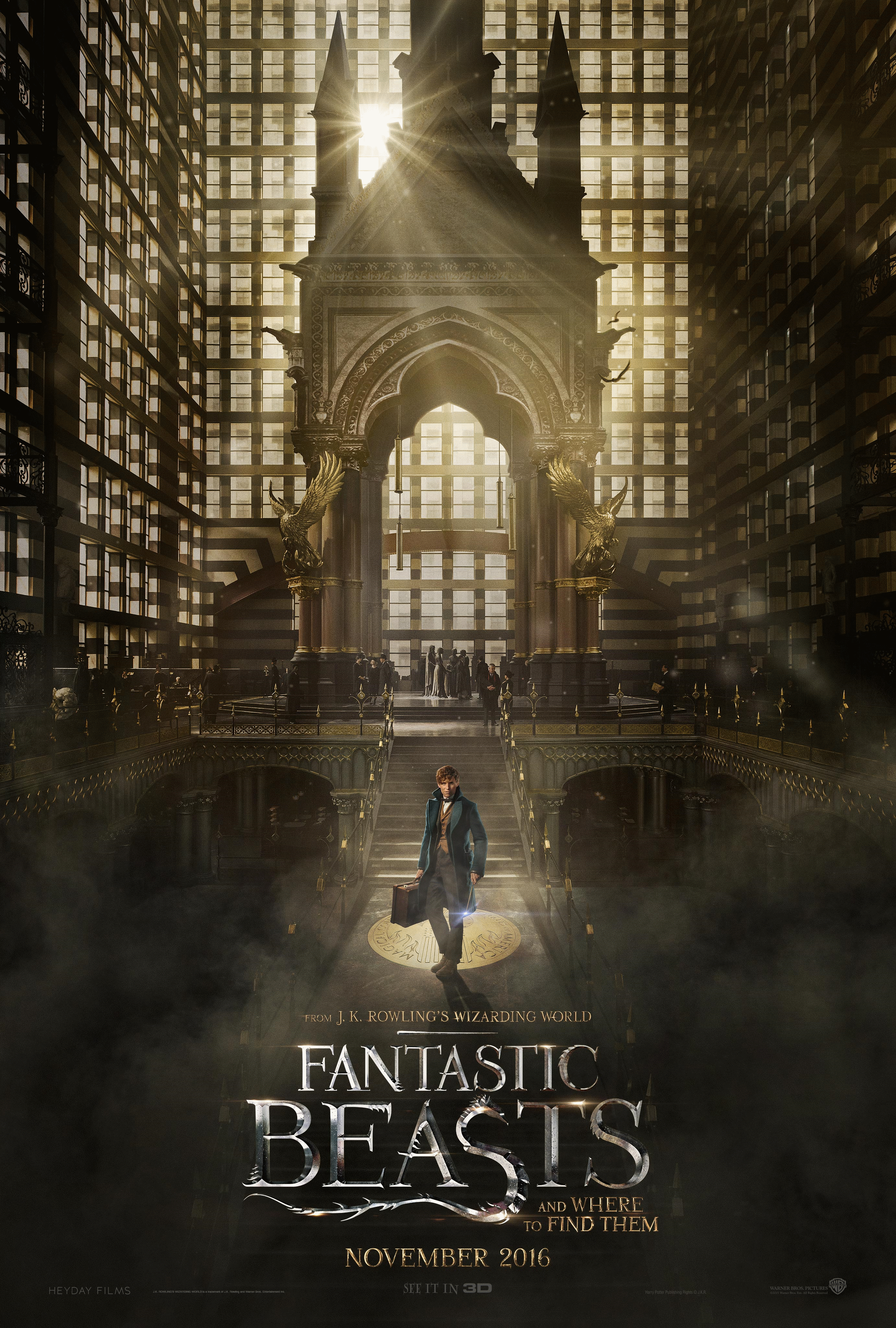
fantasticbeasts_1Spellbinding! Return to J.K. Rowling’s wizarding world in this fantastic film filled with phenomenal cinematic storytelling and mesmerizing magic. Warner Bros.’ Fantastic Beasts boasts incredible talent on and off screen that is sure to strike both a nostalgic cord with audiences as well as renew a sense of wonder in this new epic tale preceding the events of Harry Potter by more than six decades. From the flawless editing to the character dynamics, this film is definitely one to look for in the technical categories during awards season. Fantastic Beasts is also the first time that fans of Rowling’s wizarding world will witness a film based on an original screenplay and not a work of literature. After watching this movie that essentially extends a wildly popular and successful film franchise, it is clear that ‘the magic awakens’ in a manner that is destined to thrill the dedicated fanbase and ignite the passion of new fans. Whereas the last time a franchise was ‘awakened,’ it felt like a mashup of that which had been heard and seen before, Fantastic Beasts provides audiences with completely new characters in a new city facing all new challenges in a world that echoes the past but is clearly a new fantastical frontier.

Many decades before Harry Potter and Lord Voldemort would cross wands, across the pond a whole new world of witches, wizards, and fantastic beasts is beckoning for adventure. While on a rather academic expedition to locate, identify, and protect magical creatures, Newt Scamander (Eddie Redmayne) arrives in New York City to transport and collect the final creatures he needs to complete his zoologic study and publish his research. Unfortunately, this expedition is all but academic. After bumping into no-mag (no-maj/no magic) Jacob Kowalski (Dan Fogler) at the bank, Scamander mistakenly swaps briefcases with Jacob and unwittingly releases the magical creatures to roam about the big apple. With bizarrely unexplained events in the no-mag world causing people to pry into the magical world with risk of fully exposing it, Newt’s creatures become the target of the American magical congress. After bumping into an unlikely nemesis turned ally Porpentina Goldstein (Katherine Waterson) and her adorable sister Queenie (Fine Frenzy), teaming up with Jacob, Newt and his friends must capture all the magical creatures and solve the mystery of what is actually reeking havoc in both the magical and no-mag worlds.

Before analyzing the film’s content, I think it’s best to step back and look at the larger picture here. This is the first time that one of Rowling’s wizarding movies is not based on one of her novels, plays, etc. Furthermore, this also makes the fourth time, for all intents and purposes, in recent years that a popular film franchise with a highly dedicated fanbase is being extended (on the front and/or backside). The other three being: Star Wars, Jurassic Park, and to a lesser extent Star Trek; yes, there are other popular franchises that are being added to, but they are mostly perpetually continual ones like MarvelDC, or the Scary Movies, etc. Although Fantastic Beasts was highly anticipated upon the initial teaser trailers and social media traffic, the elephant in the room was whether or not it would go by way of The Phantom Menace and Jurassic Park III or The Force Awakens and Jurassic World. Thankfully, this return to the wizarding world appears to be going by way of the latter! Still too early to tell if it will truly reignite a fandom in the way the extensions did for the Star Wars and Jurassic Park franchises respectively, but the storytelling is solid and refreshing. Extending a wildly popular but essentially complete franchise is a dangerous road to go down, but Fantastic Beasts is successful in its endeavor to return audiences and fans to a world of magic and adventure.

The first cinematic element you will notice in the movie is the editing, inclusive of special effects. The prologue sequence was an incredibly brilliant way to reintroduce the audience to the wizarding world. I thoroughly enjoyed the innovative approach to integrating the magical newspapers into the opening sequence following the prologue. Although I am not a fan of 3D movies–ordinarily–I imagine that this sequence would provide quite the high degree of spectacle if watching the 3D version (which I did not do). It would not be surprising if this film gives Rogue One a run for its money in the visual/sound effects, editing, and score categories during award season. One element I was specifically looking for was the use of practical effects, props, and animatronics since it’s a film about magical creatures. I watched an advanced screening of Allied immediately before watching Fantastic Beasts; so, be honest, I need to watch it again to locate and identify uses of practical effects or animatronics. But I believe that, to a small extent, some of the scenes including interactions between the human characters and creatures used animatronics. When animatronics and CGI are used in a film–especially in the fantasy/adventure or sci-fi genres–the result is authenticity and a realness that cannot be achieved otherwise.

Eddie Redmayne delivers an outstanding performance as Newt Scamander. Absolutely flawless. From the lack of eye contact to the facial twitches to the over-all manner in which he carried himself, Redmayne does an exceptional job of bringing this character to life. Not having any books to base his characteristics off of, it was important to provide audiences with a protagonist who was both entertaining to watch and find a place in the hearts of fans in two hours. Both were definitely accomplished. Joined by an amazing cast of chief and secondary supporting players, the brilliant direction of David Yates is seen in all the character dynamics throughout the movie. I greatly appreciate the lack of developed physical romance or attraction between Newt and Porpentina and instead the mild romantic subplot involve the sexy Queenie and lovable Jacob. The villains are nicely developed as well. Of course, the best part is not quite knowing who the villains are. Going into that in more detail will give away too much; however, there are many options for villains, anti-heroes, and allies so sometimes you will not be certain who’s an ally, villain, or anti-hero or someone who was thought to be a villain turn out to be a possible ally. Although there are definitely some predictable elements in the movie, there is sufficient enough unpredictability that it will keep you guessing and engrossed in the storytelling.

Prepare to be whisked away to J.K. Rowling’s wizarding world! I cannot wait to see how Universal Orlando/Hollywood will integrate this new series into the Wizarding World of Harry Potter into their parks and resorts. The famous Harry Potter Studio Tour in England may have some new additions as well. Fantastic Beasts and Where to Find Them is a delight for the whole family and is sure to generate new fans while appealing to and satisfying legacy ones.