“Instant Family” brief movie review

Surprisingly good! You’ll want to adopt this movie into your heart. Have you ever seen a trailer for a new theatrical release and just assumed it was another generic Hallmark or Lifetime movie making its debut on the big screen? That is precisely what I thought of Mark Wahlberg’s Instant Family. In fact, the only reason I watched it last night was because there wasn’t anything else (and I didn’t want to see the neutered Deadpool cash grab). But, I am glad that I decided to watch it! Not for reasons that it’s a “great film,” but because it was a heartwarming, inspirational story told effectively! There is a refreshing unapologetic approach to familial conflict that holds nothing back. It’s a no-holds-barred dramedy that addresses the mountains and valleys of fostering/adoption, specifically sibling fostering/adoption. If I was to liken this movie to one that we are largely familiar with, I would compare it to Parenthood, but one that is for the 21st century and concerns itself with the foster system. The movie, through the trailers, sets itself up to be an over-the-top comedy, but it was far from being a farce or slapstick comedy. When Instant Family comes from the same director of Daddy’s Home and Daddy’s Home 2, you already have preconceived notions of what the experience of this movie is going to be. Fortunately for audiences, this movie is far from the former two. And why is that? The short answer is that there is a sort of flawed humanity underscoring everything. No pretense about any of the characters. If you’re looking for authenticity, a realness about true-to-life characters, situations, and conflict, then you will definitely want to catch Instant Family.

When Pete and Ellie decide to start a family, they stumble into the world of foster care adoption. They hope to take in one small child, but when they meet three siblings, including a rebellious 15-year-old girl, they find themselves speeding from zero to three kids overnight. Now, Pete and Ellie must try to learn the ropes of instant parenthood in the hope of becoming a family. (IMDb)

While there is a lot of satire in the movie, there is never a moment that you lose your empathy for Pete and Ellie. They come from families that could very well be your own, with all the jabs, competition, and patronization that comes along with them. Even the adoption center and fair scenes, there are elements of the conversations and experiences that may be exaggerated for comedic purposes, but they are all still very much grounded in reality. Pete and Ellie are extremely eager to do a good job, and even employ some of the same approaches they use for flipping houses, but in stead use them to flip people. Some of the irreverent jokes are hilarious! There is one about rebranding foster children as rescue children like the pound for animals was rebranded rescue. The movie also takes audiences behind the faces at the adoption center to reveal the tragic, hard lives that the children and teens come from. Truly highlights the importance of looking at becoming a foster or adoptive family in order to give a child a nice home. Beyond the social commentary on the adoption and foster system, there is also a lesson to be learned that can apply to any number of areas of our lives. Such as knowing precisely why you want to do something, not just the fact you feel it’s what is supposed to be done. The movie will hit you with thought-provoking moments that will force you to face what you think of foster kids and the foster system. I also appreciate the movie for depicting difference kinds of parents–quite the modern bunch! So much diversity is represented, and each prospective parent(s) is inspired by ones encountered by the writer-director Sean Anders’ own journey as he and his wife adopted three siblings.

This is a shorter review because I am getting busy with the end of the semester, but I wanted to provide some brief thoughts on it anyhow. After this week, I’ll be back to my regular article entries.

Ryan is a screenwriting professor at the University of Tampa. If you like this article, check out the others and FOLLOW this blog!

Follow him!

Twitter: RLTerry1

Instagram: RL_Terry

Thrillz (theme parks): Thrillz.co

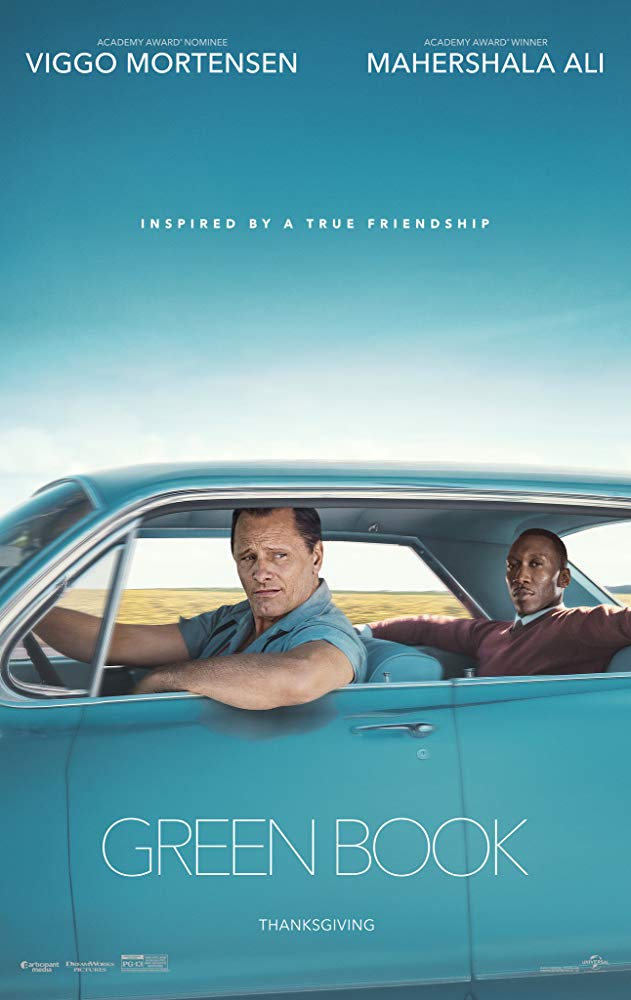
“Green Book” full film review

A timely thought-provoking dramedy in the style of “Driving Miss Daisy” with a charming lead cast that provides a platform to analyze racism, class, and other prejudicial issues set in the Jim Crow era South. Based on the true story, writer-director Peter Farrelly uses a buddy road trip comedy approach to tell an important, hard-hitting story that is just as relevant today as it was during the Jim Crow days of the deep south. More than relevance though, it’s an important film that can potentially start conversations about racism, classism, and many other isms or social phobias we face today. Socioeconomic and racial bigotry still exists. Perhaps those issues aren’t as formal as the Jim Crow days, but these are issues that are still alive today and need to be addressed. Film is a powerful medium for challenging the status quo or starting conversations about topics that are otherwise hard to discuss. Sometimes, a film plays it safe while dealing with tough topics such as racism. Hidden Figures and The Help come to mind. The topic is definitely at the crux of the plot, but it doesn’t go right for the jugular of the offending party. However, the screenplay written by Farrelly, Nick Vallelonga (son of Tony, the central character), and Brian Currie is an unapologetic exploration of the realities of where parts of the country were and to some degree still are. The film’s heavier moments are counterbalanced by the comedic banter between Dr. Shirley (Mahershala Ali) and Tony (Vigo Mortensen), and it is infectious! You may read that this film’s plot is predictable in many ways, and that is not untrue. However, the power of this movie is not in the mechanics of the plot, but its topical power and character dynamics and conversation between the characters that gives the film the award-winning quality it has.

Based on a true story, Dr. Don Shirley (Ali) is a world-class African-American pianist who’s about to embark on a concert tour in the Deep South in 1962. In need of a driver and protection, Shirley recruits Tony Lip (Mortensen), a tough-talking bouncer from an Italian-American neighborhood in the Bronx. Despite their differences, the two men soon develop an unexpected bond while confronting racism and danger in an era of segregation.

Being from the deep south originally, there are many elements and encounters in this film that I have witnessed. Not that racism is limited to the deep south, as we can see evidence of it all over the country, but the racism depicted in the movie still exists, to this day, in the south. Perhaps it’s not as formal or widely accepted as it once was, but remnants of the Jim Crow days can still be found in the smaller towns. However, this film is about more than racism during the Jim Crow days, it’s also tackling classism between the highly educated, wealthy white collar professional and the streetly educated, lower middle class blue collar professional. Furthermore, the film also takes a moment to highlight the degree to which gay males were criminalized in the south. Corrupt law enforcement is not new to film or media, but this film makes it a point to not depict all white law enforcement officers the same. While many of the law enforcement officers are shown as unethical, Green Book includes a friendly, concerned officer who helps Tony and Dr. Shirley on their return trip home.

I love the visually-driven stark contrast between Dr. Shirley and Tony that is supported by strong dialogue and subtext. Within a short amount of time, we learn precisely what makes each of our leading characters tick and just how different they are. Shirley is a high-class, highly educated, white robe and gold jewelry wearing Jamaican-American concert pianist who lives above Carnegie Hall and Tony is a working-class Italian-American, Bronx-dwelling, bouncer at the famed Copacabana night club. They couldn’t be from two more different worlds. Yet, Shirley sees precisely what he needs in Tony as a valet/chauffeur as he makes his way through the bigoted south. Both actors deliver exemplary performances, packed with quite the savage zingers and sarcasm. Mortensen literally packed on the extra pounds that you saw in the movie, much in the same way we witnessed Charlize Theron put on the weight for her brilliant performance in Tully. Both actors are playing characters completely opposite of their typical ones. In his first role since Moonlight, Ali couldn’t be any further from his drug-dealing character in that movie. And we seldom get to see Mortensen in comedic roles, but his facial expressions and infectious energy are well-suited to his role in Green Book.

One of the most powerful takeaways from this film is not the fact the American south was (and still is to a lesser extent) a hotbed of bigotry and inequality that was direct, it’s the indirect racism that that hid behind smiles and “legacy” laws and still hides behind tradition today. In several scenes, the reasons for Shirley’s treatment was because of long-standing rules or laws that just are the way they are. Those in power do not question whether a rule is fair because that’s the way it’s always been. And I think that form of racism is even more dangerous than the more violent kind because it’s far more prevalent even today. The film also deals with classism because Shirley looks down upon Tony even before the road trip begins. From the moment that Shirley and Tony meet, Shirley looks down upon Tony and is consistently spouting savage comments. Whereas one’s level of education or job does not determine the level of class one displays in real life, I appreciate this trope in Green Book because it helps to paint the socioeconomic contrast that pairs nicely with the racial contrast in order to setup conflict along the road trip. Whereas racism may not be something you’ve directly experienced, there is a strong possibility that you may have encountered or experienced economic or educational prejudice. Although the “caught in the act” scene between Shirley and the other male guest at the YMCA was a little “on the nose,” because it happened at a YMCA, this scene provides an opportunity to show that homophobia was (and still is, to an extent) very real in the deep south. It was even criminalized, as evident by the law enforcement detaining the men in the movie. So, if you’ve never experienced racism or classism, maybe this is something you’ve experienced in a more modern context. These areas are so very important because they allow so many people in the audience to identify with one or more areas of prejudice.

The screenplay for Green Book is so incredibly well-written! But the movie magic that allows the film to be as impactful as it is, is due to the on screen chemistry between Mortensen and Ali. However, back to the screenplay. It was brought to my attention that last year’s Phantom Thread is similar in pacing to Green Book, and that is in part due to the “slow moving” plot. But here is why I did NOT like Phantom but love Green Book: every moment in Green Book is important and full of meaning. There is not one wasted moment in the plot. Each line of dialogue was carefully constructed to drive the character development and plot forward. There is a beautiful authenticity to every moment of this film. Sometimes that authenticity is offensive (the language and attitudes of many of the southerners) and other times it is refreshingly candid. I was completely sold on Ali’s and Mortensen’s respective characters in every movement and every speech. I believe each and every character to be true to life, full of dimension and depth. Perhaps that depth is scary but other times it is heartwarming. Excellent banter is difficult to write, but the screenwriters demonstrate an uncanny ability to take a scene and make it both funny and dramatic all at the same time.

I am not sure where this this film falls in my ranking of picks for the year, but I can honestly say that it is one of my favorites. My two favorite parts of this film are the performances and screenwriting. It’s a timeless story, based ON a true story, that is a narrative that we need today as we seem to face increased prejudice between various groups of people. Is Green Book going to cure the problem with racism and classism on display in the United States? No. But this film does show that by spending time with other people from different backgrounds or cultures, we can combat these actions by learning to love and accept those who are different from ourselves.

Ryan is a screenwriting professor at the University of Tampa. If you like this article, check out the others and FOLLOW this blog!

Follow him!

Twitter: RLTerry1

Instagram: RL_Terry

Thrillz (theme parks): Thrillz.co

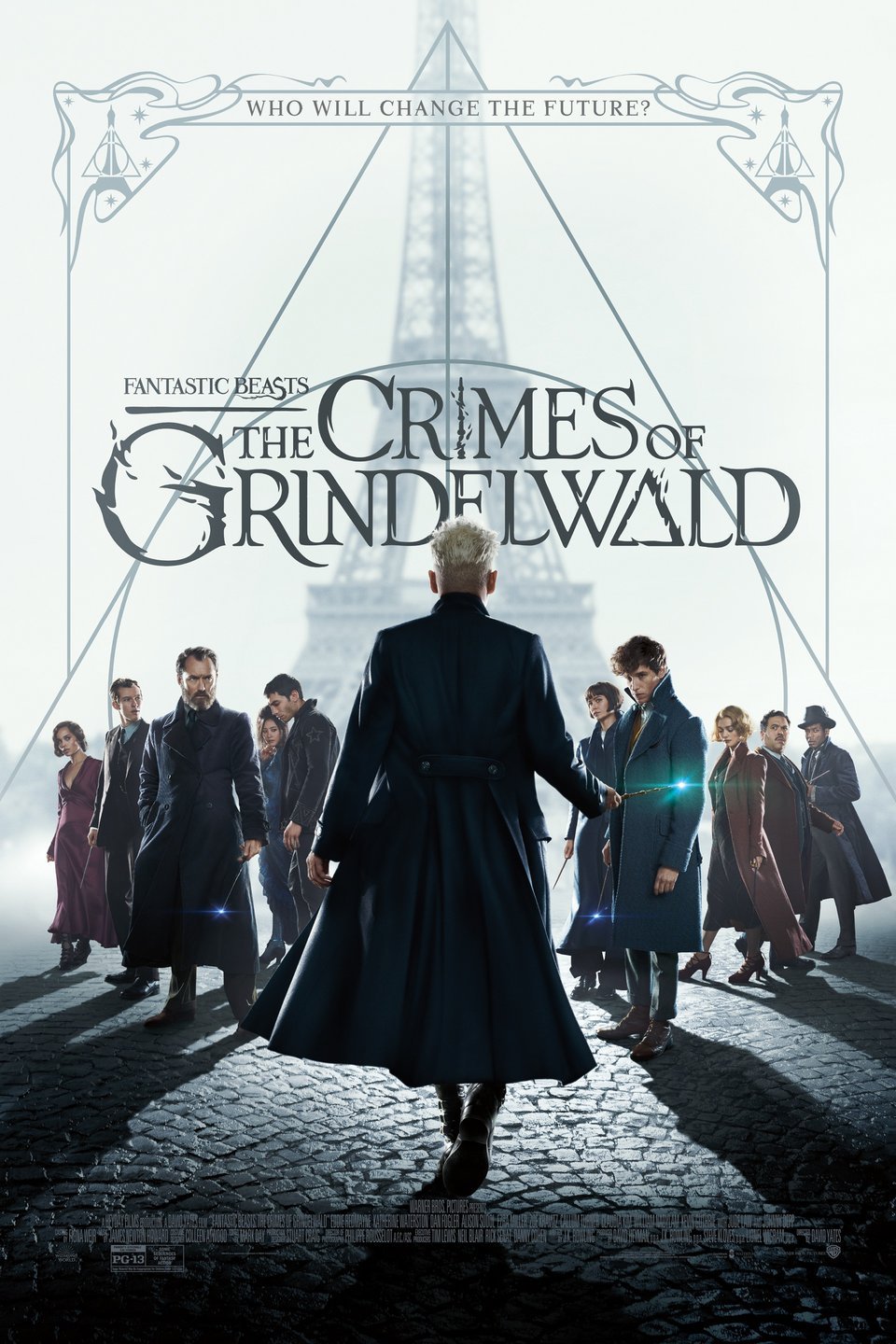
“Fantastic Beasts: the Crimes of Grindelwald” review

Fantastic Beasts: the crimes of screenwriting. I am still not entirely sure what I watched last night. J.K. Rowling’s plot for the second film in the Fantastic Beasts is all over the place, goes in every direction except intentionally forward. When the Harry Potter spinoff franchise needed an Empire Strikes Back, it gets an Attack of the Clones. Referencing a hyperbolic statement from J.K. that made its way around Twitter, I am totally in belief that she did, in fact, write the screenplay in 25mins. From pacing issues to odd tonal shifts and a lack of focus, the screenplay suffers from a case of sequelitis. The Crimes of Grindelwald appears to rely on technical marvel and spectacle more so than a compelling narrative. The movie is full of new and familiar characters (plus some Harry Potter cameos), fantastical beasts, and explosive sequences of events, but ultimately loses air ad runs flat. Much in the same way that the first movie felt like the preface to a book, this one feels that it too has the goal to simply setup the next chapter. Moreover, the movie feels like too little plot stretched over too much runtime. Which is a shame, because there is clearly an attempt to provide an escapist allegory for primarily racism and, to a lesser extent, sexuality. Subtext of heavy psycho-social and moralistic themes is nothing new to the Rowling-verse, but Grindelwald simply gets lost on its journey to deliver a powerful thought-provoking story paired with high-flying adventure. This sequel is certainly darker than its predecessor, but fails to provide a well-developed plot that will drive the remaining films forward.

In an effort to thwart Grindelwald’s plans of raising pure-blood wizards to rule over all non-magical beings, Albus Dumbledore enlists his former student Newt Scamander, who agrees to help, unaware of the dangers that lie ahead. Lines are drawn as love and loyalty are tested, even among the truest friends and family, in an increasingly divided wizarding world (IMDb).

Many movies have A, B, and C stories. The A story is the central plot that focusses on the central and opposition character’s external goal; and the B and C stories are typically the subplots that focus on character development, internal needs, and/or supporting character stories. The problem with this movie is that it randomly switches focus, tone, and direction arbitrarily without any rhyme or reason. Each of the A, B, C, D….in short, there are too many stories (plots) in this movie…plots–individually–are interesting. And stacked in an effective manner, could provide quite a bit of meat in this sandwich. Unfortunately, the focus of the layers and ingredients is on the arrangement or presentation of the sandwich more so than allowing the famished to sink their teeth into the otherwise delicious sandwich. Or think of it as the shifting staircases in Hogwarts; you could ascend and descend the staircases for hours and still not make any real progress toward your destination. Structurally, the movie suffers from a shifty foundation. So convoluted is the plot, that it continually introduces new information and elements just for surprise, shock, or brief entertainment value rather than setting up the story in the first act, throwing the characters into crisis mode in the second act, then providing solid resolution or realization in the third. It’s like one really long first act and a rushed second and third acts. As I warn my screenwriting students about science-fiction or fantasy writing, often times, these screenwriters are so wrapped up in world-building that the plot and characters suffer. Perhaps the characters in Grindelwald are complex enough (but truly debatable) but the plot is far from simple. After two movies, it appears that J.K.’s talent for writing novels is not as evident in screenwriting. Hence why many parts of this movie feel better suited to a novel than movie.

I could go on and on about the plot holes and pacing problems, but I feel I’ve made my evaluation sufficiently enough. So, now I want to switch gears to discussing what IS interesting about the movie. There are elements and attempts at themes (and subtext) that almost worked. Had more attention been paid to the logistics of screenwriting, then these would have been thought-provoking or at least meaningful. Upon my initial watch (and full disclosure, I plan to watch it again b/c I’ve heard it’s better on the second screening), the themes of racism, ethics, and sexuality are clearly present. Instead of a classic approach that features two differing ethnic races, the two races are the magical and no-mag (or muggles), skin color or country of origin do not factor into the equation. Grindelwald seeks to elevate the magical above the no-mag because he feels that the magical race is superior to the no-mag and can prevent the world from plunging into war. Ironically, his views insight mass violence and death. Furthermore, he wants the no-mag to serve the magical because the no-mag are disposable. Clearly, there are parallels between the American Civil War and Wold War II. Moreover, Grindelwald’s determined for the magical to stop hiding from the rest of the world and should come out to show the regular humans that they are the superior race–the super race, if you will.

Speaking of “not hiding,” the film also touches on sexuality in the wizarding world. For the first time, a character’s sexuality is pivotal to the plot and thus affords J.K. and WarnerMedia to comment on that in the story. Not a spoiler since J.K. stated it in a tweet, Dumbledore was in a romantic relationship with Grindelwald when they were much younger. It was always rumored that Dumbledore was gay, but this film puts those rumors to rest by addressing his past. Unlike a film that would simply add this character trait to the plot for the sake of inclusivity, Grindelwald allows for this to be an important part to the plot because Dumbledore and Grindelwald made a pact when they were in love never to fight each other directly. This theme of being free to love whom you will is also witnessed in the relationship between Jacob and Queenie. According to the present laws, Jacob and Queenie are not permitted to marry because a magical individual cannot engage in a romantic relationship with a non-mag. Queenie could wind up in the Ministry of Magic’s prison. In the end, Queenie couldn’t live with the divide between her and Jacob that the Ministry created, so she chooses a new future for herself. Although only directly touched on in one scene, there is also some commentary on ethics. At one point, Dumbledore tells Scamander that he appreciates that Scamander always does what is right, not what will best suit him or support a particular side of a conflict. He is concerned with only engaging in decisions that are ethically sound regardless of the personal benefit.

Even more than its predecessor, Fantastic Beasts: the Crimes of Grindelwald works diligently to convince you that these movies belong in the same universe as the original Harry Potter movies. The return to Hogwarts and a few familiar character appearances work to connect this film to the rest of the Wizarding World, but at times feel incredibly forced. You will also learn more about Dumbledore’s long lost, secret brother, the origin of Voldemort’s pet snake, and the lineage of Bellatrix Lestrange. With three more movies to go, there is still time to turn this franchise around for the better, but that will largely hinge on the next movie.

Ryan is a screenwriting professor at the University of Tampa. If you like this article, check out the others and FOLLOW this blog!

Follow him!

Twitter: RLTerry1

Instagram: RL_Terry

Thrillz (theme parks): Thrillz.co

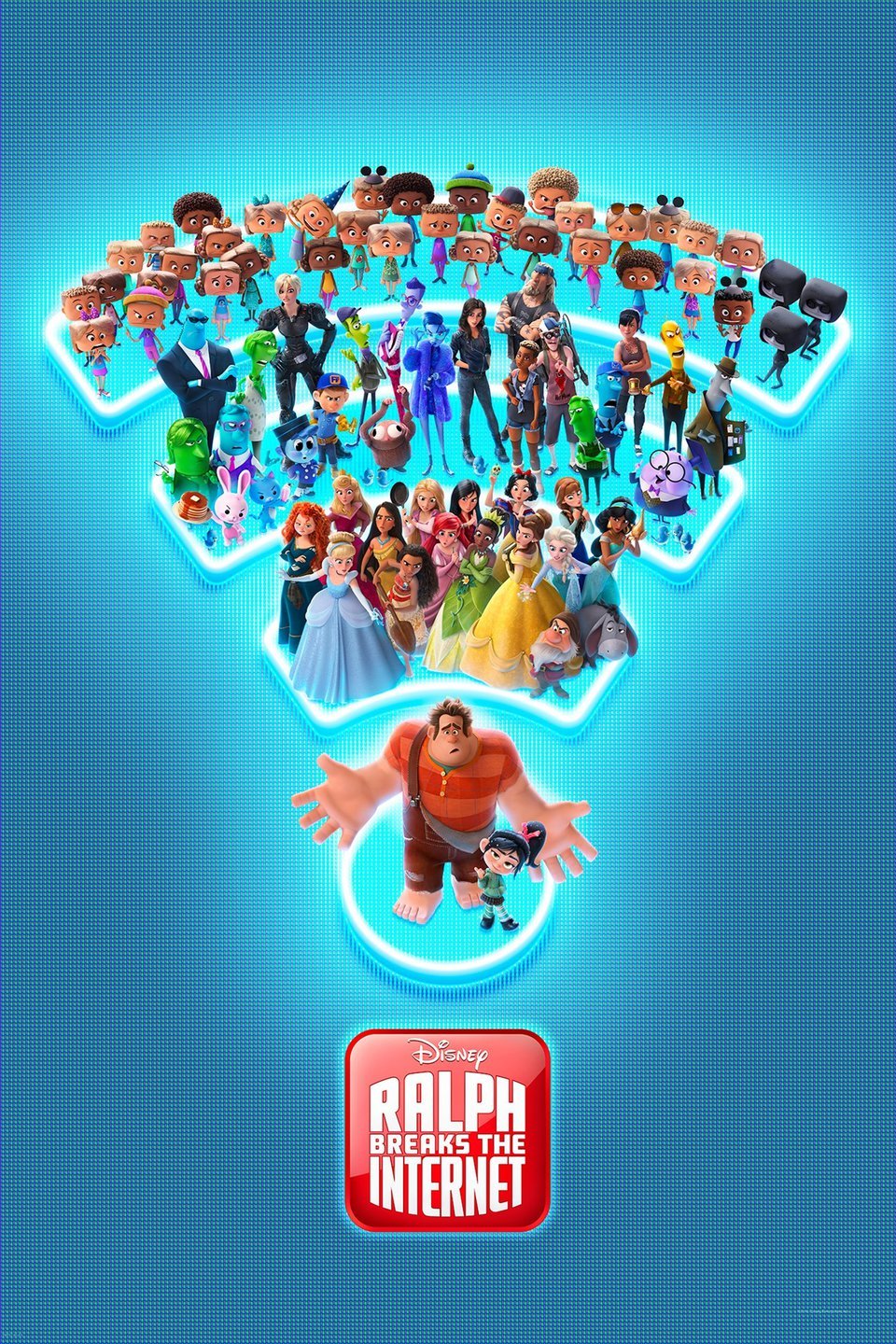
“Ralph Breaks the Internet” Full Review

It’s cute and entertaining. The highly anticipated sequel to the Oscar-nominated Wreck It Ralph hits theatres everywhere today. Much like the first film, this sequel relies heavily upon nostalgia and familiarity with pop culture more than it it does a strong narrative. All too often, it’s more concerned with making you laugh than it is delivering a meaningful narrative. However, no mistaking it, you’ll have a fun time watching this film. And sometimes an entertaining story for the whole family is all that is needed to accompany your holidays. Ralph Breaks the Internet took what the Emoji Movie attempted to do, but failed, and delivered a heartwarming story that comments on our usage of and fascination with the internet. Return to the brightly colorful animated world of Ralph and Vanellope for a highspeed adventure that takes them from the 8bit world of 80s video games to the immersive world of a visualized, stylized internet. If it’s gone viral on the internet, then you’ll likely find it in this movie. What we see in terms of abstracts or constructs, this film creatively translates that which only exists in 0s and 1s into something far more tangible. For all that Ralph Breaks the Internet did right, and that constitutes a lot aesthetically, it appears as though the writers were far more concerned with cramming every bit of Disney, pop culture, and digital media into the movie than developing a compelling narrative. And that was the part that I found obnoxious, the amount of time we spent on the Disney brands. It became self-serving instead of plot-serving. That being said, this uplifting movie accomplished what other animated films attempted, making what users do on the internet interesting. Must in the same way that Searching brilliantly captured screen-life, Ralph delivers a sensory explosion of what a visualization of the internet may look like. But who would’ve known that we were all POP Vinyls???

Vanellope is bored with her game Sugar Rush. In order to change the tracks up and give Vanellope a new experience to revive her love of her game, he builds a new track! Unfortunately, this means that Vanellope ostensibly takes control of the game’s steering wheel causing the user to break it off when trying to correct Vanellope’s car. When the arcade owner is unable to find a replacement steering wheel on eBay within his budget, he decides to shutter the game. Unbeknownst to him, he forcibly displaces the citizens of Sugar Rush. With no home to return to, the citizens of Sugar Rush are relocated to other games and the racers are adopted by Felix and Sgt. Calhoun. Ralph and Vanellope are determined to replace the steering wheel by exploring the unknown world of the internet where eBay is located. Upon arrival, it is clear that both of them are way in over their heads. They must rely upon intuition, wit, and the citizens of the internet to help them on their quest to make enough money to buy the steering wheel. Their journey soon leads them to Yesss, the head of the algorithm of BuzzTube, the most popular video sharing site, to guide them through turning likes into cash.

Central to this film are the (1) theme of friendship (2) one’s identity with home or work and (3) commentary on one’s insecurities. A nice trifecta of themes and concepts upon which to build the plot. But there is something missing. Something that is a fundamental to any screenplay. And that is clearly defined opposition to the goal represented or manifested by a character. In other words, there lacks a “villain” in this story. The villain in this story is the friendship shared by Ralph and Vanellope. Suffice it to say, it is not a requirement to have a physical villain (or more precisely, a character of opposition), but when abstracts, constructs, or concepts are the villain, it is advisable to select a character from the story to represent the true enemy. Take Jaws for example. The villain is NOT the shark; it is the folly of man. And in order to visualize this opposition, the screenplay uses the character of the mayor to personify it. Looking at Ralph Breaks the Internet, we go nearly the entire movie before we have a true character of opposition. A central character(s) is only as interesting as the character of opposition. Sometimes, the character of opposition is even more interesting than the central character.

There is also very little struggle experienced by Ralph and Vanellope. Vanellope nearly out races Shank of Slaughter Race the first time and Ralph’s first video and all his subsequent videos go viral. Not having a well-denied villain paves the way for Mary Sue characters. Just good at everything. This ease of success takes away from the ability to empathize with the struggle. That being said, after Ralph and Vanellope have their falling out over Ralph’s obsession with what he feels is best for Vanellope, their friendship is called into question and forced to face the fact that their friendship is evolving. And fighting with friends is something with which we can all identify. When Ralph’s insecurities manifest themselves in the form of a virus that takes over the internet, the movie finally has a villain that we can see, hear, and experience. The lack of a villain in this story affects the ability for the story to be as compelling or interesting as it could have been. One of the dangers of not having a villain in a story such as this one is the risk of disjoined subplots. Without a villain, the central characters have to work exponentially harder to get the audience interested in them. As it is, the audience is far more likely to find the internet setting, product placement, and mentions more interesting than our two central characters. The takeaway: make sure your screenplay has a CHARACTER of opposition.

But Ralph Breaks the Internet is not without well-developed characters. More specifically, a well-developed character in Ralph. Two of the film’s themes are manifested in Ralph. The themes of personal/interpersonal insecurities and evolution of friendship are witnessed in the actions of Ralph and Vanellope, but Ralph in particular. Audiences of all ages easily identify with him because they can observe traits, characteristics, and idiosyncrasies that have likely been experienced by each and every member of the audience at one time or another. How many among us do not depend on some sort of external validation in order for us to feel confident in what we do, what we wear, or where we go. We empathize with Ralph when his demonstrably gentle, generous soul gives way to self-destructive behaviors that form a wedge in the friendship between him and Vanellope. And that leads us into the third main theme of this film, and that is the theme of the evolution of friendship. There is no questioning the strength and loyalty of the six-year-long friendship between Ralph and Vanellope. There have been many movies that comment on the state of or evolution of our best friendships, but none quite so creative as this one. However the plot may be lacking in its ability to be truly compelling, the mountains and valleys of the central friendship are ones that many of us can identify with. It’s also a great opportunity to teach kids how their lives may go in different directions from their friends but that doesn’t mean that the friendship has to die or become burdensome. Children (and all of us, really) learn that sometimes when you love someone so much that you have to let them go to pursue their own dreams because that’s what friends do–selflessly support one another’s dreams.

Despite the inundation of recognizable brands and incessant, obnoxious Disney product placement, Ralph Breaks the Internet is an entertaining animated movie that finds a way through the underwhelming plot and constant reminders that we are in a visualized world of the internet into our hearts to brighten our holiday weekend.

Ryan is a screenwriting professor at the University of Tampa. If you like this article, check out the others and FOLLOW this blog!

Follow him!

Twitter: RLTerry1

Instagram: RL_Terry

Thrillz (theme parks): Thrillz.co

“Creed II” Full Film Review

A truly heavyweight champion of cinema! Adonis Creed will hit you right in the feels. This brilliant installment in the Rocky/Creed franchise is an exemplary example of the power of cinematic storytelling. Creed II is a knockout! Sylvester Stallone and Michael B. Jordan’s respective performances are outstanding and Steven Caple’s direction is superb. Like with the original Rocky, this is not a film about boxing, it’s not about winning, it’s about going the distance supported by the inner drive to settle old scores, redemption, grief, loneliness, and the relationship between fathers and sons. Furthermore, it calls into question the reasons why we do what we do–the real reasons. So often we try to convince ourselves that we are determined to execute a plan for reasons other than the real ones, because the real reasons are too painful. The Rocky movies could so easily be about the sport of boxing, training, and winning; but they consistently include impactful, relatable, gritty themes that resonate with the audience. Whether you are familiar with boxing or not, this film will hit you with its powerful subtext and messages of redemption that we can all identify with. Whereas the original Creed did not feel highly connected to the Rocky cinematic universe, Creed II reminds us of the connection at every punch, block, and jab. The film also offers social commentary on the fickleness of glory and just how temporary and fleeting it can be. Sylvester Stallone and Cheo Hordari Coker’s screenplay follows the Rocky Way of doing things, much in the same way that Marvel has the well-known manner that Marvel stories are told. Even if you have not seen the Rocky movies or Creed, you will be moved and entertained by this film. Suspenseful, tense, and even comedic at times, Creed II is one to look for when Best Picture nominees are announced.

Recently crowned the heavyweight champion of the world, Adonis Creed (Michael B. Jordan) does the thing that makes him more nervous than the most intense fights–proposes to his girlfriend Bianca (Tessa Thompson). Encouraged by his coach, the former world champion Rocky Balboa (Sylvester Stallone), Adonis takes the leap and asks the love of his live to marry him. And upon a visit to his mother Mary Anne (Phylicia Rashad), Adonis and Bianca find out that they are pregnant. The family time and celebration are short-lived when the son of Ivan Drago challenges Adonis’ title to the fight of the century–the Creed/Drago rematch fight that the world is waiting for. Saddled with a new engagement and the pregnancy of his fiancee, Adonis must decide if he’s willing to risk his life to settle an old score because he knows what it’s like to grow up without a dad. Soon, this date with destiny becomes an obsession that invades Adonis’ every thought and action. Against the wishes of his mom, fiancee, and Rocky, Adonis accepts the challenge from Drago’s son who Rocky describes as a monster because he has nothing to lose, whereas Adonis has everything to lose.

For fans of the Rocky franchise, this is the sequel that you have been waiting for in the Rocky cinematic universe. I liken this sequel to the recent Halloween because it feels connected in every way to the original but provides us a new story within a familiar world told through gripping characters and conflict. Beneath the surface of this high-concept plot, beats the heart of a low-concept family drama that hooks you with its relatability and intense moments that consistently keeps you drawn into the story. Creed II has many heavy moments, and could have felt overwhelming if it wasn’t for the comedic relief provided by Sylvester Stallone’s legendary character of Rocky. There are certainly plenty of somber, heartwarming, and emotionally poignant moments, but Rocky injects a little lightheartedness when it is needed to keep the emotional roller coaster going. The themes of this film are dramatized and paralleled by the training and boxing matches. Heavyweight characters paralleling heavyweight themes. Adonis’ external goal is not to win; it’s to go the distance with Viktor Drago to prove that he is a champion in and outside of the rink and therefore worthy to be a father. But what drives Adonis and Ivan Drago’s son is their need to uphold a legacy–legacies of sons haunted by their fathers. Further subtext of the film suggests that both of fighters are seeking redemption in order to fill a hole in the heart left by varying degrees of loneliness and grief over loss of relationships. In addition to the goals of Adonis, Rocky is also on a journey that is driven by his involvement in the life and training of Adonis. Rocky’s goal is to reunite with his son whom he estranged. Lots of father and son relationship internal needs in this story.

The performances are incredibly authentic. All the way around. Michael B. Jordan is well-known to be a charismatic actor who has a wide range that makes him someone whom is fun to watch on screen. He can communicate so many emotions through his face. Talk about commitment to character. I was completely sold on his character of Adonis both in and out of the rink. Displaying genuine emotion, I cared deeply about his successes and failures. In many ways, I think of him as a superhero in the vein of Captain America. Perhaps he does not have “superpowers,” but he is a hero to his family and to his community. I cared about what happened to him. Interestingly, even Viktor Drago will tug at your heartstrings because of the circumstances from which he comes. He truly is the definition of underdog. While we are rooting for Adonis to win, we cannot help but empathize with Viktor due to his somewhat warped relationship with his father and being abandoned by his mother and the community after his father lost to Rocky. Despite his evil outward appearance and behavior, Viktor is ultimately trying to prove himself to his father, estranged mother, and the Russian people that he is a champion and worthy of their adoration and love. Rocky represents the loneliness and solitude of boxing. Beyond that, he is also the compelling moral compass of Adonis and the “wise old man” teaching our central character how to truly be a winner in both is professional and personal life. In one of the lighter, yet equally heartwarming scenes of the film, Rocky is sitting by Adrian’s grave, talking to her about how he feels like a “chunk of yesterday” who cannot reconnect with their son (and later we learn, grandson). Rocky, Adonis, and Viktor all have ghosts of their pasts that they are battling much like the fights in the rink.

The film is not without its strong female characters as well. In fact, we have two amazing women who provide so much substance to the story. Humanizing Adonis is his fiancee Bianca. Moreover, her role in this film can be likened to the one once filled by Rock’s Adrian. Her performance is excellent, and she steels a few of the scenes. Thompson delivers the same grit, gumption, and emotionally powerful performance that she gave in the original Creed. Thompson’s Bianca acts as the complement to Rocky’s moral compass. She and Rocky represent two different sides of Adonis that need coaching. Adding to the emotional baggage in Adonis and Bianca’s home, Bianca continues to lose her ability to hear and wonders if their new baby will suffer from the same physiological condition. She is a phenomenally strong character who refuses to let her encroaching hearing loss to affect her quality of life. The audience was extremely delighted–audibly so–when Phylicia Rashad appeared on the screen for the first time as Adonis’ mother. Her character never backs down to her son and the deathwish he has. Deathwish in that Ivan killed his father before he was born, leaving Mary Anne a widow and mother. So, death is a real possibility in this fight of the century. She is strong in principle and convictions, and stands up to what she feels is a poor decision. However, when Adonis makes the decision to fight Viktor, his mother is supportive as a mother is even when she disagrees or fears for her son’s life and now a negative outcome from the fight will effect his fiancee and newborn daughter. Her performance is exemplary; there are times that she steels the scene from Adonis. Mary Anne and Bianca deliver moments to the audience that remind us that this film is full of heart and there are moments worth audibly cheering for. Cheering is something that you will likely hear in the auditorium. The energy level was as high as it is likely at a real boxing match.

It’s not about a fight, the film is about what the fight represents in the lives of those affected by it. Beneath the fighting platform and behind the gloves are relatable conflicts and emotional burdens that serve as a foundation upon which the drama is build and plot is driven forward. On the surface, the plot may seem like something that has been done before, and to some extent, there is a lot of Rocky and Rocky IV in this film; but, this plot contains so much depth of character that truly allows the heroes journey to shine. Not all superheroes wear capes. If it was up to Edna Mode, none of them would. Triumphs, failures, and personal and interpersonal growth are experienced by Adonis and Rocky. While so many sequels fall victim to sequelitis, Creed II meets and exceeds expectations! It’s a compelling story that till have you hooked from bell to bell.

Ryan is a screenwriting professor at the University of Tampa. If you like this article, check out the others and FOLLOW this blog!

Follow him!

Twitter: RLTerry1

Instagram: RL_Terry

Thrillz (theme parks): Thrillz.co