
“Us” full horror film review

The high speed hype train begins to slow down. Returning to horror once again, Writer-Director Jordan Peele’s Us hits theatres nationwide this weekend. The highly anticipated followup to the horror masterpiece Get Out ultimately falls short of the bar set by its predecessor. But don’t worry, there is still plenty to like about this intense film. Whereas Get Out was a horror film built upon compelling, thoughtful social-commentary on the uncredited, forced appropriation of one ethnic group by another, Us plays as a straight forward horror film, complete with all the thrills for which you hope to experience. There is certainly an attempt by Peele to comment on class, MAGA, and other important social topics, but the film tries to do too much, and winds up not accomplishing what it so desperately wants to do. Keep your eyes peeled for details, because you are going to need them in order to best appreciate the ending. With Peele’s revival of The Twilight Zone, it is clear that his adoration of that series (which is regarded as the best written series of all time by the WGA) played a roll in the development of Us. Specifically, this movie feels inspired by the After Hours and Mirror Image episodes. Peele delivers audiences an incredibly fun horror movie that is certain to do well over its run in the cinemas. Many of the film’s elements work exceptionally well; but unfortunately, the film is held back from its full potential by weak writing and average directing. Even though Peele’s Get Out, in my opinion, is the superior film, there is still a lot to enjoy in Us. I’ve no doubt that if you’re a horror fan, that you will have a great time! Let Us cut deeper into this film.

IMDb summary. Accompanied by her husband, son and daughter, Adelaide Wilson returns to the beachfront home where she grew up as a child. Haunted by a traumatic experience from the past, Adelaide grows increasingly concerned that something bad is going to happen. Her worst fears soon become a reality when four  strangers descend upon the house, forcing the Wilsons into a fight for survival. The family is horrified to learn that each attacker takes the appearance of one of them,

My biggest takeaway from this movie is that I am convinced more than ever than Jordan Peele should be able to pull off a successful, meaningful revival of The Twilight Zone. The problem with the writing and directing in Us is that it tried to do too much. In an effort to create a deep, rich, cinematic experience that was both horrifying and thought-provoking, the plot is all over the place. Even to the point that it contradicts itself. It’s as if the idea for this movie began as one of the episodes of the upcoming Twilight Zone revival but Peele decided that he wanted to turn it into a feature length movie. Evidence of this can be found in the similarities it shares with the aforementioned After Hours and Mirror Image episode. There are enough differences that it is clearly not an adaptation of the episode, but I can see how it inspired this movie. Further evidence can be witnessed in that it’s produced, written, and directed by Peele. When a storyteller wears that many hats, there is little room for checks and balances. Us feels like a feature length horror movie that would’ve been better off as a half hour or hour long installment in an anthology series. Starting off moderately strong, then very strong in the second act, the third act feels like it was from another movie idea altogether and forced to fit into this one. Too many ideas. All good individually, but convolute the plot when mashed together. The plot is too complex. What Us tries to do is ultimately too vast for what this movie is capable of delivering to audiences.

Without getting into spoilers, I’d like to visit why the plot doesn’t work as well as it demonstrably shows it had the potential to have worked. We are clearly explained a particular relationship as having a one-way transference; however, there is a plot twist that completely contradicts this relationship. A best practice of screenwriting is to not introduce significantly new material, in the third act, that directly affects the present plot, which was not foreshadowed or setup in the previous two acts; this movie introduces lots of new plot elements in the third act that further complicate versus tying up. For most of the movie, the plot lives in a believable reality, but then it takes a turn that takes it from something terrifyingly possible to nearly unbelievable. And the power of a movie such as this is that it feels possible within the world that’s created on screen. If the characters are making a statement, they run out of people to receive that statement through the course of events. Perhaps if there was a greater supernatural element in the screenplay that it would have worked much better, because the supernatural could have explained how and why much better than the science-fiction approach. What is lacking here is a singular vision.

Now that I have gotten all the things that I didn’t care for out of the way, I want to finish this article with what works brilliantly! The performances are outstanding, the score is excellent, and even the cinematography is noteworthy. Of all the stellar performances, Lupita’s is the one that stood out to me the most. As an Oscar winner, I expect her to deliver an impeccable performance, and she does precisely that! I felt what she was feeling, I empathized with her greatly, and she held my attention for the duration of the movie. I’m careful not to project an Oscar nom out of this because I thought Toni Collette’s performance in Hereditary was Oscar and Golden Globe worthy, and we all know what happened with that. Love this score! The classic orchestral approach fit this movie exceptionally well. The score worked so well that it almost felt like a character in and of itself. A well-composed score should be a diegetic extension of the story, the emotional beats, and action; and this one is all those things! Cinematography should never be overlooked as greatly contributing to how a story is being told. It is the element that places us in objective or subjective points of view or prompts us to interpret a scene in a particular way. There are some beautiful shots in this movie that are framed with precision. All throughout the movie, the cinematography plays a strong role in crafting the full experience of Us.

Regardless if you like or love this movie, you are definitely in for a fun time! Perhaps I have issues with the writing and directing (two important elements in the crafting of a movie) but I still enjoyed myself and am confident that you will too. I don’t think it will become a classic in the way that Get Out will be one day, but it’s one to watch anyhow. Lots of great concepts here, but Peele doesn’t strongly deliver any one of them.

You can join Ryan at the cinema most weeks at Studio Movie Grill Tampa.

Ryan teaches screenwriting at the University of Tampa. If you like this article, check out the others and FOLLOW this blog! Interested in Ryan making a guest appearance on your podcast or contributing to your website? Send him a DM on Twitter!

Follow him!

Twitter: RLTerry1

Instagram: RL_Terry

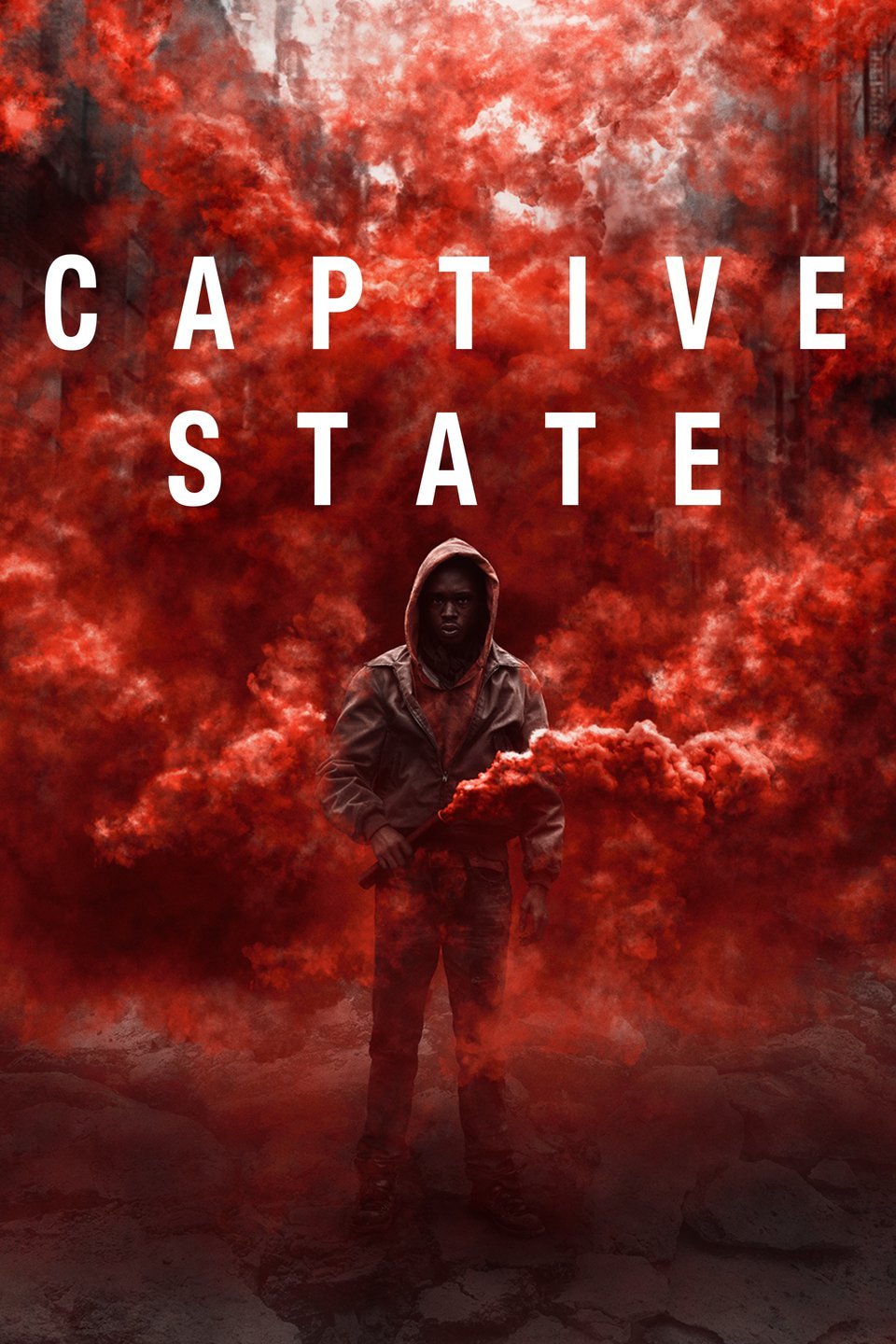
“Captive State” brief movie review

Beware of Greeks bearing gifts; or in the case of this movie, the director gifts us a movie that looks fantastic on the outside, but is a disaster on screen. There is a good science-fiction movie in there somewhere. But because of the poor direction, the movies plays off as completely disjointed, lacking any emotional connection to the characters. The concept for the film is quite brilliant. It takes the alien invasion premise and provides audiences with an original interpretation of this sub-genre of science-fiction. Often science-fiction suffers at the hands of the screenwriter(s) who becomes so pre-occupied with the world and technology of the story that they forget about developing the characters and plot. However, this film suffers more significantly at the hands of the director, but the screenwriting does play a hand in the confusing nature of this film. Incidentally, director Rupert Wyatt also co-wrote the screenplay, so it appears that he should have stuck to writing with co-writer Erica Beeney rather than directing.

Clearly, there is a solid science-fiction story in Captive State, but the story suffered as it was being written down, and even more damage was done while on set. The idea is original and good! The execution is bad. There is too much exposition in some places, like the beginning text-heavy scene and then too little exposition in other parts of the movie. Characters get introduced then forgotten, and John Goodman and Vera Farmiga are completely wasted. Literally any actor could have played these roles, and even other characters could have had their lines, and it would still play out the same way. I can tell that this movie is trying to provide me a post-modern thought-provoking story, but I am still not entirely sure what I watched. Upon watching it, I found myself grasping for whatever details I could find, and it was not enough to make heads or tails of what was going on sometimes. What we have here is a case of complex plot and simple characters. The antithesis of what makes a good screenplay. The idea for this film is certainly admirable, but the idea was lost in the translation from mind to page, and then from page to screen.

You can join Ryan at the cinema most weeks at Studio Movie Grill Tampa.

Ryan teaches screenwriting at the University of Tampa. If you like this article, check out the others and FOLLOW this blog! Interested in Ryan making a guest appearance on your podcast or contributing to your website? Send him a DM on Twitter!

Follow him!

Twitter: RLTerry1

Instagram: RL_Terry
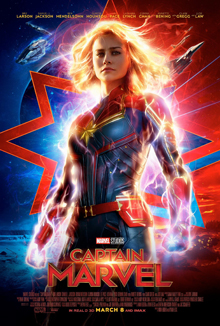
“Captain Marvel” Film Review

Written by guest contributor and one of the hosts of the Minorities Report Podcast The Raul Navedo

We’ve all, at least once in our lives, crushed on someone much like Carol Danvers. Someone cool, fun, has a good sense of humor that’s easy on the eyes, and is a total bad ass that can shoot photon lasers from their arms… Brie Larson’s Carol Danvers/Captain Marvel has all of these in spades. Likable from the jump, Carol yearns to be the best Kree “Noble Warrior Hero” in all of Hala. The only problem is that she can’t shake the dreams that haunt her. Dreams of a past she can’t be sure is her own; and furthermore, slow her progress to becoming a true Kree.

The hate is real, people! Critics are coming after this delightful performance by Larson viciously, and without reason. Don’t get me wrong, Captain Marvel has many flaws; but very few, if any, can be blamed on our star. I was as concerned as anyone when I heard Larson was casted as our glowing heroine whom would be flying freely through space, and whom would be kicking some serious Skrull ass. After Room,I was convinced that she was a great actress, but being a superhero doesn’t require incredible acting chops as much as it requires a certain charisma that I just couldn’t see in her. If you recall, though our superstar Avengers cast is beloved NOW, there were some serious concerns after most of them had their debut films (RDJ being the exception). Most of them had to grow into their respective roles, so it wasn’t until the second films that they became the heroes they were working to portray in our hearts. Not the case with Larson’s CM. She is fun, complex and dynamic, spanning the spectrum of emotions in a single scene.

Let me tell you guys something, a character being likable/unlikable does not a great/bad movie make. Harley Quinn is extremely likable in Suicide Squad and yet… And our lead in Manchester by the Sea is unlikeable and yet it is an incredible film. The art of writing real and complex characters is the ability to write them as they truly are. Angry, funny, sad, charismatic, annoying, reclusive, broken. Stop bashing films because YOU didn’t understand the characters as they were depicted. The Kree train their “noble warrior heroes” to think and not feel. Emotions are the enemy of sound thinking and are therefore a detriment to being a great warrior. Carol wants so badly to be this way–to prove she is a true Kree, but it is against her nature so she is conflicted. Her desire to not feel makes her unlikable because people without emotions are sociopaths, are un-relatable and therefore are not likable! She was written this way, people. And it is her inability to follow through with this Kree “noble warrior hero” prerequisite that makes her so damn likable!

But enough about her. I believe that what truly hurts this film is the same thing that hurt me when I was a young lad in the throws of passion for the very first time. Lack of experience. Our directing duo, Anna Boden and Ryan Fleck, have worked together on a number of projects that pale in comparison to the endeavor that is an MCU film. The writing suffered from poor dialogue and pacing at times. There were lines that just didn’t need to be there that provided information that the audience had already gathered. Action sequences that felt rushed because the rest of the script wasn’t as tight as it should be. Carol’s very first mission is so oddly paced and executed that you can’t enjoy it.

It takes a trained mind to know what needs to be trimmed and what needs to be expanded, whether in the script or in the editing room. It takes a trained ear to hear a line during a table read or on set that you know needs to be changed or taken out. These are things that not all audience members can catch or express but that most can feel. Some might just say it wasn’t good. Some might say it was fun but lacked heart. I say it was a great effort that lacked refinement. Wonder Woman had many flaws but most people were able to overlook it because it had so much heart it was tangible. It wasn’t just because Gal Gadot did a great job, it’s because Patty Jenkins has developed her skills over the years to make her a very gifted storyteller. We can forgive flat cinematography and lighting. We’ve been doing it for years with many of these MCU films who’s visuals lack depth. We can forgive a great many things that contribute to making great film. What we cannot forgive is lack of heart and emotional depth. Captain Marvel has all the building blocks, but it fell just short of being great. Fleck and Boden are well on their way there and I am excited to see their next project.

Don’t get me wrong, I am sure the blame does not solely land on their shoulders but as a great director once said “When a film does very poorly the director gets all of the blame and when a it does exceptionally well the director gets too much credit.” It comes with the territory, unfortunately.

I still highly recommend that people go see Captain Marvel. Just lower your expectations a bit and you’ll definitely enjoy it!

(From Ryan)

I hope you enjoyed this review from Raul. He is one of my longest and best friends, and spends much time watching and talking about movies as he manages a high traffic AMC Movie Theatre in North Carolina. Follow him on Twitter!

Ryan teaches screenwriting at the University of Tampa. If you like this article, check out the others and FOLLOW this blog! Interested in Ryan making a guest appearance on your podcast or contributing to your website? Send him a DM on Twitter!

Follow him!

Twitter: RLTerry1

Instagram: RL_Terry
“How to Train Your Dragon: the Hidden World” review

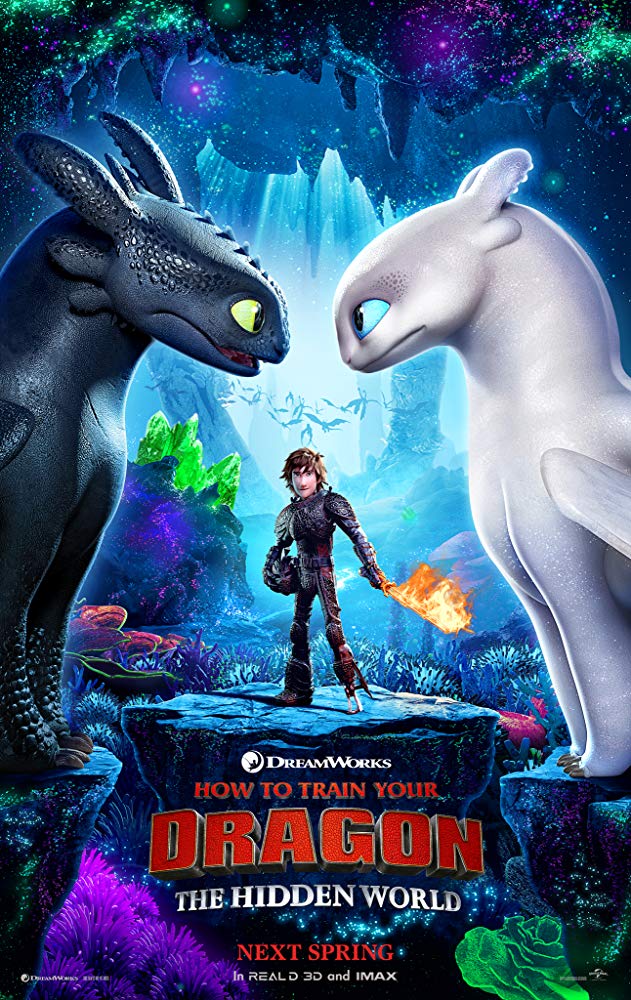
Outstanding finale for the beloved franchise! Bring your tissues because you’re going to need them. Return to the colorful, immersive world of dragons for the final chapter in the How to Train Your Dragon trilogy. We were first introduced to Hiccup and his cat-like dragon Toothless–probably the most adorable dragon ever–nearly a decade ago, and Hidden World delivers a beautiful story that takes full advantage of Dean DeBlois’ epic fantasy world of highflying adventure and heart. Unlike franchises in the cinema or on television that depict the key characters the same age in perpetuity, HTTYD allows its characters to mature and grow in complexity. This growth enables the audience to identify and empathize with the animal and human characters thus giving the film incredible emotional weight. Not only do the characters demonstrate personal growth over the nine years we’ve been enjoy Berk and all its wonders, they exhibit tangible evidence of interpersonal societal growth as this Viking kingdom learns to love and cherish creatures they once feared. Toothless takes center stage as he too, along with our friends from Berk, must grow up. Both Toothless and Hiccup experience the powerful dynamic of love as it greatly affects one’s actions. While many were wondering if this trilogy could pull off a Toy Story 3, after the immense success of the first two, especially HTTYD2, suffice it to say, DreamWorks Animation delivers a superlative animated motion picture complete with all the feels.

IMDb Summary: What began as an unlikely friendship between an adolescent Viking and a fearsome Night Fury dragon has become an epic adventure spanning their lives. Welcome to the most astonishing chapter of one of the most beloved animated franchises in film history. Now chief and ruler of Berk alongside Astrid, Hiccup has created a gloriously chaotic dragon utopia. When the sudden appearance of female Light Fury coincides with the darkest threat their village has ever faced, Hiccup and Toothless must leave the only home they’ve known and journey to a hidden world thought only to exist in myth. As their true destinies are revealed, dragon and rider will fight together—to the very ends of the Earth—to protect everything they’ve grown to treasure.

As immersive and excellent as the film’s visuals are, the characters are even more complex and deep. In fact, the film depicts one of the best friendships of any film ever. The key characters, and even the supporting cast, demonstrate love, loss, maturity, growth, and more. Although this is the final installment in the franchise, the characters are still treated with finesse and given room to grow within the movie and to complete the arcs for the trilogy. Often, Toothless and Hiccup parallel one another; they possess traits that complement one another. This added complexity to their respective characters gives them so much depth. Making an emotional connection with and evoking empathy from the audience is such an important element of the character development process. Hidden World builds upon the previous stories of finding one’s destiny in a friendship with the most unlikely of creatures (chapter 1), external and internal complexities with the new friendship and changing familial dynamics (chapter 2), and coming of age by learning from the past and letting go of that which hinders freedom (chapter 3 Hidden World).

More than a commentary on independence or freedom, this film chooses to depict complex emotions such as love between friends, family, and romantic love. And these subjects are not just talked about–exposition would be too easy and lazy–there are many moments that are visually driven, thus increasing the level of emotional impact. One of my favorite moments that deals with both the letting go of the past in order to bloom and grow is the courtship dance scene between Toothless and the Light Fury. Love is not without sacrifice. And in the exploration of relationships and independence, we are reminded of the emotional cost associated with these concepts. Paralleling this exploration of relationships between lovers, family, and friends is the journey of rising to the call and becoming a leader of one’s people. It’s the ideal journey for this final installment because it completes the hero’s journey for Hiccup and Toothless. In the first movie, both Hiccup and Toothless are outcasts, nerdy, and childlike. In the secondary film, they go through both physical and emotional growth learning the complexities of life. And the tertiary film Hidden World builds upon the previous two films by us watching this teen and young dragon grow up to realize their respective places in the world to become the leaders of their people (or dragons). We go from kid to king. So simple, but so perfect.

It’s easy to get swept up into this epic fantasy because we spend so much time with these characters. Not only do we spend movie time with the key characters, but we spend some intimate time with them as well. We see these characters at their best and worst. The individual stories of the three films and the overarching story that exemplifies the three-act structure are not afraid to bloody your characters. As real like people and dragons are not perfect, neither are the characters in the How to Train Your Dragon trilogy. We are drawn to their flaws, the majority of which are in the second chapter but we continue this high level of humanity in the third film. Change is a big part of life, and the theme of change is witnessed in the individual lives plus in the Berkian and Dragonian communities. Utopia is not without its negative impacts. One of those for Berk is overcrowding with the side effects of being more of a target to those who are still hunting dragons. Hiccup must decide whether Berk is a place or a state of mind. But he must also consider the safety and future of the dragons. More complexity. There is no one solution that will benefit everyone. So sacrifices must be made. This motif of chance incorporates the overall theme of love and sacrifice.

The visuals are breathtaking! While some animated trilogies suffer the longer the franchise goes on, the quality of the animation in this film is outstanding! In many ways, it out-Pixars Pixar. Like with other films, if this one had a Pixar logo on it instead of DreamWorks, then more people would be singing its praises. With more dragons, there was certainly room to cut corners and for the quality of the visuals to suffer. Not true with this film! The attention to detail is superb! As beautiful as the dragon flight scenes were in the first and second movies, Hidden World delivers an even more epic flight scene in this film. Wish I had seen this movie in IMAX. During the flight sequence into the Hidden World of dragons, I was reminded of Navi River Journey and Flight of Passage in Pandora: the World of Avatar at Disney’s Animal Kingdom. Never felt like a ripoff, but certainly feels inspired by the attraction. We encounter three worlds in this film: Berk, the new island, and the hidden world of dragons. Each of these worlds is designed completely differently from the rest. And the commitment to the art of animated world creation reaches incredible heights! Every scene, every moment, every setting is completely immersive.

Ryan teaches screenwriting at the University of Tampa. If you like this article, check out the others and FOLLOW this blog! Interested in Ryan making a guest appearance on your podcast or contributing to your website? Send him a DM on Twitter!

Follow him!

Twitter: RLTerry1

Instagram: RL_Terry
“The Prodigy” horror movie review

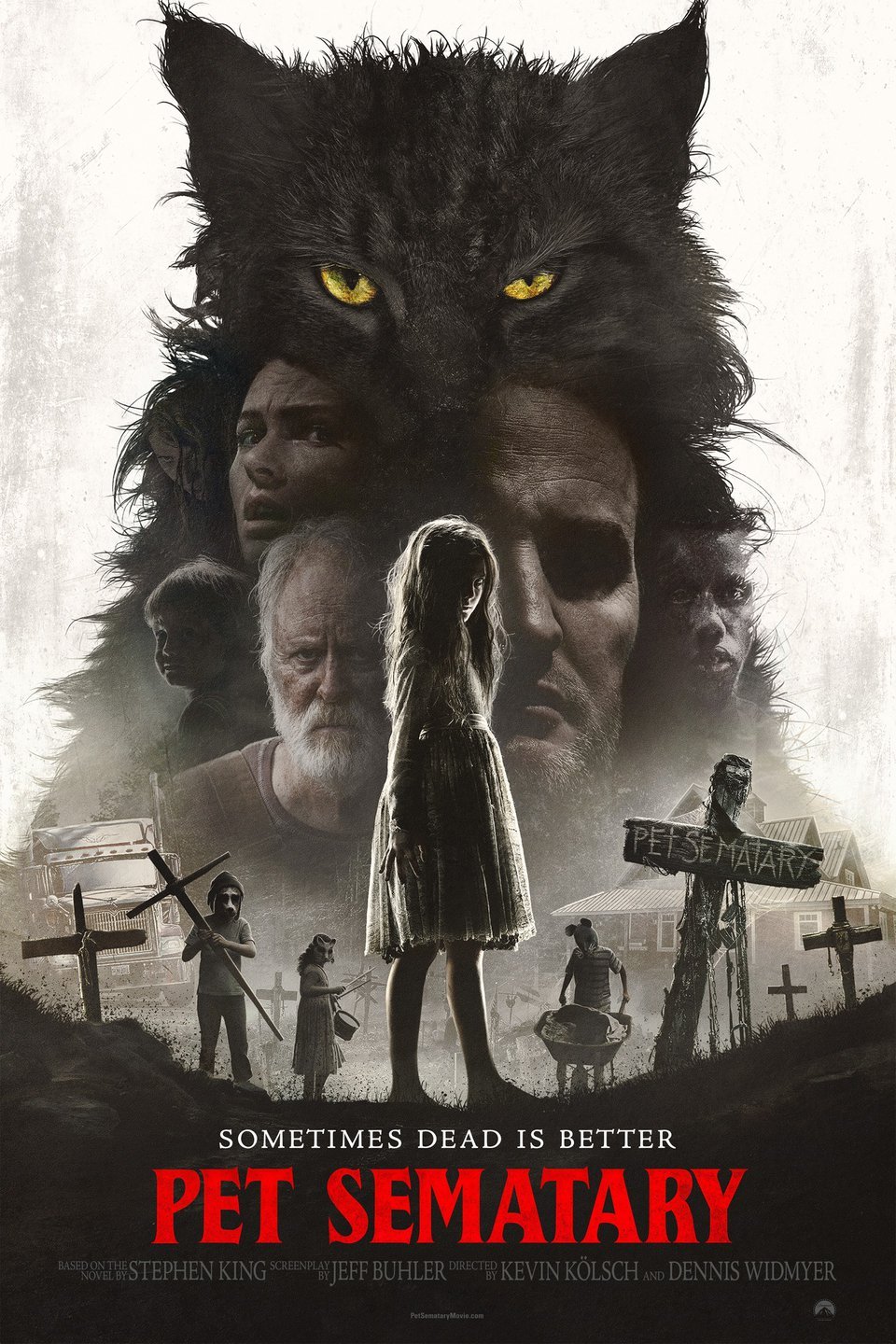
The Omen meets Child’s Play. When the trailer first dropped for The Prodigy, I was intrigued. Didn’t think that it was going to be great, but I was anticipating it as one of the horror movies I was looking forward to most in 2019, with others being Pet SemataryUsMidsommar, and IT: Chapter 2. Then I began to read the reviews of the movie, and was disappointed in what was being said. Since I wanted to get the oil changed in my car yesterday, with it being a weekday holiday off from work, I went to the auto center close to the theatre so I could drop it off and walk to the theatre for a movie. Decided to go ahead and watch The Prodigy, as the alternatives for watching were ehh, at best. To be honest, this was quite the terrible Presidents Day weekend at the movie theatre. The Prodigy certainly has some good things going for it, most of the violence is either psychological or off screen to allow you to fill in the disturbing details in your mind; it is also incredibly chilling! Unfortunately, the vapid characters and paint-by-numbers plot keep the film from achieving what it so desperately wants to achieve. Lots of great material here for what could’ve been a solid horror film with a character that combines what we love about Damien and Chucky. For fans of both The Silence of the Lambs and The Exorcist, you’ll instantly notice the old school Orion Pictures logo from SOTL followed by the clearly red text on black background taken from Friedkin’s masterpiece.

Sarah and John Blume are thrilled when their young son Miles starts to show signs of rapid development and extreme intelligence. Their family bliss soon turns into a living nightmare when Miles’ behavior becomes increasingly erratic and violent by his eighth birthday. After seeking help from two experts, Sarah is horrified to learn that her beloved prodigy may be under the grip of a dark and supernatural force. Fearing for her family’s safety, Sarah must choose between her maternal instinct to love and protect Miles and a desperate need to investigate what or who is causing his dark turn. She is forced to look for answers in the past, taking the audience on a wild ride; one where the line between perception and reality becomes frighteningly blurry

There is nothing wrong with jump scares. That’s right. You may hear of jump scares talked about in a less than favorable way; but it’s not the concept of the jump scare itself that is bad for horror (or any genre for the matter). The inclusion of some jump scares can be an element that aids in creating the physiologically engaging horror movie experience. It is the misuse, overuse, and poorly timed jump scares that work against the success of a movie or, more specifically, keeping it from reaching the critical potential that it could. It comes down to the argument of suspense versus shock. Now, a horror movie cannot be completely void of shock because then it differs little from suspense-thrillers. One of the main differences between suspense/thrillers and horror films is the intent of the writer and/or director–it’s that intent to horrify that separates thriller from horror. It’s this intent to horrify that places the often genre contested The Silence of the Lambs more in the horror category than thriller (though, it is a hybrid). Simply stated, The Prodigy is overstuffed with jump scares. When a writer or director relies upon jump scares to deliver the horror instead of crafting lingering horrifying moments through the character or plot development, then it plays as a shallow story. Strip away the jump scares, and The Prodigy is left with little to deliver. Think of a horror film supported by proliferated jump scares as a chocolate Easter bunny or egg that is hollow on the inside. It looks tasty, may even taste good (especially if made out of dark echolocate), but when you realize that the center is hollow, the experience is mitigated from where it could’ve been with a solid dark chocolate bunny.

I remarked to another horror fan on Twitter that with a few tweaks, The Prodigy could have actually been good–not great–but good. When you’re channeling what made The Omen and Child’s Play work so well, you have a lot of good material to create an original expression of these premises. One of the best parts of the movie, and one that was seriously creepy and unnerving is the performance of Jackson Robert Scott as Miles. He delivers an outstanding performance with his two contrasting identities; unfortunately, he was not used to the extent that he could have been. Had screenwriter Jeff Buhler and director Nicholas McCarthy spent more time on developing the key characters and simplifying the plot, then the movie may have been better received horror fans and general audiences. Although the movie is titled The Prodigy, the intelligence of Miles is mostly used as a McGuffin. Developed by Hitchcock, it’s a device that is used to jumpstart the central plot but has little to do with the plot itself. The best example of this is the money Marion steels in Psycho. Had she not stolen the money, she would not have stayed at the infamous Bates Motel. After that theft launches her on her roadtrip to Fairvale, it bares little consequence to the remainder of the events. However, the McGuffin IS important because it is what launches us into the thick of the plot.

Instead of all the jump scares, it would have been nicer for the movie to have worked to create an overwhelming sense of dread and keep the possession of Miles a secret longer. The film tips its hat too soon to some of the moments that should’ve been drawn out longer to increase the level of suspense. With a reliance upon jump scares to serve as a spectacle, I am reminded of researcher Linda Williams narrative vs spectacle argument. Too much spectacle, the film suffers because therein lacks any real substance; too much narrative, the film suffers because it fails to be driven as visually as it should. A horror film strikes a delicate balance between narrative and spectacle in order to achieve a compelling story with moments of terror that impact the audience emotionally and physiologically. The characters are not given the treatment that they should have been. We never truly care about any of the characters and thus do not form that important connection with the movie. Had the moments of shock been used to drive the plot forward more so than just work for a cheap scream of jump, then they would have had much more power than they did. And then there’s the ending. It plays off as showcasing a lack of imagination and more consideration paid to setting up a sequel. Without giving away any spoilers, there was a way for the ending to take a page out of the Child’s Play handbook in order to setup a sequel instead of the manner in which it did.

Looking for a popcorn horror movie to watch on a date or just one that will be fun for 1.5hrs, then this movie work perfectly fine. It will not impact you as The Omen or Child’s Play did, but it will deliver some fun thrills and a mostly original interpretation of a solid premise.

Ryan teaches screenwriting at the University of Tampa. If you like this article, check out the others and FOLLOW this blog! Interested in Ryan making a guest appearance on your podcast or contributing to your website? Send him a DM on Twitter!

Follow him!

Twitter: RLTerry1

Instagram: RL_Terry