NOPE horror film review

Nope, no plotting here. With a sensory explosion of stunning shot composition, outstanding sound design, and unnerving score–combine those with a refreshingly original expression of the classic monster movie–and you should have a great horror film, right? That was almost the case here, had it not been for the meandering narrative and thoughtless plotting. Brilliant idea, but poorly mapped out. There is so much to like about NOPE, but the full potential of this beautifully looking film is ultimately held back by screenwriting mechanics. Peele’s NOPE feels like a combination of The Birds, Close Encounters of the Third Kind, and Signs. Unfortunately, it lacks the structure and substance of any of those. Clearly, Peele had a wonderfully original idea for his latest feature film, but his idea fails to deliver narratively. The plotting is all over the place; there are scenes that simply do not pay off dramatically. Individually, each scene is meticulously crafted, but many are not connected methodically to the rest of the film. What we have here is a film, that clearly demonstrates a love for horror cinema and film history, that pushes experiential boundaries, but the plotting leaves much to be desired. Moreover, there is a disconnect between the performative element of the mise-en-scene and characterization. Fantastic performances; but the characters, as they are written, are not very well developed. The pretense of the film is one exuding cinematic gravitas, but the pretense is the equivalent of a beautiful house with a shaky foundation and infrastructure.

To go into why this film’s plotting does not work would be incredibly spoilerific, so I cannot go into many details. All throughout the film, I thought to myself “I can tell that this is supposed to mean something, perhaps subvert something, but those idea are not being communicated effectively.” What this film will likely become is one of those that a pretentious cinephile or armchair critic will respond to those that express difficulty in following the plot with “it’s not for everyone” or “you just don’t get it.” Whenever I hear those remarks in defense of films that objectively fail to deliver narratively (plot+story), it makes me want to vomit. They are copouts for explaining away why a film doesn’t have to follow established storytelling conventions; furthermore, the “you just didn’t get it” is a tool for the cinephile to establish intellectual superiority over the individual rightly questioning the screenwriting of a film.

Caretakers at a California horse ranch encounter a mysterious force that affects human and animal behavior.

Where the film excels is in the very concept of the film itself and the technical achievement! Upon watching it, I was reminded of great films such as The Birds, Signs, and Close Encounters of the Third Kind. Moreover, I was also reminded of the sci-fi/horror movies of the 1940s and 50s. Because I was reminded of those, that demonstrates Peele’s love for classic horror cinema! And I applaud him for attempting to craft something for modern audiences that feels familiar yet fresh. To the best of my knowledge, there has yet to be a film (classic or more contemporary) that expresses the alien plot in the manner that Peele does. Where the films to which he’s harkening surpass NOPE is in the plotting. Original ideas are very much needed in 21st century cinema, but these ideas need to be paired with coherent plots.

Peele’s eye for shot composition is exceptional. He knows precisely how to frame and shoot a scene dramatically, even when the shot is largely static. What makes his shot compositions work so well is that the shot is a direct extension of the emotion of the scene. The camera isn’t merely documenting the course of events, but is ostensibly an active participant in how the scene unfolds.

The brilliant sound design and unnerving score work in tandem to draw the audience into the film, especially when watching the film in Dolby Cinema (which is what I did). No sound effect or bar of score is wasted. Every sound, every note is intentionally selected as an extension of the action or emotion of a scene. Although a film should not rely upon a great score to carry the story, sound and music are two very important tools in a filmmakers tool belt to increase the sensory stimulation of the film.

Peele is such a gifted director, but I hope he chooses to work with other screenwriters in the future to take his original ideas and map them out methodically and chronologically (whether linear or nonlinear) more soundly. We need refreshing ideas such as his, but we also need them executed in more conventional ways. Have the thoughtful subplot and subtextual theming that will inspire discourses, but make the outside/action plot more accessible because it’s the vessel through which the subplot and theming is communicated.

Ryan teaches Film Studies and Screenwriting at the University of Tampa. If you like this article, check out the others and FOLLOW this blog! Interested in Ryan making a guest appearance on your podcast or contributing to your website? Send him a DM on Twitter or email him at RLTerry1@gmail.com! If you’re ever in Tampa or Orlando, feel free to catch a movie with him.

Follow him on Twitter: RLTerry1

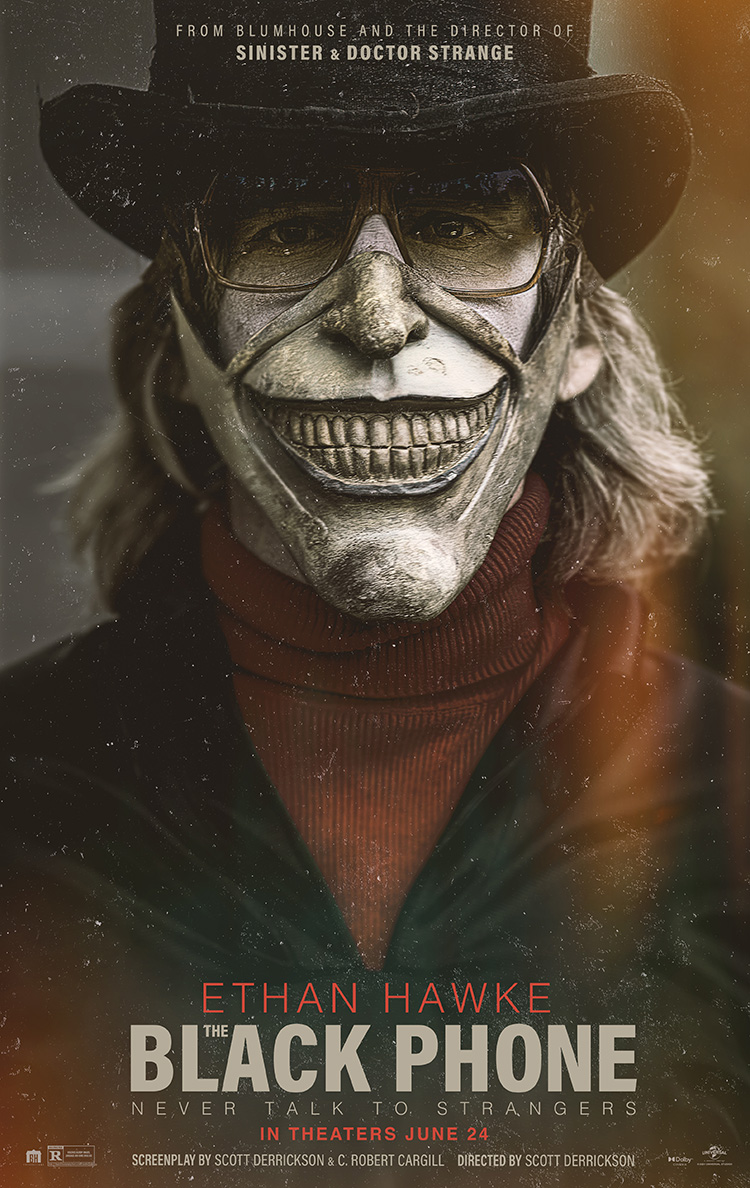
THE BLACK PHONE horror movie review

Delivers on atmosphere and tension, but the characters are largely one-dimensional. The solid lead and chief supporting cast do their best to convince audiences there is more here than what you actually get. Who’s even the audience for this???

Blumhouse sets out to terrify audiences with their summer horror offering; and while it has some fantastic moments of tension and an ominous atmosphere, it fails to deliver on both plot and character. In a manner of speaking, writer-director Scott Derrickson, took a page out of the typical A24 handbook, and place far more emphasis on aesthetics than story.

Finney Shaw is a shy but clever 13-year-old boy who’s being held in a soundproof basement by a sadistic, masked killer. When a disconnected phone on the wall starts to ring, he soon discovers that he can hear the voices of the murderer’s previous victims — and they are dead set on making sure that what happened to them doesn’t happen to Finney.

On one hand, this movie would’ve been more enjoyable had it really leaned into the camp factor that is present, but because of the subject matter, an intentional camp approach would have been even more tasteless than this movie already is. What camp would’ve afforded is overcoming plotting problems. After all, we don’t watch campy horror movies for the brilliant plotting. But when you take, what should’ve been camp, and make it something to be taken more thoughtfully or seriously, then it suffers from identity crisis and is relegated to something to perhaps ben seen once, then forgotten shortly thereafter.

Our lead cast struggles to connect with audiences because of how unrelatable they are. Films such as Stand By Me work across ages because of how relatable the boys are. Moreover, the dialogue for the all the characters is lazy and base; nothing about the way these kids speak or act feels even remotely believable. Furthermore, the central conflict of kidnapping goes to incredibly dark, cringeworthy places that are borderline inappropriate for the age group of our lead cast. While the subject matter of the film is for 17+, in my opinion, the characters do not connect with that audience.

The release time of this movie is bothersome as well, because it was Father’s Day on Sunday, yet we have two sinister examples of adult men whom each have respective father issues. Tasteless. In an era in which it is increasingly important to showcase healthy father-child relationships, this film seeks to undermine any efforts to shift the predominant and unhealthy narrative spun over the last couple of decades. There are far more great men and fathers out there than abhorrent ones. Let’s write those stories. For more on the toxic ways of how men are portrayed in TV and film, checkout my article The Man Vanishes.

Ryan teaches Film Studies and Screenwriting at the University of Tampa. If you like this article, check out the others and FOLLOW this blog! Interested in Ryan making a guest appearance on your podcast or contributing to your website? Send him a DM on Twitter or email him at RLTerry1@gmail.com! If you’re ever in Tampa or Orlando, feel free to catch a movie with him.

Follow him on Twitter: RLTerry1
HATCHING arthouse horror film review

A provocative exploration of the deadly consequences of image obsession and the dangers of forcing others to meet your expectations–hatching them in your own image. Director Hanna Bergholm delivers more than a spine-chilling social commentary on the dark side of social media influencers, Bergholm delivers an inventive cinematic exercise that shines in both form and function. Terrifying puppetry is back! Most of the buzz going into this film was on the use of practical puppetry for the bird-like creature, and that buzz is well-earned! Not since Jim Henson’s The Dark Crystal have we witnessed such nightmarishly beautiful puppetry on the silver screen. Upon the first appearance of the the avian creature, is was clear that Bergholm took inspiration from Henson’s Skeksis in all the best ways possible. More than a showcase of practical effects, this film delivers a relatable coming-of-age story, thematically rich, and will have you engaging in internal monologues on topics such as adolescent anxieties, social media influencers, and the obsession with image.

Tinja is a 12-year-old gymnast who’s desperate to please her image-obsessed mother. After finding a wounded bird in the woods, she brings its strange egg home, nestles it in her bed and nurtures it until it hatches. The creature that emerges soon becomes her closest friend and a living nightmare, plunging Tinja into a twisted reality that her mom refuses to see.

So often, when the topic of the dark side of social media is explored, it’s explored through the mind and eyes of kids and young adults; however, Hatching subverts our expectations by exploring this subject from the perspective of Tinja’s mother. Tinja’s mother is obsessed with what her followers think of her and her family, and this obsession manifests itself in the form of her social media persona and living out her athletic dreams (as a former figure skater who met with an accident that permanently injured and scarred her leg) through her daughter’s gymnastic aspirations. She pushes TInja, not to be the best she can be, but to be the best she (her mother) wants Tinja to be; it’s to glorify mother not daughter. In essence, Mother is attempting to hatch Tinja in her own image, but it goes horribly wrong. Tinja struggles to meet her mother’s expectations for her life, and this anxiety is manifested in the hatching of the avian creature. it isn’t long before Tinja realizes that she has hatched a monster. I love how fantastically ominous the mise-en-scene is!

The special effects and makeup teams should be particularly proud of their accomplishment. In an age where a bird-like monster would have been CGI, this team remained committed to practical effects. And it’s those effects to give the monster incredible dimension–cant’ replace the way real light bounces off real objects and into the camera lens. In the performative dimension of the film, the whole cast demonstrates excellent chemistry and the fake smiles add immensely to the inauthentic uneasiness of the characters. Bergholm successfully build the tension throughout the film, earning every emotional release! Unlike the prolific number of arthouse horror films that forget that the film needs to tell a good story expressed in addition to being visually impressive (a’chem A24 and Neon), this arthouse horror film looks great and delivers a thoughtful story expressed through well-structured plotting. It is both accessible by general horror audiences, but provides the more complex subjects for those that want to to the yolk of the matter.

Ryan teaches Film Studies and Digital Citizenship at the University of Tampa. If you like this article, check out the others and FOLLOW this blog! Interested in Ryan making a guest appearance on your podcast or contributing to your website? Send him a DM on Twitter or email him at RLTerry1@gmail.com! If you’re ever in Tampa or Orlando, feel free to catch a movie with him.

Follow him on Twitter: RLTerry1

SCREAM (2022) horror movie review

Familiar yet fresh. From the duo that brought you the smash hit Ready or Not comes the next instabment in the beloved SCREAM franchise. It’s been just over twenty-five years since Casey answered that fateful phone call from Ghostface and just over a decade since the late, great Wes Craven gifted us with SCRE4M before his tragic passing. And, now audiences are returning to Woodsboro. In a filmscape overstuffed with pretentious, stylized horror films that often forget that plot and characters are more important than the pretty packaging, comes a fresh interpretation of the classical slasher that is sure to thrill you! While the new SCREAM isn’t without its diegetic flaws (but, to go into that would mean spoilers), it is still entertaining and fun. Clearly, the screenwriters channeled the soul of the original SCREAM, a perfect film in my opinion, but put a relevant spin on it in order to resonate with contemporary audiences. What I can say, without going into spoilers, is that this movie has too many characters; to the point that some of them feel like furniture. Where you may connect quickly with the movie is in subtext of the film, which is grounded in a commentary on the slasher versus elevated horror (a term I absolutely detest, as I’ve previously written) and toxic fandoms versus studio execs green-lighting rebookquels or requel (as the movie states). These are the conversations that fans of horror have all the time, and you will find yourself vicariously engaged in the conversations as the characters are having their debates on screen. After the flop that was Halloween Kills, I was anticipating another vapid, pandering attempt to revive a legendary cinematic property. But, I was pleasantly surprised by how much I enjoyed this movie. We didn’t know we needed another SCREAM movie, but turns out that we did. 

Twenty-five years after a streak of brutal murders shocked the quiet town of Woodsboro, Calif., a new killer dons the Ghostface mask and begins targeting a group of teenagers to resurrect secrets from the town’s deadly past.

Not only are Sidney, Gale, and Dewey back, but you’ll see some other familiar faces too. Here is where we can directly compare Halloween Kills and Scream (2022). Both movies brought back leading and supporting characters (and actors), but Scream succeeds in developing all of them enough for audiences to care about whether they live or die. Now, Scream does suffer from being overstuffed with ancillary characters, to the point that some are one-dimensional; however, the screenwriters do manage to give each some agency–some more than others. Other than rooting for Sidney, Gale, and Dewey to survive the blade of Ghostface, you may be hard-pressed to truly care whether some of the other characters live or die. Fortunately, as little as you may care about a particular character in this movie, you’ll still find yourself caring way more than you did for the cast of Halloween Kills.

The kills are great! And best of all, it doesn’t devolve into a completely unrealistic bloodbath. Yes, it is a little gorier and violent than the original (or even the subsequent previous sequels), but not overly so. This iteration of Ghostface may not have the one-liners of its predecessors, but Ghostface manages to get some zings in there. Unsurprisingly, there are many homages to the original SCREAM, but there are nods to other horror properties as well–the shower scene from Psycho makes a little cameo, and we spend a great deal of time with the Stab movies. Instead of rules to surviving a horror movie, we have rules to surviving a Stab movie or requel. Dylan Minnette’s character’s name is Wes, which is a great touch! In fact, the entire movie is dedicated to the life and legacy of the late, great Wes Craven.

This movie works because it takes itself seriously as a Scream movie (and by extension, the slasher), but allows itself to have fun along the way. Perhaps Generation Z does not appreciate the slasher for the cultural phenomenon that it was, but this movie may just be the thing to get them interested in discovering just how brilliant and fun slashers are. I feel confident that you will enjoy Scream as much as I did! Yes, I have my plotting and diegetic problems with it, but it doesn’t take away from the fun factor. This movie succeeds where Halloween Kills failed–it never forgot its roots in greatness. It remembered its branding, and stayed the course. Even though it may not be quite as good as SCRE4M, and with the original being peerless, this fifth installment justifies its existence and delivers laughs and thrills. Much like with Wes Craven and Kevin Williamson’s incomparable original, this one also knows what it is, and it rocks it!

And here is where you should stop reading unless you don’t mind spoilers. 

Okay, if you’re continuing to read, I will interpret that as consent, and I will talk about elements of the film that involve spoilers. Not because I want to spoil it, but because it’s difficult to talk about the topics I want to address whilst completely avoiding them.

One of the best elements of the original SCREAM is the absolute perfection that the opening excruciating 13-minutes (that’s right 13), which is, in my opinion, the best and most effective opening of a film period. That opening literally does everything an opening should–you know precisely what the stakes are and what the film is about. Anyway. As to whether the opening of Scream (2022) is precisely 13-minutes, I do not know because I was not looking at my watch (but it feels that it could be 13-minutes). But I was eager for the opening for comparative analysis purposes. I wasn’t looking to see if it was as intense or brilliant as the original (because, let’s face it, that’s an overwhelming task), but I was looking to see if we would know everything we need to know and how high the stakes are going to be. Sadly, we learn that Tara (Jenna Ortega) did not die in the opening scene. And it was this poor decision that hung over me for the entire film. Because once we learn that Tara did not die, instantly any of the suspense and high stakes we had were rendered ineffective and futile. Tara should have died because then audiences would have realized that the stakes are high, and that no one is safe from the knife of Ghostface. Suffice it to say, this poor decision did not ruin the movie for me–I still had a lot of fun with it–but the power of the opening was muted and lacked anything memorable.

There are two arguments (or topics) at the center of the new Scream (1) elevated horror versus slashers and (2) toxic fans versus reboots/remakes. What I love about this, is that these two topics are such a part of the #PodernFamily (podcasters) and #FilmTwitter (film pundits and fans on Twitter) pantheon of conversations and arguments on a daily basis, especially when it comes to horror and legacy cinematic properties. Early on, in fact it’s in the opening scene, we are informed of Tara’s taste in horror: she prefers elevated (excuse me while I vomit at the term) horror like The Babadook, Hereditary, and The Witch. She slams slashers like STAB for being schlock devoid. Turns out, she underestimated the power and social commentary of slashers. Perhaps she should’ve spent more time in horror, because then she would’ve learned that horror has always been the most progressive of all the genres–not just in the last decade. Further along in the movie, we witness a debate over fans versus “requels” (wherein a movie is a combination of a reboot and sequel). While I am not a generally fan of rebooting a legacy franchise or tacking on a sequel that we didn’t need cinematically, so much of what is said in the entertaining exchange of the marketplace of ideas is incredibly meta because of how pervasive it is within the film community. And the plot of Scream (2022) plays right into both of the aforementioned commentaries on horror movies.

Of all the kills, my favorite one is right out of Once Upon a Time…in Hollywood. And I’ll leave it at that. 

Ryan teaches American and World Cinema at the University of Tampa. If you like this article, check out the others and FOLLOW this blog! Interested in Ryan making a guest appearance on your podcast or contributing to your website? Send him a DM on Twitter or email him at RLTerry1@gmail.com! If you’re ever in Tampa or Orlando, feel free to catch a movie with him.

Follow him on Twitter: RLTerry1