Review of Halloween Horror Nights XXVII at Universal Orlando

“Here’s Johnny!” Experience some of your favorite horror films and television shows as Halloween Horror Nights 27 (HHN27) at Universal Studios Florida showcases the iconic and contemporary in one terrifyingly fantastic celebration of the macabre. Be sure to catch Bill and Ted’s Excellent Halloween Adventure‘s final tour as they riff pop culture and relive some of the best moments in the popular comedy show for the last time. This year’s houses include a selection of movie-based houses and original concepts; furthermore, be sure to visit the scare zones as well! The movie or TV-based houses are: The Shining as the big headliner this year, American Horror Story (Asylum, Coven,  & Roanoke), Saw, The Horrors of Blumhouse, and Ash v. Evil Dead; the original IPs are: The FallenDead WaterScarecrow: the Reaping, & Hive. You’ll also find scare zones featuring familiar elements and scenes from The Purge and Trick’r Treat in the lineup as well as a nod to classic alien films from the 1930s-50s. From several park guests, the general consensus was that this year was solid, offered precisely what most were looking for and successfully brought nightmares to life.

For the full review, please visit Thrillz!

“Kingsman: the Golden Circle” movie review

Rough start, but a smooth finish. The highly anticipated sequel to Kingsman: the Secret Service releases this week, and you are in for a fun time! Unfortunately, not as great a time as you had with the first one. Looks like this franchise fell victim to the same condition that plagues so many franchises’ sequels. One of the experiential elements that made the first one so great is the constant reminder that “this isn’t one of those movies.” The original was self-aware and full of excellent writing. Though this sequel contains the similar action and comedy, the novelty, that was the first, is lost with Golden Circle. A struggle of many sequels is opening with sufficient connections to the original but not in such a way that it feels like the same plot. Although the movie finishes satisfyingly well, the first scene felt too much like a cliche action movie–too animated feeling. However, it finds its way back to the soul of the original soon enough. Perhaps this installment plays out differently because it no longer feels new and different. While the writing may not be as on point as the previous film, the cast is still fantastic and there is one reoccurring cameo in particular that will catch you pleasantly by surprise.

After an explosive car chase through the streets of London, Eggsy (Taron Egerton) witnesses he destruction of his apartment, close colleagues, and discovers the headquarters of The Kingsman completely wiped off the planet. With nothing left to do except follow the mysterious doomsday protocol, Eggsy finds his way to a counterpart operations in the United States known as Statesman. Meanwhile, much of the world finds itself hostage in the grasp of Poppy (Julianne Moore), a peppy beautiful drug lord operating out of a remote jungle location. Poppy has poisoned illegal drugs with a compound that brings about certain death if left untreated. In exchange for the antidote, she is forcing the US President to declassify all drugs in order to tax them like a normal legit business. Once connected with the elite team of Statesman, both agents must form a partnership to take down Poppy and save the world from mass genocide.

Although this is a fun movie–no mistaking that–it contains far too many gimmicks than solid writing. The strength in the first one was two fold: (1) the writing and (2) the cast. Given that Golden Circle contains many of the same cast members, the fault has to then be in the writing. So much of the comedy and character dynamics felt forced and less organic than the original. This film serves as evidence than even an all-star powerhouse cast and talented director cannot save a film built upon sloppy writing. The Secret Service wowed audiences with a movie that transcended all other James Bond spoofs to create a world of its own–that’s it–it felt unique in a world filled with conventional and parodied espionage movies. Character wise, Eggsy is no longer the protagonist in a My Fair Lady meets James Bond but just another flat would-be action hero. Julianna Moore’s Poppy is more interesting because she is a cross between a deranged 1950s housewife meets Martha Stewart meets drug cartel kingpin. Though the trailers contain a lot of Tatum, his character goes by the wayside at the end of Act I. Halle Berry is a solid choice for her counterpart to Strong’s Merlin.

By in large, the plot is just too silly and lacks innovation. Even the cameo by a well-known and talented vocal artist feels like an excuse to dust off the most flamboyant costumes. The plot is certainly not helped by the heavy-handed CGI effects throughout the film, and it’s so incredibly concentrated in the beginning that it feels like an animated film. That’s not to say that there aren’t reasons to enjoy Kingsman: the Golden Circle. I certainly had a good time and so did my friend who accompanied me to the advanced screening in Tampa. Some of the enjoyable parts of the film are the high profile cameo, seeing A-list actors just have fun portraying outrageous characters, and the humorous one-liners delivered tongue in cheek. Although the opening scene is over the top, it does quickly connect the beginning of this film with the end of the previous one. Had this film taken itself more seriously as a spy movie that happened to also be funny, then I think it would have be more appreciated by the audience. Despite the rough opening, the film does manage to come in for a smooth finish and leads into another installment.

If you’re looking for 2015’s Kingsman, then you may be disappointed. If you’re looking for a fun spy movie spoof, then you’ll likely enjoy The Golden Circle for the most part.

Ryan is a screenwriting professor at the University of Tampa. If you like this article, check out the others and FOLLOW this blog!

Follow him!

Twitter: RLTerry1

Instagram: RL_Terry

Thrillz (theme parks): Thrillz.co

“IT” (2017) film review

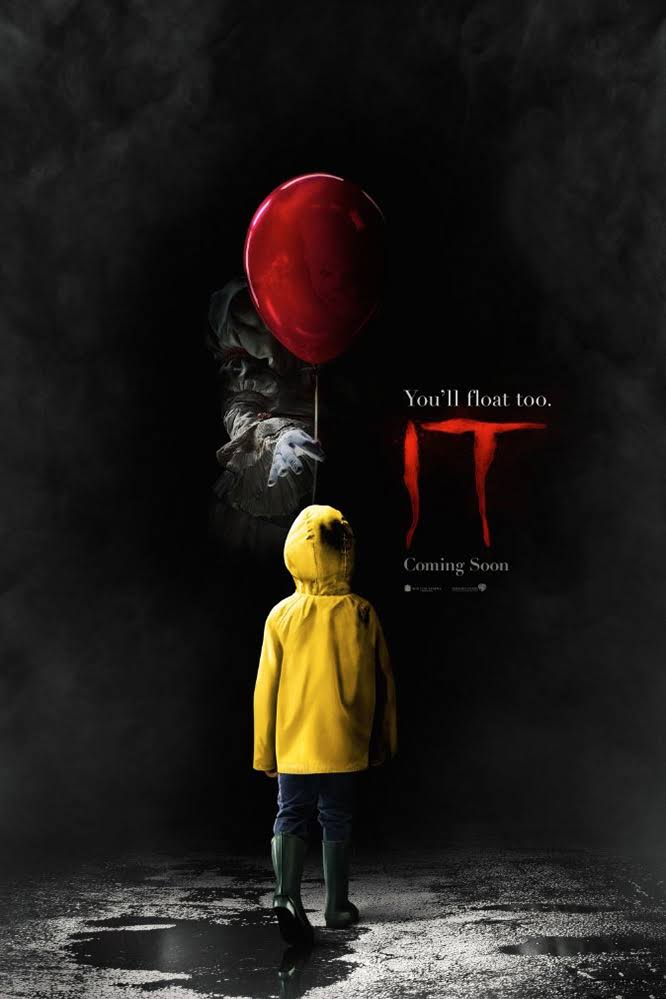
IT’s hauntingly fantastic! From the first to the last scene, the Stephen King adaptation directed by Andres Buschietti is nothing less than a horror masterpiece that does both the original novel and the TV mini series (1990) justice. The brilliance behind the adaptation is found in the excellent cast. So organic, so relatable. A common trope in King novels (and by extension the movie adaptation) is the tried and true narrative structure of the “coming of age” story. Although Stand By Me typifies the “coming of age” subgenre, IT may serve as a horror film for shock value on the outside; but beneath the nightmare-inducing exterior, beats the heart of a heavy drama with a great message about growing up, friendship, teamwork, and facing one’s fears. Few horror films reach iconic status, but this one is surely destined to be counted among films like: The Shining, Friday the 13th, Nightmare on Elm Street, Halloween, Texas Chainsaw Massacre and others. For all the previous King adaptations, Buschietti may have directed the best adaption we have ever seen. Kubrick’s The Shining may still win the award for most artistic and cinematic; however, 2017’s IT takes the words from the pages and successfully translates them to the silver screen along with impressive set design, special/practical effects, and a blood curdling score.

Derry, Maine may seem like a picturesque idealistic version of Americana, but it has a problem. Every couple of decades, children and teenagers vanish without a trace. After Georgie disappears while playing with a paper boat in the rain, his brother Billy (Jaeden Lieberher) becomes determined to solve the mystery and find his brother. Met with opposition from his father, Billy teams up with his long-time friends Eddie (Jack Dylan Grazer), Richie (Finn Wolfhard), Stanley (Wyatt Oleff), and new friends Beverly (Sophia Lillis), Mike (Chosen Jacobs), and Ben (Jeremy Ray Taylor) to unravel the mystery surrounding the town of Derry. In their wildest nightmares, no one could have anticipated the evil that lies beneath the streets, in the dank sewers of the Maine hamlet. When faced with what terrifies each of them the most, the group of young people must band together in order to conquer their fears and destroy Pennywise, the evil dancing clown (Bill Skarsgard).

The local movie theatre’s marquee displays Wes Craven’s A Nightmare on Elm Street 5; and the fact it is that particular film serves a more important purpose than simply to establish the period (which it does brilliantly, by the way). That particular movie is quite symbolic, and in many ways, parallels the events that unfold in Derry, Maine. Both Nightmare and IT take place in small towns; and furthermore, the ensemble cast is comprised of young people who must face fears and band together in order to conquer the evil that threatens their very lives. Although this version of Pennywise is a little less playful than the iconic original Tim Curry Pennywise, the dancing killer clown has a very Freddy Kruger quality about him. Many of the qualities that aid in (in my opinion) making Freddy the most terrifying of all the classic slashers and icons, is his playful attitude followed by moving in for the kill in a very showman way. Both Pennywise and Freddy are born out of and prey upon deep childhood fears and quite literally become the manifestation of the evil in the world. As such, there are many reasonable ways for IT: Chapter 1 to spawn several sequels in the same way that A Nightmare on Elm Street did.

As nightmarish as the majority of the movie is, it does struggle here and there to connect all the scenes together whilst maintaining a solid rhythm. The overall sense of dread is carried through for the most part, but there are times that the film fails to increase the level of anxiety which could have been accomplished by spending more time in Derry’s history and the traumas and secrets that were buried over the decades. I would have liked to have seen the sewers that the kids search through be more symbolic of the very plumbing that transports the deep seeded fears that are ignored or flushed away by the people of Derry. IT certainly accomplishes its goal of being a high quality horror film but it falls short of going as deep as it could have. The overall experience of the film rivals that of other great horror films that have gained iconic status. Greatly contributing to this success is the balance between establishing nostalgic connections between it, the original IT, and the audience members, and the excellent 21st century hair-raising effects. The relatable cast seems to have been taken right out of Netflix’ Stranger Things, and will work wonders for attracting a younger audience who may not be familiar with the novel or original mini series.

There are two films in IT: the horror film and dark drama. Both are well executed but have a few flaws in the nearly perfect recipe. It’s both a nostalgic coming-of-age story and a Wes Craven Freddy-like slasher. Having an ability to be a dark drama masquerading around as a horror film will do very nicely at the box office. Perhaps if this film were a little more like Nightmare and we saw a little less of Pennywise, he would be more terrifying. As it stands, the more we see Pennywise, the less scary he becomes. Still, he is pretty terrifying! Buschietti may not wind up with the same cache as Kubrick, Hitchcock, or Craven, but he has emulated much of what the aforementioned masters of suspense, terror, and horror pioneered many years ago.

One thing’s for sure, this is a great way to kick off the Halloween season of films! After a mostly lackluster August, I am glad that the cinema is bustling with great films to see. IT this week, Mother next week, followed by the remake of Flatliners, September is shaping up to be a terrifyingly brilliant month for films. Should you choose to venture to Derry, Maine this weekend, you won’t be disappointed with the remake of a classic. If you really want to have some fun, bring along a friend who has a phobia of clowns.

‘ReInnoventing’ Epcot

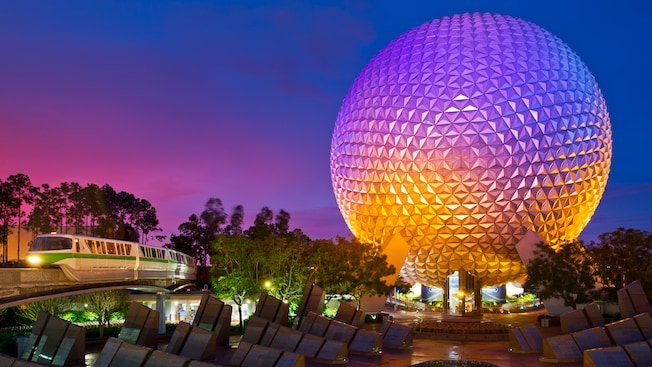
Since 1982, Walt Disney World’s second theme park Epcot has been capturing the imagination through education and glimpses into the future. At least, that was EPCOT until the last few years. Starting in the early 2010s, the identity of then EPCOT (now Epcot) has been shifting away from education to food, wine, and a few thrills. With the recent closures at Epcot (Ellen’s Universe of Energy) and at Hollywood Studios (The Great Movie Ride and soon One Man’s Dream), it is clear that the leadership and Imagineers of Walt Disney World are moving in new directions compared to the legacy direction the park(s) have demonstrated over the decades. Although it mostly flew under the radar for a large portion of park one-time guests and even some regulars, over the last few years–and increasingly so, over the last few months–Future World’s Innoventions is, much like Ellen’s dinosaurs, extinct.

Innoventions (and the former Wonders of Life pavilion, home of the once-popular Body Wars) housed some of the most entertaining, educational, and interactive show offerings at WDW. The House of Innoventions (later Vision House), Storm Struck, Where’s the Fire, What’s Your Problem, and more struck a fantastic balance between education and entertainment (often referred to as edutainment). Now, all that remains of Future World is Test Track, The Living Seas with Nemo and Friends, Mission Space (recently refurbished), Soarin’, Living with the Land, and the iconic Spaceship Earth. Nearly half as many attractions exist compared to just five years ago. During this time,  Epcot also changed its official name from EPCOT to Epcot. What’s the difference, you ask? Originally, Epcot was an acronym that stood for the Experimental Prototype Community Of Tomorrow. With the reimagination of the park over the years, and furthermore, the movement away from education and the future, the park officially changed its name to Epcot (no acronym).

Although each of these closures could be analyzed separately, the long and short of it is sacrificing education for thrills and booze. And there is not anything innately wrong with that. Theme parks should be thrilling, and offer a wide array of food and drink options! But what made Epcot unique amongst other theme parks around the country WAS the educational component. Much like the “magic of the movies” and filmmaking was the essence of what made Hollywood Studios the park it was. The introduction of the new Guardians of the Galaxy based attraction in Future World (hmm…this area of the park probably needs a new name, now that I think about it), will undoubtedly breath new life into this waning area of the park, but at what cost??? On the plus side, WDW is able to finally integrate the Marvel property into the parks but it will be replacing a legacy attraction. Legacy. That’s a term you hear quite often when talking about the Disney and Universal parks. The term legacy can be defined as an amount of money or property left to an heir in a will. For theme parks, legacy attractions are those that often opened on the first day or have maintained a presence for a substantial amount of time–so long that generations of people enjoyed them. Waxing nostalgic is a popular pseudo-activity at many theme park attractions. There is no quantifiable means of attributing a value to the ability to experience that same attraction with your kids (or nieces/nephews/grandchildren) that you experienced as a kid, but it is invaluable in a theme park adventure. When legacy attractions are removed, the ability to experience childhood nostalgia dies right along with it.

One of the reasons that it is important for Epcot to innovate a new identity is because it was, and still is to an extent, becoming a museum of what once was. Future World used to be the place to experience emerging technologies and be mesmerized by what we now call STEM (science, technology, engineering, mathematics). When the park did not keep the sponsored attractions coming and updating, it lost that wow factor and was slowly allowed to go by way of the dodo. Since the educational element of Epcot was not continually reinforced or re-imagined, it is necessary to gut and refurbish. I cannot help but think that there was room at Epcot for both the legacy and the impressive new attractions for new and long-time guests to experience. In addition to adding new attractions to bolster Epcot’s offerings, the International Food and Wine Festival as well as the Flower and Garden Festival respectively now offer more food and drinks than ever before–especially Flower and Garden. It is easy to see where the park spends the lion share of its budget. Food and alcohol have been an Epcot staple since the beginning–there are few other places that one could experience food and drinks from around the globe without need of a passport. But over the years, the park has been funneling more money into the festivals and has allowed the attraction offerings to teeter on the cusp of closure.

One way that Epcot could remain connected to the ideas of the future, innovation, and communication that were once at the bedrock of the park itself is to introduce attractions and shows that capitalize on the future-fantasy, science-fiction, and other similar IPs that the Walt Disney Company holds. There are communications and artificial intelligence technologies that are showcased in many of Disney’s movies that could be translated into a theme park experience. Innoventions was not only a place to find the “house of the future” but it was also a place that offered interactive shows. Although park guests are increasingly interested in more thrills than learning, the beauty of what Disney has proven they can do is to merge the two ideas. Epcot is the perfect “experimental” place to continue to inspire park guests through a thrilling experience paired with an educational component as well.

Epcot has positioned itself to emerge as a new park. France is getting a rollercoaster based upon the movie Ratatouille, Norway introduced the Frozen Ever After attraction (that replaced Maelstrom)Soarin got a makeover, and Test Track re-emerged as a Tron meets Test Track, so to speak, a few years ago. It would appear that Future World will increase in its fantasy and science-fiction offerings whereas World Showcase will bolster its attraction offerings as well. Hopefully, there will always be a sense of the future or education at the core of Epcot, but I am scared that both components will continue to dwindle. They certainly don’t have to. There are a lot of emerging technologies in the Disney movie universe that could very well be translated into attraction offerings or even entire new lands (or areas) at Epcot–so “the future is waiting” as Spaceship Earth would put it.


“The Glass Castle” film review

An organic, unapologetic emotional rollercoaster. Based on the novel by the same name written by Jeannette Walls, The Glass Castle provides audiences with a glimpse into the childhood, young adulthood, and then-present day life of Jeannette Walls. After watching the film and end-credit scenes of the real Jeanette and family, it is clear that the movie is supported by a screenplay that takes its inspiration from the tome-like book. From what I have read, this film successfully adapts the novel to the screen, inclusive of all the intangibles and the unseen or heard elements from the book. Furthermore, this film strikes a fantastic balance between family drama and biographical motion picture. For all that this film has going for it, it falls short of the big-budget tear-jerker that is expected of Destin Daniel Cretton after his hit Short Term 12. However, those who choose to see this gritty slice of life, who have not seen Cretton’s previous works, will likely miss just how safely objective this film is. Although you will likely identify with one or more of the characters, in general, audiences will feel that they are safely watching the events unfold from a removed vantage point. The danger in bringing a story like this one to screen is creating characters that are either too softened compared to the real people or too detestable. Fortunately, Cretton skillfully tells a story that plays as authentic as cinematically possible.

You can choose your friends and lovers, but you cannot choose your family. The Glass Castle is the film adaptation of the memoire authored by Jeannette Walls (the central character). Jeannette and her three siblings must learn to take care of themselves and survive life as their parents are free-spirited responsibility-adverse individuals who inspire and inhibit growth and education. When he was younger, their father generated a great deal of warmth, compassion, individualism, and creativity; but when he turned to drinking more heavily, he allowed them to go without food and watched over them like a warden watches over prisoners. Meanwhile, mom was completely disgusted with the idea of being a domestic so she allowed the children to care for themselves and even prepare her meals. Jeannette and her siblings faced great adversity growing up, but grew to become contributing members of society.

This is one of those films that you go into thinking that a particular actor or character is the main one, but in all reality, it is the antagonist, if you will, that is the main character. Jeannette Walls (Brie Larson) may be the author of the novel and a lead character, but it is actually Rex’s (Woody Harrelson) movie. On one hand, Rex is a brilliant father who is preparing his kids for the harsh realities of life and how to not fall victim to blending in or turning into someone you are not. On the other, he is a belligerent drunk who cares very little for the well-being of his children and even ships them off to live with his aged mother who is a child molester. Through all the struggles and setbacks, Jeannette and her siblings learn resilience and strength to face whatever life throws their way whether that is extreme poverty or molestation.

The Glass Castle relies upon switching between the present story and flashbacks to hone in on the relationship between Jeannette and her father Rex. Often times, flashbacks are used as means to lazily integrate exposition into the film or explain some other dynamic; however, much like the background story in Fried Green Tomatoes is just as interesting as the foreground story, the rotation between Jeannette’s childhood and her adulthood is performs well and creates quite the interesting dichotomy. Both have the central focus of showing the development or lack thereof in Jeannette’s and Rex’s relationship. Not that other relationships take a backseat, but there focus is squarely on Rex and Jennette. There is one particular scene in the film that deserves special attention, and that is the restaurant scene with Jeannette and Rose Many, her mom played by Naomi Watts. The degree to which this scene is pitch-perfect is almost uncanny. The tension, emotion, and cathartic release commands attention.

Ultimately, the strength of this film lies in the writing and lead cast. Only to a minor extent does the screenplay depart from the source material. And in doing so, the film is strengthened. For those who enjoy films in the vein of The Help, you will enjoy this story as well. To keep the film from being too dark, Cretton adds some feel-good moments to the film that do not attempt to sanitize the past but honors the complicated truth in Jeannette’s and Rex’s relationship.