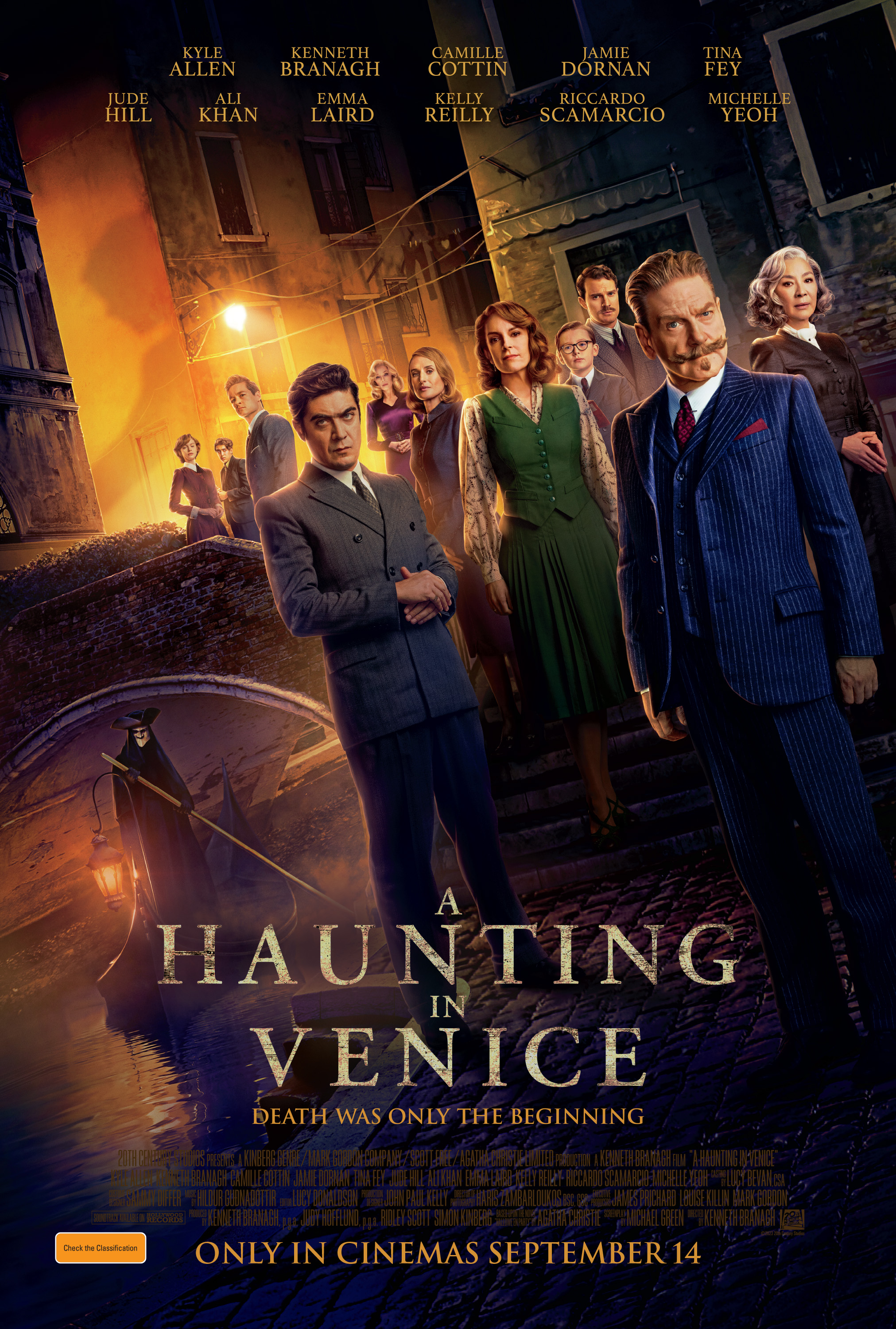
A HAUNTING IN VENICE murder-mystery movie mini review

Starts well, but finishes sloppily. The creepy atmosphere and surprisingly good scares aren’t enough to save A Haunting in Venice from mediocrity. I applaud and even praise Kenneth Branagh for attempting to revive the classic Hollywood murder-mystery movie, but perhaps Christie’s works have been adapted and served as inspiration so many times, that it is nearly impossible to adapt them for the screen–and hope to deliver something new or refreshing. Compared to Branagh’s two previous Christie adaptations, this one excels in atmosphere and character, but the story is underwhelming. Moreover, most of the clues are for the audience and not for Poirot. There is little earned by Poirot in this movie; and what he does discover, often makes little sense logically. At the end of the movie, the audience is left wondering how and why what Poirot learned actually led him to the big reveal.

Probably the shortest review I have ever written. But with this past week being a combination of my birthday and dealing with a personal matter, I am unable to focus intently on this movie. Of course, it doesn’t help that it was neither good nor bad enough to be truly memorable.

Ryan teaches Film Studies and Screenwriting at the University of Tampa and is a member of the Critics Association of Central Florida and Indie Film Critics of America. If you like this article, check out the others and FOLLOW this blog! Interested in Ryan making a guest appearance on your podcast or contributing to your website? Send him a DM on Twitter. If you’re ever in Tampa or Orlando, feel free to catch a movie with him.

Follow him on Twitter: RLTerry1 and LetterBoxd: RLTerry

BLUE BEETLE superhero movie review

High energy! Blue Beetle is a charismatic superhero movie that delivers vivacious action, laughs, and heart. Undoubtedly, Blue Beetle will become a fan-favorite superhero in the coming years ahead. However, the full potential of this movie to forge new frontiers for heroes and characters we haven’t had on the big screen before is ultimately curbed by some character choices and recurring thematic expressions.

Jaime Reyes suddenly finds himself in possession of an ancient relic of alien biotechnology called the Scarab. When the Scarab chooses Jaime to be its symbiotic host, he’s bestowed with an incredible suit of armor that’s capable of extraordinary and unpredictable powers, forever changing his destiny as he becomes the superhero Blue Beetle.

Before you begin thinking that if you’ve seen one superhero origin story, you’ve seen them all, Blue Beetle manages to make fresh a familiar plot to keep audiences entertained. The strength of Blue Beetle is in the casting, lesser so the characters themselves. That’s not to suggest that none of the characters are crafted and developed well, but there are some odd character/screenwriting choices that mitigate the full impact the movie could have had.

Susan Sarandon and Xolo Mariduēna are the standout performances and characters in the movie. Sarandon’s villain and Xolo’s hero are a perfect match for one another. She was cleverly fiendish and he was humble and strong. For me, it’s these two characters and cast members that made the movie for me. I cannot think of two other actors that could have brought these characters to life as well as these two. It’s also incredibly poetic: a screen legend and a relatively newcomer to the big screen. The chemistry and narrative poetry between our hero and villain was excellent. Anytime I get to enjoy Sarandon’s performances on the big or small screen is a good day!

While the plot for this origin story is fairly standard, the method of expression and the character choices give it an air of originality. But it’s in some of the expression of themes and characters that the movie falters, curbing the full potential of the story. Specifically, this is witnessed in the comedic stylings of George Lopez and the recurring commentary and themes borne out of postcolonial theory. While Lopez’ character was intended to be the comedic relief, the method of expression of his comedy became obnoxious and even exhausting. Moreover, his character plays right into negative stereotypes that the movie could have easily avoided.

Likewise, there is conspicuous, recurring imagery and commentary on postcolonial theory that mitigates the positive affects of the movie. It’s as if the screenwriter was message first and plot second. Even when filmmakers desire to exhibit their personal interpretation of a worldview, it is important that the filmmaker employs more clever means of expressing these opinions.

To bring us around to a more positive note, there is a wonderful depiction of a father-son (and father-family) relationship, and I highly respect the movie for this. Far too seldom do we get movies that spotlight healthy relationships between fathers and their families (in this case, the focus is on the father-son relationship). It’s so very important in narrative storytelling to remind the world of the important role a father plays in his family. Does that mean mothers cannot provide the same emotive dimension? Of course not. But there are many more movies that depict healthy, constructive mother-family relationships. This was a brilliant opportunity to spotlight the love a father has for his family and the love the family has for him.

Blue Beetle represents an MCU type of storytelling in a DC movie, but DC still manages to make this expression of a superhero their own. I really like Jaime/Blue Beetle, so I hope that I see him on the big screen again.

Ryan teaches Film Studies and Screenwriting at the University of Tampa and is a member of the Critics Association of Central Florida and Indie Film Critics of America. If you like this article, check out the others and FOLLOW this blog! Interested in Ryan making a guest appearance on your podcast or contributing to your website? Send him a DM on Twitter. If you’re ever in Tampa or Orlando, feel free to catch a movie with him.

Follow him on Twitter: RLTerry1 and LetterBoxd: RLTerry
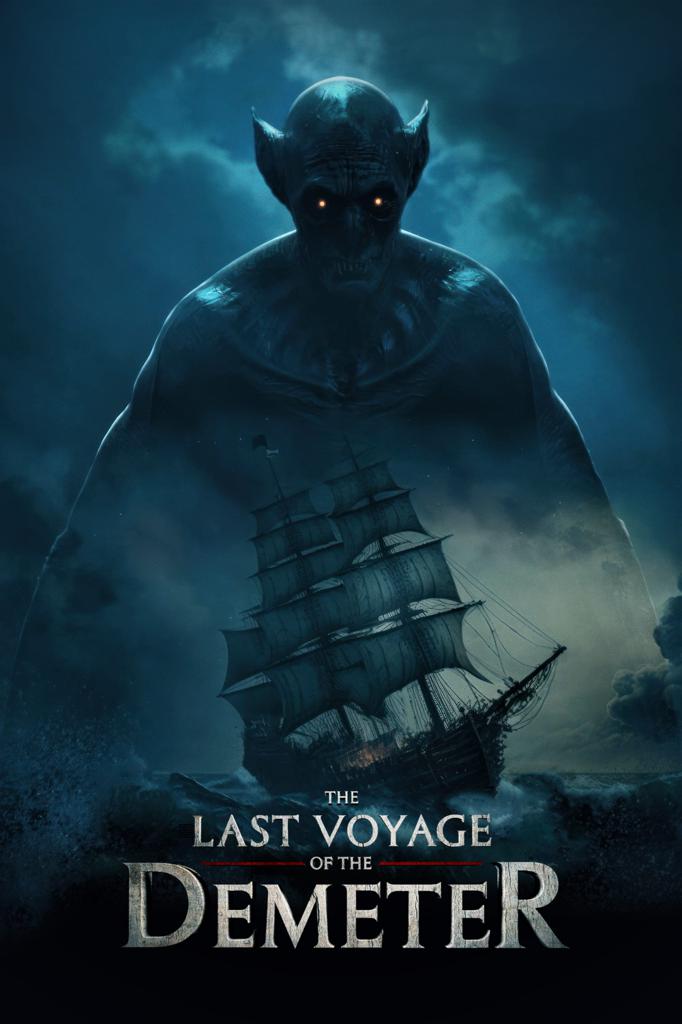
THE LAST VOYAGE OF THE DEMETER horror movie review

Fangtastic! Universal meets Hammer horror in a gothic tale that explores what may have happened on the domed Demeter carrying one thirsty passenger. While seemingly most contemporary horror movies take place in the real world, The Last Voyage of the Demeter transports us back in time to a fantastical world full of sailing vessels, ominous castles, and terrifying folklore. More than a backdrop on which the story unfolds, the atmosphere and sets are characters in and of themselves. If the gothic setting wasn’t enough, the score will certainly wrap you in the nightmare of this movie. If you love classic horror, this is right up your alley as it’s in the same ‘vein’ as such foundational early to mid 20th century horror motions pictures including Nosferatu and Dracula and even late 20th century horror pictures like the original Alien. While it remains to be seen if this is Universal’s second attempt at the defunct Dark Universe, between this movie and the Universal Monsters last at Epic Universe theme park (still under construction), the manner in which this movie ends certainly lends credence to an attempt to revive the dead Dark Universe.

After accepting mysterious cargo from an anonymous customer, the crew of The Demeter experience horrific events aboard the doomed sailing vessel as it makes it way from the harbors beneath the Carpathian Mountains to London.

Neither Bram Stoker, F.W. Murnau, nor Carl Laemmle included much information on the doomed voyage of the Demeter after it left the harbor beneath the Carpathian Mountains. All we know is that mysterious cargo (which we know is the coffin and/or dirt belonging to Count Dracula/Orlak) is dropped off and only the ghost of a ship arrives in London. And that’s the beauty of this movie, the filmmakers only needed to begin and end in the right places. Therefore, everything that unfolds on the ship is pure speculation and imagination. When adapting an existing IP, this is how it should be done. And while this is the best example in recent years of how to find new stories within an existing IP, Disney did something similar with Rogue One, which is my favorite in the Disney Wars movie universe.

We already know The Demeter and crew aboard are doomed, so the charm or terror in this movie isn’t what’s ultimately going to happen–rather–how is it going to happen. And director André Øvredal and writer Bragi Schut Jr. do an excellent job at making the events captivating and even surprising. No one is safe on the sailing cargo vessel, and I do mean no one. Our storytellers craft a narrative that is completely inspired by the past writings and movies yet it takes the story of Dracula to new levels, most of which I appreciate, though there are some elements of the story that I feel are not in line with established vampire lore.

Without getting into spoilers, it’s difficult to discuss what I would like to bring to to the discourse; however, I’d be remiss if I didn’t convey that there is a character we know from nearly all iterations of Dracule or Nosferatu that appears to be setup, but it’s never delivered. Without knowing the direction Universal is going with this movie, I must say that this was a missed opportunity to organically bring this character into what appears to be a relaunch of the Dark Universe.

Both Universal and Hammer horror are being channeled in this newest Dracula movie! You have the gothic stylings of early Universal horror coupled with the amped violence of Hammer horror. Working together, this two distinctly stylistic expressions of horror are used effectively in the crafting of the aesthetic and tone of this movie. Further evidence of the inspiration taken from early Universal and Hammer horror can be witnessed in the haunted house upon the sea concept. I am also reminded of Alien when I think of the setting, the claustrophobia, and the no escape dynamics of this movie. In Alien, it was a Xenomorph in space where “no one can hear you scream,” except we are in a sailing vessel at sea where no one can hear you scream.

As a huge horror fan, especially of the classics, I am eager to see where this movie takes Universal horror. Usually, I am not a fan of starting a franchise (when it is intentionally started), but this movie demonstrates that Universal may have learned its lesson from the failed launch of the last Dark Universe. I definitely see potential in this return to classic Universal monsters, and am along for the ride.

Ryan teaches Film Studies and Screenwriting at the University of Tampa and is a member of the Critics Association of Central Florida and Indie Film Critics of America. If you like this article, check out the others and FOLLOW this blog! Interested in Ryan making a guest appearance on your podcast or contributing to your website? Send him a DM on Twitter. If you’re ever in Tampa or Orlando, feel free to catch a movie with him.

Follow him on Twitter: RLTerry1 and LetterBoxd: RLTerry

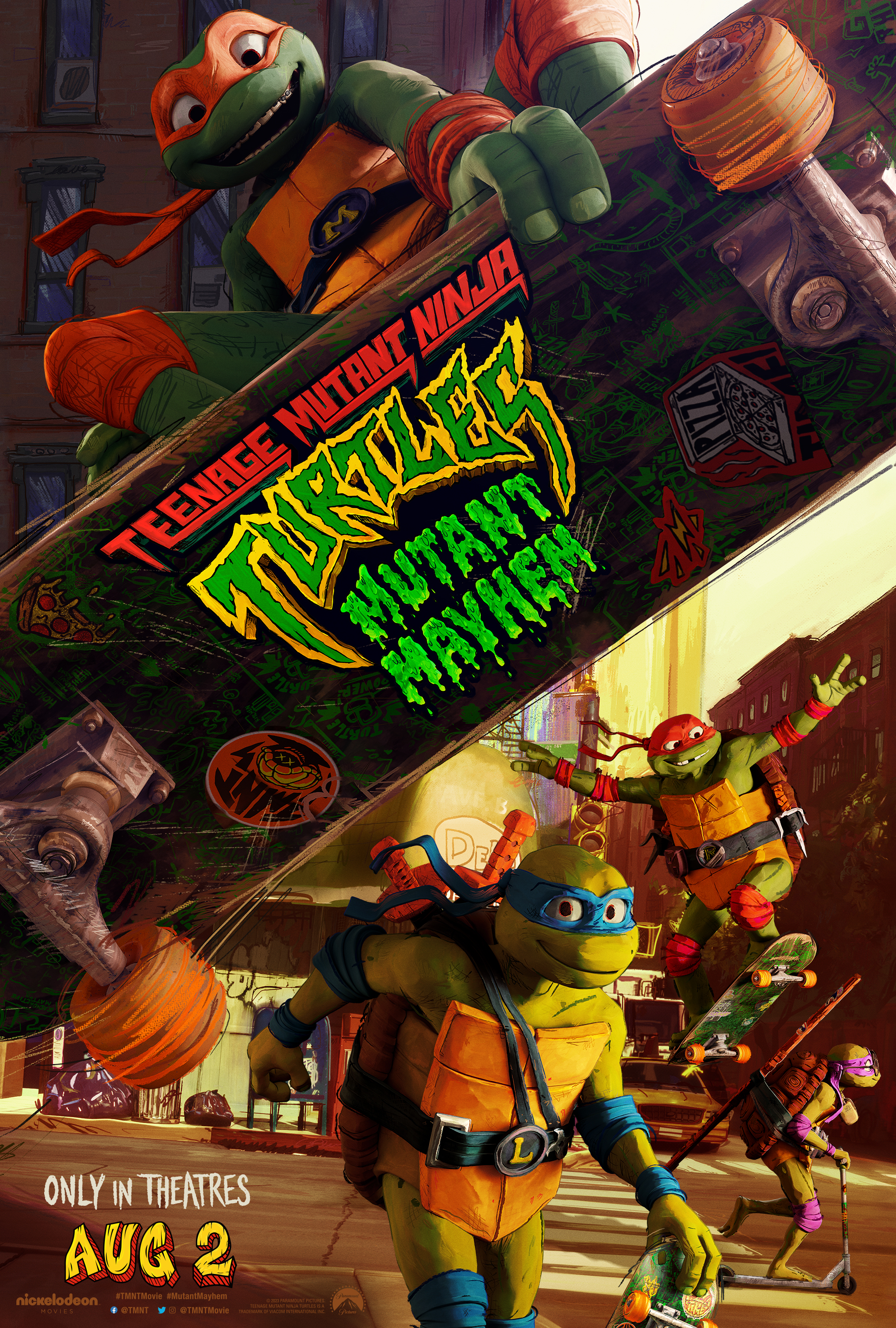
TEENAGE MUTANT NINJA TURTLES (2023) movie review

Cowabunga, you’ll have fun! Whether or not you grew up with the Teenage Mutant Ninja Turtles (TMNT) 1980s animated television show, the comic books, or even the other movies, there is so much to be enjoyed in the new TMNT movie. At just over 1.5 hours, you’ll be invested in this Mutant Mayhem that functions as a standalone origin story, plus a foundation from which to launch subsequent sequels. While Shredder is not the villain, stick around for his subtle debut in a mid-credits scene.

After years of being sheltered from the human world, the Turtle brothers set out to win the hearts of New Yorkers and be accepted as normal teenagers. Their new friend, April O’Neil, helps them take on a mysterious crime syndicate, but they soon get in over their heads when an army of mutants is unleashed upon them.

Since I have not watched any TMNT shows or movies since the animated series in the 1980s, I can’t comment on what is or isn’t canon or what would or would not be, but I can say that from what I remember about the old show, this feels like a reimagination that is simultaneously fresh yet familiar. Perhaps some characters are interpreted differently for this movie than they have been in the past, but the character dynamics, conflict, and relationships make sense within this world. Nicely plotted and paced TMNT moves quickly and leanly–sometimes a little too leanly, but I digress. Most of the humor in the movie works well, but there is one recurring joke that does grow tiring to the point that the punch is less funny than it would have been had the joke been setup and developed more sleekly.

The movie is incredibly postmodern in the sense that the characters reference real life celebrities, TV shows, movies, etc. And while it was cute for a short while, the constant pop-cultural references grew a little tiresome. It’s like salt: fantastic in small amounts; unhealthy in large amounts.

I’ve said it before, and I will say it again, I cannot figure out why studios and writers insist on sprinkling in adult language in a movie that is undeniably geared towards kids (if for no other reason, it is released by Nickelodeon). Reminder: you do not need to include foul language (in however small amounts) in order for adults to watch…they are going to watch anyway, and maybe even be more inclined to introduce their kid(s) to the TMNT.

Suffice it to say, TMNT is a lot of fun, and if you’re looking for a throwback superhero movie with some heart, then I’ve no doubt that you’ll enjoy this movie.

Ryan teaches Film Studies and Screenwriting at the University of Tampa and is a member of the Critics Association of Central Florida and Indie Film Critics of America. If you like this article, check out the others and FOLLOW this blog! Interested in Ryan making a guest appearance on your podcast or contributing to your website? Send him a DM on Twitter. If you’re ever in Tampa or Orlando, feel free to catch a movie with him.

Follow him on Twitter: RLTerry1 and LetterBoxd: RLTerry

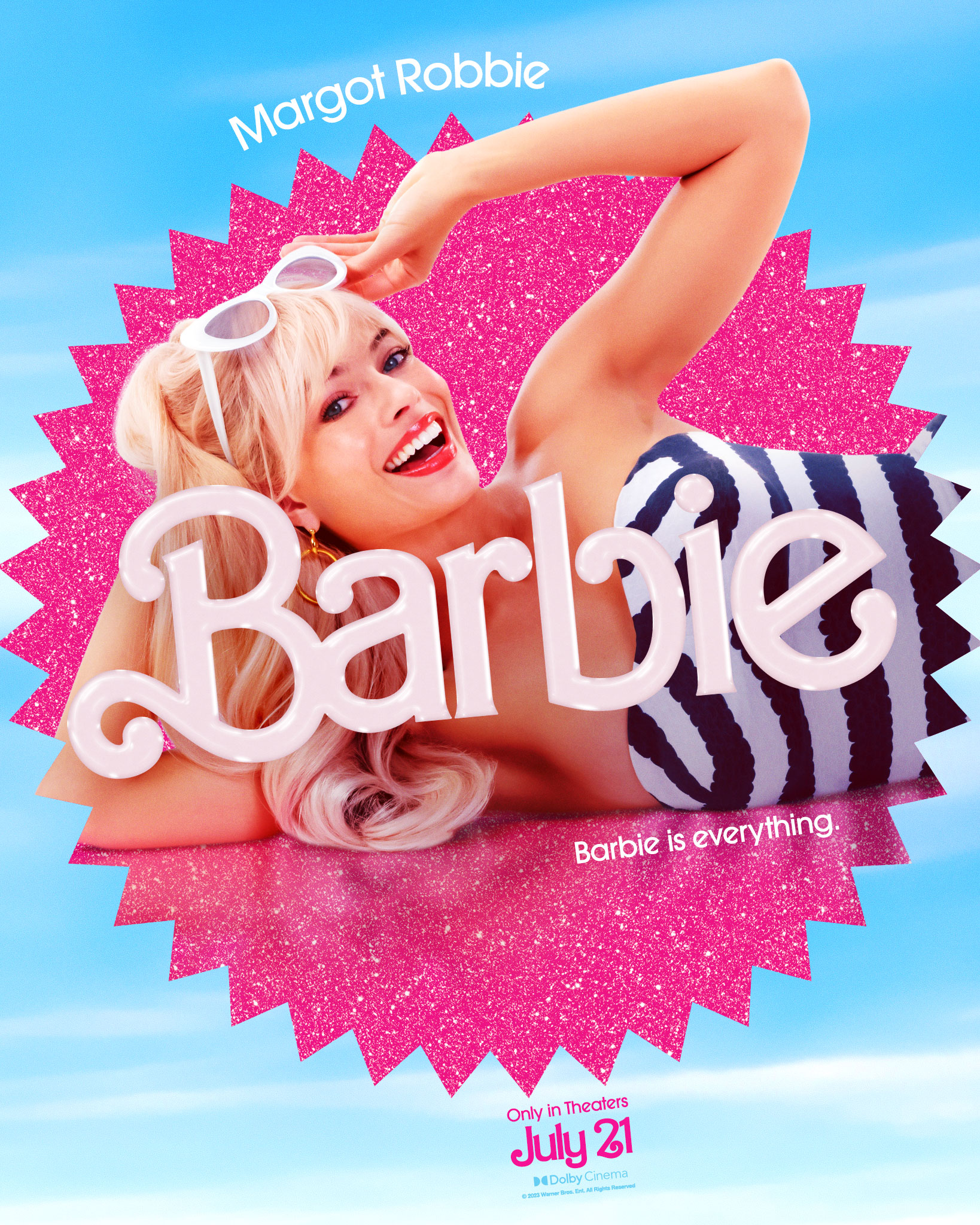
BARBIE (2023) movie review

Uniquely overflowing with creativity, innovation, and a fantastic sense of style. Greta Gerwig demonstrates an imaginative, effective approach to adapting a legacy IP and toy line for the big screen. Unfortunately, that same level of thoughtful craft does not extend into the story, which is mostly structured and paced well, save a side plot that just crowds the main story. However, the film contains heavy-handed themes rooted in a rather warped worldview.

Barbie and Ken are having the time of their lives in the colorful and seemingly perfect world of Barbie Land. However, when they get a chance to go to the real world, they soon discover the joys and perils of living among humans.

For everything the film does exceptionally well, ultimately, it fails to inspire constructive criticism; rather, its lack of challenging dominant ideologies in popular media proves to be the film’s undoing when there is little change from beginning to end. On a more positive note, I love how the film conveys the idea that toys are our way of working through the complexities of life during our early childhood years. Furthermore, Barbie is a doctor, mother, lawyer, scientist, nurse, and anything she wants to be, which should communicate to everyone that each and every one of us can be anything we want to be (provided we set realistic goals and work towards them).

Before I dive further into my critique of the ideologies the film hammers, I’d be remiss if I did not spend time praising what the film did well–and it did a lot very well! Honestly, applied postmodernist ideologies aside, the film is exceptional! I absolutely love the whole aesthetic. The sets, costumes, and music make you smile from the moment the film opens. In fact, the opening number(s) are enough to make even the most frozen of hearts melt with glee! You will feel transported back to being a kid, when imagination was king (or queen, as it were).

Everything in Barbieland is colorful and bold, and yes many, many pastel pinks, blues, and purples. The land, costumes, vehicles, and houses truly feel like they are life size versions of their toy counterparts. And that’s because everything in Barbieland is a copy of a toy. Often times, when there is an outfit, house, car, or anything really that currently is or was one offered in the Barbie toyline, it is highlighted by a popup describing the item. There are even Barbie and Ken dolls that were once offered but since discontinued, and the film spotlights those as well. The scale and scope of design is unbelievable! If I hadn’t seen it on the screen, I wouldn’t believe it possible to create Barbie land in a live action film.

There are elements of the various sets that are two-dimensional just like in a Barbie playset, and these 2-dimensional concepts are seamlessly woven into this 3-dimensional world. The level of charm in the aesthetic of this movie cannot be understated. The stylistic design continues into the cinematography and lighting as well. More than effective, the lighting and cinematography goes to the next level by applying an emotive dimension to the camera movement. Furthermore, this same thoughtful approach is carried over into the overall montage of the film.

On top of calling out real toys in the Barbie line, Hellen Mirren’s narrator goes beyond the expected to provide both diegetic and non-diegetic commentary. She also breaks character so to speak in order to call out humorous (yet truthful) observations from the very apparatus of the filmmaking.

Nearly everything works incredibly well in this film, except for one very important part: the story. Not limited to the plotting and characters, but this also includes the various (heavy-handed) themes and social commentary. Ostensibly, the portrait of society that Barbie paints is one that grossly misrepresents real life. And while the world in which we live is not perfect, the world as it is portrayed feels more like a toxic feminist worldview that simply does not exist. Yes, this is a work of fiction, but when providing commentary on real world observations, there is a balance that must be struck between exaggeration, for dramatic or humorous purposes, and how the world is (in order to make it relatable). By portraying a world that does not exist through a highly toxic, warped worldview, the film fails to evoke or affect any positive (or constructive) change. The film, which is meant to reflect a imaginative expression of the real world is ultimately relegated to a feminist fantasy.

For example (and I am oversimplifying for the sake of time) at the beginning of the film, the Kens are viewed by the Barbies as second-class citizens. Which, I get it, Gerwig is communicating to audiences that women are considered second class citizens in her personal opinion. That simply isn’t true–not in the Western world, anyway. Was it true at one time? Yes. Is it true today? Not so much. That doesn’t mean that gender relations are without flaws; but it’s not the toxic interpretation of patriarchy that is painted by Gerwig over and over and over again. Skipping to the end. After all the adventure has been had and presented conflict resolved, the Kens are still thought of as second-class citizens of Barbieland. The movie begins and ends at ostensibly the same point.

The logic presented lacks support by real world observations. The worlds that are painted by Gerwig depict a Barbie world in which Ken is irrelevant devoid of agency, and depicts a real world in which women are devoid of agency and live to serve men. Again, this is simply not true, and incredibly unhealthy to convey to audiences. Why? Because in the real world, little girls that play with Barbies (and to a lesser extent Kens) can be whatever they want to be. They can be the doctor, mother, scientist, CEO, nurse, or explorer.

The world of 19th century gender roles and heteronormative values is not the case today. But, because Gerwig demonstrably embraces dangerous ideologies rooted in applied postmodernism, she continues to war against a machine that is no longer as problematic (and rightly so) as it was in the early to mid 20th century. However, without this militant culture war, feminism (and by extension, applied postmodernism activism) feels it has no purpose, so the war has to continually be waged in order to continue to justify the need for it in modern society.

Had this movie told a similar story to Disney’s “Life Size” (the 1990s “Barbie” movie starring Tyra Banks and Lindsay Lohan) but paired it with Gerwig’s phantasmagorical, stylistic pink world, that would’ve been the Barbie movie we needed today.

There were so many missed opportunities to lean into healthy, constructive ideas that the film presents (and then overshadows with toxic ideas). For example, the film touches on ideas such as the importance of imagination, childhood play, growing in confidence, and identifying one’s purpose. These are all great! Not just because they are so very important and largely missing from messages in the media, but because they are relevant and relatable. Yes, there should be movies that are geared to one group or another, but even when gearing a movie towards a particular group, it’s important to have something in there that allows the film to be appreciated by all AND can inspire constructive conversations of how we can use the film as an analogy of real life in order to make it better.

Exploring, discussing, and addressing our problems doesn’t mean revenge is acceptable; it means treating everyone equally, fairly, and constructively. Build bridges to overcome conflict, don’t alienate the very people that you need to count on to help you make changes for the better. Humor is a fantastic tool to use to address problems, but not when the goal of the humor is to be disparaging and fails to represent a particular group in a reasonably fair manner–honest–but fair.

I love the whole look of the film; there is so much creativity to appreciate. From the homage to 2001: A Space Odyssey to all the real-life Barbie toys, and yes even a hint of Aqua’s smash hit Barbie Girl. If you watch Barbie, and you bring your kids, be prepared to discuss the heavy handed themes presented in the film.

Ryan teaches Film Studies and Screenwriting at the University of Tampa and is a member of the Critics Association of Central Florida and Indie Film Critics of America. If you like this article, check out the others and FOLLOW this blog! Interested in Ryan making a guest appearance on your podcast or contributing to your website? Send him a DM on Twitter. If you’re ever in Tampa or Orlando, feel free to catch a movie with him.

Follow him on Twitter: RLTerry1 and LetterBoxd: RLTerry