
DUNE: PART TWO movie review

A visually spectacular motion picture with a killer score that’s the storytelling equivalent of a bridge to nowhere. Denis Villeneuve’s DUNE: PART TWO is perhaps the most movie you will watch this year, as there is such a prolific amount of a variety of subplots and conflict that all converge in a single intersection to create figurative gridlock on the highway of cinematic storytelling. There is no argument, Dune: Part Two delivers cinematic scale and scope, but the grand potential of this modern-era epic is hampered by poor screenwriting.

Paul Atreides unites with Chani and the Fremen while seeking revenge against the conspirators who destroyed his family. Facing a choice between the love of his life and the fate of the universe, he must prevent a terrible future only he can foresee.

Word to the wise, be sure to rewatch the first movie before watching Part 2, because you will likely feel as lost as I was in trying to follow the central characters and main plot. With so much going on, the plot map is all over the place; in fact, one can hardly call it a map, as it’s lacking any meaningful direction. Think of an entire limited run series, jampacked into a single movie. I spent most of my time feeling completely lost in attempting to follow the outside/action plot. Fortunately, there is more action in this second installment compared to Dune: Part 1, but, ironically, more action makes for an even less engaging movie. And since the first part was sleep inducing enough, I was shocked it was possible to achieve twice.

The real star of this movie isn’t one of the A or B-listers, it isn’t the director or writer, but it’s Hans Zimmer. Zimmer’s score is mesmerizing and immersive. It truly feels like a character in and of itself. There is a beautiful otherworldly quality about his score that draws you in (too bad there’s nothing of great substance into which to be drawn) to the Duniverse. An extension of the environment is how the score plays throughout the movie.

Not even the movie’s performative dimension is sufficiently engaging, save Austin Butler, his deplorable character of Feyd-Rautha is the most entertaining out of the ensemble. Except for a few moments here or there, the performative dimension is completely uneven as some actors over-act, others under-act, some are clearly phoning-in, whilst others are visibly bored with their character. Character development, or lack thereof, is another storytelling process that is rushed in some places and creeping along in others. Ultimately, there lacks any characters with whom the audience can empathize or with which to connect as there isn’t a single likable character in the whole Duniverse. But perhaps that’s the idea: sometimes in the real world, it can be difficult to identify the most likable side in a conflict, and that is what we have here. One of life’s complexities.

During the second act (and I use that term loosely as it feels like one big second act) of the movie, there is a sequence of scenes that take place on a grayscale planet–and it looks gorgeous!!! This was probably my favorite part of the movie because it felt like an old-school gladiator-like epic in a classic sword and sandle picture.

If there were miniatures used in the film, I had difficulty identifying them. Nearly everything that wasn’t a sand dune felt like it was computer-generated. When the special/visual effects, ships, and palaces feel more computer than practical, it takes me out of the movie. That’s not to say the CGI isn’t high fidelity–it certainly is. Speaking to the quality of Dune: Part Two‘s CGI, it is exceptionally well-made. But the problem is, and yes, I know I’ve said it a hundred times, you cannot replace the way real light bounces off real objects into the camera lens. Had this movie leaned into practical effects, models, and sets more, then used the CGI for extreme wide shots or to fill in what couldn’t be made through craftsmanship, then it may have helped to compensate for the poor writing.

It’s well-known that Frank Herbert’s novel was a response to the global powers and conflict during the Cold War. That thematic idea is carried into David Lynch’s original Dune in 1984 and even in the SyFy Channel limited run series from 2000. Even though there are elements of the Cold War commentary in this adaptation of Dune, the socio-political themes and critiques are far less cohesive. While I greatly appreciate the ability to read a film differently over the years and identify what a film’s message or commentary could mean at that given time, the ability to be read differently over time does not negate the need for coherency, cohesion, and consistency. What Villeneuve and Jon Spähts’ movie is missing is consistency in representation in their interpretation of the socio-political commentary they find is more important or relevant to spotlight today.

On a side note, one of the parts of the movie that I did find surprising was Rebecca Furguson’s character’s (I don’t even remember her name) unborn baby being treated like a person. There is even a scene in which it is all but acknowledged that a human exists within her character’s womb. Certainly caught me off-guard, because the manner in which this part of the movie is presented challenges the dominant ideology so often found in media and pop culture today.

If you plan to watch it, definitely watch it in cinemas in a premium format such as Dolby. I must say, I am glad I screened it in Dolby because the score, sound design, and the grand scale is what I enjoyed most.
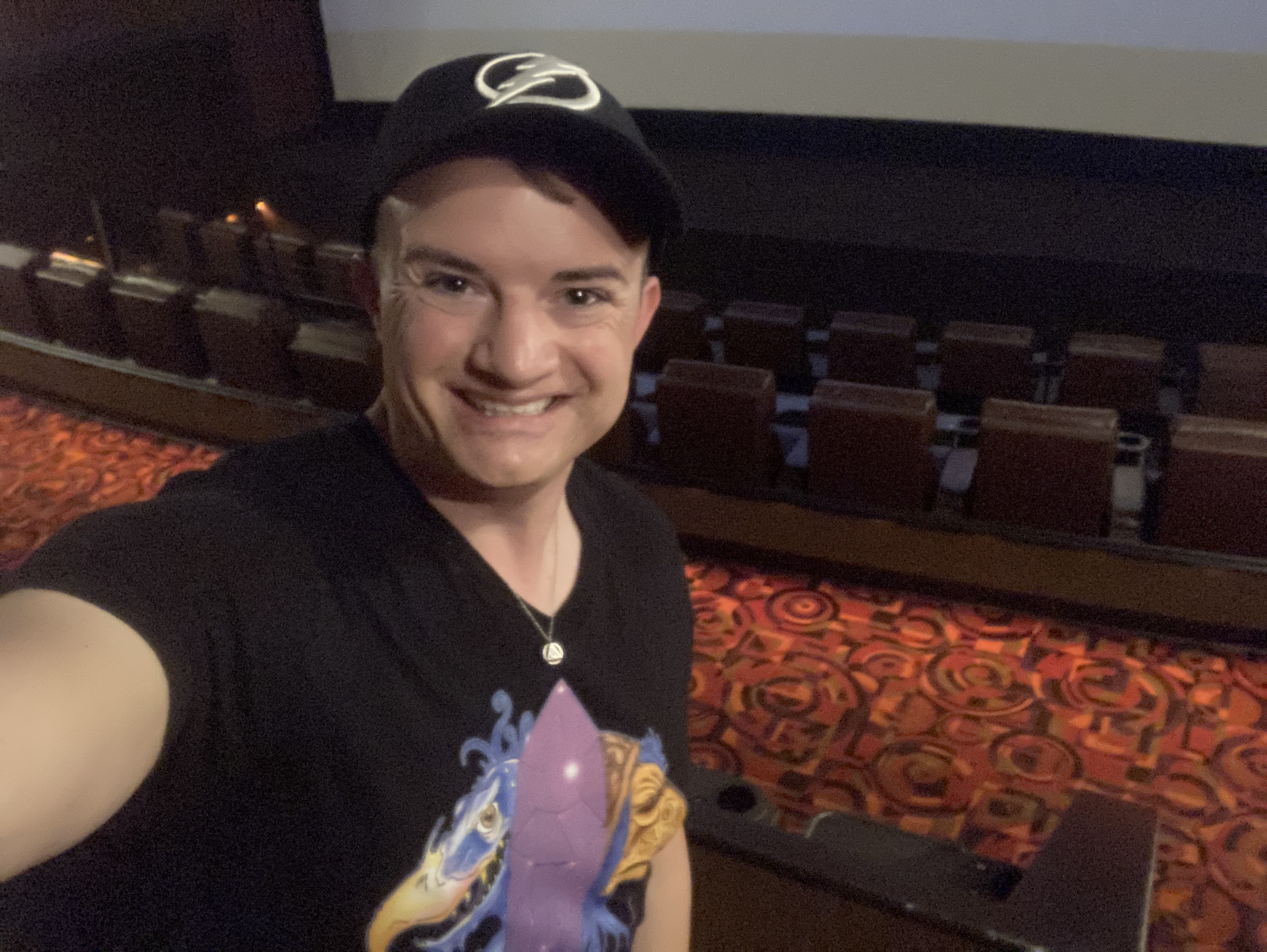
Ryan teaches Film Studies and Screenwriting at the University of Tampa and is a member of the Critics Association of Central Florida and Indie Film Critics of America. If you like this article, check out the others and FOLLOW this blog! Interested in Ryan making a guest appearance on your podcast or contributing to your website? Send him a DM on Twitter. If you’re ever in Tampa or Orlando, feel free to catch a movie with him.

Follow him on Twitter: RLTerry1 and LetterBoxd: RLTerry

DUNE (2021) Review

Audacious sci-fi scale, but a vapid adaptation. Dune is a stunning sci-fi/action visual spectacle that delivers rich imagery and epic fight choreography; but falls short in translating the thoughtful, complex themes and mythology of the source material, which get buried in heavy handed exposition or are entirely cut. Dune (part one) is the first part of the of an epic sci-fi tale about Paul Atreides, son of Duke Leto of house Atreides and Lady Jessica, a sister of the Bene Gesserit who are sent by the Padisha Emperor from their home world Caladan to govern the Planet Arrakis after the Departure of House Harkonnen. If you haven’t read the book and this sentence sounds overly expositional and convoluted to you this is how you’re going to feel throughout 80% of the films dialogues. However, I’m sure you’re not going to see Dune for the dialogue and it has plenty to offer aside from that.

Director Denis Villeneuve wanted to make this a “Star Wars for adults” and with that he succeeded. Dune boasts impressive visuals and epic conflict but in a more mature manner than the Star Wars films. Instead of using colorful light sabers people are stabbing each other with actual knives. Still not much blood is seen, thanks to the film’s PG 13 rating, but that seems to be unavoidable in today’s industry. The Designs are kept very close to the book, especially the Ornithopters which actually have flapping wings unlike in previous adaptation by David Lynch. Some of it may be because of the improved technology after nearly 40 years but I believe the production designers were definitely trying to stay faithful to the source material. All in all the depictions of technology, lifeforms and other things will satisfy fans of the book, although the production design was a bit too monochromatic for my personal taste. The visual direction is similar to other works by Villeneuve: simple and effective. The camera itself is not here to show off. That’s what the Sandworms, spaceships and battles are for. The cinematography by Greig Fraser is dark and moody, which fits the more adult tone this film is going for.

Continuing with its mission to be an adult Star Wars, it’s also more complex editing wise with mystic visions by the protagonist Paul sprinkled throughout the film by Villeneuve’s frequent collaborator editor Joe Walker. The visual effects shots are done in similar manner to the rest of the camerawork. They are impressive but only there to move the story along and not at all show-offy. The hand to hand combat sequences, of which there are quite a few, most of which look very practical are impressive as well. One can clearly see the effort the actors put into making them appear so effortless. That also includes the main cast, no stunt doubles here! There is one early fight or rather training scene between Chalamet (Paul Atreides) and Brolin (Gurney Halleck) where their skills are put on full display.

Now the actors of which this film has many and many famous ones also did very well, even despite the fact that most of their job consists of spouting exposition and fighting. Rebecca Ferguson as Paul’s mother Lady Jessica being the clear standout and stealing every scene she’s in. Timothée Chalamet has his edgy teenager moment, which in this case fits the character who is still coming to terms with his new place in the complicated conflicts and power structures of Dune but doesn’t really have any other stand out moments. Zendaya, the other perhaps controversial star of this film, also doesn’t stand out much, neither in a negative nor positive way. Her character only really appears in the film towards the end so there’s not really enough to see for a final verdict.

Now on to the not so good aspects of the film. Although the conflict in Dune is still very complex and probably closer to Game of Thrones than Star Wars it’s still very simplified if not dumbed down compared to the complex political intrigues and power plays of the novel to fit the limited runtime of the film format. The complex world of the Dune universe also has to be explained to viewer somehow, which here is mostly done through expositional dialogue. The exposition is well integrated to the story as Paul, the protagonist is also learning about most of these things but it can become a bit overbearing as said before. This can leave viewers who are not familiar with the source material overwhelmed and confused about the particularities of the story and story world. Nevertheless the film should still be enjoyable as an epic sci fi tale about family, power and mysticism, even if it takes some time to understand surrounding lore. Hopefully this film will also motivate a new generation of Dune fans to dive into the world that Frank Herbert created in his books.

Written by German correspondent Leon Zitz.
Be sure to check out his Instagram to see what he’s working on!

“The Greatest Showman” movie musical review

Stunningly sensational! Ladies and gentlemen, children of all ages witness the larger than life movie musical adaptation of the life of P.T. Barnum directed by Michael Gracey. Dazzling! 20th Century Fox’s The Greatest Showman is an incredible work of motion picture and performing arts magic. Never before has the magic of the American circus been captured so brilliantly. As the movie stares, “a man’s station is truly limited only by his imagination.” From the costumes to the music and choreography, this film is sure to inspire anyone who has a dream and wants to realize it. The music will have you singing along, clapping, and even tapping your toes because the emotions will get you right to the core. Ordinarily, a movie like this could generate an interest in budding performing artists and showbusiness enthusiasts to “run away and join the circus,” but the big top had its swan song earlier this year. One can only speculate that had this film been released last year that the circus that still bears his name Ringling Bros. and Barnum & Bailey would still be touring today. Sadly, the circus had its final performance in May 2017. From the moment the movie opens, you will be completely immersed in the world of P.T. Barnum, a world unfamiliar with the concept of shows that were sheer spectacle, illusion, and simply designed to put smiles on faces. It’s entirely possible that this may prove to be the greatest films of 2017, and certainly one of the greatest movie musicals ever made.

Simply stated, The Greatest Showman is the film adaptation of the life of P.T. Barnum (Hugh Jackman) and depicts how he was inspired to essentially create the very concept of showbusiness. From his successes to his failures, this movie showcases the very beginning of the American circus, a tradition that would last for nearly 150 years. Filled with incredible original music, this original movie musical displays how one man’s vision became a worldwide sensation.

My first observation of this film is just how polarizing it seems to be. On one hand, some critics and websites praise it for being an absolute delight while others are rating it rotten. Unapologetically, I feel strongly that this film musical is nearly flawless. As to how accurately it reflects the life of P.T. Barnum, I cannot speak to that because I have not spent hours researching his life; however, from what I do know about him, the movie seems to have captured the inspiration and vision accurately, as well as his faults and pitfalls. While standard holiday issue biopics are nothing new, what with The Darkest Hour also on the horizon this season, Gracey turns what could have been just another biographical film about an American icon into a larger than life dazzling display of precise choreography, effective montages, and just plain fun! Ringing Bros. may have closed the bigtop for the last time, but the soul of P.T. Barnum lives on in what Feld Entertainment (parent company to Ringling Bros and Barnum & Bailey) does. Without P.T. Barnum, we may not have the concept of showbusiness as we know it today. Despite staying away from the usual meaty themes found in Christmastime biopics, this film packs a powerful punch and supports the need for entertainment and the arts in our lives.

The high degree of passion Jackman displays for his character cannot be overstated. Though Gracey shows his directing prowess in this film, it is the labor of love of Jackman who has been trying to get this movie musical made for the better part of a decade. While the cliche underdog story may not be anything new, the method through which the story is told is a must-see spectacle. What works best in the movie are the extravagant and intricately choreographed musical numbers. The infectious and inspirational songs of The Greatest Showman were written by La La Land Oscar winners Benj Pasek and Justin Paul while the brilliant choreography was staged by Ashley Wallen. Each and every musical number is powerful and truly adds to the fantastic experience of this film. Moreover, this movie musical typifies the height of the visual and performing arts in terms of the ability to create an imaginative atmosphere that generates sheer delight in the minds and eyes of the audience.

In many ways, this movie is an extension of the circus that many of us grew up watching as kids and even adults. The circus was never about deep, complex stories; it was about entertaining audiences of all ages and bringing smiles to faces. And this film will certainly bring joy into your life this holiday season! Such a perfect movie for the week leading into Christmas because it is fun for the whole family.