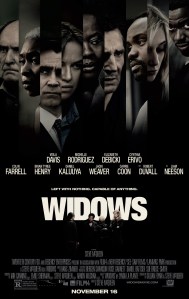
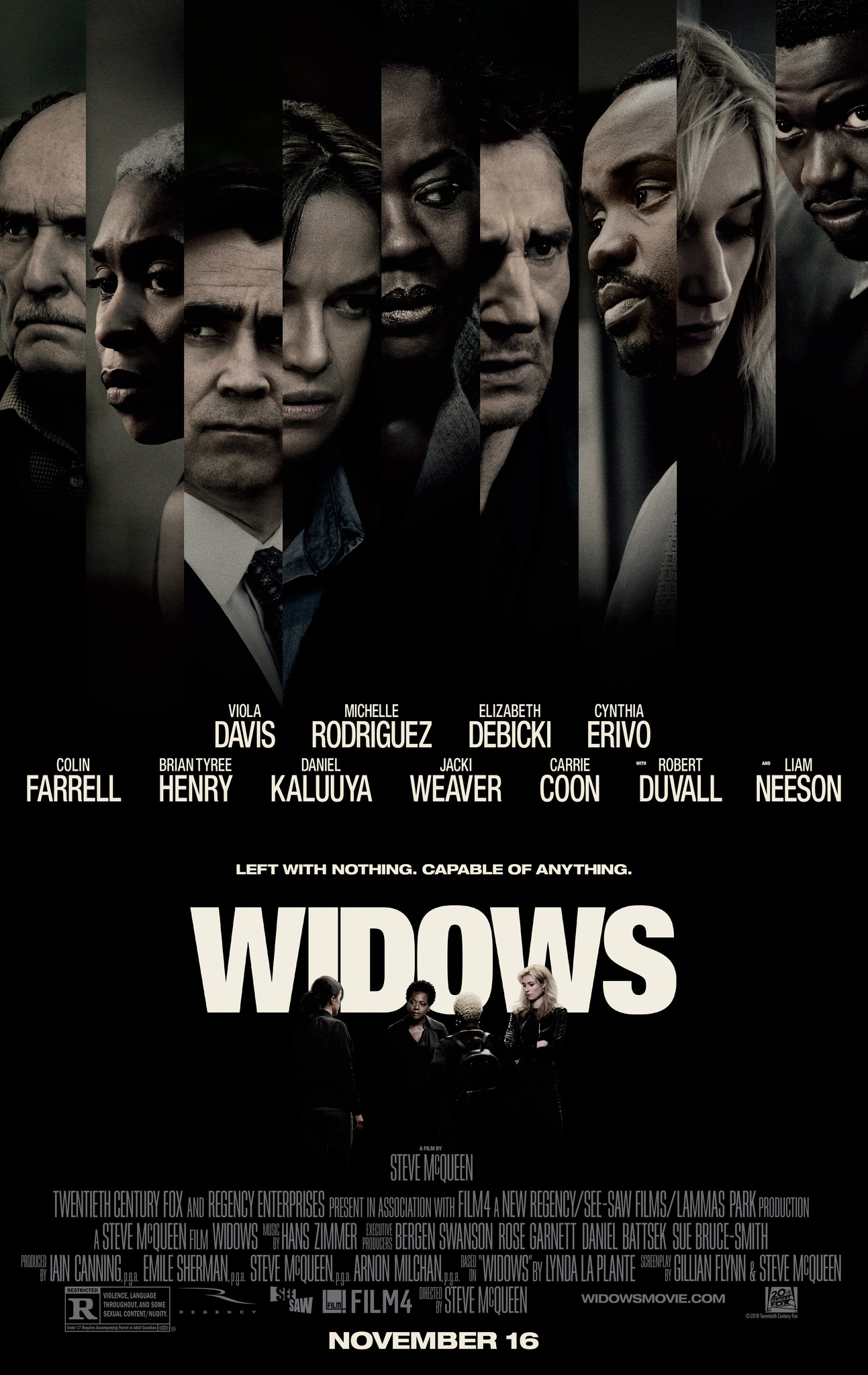
 Intelligent, emotional, thrilling. Steve McQueen’s Widows is more than a thriller about a heist, it’s a stylish cinematic exercise full of social commentary on racial and social injustice within a city built upon political and business corruption. In a world that is completely exhausted from injustice, McQueen’s masterful direction brings Gillian Flynn’s multi-dimensional screenplay to life. Widows is brilliant in part because the film works on multiple levels simultaneously whilst delivering an edge-of-your-seat drama full of conflict. Not your typical action-packed film, the focus is truly on the central characters and the worlds from which they each come–worlds that collide after a robbery goes terribly wrong. It’s a brutal story with the highest of stakes. Witness a genre that is often not thought of as much more than a good popcorn movie, mature, grow, and exceed what society dictates this genre should be. While the characters themselves break through that glass ceiling, this film parallels the narrative by shattering expectations to create a thought-provoking work of cinema. Whereas a film in this genre seldom tackles such tough topics; and in general, many films that do seek to provoke discussions on race, social injustice, and gender roles come off as preachy, Widows never crosses that line from motion picture to sermon. The visually impactful story hooks you from the opening scene, and delivers command performances that force you to empathize and ask whether or not you would go to such lengths to forge a working relationship with people completely different from you in order save your very lives. What would you do when you are thrust into a situation in which you are way over your head and unprepared? Widows is as entertaining as it is thoughtful.
A heist goes terribly wrong. Very, very wrong. The result leaves four women widows. Four women that have no idea who one another are, or even the extent of their respective husbands dealings within the world of organized crime. These women are left with a debt owed to some powerful people who have a total disregard for human life, and only value money and influence. When Veronica (Viola Davis) is approached by a crooked politician for the $2mil her husband owes, she must devise a plan to deliver the money because her very life is in immediate danger. In order to get the money that she needs, Veronica blindly contacts the other widows in order to pull off the next heist her husband was planning. “The best-laid plans of mice and men often go awry. No matter how carefully a project is planned, something may still go wrong with it.” With little time to train, Veronica and her newly forged partners work tirelessly to plan and pull off the heist with a booty of $5mil.
After listening to the recent Mike Mike and Oscar (MMO) review of this movie, I am determined now more than ever to persuade them to my side of the argument that this is a great movie, and one worthy of the critical and general audience acclaim. There are so many layers to this story that it is difficult to know precisely where to begin my analysis. Before tackling the plot itself, the area where MMO and I agree is the cinematography and editing. McQueens stylistic direction is witnessed clearly in the phenomenal movement of the camera and editing. There are times that the camera feels like a character in and of itself. Without giving any spoilers away, there is one particular scene that was so brilliantly blocked and choreographed that I was legitimately wowed by the cinematography. And that is the gripping opening scene. The camera never misses a beat, and the editing is razor sharp. There are moments that the camera moves so exceptionally that I truly feel like a fly on the wall of the getaway van. Beyond the stellar cinematography and editing in the opening scene explosive action, the camera often lingers on reactions or reveals subtext in other scenes. While the characters may be talking about something innocuous or delivering a expositional dump, the camera is focussed on something entirely different.
The story of Widows is less about the heist as it is a character study on three incredibly interesting women who are forced to work together to achieve a common goal. An external goal of the theft of $5mil because of a mess left by their respective late husbands paired with the internal need to survive. And it in these characters and the conflict experienced by each that the film truly shines as taking this action genre to substantive levels. Much like a screenplay itself is build upon the three act structure, and individual scenes also embrace the idea of a “mini 3-act movie” within each act, the film provides three fascinating characters upon which the conflict and drama are build. Whether short or feature, films contain three acts, each with a specific diegetic purpose. Paralleling this concept of 3s is the central ensemble cast of Veronica, Linda, and Alice. Amanda is also left a widow by the police shootout, but does not play as active a role. Veronica is a character who lives on the wealth of her husband, but turns a blind eye to what he does. She is grieved and frightened of how she is going to cope with life, especially after having buried a teenage son. Linda is an entrepreneurial spirit who trusts that her husband is taking care of the logistics of opening a store but does not make sure bills are getting paid. She is unaware of his habitual gambling and penchant for unethical business ventures. Alice is a timid, shy person as a result of being abused as a child and by her husband. She demonstrates an unspoken relief that her abusive husband is gone, but reluctant to become an escort even though her mother trained her that she only has her looks and nothing else. We don’t learn as much about Amanda except the fact she is a new mother and doesn’t want to be involved in anything. All three of these woman are thrust into a situation in which they are over their heads and rise to the occasion to overcome the fear of impending death to take control of fate to forge their own futures. It requires them to drop walls, cooperate, and use each of their talents to combine together to create a formidable team. Alone, each of them did not have what was necessary to pull off the job, but together they become a solid team.
The stark differences between the three women are important because it allows the story to explore the socio-political and inter-personal affects the conflict has upon them. On the surface level, Widows is a heist movie; but ultimately, the heist itself is irrelevant, little more than a glorified plot device. Steve McQueen took a high concept film and made it low concept, gave it substance and meaning. Crafting this meaningful film out of a popcorn concept demonstrates McQueen’s ability to create something that is incredibly entertaining but never sacrifices character, the cinematic experience, or the important themes and subtext found therein. This is very much a #MeToo era film. It provides a platform for strong female characters to turn the tables on their oppressors, those who take advantage of them, and take back their dignity, self-respect, ambition, and independence. Thematically, the film is incredibly rich. Each of the central women are saddled with burdens of various kinds and to varying degrees however, the common denominator is dictation of place in society. This dictation is accomplished differently for each women, but the result is the same. They are all controlled by the men in their personal and vocational lives. Veronica must shed her codependence on her late husband and even her dog (a metaphor for her dependence on the external in order to function) and successfully cope with and overcome grief. Alice must realize that she is intelligent, has intrinsic value, does not need to rely on her body to generate income, and does require a man in order to survive. Linda is challenged with rising above having her passion business ripped out from underneath her because of a mess her husband left, and provide her children with a quality life while never forgetting her own needs and desires. All of these women are the victims of messes created by men, and leaving the women in their lives to clean up.
McQueen’s Widows gives a voice to the oppressed and downtrodden. Although the central characters are our three women, there are other characters in the film representing different kinds of real people out there who are selfishly creating messes and keeping those who aren’t wealthily, white, privileged on the bottom of the ladder and dependent upon the upper class. This is where different depictions of corruption enter the story. We have political corruption, business corruption, and even corrupted leaders of religious congregations. So much to talk about! It’s in these subplots that the film spends time highlighting and commenting on racism and gender roles. McQueen delivers a white ethnocentric political family who stops at nothing to keep minorities out of city government in order to hold all the control in the longstanding dynasties. Gender roles are analyzed by the manner in which the various women are treated by their male counterparts. Although much of these subplots are conveyed through exposition, there are some brilliant shots with the camera. One particularly powerful scene in which Jack Milligan (Colin Farrell) is driving home from his campaign stop in a predominantly black, poverty-stricken neighborhood to his whitewashed wealthy neighborhood. The distance is a matter of a few blocks, but the stark contrast between the neighborhoods is astounding. Whereas the conversation between Mulligan and his assistant could have been a boring expositional dump, it was dramatized by the setting and the reactions of the black chauffeur. This scene calls out the great divide that we see in our country. A few in power keep others oppressed and in their dictated places. Powerful material.
Gillian Flynn’s screenplay is tight, focussed, and deep. It wastes no moment to advance the plot and develop the central characters who all have well-defined external goals supported by well-defined internal needs. The big event of the heist gone wrong has a wide ripple effect that puts the very lives of the innocent in harm’s way, harm they may even mean eventual death. And it’s not a film that paints the “white male” as the only unscrupulous, unethical, power-hungry entity, it also takes the opportunity to show a black male politician who is just as unethical, power-hungry, and unscrupulous, even to committing murders. The lesson here is just how corrupt business and politics is. Even down to strong arming the religious community. Of course, this also shows that the leader of a religious congregation is not immune to picking up a racket and joining the game. Without ever feeling too preachy, Flynn’s screenplay uses visual juxtaposition to truly drive these points home. While the pacing of her screenplay may be slow compared to an action-driven plot, it is perfectly paced for this character-driven story. To be honest, I do not feel that this screenplay is as brilliant as Gone Girl, it’s still a powerful screenplay that balances the action components against the character ones in order to successfully experiment with the heist genre. For all its cleverness and excitement, of the three acts, the first two are definitely the strongest with a weaker third act closing out the film. Will the third act be what keeps this film from receiving a best adapted screenplay nomination? We will just have to wait and see.
There is so much to like about McQueen’s Widows! Make sure to go in with the right expectations though. If you go into the film seeking the next great heist movie, then you my be disappointed (as was the case with Movie Drone Podcast). Mike Mike and Oscar certainly stick by their impression that it’s just an okay movie all the way around and not the Oscar contender than many Tweeps and Podcasters are saying. After watching it for myself, listening and reading to reviews on both ends of the spectrum, I still feel strongly that this movie is fantastic! It’s a timely movie that gives voices and platforms to those who are often sidelined. From writing to directing and performances, you are in for a thrilling time with Widows.
Ryan is a screenwriting professor at the University of Tampa. If you like this article, check out the others and FOLLOW this blog!
Follow him!
Twitter: RLTerry1
Instagram: RL_Terry
Thrillz (theme parks): Thrillz.co

 R.L. Terry ReelView