
“Hail, Caesar” movie review

HailCaesarA brilliant post-war self-reflexive commentary on the Hollywood studio system. Go inside classic showbiz! Before the decentralization of “Hollywood” filmmaking, the big studio was king. And Hail, Caesar captures the socio-economic mountains and pitfalls of the decline of the Golden Age of Hollywood perfectly, complete with a pure message about love, dedication, and highbrow humor along the way. You couldn’t have asked for a better cast. From the excellent writing to the impeccable acting, this film is sure to provide you with old-school style entertainment paired with plenty of topics of discussion–especially for cinema scholars and historians like myself. Return to the Hollywood that still inspires dreamers today and experience life in the studio system. This is one of the best self-reflexive films about Hollywood itself since Singin’ in the Rain. Although, the social-commentary is more or less a plot device that plays in the background while the main plot is the true focus of this exceptional narrative. Truly a remarkable film that will likely find its way into sociology and film studies classes alike.

Hail, Caesar takes place during the final days of filming of an adaptation of the story of the Christ. During a set break, Baird Whitlock (George Clooney) is drugged and kidnapped by a couple of extras and taken to a secluded beachside mansion in Malibu. Meanwhile, Eddie Mannix (Josh Brolin), head of physical production for Capital Pictures, is busy running the show–from personnel management to the shuffling around of actors. Early on, you learn that Mannix is being aggressively pursued by the Lockheed corporation and he must decide either to pursue a career that will allow him to be with his family more and retire early or remain in Tinseltown to head up production and develop motion pictures.

Where to begin?!? As a peer-reviewed published cinema [and themed entertainment] scholar and historian, there are are so many different ways of applying a critical analysis to this film. Leaving the cinema last night, I was perplexed as to how to write about it. Ordinarily, I have a general idea of the direction I will head in my review by the time the credits roll–not this time. There is definitely a subplot in the movie that would be great material to dissect and analyze but I don’t want to spoil that for you; although, I can say that is is very apropos for that period in 1940s/50s Hollywood.

In order to analyze the material that I found most interesting, I want to first spend a moment on the film itself. Even before watching it, you already know that it boasts a brilliant cast and thankfully everyone lives up to the expectation that comes with their respective talent. From the leading players down to the A list cameo appearances, all the actors bring a unique flavor to the overall recipe of the movie. One of the elements that stands out the most is the attention to detail in the classic Hollywood production design. Essentially, we are watching a movie containing the making of another movie. The matte backdrops and traditional rear projection doesn’t stop in the story of the film being made in Hail, Caesar, but the classic production styles and designs cross over into the production of the Hail, Caesar itself. From the color schemes to the wardrobe and makeup, the attention to detail is flawless. Although much more humorous and satirical than the epitome of self-reflexive post-war Hollywood films, Billy Wilder’s Sunset BoulevardHail, Caesar does a superb job of going inside the word of showbiz and highlighting positive and negative consequences of the former studio system.

The film opens up with Mannix pulling Gloria DeLamour (Natasha Bassett) from an unauthorized photoshoot because the image the studio has of her could be tainted. That is really the first glimpse into what life was like for stars who worked in the Hollywood Studio System. Not limited to the talent, Mannix even told directors who would star in the pictures that they were hired to direct. Capital Pictures pulled a cowboy off his motion picture to then star in a drawing room comedy. When you worked for the studio, you worked FOR the studio. From your image to the projects you worked on (whether talent or technical crew), your every move was managed by the studio heads. Sounds like the perfect setup for exploitation, doesn’t it? In many ways, yes. However, the studio system also provided a central hub for working in motion pictures. One of the scenes shows Mannix walking down a corridor of editing offices, and that is something that isn’t quite the same today. Studios had exponentially more full-time staff until the final collapse of the studio system in the late 1950s/early 1960s. You had a regular job Monday-Friday and were typically on a salary. You were provided meals and other amenities during the work day. Yes, many aspects of your career were managed–even down to who accompanied you to the premiere of the film you either worked or starred in. But, many more people were employed by the studio directly than today. Just something to think about.

The studio is aptly named Capital Pictures. And rightly so, because at the heart of the movie, the two-fold plot of the film contains socio-economic commentary. The counterpart to the socio-economic side is about being dedicated to one’s true passions. Mannix can easily represent anyone who has a job that they work hard at and are dedicated to but often drawn to opportunities that would be easier and make more money. Do you choose to follow your passion? Or, do you choose the easy way out that would be more profitable? You will have to see the movie in order to discover how Mannix dealt with that real-world conundrum. Although the story of the passion of Christ is a backdrop in the film, it actually plays quite an important role near the end of the third act. The message of love transcends the screenplay (being shot in the movie) and impacts the actors and studio leadership. There are so many wonderful elements to discuss in Hail, Caesar and I have just touched on a few of them. I encourage you to make your way to the cinema this weekend in order to experience it for yourself.
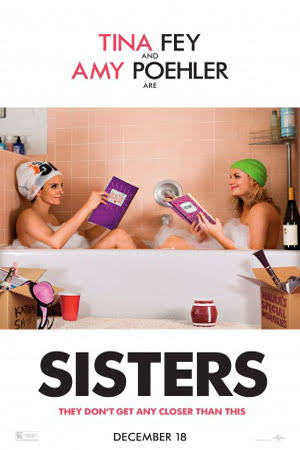
“Sisters” movie review

SistersA comedy that only Tina Fey and Amy Poehler could pull off! Since I had already seen my “movie of the week” when I screened 13 Hours, I used my Thursday night, which is typically reserved for the movie I review, to just kick back and relax with a comedy starring two amazing comediennes who have been coming into our living rooms for nearly two decades. At first glance, Sisters may seem like another crass, brassy, stupid comedy; but, a closer examination reveals that it is actually quite brilliantly structured and directed–the acting speaks for itself. For those who have studied film or entertainment in general, you are well aware that a well-written and directed comedy is actually drama in disguise. No story exists without conflict, and comedy is often frocked with conflict because that is where the “funny” or comedic “irony” comes from. Whereas this film is certainly not one that is made to be added to the library of great films or one that is meant to typify the art of cinema, it IS produced to entertain and bring about immense laughter from the audience. Sisters is a great way to spend a couple of hours with your sister or close friends and enjoy the uplifting message with a massive dose of Fey-Poehler comedy.

When their parents sell the family house in Orlando, sisters Maura (Poehler) and Kate (Fey) are requested to head down to the sunshine state to clean out their childhood room–which may as well be a bottomless pit of 80s and 90s memorabilia. With only one weekend to accomplish the near impossible, Maura and Kate are overwhelmed and  quickly become distracted with a desire to have one more night of youthful, wreckless fun before they say goodbye to the house in which they grew up. Each dealing with a source of negative stress in their respective personal lives, these two sisters decide to invite old classmates and friends to the party of the century to recapture their glory days. When the party begins to spiral out of control, Maura and Kate soon realize that their parents may not have a house to sell.

As there really is not a whole lot to dissect, in terms of the plot or technical components, I do want to take a moment to further highlight why this was a well-produced and directed comedy that is probably a little too underrated. Going in with fairly low expectations, I was delightfully surprised at how well the comedy was put together. Ordinarily, comedies like this one do not receive December releases because of the blockbuster or “Oscar” movies. So, I was curious as to why Universal related the film then it did. After having watched the movie, it was clear why Universal was confident in the December release because, in addition to having a comedic duo in leading roles, it is definitely a great movie to watch with your own sister or brother. The movie has great acting, a heartwarming story, and however over-the-top excellently written comedy.

If you do not laugh during this movie, then you are not alive. I cannot imagine a better cast for the film. That is probably because this is a unique brand of drama in disguise that Fey and Poehler can bring to the big screen. Both Maura and Kate feel like real sisters and deal with many issues that real-life sisters may deal with as they get older. The earthiness and realness of the characters bring about fantastic candor from the parents as well as confessions that have been kept secret between the sisters. Within this “let’s recapture our glory days” comedy is a love story that fits perfectly into the plot and does not feel jammed in there just to have romantic subplot. There are even times that you may identify very closely with the sisters, parents, or even some of the classmates.

It isn’t often that I truly enjoy a comedy such as this one, but the chemistry between Poehler and Fey is memorable. Whether you have a sister (or brother) or not, this movie is one that will make you laugh and perhaps even cry just a little.

“The Visit” movie review

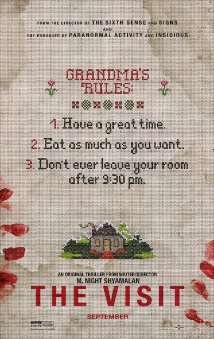
TheVisitOver the river and through the woods to grandmother’s house we go…You’ll never think of visiting your grandparents in the same way ever again. I just have to say, congratulations M. Night Shyamalan for making a triumphant return to the horror genre. Blumhouse and Universal Pictures’ The Visit is a found footage/documentary style horror film that has a lot to offer as we slowly gear up for the Halloween season in the coming weeks. The film successfully pairs blood curdling thrills with belly laughs. What can be more terrifying than a visit to grandma and grandpa’s that has gone terribly wrong??? Sometimes the best horror films are those that take what is otherwise non-descript or safe and twist it around and turn it inside out. And, that is what you get with The Visit. One of the best parts of the movie is that the–what you thought were spoilers in the trailer–are not quite as they seemed and will still catch you off guard. Perhaps next time you visit your grandparents, you may not want to leave your room after 9:30 in the evening. This is especially true if your grandparents live way out in the sticks where the only connection to the internet is an ethernet cable.

After years of separation and ignoring one another, a single mother (Kathryn Hahn) makes contact over social media with her estranged parents in the woods of Pennsylvania. Reluctantly, she decides to allow her kids Becca (Olivia DeJonge) and Tyler (Ed Oxenbould) to take a train to visit their newly discovered grandparents against Mom’s better judgment. The timing works out because Mom has a new boyfriend that has invited her on a cruise to escape the snow and bask in the sun. Upon arrival in their grandparents’ jerkwater hamlet, Becca and Tyler soon become concerned about their grandparents’ bizarre behavior. Rules like stay out of the basement and don’t leave your room after 9:30 in the evening are just the beginning of the strange and terrifying encounters that lurk behind corners and under porches. Fearful for their lives and virtually cut off from the outside world, Becca and Tyler must carefully and skillfully escape the warm kitchen, delightful cookies, and old world that has them trapped.

Okay, at first I was disappointed that it was going to be another found footage or point-of-view documentary style movie. Unless I had missed something, the preview did not lead me to believe that it would be shot POV. I was hoping for a traditional narrative that was shot mostly objectively. However, as I watched the movie, I actually found the documentary style shoot to work for the film quite well. Took a little getting used to, but in the end, it was a great method for telling this terrifying tale of a visit to grandma’s. Although the pacing does start off on the slow side, it picks up and will have you sucked in before you know it. From the moment that you meet grandma and grandpa, you know that there is just something not right. And, just like a good horror or suspense movie should, you won’t know that that is until the end of the movie during the climax–you most likely won’t see it coming.

One of the many positive elements of the movie is Shyamalan’s ability to integrate humor with the terror. One minute you will be laughing along with the kids, and the next you will shoot right up out of your seat with fright. There are even parts that will gross you out while other parts of the film contain mouth-watering homemade delights. They all work together to disorientate the audience. One of the best methods to ensure a scare is to keep the audience off balance. This way, you can hit them with a jump scare here, a warm moment there, and sneak in from behind and scare them. The disorientation allows for the narrative to build up to the most horrific elements of the movie. It’s like, the audience is in the midst of a horror movie before they know it. Building suspense is paramount to a well-written horror film. Not that jump scares aren’t important, but a film should very rarely ever build a foundation upon solely them. Building suspense lasts, a jump scare is like a firecracker–lows up quickly and dissipates just as fast.

If you are in the mood for a fun horror film before hitting Halloween Horror Nights at Universal Studios Florida/Hollywood or Howl-O-Scream at Busch Gardens Tampa/Williamsburg, or just want to put on the movie movie on your boyfriend or girlfriend, then definitely check out The Visit while it is in theaters.

“Everest” Movie Review

Everest“Climb every mountain…” Universal Pictures’ Everest is a breathtaking docudrama/biographical picture of a mid 90s all but completely failed expedition to the top of the world, frocked with tragedy. For those of us who have never been to Mount Everest, which is most people, this movie takes you up close and personal with the “most dangerous place on earth.” Never before has a movie taken the audience to place where you are viscerally confronted with the famed mountain in the Himalayas that dares even the most intrepid of climbers to scale. Although the movie has a fantastic cast and the panoramic views of Everest are breathtaking, Everest plays off more as a glorified documentary than a work of cinema. Not saying it isn’t impressive–certainly the movie has some very impressive elements–but, it lacks the cinematic structure of a traditional movie plot/subplot, theming, and subtext. It pretty much is what it is: a reenactment of an actual event on the treacherous slopes of the rooftop of the world. Shot mostly in the French Alps, with pickup shots and IMAX footage of Everest herself, the footage is beautiful and inspirational. If you dare to ascend the forbidden mountain, be sure to do it in IMAX!

Everest is about the 1996 Everest expedition of Adventure Consultants, a New Zealand-based company ran by Rob Hall (Jason Clarke) and Hellen Wilton (Emily Watson). Facing dire financial times, Rob and Hellen need this expedition to be a successful climb to the top of the world. Attaching a journalist from an outdoor adventure magazine, Rob and Hellen will pull out all the stops to land the front cover. Once the expedition team safely arrives at basecamp, it becomes apparent that a storm looms on the horizon. Rob teams up with rival expedition leader Scott Fischer (Jake Gyllenhaal) in order to lead both teams to the summit safely and back to camp before the severe storm collides with the mountain. As the best laid plans of mice and men often meet with disaster, so does this ascension.

In regards to the plot, there isn’t much to tell. The movie is about an expedition to the summit of Everest, and that is what you get. The writers try to include some subplots, but they really add little more than establishing where people are coming from and if they have a family. When the movie opened, I thought that the cinematography was amazing! The mountains were so real that I felt the chill of the air and the choice of angles showcased Everest and the Himalayas quite well. However, it was midway through the film that I realized that the cinematography wasn’t anything extra special. Certainly, it was above average and the IMAX footage was brilliant to behold; but, it was above average–nothing in particular to note. That being said, the camera was handled with care and the shots were carefully crafted. I think what gave the illusion of breathtaking cinematography was the fact that the mountains were displayed majestically on the giant screen. The majesty of the mountains enhanced the cinematography. So, it was the beauty of the mountains, not the cinematography in and of itself, that was outstanding.

I really feel this movie is meant to be viewed in IMAX because of the grandeur of it all. Watching it in a standard theatre or at home will not do the film justice. When a film’s foundation is built upon the visual stimulation, and not the psychological or emotional aspects that are common of films, then a movie needs to be screened in the best possible auditorium or IMAX theatre. This is a larger than life story, and should be seen on larger than life screens. Despite the lack of a traditional plot, I appreciated the film’s dedication to focussing on the expedition itself and not getting wrapped up in a love story or an underdog’s triumph.

If you enjoy epic adventures, bio pics on Nat Geo, or just want to visit Mount Everest, then check out Universal Pictures’ Everest opening in mid-September across the country. Word to the wise, don’t eat a massive lunch or dinner prior to seeing this film.

Review of “Jurassic World”

JurassicWorldBack with a roar! The Jurassic Park franchise returns from the dead with a vengeance in the newest and highly anticipated installment since the original back in 1993, and certainly since The Lost World in 1997 and Jurassic Park 3 in 2001. Jurassic World will take you back to the island that started it all and deliver the same WOW factor as the original beloved favorite. Return to Isla Nublar to experience the park John Hammond envisioned but could never have dreamed would become a reality. “The park is open!” Enjoy the adventure, pseudo-science, character development, plot, the acting, and the music that you loved about Jurassic Park (1993) in a film that holds true to the very essence of what made the original such a great film but adds in the visual storytelling technology we enjoy today. For lovers of the ride at Universal Studios (FL/CA), you will enjoy experiencing the park in ways you may have only dreamed of, and for lovers of the franchise, despite the poorly produced past sequels (even though they are still fun to watch), prepare for your expectations to be greatly surpassed as you return to your childhood and experience Jurassic World.

Jurassic World takes us back to Isla Nublar off the coast of Costa Rica. Just south of the original park, a new theme park has been opened and is bustling with park guests and dinosaurs alike. The luxury theme park and resort is jointly ran by Claire (Bryce Dallas Howard) and of course the once chapter 11 InGen BioEngineering company founded by John Hammond (the late Richard Attenborough). For the last few years, the guest satisfaction ratings have plateaued at Jurassic World and Claire has worked with InGen’s Dr. Henry Wu (B.D. Wong) to develop a genetically modified hybrid to wow the guests and increase profits. But as Ian Malcolm once so eloquently put it “life will find a way,” the attempts to control the park’s “assets,” will not go as planned. After the newly minted genetically modified hybrid Indominous Rex cleverly escapes the paddock, it is up to Claire and her unconventional Navy veteran turned dinosaur control/safety expert Owen (Chris Pratt) to save Claire’s nephews Zach (Nick Robinson) and Gray (Ty Simpkins) as well as the over 20K park guests from the jaws of history’s top notch predators.

Where to begin? It seems so much easier to write a critique for movies that are just okay or even terrible. When working with such an incredible movie, it’s sometimes difficult to know where to begin and even harder to know when to stop. Going into the movie, I had my reservations-especially after seeing what I thought was a ridiculous scene from the trailer of Owen facing off and talking with the raptors–but I can honestly say that is this movie that I, as well as millions of others in their mid-to-late 20s and early 30s, have been waiting for since we saw the original as kids in theaters. It truly embodies everything that made the original great and capitalizes on it by adding in the digital effects and visual storytelling techniques we enjoy as part of modern cinema. The best movies are those that simultaneously embrace current technologies whilst remaining grounded in the very essence of what a movie should be: exceptional visual storytelling in terms of the art and science of filmmaking. This truly is the sequel we have been waiting for since the helicopter left Nublar 22 years ago.

I was watching Jurassic Park 3 with a friend in order to finish the first three movies prior to seeing Jurassic World last night, and I asked him and myself  “what was it about the first one that makes it such a great film and in the top 20 grossing movies of all time (and that’s even when adjusted for inflation)? We talked a little, and both decided that is was the dynamic plot, clever writing, memorable characters, and that wow factor of seeing dinosaurs like never before on the big screen that made the first movie not just a successful movie but a GREAT movie. That same dynamic plot filled with subplots and subtext, memorable characters, and more is captured by the current installment. Yes, this movie is high concept as summer blockbusters usually are; but just because it’s high concept doesn’t mean that we cannot experience character development, subtext, exceptional writing, and great visual storytelling. From the moment that I heard the all-too-familiar music and returned to Isla Nublar, I knew then that this was going to be one of the most exciting and phenomenal movie-going experiences of my life. And you know what? It was as exciting as seeing the original for the first time. Universal Pictures, Amblin Entertainment, and Legendary Pictures harnessed the power of what made the first movie great and brought a nearly extinct franchise back from the dead.

Just like the characters from Jurassic Park (1993) helped to make the movie what it was, so do the characters of Jurassic World. You have Claire who, much like Hammond, is a dreamer. Although, she is definitely more concerned with money than Hammond ever was. Witness as she goes from a cold shrew business woman to a courageous and loving aunt to her two nephews. Speaking of whom, witness the transition of Zach as the older mean brother who couldn’t be bothered with his sibling to risking his life to save his brother Gray’s. Dr. Henry Wu reprises his role as the genius behind the science that made Jurassic Park and now Jurassic World work. Every movie needs that hero who is unconventional and has subtle sexual tension with the strong female lead, and we get that, in spades, with Owen. There is the chief financier Simon Masrani (Irrfan Khan) who is concurrently overly concerned with making a profit but still genuinely concerned that his park guests are having fun. And finally, we have Lowery (Jake M. Johnson) who sports an original Jurassic Park t-shirt and has rubber dinosaurs on his desk because he loves the original park and is thrilled to work at the new one. Each of the characters has very unique personalities and traits that are meticulously woven into the plot in order to continually advance the story.

I also wanted to touch on the references to the previous films in the franchise. Early on, it was made known that the old Visitors Center would make a cameo appearance, but I did not expect the extent to which the old compound plays an intricate part in Jurassic World‘s diegesis (narrative). Claire is even dressed in all white like Hammond. Not only is the music powerful–almost to the point of tears–and harkens back to the first time you heard it, but the movie helps to make Jurassic Park feel like a real place because of Lowery’s t-shirt he bought off eBay and the banner of “when dinosaurs ruled the earth” now covered in dirt and mold that fell from the ceiling at the close of the first movie. Although not formerly acknowledged, there are many references to not only the first movie but also 2 and 3, and even the Jurassic Park Ride. From lines of dialog to easter egg camera shots and even to the Jurassic Park 1992 Jeep Wrangler, Jurassic World uses material from its storied past to support the current narrative and evoke fond memories. Interestingly, the movie also deals with the element of third party companies grossly sponsoring attractions and exhibits in theme parks. Just like even Disney’s Magic Kingdom is now sporting a Starbucks on Main Street, the same can be seen in many theme parks. Sometimes it seems like theme parks are sacrificing storytelling and creative theming for the almighty dollar. Perhaps this movie shows us what happens when greed overpowers creativity.

I feel that Universal Pictures (a Comcast Company) has been searching for its cash cow franchise like Disney’s Pirates, Avengers, and now Star Wars or like Warner Bros. Harry Potter (even though Universal rakes in the dough from the Wizarding World of Harry Potter at it’s Florida and soon California parks), like MGM’s James Bond, or 20th Century Fox’s Avatar or X-Men, but after the two failed sequels to Jurassic Park, all seemed lost. Until now. This installment in the 22 year-old franchise has been successfully resurrected and could quite possibly be a contender and a worthy opponent in the franchise competition. The way the final shots of the island were in the movie, I have a feeling that this was the official goodbye to this chapter in the Jurassic Park novel and the opening of the floodgates for followups to this movie that will hopefully continue the embrace of the essence of the original whilst continuing to advance the story of what happens when man creates and manipulates dinosaurs.

I don’t know what you have planned this weekend, but you NEED to get to the theatre to see this movie. I am even planning to see it again this weekend myself. But, I need to find an IMAX that is showing it in 2D (yes, that is correct 2D). Prepare to be taken back to your childhood and relive the experience all over again in the newest chapter of Jurassic Park.

As always, if you liked this review, please follow or subscribe or at least share the link on social media.

For my review of Jurassic World: Fallen Kingdom click here.

Ryan is a screenwriting professor at the University of Tampa. If you like this article, check out the others and FOLLOW this blog!

Follow him!

Twitter: RLTerry1

Instagram: RL_Terry

Thrillz (theme parks): Thrillz.co