“Rat Race” movie review

RatRaceTalk about a throwback movie this week! Ordinarily, most Mondays each week are reserved for Macabre Movie Monday with some friends of mine. We screen a horror movie and talk about it. It’s a tradition that began with an American Horror Film graduate class I took as part of my M.A. at the University of South Florida. However, my roommate is not terribly fond of horror movies and I know he grows tired of them week after week. Haha. So, we agreed to watch a comedy this past Monday. I cannot remember how, but when we thought of a fun comedy to watch, my friend Dani and I almost in unison shouted Rat Race. Such a star-studded comedy. And other than SmashMouth, it really still holds up today. Well, SmashMouth and the fact that airport security is vastly different than it was when this was shot. Although I watched it when I was a kid, it’s amazing to look at it now and wonder why my parents allowed my sister and I to watch it. Well, I am glad they did because I have always thought of this comedy as one of my favorites. If you have never seen it, and enjoy watching comedies for which you can turn off your brain and laugh until you cry, then definitely watch this one. Let’s go back to 2001 and talk about Paramount Pictures’ Rat Race.

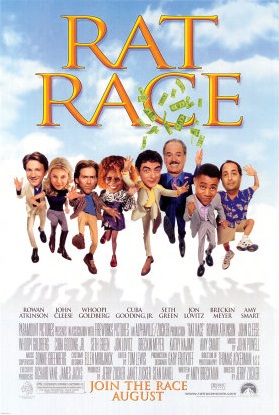
What do you get when you combine greed, money, Las Vegas, manipulation, the ticking time bomb plot, and a star-studded ensemble cast? You get Rat Race! Eccentric casino tycoon Donald Sinclair (John Cleese) selects 6 ordinary people (and by extension, their families) to race against each other for great fortune in Silver City, New Mexico. $2Mil is stashed in a locker in an old train station and there is only one rule for the lucky 6, “no rules.” Unknown to the lucky six, Sinclair is monitoring their every move with some of the biggest high rollers in the world who love to bet on any and everything. From the famous Venetian to Silver City, this group of people will stop at nothing to get their respective hands on the money first. Whether it’s commandeering a rocket car or crashing a WWII memorial service dressed as Hitler, there is little that will come between a contestant and the fortune that awaits!

Ensemble cast films are nothing new. They’ve been around as long as the medium itself. So, the fact that Rat Race is an ensemble movie is nothing unique or special; however, the fact that it is so incredibly successful in combining the subplots and individual adventures of the six racers with the main plot is something to be admired about this film. Each of the six (and their families) have a story within the main story of the film. The writers did an excellent job at spending just the right amount of time with the individual stories without sacrificing time spent with the main plot of the film. As I have mentioned in reviews before, whether film or television, no story exists without conflict; likewise, no comedy exists without “drama.” Many film scholars and writers describe the comedy genre as drama in disguise. Let me clarify a little bit. When the casual movie-goer thinks of drama, they typically think of a film that is rather heavy, primarily dialog driven, and mostly serious. Those same casual movie-goers would likely describe comedy as funny movie with lovable characters, witty dialog, lots of laughable moments, with little degree of seriousness about it. Well-developed and written comedies are those films who integrate humor into the conflict-driven drama between two or more people. In other words, a drama is primarily focussed on the drama of a situation whereas comedy is primarily focussed don the humor of a situation. The best comedies are those that have prolific conflict between characters, but a humorous twist is added to the mix. Why did I say all this? Because in order to understand the brilliance of Rat Race it is important to recognize that it holds up so well because it’s full of drama that has irony, satire, and facetiousness thrown into the mix.

Besides the writing, this film also successfully continues to cause uncontrollable laughter because of the fantastic cast. Just look at this list of leading talent: Rowan Atkinson, John Cleese, John Lovitz, Whoopi Goldberg, Cuba Gooding Jr, Breckin Meyer, Seth Green, and Kathy Najimy. In addition to that amazing list, you also have a great group of chief supporting players and an A-list cameo: Amy Smart, Wayne Knight, Dave Thomas, Dean Cain, Vince Vieluf, Paul Rodriguez, and Lanei Chapman, and special appearance by Kathy Bates as the squirrel lady. There were also many others extras and atmospheric players that helped pull together this brilliant comedy including the performance by 90/2000s hit band SmashMouth. All the elements are here for a successful comedy! Between the writing, directing, and this phenomenal cast list, how could this movie not do well??? On that note, the movie did not fair so well with critics then and even now; scores poorly on MetaCritic, Rotten Tomatoes (no surprise there), and IMDb. However, I argue that any comedy that can still hold up and significantly create a room full of laughter over and over, is a successful comedy. Comedies are seldom going to win awards, significantly contribute to the world of the arts, or serve as inspiration for someone; but Rat Race offers an escape from the doldrums of reality and whisks you away to an over-the-top world of money, hookers, gambling, crazy exes, a buss full of Lucys, and Nazis. It offers an incredibly entertaining journey that still has a heartwarming ending.

I think it’s the utter unashamed ridiculousness of the whole plot that keeps me entertained. Furthermore, it does such a good job of telling a funny story that is both clever and well-paced. One of the best parts of watching this movie is getting to feel like at least one of the leading or supporting characters. Each have a unique set of traits that can identify with someone of a similar personality. You’ll probably also see some of your friends as one or more of the characters. These characters are so much fun to watch and just when you think it can’t get anymore ironic, unfortunate, or satirical, it surprises you. Trying to remember the first time I watched it, and even to some extent this time, I remember thinking that it really isn’t that predictable. Not predictable in that it is so ridiculous! But that’s what I love about this comedy film. It sticks to a tried and true ticking-time-bomb plot with characters that are unconventional and unpredictable in every way. Well, mostly anyway. Haha. I think my favorite part of the movie is the Pear family crashing onto the stage at the WWI Vets convention in Hitler’s car with Randy (Lovitz) trying to speak but the cigarette lighter burnt his tongue and he has a Hitler mustache caused by Eva Braun’s dark lipstick. I know, right?!?

If you are ever looking to just kick back and enjoy a comedy that is guaranteed to make you laugh hysterically, then check out Paramount Pictures’ Rat Race (2001). Whether you just want to see some of your favorite Oscar, Golden Globe, or Emmy winners in an over-the-top comedic race to the finish or just a fun movie that will keep you entertained, this one is a winner!
“The Golden Girls” Television Show Review

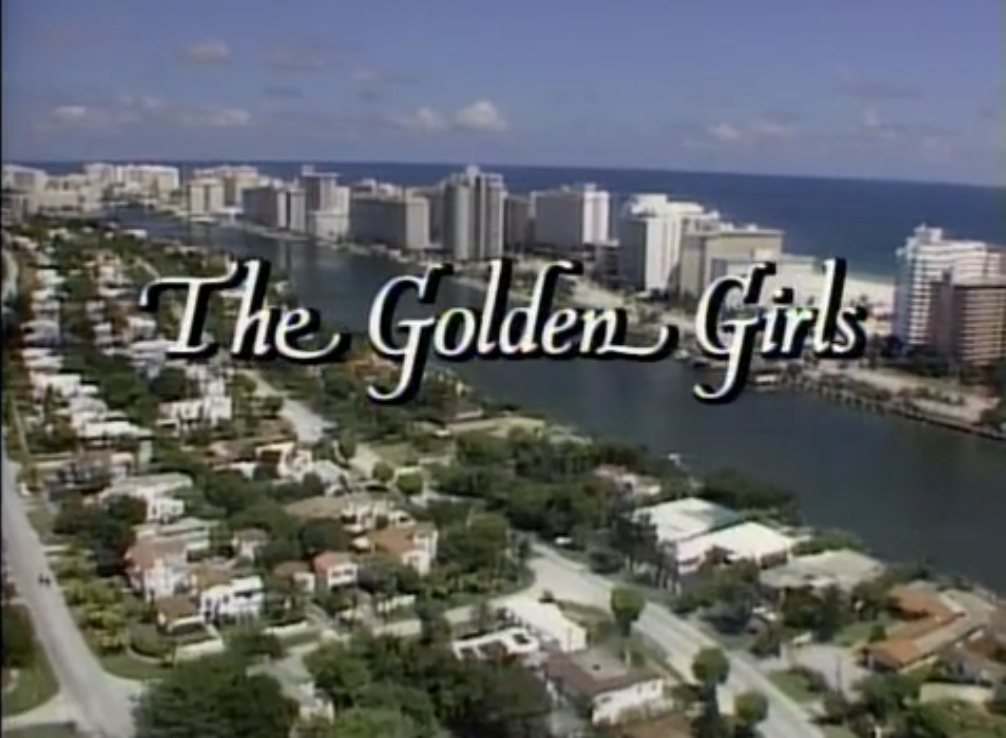
The_Golden_Girls_opening_screenshotThank you for bein’ a friend! Those now iconic lyrics opened Touchstone Television’s (Walt Disney Company) show on NBC for 180 episodes over 7 successful seasons. Earning multiple awards from Emmys to Golden Globes, this series is also one of only three sitcoms in which each principle actor received an individual Emmy. The Golden Girls was ranked in the top ten shows for six out of its seven seasons, TV Guide (2013) ranked it 54/60 in the highest rated programs of all time, and the Writers Guild of America (WGA) ranks it at 69 out of the top 101 best written series of all time. So many accolades. Created by Susan Harris, the show ran along side another 80s hit The Facts of Life. The theme song, written by Andrew Gold and recorded by Cynthia Fee, is also ranked among the top theme songs of all time. No wonder why it is still running and bringing us endless laughter (currently runs on Hallmark Channel). Much like I Love Lucy has never been off the “air” in its entire existence, The Golden Girls has also been kept on a channel somewhere since it first debuted on September 14, 1985. From laughter to tears, these four women have been such a part of Americana and continue to be referenced in pop culture. Not limited to any particular demographic or cultural group, this show transcends all kinds of racial, ethnic, gender, economic, and cultural barriers. But why has this sitcom (situation comedy) continued to be popular for now 31 years? Let’s explore!

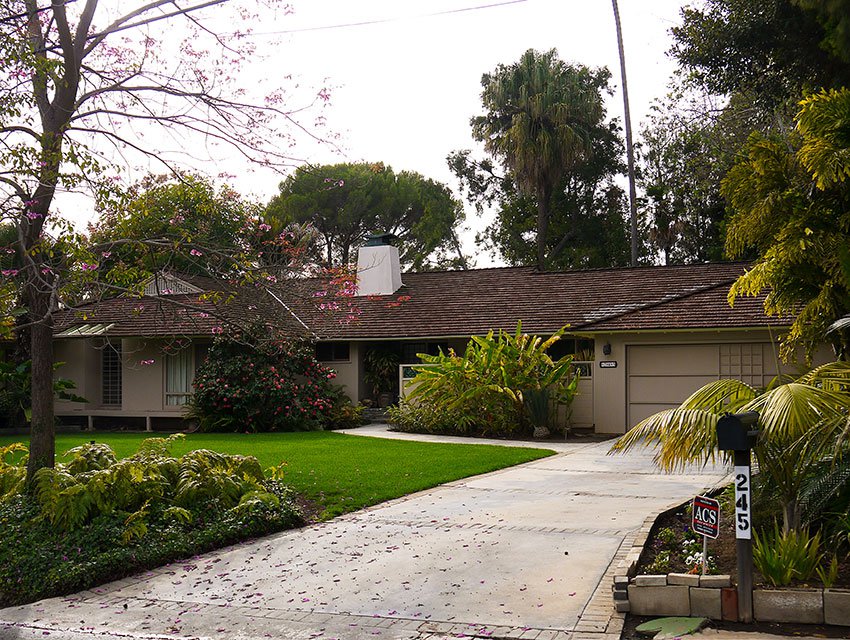
GG_HouseIt’s been 31 years since we were first introduced to Dorothy, Blanche, Rose, and Sophia at an upper middle-class home in the residential neighborhoods of Miami, FL. Ever since 1985, these four single older women have been coming into our living rooms and, for many, have become part of the family. The sitcom represents a radical move by the Walt Disney Company and NBC in that the show featured so many taboos, at that time, in broadcast television. In many ways, the show was 2-3 decades ahead of its time. The very unique nature of the show is part of why it was such success. However, the continued success of the show goes way beyond just being uncanny for its day. For a show to stand the test of time, it cannot be, in whole anyway, (1) a product of its generation (2) contain proliferated pop culture references that significantly support the plot (3) must have exquisite writing (4) have a phenomenal cast that is as interesting to watch and listen to as the plots are engaging and (5) contains characters that one can identify with decades down the road. Over all, the show has to be unique, timely, and just written and acted exceptionally well. As this is a sitcom, in short, the jokes and conflict have to still be relevant in society for many years down the road. Although entire critical analysis articles could be written about each of the characters (and actors) respectively, the focus of this article is a general overview of why the show is endearing even to this day.

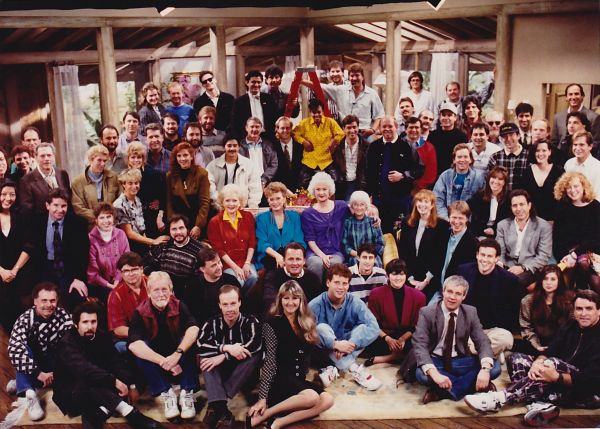
GG Cast CrewBehind every successful show (especially dialog-driven ones), there is solid writing. After creating the show and writing a few episodes, Susan Harris became less directly involved in the series. The head writers of the show (for four seasons) were Kathy Speer and Terry Grossman who would each receive numerous awards during the series’ run. Following the fourth season, they turned the reigns over to Mort Nathan and Barry Fanaro who would also go to win awards as well. Other than eccentric 80s attire, it’s the comedic conflict, sarcasm, quick witted remarks, and self-deprecating humor that keeps audiences coming back for more. No matter how many times I have seen each episode, I still laugh every time; the shows never becomes boring. The four women boasted incredibly sharp humor and were very secure in themselves. The creative leadership knew that the show had to leave its mark on television. Quite regularly, the plots were used to not necessarily address outrageous ideas, but important ones. Important ideas and values that had not been addressed in television before. What stands out most about the writing? The fact that progressive values were part of the show’s DNA. From ethnic, racial, religious, cannot forget sex and dating, and of course aging. At its core, the Golden Girls simply made aging fabulous! A good test to understand just how brilliant the writing and comedy is by turning off the picture and listening to the show as if it was a radio broadcast. Most likely, you will find yourself laughing just as much as if you were watching it. You can follow the story without the visuals to accompany it.

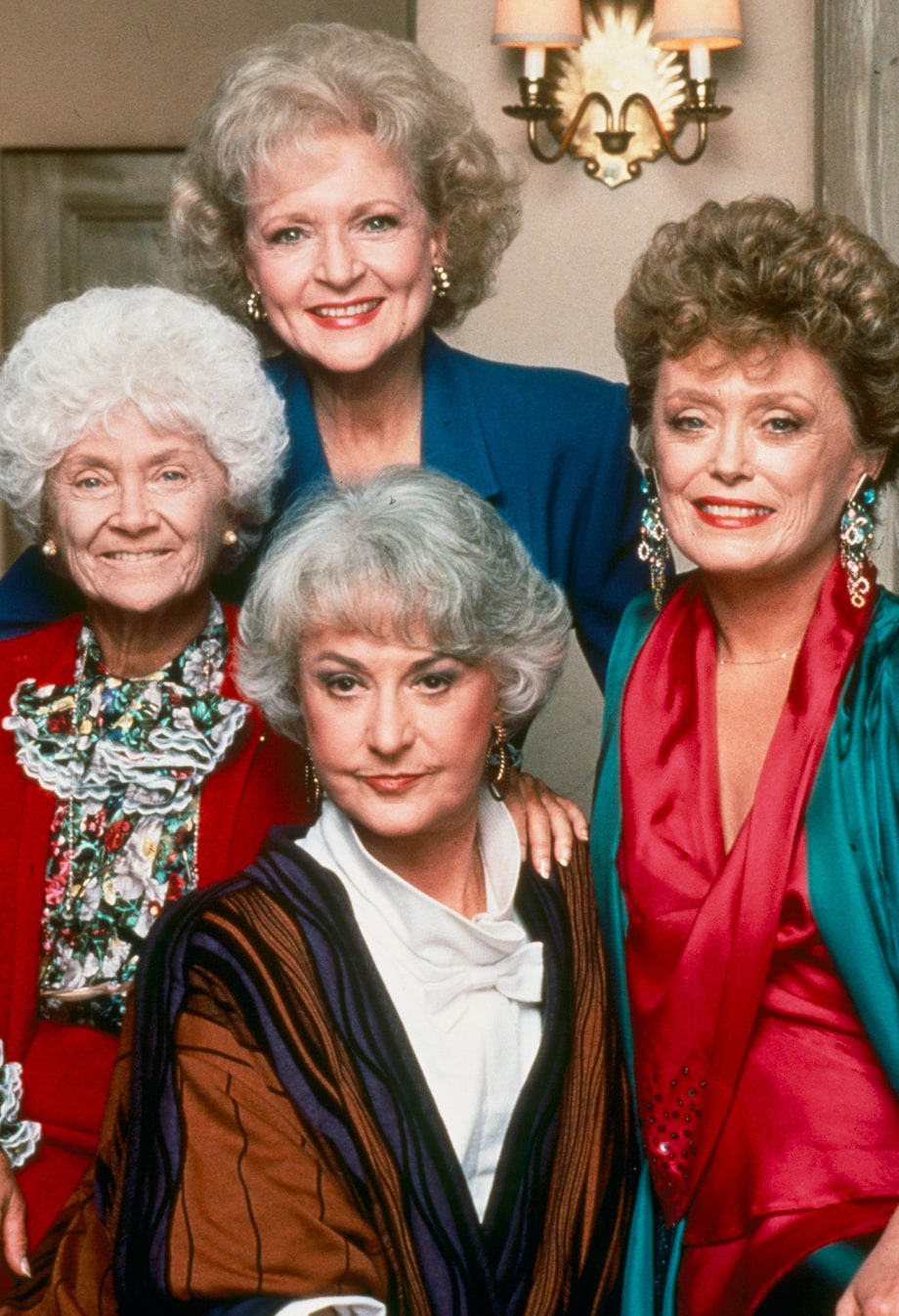
GG_Group_ShotBut isn’t television a visual medium? Yes. However, sitcoms are much more similar to live theatre than small cinema. Part of this is because a traditional sitcom is shot in front of a live audience. Just like stage actors feed off of the laughs from the audience, sitcom actors go through similar motions during a performance. Brilliant dialog and plot structure animates characters, and boy were these ladies animated! You won’t find four closer friends. These ladies could insult one another viciously and still remain intimately, but platonically, close. Each and every episode was so very interesting and feels new overtime. Not even a show like Friends holds up as well as The Golden Girls. The relationship between the four women was incredibly dynamic. Hardly an episode goes by that there aren’t alliances, betrayals, misunderstandings, or love triangles. Sometimes we venture to doctor’s offices, restaurants, or the parks; however, most of the time is spent inside the sun drenched Florida multi-champer house. Comparing the show’s floorpan to the exterior of the house, such a floorpan simply cannot exist. Haha. But that’s part of the fun. Unlike movie or television drama, a situation comedy is able to bend logic and make up for that with comedic timing and material. Moreover, the fashion of the girls definitely cannot be ignored. From flashy to trashy, these girls have it covered. The best part of the fashion choices is that, for the most part, the choice of clothing is an extension of the characters themselves. The fashion alone, is something that could be analyzed and actually has been in the past.

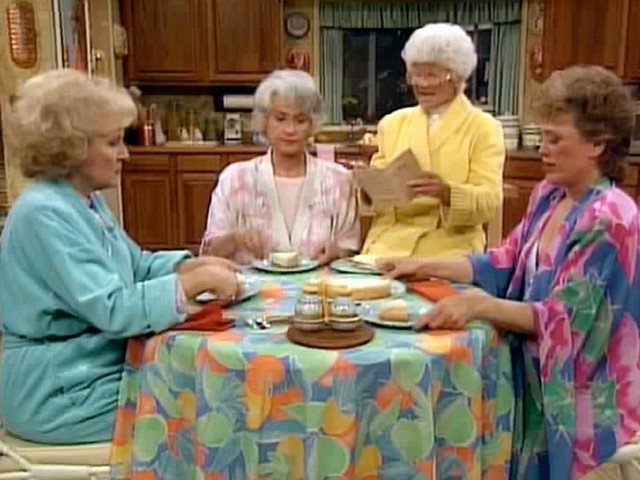
GG around tableWhile aging, women’s rights, and dating were reoccurring themes and tied directly to the show’s premise, other once taboo social topics were important milestones in the series’ development as well. Although there are a few social issues that could be mentioned, the one that is the most prominent after the ones that have been mentioned are topics dealing with gay men and women. Nearly a quarter of a century before the Supreme Court’s historic ruling on the legal definition of marriage equality, The Golden Girls had already tackled that subject and brought it into the mainstream. There are a few times that a gay character was the focus of a show, but the episode that stands out the most is when Blanche finds out that her brother is gay (and later there is an episode where he introduces her to his fiancé). This is one of the toughest episodes for Blanche and one other best examples of character development. She faced a situation that thousands of parents and siblings face everyday across the country. Before Will and GraceGleeThe New Normal, and other popular shows, these four women highlighted real world problems and social issues that continue to be battled today. Indirectly, gay social issues and stigmas were also dealt with. In the episode where Rose is contacted by a hospital regarding the possibility of her having contracted HIV through a blood transfusion, the girls take the then-unpopular stance that HIV/AIDS was not a punishment for being gay but a disease that knows no social, ethnic, sexual orientation, or religious barriers. They brought out the fact that it could happen to anyone. The brilliance of how these once-taboo subjects were handled is seen in how, amongst conflict and tears, the girls somehow still managed to bring humor into the mix, and leave you with a smile.

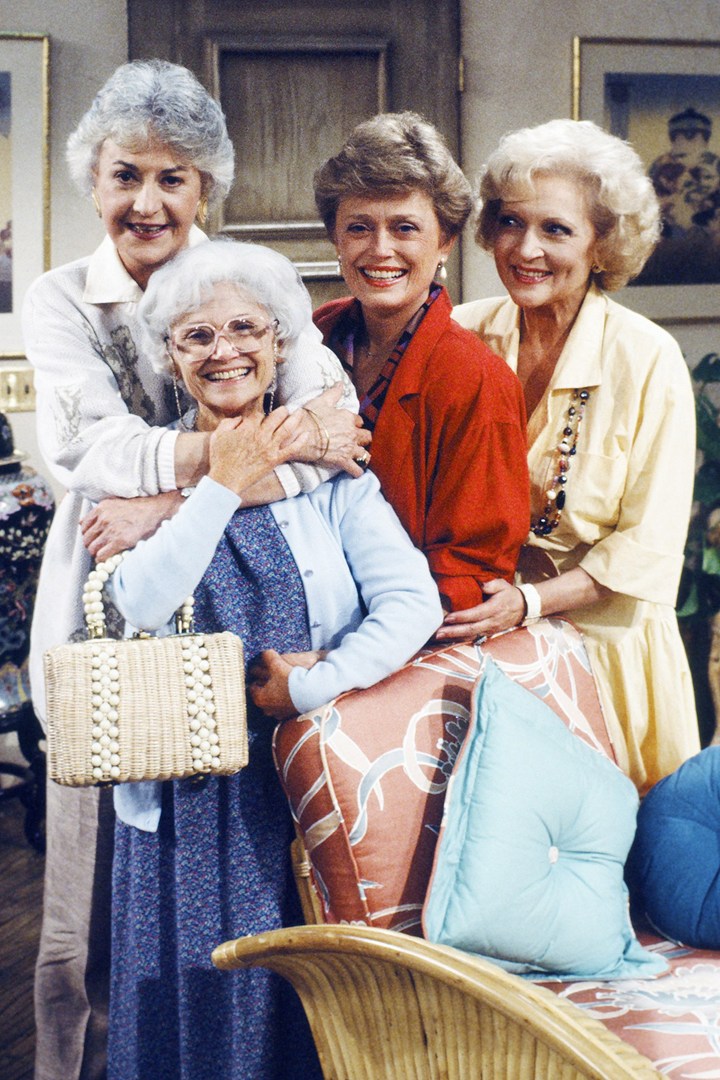
GG hugAfter watching this show for many years, it still has the ability to make me laugh uncontrollably at times. And, that sentiment is felt by many who have continued to visit the home of Dorothy, Blanche, Rose, and Sophia over the decades. There is so much to explore in this show, and why it continues to be popular today. From the writing to the acting and humorous conflicts to dealing with hard topics of bigotry, disease, sexual orientation, and aging, The Golden Girls continues to be a show that can help you laugh on the worst of days. Although there are shows that have attempted to be a modern day Golden Girls, none can hold a candle to these amazing performers and writers. There is a magic quality to the show that can never be duplicated.

“Fried Green Tomatoes” full movie review

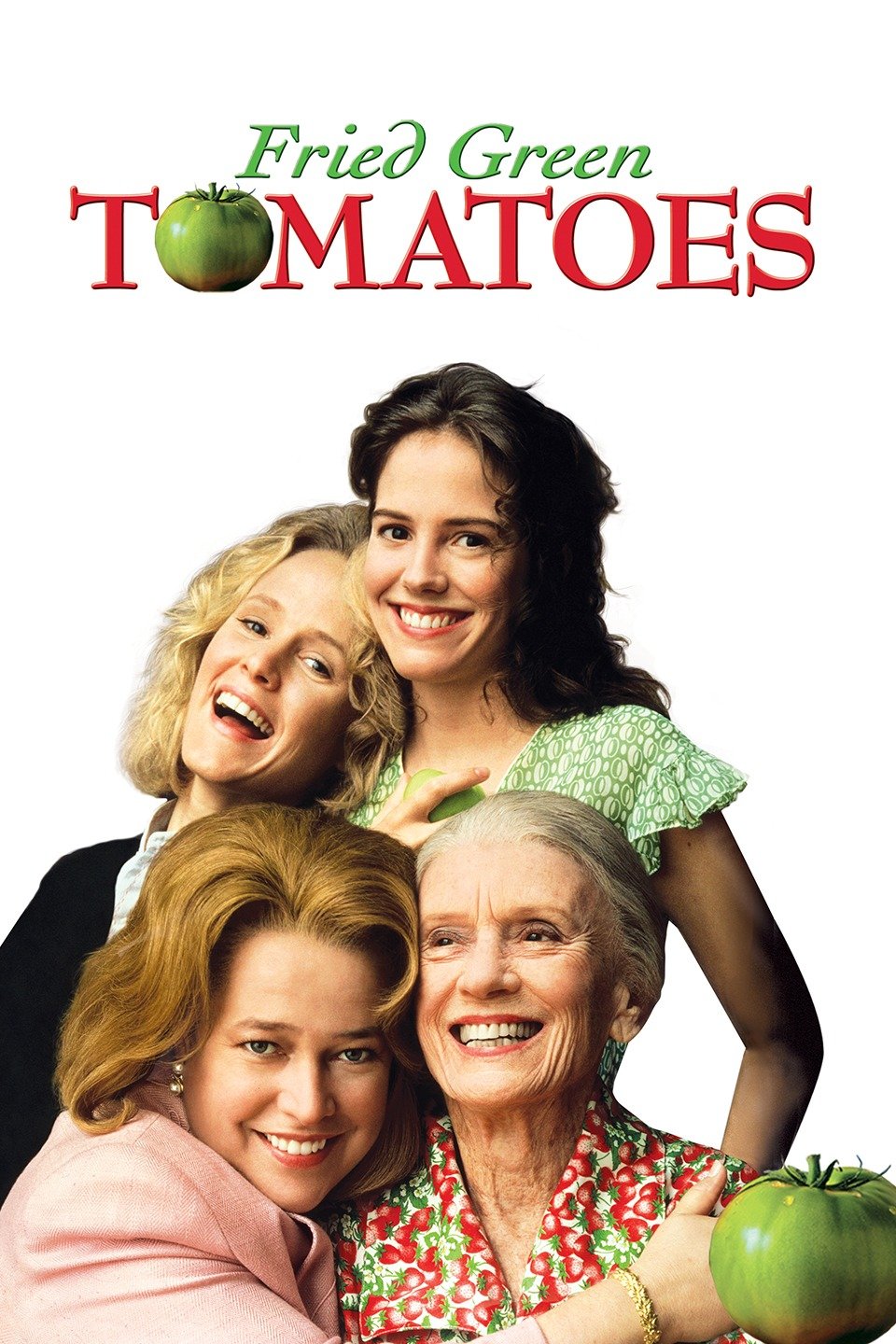
Towanda! Universal Pictures’ quintessential American cinema classic Fried Green Tomatoes based on the bestselling novel by Fannie Flagg (whom also wrote the screenplay) is a heartwarming unapologetically sentimental film that reminds us that the best thing in life is “friends, best friends.” The film is also an early breakthrough for queer cinema because it contains a subtextual world of queer thematic elements and symbolism. In Flagg’s novel, there was an explicit romance between two of our main characters; but the film toned it down in order to attract a wider audience at the time. Moreover, this film also takes on the important task of providing commentary on racism and sexism. A message that was as important then as it is now. Fried Green Tomatoes is the type of drama that will leave you feeling inspired to be the kind of friends that you see in the film. The film contains two important storylines (present and past) that are woven seamlessly into one another by theme and plot derived from character. Each story is captivating! Because of the two stories being told concurrently, it takes a little while for this film to grab hold of you; but when it does, you will be hooked on the homespun humanity, intimacy, romance, and yes even a murder mystery. Of course, it’s a murder that Angela Lansbury could solve in her sleep. Twenty-seven years later, this film is still charming the bees, and continues to be a favorite among those who love a heartwarming story with deep meaning and impact.

A woman learns the value of friendship as she hears the story of two women and how their friendship shaped their lives in this warm comedy-drama. Evelyn Couch (Kathy Bates) is an emotionally repressed housewife with a habit of drowning her sorrows in candy bars. Her husband Ed barely acknowledges her existence. One week, while waiting out Ed’s visit of his aunt at the nursing home, Evelyn meets Ninny Threadgoode (Jessica Tandy), a frail but feisty old woman who lives at the same nursing home and loves to tell stories. Over the span of several months, she spins a whopper about one of her relatives, Idgie (Mary Stuart Masterson) and her friend Ruth (Mary-Louise Parker). Idgie and Ruth are two unlikely friends that form a strong friendship in 1930s Alabama; together they face an abusive marriage, open a business, and find themselves involved in an unsolved murder. Evelyn finds herself looking forward to her weekly visits with Ninny, and is inspired by her story to take a new pride in herself and assert her independence from Ed.

Not sure about you, but I am not entirely a fan of movies that feature a couple of people sitting around in the present and talk about a story from the past. And, all the while, we get flashbacks to that earlier story. What is the point? Why not just tell the story from the past and let that be your movie? I don’t get it. There are some exceptions…take Citizen Kane for instance–it worked! But contrary to my predisposed dislike for movies that principally rely upon flashbacks to tell the story, this movie surpasses all expectations! The story in the present features Mrs. Ninny Threadgoode and Evelyn Couch. Evelyn encounters Ninny by accident while visiting her husband’s mean-tempered aunt. The confident Ninny and the plump, unhappily married Evelyn develop a fast friendship, one that helps Evelyn escape the doldrums of her early 1990s domestic married life by learning to care deeply about a relative stranger. Ninny tells Evelyn a story from her hometown that follows Idgie and Ruth through a wide range of bittersweet events that test their loyalty to each other. In the process, it also offers a portrait of a lulling, rustic, Klan-ridden Alabama in which the characters’ willful innocence often gives way to harsh racial realities. The film tries to develop some suspense around the question of how these two plots are connected, but the answer will strike no one as a surprise. One of the reasons Director Jon Avnet’s Fried Green Tomatoes survives the flashback structure is that it devises an interesting character to be the listener to the long-ago tale. In a manner of speaking, the audience is asked to be a participant in the film.

Although the screenplay is very close to the original novel, there is one element conspicuously missing from the movie–well, directly anyway. It’s presented very clearly in the novel that Idgie is a lesbian and she and Ruth are a couple despite the mores in the South at the time (and still to this day somewhat). The movie brings these elements out indirectly through powerful subtext that is not exactly trying to hide, interestingly enough. Because the movie was released prior to films showing healthy homosexual relationships as just as normal as heterosexual ones, the film got creative in how to acknowledge it while not polarizing audiences at the time. By in large, the small town of Whistle Stop was certainly not small-minded. Showing the progressive nature of this “knock-about place” in how it largely feels about minority communities, the town accepts the two of them and no questions are ever asked about their relationship. Idgie and Ruth in particularly display extremely progressive ideals, for the day, because two of their closest friends are members of the town’s black community. Big George and Sipsy (played by Cicely Tyson) are important to Idgie and Ruth, and both would do anything for them.

The stories from the past and present are both full of social-commentary, containing an  important message for women or anyone who feels that they cannot be progressive, independent, and successful because of the antiquated ways of a relationship or society. With Ninny and her stories as inspiration, Evelyn learns that she can be more than her girdle-wearing, dinner-making, frumpy dress self. Evelyn is so fired up by Ninny’s stories of Idgie’s escapades, that she begins to take control of her life. She gives up her candy bars for aerobics, stops trying to please her misogynistic redneck of a husband and begins a career as a Mary Kay sales professional. Through her many visits to spend time with Ninny, she also becomes as passionately devoted to Ninny as Ruth was to Idgie, with this one being truly platonic friendship.

If you enjoy great dialog and excellent character development, you will fall in love with this movie even if you have yet to do so. Fried Green Tomatoes was based on the novel Fried Green Tomatoes at the Whistle Stop Cafe by actress-turned-author Fannie Flagg. The four leading ladies deliver outstanding performances! It is of no surprise that this movie has stood the test of time. Clearly, this is one of the best movies about strength, character, and friendship ever produced.