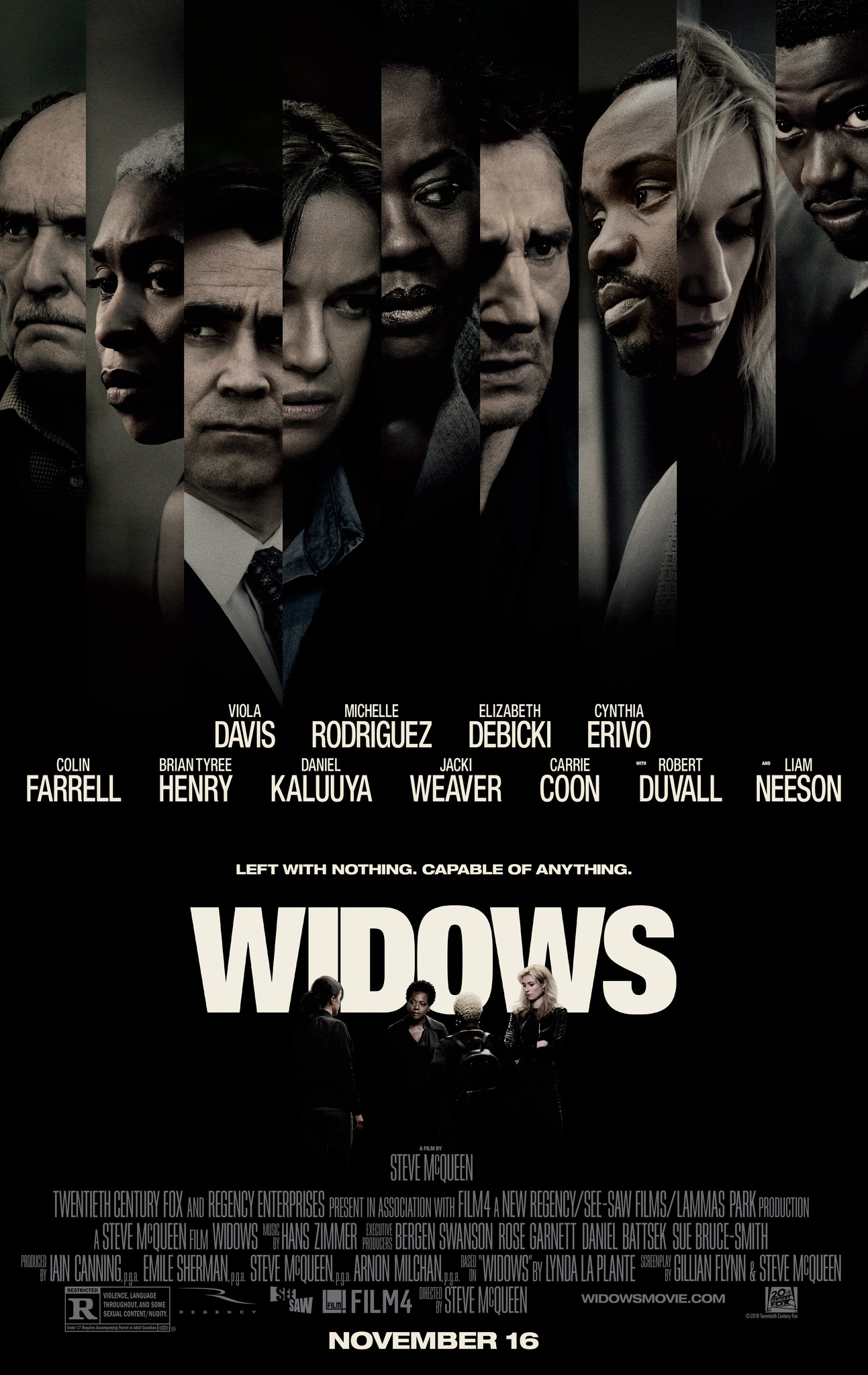
“Widows” full review

Intelligent, emotional, thrilling. Steve McQueen’s Widows is more than a thriller about a heist, it’s a stylish cinematic exercise full of social commentary on racial and social injustice within a city built upon political and business corruption. In a world that is completely exhausted from injustice, McQueen’s masterful direction brings Gillian Flynn’s multi-dimensional screenplay to life. Widows is brilliant in part because the film works on multiple levels simultaneously whilst delivering an edge-of-your-seat drama full of conflict. Not your typical action-packed film, the focus is truly on the central characters and the worlds from which they each come–worlds that collide after a robbery goes terribly wrong. It’s a brutal story with the highest of stakes. Witness a genre that is often not thought of as much more than a good popcorn movie, mature, grow, and exceed what society dictates this genre should be. While the characters themselves break through that glass ceiling, this film parallels the narrative by shattering expectations to create a thought-provoking work of cinema. Whereas a film in this genre seldom tackles such tough topics; and in general, many films that do seek to provoke discussions on race, social injustice, and gender roles come off as preachy, Widows never crosses that line from motion picture to sermon. The visually impactful story hooks you from the opening scene, and delivers command performances that force you to empathize and ask whether or not you would go to such lengths to forge a working relationship with people completely different from you in order save your very lives. What would you do when you are thrust into a situation in which you are way over your head and unprepared? Widows is as entertaining as it is thoughtful.

A heist goes terribly wrong. Very, very wrong. The result leaves four women widows. Four women that have no idea who one another are, or even the extent of their respective husbands dealings within the world of organized crime. These women are left with a debt owed to some powerful people who have a total disregard for human life, and only value money and influence. When Veronica (Viola Davis) is approached by a crooked politician for the $2mil her husband owes, she must devise a plan to deliver the money because her very life is in immediate danger. In order to get the money that she needs, Veronica blindly contacts the other widows in order to pull off the next heist her husband was planning. “The best-laid plans of mice and men often go awry. No matter how carefully a project is planned, something may still go wrong with it.” With little time to train, Veronica and her newly forged partners work tirelessly to plan and pull off the heist with a booty of $5mil.

After listening to the recent Mike Mike and Oscar (MMO) review of this movie, I am determined now more than ever to persuade them to my side of the argument that this is a great movie, and one worthy of the critical and general audience acclaim. There are so many layers to this story that it is difficult to know precisely where to begin my analysis. Before tackling the plot itself, the area where MMO and I agree is the cinematography and editing. McQueens stylistic direction is witnessed clearly in the phenomenal movement of the camera and editing. There are times that the camera feels like a character in and of itself. Without giving any spoilers away, there is one particular scene that was so brilliantly blocked and choreographed that I was legitimately wowed by the cinematography. And that is the gripping opening scene. The camera never misses a beat, and the editing is razor sharp. There are moments that the camera moves so exceptionally that I truly feel like a fly on the wall of the getaway van. Beyond the stellar cinematography and editing in the opening scene explosive action, the camera often lingers on reactions or reveals subtext in other scenes. While the characters may be talking about something innocuous or delivering a expositional dump, the camera is focussed on something entirely different.

The story of Widows is less about the heist as it is a character study on three incredibly interesting women who are forced to work together to achieve a common goal. An external goal of the theft of $5mil because of a mess left by their respective late husbands paired with the internal need to survive. And it in these characters and the conflict experienced by each that the film truly shines as taking this action genre to substantive levels. Much like a screenplay itself is build upon the three act structure, and individual scenes also embrace the idea of a “mini 3-act movie” within each act, the film provides three fascinating characters upon which the conflict and drama are build. Whether short or feature, films contain three acts, each with a specific diegetic purpose. Paralleling this concept of 3s is the central ensemble cast of Veronica, Linda, and Alice. Amanda is also left a widow by the police shootout, but does not play as active a role. Veronica is a character who lives on the wealth of her husband, but turns a blind eye to what he does. She is grieved and frightened of how she is going to cope with life, especially after having buried a teenage son. Linda is an entrepreneurial spirit who trusts that her husband is taking care of the logistics of opening a store but does not make sure bills are getting paid. She is unaware of his habitual gambling and penchant for unethical business ventures. Alice is a timid, shy person as a result of being abused as a child and by her husband. She demonstrates an unspoken relief that her abusive husband is gone, but reluctant to become an escort even though her mother trained her that she only has her looks and nothing else. We don’t learn as much about Amanda except the fact she is a new mother and doesn’t want to be involved in anything. All three of these woman are thrust into a situation in which they are over their heads and rise to the occasion to overcome the fear of impending death to take control of fate to forge their own futures. It requires them to drop walls, cooperate, and use each of their talents to combine together to create a formidable team. Alone, each of them did not have what was necessary to pull off the job, but together they become a solid team.

The stark differences between the three women are important because it allows the story to explore the socio-political and inter-personal affects the conflict has upon them. On the surface level, Widows is a heist movie; but ultimately, the heist itself is irrelevant, little more than a glorified plot device. Steve McQueen took a high concept film and made it low concept, gave it substance and meaning. Crafting this meaningful film out of a popcorn concept demonstrates McQueen’s ability to create something that is incredibly entertaining but never sacrifices character, the cinematic experience, or the important themes and subtext found therein. This is very much a #MeToo era film. It provides a platform for strong female characters to turn the tables on their oppressors, those who take advantage of them, and take back their dignity, self-respect, ambition, and independence. Thematically, the film is incredibly rich. Each of the central women are saddled with burdens of various kinds and to varying degrees however, the common denominator is dictation of place in society. This dictation is accomplished differently for each women, but the result is the same. They are all controlled by the men in their personal and vocational lives. Veronica must shed her codependence on her late husband and even her dog (a metaphor for her dependence on the external in order to function) and successfully cope with and overcome grief. Alice must realize that she is intelligent, has intrinsic value, does not need to rely on her body to generate income, and does require a man in order to survive. Linda is challenged with rising above having her passion business ripped out from underneath her because of a mess her husband left, and provide her children with a quality life while never forgetting her own needs and desires. All of these women are the victims of messes created by men, and leaving the women in their lives to clean up.

McQueen’s Widows gives a voice to the oppressed and downtrodden. Although the central characters are our three women, there are other characters in the film representing different kinds of real people out there who are selfishly creating messes and keeping those who aren’t wealthily, white, privileged on the bottom of the ladder and dependent upon the upper class. This is where different depictions of corruption enter the story. We have political corruption, business corruption, and even corrupted leaders of religious congregations. So much to talk about! It’s in these subplots that the film spends time highlighting and commenting on racism and gender roles. McQueen delivers a white ethnocentric political family who stops at nothing to keep minorities out of city government in order to hold all the control in the longstanding dynasties. Gender roles are analyzed by the manner in which the various women are treated by their male counterparts. Although much of these subplots are conveyed through exposition, there are some brilliant shots with the camera. One particularly powerful scene in which Jack Milligan (Colin Farrell) is driving home from his campaign stop in a predominantly black, poverty-stricken neighborhood to his whitewashed wealthy neighborhood. The distance is a matter of a few blocks, but the stark contrast between the neighborhoods is astounding. Whereas the conversation between Mulligan and his assistant could have been a boring expositional dump, it was dramatized by the setting and the reactions of the black chauffeur. This scene calls out the great divide that we see in our country. A few in power keep others oppressed and in their dictated places. Powerful material.

Gillian Flynn’s screenplay is tight, focussed, and deep. It wastes no moment to advance the plot and develop the central characters who all have well-defined external goals supported by well-defined internal needs. The big event of the heist gone wrong has a wide ripple effect that puts the very lives of the innocent in harm’s way, harm they may even mean eventual death. And it’s not a film that paints the “white male” as the only unscrupulous, unethical, power-hungry entity, it also takes the opportunity to show a black male politician who is just as unethical, power-hungry, and unscrupulous, even to committing murders. The lesson here is just how corrupt business and politics is. Even down to strong arming the religious community. Of course, this also shows that the leader of a religious congregation is not immune to picking up a racket and joining the game. Without ever feeling too preachy, Flynn’s screenplay uses visual juxtaposition to truly drive these points home. While the pacing of her screenplay may be slow compared to an action-driven plot, it is perfectly paced for this character-driven story. To be honest, I do not feel that this screenplay is as brilliant as Gone Girl, it’s still a powerful screenplay that balances the action components against the character ones in order to successfully experiment with the heist genre. For all its cleverness and excitement, of the three acts, the first two are definitely the strongest with a weaker third act closing out the film. Will the third act be what keeps this film from receiving a best adapted screenplay nomination? We will just have to wait and see.

There is so much to like about McQueen’s Widows! Make sure to go in with the right expectations though. If you go into the film seeking the next great heist movie, then you my be disappointed (as was the case with Movie Drone Podcast). Mike Mike and Oscar certainly stick by their impression that it’s just an okay movie all the way around and not the Oscar contender than many Tweeps and Podcasters are saying. After watching it for myself, listening and reading to reviews on both ends of the spectrum, I still feel strongly that this movie is fantastic! It’s a timely movie that gives voices and platforms to those who are often sidelined. From writing to directing and performances, you are in for a thrilling time with Widows.

Ryan is a screenwriting professor at the University of Tampa. If you like this article, check out the others and FOLLOW this blog!

Follow him!

Twitter: RLTerry1

Instagram: RL_Terry

Thrillz (theme parks): Thrillz.co
Christmas at Gaylord Palms 2018 review

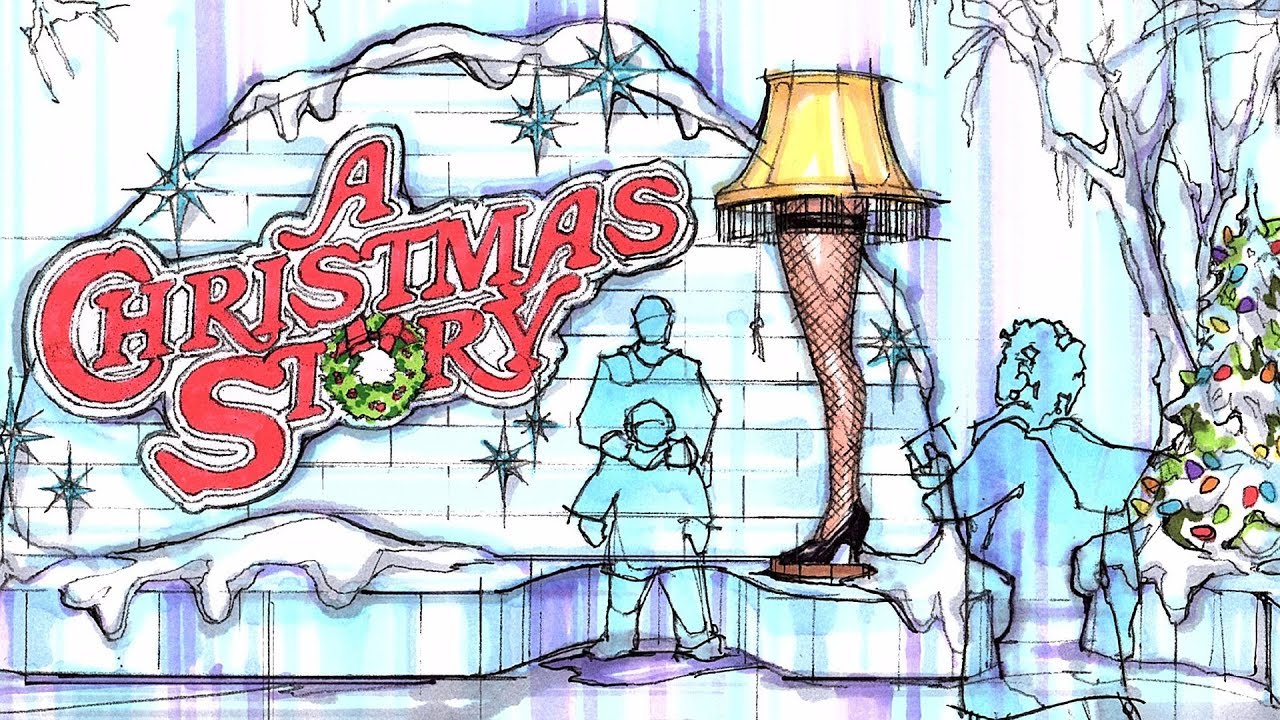
Christmas has arrived at Gaylord Palms in Kissimmee near Disney World! The Gaylord resorts are well-known for their world class dining, entertainment, and luxurious rooms, Gaylord Palms presents its annual ICE event featuring the endearing Christmas classic A Christmas Story. In addition to the life-size exquisitely designed ice sculptures, Christmas at Gaylord Palms also offers guests fantastic shows, games, food, Christmas-themed drinks at the bar, a Cirque show, and gorgeous dancing lights display in the main atrium. There is no shortage of events and offerings to uplift your holiday spirits! Fortunately, I had the privilege of attending the media event for this highly anticipated celebration, and I am looking forward to sharing my experience with you in hopes that you make time for this most festive event to brighten all your holidays this season.

When attending an event at the Gaylord Palms, the best way to begin your evening is with a dining reservation at one of the award-winning restaurants. My friend Paula and I made reservations at Old Hickory Steakhouse to start Christmas at Gaylord Palms. I cannot recommend this restaurant enough. From the exemplary service to the steak grilled to medium rare perfection, this dining experience will enhance your Christmas at Gaylord Palms exponentially. Our server recommended bold pinot noir to pair with our center cut fillets along with creamy mashed potatoes and grilled mushrooms. With three atrium designs at the resort, you will get the sensation of dining outdoors in the cool air without the bugs and humidity. Some tips for planning you dining experience at Old Hickory: the meat and seafood sections are sold without accompanying side dishes, but you have the option to select family-style sides including many options from potatoes to mushrooms to vegetables and more. Whether you select a boldly seasoned steak or mouthwatering seafood, you will greatly enjoy and vividly remember your time at Old Hickory.

After dinner, we headed for the St. Augustine atrium to take in the Cirque show and dancing lights! Unfortunately, I misread the schedule and thought that checkin was from 7-8pm, so we missed Cirque. But on the plus side, that gives me incentive to return this season to enjoy the show. Ever since Disney pulled the plug on the Osborne Family Spectacle of Dancing Lights in exchange for shallow map projection shows at Hollywood Studios, I make sure to visit all the dancing light shows in the area because that feeling of being looking at or being surrounded by choreographed displays of thousands or millions of lights cannot be replaced. There is a high degree of immersion, dimension that cannot be replicated by the projection of light onto a building. There are several different musical numbers for the lights, and each one takes full advantage of the space and creates Christmas splendor with each and every twinkle of each and every light dancing during the show.

In the lower level of the convention center, the Alpine Village awaits you! While the Cirque and dancing light shows are complimentary with your evening, the majority of the offerings for Christmas at Gaylord Palms are located in the Alpine Village, which requires additional admission. In this wintery village, you’ll find snow tubing, Santa’s snow throw, Mrs. Claus, the Sweet Shoppe, Christmas market, and the flagship attraction ICE featuring A Christmas Story. Because this was the media event, Gaylord Palms provided us with quite the spread of handcrafted sweets from the artisan chefs at the resort. After sampling the delicious treats that the resort so magnanimously provided for our enjoyment, we decided to try our hand at the snowball throwing midway game! Until I held a snowball in my hand, I would not have believed that was possible given the village is not kept below freezing. But sure enough, I received a bucket of snowballs to throw at the targets. I didn’t hit a’one. Perhaps you will have better luck!

Next to Santa’s Snow Throw is the snow tubing attraction. Up until now, no one had ventured down the slope. So, I decided to break the ice, snow to speak ;). Here’s a tip, in case the ride greeter neglects to tell you to pick up a tube on your way through the queue, pick up one! I literally walked past the greeter twice and they never told me to pickup a tube and neither did they hand one to me. So, thank you ride attendants at the top of the slope for accommodating me by giving me one. Once I slid down the snowy slope, then many more guests flocked over to the snow tubes! For those of us who live in Florida, this is a rare opportunity to have some snowy fun indoors! It is so much fun! So don’t miss out on the slopes in Alpine Village.

Next to the slopes is the Italian ice stand, but my friend Paula and I were still stuffed from dinner and the holiday treats that we had to turn down that offering. I will make it a point to get one when I return. Near the entrance to ICE and close to the Marketplace are Mrs. Claus house and the Sweet Shoppe. Both of these houses offer shows! With Mrs. Claus show being an hour long, we did not have time to enjoy that one, so it’s another offering I want to experience when I return. The show in the Sweet Shoppe wasn’t starting again for over a half hour, so we took this time to experience that movie that plays for 24-48hrs every year on a TV channel. A Christmas Story!.

Bring gloves! I always encourage guests to bring gloves because it is incredibly cold. However, as much as I preached to my friend to bring gloves, guess what I didn’t do? Bring gloves. Haha. Pretty much, my hands were completely numb by the time we passed THE END. When I say A Christmas Story, you likely have several individual scenes that instantly come to mind. Fortunately for you, each of those scenes are captured by the artisan ice sculptors. Only Hemingway could find the words to describe the beauty of the experience. Prior to entering the frigid exhibit, you get to learn about how the history of ice sculpting and how the team of sculptors create the amazing sculptures that successfully translate the iconic movie to live experience. Just before walking down the ramp into the arctic temperatures, you will be given a parka; however, I also encourage long pants and warm socks. From the moment you walk into the first room, you will be awestruck by the sheer size and beauty of the ice-tastic creations.  These are not just your average ice sculptures that you may find at weddings, galas, or even theme parks; these are quite literally life size representations of entire scenes (characters, setting props, and all) from A Christmas Story. And not just white or clear ice, these sculptures are in living color! As I walked through the flagship attraction at ICE, I was amazed at how effectively the movie was captured. I really did feel that I was watching the movie from start to finish. Since it’s a movie that also has some memorable lines of dialogue, there are signs with those quotable moments. Returning as the final display on the tour during the experience is the absolutely stunning ice nativity. I’ve seen a lot of still nativities in my day, but this one is always the most beautiful! You may even find yourself singing O Holy Night along with the background music.

Closing out our evening, Paula and I took our seats in the Sweets Shoppe for the live comedy show featuring a hilarious crossover between Babes in Toyland and The Nutcracker as told by two incredibly funny performers as the Sugarplum Fairy and Nutcracker. Highly interactive, I was reminded of the line from a Rocky Horror Picture Show live shadow cast when the live cast yells “this movie sucks without audience partici–” and Dr. Frank responds with “–pation.” Because the show itself is funny, but the entertainment factor is increased ten fold by engaging the performers and playing along. Although you can sometimes tell that an actor is or isn’t having fun in a movie, picking up on how much an actor in a live production is far more noticeable. And these two were having a blast! The Sugarplum Fairy and Nutcracker were genuinely interested in my enjoyment and truly displayed enthusiasm for their show. Do not miss this show. It’s only 20mins, and I imagine it will have multiple showings each evening. I love the addition of a comedy show to Christmas at Gaylord Palms! So much is stunning, inspirational, heartwarming, and more; but you know what, sometimes you just want to laugh too! And you will laugh a lot during this performance! The actors even asked me if I wanted to take a pic with them on stage. How incredibly nice of them! Do yourself a favor, and make time for the show. Oh yeah, don’t forget to say hi to the gingerbread man out front too.

Opening Friday, November 16th, Christmas at Gaylord Palms featuring ICE should definitely be on your list of events to attend this year. If you dine at one of the restaurants, your parking will be validated (and parking is not cheap). You may be familiar with A Christmas Story but you’ve never seen it like this.

Merry Christmas!

Ryan is a screenwriting professor at the University of Tampa and works in creative services in live themed entertainment. He’s also published prolifically on theme parks and produced a peer-reviewed study. If you like this article, check out the others and FOLLOW this blog!

Follow him!

Twitter: RLTerry1

Instagram: RL_Terry

Thrillz (theme parks): Thrillz.co

“Dr. Seuss’ The Grinch” (2018) movie review

Seuss’ beloved Christmas classic gets a brightly animated treatment. Universal and Illumination Entertainment’s The Grinch starring Benedict Cumberbatch as the furry green Christmas-hater with a loyal dog named Max. Dr. Seuss’ works are no strangers to screen adaptations. Many of his books have been adapted to animated successful TV specials and movies, including my favorite adaptation How the Grinch Stole Christmas (1966). We have the original award-winning 1966 version narrated by Boris Karloff and animated by Chuck Jones, the moderately entertaining live-action 2000 version, and the one we are reviewing today, a truly watch-worthy feature-length animated feature that has the soul of the original with some heartwarming additions. Needless to say, as much as there is to like about this new version, it does not rise to the same level as the Jones’ original, but is certainly superior to the Jim Carrey version. In addition to the main plot points from the book, this film takes some creative liberties to introduce new scenes and provide additional character development for the Grinch, Cindi Lou Who, and Cindi’s mom. Much like with the previous feature length animated and live-action films, this one too contains the quintessential Seussian architecture that lacks any straight lines (incidentally, this same concept is embraced at Seuss Landing at Universal Orlando’s Islands of Adventure). From the top of Mount Crumpit to Whoville town square, if you are a fan of the book and original, then you will certainly enjoy this one and may even add it to your holidays this season. Oh yeah, Angela Lansbury has a cameo as the Whoville mayor!

Ordinarily this is where I summarize the plot, but we all know the story, so let’s jump right into this particular version. Arguably, two of the greatest, profound, and most celebrated Christmas stories feature a central character who hates Christmas; of course, one is an old British miser and the other is furry and green. Collectively, Charles Dickens’ Scrooge from A Christmas Carol and Dr. Seuss’ Grinch from How he Grinch Stole Christmas confront the commercialism, greed, loneliness, and the results of hardening one’s heart to friends, family, and the spirit of generosity. Themes that are just as relevant today as they were when first penned. The plots are so simple, yet so incredibly profound and inspirational. Both these stories benefit from simple plots and complex characters. Many of us have been either a Grinch or a Scrooge in our lives, or perhaps you know of one now; and it’s because of the relatability that we can identify with the characters. Taking the tentpole elements of the original animated version and adding a modern touch, 2018’s The Grinch seeks to capture the imagination of young audiences but concurrently providing a wonderful experience for adult audiences too.

One of the most memorable elements in the production design of the original animated classic is the stark contrast between the warm Whovillian homes and the cold, dankness of the Grinch’s lair. One is full of smiling faces while the other is solitary. Anyone who’s read Dr. Seuss’ books notices that there is something incredibly unique to his designs. As pointed out in the opening remarks, there are no straight lines anywhere in a Seuss book or even at Seuss Landing at Islands of Adventure. While this may not seem like a big deal–it is. Truly, it’s one of the illustrated elements that gives the images their trademark look. I greatly appreciate the Illumination Entertainment artists for successfully carrying this over to the film. Even down to the drinking glasses, there are no straight lines anywhere to be found. Another highlight from the original is the music! More specifically, the songs. Instead of simply including the original songs in this feature length adaptation, they were reimagined for a new generation. Although I feel You’re a Mean One Mr. Grinch suffered in the translation, the rest of the songs worked really well, and were a lot of fun! In addition to songs inspired by the original, there are song numbers integrated that you may recognize from today’s Christmas music. The new number that was the most fun was the Whovillian Christmas carolers played by Pentatonix singing God Rest Ye Merry Gentlemen. Not just the song itself, but the choreography of that number was perfect! It combined the stereotypical “annoying caroler” trope with slapstick comedy in a chase scene of sorts.

Because of the feature length runtime of the movie, the writers have the ability to provide subtext that is often more difficult in short films. Not that the original is lacking–certainly not–that’s why it stands the test of time and continues to be adored by millions. Chuck Jones’ animated masterpiece is still teaching us today. That being said, with the additional storytelling time, we learn a bit more about the Grinch and Cindy Lou’s parallels to one another. Both of them have a stated mission and external goal at Christmas. The Grinch wants to steel Christmas away disguised as Santa Claus, and Cindy Lou wants to capture Santa in order to give her mom a Christmas well-deserved since she is a single mother raising a family. Giving and steeling Christmas. That contrast provides a lot of opportunity to play around with the meaning and value of Christmas to the hopeful and the jaded. Both the Grinch and Cindy Lou start their missions with the same two words: Santa Claus. But what they do with those words couldn’t be more polar opposite than the North and South Poles. Further parallels between these two iconic characters is the method executed to achieve their respective goals. Both of them plan and assemble a team, equipment, and traps without anyone finding out. And like each other, both are successful at achieving their goal. The Grinch does steel (what he thinks is) Christmas and Cindy Lou does capture (whom she thinks is) Santa Claus. It’s that chance encounter between faux Santa and Cindy Lou that alters the course of the evening and Christmas morning. Two completely separate plans intersecting in providence that teaches that Christmas “doesn’t come from a store…maybe Christmas…perhaps…means a little bit more!”

Much like with the live-action version, we have new characters introduced in this one too. However, the focus is never off primarily the Grinch followed by Cindy Lou. It’s important to note that keeping your central and opposition characters the focus enables the internal needs and external goals to be developed more effectively than shifting focus between too many characters and subplots. Speaking of which, who are the central and opposition characters? Contrary to the “good guy” being the typical protagonist and the “bad guy” being the typical antagonist, this story flips that script and it works beautifully! In The Grinch, the Grinch is our central character and Cindy Lou is actually the character of opposition. The “good guy” is not always your central character. The Grinch has the external goal to steel Christmas from Whoville accompanied by the internal need to make other suffer as he has; opposing his goal is Cindy Lou who also had her own set of internal and external goals. But in this story, the character opposing the central character’s goal/need is actually the “good guy.” Interesting stuff, right?!? Think of main characters in terms of central and opposition, not protagonist and antagonist.

Outside of the Grinch and Cindy Lou, there are important supporting players. Our favorite dog is back, and endearing as ever! Max is even given a bit more screen time and substance in this version. He is truly the Grinch’s only friend, and although gets taken advantaged of, it’s clear that the Grinch does care for him. There is a story of loyalty here, and it’s an element that cannot be overlooked. If the Grinch was completely evil, then Max would likely not stay with him. So, the fact that Max remains by his master’s side teaches us that there must be some good in the Grinch somewhere. We are told that his heart is two sizes too small–not non-existent. How’s about that character of Fred?!? I fell in love with him instantly. Fred, the plus-sized reindeer, plays an important role in the story that I cannot go into without revealing a spoiler. However, I can tell you that he is adorable; and he, Max, and the Grinch form a non-traditional family that works incredibly well in this film and plays into the Grinch realizing that there is value in love, friendship, and community.

Perhaps this animated feature is not as magical as the original; but you now what, it is still incredibly well directed, written, acted, and animated. I am someone who watches the original every year and even have the book. Still, I am able to find tremendous value in this version, and will likely add it to the list of movies that I watch every November and December. There is something for everyone in this movie, and you may even find your heart growing three sizes as a result of this new take on the timeless charming tale of How the Grinch Stole Christmas. Echoing the end of Seuss’ The Cat in the Hat, what does Christmas mean to you? What would you say if the Grinch asked you?

Merry Christmas!

Ryan is a screenwriting professor at the University of Tampa. If you like this article, check out the others and FOLLOW this blog!

Follow him!

Twitter: RLTerry1

Instagram: RL_Terry

Thrillz (theme parks): Thrillz.co
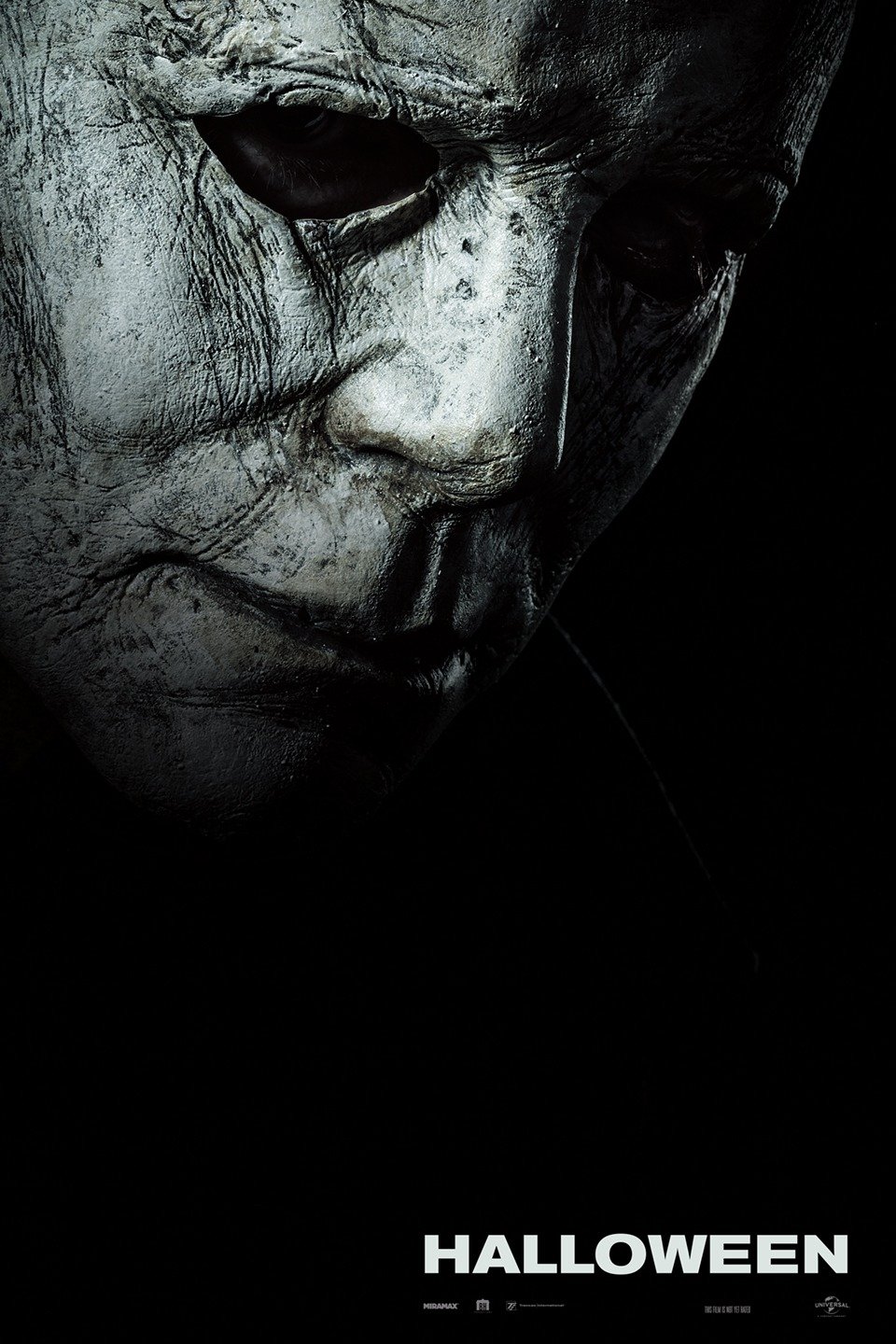
Halloween (2018) Full Horror Film Review

Happy Halloween Michael! David Gordon Green’s Halloween truly is the sequel that we have been waiting for in the Halloween franchise. Green set out to direct a Halloween movie that he desired to work both as an homage to the original whilst crafting an original story that could do more than be a great horror film, but be a great film period. And suffice it to say, he delivered in spades (or knives, as it were haha). Words cannot even begin to capture the energy of the auditorium last night. From screen to entrance Studio Movie Grill Tampa (my regular cinema) was filled with a level of energy that I’ve only ever witnessed at JurassicAvengers, and Star Wars movies. Twitter is all a’buzz this morning with those who saw it at pre-screenings and those of us who saw it at 7 o’clock last night. When I’ve been asked what I think, I am quick to respond that you need to throw out the rule book because Michael is writing this story. From echoes of the original (and some of Halloween 2) it still succeeds in providing longtime fans and those newly discovering the franchise with an original story that will hook you from the very beginning when you realize that all bets are off because no one is safe. It’s thrilling, engaging, and fun. It may lack Dean Cundey’s brilliant cinematography from the original (he was also the cinematographer for Jurassic Park, Carpenter’s The Thing and Back to the Future), but visually the film has those quintessential moments that act as a throwback to Carpenter’s original groundbreaking slasher. From the vintage opening title sequence accompanied by that iconic score to the showdown, Blum House’s Halloween is a brilliant addition to the franchise and is destined to be a future classic.

For my conversation about Halloween with the guys across the pond at the Movie Drone Podcast, be sure to watch for that episode dropping on Sunday wherever you get your pods.

It’s been 40 years to the day that Michael Myers (James Jude Courtney), the boogeyman, committed the infamous Haddonfield Halloween murders and 55 years since Judith Myers was stabbed to death. On Halloween night, Michael escapes from a bus that was transferring him from Smith Grove to a maximum security prison when the transfer goes horribly wrong. News of this escape puts Laurie Strode (Jamie Lee Curtis) on high alert as she knows he is heading for Haddonfield. Only this time, she is ready for him. Laurie is challenged with protecting herself while also protecting her daughter’s family. More than protecting herself and her family, Laurie is out for blood. With it being so long since the infamous murders, the town has largely let its guard down. History has faded into myth. But Laurie knew that Michael would be back one day, and she is fully prepared to face-off with the real-life boogeyman.

From the moment the film cuts to the vintage titles and the smashed jack-o-lantern becoming whole again, after the prologue, I knew that I was in for a real treat. That music is so incredibly iconic; those familiar chords are enough to strike fear in those who listen. Although many in the general audience may overlook the power of an opening title sequence, the typeface, transitions, music, and jack-o-lantern work together in order to communicate to the audience that David Gordon Green recognizes and respects the original and knows that you will love this installment that goes back to what made the first one work so well. It’s as if he is stating to the audience “I’ve heard you and I love the original too.” Instead of falling in line with current trends in horror films, Green is communicating to the audience that he is taking this franchise back to the roots. and back to the roots, he did. For fans of the franchise, you will undoubtedly recognize some easter eggs and other moments in the plot and kills that are nods to the original. Nods with a slight twist. I love the moments that connected me to the original. Same may call it shallow fan service, but I call that branding. Branding is important to a franchise, because those are the moments that are quintessential to the experience. And these moments in the film, that I see as branding, connect us to the original. Holding back on that branding would inhibit the nostalgia from shining briefly here and there. So much of Michael and Laurie’s identities are connected to those branding moments. However, don’t allow the return to channeling what made the first one work so well lead you to believe that you have it all figured out. While the soul of the original is there, the plot is full of twists and turns because just as Laurie was ready for Michael, he was ready for all of us sitting out there in the dark.

Written by Green, Danny McBride, and Jeff Fragley, this installment in the Halloween franchise was written to be a true continuation of the original story, ignoring everything that came after it. On that note, I like Halloween 2 and Halloween H20 but I am also equally pleased that this one essentially takes all the sequels and chalks them up to fan fiction. Could H2 and H20 have been included and the film still play out just as original and powerful? I think so, but at the same time, I did not find myself missing those installments. By placing this story 40 years after the original, it was able to remove all the absurdities of most of the others and start afresh. Missing from many of the other sequels was the playful nature of the original. Horror movies are supposed to be fun! Scary but fun. Even though there is murder and mayhem in a horror movie, that does not mean that it should be without those humorous moments. Fortunately for Green’s Halloween, the screenplay provides us with a simple revenge plot with a fantastically complex cast of principal characters. There is this refreshing exuberance I felt in the experience of this film. It was almost the same feeling that I got when I watched the original Halloween for the first time. The reason horror is used in events like Halloween Horror Nights and Howl-O-Scream is because there is a high level of amusement in it. And the screenplay of this film has perfect levels of horror and humor to keep you hooked and entertained for the whole time. Beyond the excellent direction Green provided, Jamie Lee looks so incredibly satisfying reprising her breakout role, we get a throwback Michael, and more. The key to the success of this film is the solid screenwriting. Moreover, this is not only a fantastic horror movie, it’s a solid film with no clarifier needed.

Before getting into content that requires me to talk spoilers, I want to explore the characters of Michael and Laurie specifically. Entire theses could be written on this subject, but let’s look at some of the main points. You may have asked yourself “what makes Michael tick?” The short answer: we do not know enough about his psychology, sociology, or physiology to know for sure. And that is a good thing! Why? Because if we knew too much about his mind and body, he would cease to be the boogeyman. And being the boogeyman is so important to, not only this franchise, but horror in general. That little bit of mystery and fantasy allow him to remain a monster to be feared and never truly understood. You see what happens to people in the film who seek to understand Michael better–hint–it’s not good. But since we are voyeurs who are obsessed with knowing, here is the long and short of what we know. According to Casandra Dodge (Ph.D. in criminology candidate at the University of South Florida), Michael likely suffers from and displays signs of a combination of antisocial personality disorder, schizophrenia, and obsessive compulsive disorder. We do not know enough to draw these conclusions, but there are signs of a combination of these psycho-social disorders.

Laurie is even more fascinating in this film than she was in the original. In many ways, she takes on some of the characteristics of Dr. Loomis from the first movie. He warned everyone about Michael’s violent behavior and would not be swayed into thinking that he could be rehabilitated. He was ready to kill Michael at every turn. Like Michael likely suffers from OCD, Laurie and Dr. Loomis also show signs of this disorder. Moreover, Laurie also displays signs of being a psychopath herself. Loomis, Laurie, and Michael could all be psychopaths. But contrary to popular belief, very few psychopaths are violent. In fact, careers for people that could be classified as psychopaths include: lawyers, surgeons, law enforcement, professors, artists, and more. Albeit I am overly simplifying, psychopathy means that you are predisposed to thrill-seeking behaviors and tend to be self-centered (among other characteristics). Laurie is less the final girl in this movie than she was in the original because she is very masculine and protective from the very beginning. There is no one defining moment that she sheds her (heteronormatively speaking) feminine self and takes on the traditional role of a man in stories to save the day and ultimately survive the killer. She is out for revenge the whole movie. I also appreciate how her character provides commentary on the realness of PTSD, and and the affects it has upon the whole body. On the note of revenge, the plot of this film aligns more closely with a revenge plot than a morality play. No mistaking it, Laurie Strode is back, and more phenomenal than ever! I love her character.

(spoilers ahead)

Substance and commentary. The original slashers such as HalloweenFriday the 13thA Nightmare on Elm Street, and other horror films (that do not fall into the slasher genre) hold up so incredibly well because there is a high degree of subtext that provides a solid foundation upon which to build the more superficial elements of the plot. At its core, the traditional slasher and is a morality play. And this morality goes beyond have casual sex and die or do drugs and die. But the aforementioned are recurring themes in these films. What I appreciate about the new Halloween is not following that approach–at least, not in the same way. It would be all too easy to pick-out the murders based upon that theoretical framework, and Michael is not about to have that. Characters you think will die do not, and other characters that you may not think will die, wind up another Haddonfield victim. The best example of this abandonment of the more traditional approach to slashers is the first kills. One of the past tropes of horror films is that if you are a kid or gay (or queer) you don’t die. Guess again, the 12yo boy who happens upon Michael’s transport bus who prefers dancing to hunting (tipping the hand to the fact he is likely gay) becomes one of Michael’s first victims. This is an indicator that all bets are off–no one is safe. Furthermore, the babysitter that is killed is someone whom is rather likable. She’s a good babysitter–loves her kid–and even when with her boyfriend comes over to the house, they do not engage in anything beyond “dry humping” and some weed smoking. No sex or hardcore drug usage here. Such a great approach because we like the babysitter; however, she winds up a victim anyhow. And Allison’s (Laurie’s grand-daughter) boyfriend kisses another girl at the school dance, but he does not wind up a victim. Although I would have preferred that he died, I like the fact that the rule book is thrown out.

The film also toys around with the idea of the Final Girl by playing around with the hard definition that we’ve recognized for all these years. And it pays off! Furthermore, we have some excellent commentary on and foreshadowing of the role Allison will play later on in the film. She and her boyfriend go to the high school Halloween dance as Bonnie and Clyde–with a twist! They gender bent the costumes. Showing Allison in the pants, foreshadows that she has that same androgynous image that Laurie had in the first film, tipping the hat that she is our final girl. However, she is not the only final girl. We have final girls in this movie. But this concept runs deeper than just the simple fact that we have a trifecta of female heroines. There is pattern established in the movie that when one faces Michael alone that he cannot be defeated. While the journalists at the beginning may seem like mere plot devices through which Michael gets his mask returned, they are so much more. They start the pattern because by themselves, they cannot defeat Michael, and die. The babysitter couldn’t defeat him alone, and her boyfriend died trying to protect his girlfriend. All of them on their own. Even Laurie, though being a solid match for Michael, cannot defeat him on her own either. It’s only when Laurie teams up with her daughter and grand-daughter that Michael can be taken down. Love this!

We also have some poetic justice kills. Loomis’ protege who seeks to use Michael for his own personal gain in the fields of science and academia. He is so incredibly prideful in the capabilities of his brain that his kill is symbolic that Michael will not be used to further his pretentious intellect. He stomps on his head like a pumpkin and the brain matter explodes like pumpkin seeds n a flash on screen (note: this is the most graphic kill). Likewise, the journalists who were using Michael to further their own careers by attempting to be smarter than Michael and even patronizing, wind up dead with primarily injuries to the head. Incredibly symbolic! Furthermore, there are other kills that serve purposes to comment on behavior and intention as well. In addition to symbolic kills and homages to the original, there is a recurring pumpkin and jack-o-lantern motif in the film. I need to watch again, but I believe we have a jack-o-lantern in nearly every scene like we do in the original. In fact, two of the heads of victims are turned into jack-o-lanterns with a flashlight shining out through the decapitated heads. While much of what I have described sounds grossly violent, there is far more violence off screen than what we actually see. Even the kills that are on the screen do not linger. This is important because lingering violence detracts from the narrative and becomes shallow spectacle. Green has a nice balance between narrative and spectacle. He truly showcases he art of storytelling all through Halloween.

Do yourself a favor and go see this movie! It was everything that I wanted it to be. Not only is it a great horror film, it’s a great film period. From the writing to the direction, production design, music and more. It is destined to be a future horror classic worthy of many rewatches.

Profile_PicRyan teaches screenwriting at the University of Tampa. If you like this article, check out the others and FOLLOW this blog! Interested in Ryan making a guest appearance on your podcast or contributing to your website? Send him a DM on Twitter or email him at RLTerry1@gmail.com! If you’re ever in the Tampa area, feel free to catch a movie with him!

Follow him!

Twitter: RLTerry1

Instagram: RL_Terry

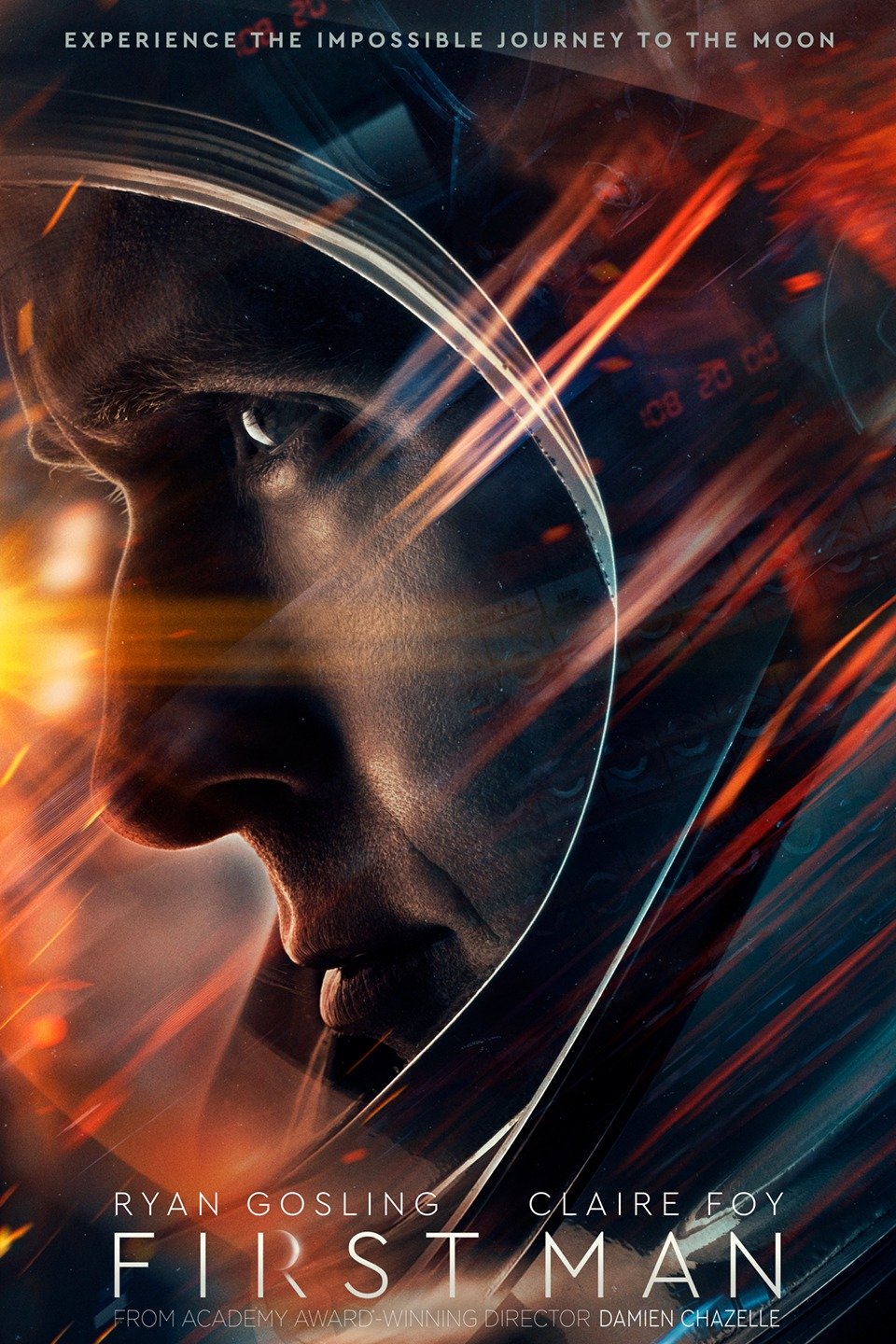
“First Man” full film review

A solidly good film eclipsed by a star that was born last week. While there have been many movies and documentaries about the space race of the mid 20th century, including the amazing Hidden Figures, this is the first film to truly take us behind NASA and into the very home of the American hero astronaut Neil Armstrong. Damien Chazelle’s First Man is not just another film that tells the story of earth to the moon using familiar events, characters, or archival footage, but instead, it takes us behind the headlines to vicariously experience what it was like for Niel and his family on this and other dangerous missions. This is not a film about the US Apollo mission to the moon nor is it about how NASA had to push through major public negative criticism of its money-sucking endeavors; it is about the hero’s journey. And our hero is Neil Armstrong. As I do not want to spend time on that ridiculous flag controversy, I will summarize that element of the film. The flag IS there at the landing site and there are plenty of flags and references to the United Staes in the film–there–moving on. When it comes to a Chazelle film, I expect a strong screenplay to serve as the foundation upon which the visual elements are build. Unfortunately, Chazelle did not write this film and it shows. It suffers from a weak screenplay that has repercussions felt through the movie. Some critics have been writing about the strong emotional tug in the movie, but I did not feel it. I also feel that Gosling was not at the top of his game, compared to past performances. First Man is all around good, and I hope for nominations for it! It’s just not as strong as I had hoped the next Chazelle film would be. Compared to A Star is BornFirst Man is not as strong and I imagine the popularity of this week’s Halloween will also cast a shadow on this riveting story.

Before Neil Armstrong uttered his now famous words when he stepped foot on the moon, he first had get there. But he had to endure a lot more than just training for the Gemini and Apollo missions in order to be the first man on the moon. More than previous films such as The Right Stuff and Apollo 13 also about critical space missions, this one practically places you in the cockpit for a first person journey from earth to the moon. You will be taken back by the sheer number of personal and professional tragedies to befall Armstrong; and furthermore, you’ll feel the vibrations of the rocket, the out of control spinning, and the moments where you are on the cliff facing death. Follow Neil and his family on this turbulent drama that takes the fascination with and mind-blowing nature of the cockpit and turn it into an image and confinement to dread for it feels more like a death trap than the bridge of forging a new frontier.

This is a drama, not an action movie. So if you are searching for a space adventure, then this is not a film for you. But if you want to learn more about the first man on the moon, what he went through personally and professionally and feel what he felt, then this is a film for you. Incredible opening scene! Hitchcock once stated that a writer or director needs to drop the audience into the middle of the action in order to instantly hook them into the story. One of the cardinal rules of screenwriting is to start each scene as close to the end of the scene as possible in order to write leanly and effectively. That is precisely what awaits you at the beginning of First Man. No ramping up to conflict here; you are in the cockpit with Neil Armstrong as he is testing an aircraft when the ship begins to drift closer to space instead of returning to the ground. This opening scene is one of the most incredible ones that I have seen in a long time. Heart pounding. Demonstrating his mastery of visual storytelling, Chazelle crafts an opening scene that thrusts you into a gritty, visceral journey that will leave you breathless. As intense as this scene is, there are man others in the film that will place you at the brink of death and destruction in an effort to puncture a hole into what is possible with the fledgling space program.

On the heels of that incredibly intense scene, Chazelle takes us to a hospital where Neil daughter Karen is undergoing radiation therapy for her tumor. In an attempt to channel Pixar-like storytelling for the opening of a film, we quickly follow the family from the hospital to a funeral for a fellow pilot, at which his daughter is playing, to Neil battling insurance companies and doctors over the phone to an intimate father-daughter moment to lowering Karen’s casket in the ground. As emotional as this opening sequence is, it falls short of where it needed to be in order to truly evoke the strong emotion for which the film was going. Compared to watching A Star is Born the week prior, I was not feeling as strong an emotional connection to these characters to justify how I was supposed to feel after these scenes. Audiences were not given sufficient time to connect with the characters in order to feel the heartache intended to be felt during and after the funeral. It was sad for sure, but not devastating. That being said, it is entirely possible that audience members who have children may have felt the heart-wrenching moment differently because of knowing what it’s like to have a child. It is evident that Chazelle did not write this film because the screenplay is on the weaker side. Now, I am not suggesting the story is weak compared to most films. On the contrary, it is much stronger than many other films; however, compared to what I expect from Chazelle, it is weaker than Whiplash and La La Land.

The screenplay contains three stories. The A story is Neil Armstrong’s personal journey, the B story is Neil’s relationship with his wife Janet (Claire Foy), and the C story is his career at NASA. There is clearly a desperate attempt to link the tragedy of Neil’s daughter to his hell-bent nature to constantly take himself close to death, putting his family and marriage under immense strain. With the tragedy of Karen not sufficiently setup and rushed through, it is hard to connect it to the rest of the movie. The film wants audiences to believe that dangerous missions are Neil’s coping mechanisms to deal with the death of his daughter, but there just isn’t enough evidence in the film support that. I see Chazelle’s desire to link Karen’s death to Neil’s desire to put himself and his family in physiological and emotional harm’s way. In terms of the character development of Neil, the stoic behavior, monosyllabic responses, countless moments of silence, and machismo become repetitive and boring. Although he certainly battles inner demons and real-world obstacles in order to eventually reach the moon, I don’t witness inner character development throughout the screenplay. Neil, at the end of the story, is pretty much the same Neil we meet at the beginning. While we are witness to the strife in his marriage to Janet, that relationship goes no where as well. There is simply no character arc or growth in this film. And that is what hinders this screenplay from being great.

Perhaps the film was built upon a weak screenplay, but there is quite a lot to like about it! Much like Interstellar was showered with nominations and wins in the technical categories, First Man will likely also see nominations for score, sound, editing, cinematography and more. From a technical achievement perspective, this film is incredible to behold. If you have the opportunity to watch the film in IMAX, then that is definitely what you want to do for the full, immersive experience. When you cannot pick out the score, that is often the park of a brilliantly diegetic score that seamlessly integrates into the film. There is a highly emotional component to the score that enhances the screenplay and picks up where the screenplay felt off in order to evoke that emotional response. I absolutely loved the cinematography. Much like the score, the cinematography felt so incredibly natural, so organic. Whether the camera is providing me with a subjective or objective POV, it frames each shot perfectly to communicate the tension and suspense. All around, Chazelle takes all the elements (except the screenplay) of the film and combines them for a solidly good film.

Some quick notes on the performances, I found that Gosling delivered an above average performance. And that’s above average for him, not compared to the litany of other actors. Obviously, compared to other actors, he is at the top of his game. But I feel that he is stronger in La La Land. And the reason for this performance that just didn’t quite hit the mark for me can be traced back to the screenplay. I’ve no doubt that he will be nominated–and he should–but I’ve little confidence that he will win. Claire Foy’s performance of as Janet Armstrong is fantastic! She will most likely also see a nomination for her role as the wife of the first man on the moon. She was incredibly strong, determined, and loyal. She demonstrates a stronger character growth arc than Gosling. The screenplay appears to have developed her character more effectively than his. Compared to the other performances in the film, hers is the most standout.

Definitely see this film. Just because it suffers from a weak screenplay does not mean that it doesn’t have a lot of offer. I greatly appreciate this film for taking us on an intimate journey with the Armstrong family. This is a story that has not been told on screen before and truly shows us the personal and professional links that Neil Armstrong went to in order to stand on the moon and announce to the world “one small step for man, one giant leap for mankind.”

Ryan is a screenwriting professor at the University of Tampa. If you like this article, check out the others and FOLLOW this blog!

Follow him!

Twitter: RLTerry1

Instagram: RL_Terry

Thrillz (theme parks): Thrillz.co