“Arrival” movie review

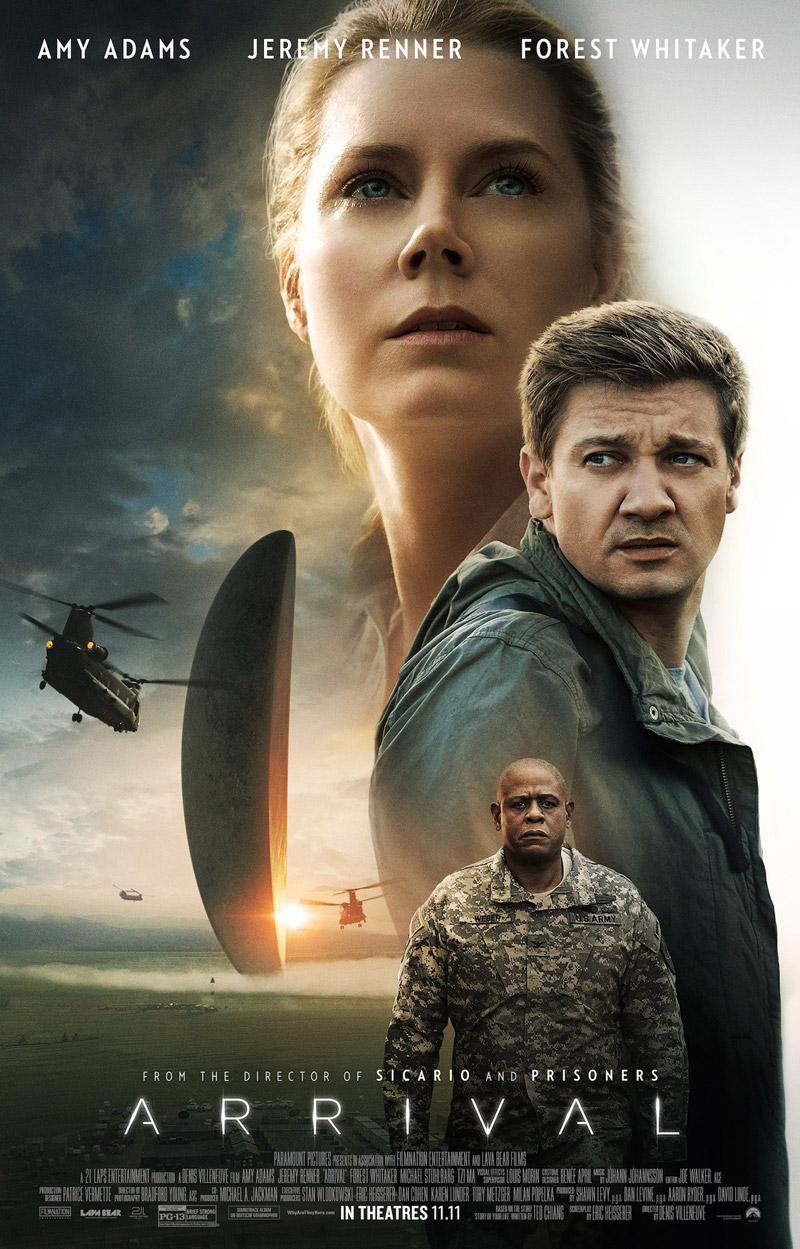
arrivalposterYou’ll want to see it again. Prepare yourself for an extraordinary cinematic journey in this science-fiction thriller complete with commentary on the human condition. From the exhilarating cinematography to the incredible awe-inspiring visual effects, Arrival will have you hooked from the very beginning. Based on the book Story of Your Life and Directed by Denis Villeneuve (SicarioPrisoners), Arrival boasts an outstanding cinematic experience that is as much cerebral as it is visceral. Your very perceptions of time and memory will be questioned and force you to open your mind to endless possibilities. Poignantly, this film takes you on a journey that will show you that we need to change and that we can change. On the verge of avant-garde, Arrival pushes the limits of traditional visual storytelling and creates an innovative method for conveying social commentary within the science-fiction genre. Following the final fade to black, you’ll want to discuss this film with your friends. Reignite your sense of wonder. Arrival is more than a story; it’s an experience!

After twelve egg-like unidentified objects land on earth, the U.S. Government calls upon expert linguist Dr. Louise Banks (Amy Adams) and theoretical physicist Ian Donnelly (Jeremy Renner) to crack the mystery and develop a means of communication with the homogenous alien species. While much of the world is on the brink of an all-out assault on the aliens, Banks is determined to establish a rapport and open communications with the species. Starting with basic words and working up to complex sentences, Banks knows she has to learn the aliens’ language in order to better understand why they have come. When things take a turn for the worst, Banks and Donnelly have precious little time to stop countries from engaging in battle with risk of war. With so little time to unravel the mystery of why the aliens are here and what they want, Banks will find herself on a mind-blowing journey of her own.

You’ve just got to see it. There is so much that I want to talk about, but it would spoil so much of the film. I’ve mentioned before that there are great ‘movies’ that are mediocre ‘films,’ but this is a prime example of an excellent movie AND brilliant film. The brilliance of this film is not in the stunning visuals, although that is certainly part of it; the brilliance lies within the cinematic and experiential storytelling. During the big reveal at the end of the film, your mind will be blown. You’ll find yourself wanting to watch it again to more clearly understand the strategic placement of the pieces of the puzzle. During a time in which the country appears so incredibly fractured, this film will provide audiences with a renewed sense of wonder and appreciation for that which one may not fully understand. Making the tough calls and putting one’s life at risk of what is right is also woven throughout this story. The theme of Arrival is not fully realized until the latter half of the film. More than a surface-level story about that which I cannot mention without giving it away, this film possesses a dynamic range of themes just beckoning for interpretation. As this film bares much similarity to avant-garde cinema in the reimagining of traditional storytelling, it will evoke a powerful emotional response.

Amy Adams and Jeremy Renner deliver outstanding performances in the lead roles. Taking center stage for most of the film, Adams breaks new ground as an actor in this role that is nearly a complete departure from most of her other roles. Both Adams and Renner display excellent chemistry in their respective characters. Although Adams is the central character and responsible for the drive of the plot, Renner is strategically placed to reinforce the affects Adams’ character has upon the plot. Forest Whitaker also plays a strong colonel and was an excellent choice for his role as well. The success of the cast can be attributed to both the outstanding direction from Villeneuve and the incredible screenplay by Eric Heisserer. Bradford Young’s cinematography is so simple but yet so beautiful and profound. It is of no surprise that this film is being touted as one of the best movies of the year and has a nearly unprecedented 100% on Rotten Tomatoes.

Whether you are a linguist yourself or just enjoy an exhilarating cinematic journey, Arrival is definitely the film to catch this weekend. For the Star Trek TNG or Voyager fans out there, you will find that Arrival possesses some of the same great content that sets Star Trek apart from other science-fiction shows due to the human condition being central to the overall plot. If you enjoy movies that prompt you to revisit how you perceive your life, time, or space, then you will not be disappointed. There are so many levels to this film. You’ll likely find yourself wanting to see it again after fully realizing the innovative plot. Hopefully this film receives some Oscar noms in the upcoming award season.
“Jack Reacher: Never Go Back” movie review

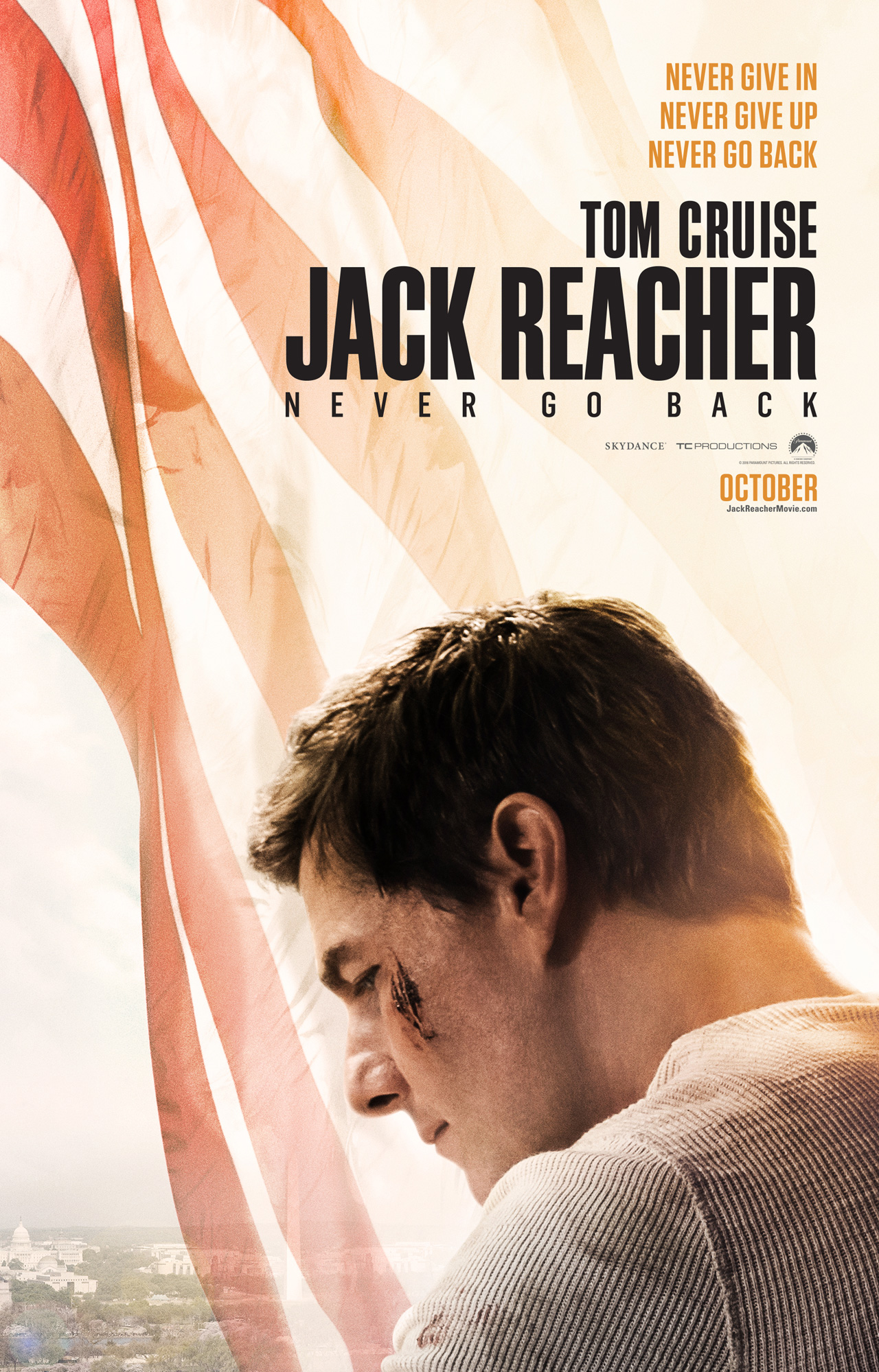
jackreacherposterOutstanding action movie! Paramount Pictures and Skydance’s Jack Reacher: Never Go Back simply does not disappoint. Jack Reacher may never become a household name like James Bond or Jason Bourne, but Tom Cruise proves once again that he truly is an action hero. Furthermore, Cruise is probably the best example of a movie star in the classical sense. You know an actor is truly a movie star when the public refers to his or her movies as “the new Tom Cruise movie.” Even the Bourne and Bond movies are not referred to by the respective actors. Lee Childs’ best-seller makes for an excellent cinematic military conspiracy action thriller! Separating this Reacher installment from the previous one and the Bond and Bourne movies is the fact that Childs and writer-director Edward Zwick give Reacher a pseudo-nuclear family. Although action movies are the epitome of high concept films, by adding a pseudo-nuclear family, a very human element is added to the story that adds some depth and allows for humor that otherwise wouldn’t work. Never Go Back comes complete with equal amounts of bad ass action and levity. Not terribly cerebral, this action-thriller provides audiences with a couple hours of high impact cinematic entertainment at which you can sit back, take your mind off life outside of the auditorium, and enjoy the action that only Tom Cruise can bring to the screen.

The Clint Eastwood-esque action hero is back. After busting a corrupt sheriff’s office in Oklahoma, Reacher (Cruise) finds himself amidst a conspiracy and coverup involving the C.O. (commanding officer) who took over his previous position. Mgr. Susan Turner (Cobie Smulders) is arrested on charges of espionage. Believing strongly that Turner is being setup, Reacher doesn’t hold back in solving the mystery and taking out those who would stand in his way. Crossing paths with the military police himself, Reacher soon finds out that the corruption runs deeper than he first thought. When faced with not only the dilemma of Turner but also the possibility that he may have fathered a child, Reacher must fight two concurrent battles. With mind and body under attack, Reacher stops at nothing to exonerate Turner and provide protection for his possible daughter.

Upon watching this film, I couldn’t help but notice the similarities between Never Go Back and Eastwood’s The Outlaw Josey Wales, by all accounts a masterpiece by the legendary actor and filmmaker. Both stories are about a renegade/loner who acquires a family of sorts. Although the film is very well produced, there is a flaw in that it is apparent that Reacher wants to ‘reach’ further and delve deeper than the superficial plot allows for. Evidence of this is in his dialog that suggests that he wants to be a more dynamic individual who is capable of love and devotion but gets stuck being the action hero all the time because violence is the only thing at which he excels. One of the most prominent themes in the movie is the juxtaposition between high intensity fight scenes and deadpan humorous family drama. By including contrasting elements, the film provides a real opportunity to love the protagonists and hate the antagonists.

Cruise definitely displays some of the best acting of his career in this installment of the Jack Reacher series. He does an excellent job of communicating the difficulty in balancing both the defensive and offensive in terms of protecting his “family” and providing empathetic nurture. I suppose one could infer that the film contains a reimagined “nature vs. nurture” quandary. His reaction to his possible daughter is classic. Throughout the dialog and blocking, it is clear that Reacher is struggling with how to be a dad-like figure but also keep his focus on solving the mystery. Just like any Eastwood-esque story about a loner who has a taste of what being part of a family  is like, the movie ends with a fated goodbye scene between his ‘daughter’ Samantha (Danika Yarosh) and himself. But just before it get too heartbreaking, Zwick throws in a pleasant twist.

If you are in the mood for a good old-fashioned military conspiracy action drama, then look no further. Jack Reacher: Never Go Back strikes a fun balance between kung-fu movies and quirky family dramas. Cruise will definitely not disappoint in this film He does what he always does. Provides us with solid action-star acting coupled with some humor along the way.

“Ben-Hur” (2016) movie review

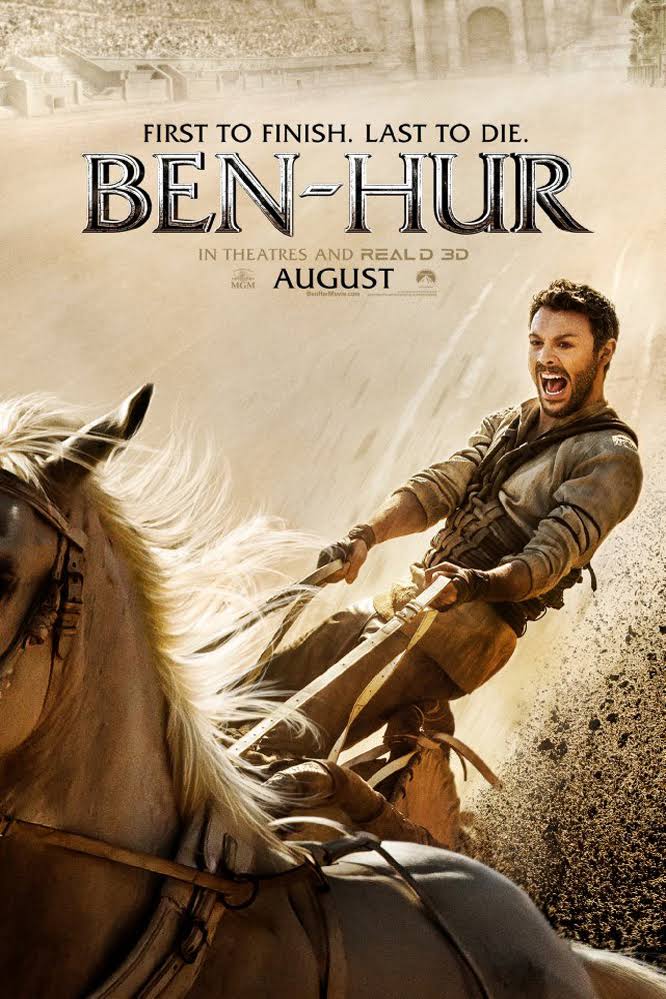
BenHurJust as epic a story today as it was during Hollywood’s golden age! Paramount Pictures and MGM Studios present the reimagined classic historical drama of Ben-Hur. Appropriately released by two of the most recognized names in the industry harkening back to the early days of cinema, Ben-Hur plays out almost as well as it did decades ago. Sitting in the auditorium last night, I wondered what it was like to see a larger-than-life nail-biting story on the silver screen when the original was released in 1959, just before the final decline of the former powerhouse of motion picture production, the studio system. The grand experience of this film is only overshadowed by the unusual pacing. Typically epic stories require a minimum of two hours, and often come close to 3-hour runtimes in order to do the story justice and tell it visually and emotionally in the most impactful way possible; however, this film is just over two hours. This moderately quick pacing hinders one’s ability to really appreciate the foreground and background stories. The grandeur of the Roman Empire fails to show as prominently as it should have in this film that bares a striking resemblance to Ridley Scott’s Gladiator in many respects. There are many sweeping shots of the Circus (chariot racing arena) that are disappointingly mostly CGI’d. Still, there is something remarkable about this story. Whether you are approaching this film from a historic standpoint (historic in an appreciation for classic Hollywood stories), religious perspective (forgiveness and sacrifice), or simply for the bad ass racing of chariots in a grand arena, you will likely find something to enjoy about this movie.

On the backdrop of the final years of the messiah, Ben-Hur is about a Jewish prince named Judah Beh-Hur (Huston) who is falsely accused and betrayed by his adopted Roman brother Messala Severus (Kebbell). Sentenced to a life of perpetual rowing of Roman galleons in battle, Ben-Hur endears harsh treatment and near-death experiences in order to one day seek his vengeance. Meanwhile, Messala becomes a war hero and favorite of the people and the Roman prefect Pontius Pilate. When the destruction of his ship opens the door for escape, Ben-Hur finds himself washed upon the shore to be picked up by a wealthy African (Freeman) who races chariots–or pays for young men to race chariots. Striking a deal between them, the wealthy African and Ben-Hur work together to train for Ben-Hur to defeat Massala in the circus in order to reclaim his name and truly hit the Romans where it hurts–losing at their own game.

One of the most unique aspects to this film is the parallel plot between the background and foreground, the plot and subplot. At the end of the day, the message of Ben-Hur is one of forgiveness. The forgiveness between brothers and the forgiveness of Christ. Although this is not a film based upon the story of the messiah (or passion), the character of Jesus is an important element in the journey from vengeance to forgiveness. On three occasions, Ben-Hur encounters Jesus, not knowing who he is. Each of these chance meetings can be read as symbolic of the different acts (or stages) in the film itself. As the story of the passion of the Christ is one that many recognize (even those who are not Christians), it helps to get an idea of what is going on in the background at the same time at the story at the forefront of the film.

Cinematically, the film was a little disappointing. It feels like a lot of potential and opportunity for incredible cinematography and production design was wasted. Although there are many wide or establishing shots, the majority of the film consists of American medium shots. It would have been exciting to see more of the physical world of Jerusalem and the Roman Empire but instead we spend a lot of time indoors or in close proximity to our cast. Likewise, I would have liked to have seen more in the way of physical production design. The world on screen should have been one that I could have almost felt. Furthermore, I find that the pacing of the film was not adequate enough to actually tell the story in the manner in which it should have. It’s mostly like there was a 2.5-3hr movie condensed into a typical 2hr runtime. Sometimes epic films are guilty of way too much exposition, but Ben-Hur definitely could’ve benefited from additional development and exposition. Everything just happens too quickly and with minimal challenge.

Chariot racing. That is synonymous with Ben-Hur. And you will get plenty of horses, chariots, and crashes. Not unlike NASCAR of today, chariot racing was all about the violence and crashes. Thousands of spectators gathered to watch heroes battle it out on the ground of the circus (or race track) to see who will be the “first to finish…last to die.” Many early films were more concerned about the spectacle of cinema more so than the story or message. After all, MGM’s famous logo states Ars Gratia Artis (latin for “art for art’s sake”), meaning the goal of cinema was to contribute to the world of the visual and performing arts. Not necessarily to entertain, although that is certainly part of it, but to create beauty, intrigue, and push the boundaries of the mind and eye. One of the most mesmerizing elements of the original Ben-Hur was the chariot racing. Likewise, the most exciting parts of this new incarnation are the sights, sounds, and spectacle of the chariot races.

Although there are certainly areas of the film that disappointed me, as I have mentioned, I highly recommend for anyone who appreciates historic dramas that wax nostalgic the days of the golden age of Hollywood. And who doesn’t love a great chariot race???

“Florence Foster Jenkins” movie review

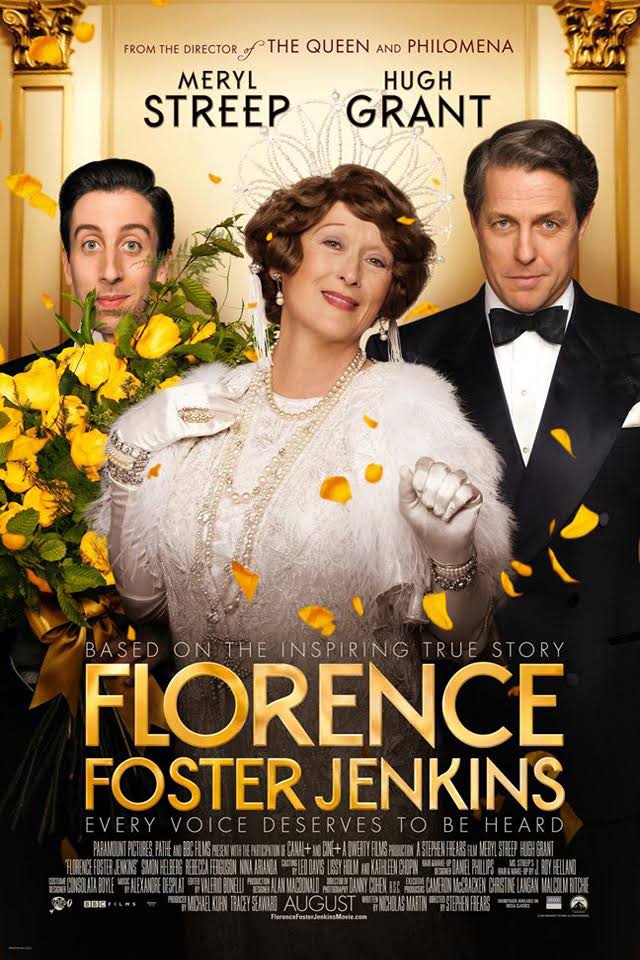
FlorenceFosterJenkinsBrilliant! Absolutely delightful. Paramount Pictures and BBC Films proudly present a magical film about one of the most legendary musical talents Madame Florence Foster Jenkins. This is the perfect film for the times that we live in. Just when so often we hear news about the worst in people, this film is about the best that people can be. Whether you are a musician or vocal artist yourself or simply appreciate the beauty of music, you will undoubtedly find this film fascinating and endearing. Meryl Streep provides audiences with a command performance as Jenkins, and will have you rolling around in your seat. Like classical music? This film has it. Prefer big band or jazz? This film has it. What about opera? It has that too. I doubt that there are many people as committed to the art of music as Jenkins was. One part musical and one part dramedy, Florence Foster Jenkins is a crowd-pleasing work of cinematic excellence. From brilliant writing to phenomenal acting, this film is a must-see for music lovers. Who would have known that someone with such a unique voice would have sung herself into the heart of millions. This film has a little something for everyone, especially those who are in the creative fields. May this film be an inspiration to all those who have drive, passion, a love for, and are dedicated to the pursuit of the arts, and open up that world to those who may not otherwise be able to experience it. Not sure what’s bigger…Jenkins’ heart or her stage presence. Whatever the case, this film is definitely one to catch on the big screen!

Return to New York City in 1944. Amidst the glitz, glamour, and sound of the very heart of the performing arts is a story of laughter and tears, but most importantly about a true unconditional love for both music and our friends and neighbors. Meet Florence Foster Jenkins (Streep). She is a well-known New York socialite who is a dedicated patron of the  arts, specifically music. She has transferred her love of music to a love of bringing people into her world. With ambitions dreams of becoming the next great opera singer, she records albums and books Carnegie Hall. There’s only one small problem; unfortunately her ambition is only succeed by her lack of an ability to carry a tune. In her head, she is an absolutely incredible talent. However, to everyone else, she sounds laughable. It matters not! She is determined to showcase her love of music to the world. Giving away 1000 tickets to military service members, she plans to fill the hallowed halls of Carnegie with the sounds of music and love. Her husband/manager St. Clair Bayfield (Hugh Grant) and accompanist Cosme McMoon (Simon Helberg) both stick by her as she plans to take Carnegie Hall by storm! Together they embark on a legendary journey that is still talked about and listened to today.

It’s so hard to know where to begin. There is quite possibly no film that truly captures the love of music and our fellow man nearly as remarkably as this film. Truly inspirational. From the writing, to the acting, to the sound track, it is a flawless story that is definitely best experienced on the big screen for Jenkins was truly a larger than life talent herself. You’ll laugh, laugh some more, and even cry a little. In many ways, this film fits the drawing room comedy subgenre of films. There are very few set changes, it is mostly dialog driven, and features various forms of comedy all working together to support a light-hearted film about the love of music. Instead of taking place in the drawing room of a home with a dynamic set of manners and social criticisms, this film takes place mostly in the homes of Jenkins, Bayfield, with a visit to the humble abode of McMoon. There is one common thread between all of them, there is either a piano or other device playing music that greatly affects the narrative. Paralleling real life, you have the grand piano in a magnificent Manhattan apartment belonging to someone who cannot play or sing very well–anymore, anyway. There is the basic, beat up upright piano in the home of a wonderfully talented pianist. And finally the home of the one without much talent at all who makes a better manager, there is a radio. Three different characters who seem to come together in the most brilliant of fashion. Each with a different part to play in the grand scheme of things. I greatly appreciate the film for keeping the focus on the love of music and not on the comedic flat, sharp, and howling notes of Jenkins’ voice.

As we are on the cusp of Oscar season (typically beginning in October), Streep’s portrayal of the, say, Ed Wood of opera singers could very well give her an Oscar nom. Making it her 20th! I don’t think there is anyone who could have played the roll as well as Streep. Yes, Strep is–no surprise–excellent at everything she does; still, there are roles that even surprise us. This is definitely one of the latter. When exploring the eccentric character of Jenkins, I am reminded of a character that is essentially a Norma Desmond of sorts. A faded star who refuses to admit her years and has extreme determination to return to the silver screen, or in this case, the stage at Carnegie Hall. Other than the inspirational message and creative storytelling based on actual events, I greatly appreciate the characters of the movie. Seems as though that Jenkins, Bayfield, and McMoon were made for each other. All unique in some form or fashion, depend on one another to achieve goals, and are more talented in their respective heads than in real life. Except. You cannot really say that about McMoon. He is definitely aware of his talent, but is so incredibly timid, shy, lacking confidence that he has extreme difficulty in allowing his talent to flourish. Much like Jenkins, Bayfield is a dedicated actor. Unfortunately, he too is much more talented in his mind than on the stage. Comedy is born out of conflict, and this beautiful film has plenty of conflict with which the characters to engage one another.

This film also highlights how incredibly devastating one critic’s review of a performance can be. Whether we are exploring film, theatre, music, or literature, a critic for a high profile outlet can make or break dreams. There are two kinds of critics, speaking as one myself. There is the critic who is so fixated on the technical components or surface level performance that he or she misses the soul of the performance or movie. Not that having a beautiful message overshadows poor production quality. However, there is a delicate balance that is important to strike to truly review or analyze a creative work. Did Florence Foster Jenkins’ performance accomplish what it set out to do? Indeed it did. Was it effective for injecting laughter into the lives of the soldiers and Manhattan music patronage community? Absolutely. She was and is truly a legend of incredible talent. Maybe not in the conventional sense, but she left a lasting impression  that has captured the imagination and attention of the world for decades. Director Stephen Frears successfully applies his vision of the story of Jenkins and translates it to the screen in a way that will inspire you to perhaps continue to pursue your own dreams no matter how much talent, or lack thereof, you have.

Don’t allow this movie to quietly slip by. Definitely catch it in theaters because Simon Helberg introduces the film and there is a behind-the-scenes/Q&A with Streep, Grant, and Helberg following the old-school credits.

“Star Trek: Beyond” movie review

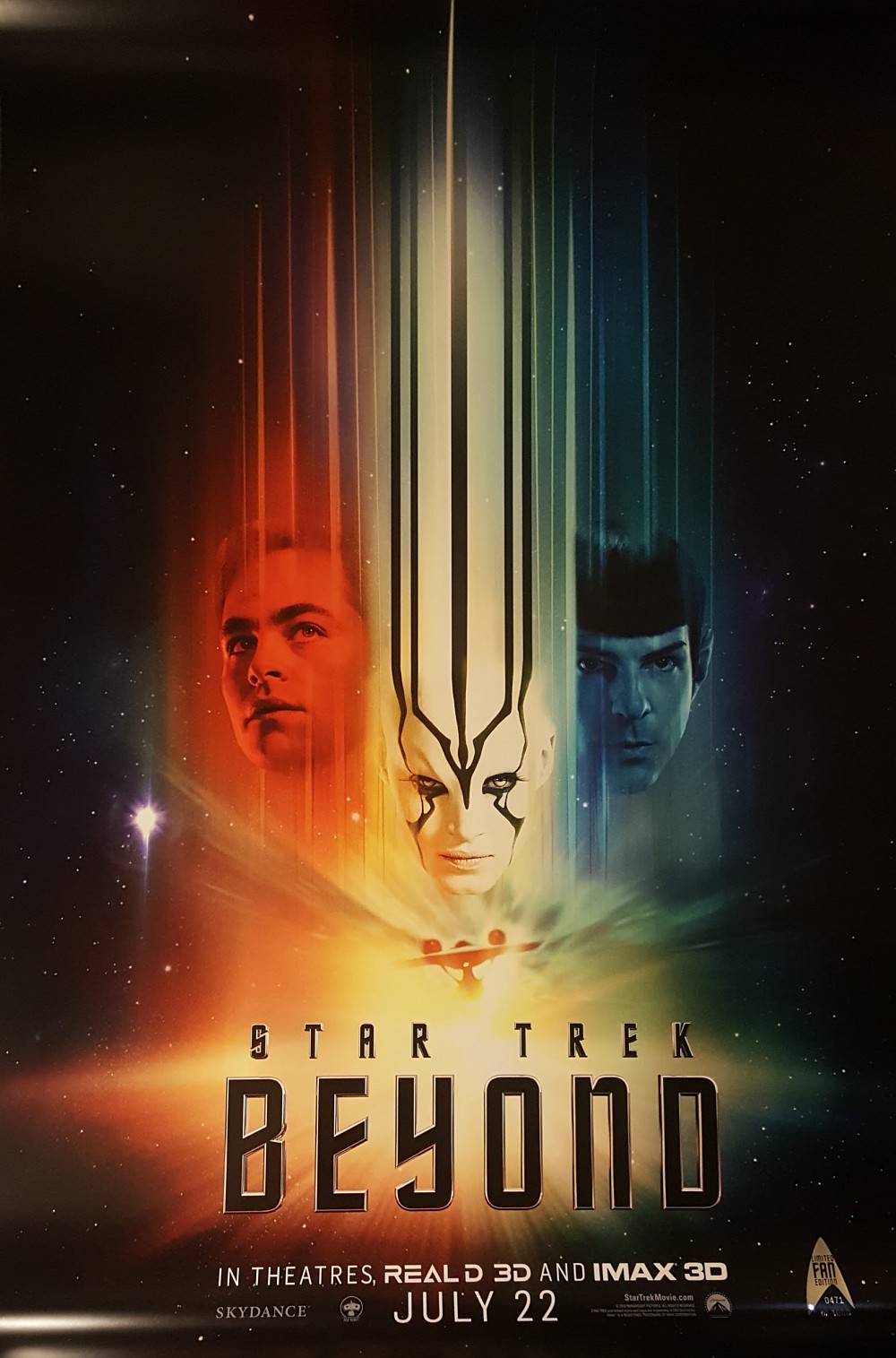
StarTrekBeyondOld school charm paired with impeccable visual storytelling! From Paramount Pictures and Bad Robot, Producer J.J. Abrams once again returns audiences to the world of Captain Kirk aboard the U.S.S. Starship Enterprise (NCC-1701) in a film that encompasses much of what was loved about the original series/movies, and combines that soul with the film production technology of today. Despite the subdued anthropological subtext, which is one of the primary differences between the Star Trek and Star Wars universes respectively, this story will definitely keep you entertained with brilliant writing and a nostalgic feel. For long-time fans of the franchise that’s been around since the 1960s, you will find that Abrams handles the settings and characters with care and respect. The third film in this reboot series, Star Trek: Beyond is one roller coaster of a ride that boasts a narrative pace that moves at warp speed. If there is one fallacy in the storytelling of this installment, in the Abrams reboot of the Gene Roddenberry classic, it is the lack of social commentary on the human condition that has been at the core of Star Trek since its creation. With a fantastic cast, incredibly strategic direction, and beautiful cinematography and visual effects, Star Trek: Beyond will whisk the audience away to the final frontier and “boldly go where no one has gone before.”

Following an encounter with an alien species at the York Town space station and colony, Captain Kirk (Chris Pine) is requested by Starfleet leadership to investigate the causes of distress in order to render help. With the possibility of accepting a Vice Admiral commission from Starfleet, Kirk sees this as his potentially final mission aboard the Enterprise. Concurrently, Mr. Spock (Zachary Quinto) is also at a crossroads in his life when he receives word that Ambassador Spock has passed away, as he contemplates picking up where Ambassador Spock left off. Gathering the crew together for what may be the final mission of Kirk and Spock, the Enterprise sets out to uncharted deep space to evaluate the problems and bring about peace. Unknown to the Enterprise crew, they are about to encounter their darkest times yet and a villain named Krall (Idris Elba) who seeks an artifact in the possession of Kirk and has a mission to destroy the Federation and bring about his own version of peace–called chaos.

As a long-time Star Trek fan myself (TNG & Voyager), one of the very first elements I picked up on at the beginning of this installment was the trademark bridge sound effects from the original Star Trek TV series. Employing a little suspension of disbelief, what with all the flat panels and touch screen displays and all, the bridge of the NCC-1701 Enterprise still boasts the old soul of the bridge that started a universe of adventures that continue to this day. Fortunately, visionary producer J.J. Abrams, director Justin Lin, and writers Simon Pegg & Doug Jung craft a story that mostly takes what made the franchise so endearing and channel it into an exciting story for audiences today. From the characters to the dialog, and from the interpersonal interactions to the settings, this Star Trek movie effectively leads the reboot of the franchise in the right direction. Having just watched Abrams’ Star Wars: the Force Awakens back in December, I was very curious as to how similar Beyond would look and feel as compared to the aforementioned. Forced to decline the director’s chair for Star Trek: Beyond, Abrams turned the reigns over to Lin while still serving as the creative producer. Directing Star Wars and producing Star Trek could have left audiences with similar cinematic experiences; however, both movies are vastly different but provide fans with excellent additions to the respective universes.

Prior to screening the movie, I was very skeptical going into it since the various trailers for the film were disappointing–looked like the film was going to be cheesy. To my surprise, the film was definitely not hokey and played out exceptionally well. Compared to the previous two films, I definitely like this one much more. That is mostly attributed to the fact that Beyond felt like a Star Trek movie. The previous two installments felt like a Star Trek movie taking place inside a Star Wars-esque universe. Hopefully, this film will redirect the reboot of the motion pictures in a direction more closely aligned with the original series and movies. With Star Wars and Star Trek trying to find their respective places in today’s culture of media, entertainment, and gaming, it is important for both series to be distinctly different from one another. Now, I don’t mean different stories or characters–obviously, that’s a given by default–but I mean the feel of the stories needs to be unique. Star Wars is an action-adventure mostly concerned with good v evil and Star Trek is science-fiction that concerns itself, traditionally anyway, with the human condition. Both take place in the future, but are different experiences. There is demonstrable evidence in Star Trek: Beyond that the franchise is seeking to stay true to its roots in anthropology and psychology; whereas Star Wars: the Force Awakens is staying true to its roots in futuristic good v evil in a galaxy far, far away.

From a technical perspective, the film is flawless; however, it would have been nice to have seen more practical effects and miniatures more so than digital effects, albeit, the effects were impressive. I appreciated the focus on the interpersonal relationships between the characters, and how it upstaged the actual conflict. Yes, the conflict in the story is important and is what drives the action, but it’s the characters themselves that are the most important element in the narrative. Does this film shift the dominant focus off Star Wars and onto Star Trek? Not particularly. But does this movie pave the way for the Star Trek movies to be on par with the Star Wars movies? I believe that we could begin to witness that trend. Star Wars has the massive advantage of being owned by the Walt Disney Company; and therefore, TWDC is integrating that IP into the parks, cruise line, and merchandise. That is HUGE. Unfortunately, Star Trek does not benefit from being owned by a distribution company and legacy studio with theme park investments in the United States, anyway. Paramount did have amusement park investments, but sold them off to Cedar Fair many years ago. Perhaps the interest in the Star Trek movies and upcoming TV series in 2017 will generate a desire for this IP to become part of a themed entertainment property as well.

With so many choices this weekend for movies it is hard to decide what to see! I am looking forward to watching Lights Out now that I have watched Star Trek: Beyond. Whether you are a fan of the original series or movies OR you are a new fan to the Star Trek universe, I feel confident that you will find much to enjoy in this newest installment in the Abrams reboot. Hopefully the film will perform well over the weekend and begin to generate an interest in the upcoming TV series as well.