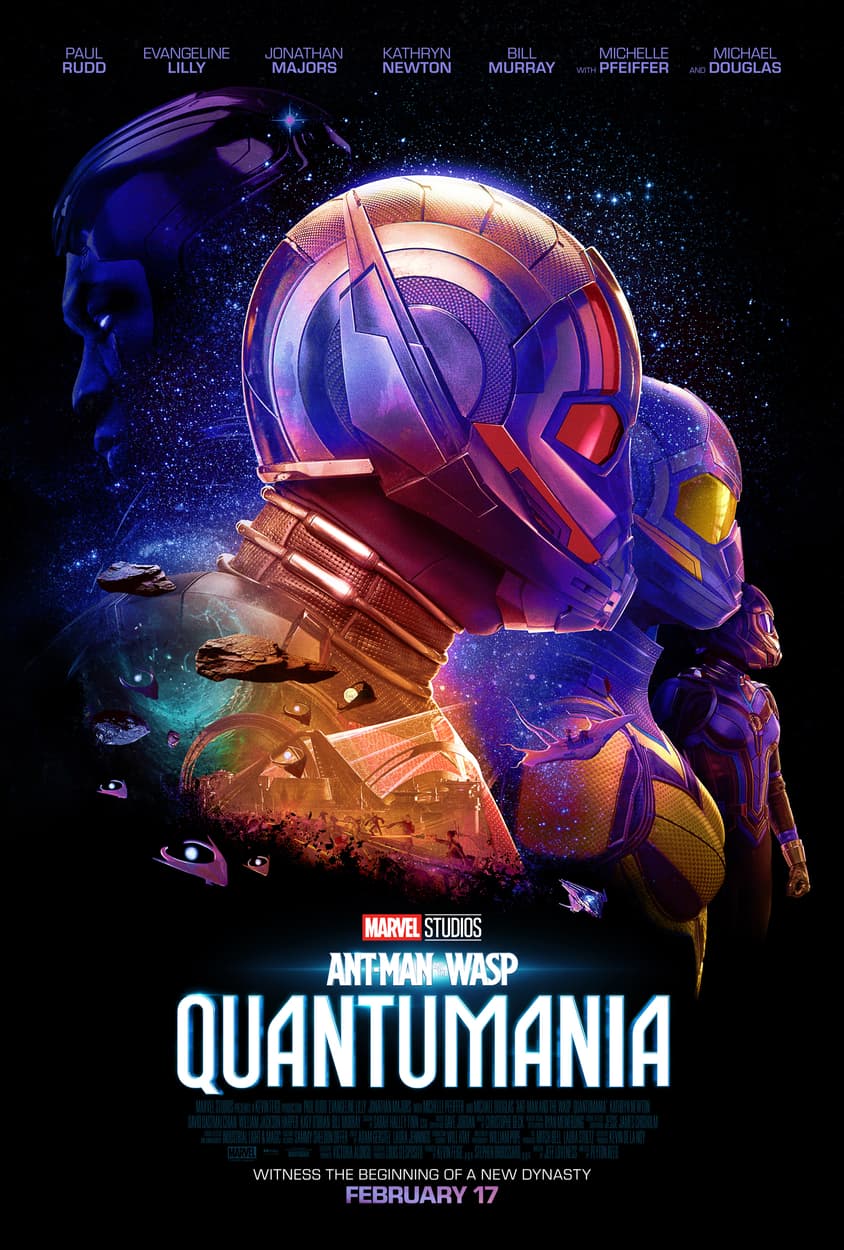
ANT-MAN AND THE WASP: QUANTUMANIA movie review

Entertaining and world-building. Phase 5 of the Marvel Cinematic Universe launches with Disney-Marvel’s Ant-Man and the Wasp: Quantumania (AWQ). This (paint-by-numbers) adventure of epic proportions benefits from a small central cast, which allows for effective character arcs and development. Furthermore, the central cast is elevated to near purrrrrrfection with the incomparable Michelle Pfeiffer’s significant screen presence as the original Wasp Janet Van Dyne. For someone that can take or leave the MCU, simply knowing that Michelle Pfeiffer is in a pivotal role, is enough to get me to watch. Perhaps that is also like you. While this is not her first time returning to the superhero genre (first did it in Ant-Man and the Wasp), this is the first time that she is front and center, giving hope that we may yet still see Pfeiffer return to her career-defining role as the definitive Catwoman.

Ant-Man and the Wasp find themselves exploring the Quantum Realm, interacting with strange new creatures and embarking on an adventure that pushes them beyond the limits of what they thought was possible.

The latest installment in the MCU mostly functions as a standalone movie, but there is clearly world building to lay the piping for Phase 5. Now, I do not follow the comics nor have seen any of the TV shows, and I was able to follow sufficiently enough, which means that anyone that has seen the MCU theatrical movies will have sufficient knowledge to follow the journey. Yes, the visual effects are expertly generated by graphics engineers, but I am seldom impressed by entire worlds that exist within the confines of a computer. There is very little real set design, which mitigates the ability to become immersed in the Quantum realm. AWQ represents what happens when a single media conglomerate owns both Marvel and Star Wars because this movie feel like the combination of Star Wars and Avengers. There is even a scene right out of the cantina on Tatooine. To the superhero movie’s credit, the plot is simple and the characters complex, so it receives high marks for screenwriting mechanics.

Par for the Disney course these days, there cannot possibly be a movie released without a dose of the cynical worldview of applied postmodernism. For AWQ, this dose comes in the first sequence of scenes following the prologue. Cassie is in jail for antagonizing law enforcement that (we are told) launched tear gas into a (we are told) peaceful protest. This serves little to no purpose, and most certainly has no bearing on the plot; therefore, it was in there simply to check off a virtue signaling box. I can see what they were trying to do–trying to show that Cassie has the early signs of going down her father’s path of delinquent behavior. If Disney-Marvel wanted this to be more poetic and elicit greater empathy from the audience, then Cassie should have been shown engaging in petty crime not activism. This would have demonstrated that Scott’s lack of engagement as a parents (due to his personal brand and professional pursuits) has had a negative impact on Cassie’s development. Furthermore, this would have provided for a greater character arc when she in instrumental in saving the universe.

What a fantastic cast!! Cast highlights include (as mentioned earlier) Michelle Pfeiffer, Michael Douglas, and a surprise cameo from Bill Murray! This otherwise paint-by-numbers superhero movie is elevated by the contributions of these exemplary actors. Even if you don’t see all the MCU movies, I highly recommend the Ant-Man movies because they are far more character-driven than the others, and the small central cast benefits from time and attention paid to their respective interpersonal journeys that provide depth to the high concept plot. For the most part, the running theme of the Ant-Man movies generally revolves around the idea of fatherhood and (by extension) parenting.

If MCU fans were looking for their next big bad, then they will find the new archenemy bent on the destruction of the known universe, without going into spoilerific details, I can say that this new villain makes Thanos look like Bowser from the Mario games, with King Koopa being our newest main villain. Be sure to stay for both the mid and post-credit scenes as they raise the stakes to exponential levels.

If you’re looking for a fun movie that you can just kick back and enjoy, then this may be your ticket. I highly recommend watching it in a premium format (such as IMAX, Dolby, or XD) because the CGI sets will shine best with the best sound and screen at your local movie theatre.
Ryan teaches Film Studies and Screenwriting at the University of Tampa and is a member of the Critics Association of Central Florida and Indie Film Critics of America. If you like this article, check out the others and FOLLOW this blog! Interested in Ryan making a guest appearance on your podcast or contributing to your website? Send him a DM on Twitter. If you’re ever in Tampa or Orlando, feel free to catch a movie with him.

Follow him on Twitter: RLTerry1 and LetterBoxd: RLTerry

Review of “French Exit”

A purrrrrfect vessel to showcase the incomparable Michelle Pfeiffer’s acting chops–complete with a–you guessed it–black cat! French Exit gets its wide exclusively theatrical release this Friday, and if you are a fan of Pfeiffer, then you don’t want to miss this whimsical, existential motion picture that’s as quirky and aimless as Frances (Pfeiffer) and Malcolm (Lucas Hedges), yet possesses an incredible charm that will hook you from the very beginning when Michelle Pfeiffer waltzes into her son’s prep school in a mink fur-lined trench coat that ostensibly gives her a larger-the-life power and protection from judgmental eyes of Manhattan high society.

Aging New York socialite Frances’ (Pfeiffer’s) is in dire straits, beset by scandal and impending bankruptcy. Her accountant tells her that she has burnt through her inheritance, and is now broke. Frances isn’t alone, she has her aimless son Malcolm, but he is of no help due to his perpetual mire in a permanent state of arrested development. Frances is forced to sell everything. Putting penury and pariahdom behind them, along with their car, the two quirky social outcasts decide to cut their losses and take the French exit. One ocean voyage later, the curious trio land in their beloved Paris, which will serve as a backdrop not for love or romance, but self-destruction and economic ruin—to riotous effect. Frances takes the last of her money and spends frivolously as she has accepted the fact that she is a cliche, but in that, she is timeless.

French Exit is based upon the novel by the same name written by the screenwriter Patrick deWitt and directed by Azazel Jacobs. While the film does not follow a typical plot structure, it does deliver a story stressing the emotional and psychological journeys of our central characters and supporting cast, which often stress individualism. Furthermore, the film delivers darkly comedic moments that explore the human condition and even human existence in and of itself. The screenwriting is filled with hilarious irony and sarcasm that often says exactly what we are thinking within a similar conflict, as the audience, but rarely have the chutzpah to state aloud. Jacobs’ and deWitt’s combination of surrealism, subjectivity, and running commentary by Frances and Malcolm create a sort of narrative ambiguity in the sense that you will undoubtedly ask questions of the film that are only ever partly answered, if answered at all. Usually this could run the risk of frustrating the audience, but it’s the off-beat comedy and Pfeiffer’s command of the screen that truly anchor this avant-garde motion picture.

Before discussing the film’s biggest selling point and sole reason to watch–Michelle Pfeiffer–I want to spend some time on the title itself, but more specifically what it represents. While on the surface the title may seem to be an extension of the slang French leave, “a departure from a location or event without informing others or without seeking approval,” which does describe the manner in which Frances and Malcolm leave New York and how Frances dramatically exits the film, it’s actually a creative nod to the style of filmmaking that is at the soul of this picture–French New Wave. In both its cinematic and literary (extrapolating from the evidence at hand) forms, French Exit is a product of the French New Wave movement in cinema, which was popularized following World War II and the massive influx of American films (most famously noir). Jacob’s vision for this existential exploration brings a fresh, auteur approach to deWitt’s screenplay using his camera-stylo to craft stylistic scenes through montage (French for assembly). Moreover, many of these shots and scenes and mesmerize the audience with excellent use of dramatic imagery that plays with audience expectation.

Throughout the film, it’s clear that Jacobs’ takes inspiration from the films of the French New Wave era evidence in everything from the blocking of the characters, the emotionally-driven scene sequences, intentionally awkward pacing. Further evidence of the inspiration taken from French New Wave includes a sort of cinematic defiance–a film that refuses to live by conventional diegetic rules. Much like Jacobs’ flagrantly defies cinematic expectations placed upon the artistic medium by scholars like yours truly, the character of Frances also doesn’t give a damn what anyone thinks about her, her son, or her cat. She doesn’t care that she isn’t relatable. You will take her or leave her. But we all know that we are going to take her, because of the outstanding, nuanced performance by Pfeiffer.

I love this line: “My plan was to die before the money ran out, but I kept and keep not dying, so here I am.” It’s but merely the tip of the iceberg of delicious character study! Jacobs’ provides a role for Pfeiffer that she’s not quite had the opportunity to play before. What I love about the character of Frances (hmm, could this be nod to French New Wave filmmaker Francois Truffaut?) is that she isn’t quite a diva, but a sophisticated, entitled, and savagely articulate socialite, with a hint of camp. While we have seen Pfeiffer in roles that have given us a glimpse into this type of character, her role in Murder on the Orient Express for example, and had the pleasure of enjoying her bewitching role in the fantasty-comedy Stardust, and the showcase of larger-then-life camp in her definitive role as Catwoman in Batman Returns, Pfeiffer channels all these memorable characters yet finds a way of grounding Frances in reality.

It’s not only the words she says, but it’s how she says them. Everything line is delivered with razor-sharp precision accompanied by an unmistakable nuance. Not limited to Frances’ dialogue, but her entire body is completely engaged in every single frame. And the manner in which she sprays perfume or wields her cigarette like a rapier, she commands your attention. In the same way that Jacobs’ film itself is a bit like controlled chaos, Pfeiffer’s portrayal of Frances is very much the same. Whether she’s drunkenly slinging kitchen knives or lighting floral arrangements on fire when the server neglects to provide timely service, Pfeiffer ensures that we not soon forget Frances.

French New Wave meets screwball comedy in this adaptation that was tricky to execute. Fortunately for audiences, Jacobs succeeds brilliantly! Even though the story’s weird pacing and tonal shifts marches to the beat of its own drum, this nearly one-room play delivers laughs, thoughtful moments, and the kind of absolutely ridiculousness we sometimes need! For all this film does uniquely well, it’s that unique comedic tone that wont’ likely resonate with everyone. However the ensemble cast of off-beat characters craving human connection will resonate with audiences, and prompt them to enthusiastically embrace the film. And it’s that desire for human connection, which universally appeals to us all. connection lends it a universal appeal that deserves to be enthusiastically embraced. If for no other reason, this film provides an excuse to enjoy 110 minutes of the glorious Oscar-deserved Michelle Pfeiffer.

Ryan teaches screenwriting and film studies at the University of Tampa. If you like this article, check out the others and FOLLOW this blog! Interested in Ryan making a guest appearance on your podcast or contributing to your website? Send him a DM on Twitter or email him at RLTerry1@gmail.com! If you’re ever in Tampa or Orlando, feel free to catch a movie with or meet him in the theme parks!

Follow him on Twitter: RLTerry1

Maleficent: Mistress of Evil movie review

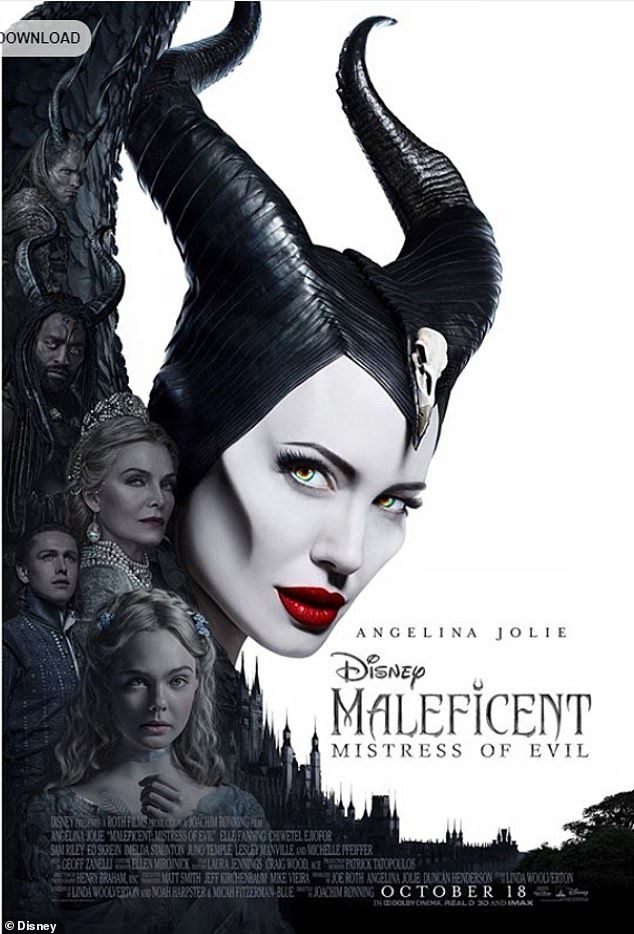
Should’ve been titled Ingris: Queen of War or maybe Disney should have featured the true mistress of the dark Elvira! After the critical and box office success of 2014’s Maleficent, this sequel, out of nowhere I might add, had some major spindles to fill. And does it live up to the original? Unfortunately not. It’s less funny, clever, creative, and even less romantic, despite a wedding being at the center of the movie. The title doesn’t even make such sense because Maleficent is barely in this movie. Our central character really is the incomparable Michelle Pfeiffer’s Queen Ingris. The movie is Maleficent in title only, but the real focus is on Ingris. Of course, I was perfectly happy with Pfeiffer stealing the show! But as a film critic, I have to acknowledge the vapid story. Literally my favorite part of the movie was when I saw that Ingris had a pet cat. A fantastic homage to Pfeiffer’s most famous role, the definitive Catwoman from Batman Returns. Other memorable characters from the original animated classic and 2014 movie are barely in this sequel as well, including our three favorite fairies that can never agree on the color of anything. Clearly there was a solid premise and well-defined direction about halfway through the movie, but then it loses narrative direction and putters to a stop.

The formidable Queen Ingris (Pfeiffer) causes a rift between Maleficent (Angelina Jolie) and Princess Aurora. Together, they must face new allies and enemies in a bid to protect the magical lands which they share.

While I hoped that this sequel would continue in the footsteps of its predecessor, there is virtually no connection to the original story at all, save a rushed bit of exposition by Queen Ingris during the start of the third act. One part romcom and another part geo-political drama, Maleficent: Mistress of Evil should have been the booster shot of originality that the latest epidemic of Disney “live action” remakes needed. What started out so well (ironically enough WITH Maleficent), has progressively gotten worse. Instead of new perspectives on past animated classics, Disney is now doing shot-for-shot remakes that add nothing new to besides photorealistic animation. Perhaps there is simply too much plot for one movie here. And in cramming as much plot as possible into 1.5hrs, the story and characters greatly suffered. There is literally enough epic world building in this movie to fill two sequels. And to be fair, I think this would have made for a much more interesting story had it been able to breath more. Everything felt so incredibly rushed. It’s also overstuffed with messages. On one hand, there are three different depictions of femininity manifested in each of our three leading ladies; but on the other, there is clearly a message of antiwar and commentary on the holocaust. The writers should have selected one of those themes to serve as the subtext for the main action plot, while the others are told through subplots. The problem is that each of them are treated with equal screentime. If you are hoping for a fantastically subserve twist like in the first movie, then don’t hold your breath.

Honestly, I could go on and on about the terrible screenplay. But I’d like to highlight what I feel that the movie did well. Casting. Reprising her phenomenal job as Maleficent is Angelina Jolie. Those razor sharp cheekbones and terrifying smile are back. Playing opposite Jolie is screen sensation Michelle Pfeiffer as the truly evil Queen Ingris. Pfeiffer steals the show! And I loved every minute of it. No matter what role she plays, she commands your attention in every frame she appears in. WIth such a larger than life screen presence, she was the perfect choice to go head-to-head with the alleged mistress of evil. The brilliant chemistry between the two is best witnessed in the first act when there is a dinner scene that turns into a twisted meet the parents scenario. Most of this scene is Ingris and Maleficent throwing metaphoric daggers at one another and peacocking who is the HBIC at that table. Tension runs incredibly high in this scene, but unfortunately the remainder of the movie’s conflict and tension never meets the bar set by that early scene. Another item of mention that the movie got right is the consistently flawless CGI of the Moors and the fairies therein. I appreciate the animation for never taking me out of the story. Both the human and animated characters coexist on the screen beautifully.

Releasing this movie in October, just two weeks prior to Halloween is an odd choice. It feels much most like an early Spring movie. There were opportunities in the movie to take it to some dark places, which could’ve boded well for mid October; however, it merely touches on dark topics and scenes. Never fully commits. If the auditorium that I was in this evening is any indication, Zombieland 2: Double Tap will out-perform Maleficent this weekend. If you were unsure whether you wanted to see it in the theatre, then I will save you the trouble and advise waiting for it to his Disney+ within a few months.

Ryan teaches screenwriting at the University of Tampa. If you like this article, check out the others and FOLLOW this blog! Interested in Ryan making a guest appearance on your podcast or contributing to your website? Send him a DM on Twitter or email him at RLTerry1@gmail.com! You can catch Ryan most weeks at Studio Movie Grill Tampa, so if you’re in the area, feel free to catch a movie with him!

Follow him!

Twitter: RLTerry1

Instagram: RL_Terry

Marvel “Ant-Man and The Wasp” movie review

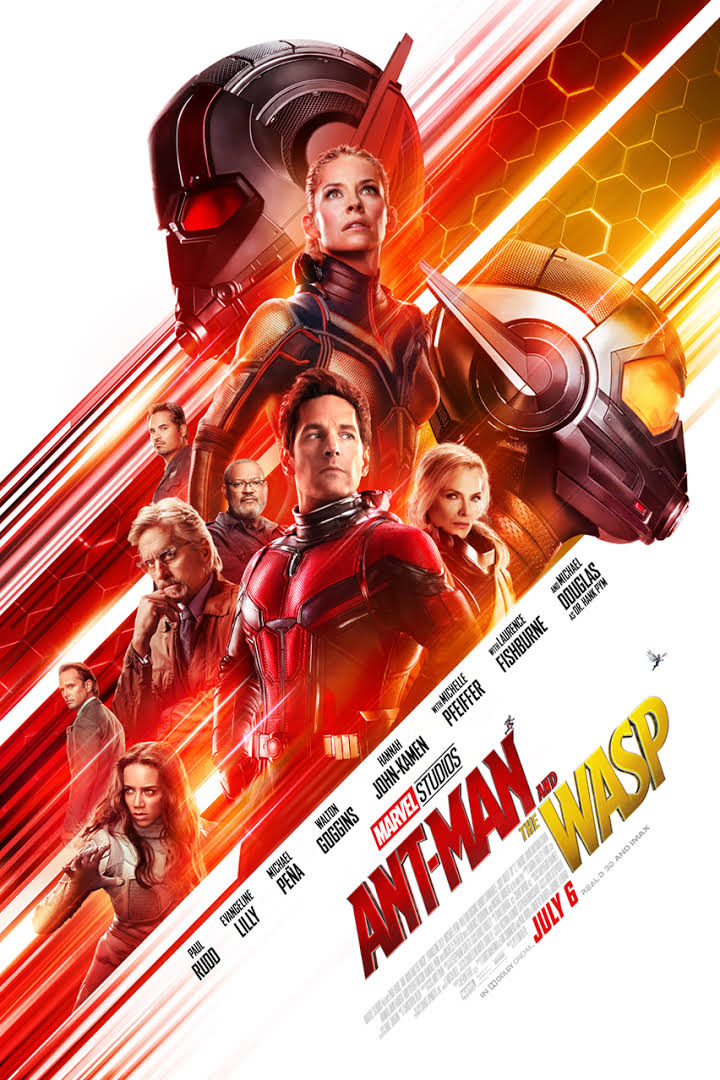
fANTastic! Although this installment may lack the grandeur of many of the Marvel Studios films, including the recent Avengers: Infinity War, director Peyton Reed delivers a fun, heartfelt, action-packed movie in the Ant-Man series that is sure to be a crowd pleaser. As someone who doesn’t typically fawn over superhero movies, with some exceptions like Batman Returns, I went into this movie with moderate expectations at best. Needless-to-day, my expectations were exceeded and I had a great time. Perhaps the story is rather shallow and even paint-by-the-numbers, but the straight-forward story is made fun and exciting by the incredible cast. This installment in the MCU is also marked by the significance of the captivating Michelle Pfeiffer’s return to the superhero genre. It’s been more than 26yrs since she wowed audiences with her roll as the definitive Cat Woman, and she still packs a punch during her short time on screen in Ant-Man and The Wasp. Is this a movie that requires a close reading or in-depth analysis? Certainly not. But, there is a running theme of change/size that is both literal and metaphoric. This may not be the at the top of your MCU favorites, but I can honestly state that you will not feel as if your time is wasted if you choose to take the quantum leap into this micro superhero movie.

After the events in Germany, Scott Lang (Paul Rudd) is under house arrest. Dealing with the consequences of being both a superhero and a father, Lang is challenged to still be a loving father to Cassie while figuring out how to continue his role as Ant-Man. Compounding the demands of being a father and superhero, Lang is also working diligently from home to build his security company in order to be the provider he wants for his daughter. Just when he has his routine down, and is getting close to being released from house arrest, he is kidnapped by Hope van Dyne (Evangeline Lilly) and Dr. Hank Pym (Michael Douglas) to help with a mission to rescue Janet van Dyne (Michelle Pfeiffer) from the quantum realm, a result of disarming a nuclear bomb many years prior. The search and rescue operation is thwarted by a ruthless southern businessman and a mysterious new ghost-like adversary. Under the ever-oppressing constraint of time and place, Ant-Man and The Wasp must cooperate in order to protect the quantum technology from falling into the wrong hands that could prohibit Dr. Pym from rescuing his wife.

While the movie, by in large, is pretty basic (solid, but basic), there is a great example of Hitchcock’s MacGuffin! If you’re unaware, a MacGuffin is the object that drives the plot forward, begins the domino effect, but ultimately does little more than trigger the plot. The definitive example of this is the money Marion Crane steals from the real estate office that sends her on the journey that lands her at the Bates Motel in Psycho. Not nearly as macabre, the MacGuffin in Ant-Man and The Wasp is the size-shifting office building of Dr. Hank Pym. Sometimes it was as large as a city block, and other times it was the size of a roller suitcase. In fact, if it isn’t already, I imagine that we will soon see this AS luggage that can be purchased at a Disney Park near you. The theme of size is demonstrated through small objects that become large and large objects that become small. Furthermore, this idea of playing around with size can also be witnessed figuratively through egos. Some egos are inflated–large–and need to shrink down to size or others are barely there and need to grow in order to not be overrun or overlooked. This theme is also displayed in how small people or objects can rise to the occasion, become a metaphoric giant in order to stop those who pose as obstacles to the goal. It is well-known that ants can carry several times their body weight, and we see characters in this film shouldering more than their fair share, but still manage to overcome any resistance or hurdles to accomplishing the mission.

Be sure to state for the mid-credits scene because it will answer the question that has been on your mind, “where was Ant-Man during Infinity War”? There is also a post-credit scene that is cute but won’t provide any further insight into the next Ant-Man or Avengers movie. With the return of Michelle Pfeiffer to the superhero genre, I am excited to see how the MCU will integrate her into the narrative because she possesses a powerful screen presence that should not be under-utilized. Unfortunately, this could mean that we may not get to see her reprise her role as Cat Woman in a future DCEU film, but her beauty and charisma will certainly add a touch of class and strength to the MCU.

While most MCU movies are suitable for all audiences, there is some content in the dialogue that may not be appropriate for those under 13. So parents and siblings, just be aware of this before taking children to this film. It’s not nearly as adult as Deadpool but it leans more toward a teen and adult film more than kids.

“I hate that word [comeback]. It’s a return! …”

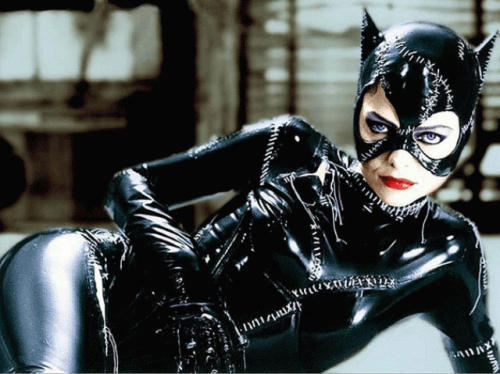
“…a return to the millions of people who have never forgiven me for deserting the screen.” A powerful line from the iconic Norma Desmond in Sunset Boulevard–but–this also rings true for Michelle Pfeiffer, who is returning to the big screen following a self-imposed exile from Hollywood. After a long “famine” (the term Darren Aronofsky attributes to the Oscar-nominated actress’s absence), Pfeiffer is making a triumphant return to the big screen, and in BIG ways. Whether your favorite Pfeiffer performance is her universally critically acclaimed interpretation of Selina Kyle/Catwoman in Tim Burton’s Batman Returns or as Elvira Hancock in Scarface, cinephiles and fans alike can agree that the big screen has missed Pfeiffer’s bold screen presence and incredible beauty. What makes Pfeiffer unique in the world of cinema, is her ability to be incredibly ballsy and completely vulnerable all at the same time. Few actresses possess the ability to be a tomboy one minute and the portrait of sensuality the next. Why would one of the brightest stars in Hollywood in the 1980s and 90s slip away from the silver screen so conspicuously? The long and short of it is she desired to make time to raise her children. In a rare interview with Vanity Fair, Pfeiffer stated that she required so many schedule and location accommodations for her to continue to be a working-mother that she became “unhireable.” Now that her children are grown and out of the house, she is ready to get back to work!

While many may be focussing on Pfeiffer’s return to the big screen–to movies that are a match for her talent–the larger picture here could be lost. Approaching 60, Pfeiffer is at the age when many actresses are either not hired as often and/or are placed in grandmother roles; however, she is busier than ever! And in high profile roles in highly anticipated films. For the fans of her brilliant performance as the definitive Catwoman, she is returning to the superhero genre in the new Ant-Man and more recently she commanded the screen in Murder on the Orient Express. Pfeiffer also told Variety that should would very much like to reprise her role as Catwoman in a future film but not go to the lengths she had to before (citing placing the real bird in her mouth and the iconic sexy, but uncomfortable costume). Pfeiffer’s return to the screen is a testament that Hollywood is beginning to show that older established actresses are still bankable.

Pfeiffer comments that being an empty-nester has provided her with the push to get back out there. She wasn’t even sure that she would be able to step right back into acting because she often remarks that she sometimes feels like a fraud because she never received any formal training. Her rise from grocery store clerk to household name happened nearly overnight. Just goes to show that even though formal training and education are valuable tools in a show business professional’s tool belt, formal education itself does not an acclaimed actor make. Part of preparing to return to the superhero genre in Ant-Man and Wasp has her pouring over old comic books to prepare for her highest profile role in more than a decade. It is clear from the few interviews Pfeiffer grants (she is self-admittingly scared of interviews) that her favorite role in her career IS her role as Selina Kyle/Catwoman. Even today, she says that she is met by fans, young and old, of her work in that role. She quickly gives credit to Tim Burton who was highly instrumental in providing exceptional direction and a creative genius in the, what many critics call the, Batman movie that typifies the franchise. So, her return to the superhero movie genre is one that is highly anticipated.

While she is excited to get back out there, she still admits that she will continue to be choosy in her roles. She is an actress that has to feel a connection to a character in order to bring it to life. Whereas before she turned down roles in Silence of the Lambs and Thelma and Louise because of making sure she had time to be a mom, first and foremost, she will continue to exhibit her desire to not simply get out there and act again, but thoroughly enjoy the characters she plays. Part of Pfeiffer’s timeless charm is her ability to be 100% sexy feminine and 100% humorous tomboy at the same time. It’s this dichotomy that gives Pfeiffer her unique blend of charisma and screen presence that commands your attention and makes her memorable. Of all the qualities that aid in creating the standout actress that many of us love, she is equally humble and still learns from those actresses like Judi Dench and others that she continues to admire.

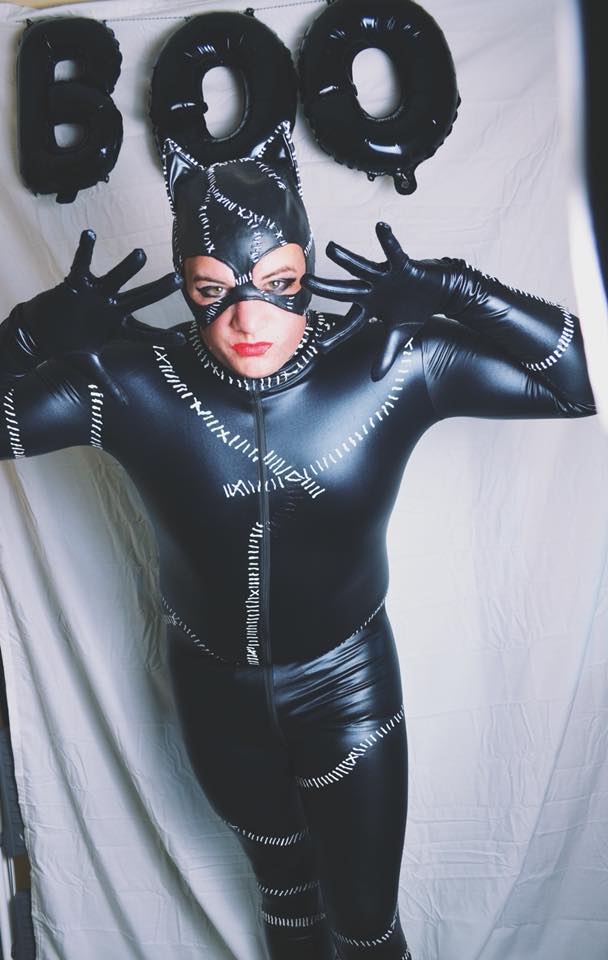
This past Halloween, I did my best to emulate her iconic Catwoman costume!