Marvel “Ant-Man and The Wasp” movie review

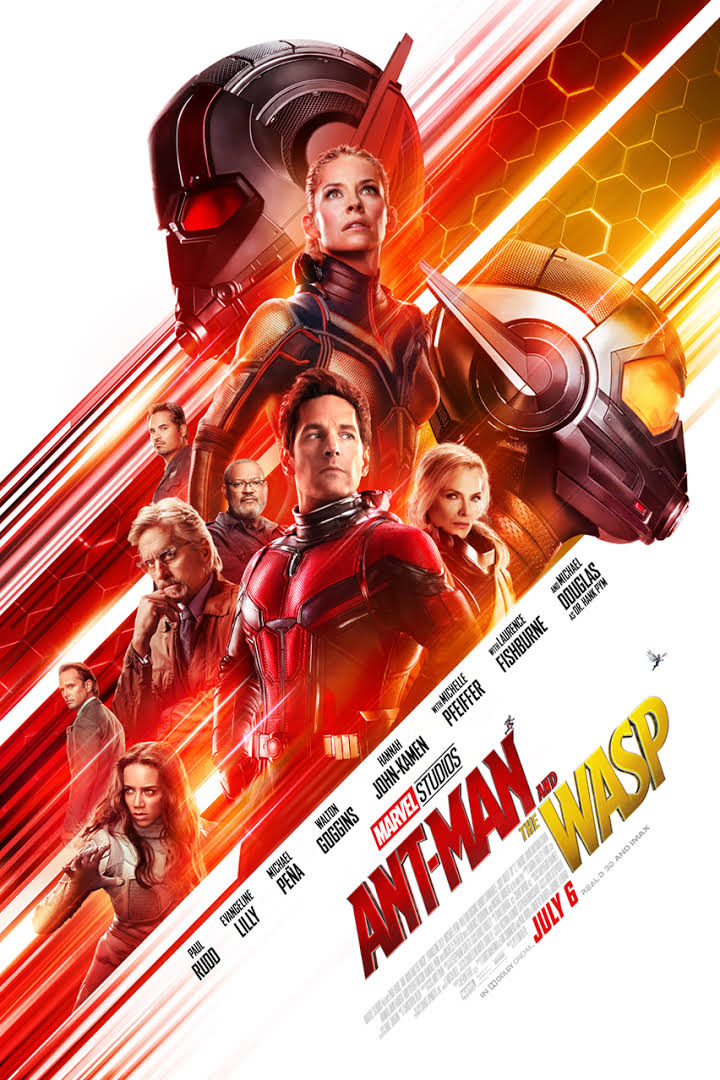
fANTastic! Although this installment may lack the grandeur of many of the Marvel Studios films, including the recent Avengers: Infinity War, director Peyton Reed delivers a fun, heartfelt, action-packed movie in the Ant-Man series that is sure to be a crowd pleaser. As someone who doesn’t typically fawn over superhero movies, with some exceptions like Batman Returns, I went into this movie with moderate expectations at best. Needless-to-day, my expectations were exceeded and I had a great time. Perhaps the story is rather shallow and even paint-by-the-numbers, but the straight-forward story is made fun and exciting by the incredible cast. This installment in the MCU is also marked by the significance of the captivating Michelle Pfeiffer’s return to the superhero genre. It’s been more than 26yrs since she wowed audiences with her roll as the definitive Cat Woman, and she still packs a punch during her short time on screen in Ant-Man and The Wasp. Is this a movie that requires a close reading or in-depth analysis? Certainly not. But, there is a running theme of change/size that is both literal and metaphoric. This may not be the at the top of your MCU favorites, but I can honestly state that you will not feel as if your time is wasted if you choose to take the quantum leap into this micro superhero movie.

After the events in Germany, Scott Lang (Paul Rudd) is under house arrest. Dealing with the consequences of being both a superhero and a father, Lang is challenged to still be a loving father to Cassie while figuring out how to continue his role as Ant-Man. Compounding the demands of being a father and superhero, Lang is also working diligently from home to build his security company in order to be the provider he wants for his daughter. Just when he has his routine down, and is getting close to being released from house arrest, he is kidnapped by Hope van Dyne (Evangeline Lilly) and Dr. Hank Pym (Michael Douglas) to help with a mission to rescue Janet van Dyne (Michelle Pfeiffer) from the quantum realm, a result of disarming a nuclear bomb many years prior. The search and rescue operation is thwarted by a ruthless southern businessman and a mysterious new ghost-like adversary. Under the ever-oppressing constraint of time and place, Ant-Man and The Wasp must cooperate in order to protect the quantum technology from falling into the wrong hands that could prohibit Dr. Pym from rescuing his wife.

While the movie, by in large, is pretty basic (solid, but basic), there is a great example of Hitchcock’s MacGuffin! If you’re unaware, a MacGuffin is the object that drives the plot forward, begins the domino effect, but ultimately does little more than trigger the plot. The definitive example of this is the money Marion Crane steals from the real estate office that sends her on the journey that lands her at the Bates Motel in Psycho. Not nearly as macabre, the MacGuffin in Ant-Man and The Wasp is the size-shifting office building of Dr. Hank Pym. Sometimes it was as large as a city block, and other times it was the size of a roller suitcase. In fact, if it isn’t already, I imagine that we will soon see this AS luggage that can be purchased at a Disney Park near you. The theme of size is demonstrated through small objects that become large and large objects that become small. Furthermore, this idea of playing around with size can also be witnessed figuratively through egos. Some egos are inflated–large–and need to shrink down to size or others are barely there and need to grow in order to not be overrun or overlooked. This theme is also displayed in how small people or objects can rise to the occasion, become a metaphoric giant in order to stop those who pose as obstacles to the goal. It is well-known that ants can carry several times their body weight, and we see characters in this film shouldering more than their fair share, but still manage to overcome any resistance or hurdles to accomplishing the mission.

Be sure to state for the mid-credits scene because it will answer the question that has been on your mind, “where was Ant-Man during Infinity War”? There is also a post-credit scene that is cute but won’t provide any further insight into the next Ant-Man or Avengers movie. With the return of Michelle Pfeiffer to the superhero genre, I am excited to see how the MCU will integrate her into the narrative because she possesses a powerful screen presence that should not be under-utilized. Unfortunately, this could mean that we may not get to see her reprise her role as Cat Woman in a future DCEU film, but her beauty and charisma will certainly add a touch of class and strength to the MCU.

While most MCU movies are suitable for all audiences, there is some content in the dialogue that may not be appropriate for those under 13. So parents and siblings, just be aware of this before taking children to this film. It’s not nearly as adult as Deadpool but it leans more toward a teen and adult film more than kids.
Don’t Pass GO, Don’t Collect Your Oscar

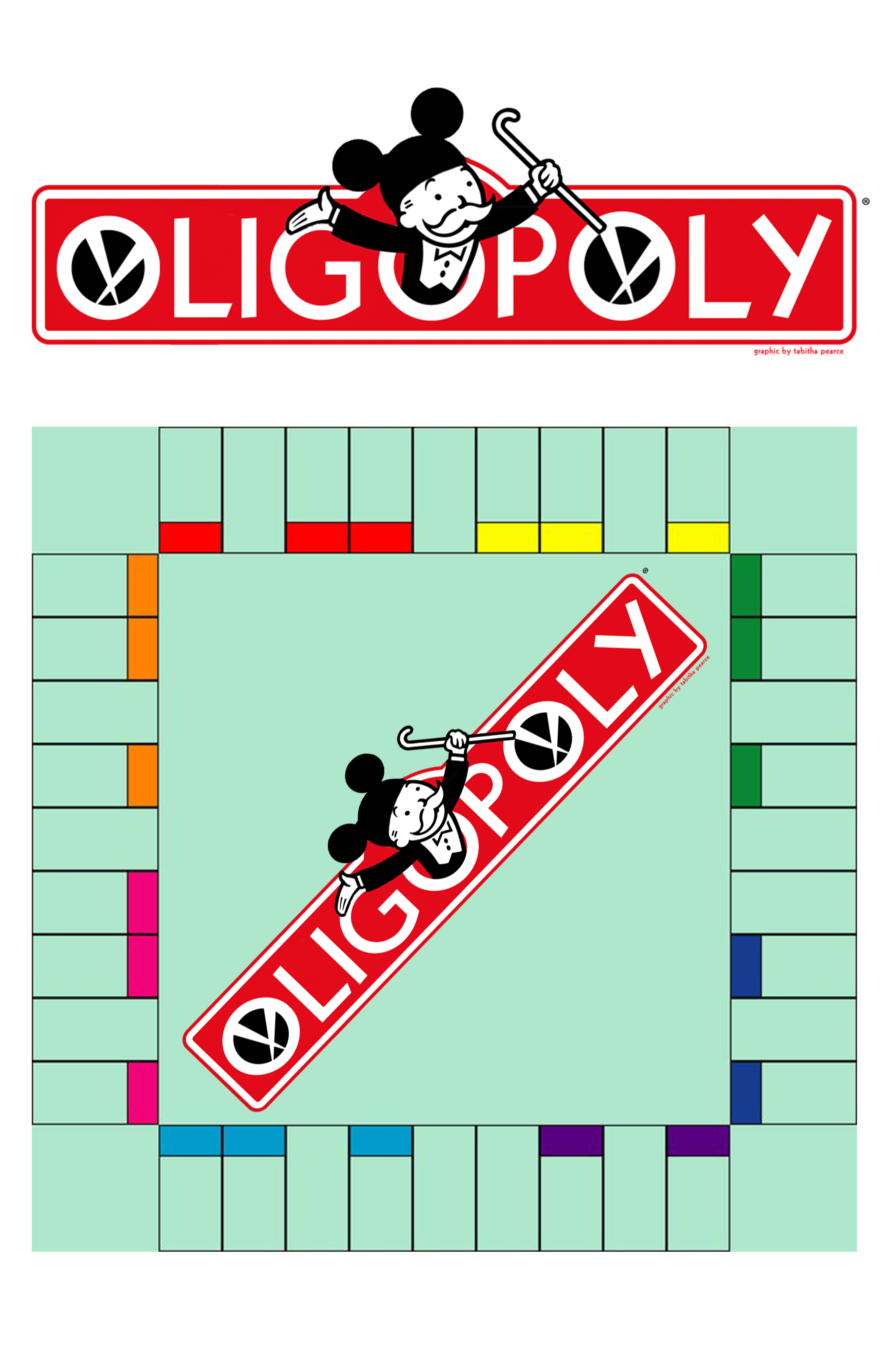
Corporate monopoly is the enemy of creativity and variety. The biggest news in entertainment this week was the talks between Disney and Fox to sell most of 21st Century Fox to The Walt Disney Company. Whether the talks are still going on behind closed doors or not presents a fascinating topic to discuss! This deal, which would be the biggest film/media deal ever, has far reaching effects upon the industry. Some may even argue that it has danger written all over it. If there wasn’t already a rigid oligopoly amongst the studio/distribution companies, there will be if this goes through. Should this go through without the government swooping in to save the day with monopoly claims in the vein of the historic Paramount Decision, the lion’s share of the cinematic marketplace would be controlled by Disney, TimeWarner (Warner Bros.), and Comcast (Universal), with Sony (Columbia) and Viacom (Paramount) bringing up the rear. Five. That’s right. Five companies would essentially determine the future of the industry, and control the majority of the motion pictures released in theaters and the content on cable television (and the streaming services that access it). It’s a mirror image of the 1940s. Instead of The Big Five and The Little Three, we have The BIG Three and the Little Two.

From the big screen to the small screen, you will notice the effects in the programs you watch. When one company controls the majority of any marketplace, it usually spells disaster for the consumer; furthermore, it means that there will be a primary gatekeeper in future artists getting his or her work out there. Not to mention that the programming on FX and other Fox (non-broadcast) subsidiaries could begin to gradually feel and look more like ABC programming. Could this put shows like The Simpsons and Family Guy on an endangered species list of sorts? Not right now. The deal, in off-and-on talks, would sell off 21st Century Fox (movie studios) and not Fox or Fox Sports (an acquisition of that sort would not be permitted because it WOULD be illegal). So, even if this buyout were to happen, The Walt Disney Company would still continue to be the brunt of many jokes on The Simpsons and Family Guy. A buyout could mean, however, that program options will seem less varied and just more of the same ABC-schlock that already pervades the bandwidth. The two companies that have the most TV programming are Fox and Disney, with Sony (CBS), Viacom (non-broadcast Nickelodeon), Comcast (NBC), and TimeWarner (CW) trailing in original programming. That being said, TimeWarner has done very well with The CW, and I hope it continues to churn out programs such as Vampire Diaries, Supernatural, Riverdale, etc.

Beyond the negative impacts on content, which, in all honestly, can be quite subjective in nature, are there legal or ethical implications here? Is there perhaps a past precedent that could be used in the courts to stop such a buyout (or sellout rather–Fox)? Let’s look at the most famous suit brought against the major motion picture studios: The Paramount Decision [(U.S. V. PARAMOUNT PICTURES, INC., 334 U.S. 131 (1948)]. Prior to the Paramount Decision, the motion picture industry was controlled by a few companies that were heavily vertically integrated. The Studio owned the facilities, production companies, staff (under long-term contracts), the films themselves, distribution channels, and the movie theaters. When the studios were growing so large that they began infringing upon the free marketplace, the US Government forced the (then) eight major/minor studio players to end the practice of block booking (meaning, films would now be sold on an individual basis), divest themselves of their respective theatre chains (sell them off), and modify the practice of long-term employee contracts (though, this would continue until the 1960s). This marked the beginning of the end of the Studio System, AKA Hollywood’s decentralization. There are many similarities between the situation in the late 1940s and today. In fact, it’s a little worse today because the industry is mostly controlled by five (instead of eight) companies, and these companies have heavy investments in streaming and television programming.

The problem with the current state of capitalism in the Unites States isn’t worries of monopolies but oligopolies (monopolistic practices between a few firms that essentially control a market). Certainly the state of the film industry already lends itself to an oligopoly because of the few companies; but the buyout of 21st Century Fox by The Disney Company would greatly increase this issue of a blatant oligopoly. If a monopolist (in many other industries) did what Disney is doing, neither the public nor the government would stand for it; but because it’s Disney, and because it’s the film industry, most of the general public is unaware of the negative consequences of such a buyout. Technically speaking, oligopolies are not illegal nor is monopolistic competition; however, this can be a slippery slope towards stifling creativity or making is increasingly difficult to break into any given industry as a newly emerging competitor. Incidentally, monopolistic competition causes the variety or level of differentiation of similar products (i.e. moves and TV shows) to become less heterogeneous and nearly come across as homogenous. For many, it will feel like there are only two primary companies controlling the majority of programming on TV and a few companies controlling a large portion of the movies that get released in movie theaters.

When a strong oligopoly exists within a specialized industry (for our purposes, media & entertainment), one of the side effects is a concept known as parallel exclusion. This concept can be described as the collective efforts of the few industry leaders who essentially act as the main gatekeepers to prevent or make it difficult for would-be newcomers to enter the arena. Parallel exclusion is nothing new, and has been in the news as recently as the last 2-3 decades within the airline and credit card industries. Throughout the eighties and nineties, Visa and MasterCard essentially blacklisted any bank that set out to do business with AmEx. Thankfully, the U.S. Justice Department stepped in when the manner in which the exclusionary rules were written crossed legal, fair trade boundaries. There were similar issues within the airline industry as well. When a few companies control the content or services in the marketplace, antitrust issues are raised.

Although we are not facing a technical monopoly with the possible acquisition of Fox by Disney, we are looking at an abuse of power that leads to anticompetitive conduct. If nothing else, the consumer should be worried about having fewer options for programming. Not that the number of programs or movies will shrink, but there will be little difference between what is released under the Disney banner and the Fox name (if it’s still even called that). In a deal like this, it’s the consumer who gets the short end of the stick. The consumer would be wise not to give Disney a pass just because there are a small group of big film studios instead of just one. While Marvel fans may be excited that the X-Men can join the MCU (Marvel Cinematic Universe), there is the possibility of a lack of competition between brands thus mitigating innovation and ingenuity. Competition is the mother of innovation just as necessity is the mother of invention.

Because the Walt Disney Company is primarily focussed on producing the biggest movies possible (after all, they made five of the 10 most successful films last year), the mid-budget dramas and comedies that used to thrive in Hollywood–you know, the ones that cause you to cry and laugh–would dwindle in number–there would be little room for them to make their respective ways into theaters in a predominantly Disney controlled industry. What we are essentially talking about here is a corporate cinematic monolith, the likes of which, has never been seen before.

Written by R.L. Terry

Graphic by Tabitha Pearce

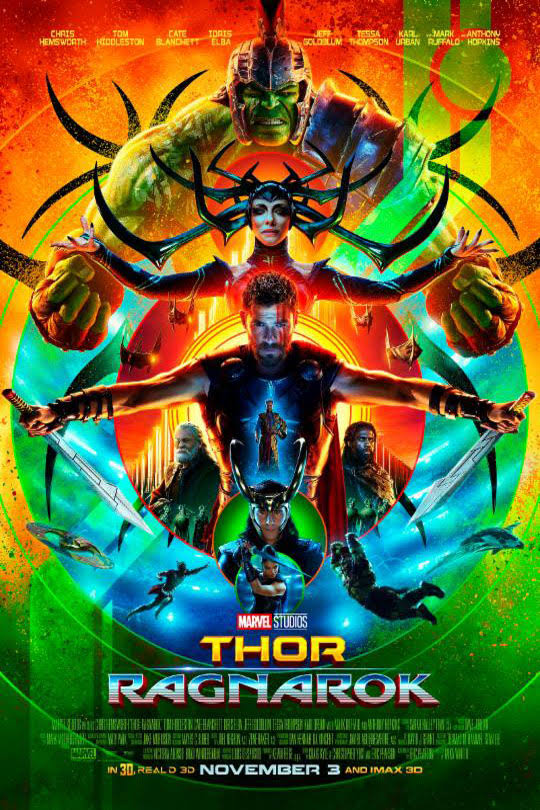
“Thor Ragnarok” movie review

Norse mythology meets Gladiator meets 80s vintage video game in this non-stop adrenaline pumping action film. Suffice it to say, everything you’ve heard about Thor Ragnarok from your friends is true. It is an incredibly fun movie that is equally well written and directed. For anyone who follows my blog, it is no secret that I typically do not like the Disney-Marvel films (and for good reason), but the focus of this review is on THIS particular film. I state that because, honestly, I very much enjoyed this film! So, it comes from liking the structure, characters, plot etc. not just from being a fan boy, or lack thereof in this case. Not only an excellent third sequel, but this movie can easily stand on its own. Whether you have watched the other MCU (Marvel Cinematic Universe) films or not, you can rest assured that you can enjoy this superhero movie. With the way the initial trailers were cut, I thought that this was MCU’s way of jumping onto the 80s nostalgia band wagon–not so. Oh, there is definitely an 80s video game vibe about the film, but the focus is on the characters and storytelling, not the nostalgia. There is also a self-aware element of this film. Not to the extent Deadpool is self-aware, but Chris Hemsworth’s Thor has a twinkle about his eye that winks at the audience so that we know that he is aware of the corniness and ridiculousness of the characters and plot. But the magic of this film is just how well balanced the content of the film is. There were many times that the plot lended itself to falling apart, but the solid cast held the film together and provided audiences with one of the best movies in the MCU.

When Thor learns of a dark, hidden family secret, he must confront the deadliest enemy he has ever faced off with in his life. But the legendary hero encounters far more than he ever expected. The mighty Thor finds himself imprisoned on a faraway planet and forced to battle in gladiator-style games. Little does he know that the winningest challenger on the planet is his former ally The Hulk. Thor must survive the deadly gladiator-like battles in order to build his team to defeat Hela, the Asgardian goddess of death who is destroying his home world.

One of the principle themes in this film that enables this one to be more and deeper than other MCU films is just how similar it is to a conventional war picture. There are hints of courts of intrigue as well. The complex plot provides a comprehensive foundation upon which a more superficial story can be developed in order to appeal to wide audiences, with few appreciating the deeper themes and subtext. But it takes more than effective and well-developed writing to build such a solid movie, it takes multi-dimensional characters portrayed by impeccable screen talent. You’ll find all of that in Thor Ragnarok. Although his screen time is brief, Anthony Hopkins’ Odin commands the screen with confidence, wisdom, and sincerity. Few actor’s can take a few minutes of screen time and put more cinematic magic in it than Hopkins. After all, he won his Oscar for Silence of the Lambs for his collectively few minutes on screen. Joining the cast are Jurassic Park’s Jeff Goldblum and the beautiful, talented Cate Blanchette. Goldblum’s Grandmaster of Sakkar is hilarious and brilliant. As you’d expect a Goldblum character in a film like this to be: detached intellectually from that which is seen as conventional, smart-alecky; yet, he is also petty, sadistic, and relentless. Blanchette’s Hela is elegant, sadistic, and intelligent. She is perfectly able to be the comic book-esque villain she needs to be, all while bringing about a pedigreed acting to it.

All the technical elements of the film works excellently together. The most memorable of those elements is the music, for me, followed by the visual effects. I absolutely loved the nod to Willy Wonka and the Chocolate Factory during Thor’s transport to through Sakkar. This works because (1) the scene it shot and edited similarly to the boat scene in the aforementioned movie and (2) Goldblum’s Grandmaster is a Willy Wonka type. Throughout the film, there are 80s video game sound effects and a score that could fit into a nostalgic 8bit video game. However, the nods to Willy Wonka and video games do not overpower the more conventional score. Whereas the visual effects could have gone overboard and made the film play off as a video game, the video game like effects where carefully integrated in order for the film to maintain a high show quality.

The film was initially sold as a funky, colorful, comedic MCU film. And there are times that the film also encroaches upon that animated feel, but it never crosses that line–thankfully. The more serious aspects to the film balance out the slapstick moments. All of this works together to execute perfect pacing and plot/character development. Like with most MCU films, the more adventurous parts of the film are not quite adventurous enough to be an adventure film and there is typically a predictable nature about the film. I find that this film is not as predictable as previous MCU movies, but there is still that experience with this one. There is one particular part to the showdown of the film that prohibits this from falling victim to another cliche MCU ending with an epic battle, bodies flying through the air, and cities on fire, but I cannot reveal that without giving away the ending.

Looking for a fun movie to watch with your friends? Then this is a solid choice. Although the film has its diegetic flaws, the ways it succeeds outweighs the shortcomings. You also do not have to have seen the other Thor movies and really don’t even need to have seen the previous Avengers films, albeit helpful to understand some of the minor plot points. It’s definitely one that has re-watchabbility.