
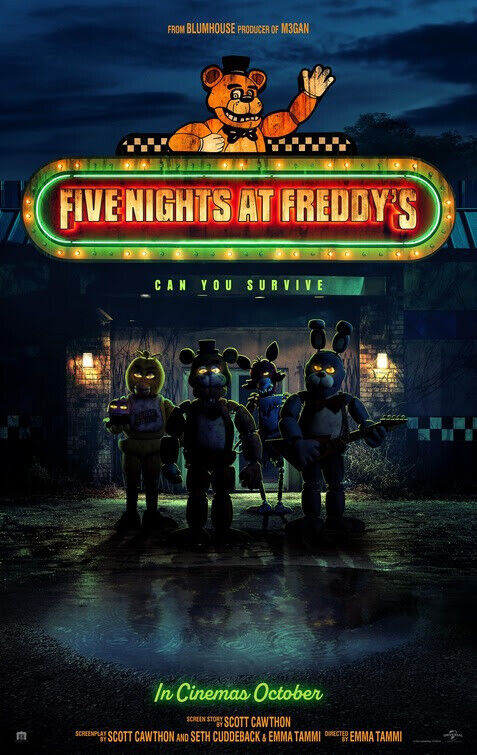
FIVE NIGHTS AT FREDDY’S horror movie review

Fun-filled and creepy! Blumhouse’s Five Nights at Freddy’s is surprisingly good! From the unnerving atmosphere to the practical effects, it’s entertaining and even thoughtful with its exploration of childhood trauma. However, for everything I liked about the movie, I do feel that it should have leaned a little more heavily into Gremlins or Chopping Mall territory because it is a little too serious at times. All in all, the movie is smartly written, with just the right amount of suspension of disbelief. There are even influences of Nightmare on Elm Street and Freddy Krueger’s MO in this movie. If you’re looking for a entertaining time to spend at the cinema on this weekend before Halloween, then you can’t go wrong with Five Nights. After watching the movie, I will now be anticipating Universal Orlando & Hollywood to feature this house at next year’s Halloween Horror Nights.

A troubled security guard begins working at Freddy Fazbear’s Pizzeria. While spending his first night on the job, he realizes the late shift at Freddy’s won’t be so easy to make it through.

I had no idea what to expect since I knew very little about the game. In fact, when I first heard of the game many years ago, I thought it was about the Freddy–Freddy Krueger. Nope. The game is about surviving an abandoned not Chuck-E-Cheese. It’s been probably twenty or more years since I’ve been to a Chuck-E-Cheese–come to think of it–I think the last time I went was when it was known as Showbiz Pizza. When I think of environments and settings that would be naturally creepy whether abandoned or not, Chuck-E-Cheese is one of them. I would imagine that on any given Tuesday night, a Chuck-E-Cheese is unnerving, let alone if it was haunted.

Since I’ve never played the game, I will not be commenting on the translation from interactive media to cinema, but from what I have learned, there is a lot of lore in the game, so I hope that lore is what was brought into the movie version.

Five Nights at Freddy’s benefits from a small cast and few locations. Furthermore, what the movie lacks in the screenwriting department, it makes up for in Emma Tammi’s directing. That’s not to suggest that it is poorly written–quite the contrary–I like how well it was written, given that it’s adapted from a video game and written for (primarily) teens that played the game as kids. Reminds me of a more mature version of Are You Afraid of the Dark? or Goosebumps. As much fun as I had with the movie, I feel that it could’ve used a little more camp in the storytelling–the movie would have benefitted from channeling Gremlins or Chopping Mall to bump up the dark humor and playfulness. The plot is simple and our central character is complex–the recipe for solid cinematic storytelling!

Our central character of Mike (Josh Hutcherson) is relatable, and his behavior feels natural considering the trauma of his younger brother being kidnapped when they were kids. The devastation of the loss of his brother, and later mother and father, has gravely impacted his ability to manage his own life and younger sister (and this is where the movie should’ve made her his daughter because a 20+ year age difference is a little hard to buy). Facing the loss of custody of his little sister to his overbearing, condescending aunt (played by Fried Green Tomatoes‘ Mary Stuart-Masterson), he must survive nights as a security guard at Freddy’s to prove he can care for his little sister. Within the first few minutes of the movie, we have our central character, their external goal, and opposition to the goal. I love when I witness established screenwriting conventions followed–because they work!

While the movie depicts very little on-screen violence and little to no gore, it successfully transfers that fear from the screen into the mind of the audience. That which is suggested in image association or shadow is more terrifying than witnessing it plainly on screen. By keeping most of the violence, death, and gore off-screen, and the adult language to a minimum, this movie works as a gateway horror for older kids and teens that are considering diving into the genre.

The setting is fantastic! I don’t know whether this was an abandoned Showbiz Pizza or Chuck-E-Cheese in real life or not–hope it was–but the setting is ominous and creepy! And because it’s representative of places in real life, it’s easy to imagine ourselves in the same environment. Perhaps it’s not as unnerving as being stalked in your own home like in Halloween or When a Stranger Calls, but there is definitely something naturally scary about being trapped with kids’ toys and animatronic characters at night in a setting haunted by ghosts of its glory days.

I also appreciate the practical effects, puppetry, and character performer costuming in the movie. While I imagine that it’s a combination of CGI and practical, I kept studying the animatronic characters to determine whether it was character performers in costume or of it was exceptionally good CGI–so much so I feel that I could reach out and touch the fur. Had the CGI been overt, then the scares would’ve been far less terrifying as CGI rarely packs the same punch as actors reacting to real props, costuming, and effects.

You’ll not be disappointed if you chose to watch Five Nights at Freddy’s this weekend. Go in with an open mind, and just enjoy a fun horror movie! Don’t overthink it, just be entertained by it!

Ryan teaches Film Studies and Screenwriting at the University of Tampa and is a member of the Critics Association of Central Florida and Indie Film Critics of America. If you like this article, check out the others and FOLLOW this blog! Interested in Ryan making a guest appearance on your podcast or contributing to your website? Send him a DM on Twitter. If you’re ever in Tampa or Orlando, feel free to catch a movie with him.
Follow him on Twitter: RLTerry1 and LetterBoxd: RLTerry

“Fried Green Tomatoes” full movie review

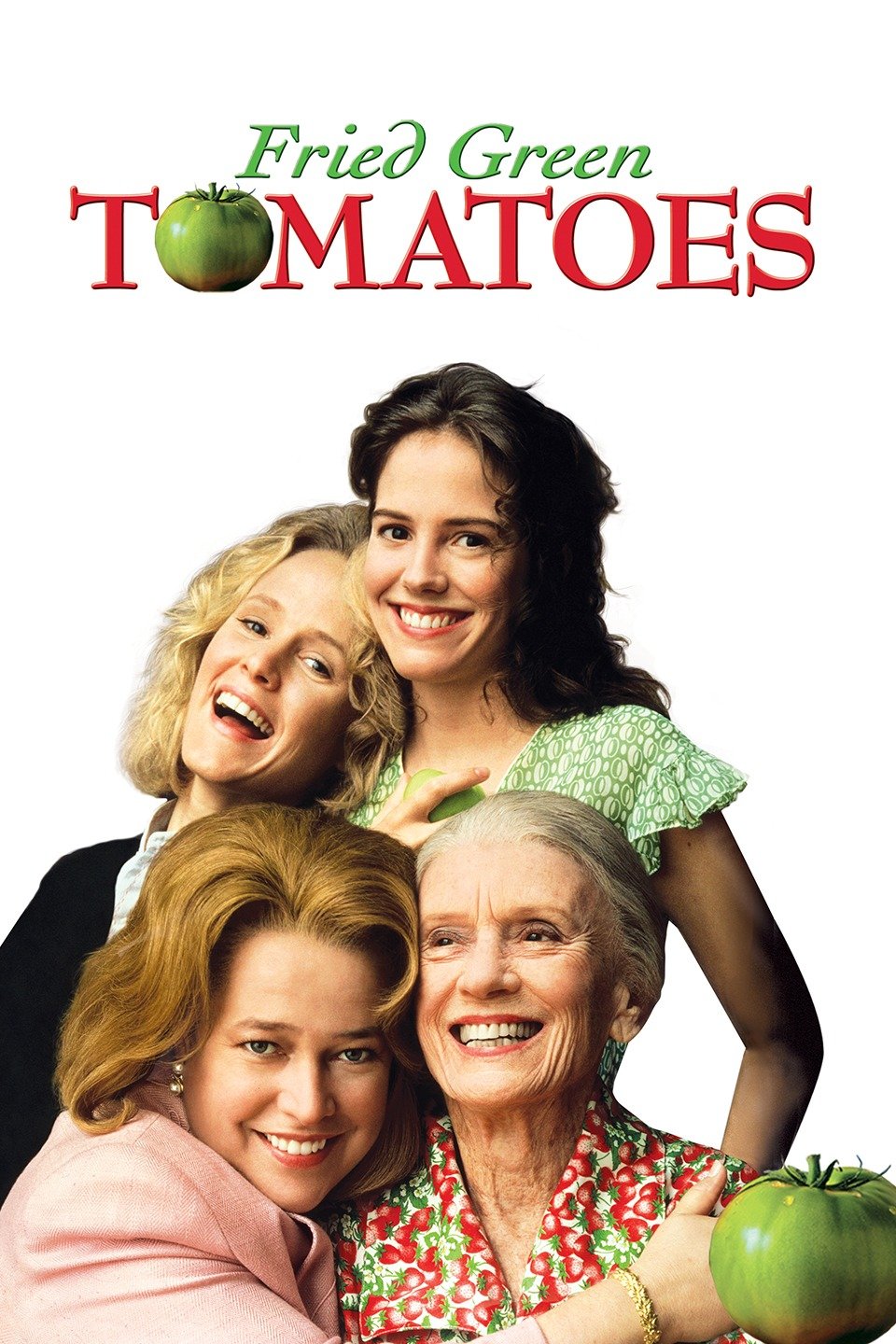
Towanda! Universal Pictures’ quintessential American cinema classic Fried Green Tomatoes based on the bestselling novel by Fannie Flagg (whom also wrote the screenplay) is a heartwarming unapologetically sentimental film that reminds us that the best thing in life is “friends, best friends.” The film is also an early breakthrough for queer cinema because it contains a subtextual world of queer thematic elements and symbolism. In Flagg’s novel, there was an explicit romance between two of our main characters; but the film toned it down in order to attract a wider audience at the time. Moreover, this film also takes on the important task of providing commentary on racism and sexism. A message that was as important then as it is now. Fried Green Tomatoes is the type of drama that will leave you feeling inspired to be the kind of friends that you see in the film. The film contains two important storylines (present and past) that are woven seamlessly into one another by theme and plot derived from character. Each story is captivating! Because of the two stories being told concurrently, it takes a little while for this film to grab hold of you; but when it does, you will be hooked on the homespun humanity, intimacy, romance, and yes even a murder mystery. Of course, it’s a murder that Angela Lansbury could solve in her sleep. Twenty-seven years later, this film is still charming the bees, and continues to be a favorite among those who love a heartwarming story with deep meaning and impact.

A woman learns the value of friendship as she hears the story of two women and how their friendship shaped their lives in this warm comedy-drama. Evelyn Couch (Kathy Bates) is an emotionally repressed housewife with a habit of drowning her sorrows in candy bars. Her husband Ed barely acknowledges her existence. One week, while waiting out Ed’s visit of his aunt at the nursing home, Evelyn meets Ninny Threadgoode (Jessica Tandy), a frail but feisty old woman who lives at the same nursing home and loves to tell stories. Over the span of several months, she spins a whopper about one of her relatives, Idgie (Mary Stuart Masterson) and her friend Ruth (Mary-Louise Parker). Idgie and Ruth are two unlikely friends that form a strong friendship in 1930s Alabama; together they face an abusive marriage, open a business, and find themselves involved in an unsolved murder. Evelyn finds herself looking forward to her weekly visits with Ninny, and is inspired by her story to take a new pride in herself and assert her independence from Ed.

Not sure about you, but I am not entirely a fan of movies that feature a couple of people sitting around in the present and talk about a story from the past. And, all the while, we get flashbacks to that earlier story. What is the point? Why not just tell the story from the past and let that be your movie? I don’t get it. There are some exceptions…take Citizen Kane for instance–it worked! But contrary to my predisposed dislike for movies that principally rely upon flashbacks to tell the story, this movie surpasses all expectations! The story in the present features Mrs. Ninny Threadgoode and Evelyn Couch. Evelyn encounters Ninny by accident while visiting her husband’s mean-tempered aunt. The confident Ninny and the plump, unhappily married Evelyn develop a fast friendship, one that helps Evelyn escape the doldrums of her early 1990s domestic married life by learning to care deeply about a relative stranger. Ninny tells Evelyn a story from her hometown that follows Idgie and Ruth through a wide range of bittersweet events that test their loyalty to each other. In the process, it also offers a portrait of a lulling, rustic, Klan-ridden Alabama in which the characters’ willful innocence often gives way to harsh racial realities. The film tries to develop some suspense around the question of how these two plots are connected, but the answer will strike no one as a surprise. One of the reasons Director Jon Avnet’s Fried Green Tomatoes survives the flashback structure is that it devises an interesting character to be the listener to the long-ago tale. In a manner of speaking, the audience is asked to be a participant in the film.

Although the screenplay is very close to the original novel, there is one element conspicuously missing from the movie–well, directly anyway. It’s presented very clearly in the novel that Idgie is a lesbian and she and Ruth are a couple despite the mores in the South at the time (and still to this day somewhat). The movie brings these elements out indirectly through powerful subtext that is not exactly trying to hide, interestingly enough. Because the movie was released prior to films showing healthy homosexual relationships as just as normal as heterosexual ones, the film got creative in how to acknowledge it while not polarizing audiences at the time. By in large, the small town of Whistle Stop was certainly not small-minded. Showing the progressive nature of this “knock-about place” in how it largely feels about minority communities, the town accepts the two of them and no questions are ever asked about their relationship. Idgie and Ruth in particularly display extremely progressive ideals, for the day, because two of their closest friends are members of the town’s black community. Big George and Sipsy (played by Cicely Tyson) are important to Idgie and Ruth, and both would do anything for them.

The stories from the past and present are both full of social-commentary, containing an  important message for women or anyone who feels that they cannot be progressive, independent, and successful because of the antiquated ways of a relationship or society. With Ninny and her stories as inspiration, Evelyn learns that she can be more than her girdle-wearing, dinner-making, frumpy dress self. Evelyn is so fired up by Ninny’s stories of Idgie’s escapades, that she begins to take control of her life. She gives up her candy bars for aerobics, stops trying to please her misogynistic redneck of a husband and begins a career as a Mary Kay sales professional. Through her many visits to spend time with Ninny, she also becomes as passionately devoted to Ninny as Ruth was to Idgie, with this one being truly platonic friendship.

If you enjoy great dialog and excellent character development, you will fall in love with this movie even if you have yet to do so. Fried Green Tomatoes was based on the novel Fried Green Tomatoes at the Whistle Stop Cafe by actress-turned-author Fannie Flagg. The four leading ladies deliver outstanding performances! It is of no surprise that this movie has stood the test of time. Clearly, this is one of the best movies about strength, character, and friendship ever produced.