“Deadpool 2” movie review

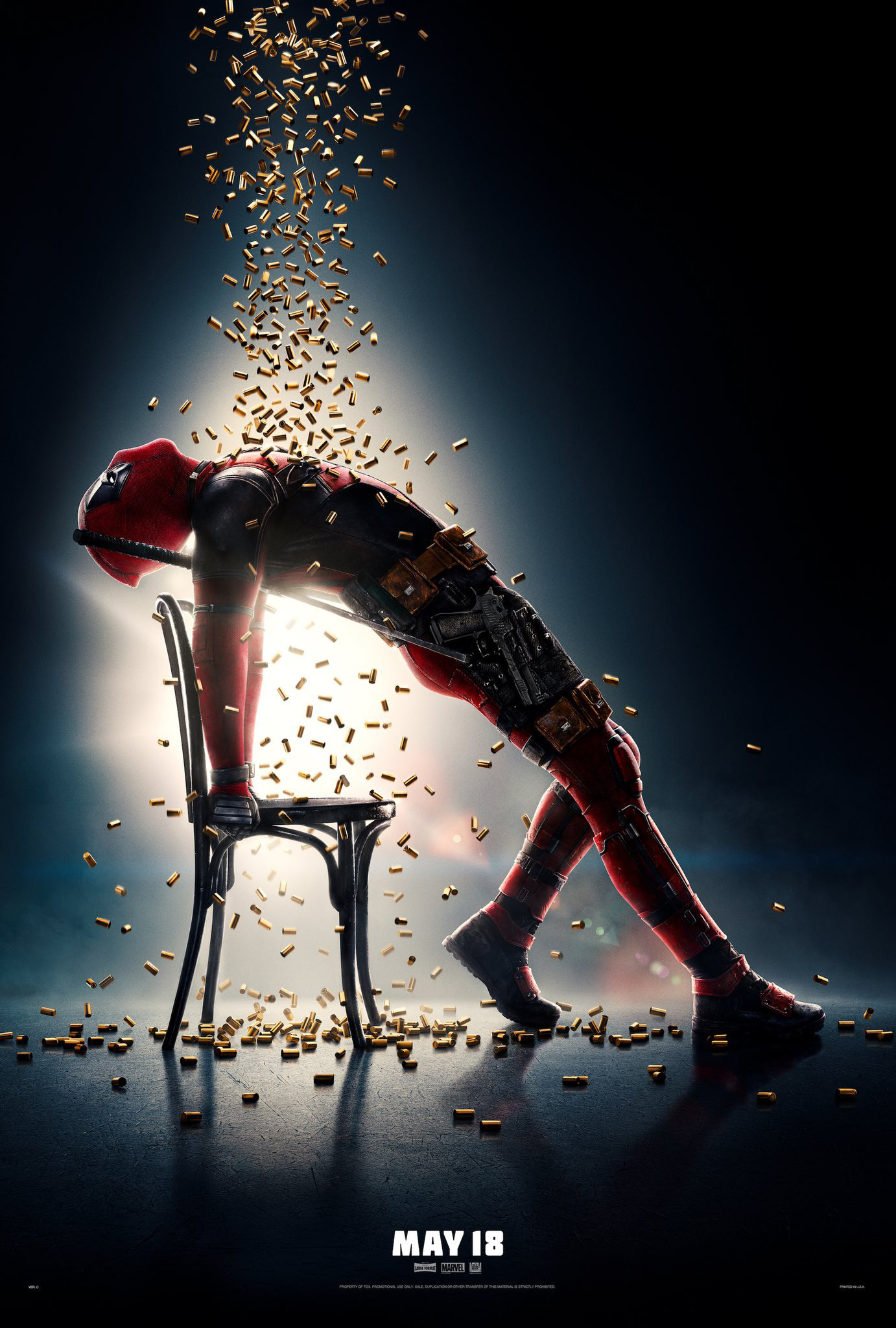
“Deadpool, can you hear me?” Subversive, irreverent, brilliant, meta. It very well may be better than the first. How often do we get to say that about direct sequels? Ryan Reynolds’ witty, crass, charmingly naughty superhero is back to take even the most unrelentingly serious movie patron, and drive them to complete laughter. The square peg of the X-Men’s round universe returns with non-stop action, antics, and fourth-wall breaking humor virtually deconstructing everything from the opening credits to the post-credit scenes. Nothing new there; however, Deadpool assures the audience that the story they are about to see is a family movie. And after watching it, it may be unconventional, but it’s a solid family film. Maybe not “family entertainment,” by the Disney definition, but about family nevertheless. Speaking of which, we may have just watched the final Deadpool as we know it before it gets the Big D sanitization treatment, should Comcast (NBC Universal) not swoop in to save 20th Century from the otherwise inevitable Disney acquisition. Deadpool 2 isn’t just better than the first one simply because it’s funnier, more risqué, or more clever; in measurable ways, it possesses stronger villain(s), stronger opposition to the goal, and a better plot overall. Not your everyday “family” film, but filled with emotional tugs at your heart strings, all the same. Just with a heaping helping of self-aware and self-deprecating bawdy humor.

For two years, Wade Wilson/Deadpool (Ryan Reynolds) has continued his mercenary work, taking down villain after villain, crook after crook; but, after he fails to kill one of his targets on an extra-special day to him, he is faced with tragedy. Through a series of bizarre events–yes, even bizarre for Wilson–Wilson finds himself in a maximum-security prison ran by the DMC (Dept of Mutant Control) along with a renegade 14yo mutant named Russell. When Cable (Josh Brolin), a high-tech assassin, arrives from the future to take out a target that he claims leads to total destruction, Wilson must battle inner and outer demons in order to get his heart into the right place. Knowing he’s facing the most dangerous villain he’s ever encountered, Wilson forms the X-Force, a diverse “superhero” group of many talents in order to apprehend the target to prevent the world from plunging into complete chaos.

There is a comedic power in the plot of Deadpool 2 that invites the audience, at every turn, to laugh with the movie as it laughs at itself. There are a few running schticks throughout the film, but my favorite is the continued references to Barbra Streisand’s groundbreaking film Yentl featuring the iconic Streisand ballad Papa, Can You Hear Me? To which, Deadpool points out sounds an awful lot like Do You Wanna Build a Snowman from Disney’s Frozen. And it’s the implication of Disney appropriating Streisand’s song where the “Disney joke” was likely cut from the movie. Other jokes carry over from the first film such as the X-Men mansion with only Negasonic Teenage Warlord and Colossus roaming around. Some of the schticks from the first movie are transformed for this direct sequel. Contrary to the Wade Wilson from the first film, this one, this one diverts from his persistent aversion to companionship and a desire to be the “lone ranger,” as it were, and expresses a need for family. This desire for family serves as the backdrop of running jokes, gags, and extreme snark.
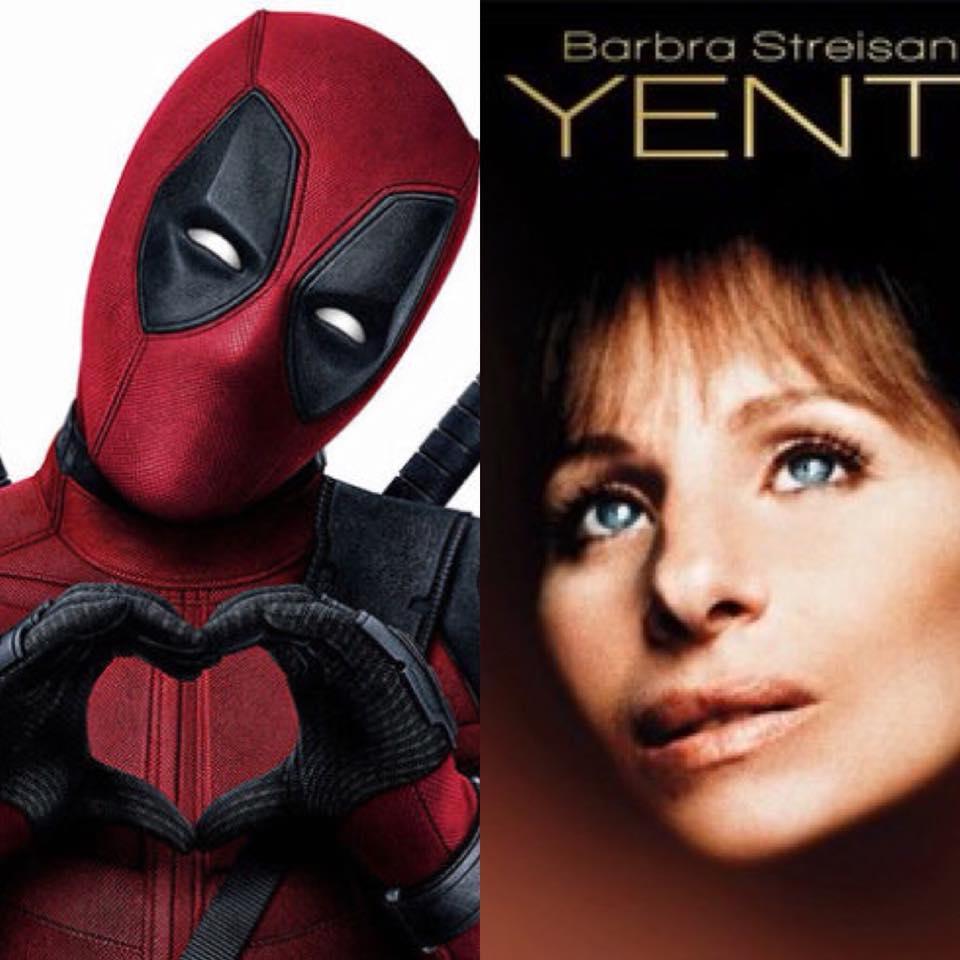
Streisand isn’t the only female vocal artist highlighted in the film, Dolly Parton’s 9 to 5, Pat Benatar’s We Belong, and Cher’s If I Could Turn Back Time are all featured, all that we were missing was Cyndi Lauper’s Time After Time. Unlike the completely unconventional opening credit sequence from the first Deadpool, this sequel’s opening credit sequence takes a page out of the James Bond handbook, complete with the new single Ashes by Celina Dion. Like the opening credit sequence from the first film, this one also replaces the names with jokes that certainly aid in setting the irreverent mood of the film. Although a film should never primarily rest upon the music, as the plot should stand on its own, the score and featured songs are incredibly important assets that can greatly enhance the experience. Deadpool 2 contains a few montages set to song that will certainly have you rolling over laughing. Sometimes it’s the complete contrast or juxtaposition that the lyrics provide against the action in the foreground that drive the audience to complete hysterical laughter.

For all the first film got right, one of the elements missing from it was a well-developed, dynamic villain (more specifically, opposition to the external goal). Deadpool 2 provides solid central opposition to the external goal (which, for spoiler sake, I won’t mention) flanked by two villains taken directly out of the X-Men comics (and X-Men: the Animated Series). Cable, mentioned earlier, and the Juggernaut. Not to pigeonhole Cable into the villain category, there is more to this villain than first meets the eye. He can be more accurately described as an anti-hero because of his reasons for returning to the past to stop Armageddon, so to speak. Knowing Cable’s backstory, his goals, and that which he sees as opposition to his goals, gives him a character depth seldom seen in many superhero villains. When a villain (or anti-hero) can get the audience to empathize with his or her plight, then the villain succeeds in being well-developed and complicated. Having a complicated villain enables the audience to love or love to hate the villain. But in both cases, the audience loves to see the villain (or anti-hero) on screen. Supplementing the cast of villains in Deadpool 2, is the iconic X-Men character Juggernaut. His introduction into the film comes at a strategic turning point that launches the plot into the showdown.

The film makes an important observation about the lack of plus-sized lead characters in superhero movies. Russell is a plus-sized mutant who wants so desperately to be a superhero, but sends the message to Wilson (and by extension, the audience) that there should be room for non-athletic types in the superhero universe. It’s an important message that I think would have played out more effectively had the actor not been so childish. I understand that the character is a 14yo mutant who is still struggling to find his place in this world and understand his powers, but I kept seeing the actor and not the character. The ability to bring a character to life without the actor showing is part of the art of acting. In most cases, the audience wants to see the character, not the actor playing him or her. I liked the character of Russell, just think he could have been portrayed by another actor who could have more effectively driven the message home that diversity in the superhero universe mans more than male, female, straight, gay, etc. It should also incorporate a diversity of body types. Having non-athletic body types represented in lead characters–superheroes specifically–is an element that I hope continues to improve.

There truly is so much to enjoy about Deadpool 2. Behind the ballsy jokes, suggestive poses, and hilarious meta observations, is solid writing and direction. With the Disney acquisition of 20th Century Fox all but complete, with the wild card of Comcast’s (NBC Universal) bidding 19% more than Disney in cash that could alter the direction of the deal, I hope that we did not witness the last Deadpool free of Disney sanitization. Knowing that they strong-armed Fox into cutting a Disney joke from the film during post-production, does not help matters any. Hopefully, the third installment of Deadpool will be just as funny, if not funnier than the first two. Oh yeah, it should go without saying but this NOT a superhero movie for kids.
“Black Panther” movie review

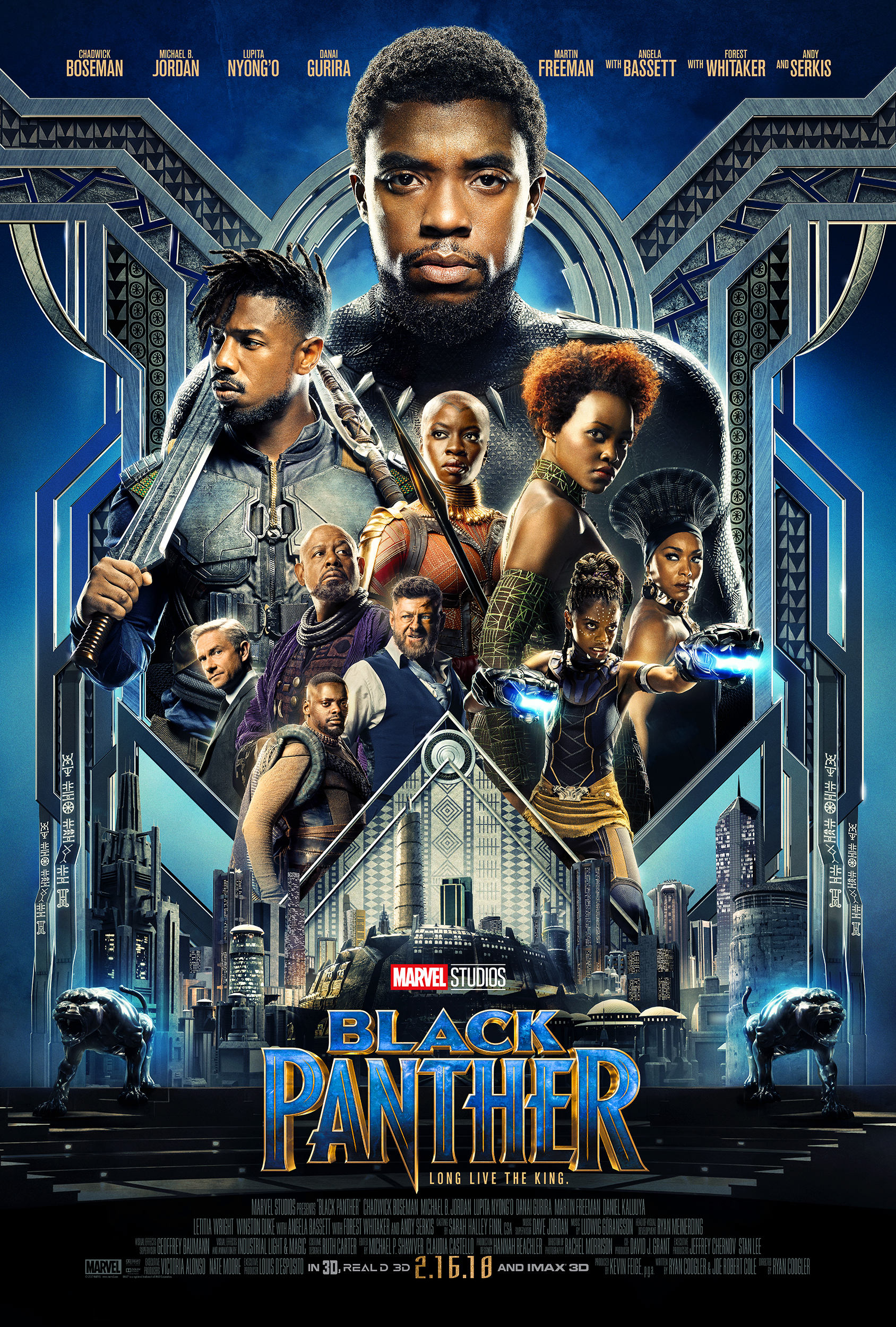
A groundbreaking new perspective on the typical high concept superhero movie. Marvel’s Black Panther directed by Ryan Coogler is the type of movie that began with the desire to make a bold statement and then a narrative was built around the message. If you’ve heard it’s unlike any superhero movie you’ve seen before, then you’ve heard correctly. One of the things I’ve always appreciated about the Marvel universe (and DC by the same token) is the diversity of the characters. There are characters from a variety of backgrounds, creeds, cultures, ethnicities, etc that are represented in the characters. However, just because the characters were there does not mean they received reasonable screentime (or page time in comics). Up to this point, X-Men’s Storm (my favorite Marvel character) seems to be the only black character who receives comparable screen and page time to that of her white male or female counterparts. In a world that should teach us that our universe is a diverse place, filled with incredible people from a variety of backgrounds and origins, the representation of black heroes lagged behind. The beauty of Black Panther is not that is was simply created to finally give a predominantly black cast in a superhero universe the spotlight, the beauty is that the movie has something to teach everyone. There is a particularly strong message for young black boys and girls that their mythology is as fascinating as the Greeks and Romans, and that they can achieve greatness through teamwork, education, and loyalty.

Chadwick Boseman plays King T’Challa, of Wakanda, the fictional African nation housing secret sci-fi technology, who must step up and embrace the weighty responsibility of his birthright after the assassination of his father. When T’Challa returns home Wakanda to take his rightful place as king, a powerful enemy suddenly reappears and challenges T’Challa’s claim to the throne — and as Black Panther — T’Challa gets tested when he’s drawn into a conflict that puts the fate of Wakanda and the entire world at risk. Faced with treachery and danger, the young king must rally his allies and release the full power of Black Panther to defeat his foes and secure the safety of his people. (IMDb)

Although there is a lot of technology in Wakanda (and by extension, in the film), the focus is not on gadgetry or superpowers but on how T’Challa can be a better king than his father who made a poor judgment call that ultimately cost him his life and put the land of Wakanda at risk of rape, pillage, and plunder. That is a message that resonates with everyone–we all want to strive to be better as we go through life. Perhaps we are trying to be better than we were as kids or maybe you are trying to be a better parent than yours were. Whatever the case, we can all place ourselves in T’Challe’s boots. There is also a powerful message regarding how isolation can be detrimental to society at large. Not that the film is advocating the loss of sovereignty–Wakanda is highly sovereign–but there is the message that a country with so much to offer should return some of that to the world in order to help create a better society, more opportunities for growth, and the sharing knowledge that can heal and protect.

The cast is incredible! So many talented performers who truly bring their respective characters to life. My only negative critique regarding the cast is the underused Michael B Jordan as the main opposition character. His charisma shines brightly on screen! But sadly, he does not get much screen time. He is the type of opposition character that you love to see, but unfortunately, you don’t get that much time with him. Although many may be quick to liken Black Panther to Captain America—and for good reason, both shoot straight and almost piously righteous–there is a big difference between the two–and it’s a good one. Black Panther is humanized by his endearing relationship with his brilliant sister Shuri portrayed by the delightful Letitia Wright. Honestly, she was my favorite character in the entire movie. Every moment she was on screen was outstanding. She was the only one who wasn’t bruting–always positive–and has the BEST lines. Just her character alone is enough to give the movie rewatchabiity. On the topic of dialogue, I would like to have seen a powerful monologue that embodied the message of the film and evoked strong emotion. There are emotional parts, but I think an acute moment would have done the film well.

The film opens with a beautiful long tracking shot of exquisite editing that has a mystical feel to it. The opening alone is enough to hook your attention for the remainder of the narrative. No surprise here that all the technical elements were exemplary. There were only a few times that the visual effects felt artificial. For all the action movie tropes in the film, it plays as more of a character-driven story than action-driven. And that’s the brilliance of Black Panther. Simple plot, complex characters–that’s what I tell my screenwriting students at the University of Tampa.

Intensely riveting, Black Panther is clearly a standout Marvel film distinguished from the others in the MCU. All the elements that give it the fresh take on the superhero movie genre work to its advantage. You’ll certainly be left with a lasting impression.

Don’t Pass GO, Don’t Collect Your Oscar

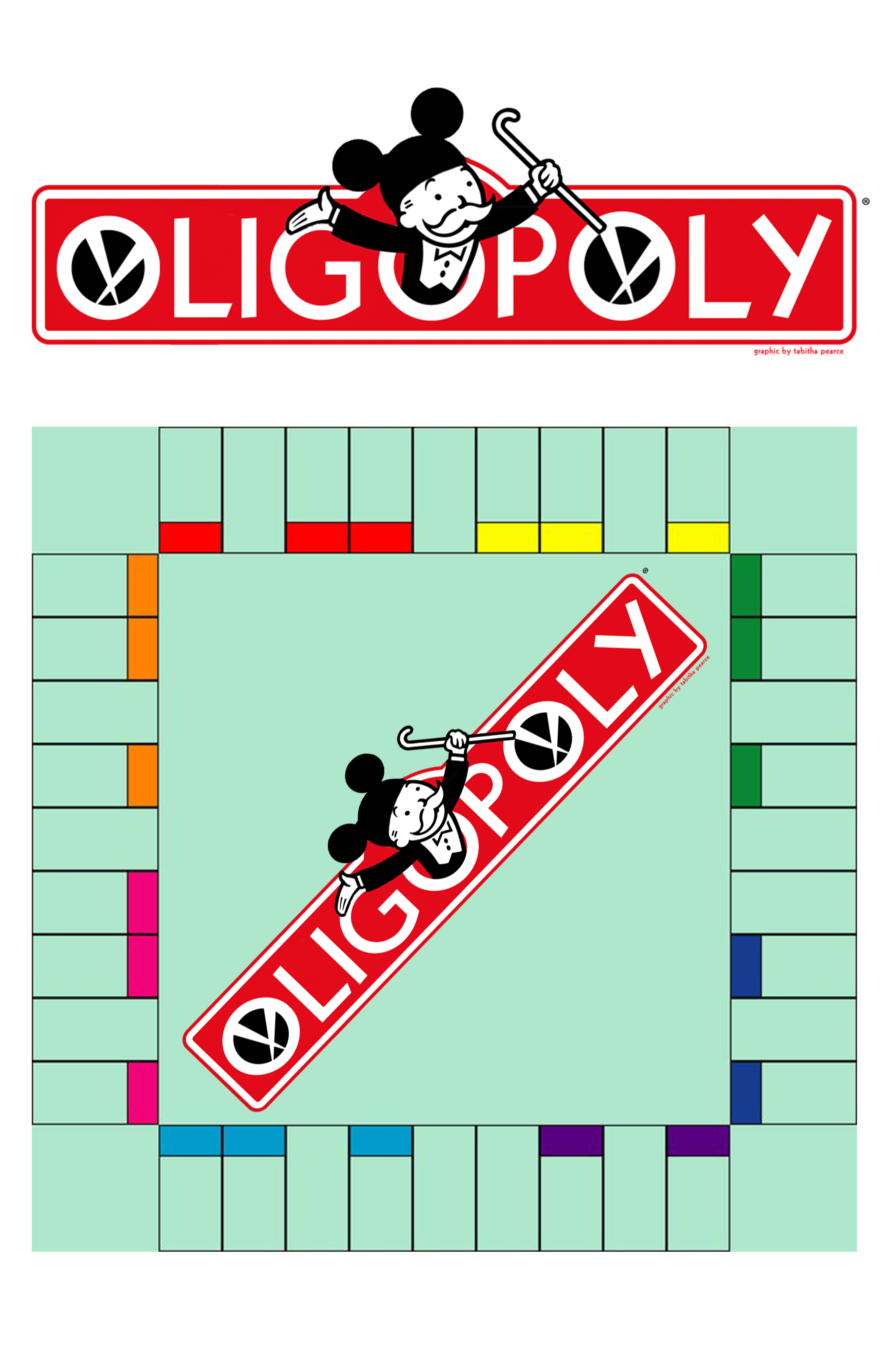
Corporate monopoly is the enemy of creativity and variety. The biggest news in entertainment this week was the talks between Disney and Fox to sell most of 21st Century Fox to The Walt Disney Company. Whether the talks are still going on behind closed doors or not presents a fascinating topic to discuss! This deal, which would be the biggest film/media deal ever, has far reaching effects upon the industry. Some may even argue that it has danger written all over it. If there wasn’t already a rigid oligopoly amongst the studio/distribution companies, there will be if this goes through. Should this go through without the government swooping in to save the day with monopoly claims in the vein of the historic Paramount Decision, the lion’s share of the cinematic marketplace would be controlled by Disney, TimeWarner (Warner Bros.), and Comcast (Universal), with Sony (Columbia) and Viacom (Paramount) bringing up the rear. Five. That’s right. Five companies would essentially determine the future of the industry, and control the majority of the motion pictures released in theaters and the content on cable television (and the streaming services that access it). It’s a mirror image of the 1940s. Instead of The Big Five and The Little Three, we have The BIG Three and the Little Two.

From the big screen to the small screen, you will notice the effects in the programs you watch. When one company controls the majority of any marketplace, it usually spells disaster for the consumer; furthermore, it means that there will be a primary gatekeeper in future artists getting his or her work out there. Not to mention that the programming on FX and other Fox (non-broadcast) subsidiaries could begin to gradually feel and look more like ABC programming. Could this put shows like The Simpsons and Family Guy on an endangered species list of sorts? Not right now. The deal, in off-and-on talks, would sell off 21st Century Fox (movie studios) and not Fox or Fox Sports (an acquisition of that sort would not be permitted because it WOULD be illegal). So, even if this buyout were to happen, The Walt Disney Company would still continue to be the brunt of many jokes on The Simpsons and Family Guy. A buyout could mean, however, that program options will seem less varied and just more of the same ABC-schlock that already pervades the bandwidth. The two companies that have the most TV programming are Fox and Disney, with Sony (CBS), Viacom (non-broadcast Nickelodeon), Comcast (NBC), and TimeWarner (CW) trailing in original programming. That being said, TimeWarner has done very well with The CW, and I hope it continues to churn out programs such as Vampire Diaries, Supernatural, Riverdale, etc.

Beyond the negative impacts on content, which, in all honestly, can be quite subjective in nature, are there legal or ethical implications here? Is there perhaps a past precedent that could be used in the courts to stop such a buyout (or sellout rather–Fox)? Let’s look at the most famous suit brought against the major motion picture studios: The Paramount Decision [(U.S. V. PARAMOUNT PICTURES, INC., 334 U.S. 131 (1948)]. Prior to the Paramount Decision, the motion picture industry was controlled by a few companies that were heavily vertically integrated. The Studio owned the facilities, production companies, staff (under long-term contracts), the films themselves, distribution channels, and the movie theaters. When the studios were growing so large that they began infringing upon the free marketplace, the US Government forced the (then) eight major/minor studio players to end the practice of block booking (meaning, films would now be sold on an individual basis), divest themselves of their respective theatre chains (sell them off), and modify the practice of long-term employee contracts (though, this would continue until the 1960s). This marked the beginning of the end of the Studio System, AKA Hollywood’s decentralization. There are many similarities between the situation in the late 1940s and today. In fact, it’s a little worse today because the industry is mostly controlled by five (instead of eight) companies, and these companies have heavy investments in streaming and television programming.

The problem with the current state of capitalism in the Unites States isn’t worries of monopolies but oligopolies (monopolistic practices between a few firms that essentially control a market). Certainly the state of the film industry already lends itself to an oligopoly because of the few companies; but the buyout of 21st Century Fox by The Disney Company would greatly increase this issue of a blatant oligopoly. If a monopolist (in many other industries) did what Disney is doing, neither the public nor the government would stand for it; but because it’s Disney, and because it’s the film industry, most of the general public is unaware of the negative consequences of such a buyout. Technically speaking, oligopolies are not illegal nor is monopolistic competition; however, this can be a slippery slope towards stifling creativity or making is increasingly difficult to break into any given industry as a newly emerging competitor. Incidentally, monopolistic competition causes the variety or level of differentiation of similar products (i.e. moves and TV shows) to become less heterogeneous and nearly come across as homogenous. For many, it will feel like there are only two primary companies controlling the majority of programming on TV and a few companies controlling a large portion of the movies that get released in movie theaters.

When a strong oligopoly exists within a specialized industry (for our purposes, media & entertainment), one of the side effects is a concept known as parallel exclusion. This concept can be described as the collective efforts of the few industry leaders who essentially act as the main gatekeepers to prevent or make it difficult for would-be newcomers to enter the arena. Parallel exclusion is nothing new, and has been in the news as recently as the last 2-3 decades within the airline and credit card industries. Throughout the eighties and nineties, Visa and MasterCard essentially blacklisted any bank that set out to do business with AmEx. Thankfully, the U.S. Justice Department stepped in when the manner in which the exclusionary rules were written crossed legal, fair trade boundaries. There were similar issues within the airline industry as well. When a few companies control the content or services in the marketplace, antitrust issues are raised.

Although we are not facing a technical monopoly with the possible acquisition of Fox by Disney, we are looking at an abuse of power that leads to anticompetitive conduct. If nothing else, the consumer should be worried about having fewer options for programming. Not that the number of programs or movies will shrink, but there will be little difference between what is released under the Disney banner and the Fox name (if it’s still even called that). In a deal like this, it’s the consumer who gets the short end of the stick. The consumer would be wise not to give Disney a pass just because there are a small group of big film studios instead of just one. While Marvel fans may be excited that the X-Men can join the MCU (Marvel Cinematic Universe), there is the possibility of a lack of competition between brands thus mitigating innovation and ingenuity. Competition is the mother of innovation just as necessity is the mother of invention.

Because the Walt Disney Company is primarily focussed on producing the biggest movies possible (after all, they made five of the 10 most successful films last year), the mid-budget dramas and comedies that used to thrive in Hollywood–you know, the ones that cause you to cry and laugh–would dwindle in number–there would be little room for them to make their respective ways into theaters in a predominantly Disney controlled industry. What we are essentially talking about here is a corporate cinematic monolith, the likes of which, has never been seen before.

Written by R.L. Terry

Graphic by Tabitha Pearce

“Thor Ragnarok” movie review

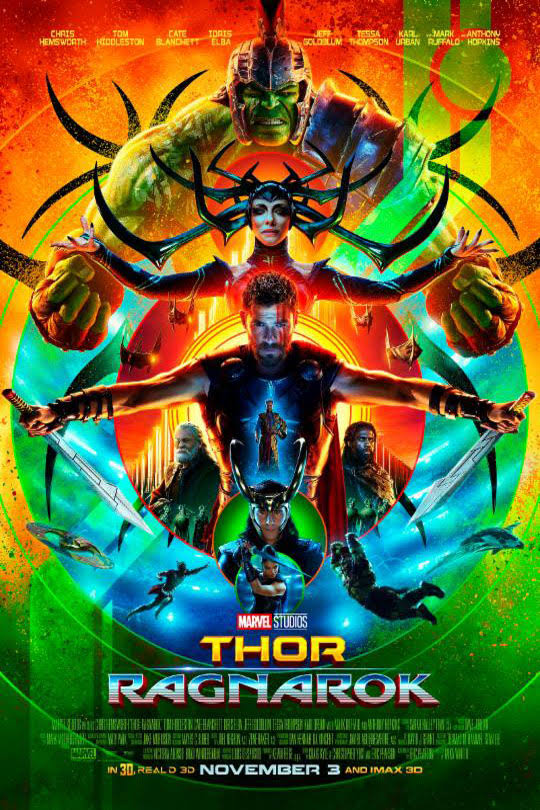
Norse mythology meets Gladiator meets 80s vintage video game in this non-stop adrenaline pumping action film. Suffice it to say, everything you’ve heard about Thor Ragnarok from your friends is true. It is an incredibly fun movie that is equally well written and directed. For anyone who follows my blog, it is no secret that I typically do not like the Disney-Marvel films (and for good reason), but the focus of this review is on THIS particular film. I state that because, honestly, I very much enjoyed this film! So, it comes from liking the structure, characters, plot etc. not just from being a fan boy, or lack thereof in this case. Not only an excellent third sequel, but this movie can easily stand on its own. Whether you have watched the other MCU (Marvel Cinematic Universe) films or not, you can rest assured that you can enjoy this superhero movie. With the way the initial trailers were cut, I thought that this was MCU’s way of jumping onto the 80s nostalgia band wagon–not so. Oh, there is definitely an 80s video game vibe about the film, but the focus is on the characters and storytelling, not the nostalgia. There is also a self-aware element of this film. Not to the extent Deadpool is self-aware, but Chris Hemsworth’s Thor has a twinkle about his eye that winks at the audience so that we know that he is aware of the corniness and ridiculousness of the characters and plot. But the magic of this film is just how well balanced the content of the film is. There were many times that the plot lended itself to falling apart, but the solid cast held the film together and provided audiences with one of the best movies in the MCU.

When Thor learns of a dark, hidden family secret, he must confront the deadliest enemy he has ever faced off with in his life. But the legendary hero encounters far more than he ever expected. The mighty Thor finds himself imprisoned on a faraway planet and forced to battle in gladiator-style games. Little does he know that the winningest challenger on the planet is his former ally The Hulk. Thor must survive the deadly gladiator-like battles in order to build his team to defeat Hela, the Asgardian goddess of death who is destroying his home world.

One of the principle themes in this film that enables this one to be more and deeper than other MCU films is just how similar it is to a conventional war picture. There are hints of courts of intrigue as well. The complex plot provides a comprehensive foundation upon which a more superficial story can be developed in order to appeal to wide audiences, with few appreciating the deeper themes and subtext. But it takes more than effective and well-developed writing to build such a solid movie, it takes multi-dimensional characters portrayed by impeccable screen talent. You’ll find all of that in Thor Ragnarok. Although his screen time is brief, Anthony Hopkins’ Odin commands the screen with confidence, wisdom, and sincerity. Few actor’s can take a few minutes of screen time and put more cinematic magic in it than Hopkins. After all, he won his Oscar for Silence of the Lambs for his collectively few minutes on screen. Joining the cast are Jurassic Park’s Jeff Goldblum and the beautiful, talented Cate Blanchette. Goldblum’s Grandmaster of Sakkar is hilarious and brilliant. As you’d expect a Goldblum character in a film like this to be: detached intellectually from that which is seen as conventional, smart-alecky; yet, he is also petty, sadistic, and relentless. Blanchette’s Hela is elegant, sadistic, and intelligent. She is perfectly able to be the comic book-esque villain she needs to be, all while bringing about a pedigreed acting to it.

All the technical elements of the film works excellently together. The most memorable of those elements is the music, for me, followed by the visual effects. I absolutely loved the nod to Willy Wonka and the Chocolate Factory during Thor’s transport to through Sakkar. This works because (1) the scene it shot and edited similarly to the boat scene in the aforementioned movie and (2) Goldblum’s Grandmaster is a Willy Wonka type. Throughout the film, there are 80s video game sound effects and a score that could fit into a nostalgic 8bit video game. However, the nods to Willy Wonka and video games do not overpower the more conventional score. Whereas the visual effects could have gone overboard and made the film play off as a video game, the video game like effects where carefully integrated in order for the film to maintain a high show quality.

The film was initially sold as a funky, colorful, comedic MCU film. And there are times that the film also encroaches upon that animated feel, but it never crosses that line–thankfully. The more serious aspects to the film balance out the slapstick moments. All of this works together to execute perfect pacing and plot/character development. Like with most MCU films, the more adventurous parts of the film are not quite adventurous enough to be an adventure film and there is typically a predictable nature about the film. I find that this film is not as predictable as previous MCU movies, but there is still that experience with this one. There is one particular part to the showdown of the film that prohibits this from falling victim to another cliche MCU ending with an epic battle, bodies flying through the air, and cities on fire, but I cannot reveal that without giving away the ending.

Looking for a fun movie to watch with your friends? Then this is a solid choice. Although the film has its diegetic flaws, the ways it succeeds outweighs the shortcomings. You also do not have to have seen the other Thor movies and really don’t even need to have seen the previous Avengers films, albeit helpful to understand some of the minor plot points. It’s definitely one that has re-watchabbility.

“Wonder Woman (2017)” film review

WONDERful! No seriously, this is an excellent film! And I’m just not talking about the superhero genre. DC finally hit a homer with this one. This film also serves as evidence that Zack Snyder can TELL/produce a great story but should probably stay out of the director’s chair. Warner Bros. and Ratpac Dune’s Wonder Woman is the superhero film we needed. Trailing so far behind the Marvel brand and film quality, DC needed to produce a film that would make up for Batman v Superman and Suicide Squad AND catch up to Marvel. Seemingly setting out to accomplish the impossible, this film exceeded all measurable expectations and provided a comprehensive cinematic experience. With many themes, this film hits on many topics and does so with incredible precision and elegance. It’s almost as if this film is an extension of Diana Prince herself. Never addressed or referenced as Wonder Woman actually, Diana Prince’s origin story is powerful and ever so apropos in today’s socio-political climate. If only we could all have the courage, compassion, and determination that Wonder Woman embodies and represents. There are certainly elements of this film that are directly aimed at the female audience members, but this is a film for everyone to enjoy and appreciate. Again, not just a great superhero film, but a great film period. One that’s inspirational, evocative, and without need for qualifiers.

After receiving a mysterious package from Wayne Enterprises, Diana Prince (Gal Gadot) opens it to find an old photograph of a Greco-Roman female warrior standing with British military in war-ridden Belgium. Bruce Wayne wants the story. Long before she was Wonder Woman, Diana, daughter of the queen of the Amazons, was a spirited young lady growing up on a beautiful and mysterious island inhabited by a super race of warrior women placed on the planet to watch out over those who seek to corrupt it. Being the only child on the island, she wanted to be trained alongside the other women. When her mother expresses a lack of interest in her daughter training, Diana meets secretly with her aunt. Through the years, Diana grows in strength, agility, courage, and cunning. After she rescues Captain Trevor (Chris Pine) from a downed plane that pierced the invisibility shield that hid the island from the rest of the world, she learns of the Great War happening just outside of their borders and makes the decision to leave her home and help man defeat the enemy combatants who she believes are being led by Ares, the Greek god of war. Fighting alongside men, Diana is able to realize her true destiny and powers as she stops at nothing to end the war that is killing so many innocent people and destroying the planet.

Ever since her creation in 1941 by psychologist William Marston, Wonder Woman has always been treated the best when all pre-existing inhibitions typically added to a female character in a “man’s” role are removed, allowing the feminist ethos at her core to shine and erupt with unbridled passion and strength. Among other traits, the chief characteristic that separates her from other superheroes in both the Marvel and DC universes respectively is–no, not her gender–it is her ability to integrate truth, justice, compassion, and courage in everything she does to protect the planet entrusted to her people by the Greek gods. The key to understanding Wonder Woman is not through her brute strength or supernatural powers, but through her love and compassion for innocent people and her own integrity. Rarely has any film truly given women (or anyone, for the matter) a strong female protagonist who does not pander but exhibits excellence in well-developed strength of character and a complete eruption of the fantasies of many women to rise up to serve and protect. It would have been far too easy to sell Diana Prince as a vengeful women out to destroy men or seek revenge for the destruction that has befallen the planet; but no, that is not the Diana we see. We see a heroine of others–a completely unselfish hero who is of earth. Being of the earth is truly what separates her from someone like Super Man. Sure, some strong female characters from with the world of comics, literature, theatre, TV, or film have demonstrated strong characteristics and have been leaders; but Wonder Woman sands alone as a film that provides audiences with a female protagonist who is not merely a leader, but the engineer–the author–of her own destiny and story.

Why does this film work so well??? After all, that is the question you are likely asking yourself after so many DC flops (note: that does not count the Burton or Nolan films). The short answer is that Snyder was NOT in the driver’s seat on this ride; however, there is more to it than that. Snyder’s touch is certainly evident in many scenes (especially the action sequences); furthermore, he was greatly instrumental in the overall structure, but he took a backseat to the driver of this vehicle. His approach was important in the design of the car, and even building it, but when it came time to take it for a spin, he turned the steering wheel over to Director Patty Jenkins. Films featuring strong female protagonists most often seem to fair better when there is a women at the helm. And Wonder Woman is a testament to that observation. Whereas a male director would have likely spent some time sexualizing Diana, Jenkins spends the time on her courage and compassion. Instead of focusing on the terrain of Diana’s mystical home beautifully appointed with white cliffs and sapphire water or spending time on her sleek blade or even her trademark lasso of truth, Jenkins spends a significant amount of screen time on the terrain of Diana’s face. A face that communicates the heart, mind, and soul of Diana. Instead of a face displaying anger or disgust at the world of men, her face is often bright, hopeful, containing a winning smile with eyes overflowing with optimism. In terms of the production design itself, it only bares hints of Snyder’s penchant for beautiful music videos; the production design is one that takes itself seriously, but in the perfect amounts. Although the film is quite dark, there are sufficient moments of levity.

Perhaps you’re a stereotypical dude who does not care for films that feature female protagonists and feministic themes. No fear. Wonder Woman is actually a World War I film disguised as a superhero movie. As much as Wonder Woman works as an exceptional superhero movie, it is equally an impressive World War I film. Taking place in the days leading up to Armistice Day, this film displays the atrocities of war and the determination of both sides to win. You will find yourself in the trenches in France and Belgium with the Allied forces who, against all odds, are determined to defeat the enemy in order to stop genocide and widespread devastation. Placing Wonder Woman amidst the warriors of earth, connects her to humanity in ways that most superheroes cannot. Fighting for what you believe in is a major theme in this film. Some of the best war movies are those that “show don’t tell.” And Wonder Woman certainly shows what war really looks like instead of talking about it as some abstract concept or spending time in diplomacy. In fact, diplomacy is thrown out the window, and Diana lays the need to fight on the hearts of the bureaucratic leaders and soldiers alike. Pick up your sword and fight. Don’t just sit idly by while humanity is destroyed. There is a particular scene midway through the film that nearly brought me to tears because of the strong emotion and courage displayed by Diana.

Go see it! Wonder Woman is an exceptional film that will blow your mind. I had high expectations going into the film last night after the early reviews were released, but I was not prepared for the degree to which I would thoroughly enjoy the entire experience. It’s not only a film for women, it’s sincerely a film or everyone. Next time you are faced with great opposition, when it feels that the world is caving in around you, be a Diana Prince.

Written by R.L. Terry

Edited by J.M. Wead