“Widows” full review

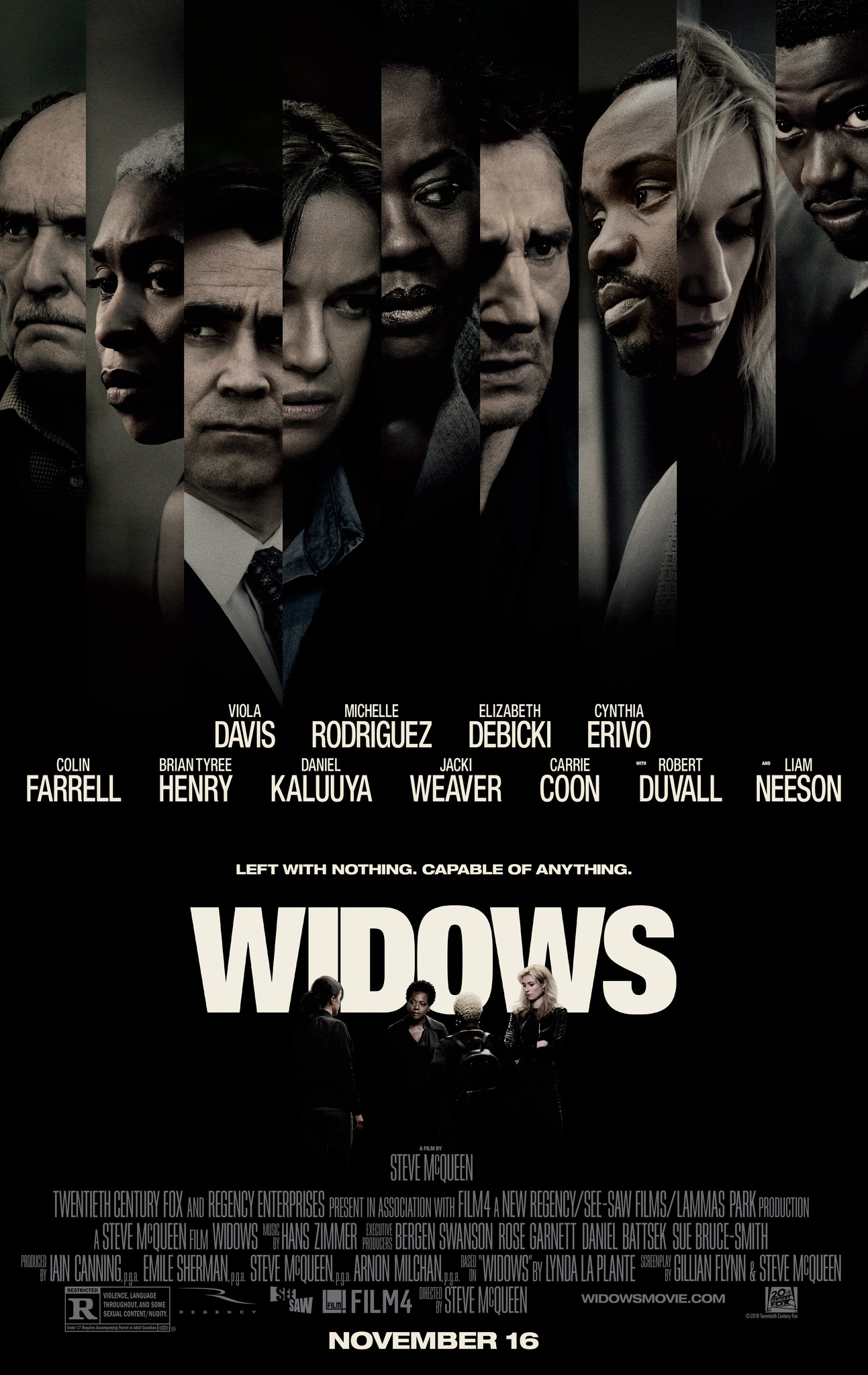
Intelligent, emotional, thrilling. Steve McQueen’s Widows is more than a thriller about a heist, it’s a stylish cinematic exercise full of social commentary on racial and social injustice within a city built upon political and business corruption. In a world that is completely exhausted from injustice, McQueen’s masterful direction brings Gillian Flynn’s multi-dimensional screenplay to life. Widows is brilliant in part because the film works on multiple levels simultaneously whilst delivering an edge-of-your-seat drama full of conflict. Not your typical action-packed film, the focus is truly on the central characters and the worlds from which they each come–worlds that collide after a robbery goes terribly wrong. It’s a brutal story with the highest of stakes. Witness a genre that is often not thought of as much more than a good popcorn movie, mature, grow, and exceed what society dictates this genre should be. While the characters themselves break through that glass ceiling, this film parallels the narrative by shattering expectations to create a thought-provoking work of cinema. Whereas a film in this genre seldom tackles such tough topics; and in general, many films that do seek to provoke discussions on race, social injustice, and gender roles come off as preachy, Widows never crosses that line from motion picture to sermon. The visually impactful story hooks you from the opening scene, and delivers command performances that force you to empathize and ask whether or not you would go to such lengths to forge a working relationship with people completely different from you in order save your very lives. What would you do when you are thrust into a situation in which you are way over your head and unprepared? Widows is as entertaining as it is thoughtful.

A heist goes terribly wrong. Very, very wrong. The result leaves four women widows. Four women that have no idea who one another are, or even the extent of their respective husbands dealings within the world of organized crime. These women are left with a debt owed to some powerful people who have a total disregard for human life, and only value money and influence. When Veronica (Viola Davis) is approached by a crooked politician for the $2mil her husband owes, she must devise a plan to deliver the money because her very life is in immediate danger. In order to get the money that she needs, Veronica blindly contacts the other widows in order to pull off the next heist her husband was planning. “The best-laid plans of mice and men often go awry. No matter how carefully a project is planned, something may still go wrong with it.” With little time to train, Veronica and her newly forged partners work tirelessly to plan and pull off the heist with a booty of $5mil.

After listening to the recent Mike Mike and Oscar (MMO) review of this movie, I am determined now more than ever to persuade them to my side of the argument that this is a great movie, and one worthy of the critical and general audience acclaim. There are so many layers to this story that it is difficult to know precisely where to begin my analysis. Before tackling the plot itself, the area where MMO and I agree is the cinematography and editing. McQueens stylistic direction is witnessed clearly in the phenomenal movement of the camera and editing. There are times that the camera feels like a character in and of itself. Without giving any spoilers away, there is one particular scene that was so brilliantly blocked and choreographed that I was legitimately wowed by the cinematography. And that is the gripping opening scene. The camera never misses a beat, and the editing is razor sharp. There are moments that the camera moves so exceptionally that I truly feel like a fly on the wall of the getaway van. Beyond the stellar cinematography and editing in the opening scene explosive action, the camera often lingers on reactions or reveals subtext in other scenes. While the characters may be talking about something innocuous or delivering a expositional dump, the camera is focussed on something entirely different.

The story of Widows is less about the heist as it is a character study on three incredibly interesting women who are forced to work together to achieve a common goal. An external goal of the theft of $5mil because of a mess left by their respective late husbands paired with the internal need to survive. And it in these characters and the conflict experienced by each that the film truly shines as taking this action genre to substantive levels. Much like a screenplay itself is build upon the three act structure, and individual scenes also embrace the idea of a “mini 3-act movie” within each act, the film provides three fascinating characters upon which the conflict and drama are build. Whether short or feature, films contain three acts, each with a specific diegetic purpose. Paralleling this concept of 3s is the central ensemble cast of Veronica, Linda, and Alice. Amanda is also left a widow by the police shootout, but does not play as active a role. Veronica is a character who lives on the wealth of her husband, but turns a blind eye to what he does. She is grieved and frightened of how she is going to cope with life, especially after having buried a teenage son. Linda is an entrepreneurial spirit who trusts that her husband is taking care of the logistics of opening a store but does not make sure bills are getting paid. She is unaware of his habitual gambling and penchant for unethical business ventures. Alice is a timid, shy person as a result of being abused as a child and by her husband. She demonstrates an unspoken relief that her abusive husband is gone, but reluctant to become an escort even though her mother trained her that she only has her looks and nothing else. We don’t learn as much about Amanda except the fact she is a new mother and doesn’t want to be involved in anything. All three of these woman are thrust into a situation in which they are over their heads and rise to the occasion to overcome the fear of impending death to take control of fate to forge their own futures. It requires them to drop walls, cooperate, and use each of their talents to combine together to create a formidable team. Alone, each of them did not have what was necessary to pull off the job, but together they become a solid team.

The stark differences between the three women are important because it allows the story to explore the socio-political and inter-personal affects the conflict has upon them. On the surface level, Widows is a heist movie; but ultimately, the heist itself is irrelevant, little more than a glorified plot device. Steve McQueen took a high concept film and made it low concept, gave it substance and meaning. Crafting this meaningful film out of a popcorn concept demonstrates McQueen’s ability to create something that is incredibly entertaining but never sacrifices character, the cinematic experience, or the important themes and subtext found therein. This is very much a #MeToo era film. It provides a platform for strong female characters to turn the tables on their oppressors, those who take advantage of them, and take back their dignity, self-respect, ambition, and independence. Thematically, the film is incredibly rich. Each of the central women are saddled with burdens of various kinds and to varying degrees however, the common denominator is dictation of place in society. This dictation is accomplished differently for each women, but the result is the same. They are all controlled by the men in their personal and vocational lives. Veronica must shed her codependence on her late husband and even her dog (a metaphor for her dependence on the external in order to function) and successfully cope with and overcome grief. Alice must realize that she is intelligent, has intrinsic value, does not need to rely on her body to generate income, and does require a man in order to survive. Linda is challenged with rising above having her passion business ripped out from underneath her because of a mess her husband left, and provide her children with a quality life while never forgetting her own needs and desires. All of these women are the victims of messes created by men, and leaving the women in their lives to clean up.

McQueen’s Widows gives a voice to the oppressed and downtrodden. Although the central characters are our three women, there are other characters in the film representing different kinds of real people out there who are selfishly creating messes and keeping those who aren’t wealthily, white, privileged on the bottom of the ladder and dependent upon the upper class. This is where different depictions of corruption enter the story. We have political corruption, business corruption, and even corrupted leaders of religious congregations. So much to talk about! It’s in these subplots that the film spends time highlighting and commenting on racism and gender roles. McQueen delivers a white ethnocentric political family who stops at nothing to keep minorities out of city government in order to hold all the control in the longstanding dynasties. Gender roles are analyzed by the manner in which the various women are treated by their male counterparts. Although much of these subplots are conveyed through exposition, there are some brilliant shots with the camera. One particularly powerful scene in which Jack Milligan (Colin Farrell) is driving home from his campaign stop in a predominantly black, poverty-stricken neighborhood to his whitewashed wealthy neighborhood. The distance is a matter of a few blocks, but the stark contrast between the neighborhoods is astounding. Whereas the conversation between Mulligan and his assistant could have been a boring expositional dump, it was dramatized by the setting and the reactions of the black chauffeur. This scene calls out the great divide that we see in our country. A few in power keep others oppressed and in their dictated places. Powerful material.

Gillian Flynn’s screenplay is tight, focussed, and deep. It wastes no moment to advance the plot and develop the central characters who all have well-defined external goals supported by well-defined internal needs. The big event of the heist gone wrong has a wide ripple effect that puts the very lives of the innocent in harm’s way, harm they may even mean eventual death. And it’s not a film that paints the “white male” as the only unscrupulous, unethical, power-hungry entity, it also takes the opportunity to show a black male politician who is just as unethical, power-hungry, and unscrupulous, even to committing murders. The lesson here is just how corrupt business and politics is. Even down to strong arming the religious community. Of course, this also shows that the leader of a religious congregation is not immune to picking up a racket and joining the game. Without ever feeling too preachy, Flynn’s screenplay uses visual juxtaposition to truly drive these points home. While the pacing of her screenplay may be slow compared to an action-driven plot, it is perfectly paced for this character-driven story. To be honest, I do not feel that this screenplay is as brilliant as Gone Girl, it’s still a powerful screenplay that balances the action components against the character ones in order to successfully experiment with the heist genre. For all its cleverness and excitement, of the three acts, the first two are definitely the strongest with a weaker third act closing out the film. Will the third act be what keeps this film from receiving a best adapted screenplay nomination? We will just have to wait and see.

There is so much to like about McQueen’s Widows! Make sure to go in with the right expectations though. If you go into the film seeking the next great heist movie, then you my be disappointed (as was the case with Movie Drone Podcast). Mike Mike and Oscar certainly stick by their impression that it’s just an okay movie all the way around and not the Oscar contender than many Tweeps and Podcasters are saying. After watching it for myself, listening and reading to reviews on both ends of the spectrum, I still feel strongly that this movie is fantastic! It’s a timely movie that gives voices and platforms to those who are often sidelined. From writing to directing and performances, you are in for a thrilling time with Widows.

Ryan is a screenwriting professor at the University of Tampa. If you like this article, check out the others and FOLLOW this blog!

Follow him!

Twitter: RLTerry1

Instagram: RL_Terry

Thrillz (theme parks): Thrillz.co
OutFoxed: Exploring the Effects of the Disney-Fox Acquisition

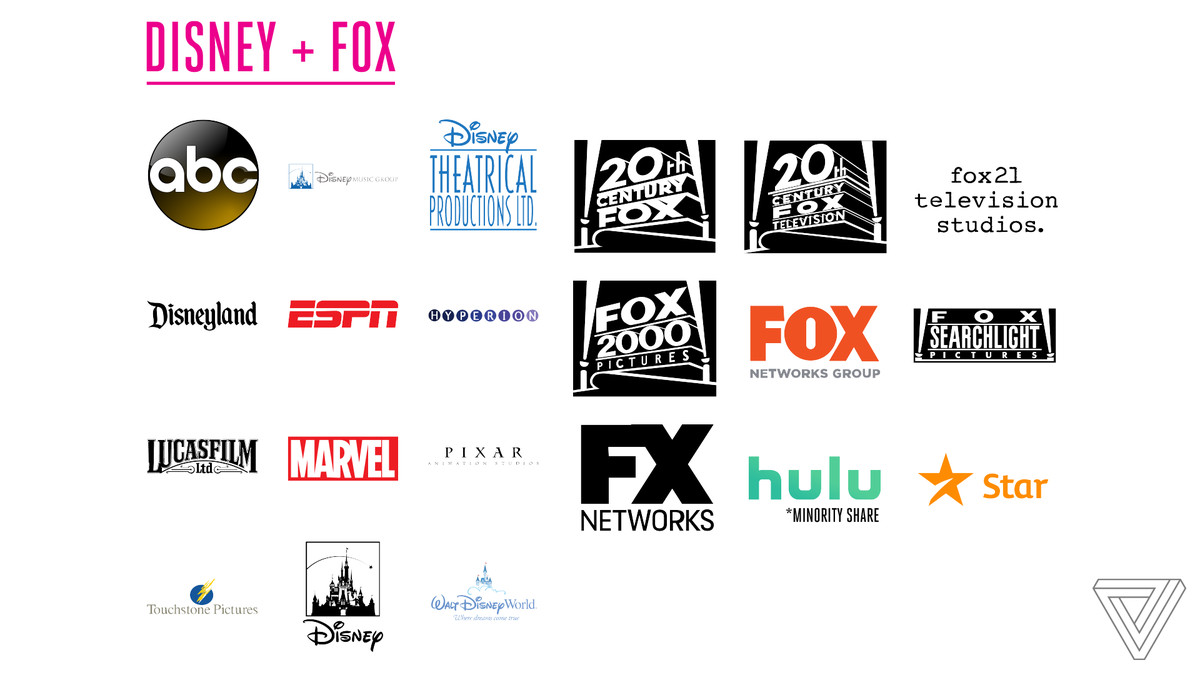
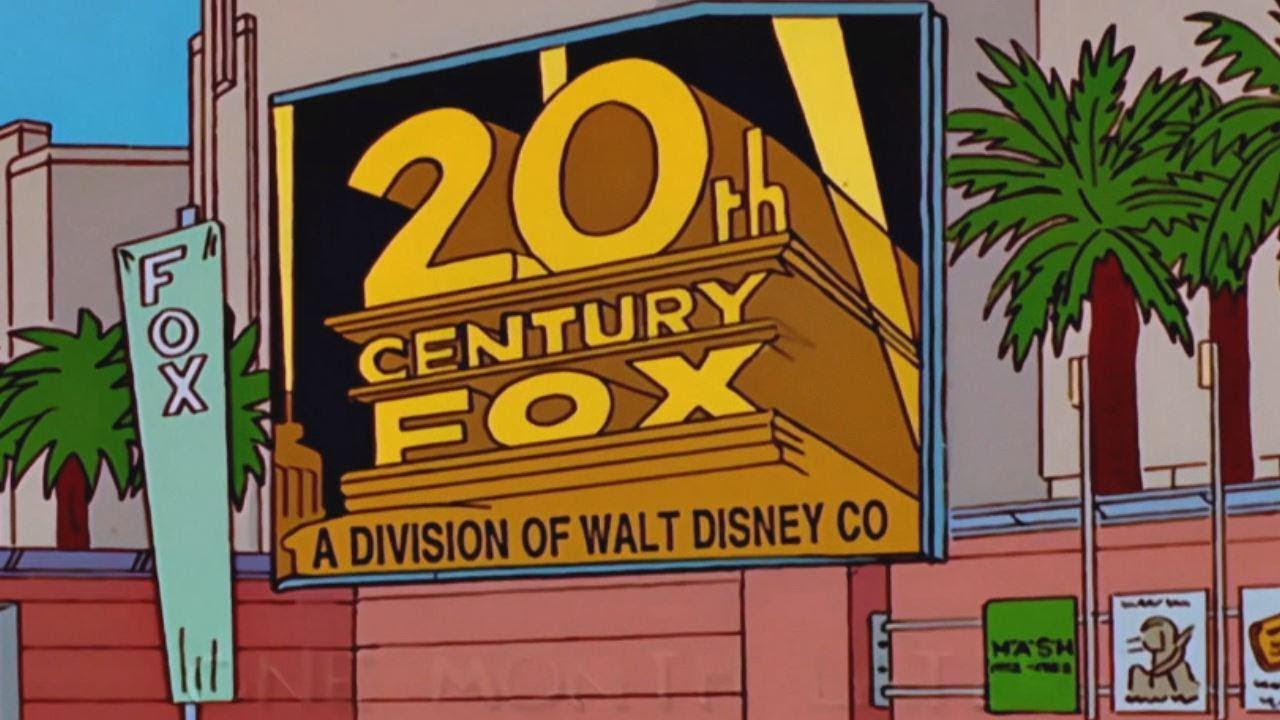
The Simpsons predicted it nearly twenty years ago, but it’s now a reality. Last week Comcast (parent company to NBC Universal) conceded victory to The Walt Disney Company for the acquisition of most of 21st Century Fox. This bidding war has been closely followed over the months, however, the war has ended and to the victor go the spoils. Today, shareholders approved the acquisition. While the broadcast channel, news, and sports will be absorbed by NewsCorp, most of the Cable/TV, Hulu, and cinema IPs will now be owned by Mickey Mouse including American Horror StoryX-MenFamily Guy, Alien, Halloween, and Deadpool, several cable/satellite channels, and more. While Disney theme park enthusiasts and MCU fanboys and girls out there are, by in large, celebrating this news, there is a lot more at stake that may alter the landscape of cinema and theme parks. Furthermore, the recent AT&T-TimeWarner and Disney-Fox deals may affect the rate at which independent filmmakers can secure distribution for their films or sell/option screenplays to producers. The world of media and entertainment is rapidly changing, but all these changes may not be for the betterment of society.

It’s not everyday that a major news story falls within my niche area of expertise on media conglomerates with major investments in themed entertainment and cinema, but this is definitely one that does. During graduate school at the preeminent University of South Florida, I studied the convergence of cinema and theme parks. This empirical study (available on Amazon) analyzed the relationship between motion pictures and theme parks/attractions as it pertained to the media holdings companies that make decisions that affect both their theme park and cinema divisions. A predictable model for creative design was produced for companies that have investments in both, are the licenser, or the licensee. Although my areas of expertise on theme park and cinema studies can be pulled on often when talking about one and/or the other, this story gets to the heart of my thesis because we are dealing with not only two, but three companies. Three? Yes. Disney and Fox are obvious, but NBC Universal may also be effected since it licenses Marvel (X-Men and Fantastic 4) and Fox (American Horror Story, Simpsons, and more) IPs for its parks. Spiderman belongs to Sony, but we won’t get that deep into this issue. With lots of IPs moving ownership and with a mostly vertically integrated company absorbing a more horizontally integrated company, there are positive and negative effects that concern producers, screenwriters, attraction designers, and others in motion picture, “television,” live entertainment, and theme parks. And not only those of us who work in showbusiness (live themed/family entertainment, here), but the fans too.

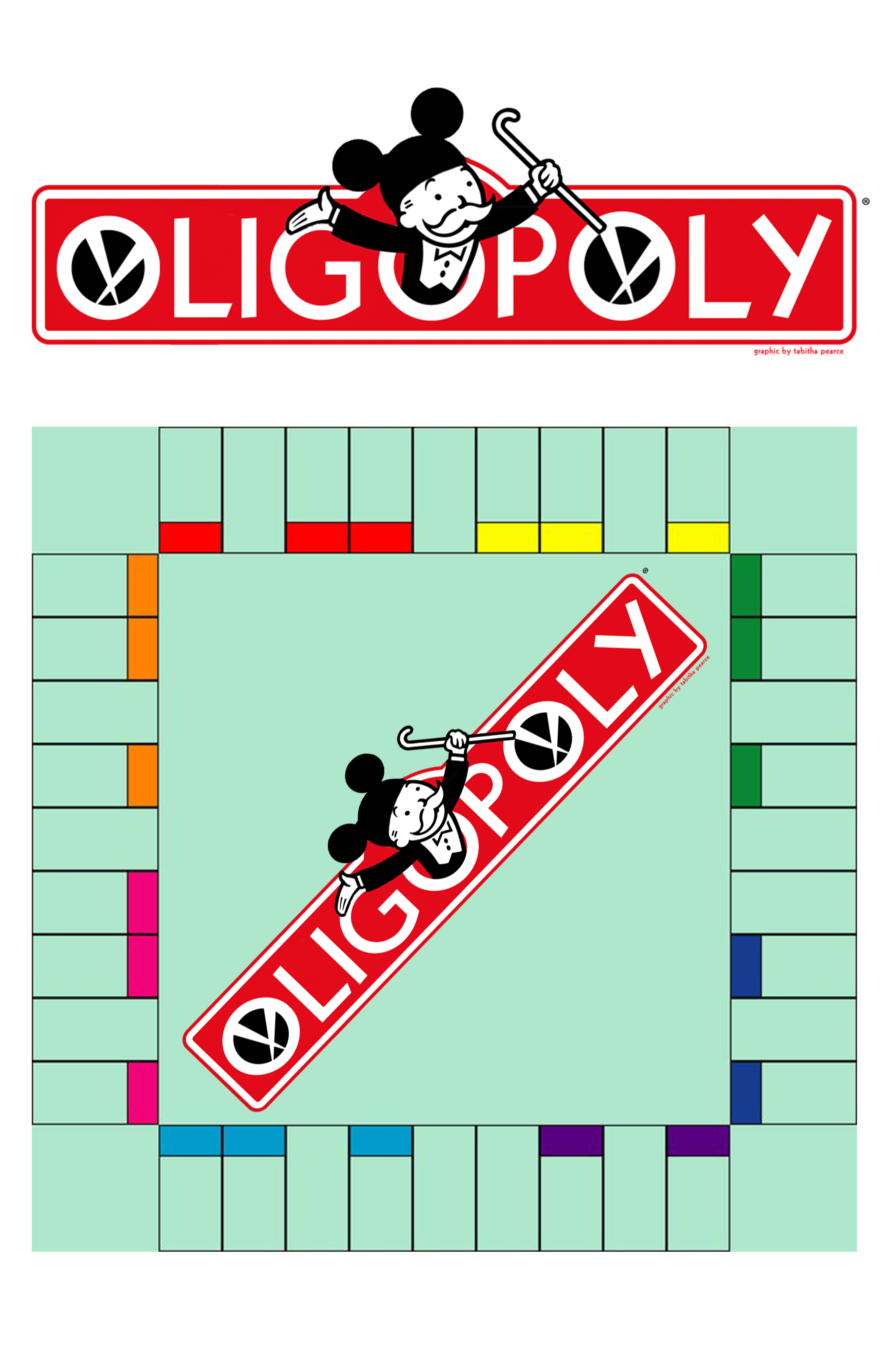
Corporate monopoly is the enemy of creativity and variety. This deal, which is one of the biggest film/media deals ever, has far reaching effects upon the industry. Some may even argue that it has danger written all over it. If there wasn’t already a rigid oligopoly amongst the studio/distribution companies, there will be now. The lion’s share of the cinematic marketplace is now controlled by Disney, TimeWarner (Warner Bros.), and Comcast (Universal), with Sony (Columbia) and Viacom (Paramount) bringing up the rear. Five. That’s right. Five companies essentially determine the future of the industry, and control the majority of the motion pictures released in theaters and the content on cable television (and the streaming services that access it). It’s a mirror image of the 1940s. Instead of The Big Five and The Little Three, we have The BIG Three and the Little Two. In the mid-20th century when the U.S. government cited anti-trust issues with the vertically structured Hollywood entertainment business model, the forced the studios to divest themselves of movie theatres, longterm talent contracts, and more in order to level the playing field for competition and creativity to thrive. The decision to end the process of being vertically integrated is known as The Paramount Decision (U.S. vs Paramount Pictures, 1948). From the big screen to the small screen, from screen to theme park, you will notice the effects of this merger. When one company controls the majority of any marketplace, it usually spells disaster for the consumer; furthermore, it means that there will be a primary gatekeeper in future artists getting his or her work out there.

Let’s explore The Paramount Decision [(U.S. V. PARAMOUNT PICTURES, INC., 334 U.S. 131 (1948)] a little more. Firstly, prior to the Paramount Decision, the motion picture industry was controlled by a few companies. Secondly, the studio owned the facilities, production companies, staff (under long-term contracts), the films themselves, distribution channels, and the movie theaters. When the studios were growing so large that they began infringing upon the free marketplace, the US Government forced the (then) eight major/minor studio players to end the practice of block booking (meaning, films would now be sold on an individual basis), divest themselves of their respective theatre chains (sell them off), and modify the practice of long-term employee contracts (though, this would continue until the 1960s). This marked the beginning of the end of the Studio System, AKA Hollywood’s decentralization. There are many similarities between the situation in the late 1940s and today. In fact, it’s a little worse today because the industry is mostly controlled by five (instead of eight) companies, and these companies have heavy investments in streaming and television programming.

Essentially, the number of gatekeepers is shrinking. The streaming service landscape is also changing because Disney’s acquisition of Fox means that Disney now has the controlling share of the streaming giant Hulu. It’s entirely probable that independent production companies and filmmakers will find it more difficult to get their content out to the public on a well-known platform. Fortunately, Amazon still allows for self-publication but Disney’s control of Hulu will probably see fewer indie films added in the future. The media conglomerates are growing so large that if you’re not in their circle, it will be increasingly difficult to secure a distribution deal for theatrical or streaming. For many, it will feel like there are only 2-3 primary companies controlling the majority of programming on TV and a few more companies controlling a large portion of the movies that get released in movie theaters. Independent filmmakers will have to hustle and work exponentially smarter to navigate the film marketplace. It may get to the point that theatrical releases are no longer realistic or viable for small to medium sized companies because of the stiff competition for the few massive media giants pumping out blockbuster after blockbuster. Conventions like the American Film Market and companies like Distribber will become even more important for indie filmmakers.

The problem with the current state of capitalism in the United States isn’t worries of monopolies but oligopolies (monopolistic practices between a few firms that essentially control a market). Certainly the state of the film industry already lends itself to an oligopoly because of the few companies; but the buyout of 21st Century Fox by The Walt Disney Company greatly increases this issue of a blatant oligopoly. If a monopolist (in many other industries) did what Disney has done, neither the public nor the government would stand for it; but because it’s Disney, and because it’s the film industry, most of the general public is unaware of the negative consequences of such a buyout and therefore only focus on the X-Men being added to the MCU and the trademark trumpet fanfare preceding the opening title sequence of the Star Wars movies once again. Technically speaking, oligopolies are not illegal nor is monopolistic competition; however, this can be a slippery slope towards stifling creativity or making it increasingly difficult to break into any given industry as a newly emerging competitor. Incidentally, monopolistic competition causes the variety or level of differentiation of similar products (i.e. moves and TV shows) to become less heterogeneous and nearly come across as homogenous.

When a strong oligopoly exists within a specialized industry (for our purposes, media & entertainment), one of the side effects is a concept known as parallel exclusion. This concept can be described as the collective efforts of the few industry leaders who essentially act as the main gatekeepers to prevent or make it difficult for would-be newcomers to enter the arena. Parallel exclusion is nothing new, and has been in the news as recently as the last 2-3 decades within the airline and credit card industries. Throughout the eighties and nineties, Visa and MasterCard essentially blacklisted any bank that set out to do business with AmEx. Thankfully, the U.S. Justice Department stepped in when the manner in which the exclusionary rules were written crossed legal, fair trade boundaries. There were similar issues within the airline industry as well. When a few companies control the content or services in the marketplace, antitrust issues are raised

Although we are not technically facing a monopoly with the Disney-Fox acquisition, we are looking at an abuse of power that may lead to anticompetitive conduct. If nothing else, the consumer should be worried about having fewer options for programming. Not that the number of programs or movies will shrink, but there will be little difference between what is released under the Disney banner and the Fox name (if it’s still even called that). In a deal like this, it’s the consumer who gets the short end of the stick. Examples of this may be found in future Simpsons and Family Guy episodes. One of the consistently running lines of jokes are at the expense of The Walt Disney Company. Jabs at Disney can also be found in Deadpool. It will not surprise me that the humor of Simpsons, Family Guy, and Deadpool will change to no longer include jokes at the expense of the hand that now feeds them. If, through contract negotiations, shows and movies like these moved to a different company, then the humor that we have come to know and love may largely be unaffected. As it stands, we will likely see fewer (if any at all) Disney jokes in the aforementioned. These are just examples of the larger problem a few companies controlling the majority of media and entertainment content. The consumer would be wise to the possibility of a lack of competition between brands thus mitigating innovation, variety, and creativity. Innovation is often the product of healthy competition in a free marketplace just as necessity is the mother of invention.

Because the Walt Disney Company is primarily focussed on producing the biggest movies possible (after all, they made the majority of the highest grossing films last year and this), the mid-budget dramas and comedies that used to thrive in Hollywood–you know, the ones that cause you to cry and laugh–could dwindle in number–there now may be little room for them to make their respective ways into theaters with Disney controlling a significant percentage of the industry. Of course, Disney is not alone. With the recent acquisition of TimeWarner by AT&T, both Disney and AT&T are now at the top of the food chain, followed closely by Comcast and then the rest of the media companies who are small in comparison. What we are essentially talking about here are entertainment corporate monoliths, the likes of which, have never been seen before. There is one key difference in the Disney-Fox and AT&T-TimeWarner deals, and one that gives AT&T a slight advantage over Disney and deeper pockets. Disney does not own the hardware in the ground that serves as the conduit for your internet service provider (or ISP) but AT&T does. Not only does AT&T control a huge share of the media/entertainment marketplace, but it also owns a significant share of the technology that brings entertainment content to your home and mobile devices including cable, satellite services, and wireless services. Issues of net neutrality are more important now than ever because the pool of competition is shrinking in number but growing in sheer size.

Cinema and TV are not the only arms of the media and entertainment industry that will feel the effects. Major theme parks, the cash cows of media conglomerates, will change as well. How exactly is this deal going to effect the theme park industry? The short answer is, it is too early to tell; however, we can explore this topic nevertheless. If you’ve been to Universal Orlando resort, you’ve undoubtedly noticed that Marvel and the X-Men have an entire island AND the Simpsons is a land in and of itself. While I am not aware of the license agreement details with both IPs, I can tell you that typically if the ownership of an IP changes hands during the lifetime of license agreement, the agreement is grandfathered in for the length of time that is left in the contract. There are sometimes caveats to that. Often a company that holds the license (for purposes of our example)–a license that belongs to someone different than the original licenser–for a theme park attraction, the licensee cannot make any significant modifications to the look, add to the established attractions, or allow the image to fall into disrepair. If significant changes are made to the look or if the attraction falls into disrepair or if additions are made under the old agreement without consent from the new licenser, the agreement could be nullified. There is a lot more to copyright and IP law than what I’ve outlined, but I wanted to hit some main points on this issue but keep it as simplified as possible. Universal Parks may have to rebrand existing Marvel and Fox attractions as another IP within its library or license an IP from Paramount, MGM, Sony, or another media conglomerate. Presently, the licensing agreement between Universal and now Disney-Fox (Marvel, etc), should stand for now. Regarding the addition of new IPs as replacements, fortunately, DreamWorks and Nintendo give NBC-Universal plenty of latitude for creativity.

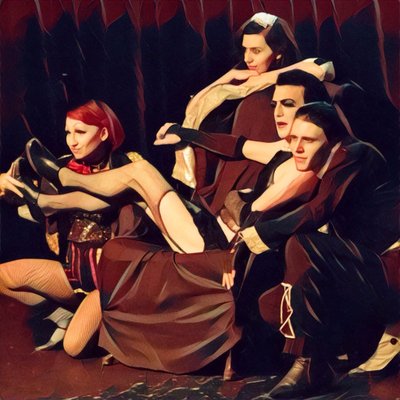
Suffice it to say, it is reasonable to conclude that Universal Parks will have to eventually remove the Marvel and Fox properties from the parks because not being able to significantly modify or add to the offerings will become too burdensome. Universal’s Halloween Horror Nights will likely also see some changes in the future because it may become more difficult to license Fox properties for houses and scare zones as Universal and Disney are direct competitors in themed entertainment. This includes American Horror Story, Alien, Predator, and Halloween. In terms of how Disney parks will benefit after this deal, the theme park division will save money on Pandora: the World of Avatar because it will no longer need to be licensed from Fox because Disney now owns the Avatar movies. Eventually, a significant Marvel presence will be felt at Disney World and any loose ends in the ownership of Star Wars will be nullified because Disney now owns the original trilogy, and not just the distribution rights. The ability to enjoy shadow casts of the iconic cult classic Rocky Horror Picture Show may also be effected because it is not unrealistic to think that Disney may crack down on RHPS troops around the country or make the licensing fees so high that many troops may not be able to afford to continue with the live performances. These weekly or monthly performances of troops around the country are an important part of the visual and performing arts. Speaking of which, if you’re in the Orlando area, checkout the Rich Weirdos at Universal Studios CityWalk and if you’re in Tampa, checkout Hell on Heels at the Villagio Cinema and Bar.

While the full effects of the recent mega media deals won’t be felt for a while, it is important to be aware of how acquisitions can effect cinema, TV, theme parks, and independent filmmakers. Corporate oligopoly is a slippery slope that can lead to anticompetitive conduct, fewer options, and become the enemy of creativity and variety.

“The Post” movie review

The Fourth Estate, triumphant! Steven Spielberg’s The Post is a historic biographical drama depicting the story behind the infamous Pentagon Papers that set a monumental precedent in the US Supreme Court following a ruling in the favor of the freedom of the press. Probably the most significant ruling affecting journalism, this film goes beyond the cold, hard facts of the case and into the offices and houses of those who were responsible for shedding light on the lies the US government was spinning to keep the War in Vietnam going. In a manner of speaking, this film could be read as Spielberg’s ode to US journalism, and by extension, to the free press at large. While traditional ink and paper newspapers may be slowly becoming a thing of the past, Spielberg’s film shows that the press has an important place in a democratic society. Without the free press, a nation’s government could easily lie and maliciously mislead its people to serve its own gain. No surprise, Meryl Streep’s and Tom Hanks’ acting is simply brilliant; while the rolls may not seem incredibly complex, it’s the beauty in simplicity that demonstrates the excellent commitment to character that we all have come to respect over the years for these Oscar-winning actors. The Post is a historical drama brought to life for the screen through precise editing, beautiful cinematography, and a gripping score.

Unrest grows at home while the US is deep in the middle of the Vietnam War. With conflicting reports coming out of the warzone, the people of the United States have only the word of their government to assure them the war is going well but they have to continue sending the boys overseas to “win.” After a rogue journalist leaks papers from the Pentagon describing how the US is losing and it keeps sending boys overseas to keep up appearances to the New York Times, the attorney general places a restraining order on the iconic newspaper to prohibit it from publishing the classified material. After word of this unprecedented extension of power, the editor-in-chief of The Washington Post Ben Bradlee (Hanks) comes to have a copy of the papers and desires to publish them in order to show the American people what the government has really been up to. Only one small problem, the owner of The Washington Post Katharine (Kay) Graham (Streep), the first woman to own a major newspaper, is unsure if the papers should be published because she seeks to take the paper public and this could damage that–not to mention that she and Bradlee could go to jail. Go beyond the pages of a history book to witness the thrilling drama unfold as you find out just why The Pentagon Papers was such a big deal.

While many critics and fans of the movie are touting it as the “best movie of the year” or commenting to managers at cineplexes that it’s “amazing,” I am not convinced that it truly is “the best” or as “amazing” as it’s being heralded. Before you go questioning my taste in movies, I completely agree that The Post is an excellently made film–there is nothing wrong with it. For all intents and purposes, it is a perfect film. But just because it’s figuratively perfectly produced and directed, does not mean that it is “amazing.” In many ways, this movie reminds me of Spielberg’s Bridge of Spies. It too is a perfectly made historic drama (coincidentally also starring Hanks) that falls within the same subgenre of drama as The Post. When I think of a Spielberg film, I have come to expect a wow factor. And it’s that lack of a wow factor that troubles me in awarding this film with an accolade such as “best picture.”

Usually, there is a particular scene that evokes strong emotion, perhaps it’s a powerful monologue or heated emotionally-driven exchange between two characters, there are other methods for evoking an eruption of feeling and emotion within the mind and body. Never once did I feel my emotions run high with this film. And I happen to be an entertainment journalist, I teach media writing at a popular university, and spent time in broadcast news. I have a love for the media, the press, and publishing. I also spent time in a media law class in graduate school analyzing the very papers in question, and I still did not feel emotionally woken up by the film. I find the film very well written, produced, shot, directed, acted, scored–everything is done with extreme precision. But, that’s what I have come to expect from Spielberg, Streep, and Hanks. Yes, to be able to consistently deliver excellence is nearly uncanny; but when I know what to expect, it’s much more difficult to surprise or wow me. That’s what is missing from this film in my opinion–the wow factor.

On the socio-political spectrum, I find the commentary on women in leadership is brilliant! Quite happy that the film chose such an incredible woman’s story to tell so cinematically well. The character of Kay Graham is not only an inspiration to aspiring female leaders, but she is an inspiration to all who find themselves in positions of influence or power for which society does not feel he or she is suited. Whereas this prejudice can affect men and women, history has shown that is has affected women more. And this film is a breath of inspiration for young women who will become future leaders around the world. Brave. Kay Graham was an incredibly brave woman who fought the good fight and proved that she could make the tough decisions that are required in order to grow a company. I also find that The Post serves as a beacon of hope that the press is here to serve the American people in a day and time that our government’s leaders claim that the press at large is “fake news.” Newspapers are here to serve the governed NOT the governers. Let the Pentagon Papers be a sign that our leaders are not past deception even if it means sending our military to certain death in order to keep up appearances.

The Post is definitely a movie that all journalists should watch. And not just “conventional” journalists. But anyone who takes part in publishing written, audio, or video media content. Especially those who cover governmental affairs should watch this historical drama highlighting a huge turning point in the freedom of the press.

“The Shape of Water” film review

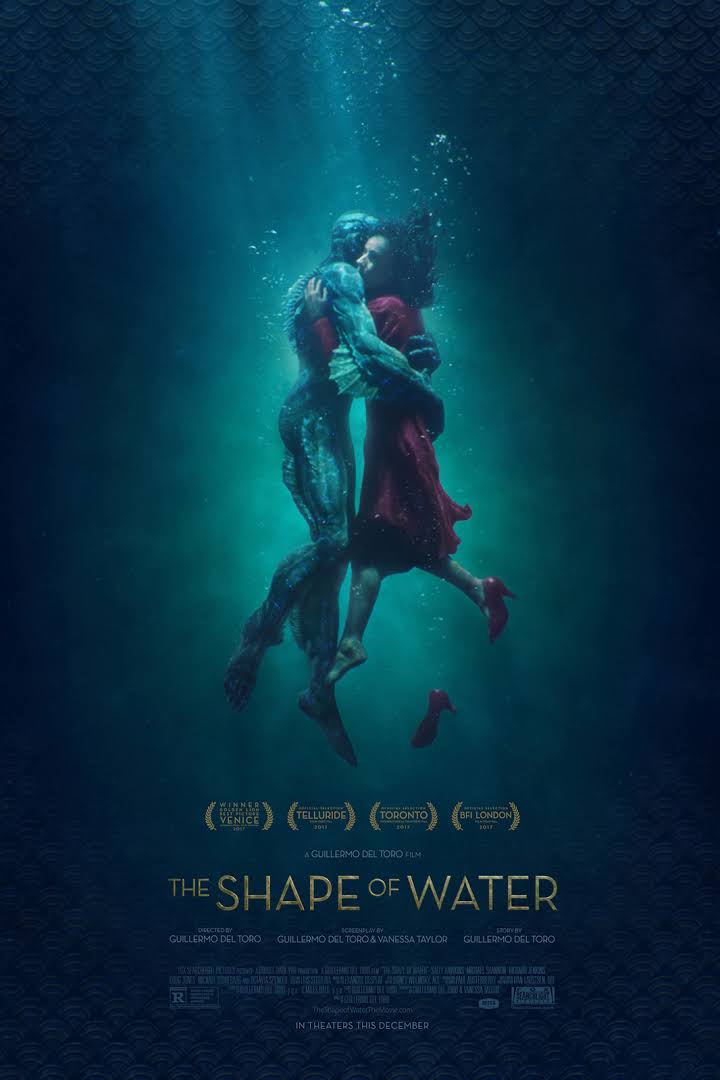
Absolutely enchanting! Guillermo Del Toro’s The Shape of Water is a beautiful modern fairy tale told through a classical means. From the provocative first scene to the endearing final moments, this film explores the human condition in an innovative way that highlights the spirits of kindness, generosity, and love. In a film that could have so easily played out like many other-worldly science-fiction love stories, this story demonstrates the power of cinematic storytelling full of brilliantly developed characters and excellent direction from Del Toro. Positively gripping. The Shape of Water provides audiences with a fresh perspective on the “monster movie” genre by taking you on a whimsical journey into the belly of a government research facility during the Cold War where you meet characters you love and love to hate along the way. As with many of his other films, Del Toro once again crafts an imaginative experience through the creation of memorable characters grounded by solid writing, direction, and cinematography. It seems like “genre films” are becoming a thing of the past, because so many want to exist in multiple planes; however, for all the elements at its heart, The Shape of Water is a classic monster genre film but breaks new ground.

Elisa (Sally Hawkins) is a mostly isolated mute young lady who works in housekeeping at a remote, underground government research facility near Baltimore. With only her starving artist neighbor Giles (Richard Jenkins) to keep her company at home and her close friend Zelda (Octavia Spencer) to watch over and speak for her at work, she leads a rather mundane life but longs for music, adventure, and romance. Taking place during the Cold War in 1962, Elisa’s encountered the strange and questionable over her time in and out of cleaning labs. Her nondescript life will be forever changed when she discovers the lab’s newest secret–a mysterious amphibian-like creature who lives in an aquarium tank. Over the days, Elisa feels compelled to visit the creature as the two of them develop a trusting bond. When the creature’s very life is at stake, Elisa must work quickly to construct a plan for his safe evacuation.

The Shape of Water has one of the most innovative openings to a film in that it juxtaposes a serene, calming yet mesmerizing sequence of underwater shots during the opening title sequence against a rather provocative first scene. Del Toro will successfully have your attention for the entirety of the film. It isn’t often that we get fairy-tale like narration at the beginning of a monster movie, and Del Toro’s choice for the beginning narration was absolutely perfect. It not only provided strategic exposition, but set the tone of the film. What we are about to watch may contain elements of monsters and mysteries, but it is a modern romantic fairy tale. Horror and science-fiction have often been used as conduits for filmmakers to explore the human condition and all its imperfections and growth; so by combining elements from both to create an innovative monster movie, Del Toro provides audiences with a fantastic opportunity to use the film’s diegesis as a mirror to our modern lives. Although the “beauty and the beast” style love story is central to the film, the film also comments on topics such as race, marriage, and class during the 1960s. There is also a side story that alludes to how members of the LGBTQ community were treated in the workplace and within the community. An incredibly comprehensive plot that never loses focus on the main story.

What an excellent cast! Sally Hawkins brings such endearing and powerful subtlety to her mute character. Her commitment to Elisa is so exquisite that you will swear that you can hear her voice through her sign language. Much in the same way we explored interspecies communication in last year’s Arrival, we witness just how the movement of hands and facial expressions know no bounds when establishing relationships with those with whom we cannot verbally communicate. In many ways, this movie is a combination of Beauty and the Beast, TV’s Swamp ThingArrival, and a little Creature from the Black Lagoon. Hawkins’ exceptional performance may very well land her an Oscar nomination, and quite possibly a win. Doug Jones’ creature is a brilliant combination of monster and lover. From the moment you encounter him, you will feel a human-like connection to his character. Like with Hawkins’ Elisa, Jones’ creature exhibits the power of subtlety. That seems to be a common element of this film: subtlety. So often the techniques of the pioneers of cinema are forgotten. Hitchcock proved over and over again that the camera itself can create suspense. Of course, he took many of his techniques from silent cinema where the camera was instrumental in visually communicating so much. Del Toro utilizes this power of the camera to not only visually create emotions but to work through actors to allow subtle powers of character to enhance the experience of this movie.

Beyond our central characters, Zelda (Octavia Spencer) and Giles (Richard Jenkins) have mini-movies of their own. And indirectly, their mini-movies have an impact on the larger story; however, these side stories never eclipse the central plot and only serve to bolster the overall experience. Spencer’s character enables audiences to explore marriage in the 1960s and Jenkins’s character provides a platform for discussion regarding how ostracized members of the LGBTQ community were before more modern times. There is also a scene where a classy looking black couple was denied seating at a diner. So many societal themes that can be used as a framework through which to understand the time in which this story takes place, and now the characters can be used to explore modern themes as well. Each and every chiefly supporting player has a significant impact upon the central diegesis of The Shape of Water. Del Toro took special care in integrating every element and making sure each aspect of the story was never just filler or for shock value. Each character, each scene, each camera angle moves the story forward.

The reality of love and relationships juxtaposed against an imaginative backdrop grounded in a literal view of life in the 1960s comprise this world created by Guillermo Del Toro. Whether you enjoy an excellent monster movie or old-fashioned romance, you will enjoy The Shape of Water. The brilliance of this film can be found in how this modern fairy tale is told through classical means. I also enjoyed the references to classic Hollywood movie musicals and dramas that can each be seen in the plot of this film. No image is ever wasted in Del Toro’s film. If there is one negative critique, the second act is a little drawn out and could have been trimmed a little, and some added suspense would have been appreciated in the second act as well.

Don’t Pass GO, Don’t Collect Your Oscar

Corporate monopoly is the enemy of creativity and variety. The biggest news in entertainment this week was the talks between Disney and Fox to sell most of 21st Century Fox to The Walt Disney Company. Whether the talks are still going on behind closed doors or not presents a fascinating topic to discuss! This deal, which would be the biggest film/media deal ever, has far reaching effects upon the industry. Some may even argue that it has danger written all over it. If there wasn’t already a rigid oligopoly amongst the studio/distribution companies, there will be if this goes through. Should this go through without the government swooping in to save the day with monopoly claims in the vein of the historic Paramount Decision, the lion’s share of the cinematic marketplace would be controlled by Disney, TimeWarner (Warner Bros.), and Comcast (Universal), with Sony (Columbia) and Viacom (Paramount) bringing up the rear. Five. That’s right. Five companies would essentially determine the future of the industry, and control the majority of the motion pictures released in theaters and the content on cable television (and the streaming services that access it). It’s a mirror image of the 1940s. Instead of The Big Five and The Little Three, we have The BIG Three and the Little Two.

From the big screen to the small screen, you will notice the effects in the programs you watch. When one company controls the majority of any marketplace, it usually spells disaster for the consumer; furthermore, it means that there will be a primary gatekeeper in future artists getting his or her work out there. Not to mention that the programming on FX and other Fox (non-broadcast) subsidiaries could begin to gradually feel and look more like ABC programming. Could this put shows like The Simpsons and Family Guy on an endangered species list of sorts? Not right now. The deal, in off-and-on talks, would sell off 21st Century Fox (movie studios) and not Fox or Fox Sports (an acquisition of that sort would not be permitted because it WOULD be illegal). So, even if this buyout were to happen, The Walt Disney Company would still continue to be the brunt of many jokes on The Simpsons and Family Guy. A buyout could mean, however, that program options will seem less varied and just more of the same ABC-schlock that already pervades the bandwidth. The two companies that have the most TV programming are Fox and Disney, with Sony (CBS), Viacom (non-broadcast Nickelodeon), Comcast (NBC), and TimeWarner (CW) trailing in original programming. That being said, TimeWarner has done very well with The CW, and I hope it continues to churn out programs such as Vampire Diaries, Supernatural, Riverdale, etc.

Beyond the negative impacts on content, which, in all honestly, can be quite subjective in nature, are there legal or ethical implications here? Is there perhaps a past precedent that could be used in the courts to stop such a buyout (or sellout rather–Fox)? Let’s look at the most famous suit brought against the major motion picture studios: The Paramount Decision [(U.S. V. PARAMOUNT PICTURES, INC., 334 U.S. 131 (1948)]. Prior to the Paramount Decision, the motion picture industry was controlled by a few companies that were heavily vertically integrated. The Studio owned the facilities, production companies, staff (under long-term contracts), the films themselves, distribution channels, and the movie theaters. When the studios were growing so large that they began infringing upon the free marketplace, the US Government forced the (then) eight major/minor studio players to end the practice of block booking (meaning, films would now be sold on an individual basis), divest themselves of their respective theatre chains (sell them off), and modify the practice of long-term employee contracts (though, this would continue until the 1960s). This marked the beginning of the end of the Studio System, AKA Hollywood’s decentralization. There are many similarities between the situation in the late 1940s and today. In fact, it’s a little worse today because the industry is mostly controlled by five (instead of eight) companies, and these companies have heavy investments in streaming and television programming.

The problem with the current state of capitalism in the Unites States isn’t worries of monopolies but oligopolies (monopolistic practices between a few firms that essentially control a market). Certainly the state of the film industry already lends itself to an oligopoly because of the few companies; but the buyout of 21st Century Fox by The Disney Company would greatly increase this issue of a blatant oligopoly. If a monopolist (in many other industries) did what Disney is doing, neither the public nor the government would stand for it; but because it’s Disney, and because it’s the film industry, most of the general public is unaware of the negative consequences of such a buyout. Technically speaking, oligopolies are not illegal nor is monopolistic competition; however, this can be a slippery slope towards stifling creativity or making is increasingly difficult to break into any given industry as a newly emerging competitor. Incidentally, monopolistic competition causes the variety or level of differentiation of similar products (i.e. moves and TV shows) to become less heterogeneous and nearly come across as homogenous. For many, it will feel like there are only two primary companies controlling the majority of programming on TV and a few companies controlling a large portion of the movies that get released in movie theaters.

When a strong oligopoly exists within a specialized industry (for our purposes, media & entertainment), one of the side effects is a concept known as parallel exclusion. This concept can be described as the collective efforts of the few industry leaders who essentially act as the main gatekeepers to prevent or make it difficult for would-be newcomers to enter the arena. Parallel exclusion is nothing new, and has been in the news as recently as the last 2-3 decades within the airline and credit card industries. Throughout the eighties and nineties, Visa and MasterCard essentially blacklisted any bank that set out to do business with AmEx. Thankfully, the U.S. Justice Department stepped in when the manner in which the exclusionary rules were written crossed legal, fair trade boundaries. There were similar issues within the airline industry as well. When a few companies control the content or services in the marketplace, antitrust issues are raised.

Although we are not facing a technical monopoly with the possible acquisition of Fox by Disney, we are looking at an abuse of power that leads to anticompetitive conduct. If nothing else, the consumer should be worried about having fewer options for programming. Not that the number of programs or movies will shrink, but there will be little difference between what is released under the Disney banner and the Fox name (if it’s still even called that). In a deal like this, it’s the consumer who gets the short end of the stick. The consumer would be wise not to give Disney a pass just because there are a small group of big film studios instead of just one. While Marvel fans may be excited that the X-Men can join the MCU (Marvel Cinematic Universe), there is the possibility of a lack of competition between brands thus mitigating innovation and ingenuity. Competition is the mother of innovation just as necessity is the mother of invention.

Because the Walt Disney Company is primarily focussed on producing the biggest movies possible (after all, they made five of the 10 most successful films last year), the mid-budget dramas and comedies that used to thrive in Hollywood–you know, the ones that cause you to cry and laugh–would dwindle in number–there would be little room for them to make their respective ways into theaters in a predominantly Disney controlled industry. What we are essentially talking about here is a corporate cinematic monolith, the likes of which, has never been seen before.

Written by R.L. Terry

Graphic by Tabitha Pearce