
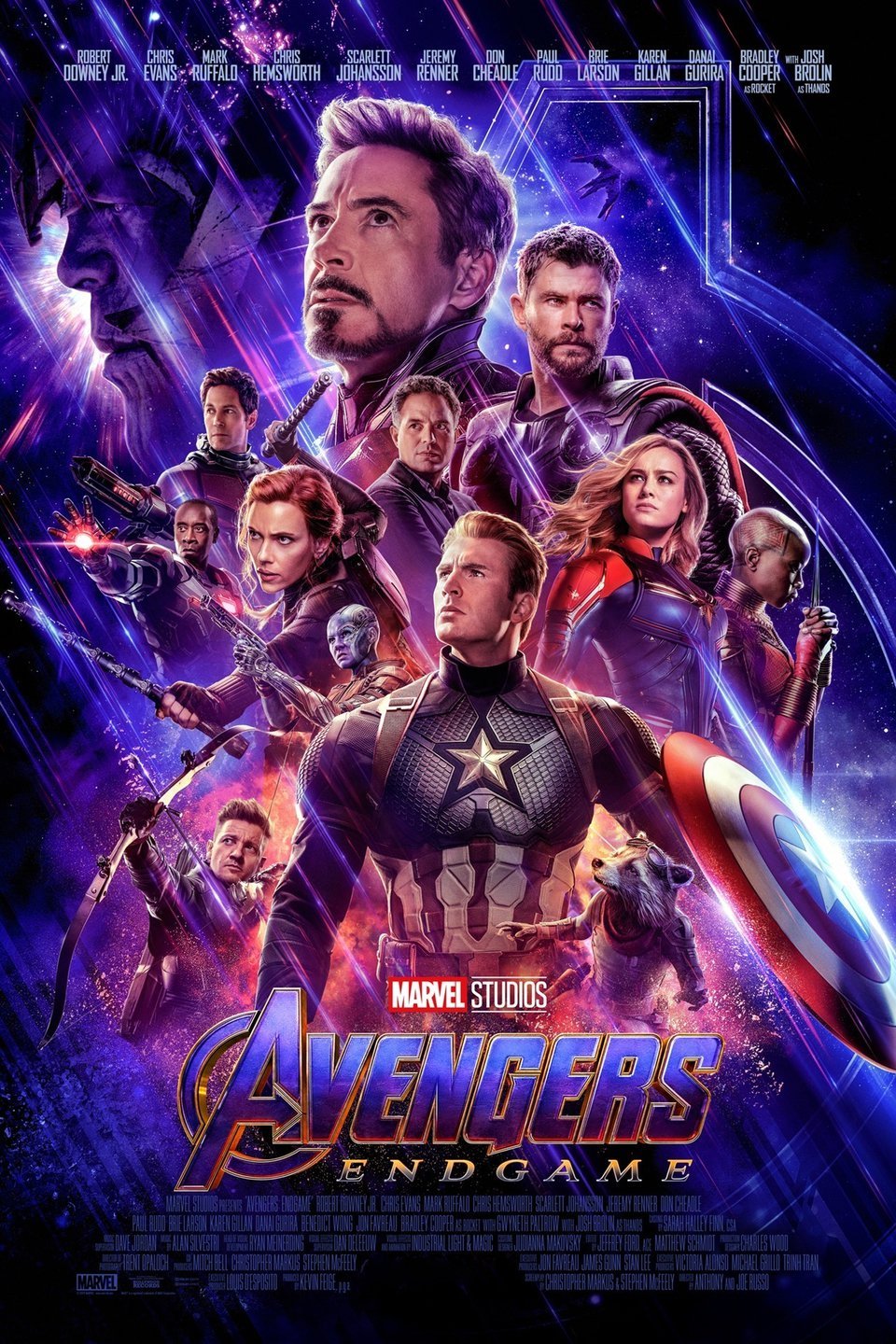
Avengers Endgame Full Movie Review

By Raul Navedo of the Minorities Report Podcast

“Part of the journey IS the end.” And what an end we’ve been gifted with. We live in a world that has had to endure Kingdom of the Crystal Skull, TDKR, and Justice League. Where your average ensemble film can’t get pacing and structure right because of how many A-Listers have to share a narrative. A place where “spectacle” tends to trump storytelling. It’s no wonder why we walk into things like this with some concern. Worried that we will be let down like so many times before… But I can now say, not this time. This time we can walk out of the theater like Judd Nelson and throw that fist in the air, and I hope some of you do, because our beloved Russo Bros. have brought an epic and satisfying end to one of the greatest journeys in cinematic history.

I’m not going to spend a lot of time on the breakdown because we all know it and if you don’t, then this is not the place for you. You clicked on the wrong “Avengers” from the wrong decade… Our team is back to kill Thanos and try to correct what he did. Some of our heroes are in VERY VERY VERY low places, and I’m not just talking about their gut; but they have to get it together for a long-shot opportunity to regain the people they have lost while making up for the years humanity can never get back.

Guys, I don’t know if you are aware but our current MCU universe is made up of 28 (from my quick count) lead, non-supporting, characters that make up our heroes. Extend that to supporting and we are at 40, but let’s stick to 28, shall we? To consider what the Russos had to work with to balance screen time to appease the fans of all of these franchises. Breaking down each storyline and finding ways to–not only represent them well–but end them well with a conclusion that is both epic and satisfying. Funny and heart breaking. Some would say it’s too much for one person to handle… Luckily we got two!

The plot was handled so well even though there was so much to work with, and I know it was a three hour film; but honestly, it could have been longer. One of my biggest issues with the film is the pacing in the first hour. It is a bit rushed; but then again, if you consider where they need to get and all they need to do then you understand why it is so. However, if you add another twenty minutes to the film, that first third will feel a lot better. For the general public, a three hour film is too much to handle. So, I get it. The pacing seems to settle significantly once a certain character pops back into the world and puts a plan in motion that, though the risk is high, the reward is, literally, a trillion times better! “We owe it to everyone who isn’t here to try.”

As a kid I used to own a VHS copy of Titanic. I remember it was so long it came in two tapes. The second tape began right as Jack and Rose leave the iconic handprint on the glass. They run out to the deck laughing. The two guys in the crows nest see them getting frisky and then we get the comedic “If that’s what it takes to get warm I’d rather not” line right before we hit the glacier. I remember this because I watched the second half of Titanic easily over a dozen times. I would just pop in the second tape. If VHSs were still relevant this would be this generation’s Titanic. The whole film is great but the second half is so much greater! Kids would know the second half like the back of their hand and their recollection of the first half would amount to lovers standing at the front of a ship with their arms out AND Rose’s boobs. Hopefully you are still tracking with me. Although the first half of this film is great, the second half is what people will keep coming back for.

This is the culmination of 2,448 minutes of superhero excellence, and the pressure was real but the “Endgame” was handled so well that few will have a hard time enjoying these three hours that fly by before you know it.

Besides the first hour’s pacing being a bit off, there was one scene that is truly problematic. I may get some hate for this but someone has to say it! The forced unnecessary-female-empowerment-moment. Not that I have a problem with an awesome kick-ass girl scene but this one is so blatantly forced that it is very difficult to enjoy without mocking. I loved the similar moment in Infinity War but I didn’t have to suspend disbelief to enjoy it. Everyone around me shook their heads–women and men My wife was right next to me saying “So dumb…”

That is truly the worse moment in the film for me, and it wasn’t even a full scene. Just a quick moment. The rest of the film was filled truly great moments where we felt deep joy and heartache that was fueled by some tremendous acting. Everyone did exceptional, but I have to say hats off to Robert Downy Jr who created some complicated emotional moments. The only thing I was left wanting was Captain Marvel. I really like what Brie, the Russo’s and Anna & Ryan did with her character so I expected to see more of her. I mean, it must be tough considering this was shot before Captain Marvel even had a script so they had no idea how well her character would do and how big her fandom would be but I wish they had just trusted that people would jive with her and that her solo film would break a billion at the box office.

All that being said, this is a great film that I will probably see five times in theaters and will surely talk about at length. It is definitely worth the watch that I need to say that, and it will likely end up at the top of my MCU ratings. “Part of the journey is the end” and, as I writer, I believe that it is not only part of the journey but it is the most important part. It is the part people leave with. The part of the story that determines how you feel when it’s all over. Did you know our strongest memories are attributed to emotion? That’s why the end is the thing people will discuss and breakdown most. The part they will criticize or admire the most. It’s the part that keeps them coming back like when Cal is chasing Jack and Rose through the sinking ship while shooting at them…

The end is everything and, in this situation, everything is pretty friggin great!

You can follow the Minorities Report Pod on Twitter! And visit their website to listen to the podcasts. A big thank you to Raul for contributing this article.

You can catch Ryan most weeks at Studio Movie Grill Tampa, so if you’re in the area, let him know and you can join him at the cinema.

Ryan teaches screenwriting at the University of Tampa. If you like this article, check out the others and FOLLOW this blog! Interested in Ryan making a guest appearance on your podcast or contributing to your website? Send him a DM on Twitter!

Follow him!

Twitter: RLTerry1

Instagram: RL_Terry
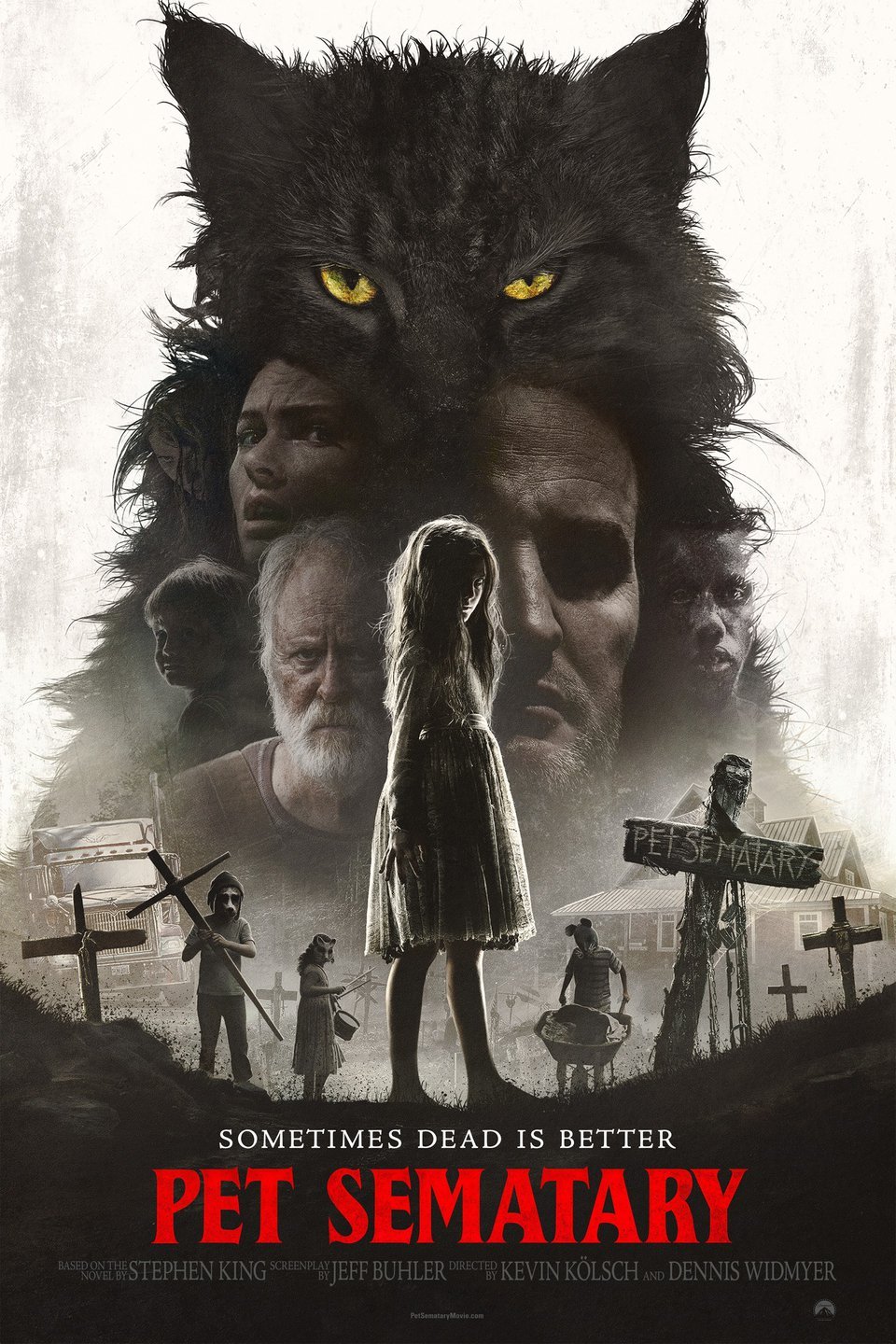
“Pet Sematary” (2019) horror film review

“Sometimes dead is better.” Unless you’re back from the dead with a vengeance! Brace yourself for the spine-chilling, immensely terrifying 2019 adaptation of the best-selling novel Pet Sematary by the legendary Stephen King. Whereas many remakes/reboots of earlier horror films often suffer, this one emerges from the soured soil as a force to be reckoned with. Directors Kevin Kolsch and Dennis Widmyer deliver a heartpounding rollercoaster of a nightmarish experience as Pet Sematary opens everywhere this weekend. Instead of a direct from page to screen adaptation, much like the fantastic 1989 original version (and yes, it still holds up), this version takes some creative liberties; however, the soul of the novel and even the 1989 version is clearly there. This creative latitude enabled the film to deliver new, surprising scares that are sure to frighten you. If you haven’t seen the extended trailers–DON’T–cannot say that enough. It’s best to go into this film with only the name and the initial teaser trailer in your mind. Not a spoiler, because it’s well known this this horror film and novel deals with loss, grief, and the uncanny (i.e. the return of the repressed), so the challenge of this adaptation was to force the conflict to derive from those issues and inspire the hellish events for which the story is well known. 2019’s Pet Sematary delivers in spades–quite literally. You will feel the ominous sense of dread from the moment the Creeds move into their new house and that feeling will stay with you as you are buried in a nightmare. This plot is solid.

I joined the popular podcast Mike Mike and Oscar to discuss this film, so click below to listen to the show. You are also invited to continue reading my written review.

Dr. Louis Creed (Jason Clarke) and his wife, Rachel, relocate from Boston to rural Maine with their two young children. The couple soon discover a mysterious burial ground hidden deep in the woods near their new home. When tragedy strikes, Louis turns to his neighbor Jud Crandall (John Lithgow), setting off a perilous chain reaction that unleashes an unspeakable evil with horrific consequences (IMDb summary). Sometimes dead is better

Let’s address the white ‘el’ephant in the room first. And I don’t mean the major plot twist changed from the novel and 1989 film that we saw in the trailer (c’mon, this is a well-known story and trailer at this point)–I mean the dialogue. Is the dialogue horribly bad? No. But it’s definitely the weak element in the script. Fortunately, this movie makes up for that with incredible windup, excellent deliveries, and the fact it is nightmarishly creepy. The pacing and tone are excellently crafted, and the visuals are fantastic. Never one does this film attempt to prove that it’s better than the original; in fact, it takes what many of us love about the original and use those moments as expertly designed fake-outs and false setups that are followed with something new and fun. So, it acknowledges the original without remaking it. Furthermore, it integrates many elements from the novel and original into the plot seamlessly. Achieving an overwhelming sense of dread from the very beginning of a horror film is quite difficult. That sense of unease is a combination of the atmosphere, setting, and ominous visual elements. Not five minutes into this movie, you are feeling that sense that something is definitely not right about this place. Yes, this is in part because many of us know what is to come; but even for new folks, the evil of this place can be felt all over your body. One of the creepiest scenes features the warped mirror image of an earlier cheerful moment, but it has been affected by the sour soil of the ancient burial ground.

While there isn’t much time to develop these characters, the writers were challenged with developing them enough for the story, and it works pretty well. The script isn’t quite as well-written as IT, but the margin of difference is not tremendously wide wither. As much of a fan of the original version as I am, there are areas that this version got better. For instance, the Zelda subplot–much more organically integrated into the main plot of Pet Sematary and even drives the main plot forward by revealing aspects to Rachel’s character. Two things for sure, these are two bad parents and Jud is an irresponsible neighbor. We don’t spend much time in the campus hospital where Luis Creed works, but we still get the big event of the passing of Pascow. Pascow’s character, whereas his harbinger of death or Jacob Marley (as so eloquently put by Mike Mike and Oscar) character isn’t as integral to the plot of this version, he looks more terrifying and doesn’t take a turn for the humorous. Of all the characters, I was most curious about John Lithgow’s performance as Jud. I was cautiously optimistic because Lithgow often has a way of delivering memorable performances, no matter how minor the role. His expression of Jud differs from that of Fred Gwynne’s but he still stays true to the character of Jud. And there are even moments that he channels Gwynne’s interpretation of the infamous neighbor. Just wish he had a Maine accent since he is still a local boy in this village (which is very close to Derry, according to a road sign). One of the best scenes in the movie take place as Lousi and Jud sit around a campfire, drinking, smoking and having an ill–fated heart-to-heart.

Contemporary remakes of earlier horror films often rely upon CGI versus practical effects. Cast that worry away because other than a few moments of CG, there are lots of fantastic practical effects from set design to the kills. There is such a high level of authenticity in everything the camera allows us to see, and even those moments that lie just off screen. Yes, there is still the inescapable supernatural factor in this story, but everything else is pretty well grounded in reality. From the parents building a fence to the proximity of the ancient burial ground, everything works to craft an authentic setting and characters. And yes, your Achilles tendon will still hurt in that famous kill. The directors truly seem to take into account that you cannot replace the way real light bounces off real objects and into the camera lens. Out two houses, the characters, and Church the cat exist in the time and space of each and every scene. With the exception a couple scenes that were not necessary or drawn out too far, they all work quite well to setup the following scene and point to the end of the film. There are moments that will cause you to look under beds, under stairs, and even analyze your pet more when you get home. For young audience members, watching this story for the first time, I imagine that they will be terrified just like I was when I saw the 89 one as a kid.

While I’ve read reviews claiming that this is the best Stephen Kind page to screen adaptation, I feel that other films have been more effective. Off the top of my head, I’d say that Misery is a better film both in terms of its cinematic critical value and faithfulness to the novel. Not to mention the Oscar-winning performance by Kathy Bates as Annie Wilkes! No mistaking it, 2019’s Pet Sematary is a good horror movie and one that has a moderate level of rewatchability. Highly recommend for horror fans!

You can catch Ryan most weeks at Studio Movie Grill Tampa, so if you’re in the area, let him know and you can join him at the cinema.

Ryan teaches screenwriting at the University of Tampa. If you like this article, check out the others and FOLLOW this blog! Interested in Ryan making a guest appearance on your podcast or contributing to your website? Send him a DM on Twitter!

Follow him!

Twitter: RLTerry1

Instagram: RL_Terry

“Us” full horror film review

The high speed hype train begins to slow down. Returning to horror once again, Writer-Director Jordan Peele’s Us hits theatres nationwide this weekend. The highly anticipated followup to the horror masterpiece Get Out ultimately falls short of the bar set by its predecessor. But don’t worry, there is still plenty to like about this intense film. Whereas Get Out was a horror film built upon compelling, thoughtful social-commentary on the uncredited, forced appropriation of one ethnic group by another, Us plays as a straight forward horror film, complete with all the thrills for which you hope to experience. There is certainly an attempt by Peele to comment on class, MAGA, and other important social topics, but the film tries to do too much, and winds up not accomplishing what it so desperately wants to do. Keep your eyes peeled for details, because you are going to need them in order to best appreciate the ending. With Peele’s revival of The Twilight Zone, it is clear that his adoration of that series (which is regarded as the best written series of all time by the WGA) played a roll in the development of Us. Specifically, this movie feels inspired by the After Hours and Mirror Image episodes. Peele delivers audiences an incredibly fun horror movie that is certain to do well over its run in the cinemas. Many of the film’s elements work exceptionally well; but unfortunately, the film is held back from its full potential by weak writing and average directing. Even though Peele’s Get Out, in my opinion, is the superior film, there is still a lot to enjoy in Us. I’ve no doubt that if you’re a horror fan, that you will have a great time! Let Us cut deeper into this film.

IMDb summary. Accompanied by her husband, son and daughter, Adelaide Wilson returns to the beachfront home where she grew up as a child. Haunted by a traumatic experience from the past, Adelaide grows increasingly concerned that something bad is going to happen. Her worst fears soon become a reality when four  strangers descend upon the house, forcing the Wilsons into a fight for survival. The family is horrified to learn that each attacker takes the appearance of one of them,

My biggest takeaway from this movie is that I am convinced more than ever than Jordan Peele should be able to pull off a successful, meaningful revival of The Twilight Zone. The problem with the writing and directing in Us is that it tried to do too much. In an effort to create a deep, rich, cinematic experience that was both horrifying and thought-provoking, the plot is all over the place. Even to the point that it contradicts itself. It’s as if the idea for this movie began as one of the episodes of the upcoming Twilight Zone revival but Peele decided that he wanted to turn it into a feature length movie. Evidence of this can be found in the similarities it shares with the aforementioned After Hours and Mirror Image episode. There are enough differences that it is clearly not an adaptation of the episode, but I can see how it inspired this movie. Further evidence can be witnessed in that it’s produced, written, and directed by Peele. When a storyteller wears that many hats, there is little room for checks and balances. Us feels like a feature length horror movie that would’ve been better off as a half hour or hour long installment in an anthology series. Starting off moderately strong, then very strong in the second act, the third act feels like it was from another movie idea altogether and forced to fit into this one. Too many ideas. All good individually, but convolute the plot when mashed together. The plot is too complex. What Us tries to do is ultimately too vast for what this movie is capable of delivering to audiences.

Without getting into spoilers, I’d like to visit why the plot doesn’t work as well as it demonstrably shows it had the potential to have worked. We are clearly explained a particular relationship as having a one-way transference; however, there is a plot twist that completely contradicts this relationship. A best practice of screenwriting is to not introduce significantly new material, in the third act, that directly affects the present plot, which was not foreshadowed or setup in the previous two acts; this movie introduces lots of new plot elements in the third act that further complicate versus tying up. For most of the movie, the plot lives in a believable reality, but then it takes a turn that takes it from something terrifyingly possible to nearly unbelievable. And the power of a movie such as this is that it feels possible within the world that’s created on screen. If the characters are making a statement, they run out of people to receive that statement through the course of events. Perhaps if there was a greater supernatural element in the screenplay that it would have worked much better, because the supernatural could have explained how and why much better than the science-fiction approach. What is lacking here is a singular vision.

Now that I have gotten all the things that I didn’t care for out of the way, I want to finish this article with what works brilliantly! The performances are outstanding, the score is excellent, and even the cinematography is noteworthy. Of all the stellar performances, Lupita’s is the one that stood out to me the most. As an Oscar winner, I expect her to deliver an impeccable performance, and she does precisely that! I felt what she was feeling, I empathized with her greatly, and she held my attention for the duration of the movie. I’m careful not to project an Oscar nom out of this because I thought Toni Collette’s performance in Hereditary was Oscar and Golden Globe worthy, and we all know what happened with that. Love this score! The classic orchestral approach fit this movie exceptionally well. The score worked so well that it almost felt like a character in and of itself. A well-composed score should be a diegetic extension of the story, the emotional beats, and action; and this one is all those things! Cinematography should never be overlooked as greatly contributing to how a story is being told. It is the element that places us in objective or subjective points of view or prompts us to interpret a scene in a particular way. There are some beautiful shots in this movie that are framed with precision. All throughout the movie, the cinematography plays a strong role in crafting the full experience of Us.

Regardless if you like or love this movie, you are definitely in for a fun time! Perhaps I have issues with the writing and directing (two important elements in the crafting of a movie) but I still enjoyed myself and am confident that you will too. I don’t think it will become a classic in the way that Get Out will be one day, but it’s one to watch anyhow. Lots of great concepts here, but Peele doesn’t strongly deliver any one of them.

You can join Ryan at the cinema most weeks at Studio Movie Grill Tampa.

Ryan teaches screenwriting at the University of Tampa. If you like this article, check out the others and FOLLOW this blog! Interested in Ryan making a guest appearance on your podcast or contributing to your website? Send him a DM on Twitter!

Follow him!

Twitter: RLTerry1

Instagram: RL_Terry
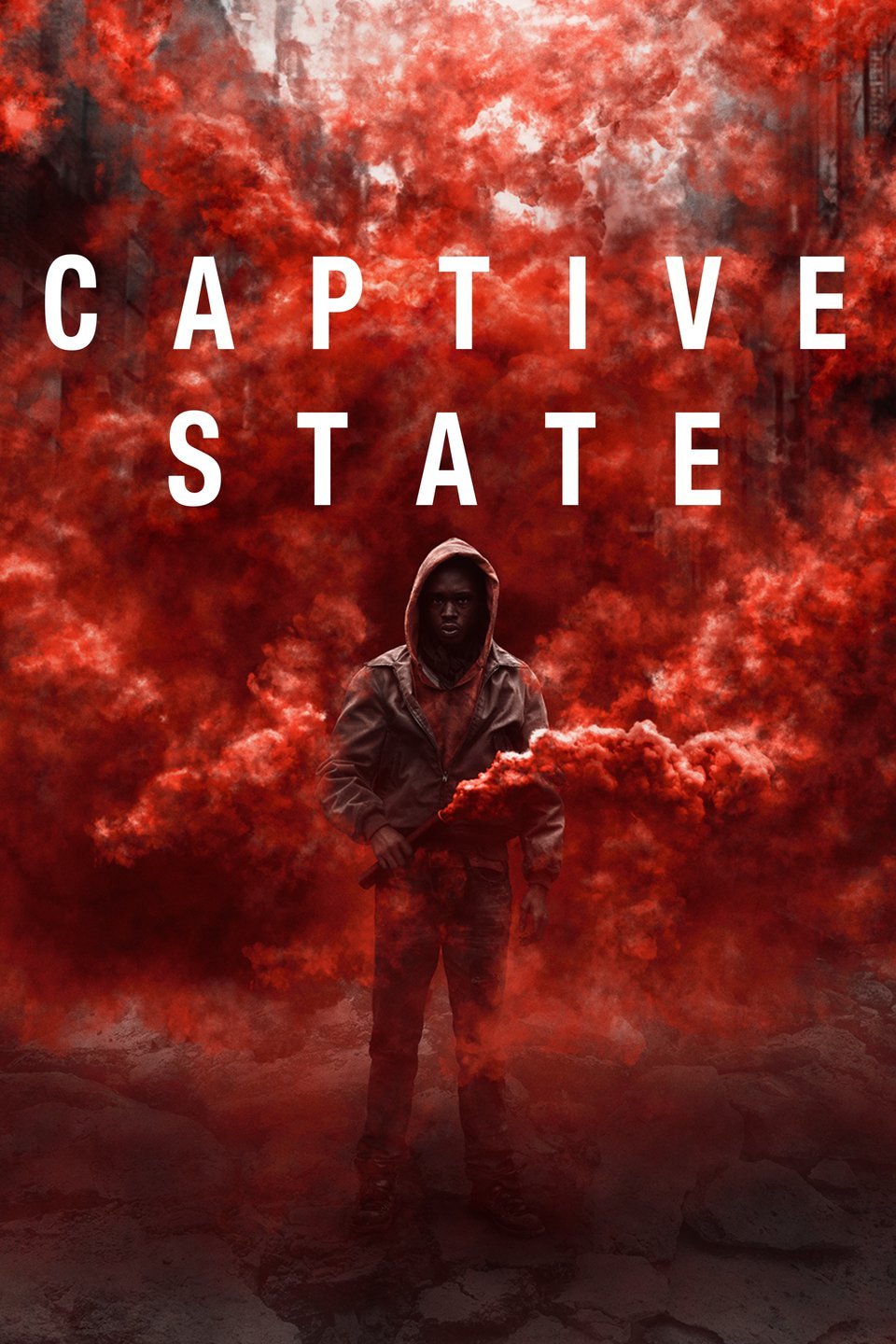
“Captive State” brief movie review

Beware of Greeks bearing gifts; or in the case of this movie, the director gifts us a movie that looks fantastic on the outside, but is a disaster on screen. There is a good science-fiction movie in there somewhere. But because of the poor direction, the movies plays off as completely disjointed, lacking any emotional connection to the characters. The concept for the film is quite brilliant. It takes the alien invasion premise and provides audiences with an original interpretation of this sub-genre of science-fiction. Often science-fiction suffers at the hands of the screenwriter(s) who becomes so pre-occupied with the world and technology of the story that they forget about developing the characters and plot. However, this film suffers more significantly at the hands of the director, but the screenwriting does play a hand in the confusing nature of this film. Incidentally, director Rupert Wyatt also co-wrote the screenplay, so it appears that he should have stuck to writing with co-writer Erica Beeney rather than directing.

Clearly, there is a solid science-fiction story in Captive State, but the story suffered as it was being written down, and even more damage was done while on set. The idea is original and good! The execution is bad. There is too much exposition in some places, like the beginning text-heavy scene and then too little exposition in other parts of the movie. Characters get introduced then forgotten, and John Goodman and Vera Farmiga are completely wasted. Literally any actor could have played these roles, and even other characters could have had their lines, and it would still play out the same way. I can tell that this movie is trying to provide me a post-modern thought-provoking story, but I am still not entirely sure what I watched. Upon watching it, I found myself grasping for whatever details I could find, and it was not enough to make heads or tails of what was going on sometimes. What we have here is a case of complex plot and simple characters. The antithesis of what makes a good screenplay. The idea for this film is certainly admirable, but the idea was lost in the translation from mind to page, and then from page to screen.

You can join Ryan at the cinema most weeks at Studio Movie Grill Tampa.

Ryan teaches screenwriting at the University of Tampa. If you like this article, check out the others and FOLLOW this blog! Interested in Ryan making a guest appearance on your podcast or contributing to your website? Send him a DM on Twitter!

Follow him!

Twitter: RLTerry1

Instagram: RL_Terry
“Captain Marvel” Film Review

Written by guest contributor and one of the hosts of the Minorities Report Podcast The Raul Navedo

We’ve all, at least once in our lives, crushed on someone much like Carol Danvers. Someone cool, fun, has a good sense of humor that’s easy on the eyes, and is a total bad ass that can shoot photon lasers from their arms… Brie Larson’s Carol Danvers/Captain Marvel has all of these in spades. Likable from the jump, Carol yearns to be the best Kree “Noble Warrior Hero” in all of Hala. The only problem is that she can’t shake the dreams that haunt her. Dreams of a past she can’t be sure is her own; and furthermore, slow her progress to becoming a true Kree.

The hate is real, people! Critics are coming after this delightful performance by Larson viciously, and without reason. Don’t get me wrong, Captain Marvel has many flaws; but very few, if any, can be blamed on our star. I was as concerned as anyone when I heard Larson was casted as our glowing heroine whom would be flying freely through space, and whom would be kicking some serious Skrull ass. After Room,I was convinced that she was a great actress, but being a superhero doesn’t require incredible acting chops as much as it requires a certain charisma that I just couldn’t see in her. If you recall, though our superstar Avengers cast is beloved NOW, there were some serious concerns after most of them had their debut films (RDJ being the exception). Most of them had to grow into their respective roles, so it wasn’t until the second films that they became the heroes they were working to portray in our hearts. Not the case with Larson’s CM. She is fun, complex and dynamic, spanning the spectrum of emotions in a single scene.

Let me tell you guys something, a character being likable/unlikable does not a great/bad movie make. Harley Quinn is extremely likable in Suicide Squad and yet… And our lead in Manchester by the Sea is unlikeable and yet it is an incredible film. The art of writing real and complex characters is the ability to write them as they truly are. Angry, funny, sad, charismatic, annoying, reclusive, broken. Stop bashing films because YOU didn’t understand the characters as they were depicted. The Kree train their “noble warrior heroes” to think and not feel. Emotions are the enemy of sound thinking and are therefore a detriment to being a great warrior. Carol wants so badly to be this way–to prove she is a true Kree, but it is against her nature so she is conflicted. Her desire to not feel makes her unlikable because people without emotions are sociopaths, are un-relatable and therefore are not likable! She was written this way, people. And it is her inability to follow through with this Kree “noble warrior hero” prerequisite that makes her so damn likable!

But enough about her. I believe that what truly hurts this film is the same thing that hurt me when I was a young lad in the throws of passion for the very first time. Lack of experience. Our directing duo, Anna Boden and Ryan Fleck, have worked together on a number of projects that pale in comparison to the endeavor that is an MCU film. The writing suffered from poor dialogue and pacing at times. There were lines that just didn’t need to be there that provided information that the audience had already gathered. Action sequences that felt rushed because the rest of the script wasn’t as tight as it should be. Carol’s very first mission is so oddly paced and executed that you can’t enjoy it.

It takes a trained mind to know what needs to be trimmed and what needs to be expanded, whether in the script or in the editing room. It takes a trained ear to hear a line during a table read or on set that you know needs to be changed or taken out. These are things that not all audience members can catch or express but that most can feel. Some might just say it wasn’t good. Some might say it was fun but lacked heart. I say it was a great effort that lacked refinement. Wonder Woman had many flaws but most people were able to overlook it because it had so much heart it was tangible. It wasn’t just because Gal Gadot did a great job, it’s because Patty Jenkins has developed her skills over the years to make her a very gifted storyteller. We can forgive flat cinematography and lighting. We’ve been doing it for years with many of these MCU films who’s visuals lack depth. We can forgive a great many things that contribute to making great film. What we cannot forgive is lack of heart and emotional depth. Captain Marvel has all the building blocks, but it fell just short of being great. Fleck and Boden are well on their way there and I am excited to see their next project.

Don’t get me wrong, I am sure the blame does not solely land on their shoulders but as a great director once said “When a film does very poorly the director gets all of the blame and when a it does exceptionally well the director gets too much credit.” It comes with the territory, unfortunately.

I still highly recommend that people go see Captain Marvel. Just lower your expectations a bit and you’ll definitely enjoy it!

(From Ryan)

I hope you enjoyed this review from Raul. He is one of my longest and best friends, and spends much time watching and talking about movies as he manages a high traffic AMC Movie Theatre in North Carolina. Follow him on Twitter!

Ryan teaches screenwriting at the University of Tampa. If you like this article, check out the others and FOLLOW this blog! Interested in Ryan making a guest appearance on your podcast or contributing to your website? Send him a DM on Twitter!

Follow him!

Twitter: RLTerry1

Instagram: RL_Terry