“Hidden Figures” movie review

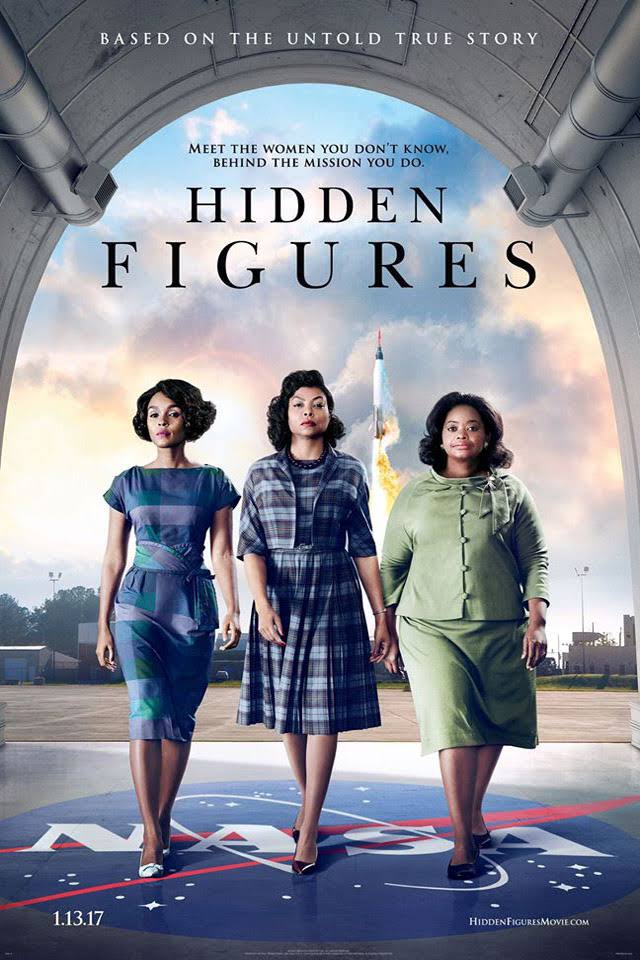
hiddenfiguresAn absolutely out-of-this-world biographical film! 20th Century Fox, PepsiCo, and TSG Entertainment present Theodore Melfi’s incredible film depicting the lives and careers of three African-American women whose work was extremely influential in the early days of NASA’s Mercury, Atlas, and Apollo missions. In all likelihood, there may not have been successful launches, orbits, and landings if it weren’t for these brave women who refused to back down and take the back seat to white men and women at a time that even government buildings still segregated restrooms, water fountains, and “community” coffee pots. Every once in a while, there is a biographical drama that packs a powerful socio-political message within a simple but brilliant story that is told incredibly successfully. Hidden Figures is a film that should have been released many years ago. How stories like this one go untold, is bewildering. Between the powerful performances, excellent writing, meticulous direction, and fantastic score, this is definitely a film to catch in theaters this weekend. Although Hidden Figures has been on a limited release since December, it receives its nationwide release this weekend and one to watch for when Oscar nominations are released.

Hidden Figures is the story of three absolutely brilliant African-American women who served as the problem-solving geniuses behind some of NASA’s greatest space operations in all of history including John Glenn’s (Glen Powell) first earth orbit and Alan Shepherd’s symbolic penetration of earth’s atmosphere into space. Katherine Goble (Taraji P. Henson), Dorothy Vaughn (Octavia Spencer), and Mary Jackson (Janelle Monae) work as computers (the term used at the time before the conventional modern use) at NASA’s Langley facility near Washington D.C. Never assigned to a permanent position, these talented ladies work tirelessly to support NASA’s operations and aspirations of space exploration. At a time in which it was incredibly difficult for persons of color–much less women–to climb out of temporary and entry-level jobs, these women do not permit archaic societal norms to stop them from reaching their greatest potential as an engineer, programmer, and mathematician respectively. This untold story will move you as these three women, that society and NASA determined could not be more than computers, are significantly instrumental in launching the space program that indirectly united people from all over the world and cemented the U.S. as a then-leader in space exploration.

What a story! And the best part about it is that it is based on actual events and three real women who are responsible for the success of NASA’s early space programs and even help to launch some of the more contemporary missions. Unlike many biographical dramas, there is a comprehensive nature to this film as it contains two important stories. There is the foreground story featuring the women at the center of the movie, but there is also the story of the state of the U.S.’ domestic socio-political policies at a time of civil rights unrest–especially in places like Virginia. Both stories parallel one another and serve to pack a powerful punch. After watching this film, it is clear that this film wishes it had existed in the 1960s. Within the former story, the focus is primarily on the life and career of Katherine Goble followed by Dorothy Vaughn, and to a lesser extent, Mary Jackson. Each woman specializes in a different STEM (as it is now commonly referred) area. Katherine is a mathematical genius matched by none, Dorothy understands early computer language better than anyone at NASA, and Mary is an aspiring engineer with a brilliant mind for aerospace design. The latter story, underscoring the socio-political civil rights unrest, is certainly highlighted in the film but never takes the focus completely off the story in the foreground; however, is vitally important to this powerful story with a message that those who you least expect to rise to be leaders in their respective fields, can and will! Despite all the challenges coming from within the work place and the country itself, these three women prove that you should never be afraid to be the best. Being good, isn’t good enough. Be the best!

Although this is truly a powerful film with a beautiful message that is just as relevant today as it would have been 50 years ago, it never quite hits the mark that I had hoped it would and perhaps that is due to the PG rating. Suffice it to say, there are some remarkable scenes with powerful speeches, but the film is just shy of the level of intensely as it should have contained. I realize that some of what transpired in the Space Task room, wind tunnels, and courtroom may have been taken from transcripts for authenticity, as this is a movie, I feel that there should have been more of a dramatic license taken out to increase the emotional impact of the film. It certainly has a moderately high emotional impact, but there was definitely the potential to take it up several more degrees. Two scenes come to mind. (1) Katherine challenging the segregation policies at NASA as it relates to common comforts such as restrooms and coffee and (2) Mary petitioning the court to permit her enrollment for graduate level engineering classes held at an all-white school. Dorothy also has a couple of encounters with her superior (Kirsten Dunst) but they are more subtle–no less powerful and important to the film. In regards to the scene in which Katherine confronts Mr. Harrison, the scene feels a little cut short of where it should have ended and Mr. Harrison’s (Kevin Costner) response could have been more dramatic. When inside the courtroom as Mary was addressing the judge, this would have been the perfect time for a speech that would have brought a flood of tears to the eyes, but it stops short of where it could have gone too. Over all, the screenplay is excellently written. These are just two areas that I feel could have struck a more powerful emotional cord. As it is, these scenes are still some of the most brilliant in the film and leave an impact.

One of Mr. Harrison’s lines in the film contains a large degree of irony. The line was something to the effect of “How can the U.S. government justify NASA when it is consistently unable to get into and explore space?” The irony therein is seen in today’s defunding of NASA for, essentially, that very concept. NASA did not lose the bulk of its government funding due to any particular presidential administration but from remaining in the 80s and never launching into the 21st century. After the Space Shuttle program, NASA did very little to grow–its technology and engineering remained fairly stagnant. Sure, communication technologies greatly benefited from NASA engineers, but that is not what made NASA an exciting organization from the 60s thru the 90s. What made NASA great was the perception of being explorers–exploration excited a society! Once NASA no longer appeared to be focused on exploration and shifted its focus to communication technologies, it lost that public support that was such a part of what brought so many people together. In many ways, the perceptions and issues facing NASA prior to and during the early missions is plaguing it today. Instead of an inability to launch a man into space and orbit the earth (later to land on the moon), there is now the demonstrable evidence and perception that NASA has an inability to create manned vessels capable of exploring space. Satellites and camera are great, but nothing parallels the actual exploration of space by humans. If NASA could one again be seen as explorers, then perhaps a new generation would petition the government to once again proactively support the iconic organization.

Hidden Figures is definitely not to be missed while it is in theaters. It is a larger than life story that is best appreciated on the big screen. For those in the audience who remember the early days of NASA, there is plenty of vintage footage to accompany the modern cinematic storytelling in this film. Even Kennedy’s famous “we will go to the moon” speech is in this movie. More than a biography of the glory days of NASA, this is a story of three women who, against all odds, rose to the challenges they faced on a daily basis to prove that women are capable of anything that a man can do. Between breaking the sound barrier, gravitational pull, and paving the way for equal rights and treatment in the workplace, this film will hit close to home for many who know what it is like to feel oppressed for who they are.

Written by R.L. Terry

Edited by J.M. Wead
“Passengers” movie review

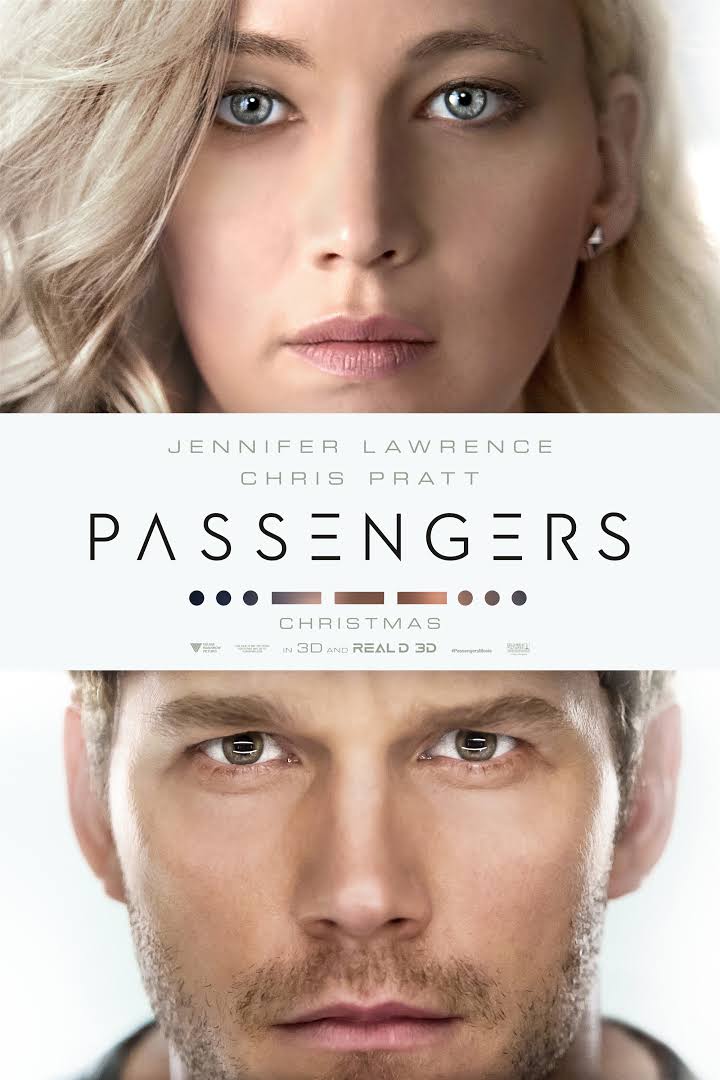
passengersAn intriguing journey with lots of potential but ultimately fails to pull into the space dock. The highly anticipated visually stunning science-fiction film starring Jennifer Lawrence and Chris Pratt proves one thing: Pratt and Lawrence have excellent on screen chemistry and play off each other very well. With films like this one, it’s hard to know where the fault lies. Typically, a film with such potential and a powerful cast is weakened by either the writing or directing. Since the director principally works with the cast, it can be concluded that the writing lacked the drive that this film needed. On a more positive note, this film depicts deep space travel how it could likely be in the not-so-distant future. From the centrifugal force created by the rotating space craft to simulate how artificial gravity could be generated to the onboard technology to the sickbay, this film does a fantastic job of providing audiences with a science-fiction that is almost tangible. Having such a limited cast in one location can spell disaster for cinematic storytelling; but, the film is quite interesting to watch and sufficiently keeps the audience’s attention. Furthermore, the audience mostly connects with Aurora (Lawrence) and Jim (Pratt) well enough. But, the film fails to truly provide audiences with a new adventure because it amounts to a glorified Castaway set in the Disney Springs of shopping malls in outer space–just completely empty of scooters, strollers, and other park guests. Lack of surprise pretty well sums it up.

Welcome aboard The Avalon on the Homestead Company’s routine transport to Homestead II, a new earth colony. All is going well until two passengers find themselves awakened from suspended animation about 90 years too early during a cascade of ship wide malfunctions. Faced with living the rest of their respective lives on board and only the company of an AI bartender (Michael Sheen), Jim and Aurora must cope with the challenges of living together in a world that is merely 1000 meters from stem to stern. When the ship begins to increasingly malfunction and life support at risk, Jim and Aurora much solve the mystery of what originally caused the problem that began the cascade. Just as the ship is keeping a secret, there are other dark secrets on board the ship as well. Meeting with psychological, emotional, and engineering challenges, Jim and Aurora have 5000 other passengers and crew to save while maintaining their own sanity and psycho-social health.

As the movie faded to black, I began discussing it with the friends who accompanied me to the cinema last night. And we shared a mutual reaction of hmm, not exactly sure what this was or how to read it but it had some interesting components. And that pretty well covers it. The film will likely keep you entertained but with few surprises, it lacks anything to make it memorable in a positive way. Forgettable is what this movie will become in the no-so-distant future. Essentially, Passengers is what you would get if Gravity and Titanic were to have a baby. Star-crossed lovers on a ship that is self-destructing in the vacuum of space. One of the most intriguing components in the plot of the film is also highly disturbing. While love and infatuation causes many to go to great lengths in order to see desire become reality, it is a double-edged sword that can cause one to behave selfishly if not displaying signs of sociopathy. While Pratt’s performance is what is to be expected from one of the most bankable actors in Hollywood who is equally a dedicated family man, his performance is never quite on par with his Castaway counterpart. However, Lawrence delivers an intense performance as she plays off Pratt,the bartender, and The Avalon itself.

The cinematography and editing are excellent. In fact, the technical elements of the film are impressive! Not quite as groundbreaking as Gravity or Interstellar but still outstanding. There is one scene in particular that still has me puzzled as to how it was able to be achieved so flawlessly. The set design, albeit spartan, is beautifully sleek and functional. As film is a visually driven medium of storytelling, the camera often pulls in close to characters to establish intimacy but juxtaposes that against pulling back to reveal the oppressive loneliness of being alone on a massive ship in space. For a brief moment, I experienced the dread that is created in Kubrick’s The Shining when Jim meets Arthur the bartender. Interestingly, the music (composed by Thomas Newman), camera direction, dialog, blocking, an set design all work together seamlessly to establish that unparalleled sense of dread, loneliness, and self-destructive despair that are so iconic to The Shining. Unfortunately, that powerful sense of dread is lost in weak writing. Had the film embraced the potential to channel The Shining, it may have played out more memorably. But, this is a love story so the horror plot devices that could have helped the film were not integrated into the plot. Although there are may significant contributors to a film’s success, the success of a film often relies upon the direction, writing, and cast. As briefly mentioned in my opening paragraph, the director (Morten Tyldum) of a film principally works with the cast and is responsible for blocking, delivery of dialog, and perception; so, it is likely the screenplay by Jon Spaihts that is responsible for the weak story. A director and cast can work hard to makeup for a weak screenplay, but in this case, the lack of developed story showed through.

Despite sharing the screen with Aurora, this truly is Jim’s movie and others simply happen to appear in it when necessary. As a side note, I could easily see how this film could be translated into a stage production. Perhaps on stage, the story could evolve to leave more of an impact on the audience.

“Rogue One: a Star Wars Story” movie review

rogueoneJust when all hope was lost, the force has awakened this time. After the disappointingly stale installment last year, I did not have high hopes for Rogue One. To my surprise, the first standalone Star Wars franchise film exceeded expectations. Although the public is accustomed to Star Wars films coming in threes, Lucasfilm and Walt Disney Studios took a risk in creating an original single story to successfully setup A New Hope. Unlike when the force tried to awaken last year, THIS feels like a new Star Wars film. With twenty-some-odd years to fill between Revenge of the Sith and the original movie, how was one film going to do it? Focus on what was ultimately important. Not that the development of the Empire would be uninteresting, but the white elephant in the room was “how did the rebels get the plans that setup the events at the beginning of A New Hope“? And that is precisely what director Gareth Edwards did, and it paid off! Rogue One is as exciting as the original film; and furthermore, is built upon a solid plot that is mostly new with a little nostalgia and Easter Eggs (visual references to A New Hope) in the form of locations, props, shots/frames, and familiar featured characters and a surprising cameo. One of the elements that plagued Episode VII was the simple fact that it was little more than a remix and mashup of everything that had been done before, including main plot points, subplots, and predictable behavior. Rogue One feels fresh and new. Yes, there are obviously appearances and references to characters and settings from A New Hope, but that is to be expected since this film ends where the original film begins. Thematically darker than the original film but not as dark as Empire Strikes Back, this installment strikes a balance in the force that makes it interesting to watch. We all know that the rebels get the plans in the end, but this film makes the adventure worth watching as it unfolds.

With the old republic in ruins and the senate all but disbanded, the Galactic Empire has  its eyes set on a feat of engineering never seen before. But they need to attach the right scientific talent in order to create that which would become known as the Death Star. Galen Erso (Mads Mikkelsen) is a brilliant scientist and former Imperial officer, devoted husband, and loving father. Director Krennic, head of the secret Death Star project, arrives at Erso’s home to forcibly recruit him to head up the science and engineering divisions. When recruitment does not go as planned, Erso is separated from his family and taken away. Escaping to the caves, his daughter evades capture. Many years later, Jyn (Felicity Jones) finds herself a criminal and angry that her father never came back for her. When an Imperial pilot allegedly defects and claims to have a message from Galen for the Rebel Alliance, Jyn is recruited by the rebels to lead them to a former rebel turned rogue and ultimately to her father. With Captain Cassian Adnor (Diego Luna) at the helm and lead of the small band of rebels accompanying Jyn to her father, they uncover a secret that thousands will die for in order to attempt to make things right in the galaxy. All the while, they have no idea that this clandestine mission will spark events that they could have never imagined.

Already, this film seems to have sparked arguments among fans of the franchise and those who enjoy them but may not be fanboys. Even this morning, I noticed many comments on social media that commented on the film positively or negatively. Interestingly, at first glance, it seems as those who liked Episode VII: The Force Awakens did not like Rogue One, and those–like me and the friends I went with last night–who thought The Force Awakens was garbage but found Rogue One to be exciting, dynamic, and refreshing. Of course, there are plenty of people who like both films released under the Disney banner, either because the Big D can’t possibly do anything wrong or because they are true fans for better or worse of the nearly forty-year-old franchise and staple in the future fantasy genre (notice I did not say science-fiction–no real science here). At this point, I am unsure why those who liked last year’s film may not have liked this weekend’s installment; however, it appears to be clear from multiple comments and reviews that the reason why those who did not like Episode VII enjoyed Rogue One is the newness of a film that embodies the spirit of the original but provides audiences with a new adventure that connects well without redundancy. One of the reasons for the success of the original film–aside from a great cast–is the focus on the drama between characters and camps. There is the drama between Rebels and the Empire but also drama within the camps themselves. Rogue One borrows from A New Hope in that the focus is more on the drama than resting its laurels on the technical elements. Not that this film lacks in the technical category. Rogue One comes complete with great direction, color grading, cinematography, and impressive editing (especially with some rather surprising CGI that will definitely cause you to do a double take utter delight).

For all that this installment did well, the beginning of the film following the prologue was dreadfully ill-conceived and mostly unnecessary. Unlike all the other Star Wars films, this one did not open with the trademark scrolling written prologue offering exposition to setup the movie. Instead, after the “A long time ago, in a galaxy far far away” the film cuts to the opening scene of Krennic recruiting Galen. Following the prologue and rather PowerPoint-looking Rogue One title card, is a rapid, incoherent, and confusing sequence of montages. Honestly, I am still unsure why that whole sequence was necessary. Between the PowerPointy title card and this sequence of montages, I did not have hope for the film at all. Obviously, I ended up enjoying it immensely, but I look back and feel strongly that it could have been left out. The settings/planets that were depicted did not play into the plot at any level of significance. Felt like filler. Thankfully, the scenes following the prologue are but a small portion of the film and the film really begins to take off after Captain Cassian and his team rescue Jyn from a prison transport vehicle. After Jyn’s rescue covert operation, the rest of the film is nicely paced and developed. Other than knowing the ending, the majority of the film was unpredictable. Unpredictable in that you know the direction it’s going and ultimately what’s going to happen but you don’t know HOW it all happens and works together to setup A New Hope.

Just the right amount of nostalgia and Easter Eggs. For those who are fans of or simply familiar with the movies, there are cameos, references, and shots taken from the chronologically preceding films (mostly A New Hope). Just enough nods to and direct connections to provide the audience with a film that IS as much a part of the Star Wars saga as the official Star Wars cannon. It’s no surprise that the Death Star is a big part of Rogue One, Senator Mon Mothma is seen leading the rebels, Darth Vader (still voiced by James Earl Jones) makes several brief appearances, and a couple other nostalgic cameos; but there are some characters who are included in the diegesis of this film who will delight old and new fans alike–one in particular that will incite an eruption of cheers! Beyond the human characters, there are other appearances by iconic ships and war machines that aid in cementing this story in with the rest of the franchise. While the film contains some lighthearted, witty dialog between the core group of principle and supporting characters, the film also contains some dark moments. Personally, I think the film should have been a little darker since it sets up the installment all about hope reborn; but, the atrocities of war are definitely not hidden from the audience and events transpire that are atypical of future fantasy films between heroes and villains. In a manner of speaking, and as I mentioned in my opening paragraph, the film’s diegesis strikes a balance in the force in terms of the light and dark content.

Rogue One: a Star Wars Story is an exciting narrative that successfully sets up the film that started it all. If you’re a fan of the original trilogy but did not enjoy Episode VII, you will most likely enjoy this installment. If you are a fan of the original trilogy and liked Episode VII, then there is moderate chance that you may not like this story. It will be interesting to see how this film plays out amongst mild, moderate, and hard core Star Wars fans from both the Disney and Fox camps. I had my doubts of Disney taking the reigns of the franchise after last year; but this film gives me a new hope that Disney may be able to successfully navigate the rest of the franchise.

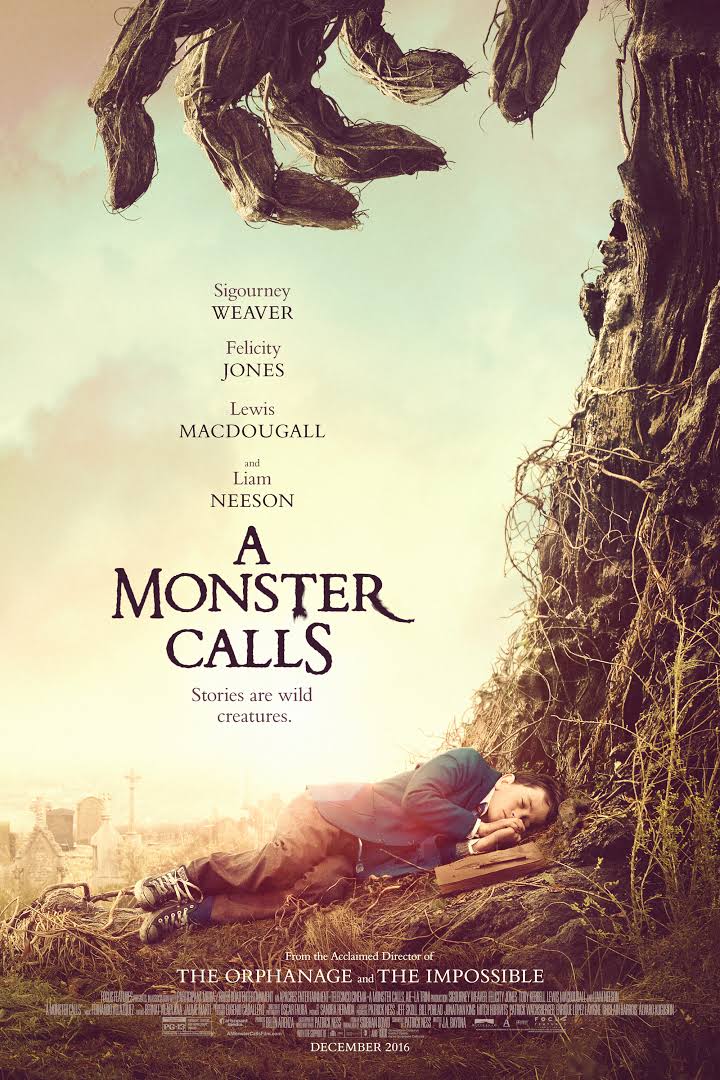
“A Monster Calls” movie review

monstercallsA breathtakingly beautiful and dynamic film that typifies the art of visual storytelling in the gothic style. Focus Features’ A Monster Calls directed by J.A. Bayona is nothing short of a Terms of Endearment, in theme anyway, for a new generation. You are certain to laugh and cry your way through the film. Based upon the novel by the same name, written by Patrick Ness and illustrated by Jim Kay and conceptualized Siobhan Dowd, Bayona’s adaptation of the novel plays out to be a deep, rich story that will touch the hearts and minds of each and everyone in the audience. For anyone going through the stages of grief, this film will especially ring true and perhaps bring about comfort. Although the protagonist Connor, played by Lewis MacDougal, is twelve years old, this dark melodrama with a plot revolving around terminal illness is not typically something that will appeal to kids of Connor’s age. Despite the fantasy elements and the young protagonist, A Monster Calls is more suited for older teens and adults; however, by the same token, the movie isn’t entirely going to initially appeal to adults since the protagonist is quite young. I screened the movie last night in an auditorium filled with patrons of all ages and there was not one dry eye in the audience. Looking at the film from the outside and analyzing the plot and cast, it would appear that it may not attract droves of people because of the gothic fantasy nature, typically aimed at kids and young teens, with content and theming best suited for older audiences; however, the film truly transcends age barriers and stereotypes to touch those who are young or young at heart.

While most twelve year old boys are busy with school and learning to develop socially or even romantically, or just simply playing video games and having Stephen King type adventures, Connor (MacDougal) is dealing with far more than a kid should every have to deal with. Connor’s mother (Felicity Jones) is very ill and Connor is forced to grow in many ways kids should not quite quickly to take care of her. Not entirely going through this terminal illness alone, Connor has a grandmother (Sigourney Weaver) who looks in on him and his mother–a grandmother with whom he shares little in common. With Connor’s father settling down in Los Angeles, Connor feels very much alone while dealing with his mother’s illness. Expressing his emotions and thoughts through water color and sketch artwork, Connor uses his penchant for beautiful art as a form of therapy. Just when all seems lost, an unexpected ally in the form of a rather gothic tree-like monster (Liam Neeson) appears in his window one night. Apprehensive at first, Connor befriends the monster who guides him on a journey of courage, truth, and faith that combine in a powerful fusion of imagination and reality.

This is certainly a year for fantastic monsters and fantasy, isn’t it? However, A Monster Calls is definitely not your typical fantasy. It deals with deep emotions, dark themes, and material usually better suited for adults. Why then choose such a young protagonist? Perhaps the author Patrick Ness wanted to reach those kids who are going through tough times and who are dealing with situation that most kids won’t face until they are much older. Some kids are just forced to grow up more quickly than others. It’s important that cinema and literature not forget them because words on pages or moving pictures may be the only source of comfort, escape, or allegory. Director J.A. Bayona appears to have successfully translated the novel to screen–from what I know. Interesting that the movie opens with the narrator describing Connor as being too old to be a kid but to young to be an adult. By extension, that is precisely where this movie fits in. It’s too “old” to be a kid’s movie but too “young” to be an adult movie. And that’s okay. Growing up is hard, and when faced with a family member or close friend with a terminal illness, life is exponentially more difficult emotionally and even psychically. Unconventional as it may seem, this film is powerful and transcends the age spectrum to provide a strong emotional journey that audiences can appreciate and from which people may receive comfort. If for no other reason, having a kid starring in a melodrama brings audiences of all ages together–many who may be going through something similar as the child, parent, spouse, or lover of someone who is terminally ill. It’s okay to grieve and let go.

From the opening credits alone, I was confident that this was going to be a visually stunning movie. The water color animation and brushstrokes are reminiscent of the story of the three brothers in Harry Potter. Absolutely beautiful. Much in the same way Kubo and the Two Strings was an innovative animated film, A Monster Calls also contains unconventional and innovative methods of telling its story. Similar to how the animated story of the three brothers in Harry Potter was integrated into the diegesis of a live action movie, so it is with this film. The more I thought about the technical and emotional elements of A Monster Calls, it is clear that it’s truly a dynamic means of cinematic art. Dynamic in that there are three different types of storytelling methods used diegetically each highlighting a different form of art: (1) motion pictures (2) visual art (3) oral storytelling. It’s been said that the novel is an extension of oral storytelling, the play an extension of the novel, and motion pictures an extension of the play. At the root of all those methods of communicating through art is the very concept of storytelling. And A Monster Calls has the art of storytelling in spades. There are so many levels to the diegesis in this film; much like an onion or matryoshka doll, this film has a message of how to deal with grief at its core but there are many different routes to get to that central theme. Each layer teaches Connor and the audience something different and valuable. The cinematic storytelling elements of direction, cinematography, editing, and score are all equally beautiful.

Structurally, A Monster Calls is an intimate story reinforced and surrounded by artistic German expressionism calling attention to its own artifice. From the exterior shots to interior rooms, the various sets appear to be meticulously constructed on a stage and the wardrobe much like perfect costumes. The art tells the story effectively with little exposition required. Fernando Velazquez’ score is so incredibly moving that you may find yourself listening to the score as it too truly assist in the overarching means of telling this story. The design of the monster is brilliant and ominous all at the same time. Almost animatronic in nature, the tree plays out like there is a puppeteer on the inside articulating the movements. The monster feels just as much like an actor as the actors playing the human characters. Liam Neeson was a perfect choice to cast as the tree’s voice. His deep bass is comforting, warm, and wise-sounding. But just who is the tree (in the story)? Although we are never told whose spirit inhabits the tree that has seen thousands of years go by, there are a couple of hints as to who it might be if you pay close enough attention to subtleties in the film. At the end of the day, whether it’s the spirit of someone or the personified life of the tree itself, it is of little consequence to the movie. Still, its definitely fun and interesting to talk about as my friend and I did after the film.

If you enjoy movies such as The Iron GiantThe Giving Tree, or Terms of Endearment, then you will immensely enjoy this film. Presently in advanced screenings and limited releases, you may need to wait a few weeks before it is at a theatre near you. Although slated for a January wide-release, it may make its way through many markets before then. Originally set for an October release, it makes since to have held it until Oscar season since this is one of those films that could grab the attention of the academy. Definitely bring your tissues.

“Nocturnal Animals” movie review

nocturnalanimalsA meta-thriller that is equally shocking, seductive, bizarre, and beautiful all at the same time. Tom Ford’s adaptation of the best-selling novel Tony and Susan (1993) will either repulse or intrigue you from the opening credit sequence. There is definitely a pronounced shock value in this cinematic erotic mystery that includes an incredible amount of symbolism and theming just eager to be interpreted and dissected. Not typically found in mainstream cinema, the avant-garde seems to be the inspiration for many films this year. Nocturnal Animals is one of those films that is destined for discussion in a film or media studies graduate class. With solid acting, writing, and cinematography, you will be sucked into this twisted mystery within the world that the wealthy live in and the real world that most of us live in. You will likely find yourself thinking about what everything means, how it might apply to you, or simply appreciate non-linear storytelling. Although the film certainly rests upon the flashback as a chief storytelling method, Ford plays his cards right and creates a film in which all three stories are equally interesting. You may have heard it said–even by me–that some good movies are poor films; but, this is a case of a good film but a poor movie. That is usually the case with films that fall into the artistic or avant-garde stylistic way of conducting a visual story that contains a strong emotional impact.

Susan Morrow (Amy Adams) is an incredibly successful art gallery owner in Los Angeles. However, the marriage to her second husband is not nearly as successful. He’s often away on business trips to New York. One evening, Susan receives a manuscript written by her first husband (Jake Gyllenhaal)–a once struggling writer and graduate student turned college professor and now professional author. She finds the novel gripping and disturbing. As she continues to pour over the pages dripping with intrigue, she is impacted on a personal level as she uses the world of the novel as a mirror on her own life. Taking her to dark places in her past, Susan finds herself on a path of self-evaluation as she is presently going through emotional and financially hard times.

Cognitive cinema. Focus Features’ Nocturnal Animals is one of those films that requires higher thinking in order to truly appreciate the symbolism and theming. Not that it cannot be enjoyed as a beautifully dark and disturbing story, but there is so much that can be analyzed in this film. From the sequence of obese nude females dancing with sparklers, ringmaster hats, and cheerleader regalia to the reoccurring imagery of crosses and death–both in terms of emotional and physical–director Tom Ford provides audiences with a film that can only be characterized as a mystery that is meta-thriller meets hints of erotica. Even now, I am analyzing the symbolism and theming as I write this review. There are so many elements to talk about. And I think that is the best part about a movie like this. Don’t watch it alone. Not because it is too intense or scary but because you will want to talk to someone about the theming or emotional commentary. I find myself with a deep desire to analyze the film with someone, but none of my friends or colleagues have seen it yet. Visually driven. Even without the dialog, Ford’s Nocturnal Animals can be understood through the imagery in and of itself. Trace amounts of Tom Ford’s legacy as a high fashion designer can easily be seen in the design of this film. And I am not just talking about Adams’ stunning wardrobe and hair/makeup. In many ways, this film–as a whole–is symbolic of high fashion clothing. It can be read in some of the same ways fashion is read and appreciated. Because this is only the second feature length film from Ford, there are elements of the story that give the impression that his talent for visual storytelling is still in the development process as there are times that his method of directing is that of an observant student or scholar of cinema.

There are three distinct narrative threads in this film. (1) is the main story that we open up to at the interpretive and conceptual art exhibit establishing Susan, her gallery, her husband, and lavish lifestyle (2) is the narrative of her first husband Edward Sheffield (Gyllenhaal)’s novel Nocturnal Animals and (3) is the story of the rise and fall of the relationship between Susan and Edward. Juggling three plots is no easy task. Contrary to how it may appear, the narratives are not confusing or incoherent. Each plays an important role in the overarching theme and story of the film. The incoherency is found in the interpretation and analysis of what everything means. It’s as if the film is providing the audience with puzzle pieces that can be arranged to depict something different for everyone. Perhaps you want to read the film as commentary on the relationship between Susan and Edward. Maybe you view it as symbolic of the estranged relationship between Susan and her current husband. Or maybe the novel is self-reflexive of the life Susan has created for herself.

Each story is stylized in such a way that they complement one another–do not necessarily correlate or match each other, but the narratives are complementary. Although the audience is asked to draw their own respective conclusions to the story, presumably Susan’s once lavish and charmed life will continue to rot and crumble as her husband is likely cheating on her just like she cheated on Edward. Still, there is a lot left up to interpretation in the best possible way. The Roger Ebert website review of this film commented that there are parallels between this film and Alice Through the Looking Glass. Fascinating take on this film. That is probably the best analogical interpretation of Nocturnal AnimalsLooking at the film in such a way that Susan is Alice and the two other narrative threads are her adventures in Wonderland opens a whole new window through which to view the events as they unfold. On the surface level, there is a clear theme of revenge woven throughout the plot. This is indicated by a painting that catches Susan’s attention on her way to a board meeting. The metaphysical thrilling aspect to the subplot of revenge is the revenge the past has on the present and the present on the past. In a manner of speaking, Susan is listed by ghosts of her past, present, and future. Okay, perhaps not in the same way Scrooge was visited, but there are certainly some commonalities.

If you enjoy films that make you think, then this is definitely one to watch! As it was on a limited release until this weekend, you may not have heard of it but look for it at your local movie theatre. Fans of Blue Velvet will likely enjoy this film as well. Intriguing writing, solid acting, and beautiful cinematography make this a fascinating movie to prompt deep discussions afterwards.