
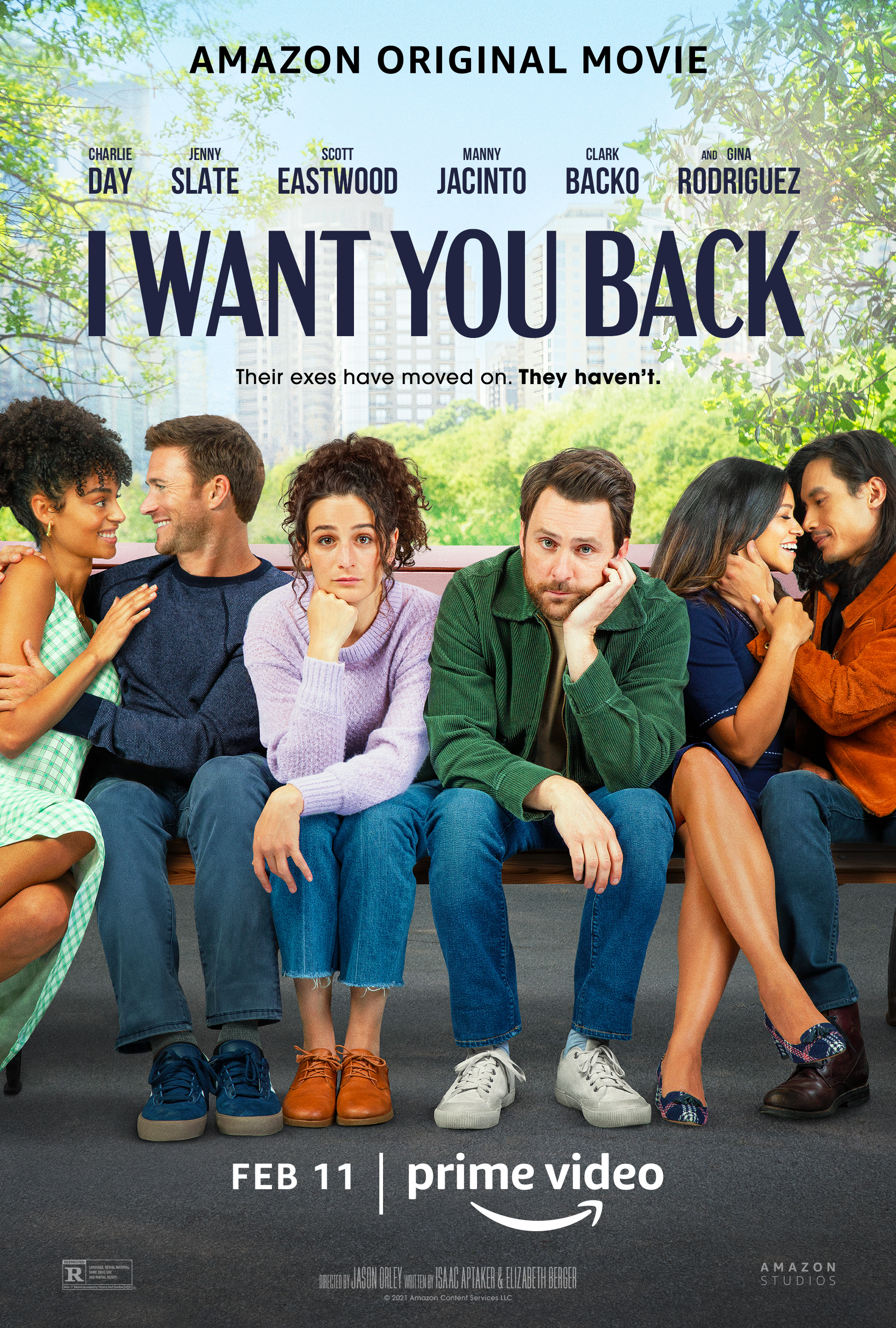
I Want You Back romcom review

Heartwarming! From the outstanding cast chemistry to the clever writing, you need to make I Want You Back part of your Valentine’s Day celebrations at the cinema (for the limited theatrical run) or on Amazon Prime Video. Much like Broken Hearts Gallery showed us that the romcom can be reimagined for today’s teen and 20-something audiences, Jason Orley’s I Want You Back is the romcom reimagined for 30-something audiences. If it can make cynics like me once again believe that my “plane mask buddy” (you’ll just have to see the film to get the reference) is still out there, you too will find the story incredibly endearing! While the classical American romcom has largely fallen out of favor with a significant portion of movie audiences over the last decade or so, there are films that take the foundation of what made the romcom such an American cinema staple, and upon it, build plots and characters that both resonate across ages and cultures and still deliver the quirks and laughs that are such a hallmark of the romcom. It’s been a long time since I’ve witnessed such excellent chemistry between an ensemble in a comedy, and it is the characters that will command a rewatch of this soon-to-be quintessential romcom, that will undoubtedly rank up there with the likes of Sleepless in Seattle, You’ve Got Mail, Two Weeks Notice and more.

Peter (Charlie Day) and Emma (Jenny Slate) are total strangers. When they meet, they realize they were both dumped on the same weekend. Their commiseration turns into a mission when they see that each of their ex-partners have happily moved on to new romances.

What makes this movie work so well is the focus on character-driven (or dramatic) storytelling. When the character(s) drives the plot, we refer to it as drama, while the action driving the plot is referred to as melodrama. Just a little film studies there, for ya. The movie wastes no time in establishing who our central and chief supporting characters are; this is an important screenwriting decision because it allows for the character reactions to drive the story in a manner in which we believe everything the characters do because the rules for the characters were established up front. You can get away with anything if you set it up appropriately.

Yes, there are melodramatic moments (and you will need to engage your suspension of disbelief), but every emotional beat and turning point is earned and delivered meaningfully. Meaningful. That is a description that is so often overlooked in comedies. When writers focus so much on laughs, the art of meaningful storytelling is lost. In the writers room, a strong story with well-developed plot and characters can always be punched up with laughs, versus a laugh-a-minute story with poorly-developed plot and characters, which has a problem requiring major diegetic surgery.

Authenticity! You will find the characters to be incredibly believable and real, with little to no pretense. Our leads and supporting cast feel like your coworkers, neighbors, and friends. We all have someone in our lives of whom the characters will remind us. In fact, you will likely see yourself IN one or more of the characters. When you can place yourself in the story, the degree to which it impacts you will significantly increase. And it’s even better when you can laugh along with the characters. But what makes these characters connect and resonate with audiences is the unexpected level of vulnerability the characters demonstrate. And it’s our vulnerabilities, our flaws and the ability to learn, grow, and experience redemption that makes us human.

Perhaps you are like me, a romantic cynic. So, your default setting is disdain and pessimism for anything that even has a hint of romance and erotic love. I find it difficult to connect with the typical romcom, even the great ones of the 80s, 90s, and early 2000s. Just feels like something so out of reach and unbelievable that I’d rather watch another horror movie. If someone like me can be touched by I Want You Back, then I know that it can touch even the most cynical. Personally, I see myself as two-parts Emma and one-part Peter. And it’s the prolific opportunities to connect with the characters that will cause this movie to find a place in your heart.

Ryan teaches Film Studies and Digital Citizenship at the University of Tampa. If you like this article, check out the others and FOLLOW this blog! Interested in Ryan making a guest appearance on your podcast or contributing to your website? Send him a DM on Twitter or email him at RLTerry1@gmail.com! If you’re ever in Tampa or Orlando, feel free to catch a movie with him.

Follow him on Twitter: RLTerry1
SCREAM (2022) horror movie review

Familiar yet fresh. From the duo that brought you the smash hit Ready or Not comes the next instabment in the beloved SCREAM franchise. It’s been just over twenty-five years since Casey answered that fateful phone call from Ghostface and just over a decade since the late, great Wes Craven gifted us with SCRE4M before his tragic passing. And, now audiences are returning to Woodsboro. In a filmscape overstuffed with pretentious, stylized horror films that often forget that plot and characters are more important than the pretty packaging, comes a fresh interpretation of the classical slasher that is sure to thrill you! While the new SCREAM isn’t without its diegetic flaws (but, to go into that would mean spoilers), it is still entertaining and fun. Clearly, the screenwriters channeled the soul of the original SCREAM, a perfect film in my opinion, but put a relevant spin on it in order to resonate with contemporary audiences. What I can say, without going into spoilers, is that this movie has too many characters; to the point that some of them feel like furniture. Where you may connect quickly with the movie is in subtext of the film, which is grounded in a commentary on the slasher versus elevated horror (a term I absolutely detest, as I’ve previously written) and toxic fandoms versus studio execs green-lighting rebookquels or requel (as the movie states). These are the conversations that fans of horror have all the time, and you will find yourself vicariously engaged in the conversations as the characters are having their debates on screen. After the flop that was Halloween Kills, I was anticipating another vapid, pandering attempt to revive a legendary cinematic property. But, I was pleasantly surprised by how much I enjoyed this movie. We didn’t know we needed another SCREAM movie, but turns out that we did. 

Twenty-five years after a streak of brutal murders shocked the quiet town of Woodsboro, Calif., a new killer dons the Ghostface mask and begins targeting a group of teenagers to resurrect secrets from the town’s deadly past.

Not only are Sidney, Gale, and Dewey back, but you’ll see some other familiar faces too. Here is where we can directly compare Halloween Kills and Scream (2022). Both movies brought back leading and supporting characters (and actors), but Scream succeeds in developing all of them enough for audiences to care about whether they live or die. Now, Scream does suffer from being overstuffed with ancillary characters, to the point that some are one-dimensional; however, the screenwriters do manage to give each some agency–some more than others. Other than rooting for Sidney, Gale, and Dewey to survive the blade of Ghostface, you may be hard-pressed to truly care whether some of the other characters live or die. Fortunately, as little as you may care about a particular character in this movie, you’ll still find yourself caring way more than you did for the cast of Halloween Kills.

The kills are great! And best of all, it doesn’t devolve into a completely unrealistic bloodbath. Yes, it is a little gorier and violent than the original (or even the subsequent previous sequels), but not overly so. This iteration of Ghostface may not have the one-liners of its predecessors, but Ghostface manages to get some zings in there. Unsurprisingly, there are many homages to the original SCREAM, but there are nods to other horror properties as well–the shower scene from Psycho makes a little cameo, and we spend a great deal of time with the Stab movies. Instead of rules to surviving a horror movie, we have rules to surviving a Stab movie or requel. Dylan Minnette’s character’s name is Wes, which is a great touch! In fact, the entire movie is dedicated to the life and legacy of the late, great Wes Craven.

This movie works because it takes itself seriously as a Scream movie (and by extension, the slasher), but allows itself to have fun along the way. Perhaps Generation Z does not appreciate the slasher for the cultural phenomenon that it was, but this movie may just be the thing to get them interested in discovering just how brilliant and fun slashers are. I feel confident that you will enjoy Scream as much as I did! Yes, I have my plotting and diegetic problems with it, but it doesn’t take away from the fun factor. This movie succeeds where Halloween Kills failed–it never forgot its roots in greatness. It remembered its branding, and stayed the course. Even though it may not be quite as good as SCRE4M, and with the original being peerless, this fifth installment justifies its existence and delivers laughs and thrills. Much like with Wes Craven and Kevin Williamson’s incomparable original, this one also knows what it is, and it rocks it!

And here is where you should stop reading unless you don’t mind spoilers. 

Okay, if you’re continuing to read, I will interpret that as consent, and I will talk about elements of the film that involve spoilers. Not because I want to spoil it, but because it’s difficult to talk about the topics I want to address whilst completely avoiding them.

One of the best elements of the original SCREAM is the absolute perfection that the opening excruciating 13-minutes (that’s right 13), which is, in my opinion, the best and most effective opening of a film period. That opening literally does everything an opening should–you know precisely what the stakes are and what the film is about. Anyway. As to whether the opening of Scream (2022) is precisely 13-minutes, I do not know because I was not looking at my watch (but it feels that it could be 13-minutes). But I was eager for the opening for comparative analysis purposes. I wasn’t looking to see if it was as intense or brilliant as the original (because, let’s face it, that’s an overwhelming task), but I was looking to see if we would know everything we need to know and how high the stakes are going to be. Sadly, we learn that Tara (Jenna Ortega) did not die in the opening scene. And it was this poor decision that hung over me for the entire film. Because once we learn that Tara did not die, instantly any of the suspense and high stakes we had were rendered ineffective and futile. Tara should have died because then audiences would have realized that the stakes are high, and that no one is safe from the knife of Ghostface. Suffice it to say, this poor decision did not ruin the movie for me–I still had a lot of fun with it–but the power of the opening was muted and lacked anything memorable.

There are two arguments (or topics) at the center of the new Scream (1) elevated horror versus slashers and (2) toxic fans versus reboots/remakes. What I love about this, is that these two topics are such a part of the #PodernFamily (podcasters) and #FilmTwitter (film pundits and fans on Twitter) pantheon of conversations and arguments on a daily basis, especially when it comes to horror and legacy cinematic properties. Early on, in fact it’s in the opening scene, we are informed of Tara’s taste in horror: she prefers elevated (excuse me while I vomit at the term) horror like The Babadook, Hereditary, and The Witch. She slams slashers like STAB for being schlock devoid. Turns out, she underestimated the power and social commentary of slashers. Perhaps she should’ve spent more time in horror, because then she would’ve learned that horror has always been the most progressive of all the genres–not just in the last decade. Further along in the movie, we witness a debate over fans versus “requels” (wherein a movie is a combination of a reboot and sequel). While I am not a generally fan of rebooting a legacy franchise or tacking on a sequel that we didn’t need cinematically, so much of what is said in the entertaining exchange of the marketplace of ideas is incredibly meta because of how pervasive it is within the film community. And the plot of Scream (2022) plays right into both of the aforementioned commentaries on horror movies.

Of all the kills, my favorite one is right out of Once Upon a Time…in Hollywood. And I’ll leave it at that. 

Ryan teaches American and World Cinema at the University of Tampa. If you like this article, check out the others and FOLLOW this blog! Interested in Ryan making a guest appearance on your podcast or contributing to your website? Send him a DM on Twitter or email him at RLTerry1@gmail.com! If you’re ever in Tampa or Orlando, feel free to catch a movie with him.

Follow him on Twitter: RLTerry1
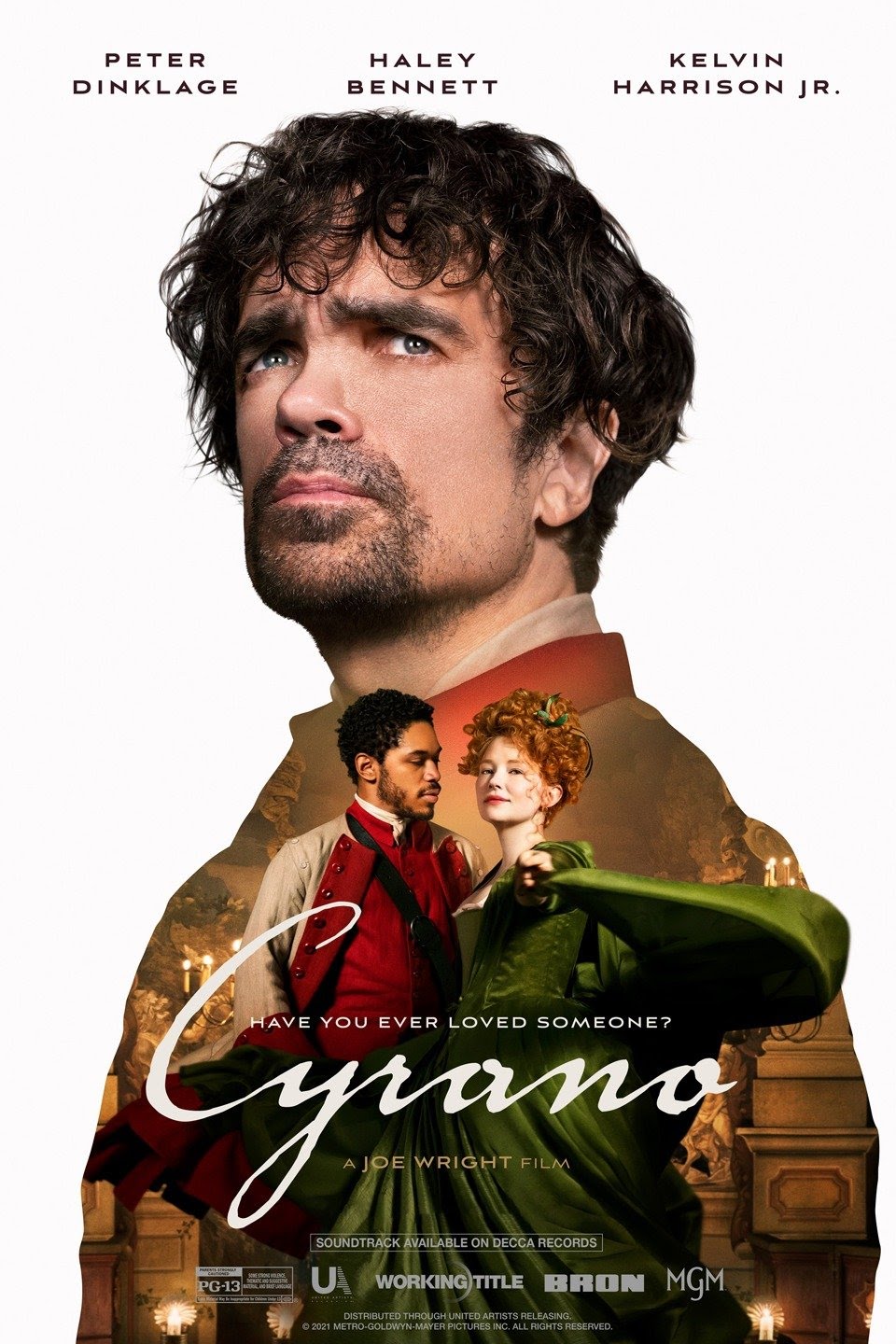
CYRANO movie musical mini review

Outstanding! Move over În the Heights and West Side Story, this is the best musical since Greatest Showman. Joe Wright (Darkest Hour) delivers a thought-provoking musical adaptation of the classic story inspired by the real Cyrano de Bergerac–yes that’s right, before he was immortalized in Edmond Rostand’s 1897 play, he was indeed a real-life person. Furthermore, this adaptation of the timeless stage play provides audiences with immense depth by exploring romanticism versus reality. A topic that resonates with anyone that experiences this mesmerizing motion picture. From the 17th century Sicilian setting to the beautiful costumes to the phantasmagorical choreography, Wright captures the soul of the original story yet finds a fresh perspective that will touch audiences everywhere. Peter Dinklage’s Cyrano writes and sings things (my fellow Game of Thrones fans will appreciate that reference). The chemistry between he and his co-stars Haley Bennett (Roxanne) and Kelvin Harrison Jr. (Christian) is fantastic! Although there is undeniably a healthy level of intentional camp in this otherwise naturalistic melodrama, Wright strikes a perfect balance between the two common approaches to musicals, in order to comment on relevant interpersonal topics whilst keeping the live theatre-like experience highly entertaining. The subtext of the entire story isn’t so much one of star-cross lovers caught in the middle of a deadly rivalry, but one of romanticism versus reality. Often times, we imagine a relationship or experience through an idyllic lens that constructs every element in the most ideal way possible, yet the reality of the relationship or experience is much more gritty and rough. Perhaps a great sacrifice must be made in the pursuit of the relationship that we had not anticipated. Perhaps the pursuit of the relationship may mean losing who you are. The possibilities of romanticism versus reality are endless. While Wright isn’t the first to bring de Bergerac to the big screen, he is the first to reinvent the classical tale though a spectacular big screen musical in the vein of the MGM Musicals of the Golden Age of Hollywood. You don’t want to miss seeing Cyrano on the big screen!

Ryan teaches American and World Cinema at the University of Tampa. If you like this article, check out the others and FOLLOW this blog! Interested in Ryan making a guest appearance on your podcast or contributing to your website? Send him a DM on Twitter or email him at RLTerry1@gmail.com! If you’re ever in Tampa or Orlando, feel free to catch a movie with him.

Follow him on Twitter: RLTerry1
BEING THE RICARDOS film review

I Love Being the Ricardos. Whether you are a fan or scholar of I Love Lucy or not, this biographical motion picture is for you! Go behind the walls of 623 E. 68th St. (an address that in real life would be in the East River), and get up close and personal with one of the toughest weeks in Lucille Ball and Desi Arnaz’ careers and the run of the sitcom. Being the Ricardos also represents Aaron Sorkin’s directorial debut, and be brings with him his penchant for exploring the human condition through dialogue steeped in subtext, thus adding the dramatic dimension to the dialogue. What I appreciate about Sorkin’s approach is how he seamlessly layers two timelines and a meta narrative into one another, in a manner that is consistently driving the plot forward in terms of plot and character. While the central focus of the film is on Lucille Ball being accused of being a communist, there are ancillary stories on Desi’s affairs and Vivan Vance’s complicated relationship with Lucille Ball and her character Ethel Mertz. William Frawley is depicted as the most level-headed out of the whole cast. Other dynamics of the mother of all sitcoms include the the power dynamic between the writers Madelyn Pugh, Bob Carroll Jr., and executive producer Jess Oppenheimer. Throughout the film, one theme is clear: home. What does a home mean or look like to you? Lucy desires a home, and she will fight for it.

In 1952, Hollywood power couple Lucille Ball and Desi Arnaz face a series of personal and professional crises that threaten their careers, their relationship and their hit TV show.

With so many layers at play, it may have proven to be disastrous for many if not most writer-directors, but not Aaron Sorkin. Any reviews you’ve heard or read that suggest Being the Ricardos is too inside baseball are wildly exaggerated. Yes, there is a greater appreciation for the film by those that know I Love Lucy well, but even those that only know of the sitcom will appreciate it. The friend that attended with me had virtually no substantive knowledge of I Love Lucy, yet he laughed along with this film, and knew precisely what was going on and why it was so important. If you are a member of the creative economy that runs, writes for, or acts in a sitcom, then you will have a greater level of empathy and understanding for the ups and downs faced by writers, actors, producers, and sponsors in Being the Ricardos.

Being the Ricardos starts out “in the future” with interviews with the (late in real life) Jess Oppenheimer, Bob Carroll Jr., and Madelyn Pugh about I Love Lucy and that week–and they all had the same reaction. Although I thought the three comedy writers had passed away, I was completely convinced that Sorkin was interviewing the TV legends. I actually had to check Wikipedia for the death dates. Anyway. The illusion of a documentary layer added to the authenticity of this film. Periodically throughout the film, we return to our writers and executive producer for some retrospective commentary on the “past” or “present” story. These interview segments provide a more substantive context for the conflict to follow. Furthermore, it adds come comedic relief for the otherwise serious film.

Often times, these type of biographic motion pictures work to humanize or make relatable the central figure(s), and Sorkin’s film does just that. Even though the world knows that Lucille Ball and Desi Arnaz divorced in 1960 (following the final performance of the Lucy Desi Comedy Hour), we still think fo them as the madly-in-love couple at 623 E. 68th St (and later at their house in West Chester, CT). Going behind the scenes, we witness four actors with their own demons and flaws. Perhaps you can identify with the struggles experienced by Lucy, Desi, Vivian, or William (Bill). And not just them, but Madelyn, Bob, and Jess too. More than a historical biographical picture, this is a motion picture that is very much a story of what it means to be human that is paired with a deep dive into one of the most beloved TV shows of all time.

Kidman’s performance as Lucille Ball and Javier Bardem’s performance as Desi are excellent! While Bardem may not disappear behind the costuming, hair, and makeup to the degree that Kidman does, he had Desi’s mannerisms and body language down pat! Clearly, he spent a great deal of time preparing for a role that has major shoes to fill, or should I say bongos to play. From her voice to her appearance to her body language, Nicole Kidman will wow you with her portrayal of the Queen of Comedy Lucille Ball. Kidman’s preparation for this role of a lifetime paid off in spades. If I didn’t know any better, I’d almost believe that I was watching Lucille Ball on screen. It reminds me, in many ways, of Jessica Chastain’s outstanding performance as Tammy Faye in (my favorite film of 2021) The Eyes of Tammy Faye.

For fans of the show, you may notice some continuity errors. Now, these errors don’t detract away from the film, but may surprise you. The show is in the middle of the second season, but the apartment set is the apartment they would move into after Little Ricky was born in Season 3. The giveaway was the window in the back. And in the film when they are referring to baby the Ricardos will have, it’s actually Desi Jr. that would be born during the third season and not Lucie, which is what is depicted in the film.

While we get a flashforwards to the famous grape vat scene, we do not get the most famous scene from I Love Lucy of all time: Vitameatavegemin. It is referenced, but we do not get to see Kidman recreate this scene. Maybe it’s a bonus feature on the BluRay. I hope so anyway!

Ryan teaches American and World Cinema at the University of Tampa. If you like this article, check out the others and FOLLOW this blog! Interested in Ryan making a guest appearance on your podcast or contributing to your website? Send him a DM on Twitter or email him at RLTerry1@gmail.com! If you’re ever in Tampa or Orlando, feel free to catch a movie with him.

Follow him on Twitter: RLTerry1
THE KING’S MAN movie review

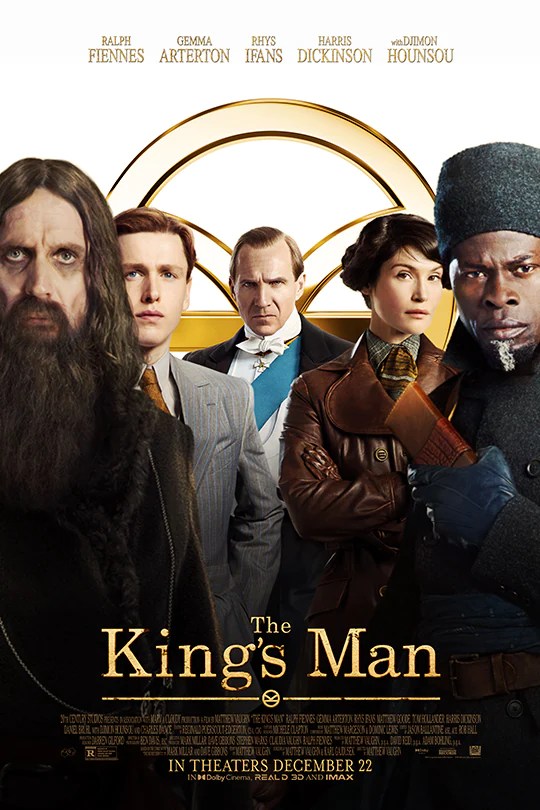
Highly entertaining! This film can be read as a commentary on the necessities and atrocities of war and the emotional cost of freedom. After the disappointing sequel to the outstanding Kingsman: the Secret Service, I was unsure what to expect from this prequel-sequel. So often, prequels simply do not capture the magic of the original. While the original is still the best in this franchise, this prequel taking us back to the origins of the secret agency operating at the most extreme discretion, will keep you engaged as it parallels world history leading up to World War I. The movie is well-paced and structured, and will keep your eyes and ears glued to the screen for the duration of the movie that surprisingly exceeds two hours; you will not feel like you’ve sat there for over two hours. Teaching World Cinema, I spend a lot of time each semester discussing the historical events that helped to shape the content therein and direction of cinema, so I was particularly interested in how closely this film would follow the Russian Revolution and the preamble to the Third Reich in Germany. Even though this film is not intended to recreate all the actual events that plunged the Western world into World War I, there are quite a number of nods and references to major turning points in the revolutions and wars. Most notably in this film, is the subplot of Rasputin and the Romanov family. Ralph Fiennes’ role as the Duke of Oxford (founder of Kingsman) finds a nice balance between serious and campy. Tonally, the original still strikes the best balance, but this one is certainly aiming for that balance between serious espionage movie and camp; perhaps the landing is a little bumpy, but never does it detract away from the experience. If you enjoy spy movies that are exciting and take place within real world history, then you will undoubtedly enjoy this film!

One man must race against time to stop history’s worst tyrants and criminal masterminds as they get together to plot a war that could wipe out millions of people and destroy humanity.

Decades prior to the events of the original, Kingsman was formed, but only after the Western world was plunged into World War I, inclusive of the Russian Revolution and preamble to the Third Reich. While we know from history that there wasn’t an organization of villains who’s goal was to overthrow democracy and monarchy in exchange for socialism and totalitarianism, the film does a good job of applying some fiction to the real historical events. In terms of history, the months leading up to the Russian Revolution provide the bulk of the historic context. Yes, that means the infamous Rasputin plays a major role in the film. And the film plays it close to history, because unlike the Rasputin we get in Anastasia, this one isn’t a sorcerer; however, it does hint at him possessing some dark magic (but that mythos is grounded in reality). The real life Rasputin was a dark priest, alchemist, healer, and advisor to Tsar Nicholas Romanov II, the last emperor of Russia. One prominent historical theory suggests that the British Secret Service was involved in Rasputin’s assassination, and this film leans into that theory in order to motivate the founding of Kingsman. For a while, I thought that the legend of Anastasia (which lasted about 90 years) was going to factor into this movie, which would give rise to a plot point in its sequel. But sadly, I don’t think we will be searching for Anastasia in the next movie (if there is one, which there probably will be).

What I appreciate most about this film is the commentary on the atrocities and necessities of war and the emotional cost of victory. This isn’t really a spoiler because it happens in the first few minutes of the film, but we open on the death of the Duke of Oxford’s (Fiennes) wife, and it’s this death that radically alters his opinions on getting involved in war and fighting for your country. Moreover, his radical ideological shift was exhibited through his rearing of his son, whom he (over)protected and kept from entering into military service. Understandably, the Duke did not want to lose his son on the war front, in the same way he lost his wife and son’s mother. Without spoiling the plot, the Duke goes through a redemption arc and through various conflict, his pacifist ideology is challenged, and he must decide what he’s going to do about it, as the world is crumbling around him. Sometimes, war is necessary to fight for what is right. But even the most justified wars come as a cost. That cost may be emotional, psychological, or relational; yet, the cost is worth it because it may have saved tens of thousands or even millions of lives in the long run. The King’s Man challenges our views on war, by placing us in the family units and in the trenches along No Man’s Land (and no, Wonder Woman does not show up). Some things in life are truly worth fighting for, and fights are not always going to be debates on a stage. Furthermore, if you’re a parent, perhaps you will be challenged to be the kind of man or women your child would be.

You’ll want to add The King’s Man to your list of movies to watch in cinemas over Christmas! You get a little of everything: some classic espionage, a World War I film, and commentary that is applicable to our own lives.

Ryan teaches American and World Cinema at the University of Tampa. If you like this article, check out the others and FOLLOW this blog! Interested in Ryan making a guest appearance on your podcast or contributing to your website? Send him a DM on Twitter or email him at RLTerry1@gmail.com! If you’re ever in Tampa or Orlando, feel free to catch a movie with him.

Follow him on Twitter: RLTerry1