“Pirates of the Caribbean: Dead Men Tell No Tales” movie review

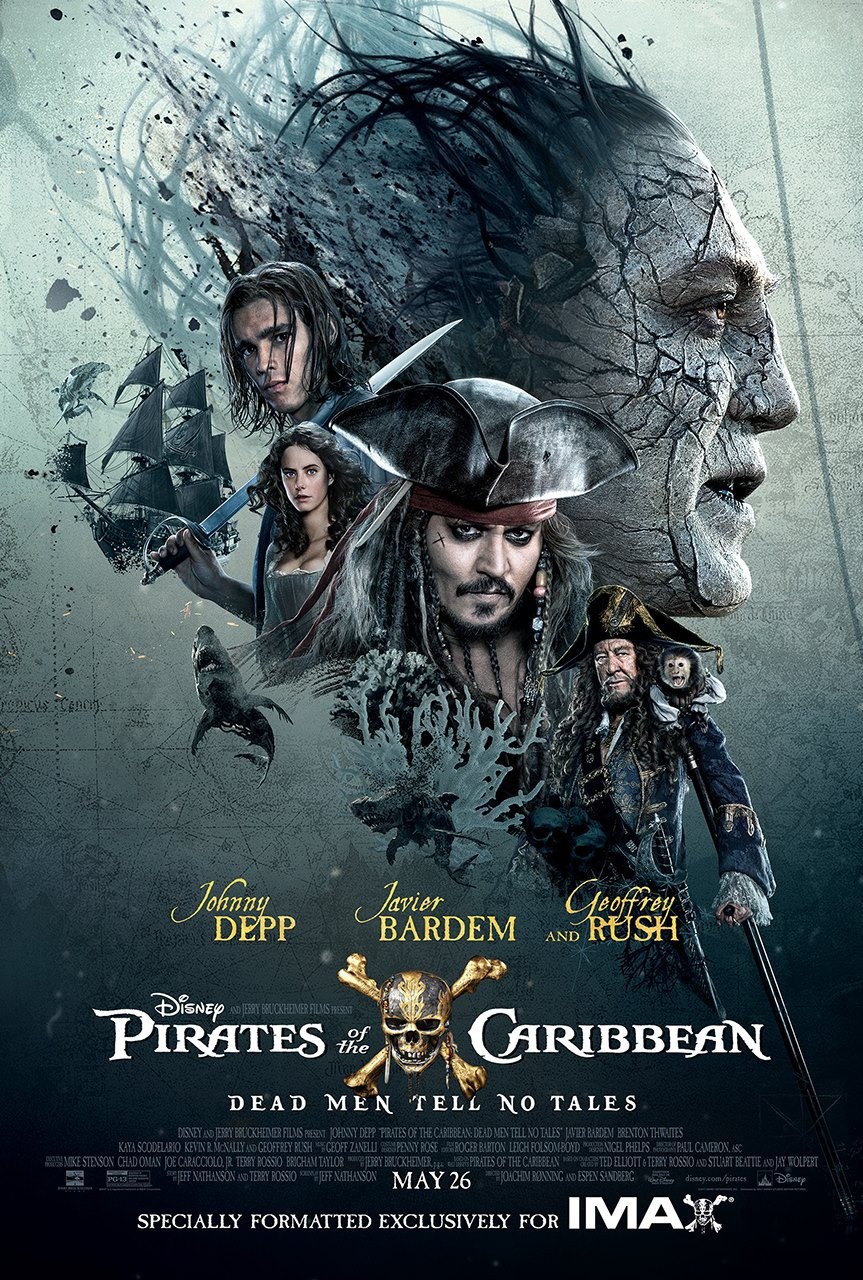
Of all the tales that the depths of the ocean contain, this one is quite shallow. Disney’s latest installment in the swashbuckling franchise Pirates of the Caribbean: Dead Men Tell no Tales proves that neither changing directors, writers, nor the inclusion of an undead Javier Bardem, can bail enough water out of a sinking ship. No doubt the next chapter in the life and times of Jack Sparrow was one to be anticipated by fans, but sadly the writing was not strong or developed enough to carry the waning film series. This film reminds me of the Child’s Play franchise. What??? That is likely what you’re saying. But hear me out. After the first two Chucky films, the studio realized that the series was not working as a hard horror film, so the studio went the camp route and capitalized on the ridiculousness of the characters and the situations. Dead Men Tell No Tales contains many camp elements such as completely ludicrous antics and escapes that are even too much for a Mission Impossible movie. Although there is an attempt at some closure between characters at the end of the film, it plays out as forced and on-the-nose. Still, there are moments that will mildly tug at your heartstrings during the showdown, but it’s not enough to add any dimension to this flat tale. One thing that this Pirates movie has going for it is the impressive visual effects. Both the editing and score are pretty outstanding, and certainly add to the experience of the film. However, if you watch the movie in 3D, as I did because there wasn’t a 2D option at the earliest showing, some of the magic of the undead pirates will be lost due to noticeability of editing. Over all, Disney’s Pirates of the Caribbean: Dead Men Tell No Tales is a great popcorn movie and a fun one to watch with friends or the family. Be sure to stay after the credits for a sneak peek at the next (and hopefully last) one.

Return to the swashbuckling world of the franchise inspired by the iconic Pirates of the Caribbean attraction at Disney Parks! Many years after the encounter with Davy Jones, Jack Sparrow (Depp) is being sought out by a young Henry Turner (Brenton Thwaites)–yes, that Turner. After witnessing his entire ship’s compliment slaughtered by ghost pirates led by Captain Salazar (Bardem), Turner is even more determined to find Captain Jack. Unbeknownst to Turner, Jack Sparrow’s fortune is not what it used to be. With his luck turned sour, Sparrow is captured and Turner must free him if the ghost pirates are to be stopped and the curse of Davy Jones lifted. By sheer happenstance, Sparrow is sentenced to die alongside an accused witch named Carina (Kaya Scodelario). If that wasn’t bad enough, Captain Barbosa (Rush) has been cornered by Salazar into leading him to Sparrow as well. Other than a need to find Jack, Turner, Salazar, and Carina all share a common interest in locating the trident of Poseidon. That trident is the key to unlocking the power of the ocean and breaking curses.

Like so many franchises that have come before, Disney’s Pirates of the Caribbean appears to have suffered the same fate. Although this can’t be said of every franchise, the area that fairly consistently fails to deliver is strong writing inclusive of plot and character development. Often times it seems that story is exchanged for merchandising, impressive visual effects, or pandering in longstanding franchises. After an outstanding opening sequence that instantly hooks you, the rest of the movie just plays out so paint-by-the-numbers that it becomes nearly predictable and lacks any real substance. Sometimes franchises fall into the trap of realizing that it can no longer take itself seriously and allows the camp factor to increase significantly. That is the one word that pretty much sums up this film: camp. Whether you are talking the perpetually drunk Jack Sparrow (yes, even more than usual), unbelievable escapes that defy all logic and past precedents set is previous films, or the supernatural playing off more as a joke than a serious plot device, there are many elements in this film that attempt to cover up poor writing by going for the flash in a pan approach.

One of the down sides to the recent Guardians of the Galaxy I found was the film only focusing on Acts I and III, leaving out the chunk of story development typically found in Act II. By the same token, Dead Men Tell No Tales spends most of the time in Act II, leaving Act I and again Act III to be rushed through. The common variable in both scenarios is a weak third act. To explain where I feel that this movie should have ended and the next one begin would give away a plot spoiler, so I won’t mention it. However, there is a place in this film in which there is a great opportunity to end this story on a high note of anticipation of what is to come but it just rushes through the rest of the story. Had more time been spent on developing a solid story, then this Pirates movie would definitely have turned out much better. Sadly, it seems like more time was spent in post-production and scoring the film. Certainly, the talent behind the lead characters is excellent. Perhaps the writing is poor and the screenplay was weak, but with a lead cast of Depp, Rush, and Bardem, the movie is fun to watch. And sometimes that’s all you want–a good popcorn movie.

If you ARE looking for a good popcorn movie to watch with your family or friends over the holiday weekend, then checkout Disney’s Pirates of the Caribbean: Dead Men Tell No Tales. Can’t promise that you will enjoy the story as much as the original, but you’ll still have a good time. Perhaps the sequel to this film will be stronger and pick up where this one failed to deliver.

Written by R.L. Terry

Edited by J.M. Wead

Disney’s “Beauty and the Beast” (2017) movie review

Prepare yourself for “a tale as old as time” that is ultimately better told through its animated counterpart. Director Bill Condon’s live-action remake of Beauty and the Beast, the first animated film nominated for Best Picture at the (1992) Academy Awards, is an extravagant display of visual effects and digital imagery necessary to animate a live-action motion picture. Essentially, he took an animated movie, made it live-action, just to make it animated again. Sure, this new version of the “song as old as rhyme” can certainly stand on its own and is demonstrably well-directed, but 2017’s Beauty and the Beast largely comes across as unnecessary. In terms of the storytelling (or diegesis), the film’s effort to nearly shot-for-shot translate the most memorable parts of the film from animation to live-action pays off nicely! It’s when the film tries to be different that it falls short in its delivery. There are sufficient moments that beautifully recreate that which caused you to fall in love with this movie more than two decades ago; although, with this version, you may find yourself exhausted and over-stimulated by the constant waves of computer-animated figures in a live-action world. Oh yeah, you’ll likely miss hearing the legendary Angela Lansbury as the iconic Mrs. Potts. The film does its very best to justify its existence, but begs the question whether or not this was the movie for which you were waiting.

Belle (Emma Watson) is a young lady with a longing for adventure and a great big imagination, but she lives in a rather provincial French town. But, Belle is about to get more adventure than even she, in her wildest imagination could have dreamt. For through a series of strange circumstances, she finds herself trapped inside a dark foreboding castle, surrounded by a very odd collection of characters. It’s in this castle that she finds her father who she feared injured or dead imprisoned by a Beast (Dan Stevens). Against her father’s wishes, she reluctantly exchanges herself for her father’s release. After the Beast sets him free, Belle is to remain a permanent resident of the castle. Fearing the worst, Belle’s father seeks the help of the misogynistic village heartthrob Gaston (Luke Evans) and his band of goofs and thugs to rescue her. During this time, however, Belle begins to feel “something there that wasn’t there before” as she learns more about the Beast of the castle.

Can this film stand on its own? Sure. There is no question in that. Moreover, is it enjoyable and magical? That, it is. But when most of the campaign, leading up to the highly anticipated release, was primarily built upon how similar the live-action film would be to its animated counterpart, therein a problem arises. Because most people going into the movie will have seen the animated version, Broadway show, or even the show at Disney’s Hollywood Studios (which, in full disclosure, is a show that I worked when I was a Cast Member at Walt Disney World), you are predisposed to looking for and eagerly awaiting the nostalgic references and memories. And there is nothing wrong with that. In fact, I was looking forward to reliving the experience of when I first saw the animated movie. For the most part, if you are like me, then you will be pleased with the live-action translation–truly. However, it’s when the live-action version departs from or adds in material not found or referenced in the animated classic that you may be disappointed or simply ask “why?” You may find yourself wondering why was a live-action remake even necessary?

One of the most memorable elements of Disney’s Beauty and the Beast (1991) is the music! Still to this day, millions of people love hearing the classic music and lyrics by Alan Menken and Howard Ashman. Both the Beauty and the Beast and Be Our Guest can be heard as part of other shows at Walt Disney World and of course are included in the stage show at Hollywood Studios. Fortunately, the most iconic songs from the animated version are largely untouched; however, with a couple of the songs, there are breaks for diegetic dancing, fighting, or other material that essentially interrupts the organic flow of the music from the buildup to the climax and denouement. Again, the question “why” will likely pop into your head. We are introduced to a few new songs, and in and of themselves, are beautiful! Every note and lyric has that Disney magic that many of us have come to expect and appreciate. Unfortunately, the songs just don’t fit in with the original numbers in terms of pacing, lyrics, and score. Furthermore, here’s something quite interesting and odd: the song [To Be] Human Again was written for but deleted when it originally hit theatres in 1991. It was, however, added back in for the Broadway show and in the 2010 (and Diamond Edition) re-release of the movie. Although it was seen as important enough to include in the Broadway show and add back into the animated version, it is conspicuously missing from the live-action remake.

With the exception of Emma Thompson replacing the legendary Angela Lansbury, the cast was well-selected and demonstrated excellent chemistry between one another. Although Emma Watson is not a singer by trade, she was able to capture a Belle-like essence in her delivery of the various songs throughout the film. There was something uniquely organic in her voice that is seldom captured by other Disney “princesses” (note: Belle is not a princess). I greatly appreciate the dynamic range of characters that Watson has demonstrated that she can play over the years. Dan Stevens wows audiences with his vocal prowess especially in his solo number as we transition from the second to third acts. I appreciate how he stuck a fantastic balance between his human and beast sides respectively. Luke Evans was a perfect choice for Gaston, and his vocal talent matches his muscles–big, bold, and flawless. The rest of the cast, which includes some A-list talent itself, was ideally suited for the enchanted objects in the castle and the village.

Okay, now for the white elephant in the room: Josh Gad’s Lefou. Unless you have been completely disconnected from social media and the news, you’ve undoubtedly heard or read about the first ever Disney “gay moment” in this film. Suffice it to say, the whole thing has been blown way out of proportion. In fact, more attention is likely being paid to Lefou now than had the story never grown to the size of Gaston’s ego. For the most part, the subtext and subtitles of Lefou’s are largely just that–subtle–unless you are looking for them. But, in doing that, you may miss some of the more important and impressive parts of the movie. Moreover, there is nothing in Lefou’s actions that come across as offensive or obnoxious. Before audiences begin accusing Disney of pushing their ideals on those eager to attend this film, it is likely that the entertainment and media giant is simply delivering what audiences already expect or want. As a film and media professor, I can tell you that by in large, media simply delivers what audiences and investors are telling them to produce–not the other way around. Looking back at the animated film, it is pretty obvious that Lefou has a thing for Gaston anyway. Although most of the hints at his sexual orientation are more-or-less winks or nods at the audience (winks or nods that you have to be looking for), there is a moment that is a trifle more obvious at the end of the film. Diegetically, there is nothing bizarre about Lefou’s behavior and it suits his character well.

Prepare to be whisked away to an enchanted castle in a remote part of France. So remote is this province in France, that most everyone speaks with a British accent. Bill Condon’s film will take you back to when you first saw this magical tale of falling in love with someone based upon what’s on the inside and not allowing a beastly outward appearance to detract from the gentle soul. Relive the music that you may still listen to in the car or eagerly look forward to when visiting the Disney Parks and Resorts. Ultimately, this film may not capture the magic of the original for you, but there is a lot to enjoy! Looking for a great date movie this weekend, then this is definitely it! Hopefully a side effect of this film may remind producers and audiences that some stories are better suited for an animated motion picture.

Written by R.L. Terry

Edited by J.M. Wead

“Rogue One: a Star Wars Story” movie review

rogueoneJust when all hope was lost, the force has awakened this time. After the disappointingly stale installment last year, I did not have high hopes for Rogue One. To my surprise, the first standalone Star Wars franchise film exceeded expectations. Although the public is accustomed to Star Wars films coming in threes, Lucasfilm and Walt Disney Studios took a risk in creating an original single story to successfully setup A New Hope. Unlike when the force tried to awaken last year, THIS feels like a new Star Wars film. With twenty-some-odd years to fill between Revenge of the Sith and the original movie, how was one film going to do it? Focus on what was ultimately important. Not that the development of the Empire would be uninteresting, but the white elephant in the room was “how did the rebels get the plans that setup the events at the beginning of A New Hope“? And that is precisely what director Gareth Edwards did, and it paid off! Rogue One is as exciting as the original film; and furthermore, is built upon a solid plot that is mostly new with a little nostalgia and Easter Eggs (visual references to A New Hope) in the form of locations, props, shots/frames, and familiar featured characters and a surprising cameo. One of the elements that plagued Episode VII was the simple fact that it was little more than a remix and mashup of everything that had been done before, including main plot points, subplots, and predictable behavior. Rogue One feels fresh and new. Yes, there are obviously appearances and references to characters and settings from A New Hope, but that is to be expected since this film ends where the original film begins. Thematically darker than the original film but not as dark as Empire Strikes Back, this installment strikes a balance in the force that makes it interesting to watch. We all know that the rebels get the plans in the end, but this film makes the adventure worth watching as it unfolds.

With the old republic in ruins and the senate all but disbanded, the Galactic Empire has  its eyes set on a feat of engineering never seen before. But they need to attach the right scientific talent in order to create that which would become known as the Death Star. Galen Erso (Mads Mikkelsen) is a brilliant scientist and former Imperial officer, devoted husband, and loving father. Director Krennic, head of the secret Death Star project, arrives at Erso’s home to forcibly recruit him to head up the science and engineering divisions. When recruitment does not go as planned, Erso is separated from his family and taken away. Escaping to the caves, his daughter evades capture. Many years later, Jyn (Felicity Jones) finds herself a criminal and angry that her father never came back for her. When an Imperial pilot allegedly defects and claims to have a message from Galen for the Rebel Alliance, Jyn is recruited by the rebels to lead them to a former rebel turned rogue and ultimately to her father. With Captain Cassian Adnor (Diego Luna) at the helm and lead of the small band of rebels accompanying Jyn to her father, they uncover a secret that thousands will die for in order to attempt to make things right in the galaxy. All the while, they have no idea that this clandestine mission will spark events that they could have never imagined.

Already, this film seems to have sparked arguments among fans of the franchise and those who enjoy them but may not be fanboys. Even this morning, I noticed many comments on social media that commented on the film positively or negatively. Interestingly, at first glance, it seems as those who liked Episode VII: The Force Awakens did not like Rogue One, and those–like me and the friends I went with last night–who thought The Force Awakens was garbage but found Rogue One to be exciting, dynamic, and refreshing. Of course, there are plenty of people who like both films released under the Disney banner, either because the Big D can’t possibly do anything wrong or because they are true fans for better or worse of the nearly forty-year-old franchise and staple in the future fantasy genre (notice I did not say science-fiction–no real science here). At this point, I am unsure why those who liked last year’s film may not have liked this weekend’s installment; however, it appears to be clear from multiple comments and reviews that the reason why those who did not like Episode VII enjoyed Rogue One is the newness of a film that embodies the spirit of the original but provides audiences with a new adventure that connects well without redundancy. One of the reasons for the success of the original film–aside from a great cast–is the focus on the drama between characters and camps. There is the drama between Rebels and the Empire but also drama within the camps themselves. Rogue One borrows from A New Hope in that the focus is more on the drama than resting its laurels on the technical elements. Not that this film lacks in the technical category. Rogue One comes complete with great direction, color grading, cinematography, and impressive editing (especially with some rather surprising CGI that will definitely cause you to do a double take utter delight).

For all that this installment did well, the beginning of the film following the prologue was dreadfully ill-conceived and mostly unnecessary. Unlike all the other Star Wars films, this one did not open with the trademark scrolling written prologue offering exposition to setup the movie. Instead, after the “A long time ago, in a galaxy far far away” the film cuts to the opening scene of Krennic recruiting Galen. Following the prologue and rather PowerPoint-looking Rogue One title card, is a rapid, incoherent, and confusing sequence of montages. Honestly, I am still unsure why that whole sequence was necessary. Between the PowerPointy title card and this sequence of montages, I did not have hope for the film at all. Obviously, I ended up enjoying it immensely, but I look back and feel strongly that it could have been left out. The settings/planets that were depicted did not play into the plot at any level of significance. Felt like filler. Thankfully, the scenes following the prologue are but a small portion of the film and the film really begins to take off after Captain Cassian and his team rescue Jyn from a prison transport vehicle. After Jyn’s rescue covert operation, the rest of the film is nicely paced and developed. Other than knowing the ending, the majority of the film was unpredictable. Unpredictable in that you know the direction it’s going and ultimately what’s going to happen but you don’t know HOW it all happens and works together to setup A New Hope.

Just the right amount of nostalgia and Easter Eggs. For those who are fans of or simply familiar with the movies, there are cameos, references, and shots taken from the chronologically preceding films (mostly A New Hope). Just enough nods to and direct connections to provide the audience with a film that IS as much a part of the Star Wars saga as the official Star Wars cannon. It’s no surprise that the Death Star is a big part of Rogue One, Senator Mon Mothma is seen leading the rebels, Darth Vader (still voiced by James Earl Jones) makes several brief appearances, and a couple other nostalgic cameos; but there are some characters who are included in the diegesis of this film who will delight old and new fans alike–one in particular that will incite an eruption of cheers! Beyond the human characters, there are other appearances by iconic ships and war machines that aid in cementing this story in with the rest of the franchise. While the film contains some lighthearted, witty dialog between the core group of principle and supporting characters, the film also contains some dark moments. Personally, I think the film should have been a little darker since it sets up the installment all about hope reborn; but, the atrocities of war are definitely not hidden from the audience and events transpire that are atypical of future fantasy films between heroes and villains. In a manner of speaking, and as I mentioned in my opening paragraph, the film’s diegesis strikes a balance in the force in terms of the light and dark content.

Rogue One: a Star Wars Story is an exciting narrative that successfully sets up the film that started it all. If you’re a fan of the original trilogy but did not enjoy Episode VII, you will most likely enjoy this installment. If you are a fan of the original trilogy and liked Episode VII, then there is moderate chance that you may not like this story. It will be interesting to see how this film plays out amongst mild, moderate, and hard core Star Wars fans from both the Disney and Fox camps. I had my doubts of Disney taking the reigns of the franchise after last year; but this film gives me a new hope that Disney may be able to successfully navigate the rest of the franchise.

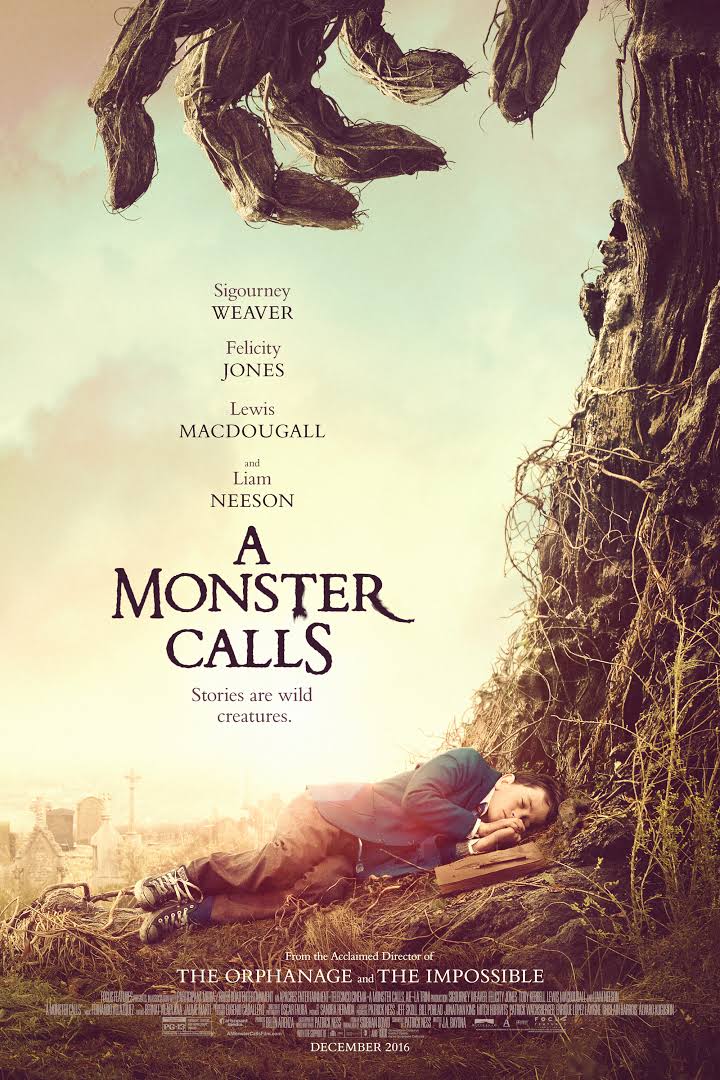
“A Monster Calls” movie review

monstercallsA breathtakingly beautiful and dynamic film that typifies the art of visual storytelling in the gothic style. Focus Features’ A Monster Calls directed by J.A. Bayona is nothing short of a Terms of Endearment, in theme anyway, for a new generation. You are certain to laugh and cry your way through the film. Based upon the novel by the same name, written by Patrick Ness and illustrated by Jim Kay and conceptualized Siobhan Dowd, Bayona’s adaptation of the novel plays out to be a deep, rich story that will touch the hearts and minds of each and everyone in the audience. For anyone going through the stages of grief, this film will especially ring true and perhaps bring about comfort. Although the protagonist Connor, played by Lewis MacDougal, is twelve years old, this dark melodrama with a plot revolving around terminal illness is not typically something that will appeal to kids of Connor’s age. Despite the fantasy elements and the young protagonist, A Monster Calls is more suited for older teens and adults; however, by the same token, the movie isn’t entirely going to initially appeal to adults since the protagonist is quite young. I screened the movie last night in an auditorium filled with patrons of all ages and there was not one dry eye in the audience. Looking at the film from the outside and analyzing the plot and cast, it would appear that it may not attract droves of people because of the gothic fantasy nature, typically aimed at kids and young teens, with content and theming best suited for older audiences; however, the film truly transcends age barriers and stereotypes to touch those who are young or young at heart.

While most twelve year old boys are busy with school and learning to develop socially or even romantically, or just simply playing video games and having Stephen King type adventures, Connor (MacDougal) is dealing with far more than a kid should every have to deal with. Connor’s mother (Felicity Jones) is very ill and Connor is forced to grow in many ways kids should not quite quickly to take care of her. Not entirely going through this terminal illness alone, Connor has a grandmother (Sigourney Weaver) who looks in on him and his mother–a grandmother with whom he shares little in common. With Connor’s father settling down in Los Angeles, Connor feels very much alone while dealing with his mother’s illness. Expressing his emotions and thoughts through water color and sketch artwork, Connor uses his penchant for beautiful art as a form of therapy. Just when all seems lost, an unexpected ally in the form of a rather gothic tree-like monster (Liam Neeson) appears in his window one night. Apprehensive at first, Connor befriends the monster who guides him on a journey of courage, truth, and faith that combine in a powerful fusion of imagination and reality.

This is certainly a year for fantastic monsters and fantasy, isn’t it? However, A Monster Calls is definitely not your typical fantasy. It deals with deep emotions, dark themes, and material usually better suited for adults. Why then choose such a young protagonist? Perhaps the author Patrick Ness wanted to reach those kids who are going through tough times and who are dealing with situation that most kids won’t face until they are much older. Some kids are just forced to grow up more quickly than others. It’s important that cinema and literature not forget them because words on pages or moving pictures may be the only source of comfort, escape, or allegory. Director J.A. Bayona appears to have successfully translated the novel to screen–from what I know. Interesting that the movie opens with the narrator describing Connor as being too old to be a kid but to young to be an adult. By extension, that is precisely where this movie fits in. It’s too “old” to be a kid’s movie but too “young” to be an adult movie. And that’s okay. Growing up is hard, and when faced with a family member or close friend with a terminal illness, life is exponentially more difficult emotionally and even psychically. Unconventional as it may seem, this film is powerful and transcends the age spectrum to provide a strong emotional journey that audiences can appreciate and from which people may receive comfort. If for no other reason, having a kid starring in a melodrama brings audiences of all ages together–many who may be going through something similar as the child, parent, spouse, or lover of someone who is terminally ill. It’s okay to grieve and let go.

From the opening credits alone, I was confident that this was going to be a visually stunning movie. The water color animation and brushstrokes are reminiscent of the story of the three brothers in Harry Potter. Absolutely beautiful. Much in the same way Kubo and the Two Strings was an innovative animated film, A Monster Calls also contains unconventional and innovative methods of telling its story. Similar to how the animated story of the three brothers in Harry Potter was integrated into the diegesis of a live action movie, so it is with this film. The more I thought about the technical and emotional elements of A Monster Calls, it is clear that it’s truly a dynamic means of cinematic art. Dynamic in that there are three different types of storytelling methods used diegetically each highlighting a different form of art: (1) motion pictures (2) visual art (3) oral storytelling. It’s been said that the novel is an extension of oral storytelling, the play an extension of the novel, and motion pictures an extension of the play. At the root of all those methods of communicating through art is the very concept of storytelling. And A Monster Calls has the art of storytelling in spades. There are so many levels to the diegesis in this film; much like an onion or matryoshka doll, this film has a message of how to deal with grief at its core but there are many different routes to get to that central theme. Each layer teaches Connor and the audience something different and valuable. The cinematic storytelling elements of direction, cinematography, editing, and score are all equally beautiful.

Structurally, A Monster Calls is an intimate story reinforced and surrounded by artistic German expressionism calling attention to its own artifice. From the exterior shots to interior rooms, the various sets appear to be meticulously constructed on a stage and the wardrobe much like perfect costumes. The art tells the story effectively with little exposition required. Fernando Velazquez’ score is so incredibly moving that you may find yourself listening to the score as it too truly assist in the overarching means of telling this story. The design of the monster is brilliant and ominous all at the same time. Almost animatronic in nature, the tree plays out like there is a puppeteer on the inside articulating the movements. The monster feels just as much like an actor as the actors playing the human characters. Liam Neeson was a perfect choice to cast as the tree’s voice. His deep bass is comforting, warm, and wise-sounding. But just who is the tree (in the story)? Although we are never told whose spirit inhabits the tree that has seen thousands of years go by, there are a couple of hints as to who it might be if you pay close enough attention to subtleties in the film. At the end of the day, whether it’s the spirit of someone or the personified life of the tree itself, it is of little consequence to the movie. Still, its definitely fun and interesting to talk about as my friend and I did after the film.

If you enjoy movies such as The Iron GiantThe Giving Tree, or Terms of Endearment, then you will immensely enjoy this film. Presently in advanced screenings and limited releases, you may need to wait a few weeks before it is at a theatre near you. Although slated for a January wide-release, it may make its way through many markets before then. Originally set for an October release, it makes since to have held it until Oscar season since this is one of those films that could grab the attention of the academy. Definitely bring your tissues.

“The 5th Wave” movie review

FifthWaveAnother cliche wave of ‘only attractive young people can save the world because they are special’ movies. Really??? Do we really need another one of these films with an overly used and tired plot? I suppose so–or at least that is what Sony Pictures is hoping for. Once again, the world is at the brink of destruction by an alien race that has taken over most adults. It is up to a small band of rebel young people to save the world by overcoming the impossible. Only this time, the dialog and plot are so incredibly blasé that you may likely find yourself often glancing at your watch to see when this painful movie will be over. Can we survive the fifth wave??? That question is all too apropos. From the unimpressive digital effects to the crazy quilt consisting of pieces and patches from every other  YA fantasy action thriller, hopefully this movie signifies the last wave of boring and predictable franchises that try to compete with The Hunger Games but fail miserably.

I normally summarize the plot here, but I am pretty well sure that you already know all that you need to know, given the repetition of such films in this sub-genre of young adult movies.

If you simply enjoy mild, mindless, cliche young adult (trying so hard to appeal to teens and adults) entertainment, then this film is for you. On the other hand, if you are tired of this same vapid plot that we have been accosted with for the last several years, then this is not the way to spend the weekend. Haha. I wanted to see The Boy instead last night; but unfortunately, it was not getting a Thursday night release. I think distribution companies and theatre chains should have released it instead last night, and saved this travesty for today.