
Disney’s “A Christmas Carol” (2009) movie review

d_a_christmas_carolAn exhilarating visual array of breathtaking motion-capture animation with a touch of the macabre! Disney’s A Christmas Carol directed by Robert Zemeckis is an outstanding adaptation of the literary classic. Instead of attending the cinema this week, with the box office offerings on the anemic side as we gear up for the bulk of Oscar season heavy hitters, I decided to rewatch Disney’s A Christmas Carol. Charles Dickens’ masterpieces have long sense been a source of inspiration for film adaptations of literature. Specifically, A Christmas Carol was actually one of the earliest films period–let alone adaptations. The first adaptation of A Christmas Carol was a British film in 1901 titled Marley’s Ghost. This classic work has been adapted for film, theatre, radio, and television more than 100 original/separate times, collectively. But why??? Why this novel? Quite possibly, this single work of literature has been brought to life for the stage, speaker, or screen more than any other with only a few possible exceptions. Perhaps, because it is simply timeless–transcends all generations. Writer-director Robert Zemeckis showcases his ability to put his spin on the timeless tale by perfecting the motion-capture animation techniques that made his adaptation of The Polar Express so visually stunning. Although Patrick Stewart’s Scrooge in the TNT original movie from 1999 is my favorite Scrooge, I feel strongly that Zemeckis’ film is closest adaptation to the spirit of the novel and brings it to life in the way Dickens himself may have imagined.

London may be anxiously awaiting the arrival of Christmas Day, but the old miser Ebenezer Scrooge (Jim Carrey) could not care any less. He much prefers the company of his money and micro-managing his humble clerk Bob Cratchit (Gary Oldman) at his counting house. After begrudgingly allowing Cratchit to have Christmas Day off, Scrooge heads home. Upon arrival to his stately but lonely townhouse, Scrooge encounters the ghost of his dead–and there is no doubt about that–business partner Jacob Marley (Oldman). In an effort to spare Scrooge his horrifying fate, Marley informs Scrooge that he will be listed by three spirits (Carrey). The ghosts of Christmas past, present, and yet to come respectively take Scrooge on a terrifying journey through his his life in hopes of transforming his selfish bitterness and embrace the selfless love and joy of Christmas.

Prior to analyzing this adaptation, as it is a story most of us know and cherish, I’d like to look at why. Why has this work of literature been adapted for nearly every storytelling medium? The short answer is that it is a story that is as relevant today as it was in the 1800s. Much like with his other masterpieces, Dickens captures so much about the human condition, in what amounts to a short story. The novel is not terribly long. With many in the U.S. feeling as though, much like in Dickens’ world, that we are being divided up into the rich and poor, this novel rings especially true. In fact, there are definitely high profile people in our economy echoing Scrooge’s words “have we no prisons; have we no work houses???” Not that we have a physical debters’ prison or work houses (in the old fashioned sense), but there are certainly elements of our society which parallel them. The story hits close to home for many. Furthermore, the novel, and subsequent adaptations, are regarded so highly because Dickens encapsulated every aspect by which mankind judges one another: past, present, and future. This is the foundation of a single person or people as a unit. Through Scrooge, Dickens shows us that if we look at our past, present, and future, then we can see the impact we have on those around us and even ourselves. By seeing how we really are, we can make the decisions to develop an approach to change ourselves to be about the business of mankind.

Interestingly, the ghosts show Scrooge how Christmas past was a time of magic (although it ended in heartbreak for Scrooge), Christmas present depicts how commercialism and greed have all but wiped out the magic with a glimmer of hope as shown by Cratchit and Fred, and Christmas yet to come shows Scrooge–and us–a world without the magic of Christmas: a world that we created. Another reason why this story is so powerful is because Dickens wrote the character of Scrooge to be a complex, multi-layered human who acts very much like a mirror to many of us. On the surface, he looks like a stereotypical old miser, but after looking into his past, we are given a glimpse of how he evolved–not unlike many of us. This story is also powerful for those who recognize the religious origins of Christmas or not. The focus of the story is on generosity, hospitality, love, compassion, as well as selfishness, greed, and sociopathy; but, it very much includes and makes reference to the religious underpinnings of this special time of year. Simply stated, this is a dynamic story of redemption that transcends generations of people.

Zemeckis’ adaptation is a beautiful usage of 3D storytelling technology. Ordinarily, I am not a fan of 3D movies, but this one is an exception for sure. I did not watch it in 3D last night, but I remember watching it in 3D when it came out in 2009 at the [then] Downtown Disney AMC. Zemeckis is one of few directors who knows how to use 3D effectively without it seeming like a gimmick. His use of 3D in A Christmas Carol greatly enhances the visceral appeal of the movie. One of the principle differences between this and other adaptations is just how supercharged it is with visual effects, intense chase scenes, and flying through the street of London. But, as Scrooge himself acknowledged, spirits can do anything–they’re spirits. Zemeckis does not hold back on the dark elements of the story. If you have read the novel, you will recognize that there are very dark parts. In many respects, A Christmas Carol is a supernatural horror film. After all, how else was Scrooge going be so scared that he would make a 180 and change his miserly ways???

It’s no surprise that Jim Carrey can be seen in the character of Scrooge; however, it is not as apparent that he is the infrastructure of the look of the characters he voiced, as was the case with Tom Hanks’ characters in Zemeckis’ The Polar Express. And this trend is even less apparent with Firth’s, Oldman’s, and Wright’s, respective characters. I love Zemeckis’ embrace of the macabre mood of the story. So often, adaptations of this story lose the very horrifying elements that absolutely terrify Scrooge. Although I remember hearing parents comment that this version was too scary for their kids, I think that having a version that is skewed towards teens and adults was important. Another great element in this film: the score! Alan Silvestri’s score sneaks in some traditional Christmas carols, but you have to listen for such as “God Rest Ye Merry, Gentlemen” when its distinctive cadences turn sinister during a perilous flight through London.

There are few Christmas movies that capture the spirit of the season better than A Christmas Carol. Zemeckis’ adaptation is my pick for best translation of page to screen. The cinematic excellence of Disney storytelling is woven throughout this film and makes for a thrilling journey. If you are planning to watch some Christmas movies this holiday season, I highly recommend this version of A Christmas Carol. But if you have very young children, it may be a little too scary for them. Whether you are young or young at heart, the magic of Christmas rings all too loudly in this timeless story brought to screen once again.
“Where are You Christmas?” A Review of “Jingle Bell, Jingle BAM” at Disney’s Hollywood Studios

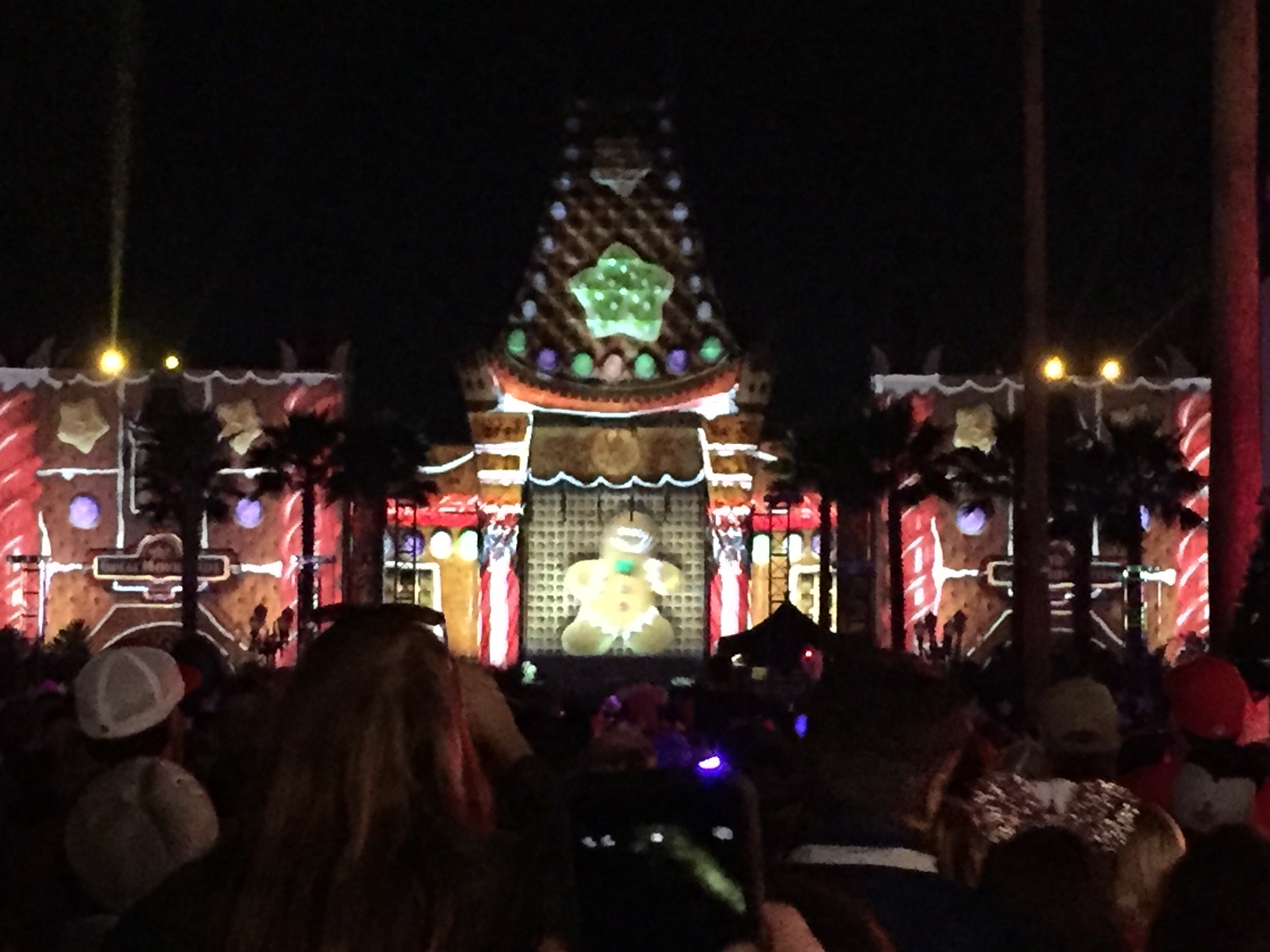
img_7604One of my favorite times of the year at the Disney Parks is the holiday season. And not just November through December but September through October too. The autumn and winter holidays offer so much opportunity for seasonal offerings that make the Holidays a special time of year for friends, family, and lovers. Of all the holidays, Christmastime is the generally the highest attended and most looked forward to at the Disney Parks. Whereas Universal Studios Florida is the king with Busch Gardens Tampa Bay as Queen during Halloween, the big D is arguably king at Christmas–perhaps the Jingle King? Putting a Christmas spin on Pumpkin King. For years, hundreds of thousands of park guests flood the Disney Parks to enjoy everything from Cinderella’s Castle draped in icicle lights to Mickey’s Very Merry Christmas Party to the late Osborne Family Spectacle of Dancing Lights and even Holidays Around the World at Epcot’s World Showcase and Jingle Cruise (the holiday overlay at Jungle Cruise). Not to even mention the elaborate gingerbread houses and other creations at the Disney Resorts. Over the last few years, we have witnessed a slow mitigation of Holiday offerings. Most notably the Osborne Family Spectacle of Dancing Lights at Hollywood Studios (DHS) and Animal Kingdom’s Jingle Jungle Parade. Along with so many anxious park guests and Cast Members, I too was curious how DHS was going to adjust its Christmas offerings with the conspicuous absence of the Osborne Lights. Sunday night, I was finally able to watch the new Jingle Bell, Jingle BAM show at DHS, and if I had to sum up the experience in one word, it’d be a lukewarm “meh.” But as you know, I will provide you with many more words, haha…….

After the announcement of Jingle Bell, Jingle BAM as the special seasonal nighttime spectacular offering at DHS, I was still sad that there were no more dancing lights but I was looking forward to the new show and how it was going to play out. Taking place in the center of the park at the replica of the timeless Grauman’s Chinese Theatre serving as the show building for the opening day attraction The Great Movie Ride and icon of the park, Jingle Bell, Jingle BAM (Jingle BAM from hereon) is a colorful display of map projections, lasers, and pyrotechnics. Many of your favorite Disney and Pixar animated films are included as well as a sequence from Tim Burton’s The Nightmare Before Christmas. In addition to the familiar film clips, there is a loosely integrated narrative with Santa’s elves and then a message from the big man himself. Accompanying the outstanding map projections of gingerbread men, presents, snow, and other holiday iconic images are a vast array of lasers crisscrossing the sky adding an immersive effect to the courtyard and Hollywood Blvd. No nighttime spectacular at the Disney parks would be complete without pyrotechnics. Jingle BAM boasts a fantastic finale of fireworks that dazzle the sky.

For all the wonderful potential the show has, it unfortunately fails to leave even half the lasting impression that the Osborne Lights left in the hearts and minds of park guests for 20 years. There are a few key elements that contribute to the mediocre reception of Jingle BAM: (1) DHS is not designed/laid out for a nighttime hub show (2) narrative is weak (3) plays out very flat–lacks depth (4) the fireworks are nowhere close to being centered behind the Chinese Theatre (5) fails to elicit a positive emotional response from the park guests (6) Santa’s message is generic and forgettable and (7) there is very little “Christmas” to be found in the show, period. However, it’s not all bad. The show is an outstanding combination of programming, projection technology, and brilliant lasers. The lasers greatly enhance the experience when the snow falls along Hollywood Blvd. From a technical perspective, the show is an incredible spectacle of what happens when art and science are combined.

Unless you arrive one or more hours before showtime or purchase the special dinner/dessert package viewing area, you will quickly notice that your view is most likely obstructed by anything from palm trees, to tech booths, to light poles, shoppes, or even children on the shoulders of parents. Let’s face it, the latter is unavoidable. If you’ve ever been to DHS, you’ll remember that the courtyard in from of the stage in front of Great Movie Ride (GMR) is quite small. Possibly a 1/3 of the size of the one in front of the Tree of Life at Disney’s Animal Kingdom (DAK). So, there isn’t much physical space to work with when accommodating thousands of guests in the same location for a 15min show. Although Osborne Lights moved over the years, it was a staple to the local holiday celebrations, for sure, as well as those who would travel hundreds of miles. Very quickly, for those of you who do not know the history of Osborne Lights, the show was originally on Residential Street (a street of TV houses) until it was moved to its former location on Streets of America (production standing set). Families and friends could casually stroll through the millions of lights that danced every few minutes–synced to classic and contemporary holiday hits! No showtimes. Just continual twinkling and dancing from sunset to one hour after the park closed.

Much like the hub area, the backlot area was also unable to support the majority of the park guests at any one (1) time. So, the continual dancing was important because guests could attend at their leisure. Compounding the physical space dilemma, there are also new palm trees that were installed after the hat was removed, two giant towers that are tech/electrical/equipment booths for the “temporary” stage that sits where the hat was, and several light poles. Once you back up toward Hollywood Blvd, your view is also blocked by the other trees and shoppes. Unlike Magic Kingdom, which has a low grade incline from the train station to the castle, there is no incline from the entrance of DHS to GMR; therefore, the possibility of an obstructed view is greatly increased. Never mind that GMR is less than half the height of Cinderella’s Castle. Between the level surface from the entrance to GMR, the palm trees directly in front of GMR, and the tech booths blocking the view from Hollywood Blvd, it is clear that this park is not designed for a hub show. At least a hub show that runs only once. And you know what? There is little that can be done about the layout of the park. So. The Imagineers and entertainment leadership should recognize those shortcomings and develop a way that a decent view of the show is possible from the central area of the park.

I love the concept of storytelling–in all forms. So, naturally I was curious as to how a story was woven into Jingle BAM. Even now, I am attempting to piece together what the story was. Essentially, the elves are looking for Santa because he is missing. Turns out that he has been captured by Oogie Boogie from The Nightmare Before Christmas. After Boogie’s song number, Santa is rescued. Following Santa’s rescue, he has a message about friends and family. More specifically, he directs the message to the City of Orlando. But, it just doesn’t strike an emotional tone. It plays off as canned and generic. Tiny Tim’s closing remarks “God bless us, everyone” from Charles Dickens’ masterpiece A Christmas Carol packs much more meaning and impact. Interestingly, it is the other bookend and answer to the novel’s opening line “Marley was dead to begin with, there’s no doubt about that.” I think a holiday message about friends and family is very important, but this one just plays off as forced–like other elements of this show. There is definitely a story and message there, but it is weak. Perhaps it would have been more effective to include some holiday spirit or nostalgia in his closing remarks. I think the show would play out just as well–if not better–if the plot of rescuing Santa wasn’t present. Not that I think the show should be without a story, but the story should be more coherent. Stories, such as this one, should also attempt to elicit an emotional response from the audience but it does not extend its reach beyond the surface level.

The over all experience of the show lacked depth. It felt very flat–like a projected image, ironically enough. All surface level and spectacle but no substance. One of the major attractions to and benefits from Osborne Lights was the total immersion into a winter wonderland. Immersion is so incredibly important in themed entertainment. The Osborne Lights provided more than a show–an experience! Even more importantly than immersion is the concept of experiential attractions. And this was an experience like no other. Jingle BAM lacks these all too important elements of immersion and experience. Instead of experiencing the seasonal holiday offering, park guests watch as third party spectators. The only time it becomes mildly experiential is when the Florida snow begins to fall. One of the most important elements to the experience of the Osborne Lights was the park guests’ ability to go from spectator to participant. The transition from spectator to participant is a popular trend in themed entertainment attractions because it offers a much more visceral experience. But what about the other nighttime Disney shows??? Aren’t they more of a spectacle than experience? Short answer: yes. Wishes, Illuminations, Fantasmic, and the Tree of Life are all about the sheer spectacle of it all. And there’s nothing wrong with that…provided that is how it’s always been. However, Wishes is set apart because of the strong emotions the music and pyro evokes from the park guests. It truly is a magical experience. But the problem occurs when the park offers a participatory experience and replaces it with something more along the lines of a glorified short film.

Most Disney nighttime spectaculars offer a phenomenal dazzling array of pyrotechnics and fireworks. Keeping in line with the tradition of magical Disney fireworks, Jingle BAM also offers an impressive choreographed firework display and dynamic finale. Unfortunately, those fireworks are not behind the Chinese Theatre–not even close. The majority of the pyro and entire firework finale is way off stage left (house right). illuminating the sky above the Animation Courtyard, the fireworks cause the park guests to turn their heads 90-degrees (away from the center of the show). Although DHS would have to close the Pixar area during the Galactic Spectacular (Star Wars nighttime show) in order to keep guests safe from the falling debris, the fireworks shot off above the Chinese Theatre making for a phenomenal nighttime show that was truly spectacular whether you are a Star Wars fan or not. The show was incredibly impressive. With the fireworks way off to the side at Jingle BAM, it feels more like a distraction than the finale.

Lastly, the show simply does not have that holiday spirit. Other than Santa and a couple Christmas songs, the show has a very generic feel. So much so that, take away Santa and replace a few other elements and the show could silly be modified to run as part of daily operations. That certainly displays efficiency, but this is a seasonal offering during Christmastime and should feel special. Guests should have the impression that they cannot get this experience anywhere else. As it stands, this map projection show is not unlike the one at Magic Kingdom. Since Disney has two popular versions of A Christmas Carol as part of its IP, I was shocked that neither make appearances in the show. What is more Christmassy than the timeless classic??? The lack of Christmas music is compounded by the absence of Jack Skellington’s lyrics in the song What’s This? from The Nightmare Before Christmas. As part of the score for Jingle BAM, the accompaniment from What’s This? can be heard, but no lyrics. Although many people celebrate the holiday season differently and various elements are held more dearly than others, there should have been a mixture of classic and contemporary holiday hits to create a festive atmosphere. The magic of Christmas is very much lacking in this seasonal show. Where are you Christmas?

Over all, Jingle BAM is a cute show. Is it a replacement for the late Osborne Lights? No. Is it filled with holiday cheer? Not particularly. But perhaps this is the start of something that will grow to become nostalgic for guests that are just now experiencing the Disney parks for the first time. With map projection shows taking the place of more practical effect shows, we could simply we witnessing the next evolution of nighttime spectaculars at Walt Disney World. As I recognize the need to evolve and develop new ideas in order to keep the parks relevant to current generations, perhaps Disney Imagineers can find a way to combine both the Osborne Lights and the map projection concept in a new dynamic show–a new experience. In the short term, if Disney Imagineers could find a way to modify the current Jingle BAM to go from a one (1) showtime to something more continuous like the Tree of Life at Animal Kingdom, then that would quickly solve the physical space and adequate viewing dilemma.