Disney’s “Beauty and the Beast” (2017) movie review

Prepare yourself for “a tale as old as time” that is ultimately better told through its animated counterpart. Director Bill Condon’s live-action remake of Beauty and the Beast, the first animated film nominated for Best Picture at the (1992) Academy Awards, is an extravagant display of visual effects and digital imagery necessary to animate a live-action motion picture. Essentially, he took an animated movie, made it live-action, just to make it animated again. Sure, this new version of the “song as old as rhyme” can certainly stand on its own and is demonstrably well-directed, but 2017’s Beauty and the Beast largely comes across as unnecessary. In terms of the storytelling (or diegesis), the film’s effort to nearly shot-for-shot translate the most memorable parts of the film from animation to live-action pays off nicely! It’s when the film tries to be different that it falls short in its delivery. There are sufficient moments that beautifully recreate that which caused you to fall in love with this movie more than two decades ago; although, with this version, you may find yourself exhausted and over-stimulated by the constant waves of computer-animated figures in a live-action world. Oh yeah, you’ll likely miss hearing the legendary Angela Lansbury as the iconic Mrs. Potts. The film does its very best to justify its existence, but begs the question whether or not this was the movie for which you were waiting.

Belle (Emma Watson) is a young lady with a longing for adventure and a great big imagination, but she lives in a rather provincial French town. But, Belle is about to get more adventure than even she, in her wildest imagination could have dreamt. For through a series of strange circumstances, she finds herself trapped inside a dark foreboding castle, surrounded by a very odd collection of characters. It’s in this castle that she finds her father who she feared injured or dead imprisoned by a Beast (Dan Stevens). Against her father’s wishes, she reluctantly exchanges herself for her father’s release. After the Beast sets him free, Belle is to remain a permanent resident of the castle. Fearing the worst, Belle’s father seeks the help of the misogynistic village heartthrob Gaston (Luke Evans) and his band of goofs and thugs to rescue her. During this time, however, Belle begins to feel “something there that wasn’t there before” as she learns more about the Beast of the castle.

Can this film stand on its own? Sure. There is no question in that. Moreover, is it enjoyable and magical? That, it is. But when most of the campaign, leading up to the highly anticipated release, was primarily built upon how similar the live-action film would be to its animated counterpart, therein a problem arises. Because most people going into the movie will have seen the animated version, Broadway show, or even the show at Disney’s Hollywood Studios (which, in full disclosure, is a show that I worked when I was a Cast Member at Walt Disney World), you are predisposed to looking for and eagerly awaiting the nostalgic references and memories. And there is nothing wrong with that. In fact, I was looking forward to reliving the experience of when I first saw the animated movie. For the most part, if you are like me, then you will be pleased with the live-action translation–truly. However, it’s when the live-action version departs from or adds in material not found or referenced in the animated classic that you may be disappointed or simply ask “why?” You may find yourself wondering why was a live-action remake even necessary?

One of the most memorable elements of Disney’s Beauty and the Beast (1991) is the music! Still to this day, millions of people love hearing the classic music and lyrics by Alan Menken and Howard Ashman. Both the Beauty and the Beast and Be Our Guest can be heard as part of other shows at Walt Disney World and of course are included in the stage show at Hollywood Studios. Fortunately, the most iconic songs from the animated version are largely untouched; however, with a couple of the songs, there are breaks for diegetic dancing, fighting, or other material that essentially interrupts the organic flow of the music from the buildup to the climax and denouement. Again, the question “why” will likely pop into your head. We are introduced to a few new songs, and in and of themselves, are beautiful! Every note and lyric has that Disney magic that many of us have come to expect and appreciate. Unfortunately, the songs just don’t fit in with the original numbers in terms of pacing, lyrics, and score. Furthermore, here’s something quite interesting and odd: the song [To Be] Human Again was written for but deleted when it originally hit theatres in 1991. It was, however, added back in for the Broadway show and in the 2010 (and Diamond Edition) re-release of the movie. Although it was seen as important enough to include in the Broadway show and add back into the animated version, it is conspicuously missing from the live-action remake.

With the exception of Emma Thompson replacing the legendary Angela Lansbury, the cast was well-selected and demonstrated excellent chemistry between one another. Although Emma Watson is not a singer by trade, she was able to capture a Belle-like essence in her delivery of the various songs throughout the film. There was something uniquely organic in her voice that is seldom captured by other Disney “princesses” (note: Belle is not a princess). I greatly appreciate the dynamic range of characters that Watson has demonstrated that she can play over the years. Dan Stevens wows audiences with his vocal prowess especially in his solo number as we transition from the second to third acts. I appreciate how he stuck a fantastic balance between his human and beast sides respectively. Luke Evans was a perfect choice for Gaston, and his vocal talent matches his muscles–big, bold, and flawless. The rest of the cast, which includes some A-list talent itself, was ideally suited for the enchanted objects in the castle and the village.

Okay, now for the white elephant in the room: Josh Gad’s Lefou. Unless you have been completely disconnected from social media and the news, you’ve undoubtedly heard or read about the first ever Disney “gay moment” in this film. Suffice it to say, the whole thing has been blown way out of proportion. In fact, more attention is likely being paid to Lefou now than had the story never grown to the size of Gaston’s ego. For the most part, the subtext and subtitles of Lefou’s are largely just that–subtle–unless you are looking for them. But, in doing that, you may miss some of the more important and impressive parts of the movie. Moreover, there is nothing in Lefou’s actions that come across as offensive or obnoxious. Before audiences begin accusing Disney of pushing their ideals on those eager to attend this film, it is likely that the entertainment and media giant is simply delivering what audiences already expect or want. As a film and media professor, I can tell you that by in large, media simply delivers what audiences and investors are telling them to produce–not the other way around. Looking back at the animated film, it is pretty obvious that Lefou has a thing for Gaston anyway. Although most of the hints at his sexual orientation are more-or-less winks or nods at the audience (winks or nods that you have to be looking for), there is a moment that is a trifle more obvious at the end of the film. Diegetically, there is nothing bizarre about Lefou’s behavior and it suits his character well.

Prepare to be whisked away to an enchanted castle in a remote part of France. So remote is this province in France, that most everyone speaks with a British accent. Bill Condon’s film will take you back to when you first saw this magical tale of falling in love with someone based upon what’s on the inside and not allowing a beastly outward appearance to detract from the gentle soul. Relive the music that you may still listen to in the car or eagerly look forward to when visiting the Disney Parks and Resorts. Ultimately, this film may not capture the magic of the original for you, but there is a lot to enjoy! Looking for a great date movie this weekend, then this is definitely it! Hopefully a side effect of this film may remind producers and audiences that some stories are better suited for an animated motion picture.

Written by R.L. Terry

Edited by J.M. Wead

“The LEGO Batman Movie” movie review

legobatmanNonstop antics, action, and thrills! Warner Bros. and Ratpac Dune present a movie that is equally one-hundred percent Batman whilst still completely LEGO. From the moment the opening title sequence of logos appears under the voiceover of a self-aware Batman, this brilliant animated film will take captive your attention and draw you in with a batarang of perfectly choreographed fight scenes and incredibly well timed self-reflexive humor. The LEGO Batman Movie is an entertaining combination of a contemporary story on the backdrop of Batman nostalgia. Whether you are a fan of the show from the 1960s, the Burton universe (as I am), the dark world of Nolan, or Snyder’s, you will find strategically placed references that fit exceptionally well into this LEGO universe. While the film is aimed at a younger audience, there are humor, easter eggs, and allusions to the various Batman shows and movies for adults to appreciate. Underscoring the over-the-top high concept plot, is a heartwarming story of love, family, and friends. This Batman movie pulls out all the stops as most, if not all, Batman’s villains receive screen time as well as other members of the Justice League with Batgirl and Robin. Oh yeah, the Joker IS actually in this Batman movie! With a 90% on Rotten Tomatoes and an 8.1 on IMDb, this film is sure to be a huge success this weekend.

When after a failed attempt at a takeover of Gotham by the Joker (Zach Galifianakis) and his henchmen, Batman (Will Arnett) is all too happy to accept all the credit for stopping the squad of villains. However, this time is different. The Joker and his henchmen give themselves up to the new Commissioner [Barbara] Gordon (Rosario Dawson). When the law enforcement and people of Gotham conclude that there is no longer a need for a masked vigilante, Batman finds himself having an identity crisis. Meanwhile, at a party, Bruce Wayne accidentally adopts young Richard Greyson (Michael Cera), and now is faced with the challenge of balancing his newfound role as a parent with Batman’s penchant for crime fighting. With pressures from Alfred (Ralph Fiennes) and Barbara Gordon mourning in Batman’s personal and professional lives, he must work through these challenges in order to save the city. Only this time, he may not be able to do it on his own.

What’s not to like??? The LEGO Batman Movie is one of those animated films that is perfect for (1) the whole family and groups of friends, as well as (2) legacy and new Batman fans. Just the animation and production design are positively mind blowing. With few exceptions, every design in the film from people to buildings and vehicles can be created with those iconic plastic building blocks. Much like with the previous LEGO movie, other LEGO universes get screen time as well (some of which are mentioned by name and others are implied), such as Lord of the RingsHarry PotterJurassic ParkKing Kong and more. With all the characters in the film, the focus is never shifted from Batman and Joker. There are many rabbit trails the film could have gone down, but it always stays true to the central characters. Overstimulation is another risk in a film like this one; but, for all the action sequences and ensemble casts, never once does the film feel that it is way too much to take in and enjoy. On top of the brilliant animation and design, is solid writing with excellent character development. Crafting the vision is director Chris McKay. Selecting the right director to handle all the elements of a LEGO movie is no short order. And Warner Bros and Ratpac Dune made a killer choice in McKay who brought us Robot Chicken: Star Wars: Episode III.

One of my personal favorite elements from the movie is the nostalgia meticulously and strategically woven into the plot. If you grew up watching the show from the 1960s or even reruns with your parents, you will be surprised with the echoes of the past and how they fit in perfectly with this Batman world written by Seth Grahame-Smith et al. Even the pow, bam, zap sound effect bubbles make a cameo appearance. The LEGO Batman Movie offers the best of all the Batman stories over the years. As I am not familiar with the Batman comics, I imagine that there are comic book references in the film for the enjoyment of that audience as well. Not as self-aware as Deadpool, this film does contain a hint of self-awareness, but never takes the place of the foreground action; however, it supports the main story nicely. Even the costumes are representative of many Batman universes. For the most part, Batman’s costume is rooted in the one worn by Michael Keaton in Batman and Batman Returns, but Batgirl and Robin’s costumes, respectively, are more reminiscent of the show from the 1960s. Joker is an excellent combination of the, in my opinion, definitive Joker: Jack Nicholson but hints of the more recent Jared Leto and Heath Ledger Jokers are in his costume, makeup, and behavior. We even get a more accurate representation of Harley Quinn in this film. There is quite literally something for everyone in LEGO Batman.

Looking for a great film to watch this weekend that doesn’t involve some sappy victimized Stockholm Syndrome-esque warped love story? Then head to your local theatre to catch The LEGO Batman Movie on the big screen! What better way to spend the weekend leading up to Valentine’s Day than laughing with your date??? Even if you’re spending Valentine’s Batman style–flying solo–you will still have a great time at this movie.

Disney’s “A Christmas Carol” (2009) movie review

d_a_christmas_carolAn exhilarating visual array of breathtaking motion-capture animation with a touch of the macabre! Disney’s A Christmas Carol directed by Robert Zemeckis is an outstanding adaptation of the literary classic. Instead of attending the cinema this week, with the box office offerings on the anemic side as we gear up for the bulk of Oscar season heavy hitters, I decided to rewatch Disney’s A Christmas Carol. Charles Dickens’ masterpieces have long sense been a source of inspiration for film adaptations of literature. Specifically, A Christmas Carol was actually one of the earliest films period–let alone adaptations. The first adaptation of A Christmas Carol was a British film in 1901 titled Marley’s Ghost. This classic work has been adapted for film, theatre, radio, and television more than 100 original/separate times, collectively. But why??? Why this novel? Quite possibly, this single work of literature has been brought to life for the stage, speaker, or screen more than any other with only a few possible exceptions. Perhaps, because it is simply timeless–transcends all generations. Writer-director Robert Zemeckis showcases his ability to put his spin on the timeless tale by perfecting the motion-capture animation techniques that made his adaptation of The Polar Express so visually stunning. Although Patrick Stewart’s Scrooge in the TNT original movie from 1999 is my favorite Scrooge, I feel strongly that Zemeckis’ film is closest adaptation to the spirit of the novel and brings it to life in the way Dickens himself may have imagined.

London may be anxiously awaiting the arrival of Christmas Day, but the old miser Ebenezer Scrooge (Jim Carrey) could not care any less. He much prefers the company of his money and micro-managing his humble clerk Bob Cratchit (Gary Oldman) at his counting house. After begrudgingly allowing Cratchit to have Christmas Day off, Scrooge heads home. Upon arrival to his stately but lonely townhouse, Scrooge encounters the ghost of his dead–and there is no doubt about that–business partner Jacob Marley (Oldman). In an effort to spare Scrooge his horrifying fate, Marley informs Scrooge that he will be listed by three spirits (Carrey). The ghosts of Christmas past, present, and yet to come respectively take Scrooge on a terrifying journey through his his life in hopes of transforming his selfish bitterness and embrace the selfless love and joy of Christmas.

Prior to analyzing this adaptation, as it is a story most of us know and cherish, I’d like to look at why. Why has this work of literature been adapted for nearly every storytelling medium? The short answer is that it is a story that is as relevant today as it was in the 1800s. Much like with his other masterpieces, Dickens captures so much about the human condition, in what amounts to a short story. The novel is not terribly long. With many in the U.S. feeling as though, much like in Dickens’ world, that we are being divided up into the rich and poor, this novel rings especially true. In fact, there are definitely high profile people in our economy echoing Scrooge’s words “have we no prisons; have we no work houses???” Not that we have a physical debters’ prison or work houses (in the old fashioned sense), but there are certainly elements of our society which parallel them. The story hits close to home for many. Furthermore, the novel, and subsequent adaptations, are regarded so highly because Dickens encapsulated every aspect by which mankind judges one another: past, present, and future. This is the foundation of a single person or people as a unit. Through Scrooge, Dickens shows us that if we look at our past, present, and future, then we can see the impact we have on those around us and even ourselves. By seeing how we really are, we can make the decisions to develop an approach to change ourselves to be about the business of mankind.

Interestingly, the ghosts show Scrooge how Christmas past was a time of magic (although it ended in heartbreak for Scrooge), Christmas present depicts how commercialism and greed have all but wiped out the magic with a glimmer of hope as shown by Cratchit and Fred, and Christmas yet to come shows Scrooge–and us–a world without the magic of Christmas: a world that we created. Another reason why this story is so powerful is because Dickens wrote the character of Scrooge to be a complex, multi-layered human who acts very much like a mirror to many of us. On the surface, he looks like a stereotypical old miser, but after looking into his past, we are given a glimpse of how he evolved–not unlike many of us. This story is also powerful for those who recognize the religious origins of Christmas or not. The focus of the story is on generosity, hospitality, love, compassion, as well as selfishness, greed, and sociopathy; but, it very much includes and makes reference to the religious underpinnings of this special time of year. Simply stated, this is a dynamic story of redemption that transcends generations of people.

Zemeckis’ adaptation is a beautiful usage of 3D storytelling technology. Ordinarily, I am not a fan of 3D movies, but this one is an exception for sure. I did not watch it in 3D last night, but I remember watching it in 3D when it came out in 2009 at the [then] Downtown Disney AMC. Zemeckis is one of few directors who knows how to use 3D effectively without it seeming like a gimmick. His use of 3D in A Christmas Carol greatly enhances the visceral appeal of the movie. One of the principle differences between this and other adaptations is just how supercharged it is with visual effects, intense chase scenes, and flying through the street of London. But, as Scrooge himself acknowledged, spirits can do anything–they’re spirits. Zemeckis does not hold back on the dark elements of the story. If you have read the novel, you will recognize that there are very dark parts. In many respects, A Christmas Carol is a supernatural horror film. After all, how else was Scrooge going be so scared that he would make a 180 and change his miserly ways???

It’s no surprise that Jim Carrey can be seen in the character of Scrooge; however, it is not as apparent that he is the infrastructure of the look of the characters he voiced, as was the case with Tom Hanks’ characters in Zemeckis’ The Polar Express. And this trend is even less apparent with Firth’s, Oldman’s, and Wright’s, respective characters. I love Zemeckis’ embrace of the macabre mood of the story. So often, adaptations of this story lose the very horrifying elements that absolutely terrify Scrooge. Although I remember hearing parents comment that this version was too scary for their kids, I think that having a version that is skewed towards teens and adults was important. Another great element in this film: the score! Alan Silvestri’s score sneaks in some traditional Christmas carols, but you have to listen for such as “God Rest Ye Merry, Gentlemen” when its distinctive cadences turn sinister during a perilous flight through London.

There are few Christmas movies that capture the spirit of the season better than A Christmas Carol. Zemeckis’ adaptation is my pick for best translation of page to screen. The cinematic excellence of Disney storytelling is woven throughout this film and makes for a thrilling journey. If you are planning to watch some Christmas movies this holiday season, I highly recommend this version of A Christmas Carol. But if you have very young children, it may be a little too scary for them. Whether you are young or young at heart, the magic of Christmas rings all too loudly in this timeless story brought to screen once again.

“Kubo and the Two Strings” movie review

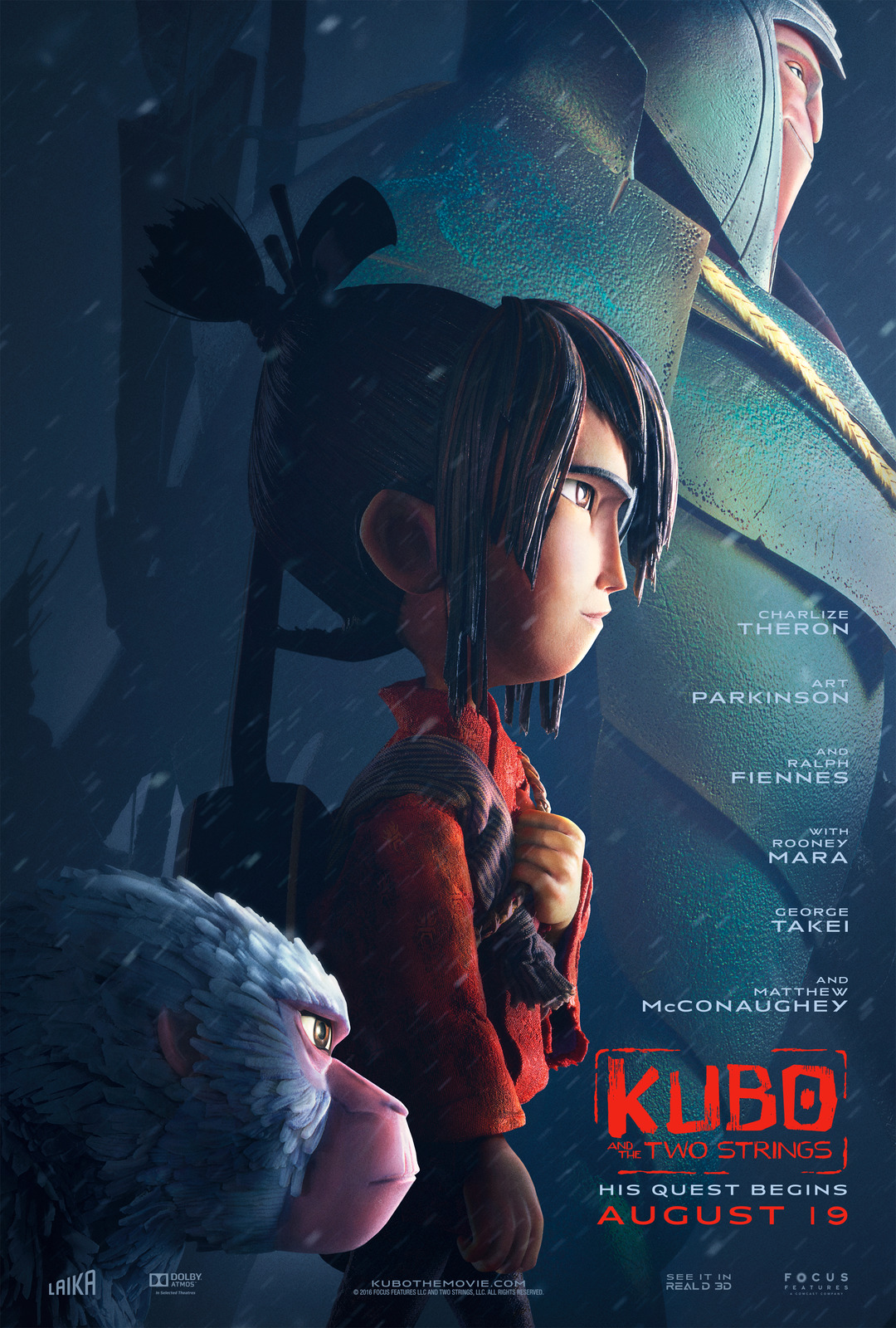
kuboAbsolutely beautiful! A dazzling display of the best that cinema can be! Laika and Focus Features’ Kubo and the Two Strings is truly a testament to the art of motion pictures! Brilliantly animated in an eye-catching stylistic way, this film provides audiences with a simple and intimate journey through a dynamically epic world of adventure, laughter, and tears. Directed by Travis Knight, from the opening to the final fade to black, Kubo is arguably the best animated feature length film to hit theaters in a long time. It contains the incredible storytelling that few films, live-action or animated, strive for but often fail to accomplish. Rarely, do audiences witness a perfect film, but this one comes very close to being perfectly written, directed, acted, shot, edited, and produced. With an A-list of vocal talent behind the characters in this immaculately animated world, Kubo will surely impress all those who watch this fantastical story. In some ways, I could argue that this film displays signs of being self-aware. Self-aware in that this simple but effective visual story is all about the very concept of storytelling. Cecil B. DeMille said, “the greatest art is the art of storytelling;” and this film proves that, in a world of high concept blockbusters that are produced to simply generate revenue at the sacrifice of storytelling, there are films with beautiful imagery, writing, and even a great message that hold true to the very idea what launched more than 100 years of cinema.

Following a daring escape from an unknown enemy across a treacherous ocean of tsunami sized waves, a young women survives a nearly fatal crash and washes upon the shore of a beach in the shadow of an imposing mountain with her infant. Many years later, Kubo (Art Parkinson) has grown up to be a young man with a passion for storytelling that he learned from his mother. Never having fully recovered from the accident, so many years ago, Kubo has the responsibility to take care of his mother. Harnessing his talent for magical origami, a stringed instrument, and storytelling, Kubo makes a little money each day for him and his mother. Little did Kubo know that his mother’s warning to not stay outside of their home after dark was for good reason. Soon, Kubo will find himself on an epic journey to unlock a secret legacy that he could have only dreamed of. Along his journey, he meets up with a monkey (Charlize Theron) and a man-beetle (Matthew McConaughey) who protect and teach him along the way. Don’t blink, even for one second, because you may very well miss something of grave importance.

The first thing you will observe in this movie is the exquisite and stylistic combination of two different animation methods. Claymation, which most are familiar with, and the lesser used papermation. Although typically used by themselves to tell an animated story, the brilliant combination of both methods to concurrently tell this epic story will leave a lasting impression upon you. There is a beauty in this film unmatched by any other in recent times. In many ways, the visual appeal of this movie reminds me of the early Walt Disney and Pixar animated films. Audiences can easily witness the absolute passion in every movement, detail, and landscape. I was completely sucked into Kobo’s fantastic world of Japanese influence. In addition to outstanding technical achievements in animation, lighting, and cinematography, Kubo is a film that is equally outstanding in its ability to tell a simple but inspirational story. It is the epitome of an ideal relationship between artists and engineers. This film successfully combines an artisan handcrafted charm with the precision of sophisticated visual storytelling technologies in a dazzling display of cinematic art that will surely be cherished for a lifetime.

Simple. The plot is so simple but yet very much profound. While so many studios are cranking out franchises, adaptations, complex plots, and young adult dramas, the Laika production company chose a different route. It chose a route that proves that the mastery of visual storytelling that showcases the art of cinema is still alive. In a world of the business of moviemaking, Kubo returns us to the art of filmmaking. Not confined to art house theaters in Greenwich Village or West Hollywood, this film is evidence that truly artistic masterpieces are still desired by the American audience. “The art of making art, is putting it together” (Sunday in the Park with George). Knowing that just the leaf ship sequence at the turning point between the first and second acts took 19 months to create, design, and produce, it is clearly apparent that a tremendous amount of time, love, and energy went into every frame of this stunning movie. As someone who has a passion for the very concept of storytelling, this film brought tears to my eyes because of the sheer beauty of the film and the experience of watching it on the big screen. Although it is an endearing film filled with love and adventure, it is also quite scary during some of the intense conflict between Kubo and those who wish to do him harm. From Kobo’s magical origami birds and samurai warrior to the playful banter between Monkey and Beetle, I was awestruck at the brilliance of the film in both writing and visuals.

I highly recommend this film for those who have not seen it yet. I only wish I had made it to the movie before last night. After hearing what others have said and written about this movie, I have come to the same conclusion that many have voiced: this film is exceptional by any known measurable means of evaluating a film. If any animated film this year is destined for an Oscar nomination or win, this one is it.

Ryan teaches screenwriting at the University of Tampa. If you like this article, check out the others and FOLLOW this blog! Interested in Ryan making a guest appearance on your podcast or contributing to your website? Send him a DM on Twitter or email him at RLTerry1@gmail.com! You can catch Ryan most weeks at Studio Movie Grill Tampa, so if you’re in the area, feel free to catch a movie with him!

Follow him!

Twitter: RLTerry1

Instagram: RL_Terry

“The Secret Life of Pets” movie review

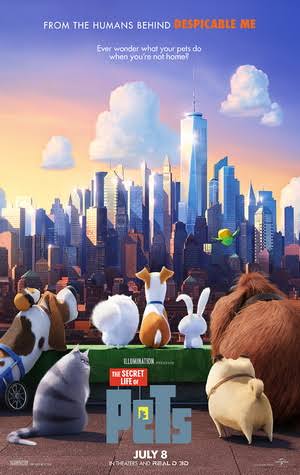
SecretLifePetsWhen well-developed setups lead to brilliantly executed gags, throw in some adorable house pets and endearing street animals and you get Universal Pictures and Illumination Entertainment’s answer to what toys do when the owners aren’t around, The Secret Life of Pets. More precisely, this movie could be described as Toy Story meets Oliver and Company meets Homeward Bound. Backed by an exquisitely talented cast of voice actors and excellent writing, The Secret Life of Pets could be what ushers Illumination Entertainment (an NBCU company) into the ring with Disney-Pixar. Prior to this movie, Illumination/Universal certainly created some fantastic animated films including The LoraxDespicable Me, and others; but this film is the first to really be on par with the Disney-Pixar quality that many of us have come to love and expect. Fast-paced and comedically timed very well, this movie is sure to entertain and warm the hearts of anyone who sits down to watch it. Is it quite as endearing as Toy Story? Not exactly; but it is very close and serves as evidence that we should come to expect this quality and higher of animation from Universal/Illumination. Although the movie is marketed to kids and teenagers, there is certainly enough comedic subtext, easter eggs, and nods to films that adults will greatly appreciate as well. One of my personal favorites is in the Millions short film before the feature. One of the minions is wearing a hat that states “let it grow” while he’s cutting the grass.

When Max (Louis C.K.), a spoiled terrier living in a New York City apartment building with a beautiful view meets his new roommate, his perfect world is rocked. New roommate Duke (Eric Stonestreet), a giant rambunctious dog, mixes as well with Max as oil does with water. They are complete opposites in nearly every way. Max soon gets the idea to set Duke up for failure by sabotaging the house. Unfortunately that idea backfires and just serves to stoke the fire of animosity. After a prank in the park takes a turn for the worst, both Max and Duke are lost in the seedy underbelly of New York City. One step forward and two steps back is exactly the pace of the journey home for both canines. Following a run-in with a street gang led by the ferocious but cute bunny Snowball (Kevin Hart), Max and Duke find themselves in Brooklyn after escaping the hoard of animals bent on their destruction. Along the journey home, Max and Duke are forced to work together and support one another in order to have any hope of returning to their comfy apartment.

The Secret Life of Pets‘ success is in-part due to the successful setup and payoff of gags. This can be a dangerous platform on which to build an animated comedy because there is a high risk of the narrative primarily resting upon the gags instead of the gags enhancing the diegesis. Fortunately for audiences, this film successfully pairs a well-developed and paced narrative that will keep your attention and deliver laughs for the entire runtime. Sometimes comedies, whether animated or live action, can spend too much time in the development of gags rather than on the visual storytelling. For instance, some movies write the gags first and then try to integrate a story that attempts to tie all of them together. What I appreciate about The Secret Life of Pets is the strong story inclusive of sight gags and double entendre humor to satisfy a diverse audience from different backgrounds and ages. In addition to the writing, the vocal talents are also instrumental in the success of this animated feature. Leading the “pack” are of course comedians Louis C.K. and Kevin Hart, but the entire cast is perfectly pairs with his or her animated persona. For the cat lovers out there (and yes, I am one of them), there are deftly come good comedic jabs at dogs. But the dogs also get in some good ones on the cats. Haha.

The setting of the movie is New York City, or an idealistic surreal New York City slightly augmented to fit the pacing, genre, and feeling of the film. I’d like to know what job Katie has to be able to live by herself in an apartment with such a beautiful view. But I suppose it’s just as well that we don’t since the focus is on the dogs. On the view from the apartment, though. Much like the view from Frasier’s upscale urban trend-setting apartment in Seattle faced a view of the Seattle skyline that doesn’t actually exist, unless you are looking at downtown from the surrounding mountains and hills, I am not entirely sure the view from Katie’s Manhattan apartment exists either. The view of the city seen from Frasier’s apartment was selected in order for the Space Needle to have a prominent placement in the skyline. In the same vein, I believe that the unrealistic view from Katie’s apartment was selected in order for the Freedom Tower to have a strong presence. I know, I am analyzing an element that doesn’t really have an affect upon the film; but since the film is actually very well done, I thought it would be fun to look at the setting of the movie.

Although I can almost guarantee you that his film won’t see an Oscar nom in the animated feature category, much less a win, since the Academy believes that only Pixar can create Oscar-worthy animated films, I find The Secret Life of Pets to be a fantastic animated feature filled with action, adventure, comedy, and some touching moments as well. All around, it is enjoyable for the whole family and will cause many owners to wonder what their pet does while he or she is away at work. One of my favorite parts of the movie is the musical sequence at the sausage factory. So much symbolism to discuss. Haha. So, yes. This movie even includes a musical number worthy of–I am sure–many memes to come over the next few months.