“Alien: Covenant” movie review

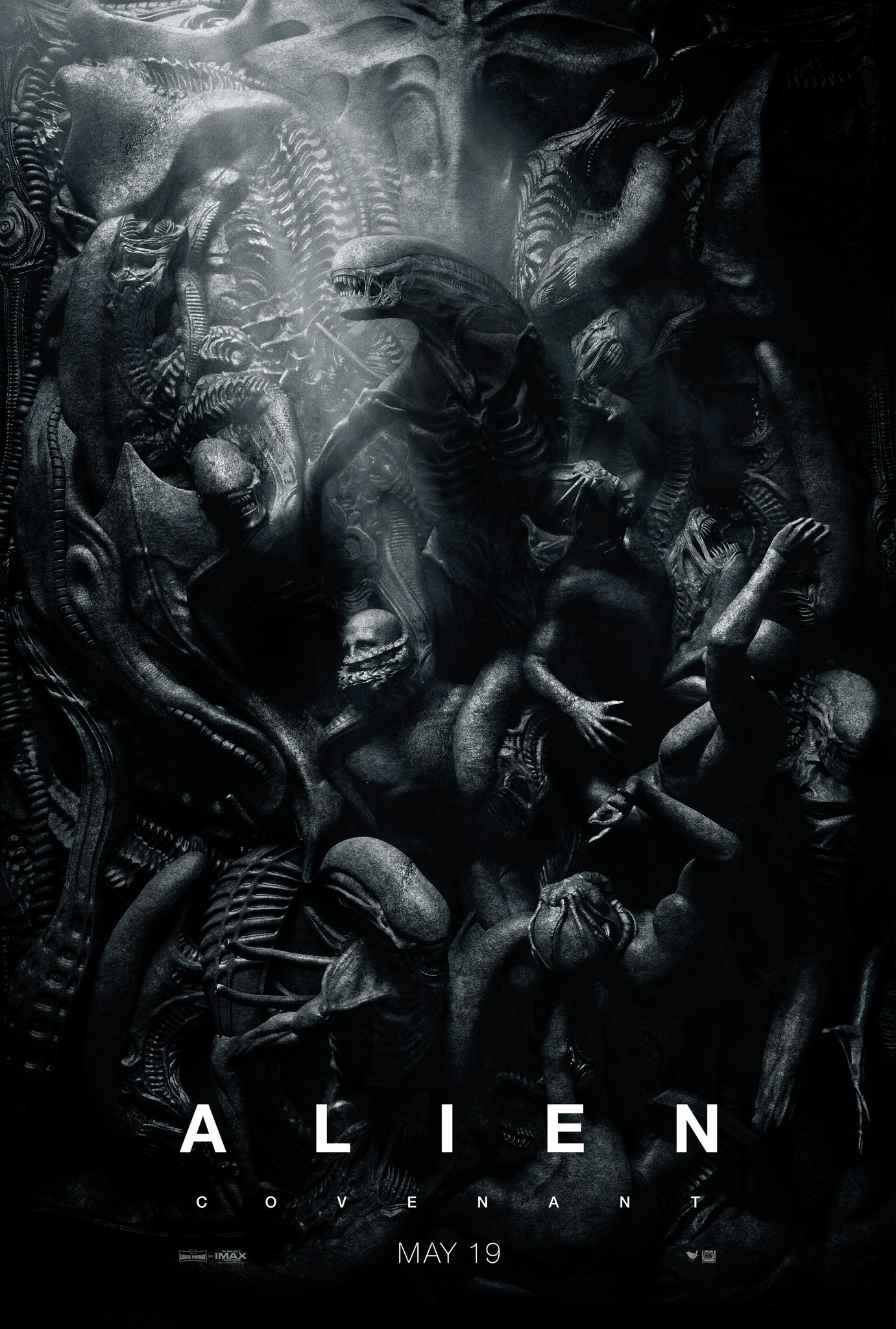
Alien: Covenant returns to its roots in horror. In 1979, Ridley Scott convinced audiences around the world that “in space, no one can hear you scream.” And the newest film in the line of prequels leading up to the terrifying events aboard the Nostromo, attempts to make up for the rejection of 2012’s Prometheus as a true prequel to Alien. Fortunately for fans of the franchise, Alien: Covenant is mostly successful at delivering what audiences loved about the original and missed in the subsequent Cameron and Fincher movies–the trademark horror of the xenomorph and facegrabbers. Starting off like Prometheus and finishing more like the original Alien, the newest film in the nearly 40-year-old franchise will have you screaming, cringing, and completely immersed in blood-curdling terror. That is, until you realize that only some questions from Prometheus are answered, and all new questions about events in this movie are generated and left unanswered. That appears to be Ridley Scott’s Achilles heal: always leaving more questions unanswered than providing closure or exposition, thus prohibiting the movie from being as great as it certainly had the potential to be. With one more film between this current installment and 1979’s Alien, perhaps there will be far fewer unanswered questions and provide the history for which fans are looking.

On a colonization mission, the complement of the Covenant is traveling into deep space towards a new planet that earth’s humans hope to make a new home. After encountering some severe spacial turbulence enroute to the destination, the crew of the Covenant intercept a transmission from an uncharted planet that, according to the sensors, appears to be a complete paradise. After some deliberation, it’s decided to head for this new planet. Most of the time, when something is too good to be true, it usually is. Led by the new captain Oram (Crudup) and first officer Daniels (Waterson). After an attack from an alien species, the crew is rescued by David (Fassbender), a synthetic android-like human, who is the only remaining survivor of the Prometheus expedition from some years earlier. Unbeknonst to the crew and scientists of the Covenant, they are about to come face to face with the most terrifying nightmare imaginable–make that–an unimaginable fight for survival when paradise turns to hell.

One of the first technical elements that fans of Alien will notice is the opening title sequence. It is reminiscent of the manner in which the opening credits and title of the original were revealed in the emptiness of space on screen. I appreciated this homage to the original because it set me up to prepare for an Alien movie and not a second Prometheus. Perhaps that does not seem important to non-fans; but to make a long story short, while Scott was in the conceptual phase of a sequel to Prometheus (prequel to Alien), he was told by the studio that audiences didn’t want another Prometheus–they wanted Ridley Scott’s Alien. And now the rest is history. In order to best understand the flaws of Alien: Covenant it’s necessary to understand the similar flaws of Prometheus. One of the many diegetic and technical problems with Prometheus was the fact that there was little direct connection to Alien and it felt like a whole new franchise and not an extension of the original. This lack of connection is best represented by the number of unanswered questions dwarfing the answered ones. Essentially, audiences only learned about David’s origin and, to a lesser extent, why that particular planet. But enough about Prometheus, we are here to talk Alien: Covenant.

Although vastly improved, Covenant also leaves audiences with many unanswered questions; albeit, it is successful at making up for many of the diegetic flaws of the preceding film. To get into the questions would reveal too much about the film and perhaps hint at some spoilers, so I won’t go into specifics. But enough about the flaws of this otherwise exciting and well-produced film–just know that the writing is weak but hopefully will be better in the next installment. The most impressive elements of the movie are related to the cinematography, editing, and visual effects. From the sweeping landscape shots to intimate closeups of the xenomorph and its victims, Covenant is absolutely visually stunning. There is even a mild romantic encounter between David and a member of the Covenant crew that was shot incredibly well and strategically placed in the narrative. Where the story is weak, Scott makes up for in creating an impressive cinematic experience for long-time and new fans alike. There are even shot sequences that are taken directly out of Alien. Often times, I am extremely critical of computer-generated effects and characters versus practical effects and animatronics–and for good reason–nothing can replace the way real light bounces off real objects and is really captured by the glass lenses on a camera. Furthermore, it’s rare that a character react in genuine fear to an object, villain, or murderous alien that is not really present on set. However, the combination of CGI and practical effects in Covenant is breathtaking and convincingly real. You will almost feel the facegrabber latching onto you and the xenomorph’s wet acid-breath on your skin.

Aside from the unanswered questions still residing in the minds of those who have seen the film, Covenant fails to live up to Alien in another rather conspicuous way. For everything that this film did right and make up for (in respect to Prometheus), it lacked any memorable crew members–more specifically–this film differs from Alien by not developing Dani(els) to be the strong female character that she had the potential to be. Dani could have been Covenant‘s answer to Sigourney Weaver’s Ripley in Alien. One of the diegetic elements that is most talked about and is often the topic of horror film humanities classes is the breaking of gender roles and heteronormative expectations by Ripley in Alien. Perhaps that is why Alien is almost avant-garde in the cinematic experience whereas Covenant is impressive but does not typify the art of cinematic storytelling nor contributes to groundbreaking character-types. Beyond strong female lead, the film simply fails to leave the audience with any one memorable character period. No one will be talking about any one particular character years from now. Both the unanswered questions and the lack of memorable significant characters can be traced by to one root cause: flawed writing.

If you loved the original Alien, then you will mostly enjoy Alien: Covenant. The experience is equally terrifying as it is beautiful. Whether you have seen Prometheus or not will not affect your enjoyment factor in this film. If you have seen Prometheus, then I would suggest watching the Ridley Scott short film The Crossing because it ties Prometheus to Alien: Covenant. Think of it as an extended prologue. This short film helps audiences to make the connection between the two films in hopes that it does answer some otherwise unexplained circumstances and events. After watching this film, I have an urge to rewatch the original in order to begin making those direct connections between this one and Alien. With one more film to release to finalize the events between Prometheus and Alien, I am eager to have my remaining questions answered. Bottom line: Alien: Covenant demonstrates Scott’s newfound commitment to return audiences to the space horror that makes the original so iconic.

“LIFE” movie review

Chilling! In space, no one can hear you scream. Although that tagline is associated with Ridley Scott’s groundbreaking space-horror Alien, director Daniel Espinosa’s LIFE delivers an intensely dark thriller that will have you screaming and cringing from the moment life on Mars is discovered. In the same vein as AlienLIFE is a science-fiction horror that may look like Gravity and might even have the strong orchestral sounds of Interstellar, but provides audiences with an entirely different experience. Borrowing from Alien and Gravity, Sony and Columbia Pictures craft a new space-horror narrative that can sufficiently serve as a standalone film–and be great in that–but also has potential for a sequel or two. Interestingly, there are parallels to Ridley Scott’s Alien beyond the premise; LIFE also features the same number of crew members and other more subtle elements. That being said, LIFE is definitely not a knockoff Alien nor is it trying to be Ridley Scott’s critically claimed film as it does not contain the social commentary on gender, sex, and family. However, imitation is the highest form of flattery, and LIFE pays both homage to the film that likely inspired it but delivers a comprehensive science-fiction horror experience that provides ample twists, turns, and even some emotional connection along the way.

A group comprised of engineers and researchers on board the International Space Station (ISS) are on the brink of one of the most important discoveries in human civilization: life on Mars. Rory Adams (Ryan Reynolds), David Jordan (Jake Gyllenhaal), Miranda North (Rebecca Ferguson), Sho Murkami (Hiroyuki Sandana), Hugh Derry (Ariyon Baker), and Ekaterina Golovkina (Olga Dihovichnaya) represent several different counties, all working in cooperation on this groundbreaking mission. After the satellite, carrying the Martian sample, is retrieved from spiraling out of control towards the ISS is secured, the group of astronauts are faced with the crisis and task of retrieving it. After a daring retrieval, what should be a joyous discovery–something out of a scientists dreams–soon becomes a living nightmarish game of hide and seek. When the specimen from Mars begins to grow rapidly and become more and more intelligent, it stops at nothing to continue to feed the alien’s insatiable appetite and its goal to find a new home.

Initial impressions of LIFE leave you with noticing just how much like Alien it feels. It’s been nearly forty years since the Ridley Scott cinematic masterpiece, but in that time, no other science-fiction/horror film has come this close to delivering a similar (note: not as high on the cinematic totem pole as its predecessor) experience to that which first terrified audiences in 1979. One of the primary differences between Alien and LIFE is just how much closer to home this horrifying experience occurs. Whereas with the former, the alien encounter takes place hundreds of lightyears away, the latter’s narrative takes place just outside of our atmosphere on the ISS. Not that LIFE feels more intimate than Alien–it doesn’t–but the proximity of this story might add a little something more to the edge that you’re already sitting on as the horrific events unfold on the space station. Pacing is similar to Alien in that LIFE has a slow burn during the first act. To balance this slow burn or to keep audiences from thinking that it’s taking forever for the movie to really get started, the film begins with the “big event” right at the very beginning. The “big event” being the apprehension of the satellite carrying the Martian specimen. But for all it’s similarities, this movie provides a different experience that can certainly stand on its own. LIFE may have been inspired by Alien, but it is certainly not a ripoff.

I’ve been quite critical of the CGI-effects of films in more recent years, but the brilliance of the alien life form in LIFE is the degree to which it feels organic. In the beginning, the life form is little more than a single-celled organism; however, as the plot thickens, the organism begins to take a more chilling form and shape. Eventually, the alien develops a frightening grin and a mysterious-like form. One of the scariest parts of Ridley Scott’s Alien was the degree to which the Xenomorph feels so real that, even in your seat, you could feel the acidic slime and your body likely felt the excruciating pains of that iconic moment when the alien shoots out of the stomach. Part of that can be attributed to the use of pneumatics, animatronics, miniatures, and other practical effects standards. Yes, the alien life form in LIFE is computer-generated, but it also has a very real nature to it. Instead of focussing on how to make the alien as impressive as possible, it would appear that the special effects artists (whose work can be seen in the Transformers movies) focussed more on the small details that ordinarily give a CGI character away. Just like with the brilliant visual effects work in Ex Machina, the visual effects of the alien are flawless.

There is an inherent level of unpredictability in LIFE even after the unavoidable similarities to AlienLIFE plays around with the final girl trope and the killings have a strategy or method to their madness. Conspicuously missing from the characters of LIFE in a comparison to Alien is a Ripley-like character. Does the film portray strong female characters? Certainly. But LIFE keeps you guessing because the order of the deaths do not follow any predictable pattern. Do not allow yourself to fall into the trap of being predisposed to the order of the killings to be based up on star billing. Speaking of the characters, effectively managing an ensemble cast is always difficult. So often, some characters in the ensemble get lost or do not receive nearly as much development as the more obvious leaders. Not true with LIFE. True that there is not a large degree of character development all the way around, but each of the characters is treated with equal screen time and emphasis. That is, until death occurs. The excellent handling of this ensemble gives LIFE an extra dynamic that lacks in other ensemble cast films, thus helping this science-fiction horror to stand out from others that are similar in premise or plot. This movie has a “life” of its own.

2017 seems to be shaping up to be a year of excellent movies! We are just about to finish the first quarter of the year, and already there have been some great motion pictures. Furthermore, 2017 seems to be the year of the horror film because so many have made the theatrical distribution circuit. For those who love a good science-fiction thriller, you will not be disappointed with LIFE. Albeit the film may not be able to sustain the magic and horror for the entire runtime, it successfully delivers a terrifying experience for most of the film. If you don’t mind some cringeworthy moments and the dark tone of the film, then this is definitely one to see this weekend.

PS. I saw Power Rangers this week as well, and it was a delightful film! Yeah, it’s a little campy, but that’s to be expected. Definitely the best Power Rangers motion picture. All-in-all, it sufficiently pays homage to the 90s show but provides audiences with a new story. Go-go see it too!

Written by R.L. Terry

Edited by J.M. Wead

“Arrival” movie review

arrivalposterYou’ll want to see it again. Prepare yourself for an extraordinary cinematic journey in this science-fiction thriller complete with commentary on the human condition. From the exhilarating cinematography to the incredible awe-inspiring visual effects, Arrival will have you hooked from the very beginning. Based on the book Story of Your Life and Directed by Denis Villeneuve (SicarioPrisoners), Arrival boasts an outstanding cinematic experience that is as much cerebral as it is visceral. Your very perceptions of time and memory will be questioned and force you to open your mind to endless possibilities. Poignantly, this film takes you on a journey that will show you that we need to change and that we can change. On the verge of avant-garde, Arrival pushes the limits of traditional visual storytelling and creates an innovative method for conveying social commentary within the science-fiction genre. Following the final fade to black, you’ll want to discuss this film with your friends. Reignite your sense of wonder. Arrival is more than a story; it’s an experience!

After twelve egg-like unidentified objects land on earth, the U.S. Government calls upon expert linguist Dr. Louise Banks (Amy Adams) and theoretical physicist Ian Donnelly (Jeremy Renner) to crack the mystery and develop a means of communication with the homogenous alien species. While much of the world is on the brink of an all-out assault on the aliens, Banks is determined to establish a rapport and open communications with the species. Starting with basic words and working up to complex sentences, Banks knows she has to learn the aliens’ language in order to better understand why they have come. When things take a turn for the worst, Banks and Donnelly have precious little time to stop countries from engaging in battle with risk of war. With so little time to unravel the mystery of why the aliens are here and what they want, Banks will find herself on a mind-blowing journey of her own.

You’ve just got to see it. There is so much that I want to talk about, but it would spoil so much of the film. I’ve mentioned before that there are great ‘movies’ that are mediocre ‘films,’ but this is a prime example of an excellent movie AND brilliant film. The brilliance of this film is not in the stunning visuals, although that is certainly part of it; the brilliance lies within the cinematic and experiential storytelling. During the big reveal at the end of the film, your mind will be blown. You’ll find yourself wanting to watch it again to more clearly understand the strategic placement of the pieces of the puzzle. During a time in which the country appears so incredibly fractured, this film will provide audiences with a renewed sense of wonder and appreciation for that which one may not fully understand. Making the tough calls and putting one’s life at risk of what is right is also woven throughout this story. The theme of Arrival is not fully realized until the latter half of the film. More than a surface-level story about that which I cannot mention without giving it away, this film possesses a dynamic range of themes just beckoning for interpretation. As this film bares much similarity to avant-garde cinema in the reimagining of traditional storytelling, it will evoke a powerful emotional response.

Amy Adams and Jeremy Renner deliver outstanding performances in the lead roles. Taking center stage for most of the film, Adams breaks new ground as an actor in this role that is nearly a complete departure from most of her other roles. Both Adams and Renner display excellent chemistry in their respective characters. Although Adams is the central character and responsible for the drive of the plot, Renner is strategically placed to reinforce the affects Adams’ character has upon the plot. Forest Whitaker also plays a strong colonel and was an excellent choice for his role as well. The success of the cast can be attributed to both the outstanding direction from Villeneuve and the incredible screenplay by Eric Heisserer. Bradford Young’s cinematography is so simple but yet so beautiful and profound. It is of no surprise that this film is being touted as one of the best movies of the year and has a nearly unprecedented 100% on Rotten Tomatoes.

Whether you are a linguist yourself or just enjoy an exhilarating cinematic journey, Arrival is definitely the film to catch this weekend. For the Star Trek TNG or Voyager fans out there, you will find that Arrival possesses some of the same great content that sets Star Trek apart from other science-fiction shows due to the human condition being central to the overall plot. If you enjoy movies that prompt you to revisit how you perceive your life, time, or space, then you will not be disappointed. There are so many levels to this film. You’ll likely find yourself wanting to see it again after fully realizing the innovative plot. Hopefully this film receives some Oscar noms in the upcoming award season.

“10 Cloverfield Lane” movie review

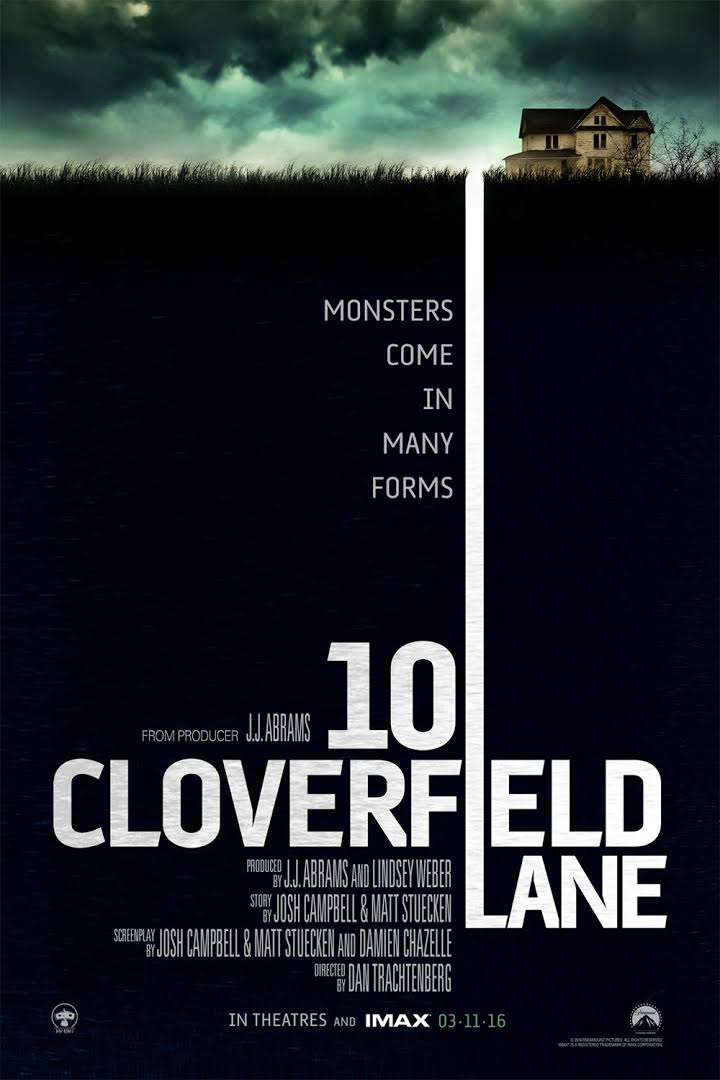
10CloverfieldExtremely suspenseful and enigmatic! Within minutes of the beginning of the movie, you will be sucked into the twisted and claustrophobic subterranean world at 10 Cloverfield Lane. Not directly connected to Cloverfield (2008), this film quite possibly takes us to a moment concurrent to or just before/after the events in New York City caught on the handicam. Director Dan Trachtenberg and Producer J.J. Abrams work together to shock the audience with a movie that will keep you guessing right up until the end. Brilliantly cast and written, 10 Cloverfield Lane is an excellent old-school feeling horror film that you have got to experience in IMAX. Just when you think you have it figured out, you will immediately begin to second guess yourself. Probably the most brilliant part of the film is the fact that three principle characters can keep your interest and attention the entire time without ever a feeling of boredom or annoyance. From the writing to the cinematography and visual effects, this film is sure to keep you on the tip of your toes.

Following a car accident, Michelle (Mary Elizabeth Winstead) wakes up with an IV in her arm and chained to a wall [wait, is this Saw?]. With no cell reception and no recollection of what happened, she begins to fear the worst. Upon meeting her capture Howard (John Goodman), she fears for her life. Not buying his story about saving her and keeping her from the hard during the fallout from the attack, Michelle attempts to escape. Failing to overcome Howard, she slowly begins to accept the worst. To her surprise, she is not the only one in Howard’s fallout shelter. Michelle meets Emmett (John Gallagher Jr). Thinking that Emmett’s injuries are from escaping, she learn that his broken arm is from fighting to get INTO Howard’s shelter. With this new revelation, Michelle begins to settle into life with Howard and Emmett. Still, something just isn’t right. From car noises to sunshine, Michelle has doubts of the alleged apocalypse and must solve the mysteries, puzzles, and covertly plan her escape.

One of the most intriguing elements of the movie is personally feeling the claustrophobia that the principle cast is experiencing in the movie. That is thanks to the excellent cinematography, production design, and lighting. That additional experiential element is not terribly common in films, even horror cinema. But it was very instrumental in generating the feeling of suspense, anticipation, and intrigue during the movie. Much like Super 8 and in the vein of other J.J. Abrams’ Bad Robot productions, the movie begins with a fantastic and blood curdling accident. Just like a rollercoaster, once that car accident hits the screen, the movie will take you up and down thrilling hills on a track that you will struggle to see 10 feet ahead. It’s difficult to talk about how the movie keeps you guessing and second guessing yourself without giving away a lot of what makes the movie thrilling. So, you will just have to take my word for it. Like with any good horror/suspense movie, it is necessary to include strategic comedic relief or lighthearted moments. And writers Drew Goddard, Daniel Casey, Matthew Stuecken, and Josh Campbell weave together a brilliant combination of terror and humor to keep the movie alive and dynamic.

John Goodman is absolutely brilliant in the film. Not that he has anything to prove. He is one of those actors who, with the slightest tweak of the face or shift of the eyes, can have you laughing one second and terrified the next. His ability to turn his character’s emotion on a dime makes him equally weird/quirky and frightening all at the same time throughout the story. Is he a weird old man who, in his own awkward and bizarre way, is keeping Michelle and Emmett from hard or his is a sadistic serial killer who forms inappropriate intimate bonds with his “guests”? That is for you to discover in the movie. Both Mary Elizabeth Winstead and John Gallagher Jr were perfect choices for their respective roles as well. Winstead brings that independent spirit and look to the character of Michelle and Gallagher provides the audience with a country boy charm. The ability for an actor to capture the emotion of extreme terror and sell it as a legitimate, believable emotion is tough. Selling that acute and powerful emotion can make or break a horror film–if the director’s intent is to make the story as real as possible and not a parody or satire of itself.

You may be wondering how this film is even loosely connected to 2008’s Cloverfield. And that connection isn’t really made until the end of the third act of the movie. Unfortunately, I cannot go into too much detail without giving away the climactic and over-the-top ending, but I can say that it does a great job of being connected just enough that it can essentially stand on its own but when you think of how it is or could be connected to Cloverfield, then the movie becomes all the more intriguing. Interestingly, the manner in which this installment in the Cloverfield universe was directed and produced, it definitely could begin a franchise with movies that are never directly connected to the previous film or even Super 8, but are taking place at or near the same time, each with it’s own respective story.

It isn’t often that I watch movies that are best seen in IMAX, but this is definitely one that is best appreciated and experienced in IMAX; however, if you want to take the old-school feel of the movie to a who other level, then you may want to consider watching the movie at a local drive-in. However you choose to watch the film, you are going to definitely enjoy the adventure.

“The Martian” movie review

TheMartianHouston, we have a problem…with Ridley Scott’s directing. Despite the fact that his is an extremely well-known name among directors and both “Alien” and “Gladiator” are critically acclaimed films, Scott just keeps proving over and over again that he can create a very visual movie with a star-studded cast; but, his films over the last decade have just not held up to the hype behind his name or the caliber of director he used to be. The Martian is a prime example of when junior executives at motion picture studios decide that a given plot/sub-genre is popular and keep cranking them out. The problem is, by the time the studios pick up on what the public wants, when the next copycat film gets released, often times the public is tired of that kind of movie. This makes the third epic space movie in three years. Pretty sure both Matt Damon and Jessica Chastain just used their same costumes from Interstellar. One thing’s for sure, if NASA was looking for a film to showcase their brand in an indirect effort to increase funding and rally support for the essentially mission-less organization, this may not have been the best one. In many ways, it just showcased their bureaucracy and inefficiency. Perhaps, space travel should be mostly conducted by private organizations with some infrastructural support on the federal level.

The Martian is about rescuing Mark Watney (Damon) a stranded astronaut-botonist on Mars after a research expedition was abruptly cut short due to an unforeseen storm. The Mars research team, led by Commander Lewis (Chastain), heads back to earth on not knowing that the comrade they thought dead was now completely abandoned on the red planet. Following some minor self-surgery, Watney realizes that he will have to learn to survive on Mars until he can be rescued by growing his own food and repairing the communication technologies in order to make contact with NASA. After NASA discovers the Watney is alive and in reasonably good condition, they must mount an effort to deliver supplies and get him home. Following some failed attempts, NASA eventually teams up with the most unlikely of players in the space game as a collaborative effort to work together for the greater good.

Now I know what you may be saying, ‘this guy doesn’t like most high concept, popular movies.’ That is definitely not the case at all. However, I feel that high concept films often suffer from under-developed plots and poorly executed directing. Just because you have a handful of hits such as AlienBlade Runner, and Gladiator, doesn’t mean that you should be given a pass for all subsequent films. That’s what I and other critics have noticed with his theatrical releases over the last decade. I just don’t think movie-going audiences needed another space movie after Gravity and Interstellar. Certainly not a film about a rescue mission or one with two of the same actors in similar roles from last year. The Martian is definitely beautifully shot, and that is of no surprise, since Scott’s films are often filled with stunning cinematography and production design. If only the actors were just as exemplary in their respective roles. Most of the more prominent roles were just under-developed. Don’t highlight a particular character if there is no real reason for the special attention.

Although you may be thinking that I didn’t like this movie at all, you would be mistaken to rush to that conclusion. In fact, there are definitely a few reasons why I liked certain elements of the film. I thoroughly enjoyed the commitment to real science in this science-fiction story. That was my biggest negative criticism of the plot of Interstellar. In the plot of the aforementioned, we were asked to constantly engage in the suspension of disbelief and blindly accept scientific information that was never explained or even made logical sense within the world of the film. Fortunately, The Martian played out as a believable film that is taking place not that far into our future. Throughout the film, the science is explained in carefully crafted exposition that is seamlessly integrated into the plot. Never does it feel that we are to blindly accept some science or logic just for the sake of moving the plot along. The believability of the plot and production design is what helps this film succeed as a good example of a science-fiction theatrical release.

As we gear up for Oscar season, I hope that this isn’t what we are to expect: movies that have many great elements paired with poor direction overall. If for no other reason, The Martian shows us how we could colonize Mars and travel back and forth. Although his performance wasn’t stellar, Damon pretty much holds the audience’s attention through the use of comedic relief during some of the most stressful times in the movie. For the aeronautical and and jet propulsion communities, this is a good example of research and development in the area of space exploration.