“On Cinema and Theme Parks” (part 7)

My Book

In the current business model of theme parks, the park itself serves as an instant and rapid income generator for the larger parent corporation. “Immediate profits are made in much the same ways as in other mass entertainment industries, such as movies, rock concerts, and mass sports events” (Davis, 1996, p402).  However, the theme park differs from the amusement park because it depends on a narrative around which to build the rides, shows, shops, and restaurants (Herwig, 2006). And this is where the movie studio branches of these large corporations come into play. The movie (usually an epic, horror, or adventure) provides the narrative for the theme park (Herwig, 2006). Instead of the amusement park concept of hiring random performers, “the theme parks, by contrast, specialize in experiential homogeneity (Bristol, 1996). Simply stated, the theme park carefully crafts the types of performers that will be there. Ordinarily, the performers are in live shows directly associated with a work of cinema [e.g. Beauty and the Beast: Live on Stage (Walt Disney World), Beetlejuice Graveyard Revue (Universal Studios), or Grinchmas (Universal Islands of Adventure)]. While, midway performers and carnival workers or the golden age of the circus or roller-coaster parks are a hodgepodge of different ideas, the theme park is centrally produced and conceptualized for an experience that transcends from the superficial down to the core (Block, 2012).

If a theme park is designed well, the park guests can easily describe the theme. For instance, Disneyland’s theme would be the Magic Kingdom of Disney fantasy; the guests at Universal Studios can easily understand the theme is the movies. Not all parks are able to draw on a vast film heritage (e.g. Six Flags, Cedar Point, SeaWorld Parks and Entertainment). However, the parks with a direct connection to the cinema have consistently out performed their respective counterparts (IAAPA, 2014). There are exceptions to this rule of thumb, though. SeaWorld Parks and Entertainment does not have direct access to a vast film heritage (like Universal or Disney), but it perfected how to capitalize on theming from a historical perspective (as did Busch Gardens Williamsburg) and from a zoological perspective (as did SeaWorld Parks and Busch Gardens Tampa Bay) (Davis, 1996). However, in recent years, SeaWorld Parks and Entertainment has tapped into the franchises of DreamWorks Pictures and Sesame Street because of the instant association with cinema and television entertainment (Niles, 2013).

Before tackling this paper’s over-arching concept of analyzing the convergence of theme parks and movies, the question of “why media conglomerates” needs to be explored. It is important to note that in her article entitled The Theme Park: a Global Industry, author Susan G. Davis (1996) tackles this very subject. She suggests that the short answer is the simple fact that well-produced and directed theme parks are extremely profitable in the short-run. But, the fact they are highly profitable quickly does not take away from the fact that they are a massive financial expenditure for years prior to opening the gates to audiences turned guests. Once up and running, these mass entertainment behemoths provide an extraordinary source of virtually endless income for the media conglomerates. This income is used to produce the movies that will eventually wind up in the parks, and are also used for park improvements as technology and public taste or opinion changes (1996).

The acquisition of an existing or development of a new park is a perfect way for media conglomerates to enter into the tourism industry, thus providing a greater array of diversification. By gaining access to the tourism industry, media conglomerates can not only continue to make the movies they want, but can license or operate cruise ships, golf courses, restaurants, hotels, and resorts. In effect, by entering into the tourism industry, the media conglomerate can essentially create an entire entertainment district that acts as the fabled goose that laid the golden egg.

You can always find out what you missed by buying my book on Amazon.

To go back to the beginning of the series, click HERE.
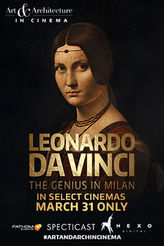
“Leonardo da Vinci: the Genius in Milan” documentary review

DaVinciGrab your passport and prepare to be whisked away to Leonardo’s Milan. Arts & Architecture in Cinema (AAIC) and Fathom events present a remarkable look into the  genius of Milan. Experience the works and legacy of Leonardo da Vinci like never before–that is, unless you have had the privilege of traveling to Leonardo’s Milan, Florence, Rome, and France. Go beyond the Mona Lisa and The Last Supper and witness a rare 4K glimpse into the life and times of the world’s most famous Renaissance man. Combining interviews with Da Vinci scholars along with actors portraying Leonardo’s subjects, pupils, and contemporaries, this film will open your eyes to the Leonardo that you never knew. Although there clearly lacks a story in the traditional or cinematic narrative sense, there IS definitely a story here. Like with art itself, the story is left up to interpretation by the viewer. Perhaps your story interpretation will be one of inspiration or maybe a new clairvoyance into yours or someone else’s life. Either way, there is something for any art or architecture lover.

The first element of the documentary film that I noticed was simply the fact that the entire film is in Italian; albeit apropos, it definitely served as a minor distraction from my ability to concentrate on the stunning visuals in the documentary. Never having traveled abroad before, I was very excited to feel this close to such renown works as The Mona LisaThe Last Supper, and more. The beautiful imagery outshines the highest resolution coffee table art books. That is largely in part due to the giant screen and 4K cameras that were used in this production. Now, I am not accustomed to watching foreign films, so it is entirely possible that what I found to be a distraction is not as distracting for those who watch foreign films. However, it would have been greatly beneficial for the distribution company to have dubbed the the film in English. Granted, it would have lost a degree of authenticity in the true Milan experience, but I would have probably learned a little more than I did. That being said, I still found the documentary film to be full of fascinating information and insight into Leonardo.

One of the predominant themes in the film was the reoccurring message (sometimes direct and other times indirect) that Leonardo did not consider himself a painter; paining is what he did to “pay the bills,” so to speak. Not unlike aspiring visual and performing artists of today, it appears that Leonardo had a day job in order to support his love of dreaming, designing, science, research, and architecture. Yes, even Leonardo was at times sloppy, lazy, and lacked interest in painting. Some of his most famous sketches and paintings are unfinished because he decided to move on. He loved science and engineering more than anything else; and although his flying machine and other inventions have been found to be impossible or impractical, it doesn’t take away from his genius. While we may have referred to Leonardo (as well as many of his contemporaries in the arts and sciences) as a man of the future, the scholars in the film point out that he was a man of the now. However, due to his nearly unparalleled level of curiosity, he indirectly inspired countless artists and scientists to pursue what they love and find interesting.

A man of the present, future, and a man of mystery. Leonardo loved mysteries, enigmas, and puzzles. And no, I am not referring to his code. Just like he was intrigued and mesmerized by natural mysteries or breaking barriers of gravity or even the celestial realm, he left mysteries behind. True, it is due to his reputation as a man of mystery that author Dan Brown developed his Angels and Demons and Da Vinci Code. But it goes way beyond the creative fictitious codes Brown attributed to the Renaissance man. Leonardo wanted to make sure that no one could copy his work. In fact, he kept a very small staff of pupils around him in order to have control over his visions of paintings, frescos, architecture, and engineering. According to the scholars and his contemporaries in the documentary, Leonardo found the inspiration for his enigmas and mirror writing from nature itself. The inclusion of actors portraying historic individuals from Leonardo’s day was an brilliant element in the film. Speaking from a historic point of view but including information from today, the characters were able to help bridge the gap between the world of Leonardo and ours. It added a fantastic dimension to the documentary that greatly enhanced the experiential factor.

Ordinarily, this is where I point out what may prompt you to see the film, but this documentary was a one-night event. That being the case, it is likely that you may have to wait for it to be released on Netflix, RedBox, or on BluRay. But, if you enjoy history, art, and architecture, I encourage you to remain on the lookout for this title to appear in your queue.

“On Cinema and Theme Parks” (part 6)

My Book

Successful movie-themed attractions (stage shows or rides) create an atmosphere that is often built upon a foundation consisting of confrontation and direct simulation rather than long, sustained narratives. Whether watching a show on a stage or experiencing a ride-like attraction, the park guest is subjected to a series of physical and/or emotional shocks throughout the abridged narrative. Physical movement is also a strong element in an effective and successful movie-themed attraction design. This creates the illusion that the audience member is not only watching the action or horror take place, but part of the story as well. Implementing the use of special effects such as lighting effect or water also improve the guest experience by bringing the narrative to life.

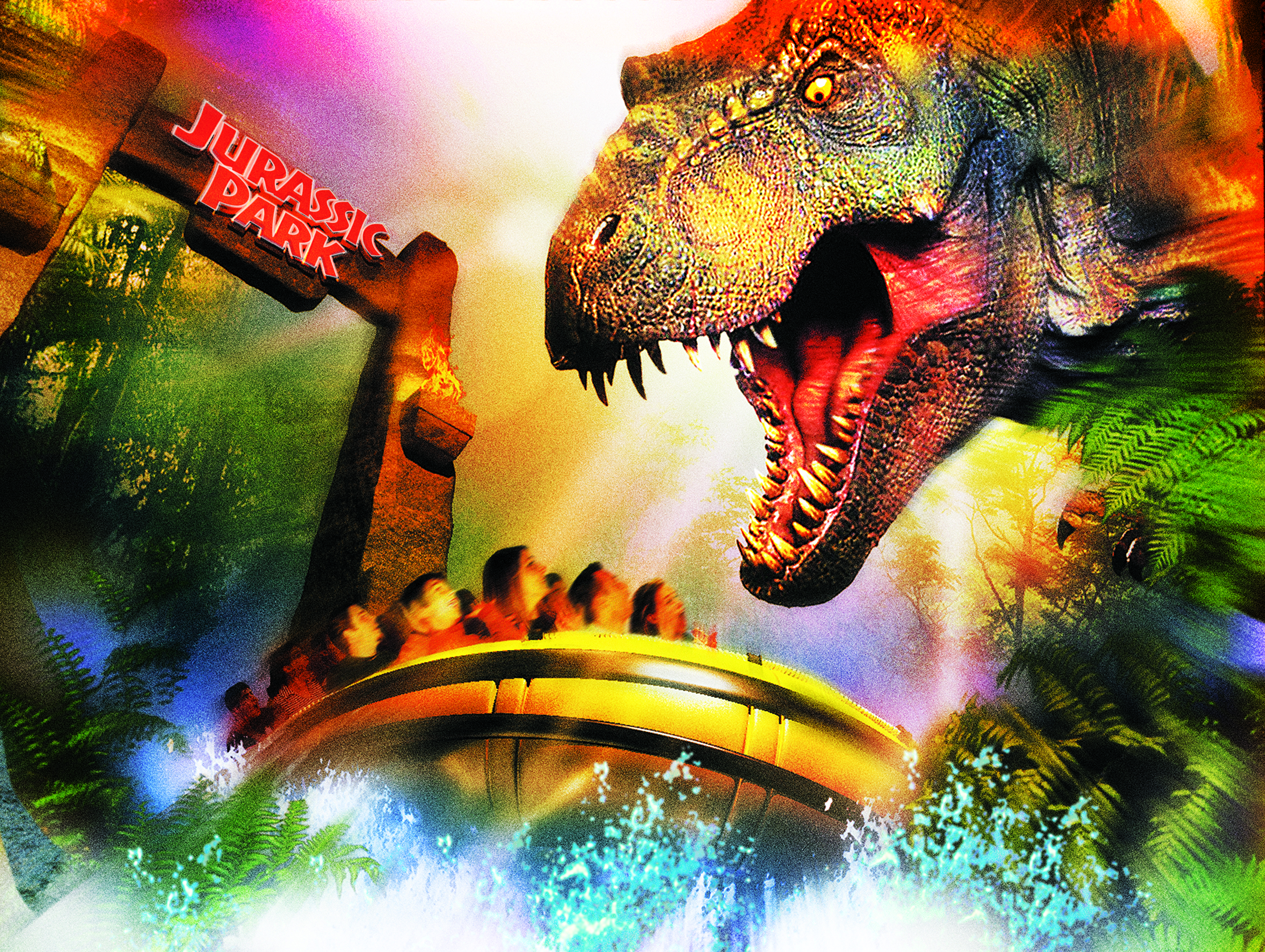
jurassic_park_river_adventureIn the contemporary theme park model, designers seek to create a relationship between the narrative and the audience (or park guest); this is what Geoff King (2000) refers to as “the cinema of attractions.” The park guests want to be transported from a world in which they are spectators to a world in which they are participants in the story. But, themed entertainment has come a long way from its inception into modern society. How the film theme has been fused with theme park attraction design has evolved over the decades to create the convergence and synergy that exists today. This is mostly due to the understanding of spectacle versus narrative. Although these two elements work seamlessly together in a themed attraction, they are not synonymous with one another. An excellent example of a horror/action film that is both spectacle and narrative, and furthermore, is both a film and a ride is Jurassic Park.

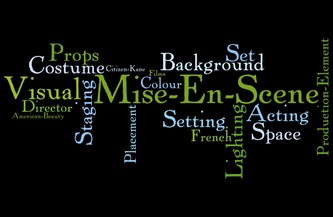
A similar example of the infusion of the aforementioned is Jaws. Just as the use of digital special effects (or visual effects) has evolved in film, the use has also evolved in theme parks. Digital (or visual) effects is a broad term, as it covers a range of possibilities that include computer-based or computer-generated effects (Wood, 2002). The “spectacle” of film and theme park rides possesses the ability to transform the narrative, thus adding an extra dimension to the story progression. However, ultimately within the full-spectrum of the elements that make up a film or ride based on a movie, spectacle is subordinate to narrative. Spectacle is needed to dazzle and simulate, but is essentially lifeless without the narrative. (Wood, 2002). Unlike a narrative, which can have great depth, spectacle “is often understood as a particular kind of extended special dimension…depthless, or as having an excess of surface…more image-full than mise-en-scene (meeze-on-syn) everything that appears before the camera and its arrangement, composition, blocking, and lighting] as it accumulates ever more details” (Wood, 2002, 373).

mise en sceneSpectacle should never be relied upon to carry a narrative, but should be considered a useful tool in enhancing the visceral experience of the narrative. Spectacle possesses the ability to be used to create a dynamic time and space through which the narrative expands and can sometimes be manipulated (Wood, 2002). Digital effects can be used to advance the story or comment on the relationship between characters and their respective environments. In terms of theme park attractions, specifically those based on movies, adding spectacle to the narrative of the ride serves to enhance the overall experience of the park guest. The use of spectacle enables the settings, events, and characters to come to life for the park guests experiencing the live movie-based narrative. Effectively used, the guests should feel as though they get transported from the real world to the world of the movie. Theme parks offer escapes from reality; this is also true of most movies. So, by utilizing the tangible benefits of both narrative and spectacle, the designers are successful in creating the illusion that the guest is either witnessing or part of the story.

University of Central Florida professor Andy Milman (2001) further explores this relationship between cinema and theme parks in his writings in the Journal of Tourism (2001). Exploring the infrastructure of the movies, theme parks, and the convergence of the two is a complex research area that is increasingly becoming more important as the movie studios turn to theme parks for revenue, and the theme parks depend on the movie studios for creative direction and expansive guest experiences. In the article Movie Induced Tourism, authors Roger Riley, Dwayne Baker, and Carlton S. Van Doren (1998) explain that movies provide both the objective and subjective material that capture peoples’ gaze and influence them to travel to the places depicted in movies.  The concept of traveling to locations where movies were made has a direct relationship with the concept of designing theme parks based on movies and showcasing the magic behind the movies (Riley et al, 1998). This concept can be seen in some of the most visited parks in the world. One of the goals of a studio like Warner Bros. is to get the fans of the Harry Potter books and movies to the Wizarding World of Harry Potter at Universal Studios Florida; and, by way of the flip side of the coin, one of the goals of the theme parks (mainly Disney and Universal) is to turn park guests into movie audience patrons (Milman, 2001).

You can always find out what you missed by buying my book on Amazon!

Return to the beginning of this series by clicking PART 1

“Batman v Superman” movie review

BMvSMBetter brush up on your comics before watching this movie. If DC set out to produce a movie that was completely different than the Marvel movies, then they succeeded. Batman v Superman leaves you feeling like you are watching a sequel without an original movie. And no, Man of Steel does not sufficiently set up this “sequel.” Imagine if you will, opening a book and starting to read. You are a few pages in, and you realize that there are situations, characters, settings that are unfamiliar or seem out of step. Oh, duh, you started on chapter two by mistake. Just as you flip back to find chapter one, you discover that the pages are missing. DC’s attempt to setup an entire comic universe (Justice League), in one movie, failed miserably. However, you will be hard pressed to find another superhero action movie that is more cinematic than this one. The sound and visual effects blew my mind–exponentially more impressive than anything that Marvel (Disney or Fox) has produced; but that’s Zack Snyder for you. Unfortunately, the man should have assisted a director in crafting a visual story, not attempted to tell it himself. If DC was fighting a losing battle up a hill, now it is fighting that same battle up a mountainside.

Look! Up in the sky. It’s a bird, it’s a plane, it’s a box-office bomb. Two years following the epic battle between Superman (Henry Cavill) and Zod, Metropolis is still recovering from the mass devastation. Affected by this infamous battle, crime-fighting billionaire Bruce Wayne (Ben Affleck) is fully convinced that Superman is a threat to humanity and must be contained or destroyed. Although he is not as young as he used to be, Affleck once again dawns the Batman uniform and sets out on his personal vendetta against the god-like Kryptonian. Feeling the growing threat of Batman, Superman will stop at nothing to defeat Batman and save the city. In an effort to save their respective cities from destruction, Batman and Superman vow to kill one another. While each superhero has it in for the other, Lex Luther (Jesse Eisenberg) is cooking up something in his research park that can defeat gods and titans. It’s a good thing that Metropolis and Gotham are closer together than Tampa and St. Petersburg are (LOL).

Film is a visual storytelling medium, but storytelling nevertheless. The only other more visual medium, one could argue, is comics. And, you better have studied your Justice League universe comics before buying your ticket to this attempt at a Springtime/Easter blockbuster. But unfortunately, that’s all that this movie has going for it–its unparalleled use of phenomenal visual and sound effects to create a fantastically stimulating experience. One problem: where’s the story??? I thought that this was (to borrow from Star Wars: the Force Awakens) “supposed to make things right“? Ironic how Easter is a holiday and season which represents rebirth; and as hard as DC Comics and Zack Snyder tried to rebirth this struggling universe, it still remains in the ground. All the water and fertilizer in the world could not help this Easter lily, for the farmer forgot to plant the bulb. There is little to no exposition in the entire movie. If you are unfamiliar with the story from the comics, you will most certainly feel dazed and confused. DC really needed this movie to tell an excellent story in order to continue to compete with the Marvel movies that are coming from Disney and Fox. After this travesty, there is almost no competition any longer. One can only hope that the next installment fixes things. But, it’s highly unlikely at this point.

Sometimes poor writing can be covered and masked by flashy graphics and stunning cinematography, other times, it can be assisted by an excellent cast. Well, fail once again. The casting only aided in highlighting the fallacies in the plot structure and nearly non-existent, poorly setup story. Before I negatively criticize the majority of the cast, I need to point out what worked for the film in terms of cast. Although I have been informed that he did not portray the Lex Luther from the comics, I firmly hold to that Jesse Eisenberg played the Lex Luther that this film needed and benefitted from. The quirky, psychopathy, childlike, socially awkward, intellectual Lex Luther works for this universe. He was probably my favorite part of the whole movie. He was quite the juxtaposition to other villains that have been in Marvel and DC movies–a refreshing new take. Amy Adams also plays a great Lois Lane. Since I am not familiar with the comics, I am not going to try to compare and contrast her portrayal to that of past Lois Lanes or the ones from the comics. Still, Adams brought about a fantastic charm to the character and she fit in well with Henry Cavill’s Superman.

Sadly, the rest of the principle cast was terrible. Since when did Alfred (Jeremy Irons) become nearly Bruce’s age??? Maybe he is ten years his senior, but that’s pushing it. Alfred is supposed to be a lovable and endearing old man, and Batman’s Jiminy Cricket, so to speak. Neither does Irons fit the age nor the personality traits of Alfred. I sure missed Michael Caine and Michael Gough’s Alfreds. There was a lot of concern when Affleck was chosen to become the caped crusader; and as it turns out, these concerns were valid. He has demonstrated that he cannot fill the cape in the manner in which Michael Keaton and Christian Bale were so successfully able to do. It’s entirely possible that Holly Hunter’s Senator Finch and Gal Gadot’s Wonder Woman/Diana Prince could have been the much-needed support that the film lacked, but their respective characters were severely under-developed. Also, not so much cast as he is character but where did the Kryptonian deformed creature come from??? I think the film tried to explain, but again, it failed. Who cares, though? He made the climax shocking and exciting. A solid match for Superman.

If you want to have your eyes and ears stimulated beyond what you have likely experienced in superhero action movies in the past, then this is the movie for you. Just don’t expect much beyond the mesmerizing surface. Already having a 33% on Rotten Tomatoes, most likely the grade will continue to drop. That being said, I DO believe that if you are a follower of the comics and know your stuff, then you will most likely thoroughly enjoy this film. I warn you; be prepared to be your group’s personal Wikipedia after the movie.

“On Cinema and Theme Parks” (part 5)

My Book

Over the decades, there has been a strong convergence between cinema and theme parks. Studio executives, filmmakers, and theme park designers are working together in ways that serve to support both the movies and the parks that have rides based on the movies. Historically, the beginning of the convergence of cinema and theme parks became apparent in the late 1970s. Following the decline and eventual fall of the original Hollywood studio system in the 1960s, there are some areas that have changed in the production of films (and other entertainment media). According to Allen Scott of UCLA in the writings of Dr. Ralph Casady (1957), some of the changes and transitions dating back to the 1970s are: (1)The penetration of digital technology into all stages of motion picture production (2)The intensified geographic decentralization of production in the greater LA area (3)The proliferation of new markets based on the cross-promotion of intellectual property rights (4)The increased penetration into themed entertainment and video gaming and (5)The merging of, or buying out of major studios by giant multinational media conglomerates (2001). Along with anti-trust government regulation as a result of the Paramount Decision* and the reluctance of big banks to continue to finance motion pictures, film studios were forced to seek new revenues from other sources.

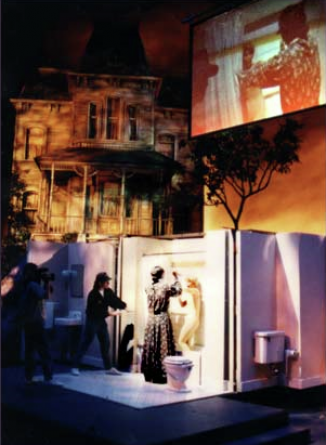
Inside the show building from the former Hitchcock: the Art of Making Movies attraction at Universal Studios Florida.

Inside the show building from the former Hitchcock: the Art of Making Movies attraction at Universal Studios Florida.

More than ever, filmmakers and attraction designers need to know what the cinema patron and park guest both want in order to create a synergistic and dynamic entertainment experience based on a single narrative. The idea is to generate a similar or complementary emotional response during the themed attraction to that experienced by the movie patron during the respective movie. According to researchers Enrique Bigne, Louisa Audreu, and Juergen Gnoth (2004) of Tourism Management, visitor emotions, in a theme park environment, influence satisfaction and behavioral intentions; and, emotions consist of two independent dimensions: pleasure and arousal (2004).  Theme parks are a form of leisure activity because they provide an opportunity for entertainment during an individual’s discretionary time (Milman, 1991). More specifically, movie-based theme parks provide live themed entertainment experiences that immerse the individual into the world of filmmaking or into the narrative itself. As media conglomerates continue to grow and acquire theme park properties (either through the development of new or re-envisioning of old ones) and intellectual property licenses, the popularity of movie-based theme parks will likely continue to grow.

(Check out what you missed by buying my book on Amazon)

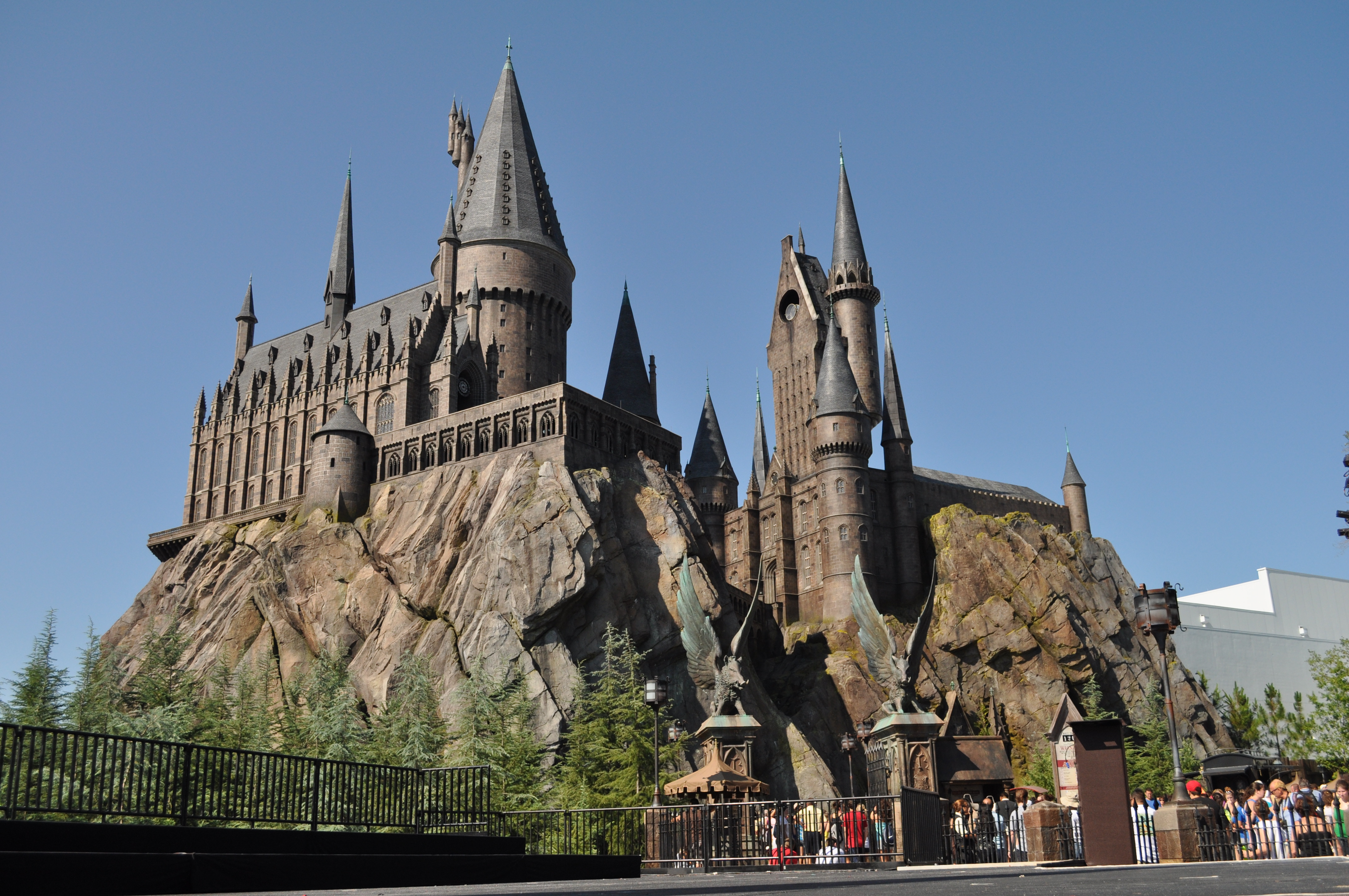
Harry Potter and the Forbidden Journey at Universal's Islands of Adventure

Harry Potter and the Forbidden Journey at Universal’s Islands of Adventure

The creators of theme park attractions from movies have to keep in mind two areas to communicate through the attraction: (1) selecting elements from the setting, characters, and narrative to translate; (2) Translating the aforementioned elements in a manner which can be communicated in a physical, tangible, multisensory way. Theme parks have traditionally used two models for cinema-based attractions. Examples of these models can be found at the Universal Studios Florida park (Failes, 2014). One model is the behind the scenes of movie-making and the other model is the ‘ride the movie’ concept (“ride the movies” is the original slogan for Universal Studios Parks). The former is traditionally more of a stage show that takes the park guests on a journey through the production process of a movie (i.e. Earthquake: Ride it Out or Hitchcock: The Art of Making Movies). The latter is usually a more conventional amusement ride that involves moving vehicles through the world and characters of the movie, often facing some sort of challenge within the narrative (i.e. Harry Potter: The Forbidden Journey and StarTours: The Adventure Continues). In recent years, there has been a move from the “behind the scenes” rides/shows to more participatory rides, placing the park guest into the narrative as a de facto character from the movie.

* U.S. V. PARAMOUNT PICTURES, INC., 334 U.S. 131 (1948) The US Government forced the eight major/minor studio players to end the practice of block booking (meaning, films would now be sold on an individual basis), divest themselves of their respective theatre chains (sell them off), and modify the practice of long-term employee contracts (though, this would continue until the 1960s). This marked the beginning of the end of the Studio System, AKA Hollywood’s decentralization.

For previous articles this series, click here: