TITANE French Extremity Horror Review

Zero to sixty in three seconds, but loses traction toward the end. When I first read David Ehrlich describe Julia Ducournau’s Titane as “the sweetest movie ever made about a serial killer who has sex with a car,” I as instantly intrigued.  And for the first half of the movie, that is exactly what I got.  It was a brutal, thrilling, and raw (pun intended!) ride.  The main character, Alexia, is an erotic dancer at a car venue with a sadistic side – hinted at in her interactions with a fellow dancer in the showers and made even more obvious with her murder of a fanboy later in the evening.  While it may seem like a one-off act of self-defense, the mechanical precision and heartless manner in which she swiftly kills and stows her victim suggest otherwise.  We later learn she is a wanted serial killer terrorizing the south of France. 

Her heartless nature can be reflected in her relationship with cars.  After surviving an automotive accident as a child, a titanium plate is inserted into her head with the scars of the procedure following her onward into adulthood.  She physically has become more machinelike form this operation, and when discharged, she does not take solace with her parents, but rather begins to passionately kiss their car.  As an adult, this “auto” eroticism will manifest into her literally having sex with cars and later, even conceiving.

Alexia continues on with her killing spree, until one night she miscalculates – what she thinks is a quiet secluded night in to kill her colleague turns out to be a small gathering, with several guests in the home.  It becomes a massacre, as she stresses over making sure each new witness meets their demise in order to keep the situation under control.  But it all goes wrong when one girl escapes.  From this moment on, she will no longer be a mysterious killer able to move freely in plain sight, she will be a wanted criminal with her police sketch plastered everywhere.

At this point, around midway, the movie takes an odd pivot and never recovers the thrill of the first half.  What started as a violent adventure with a sensual huntress becomes a drawn-out family melodrama as the film slams on the brakes in tone and pacing.

Alexia is on the run and sees a sign for missing children that have been digitally aged.  She decides she can pose as one of them and goes into a bathroom to undergo a brutal transformation involving a haircut, binding her breasts, and several excruciating attempts – one finally being successful – to break her own nose.  She turns herself in at a police station and is now “Adrien” the long-lost son of an unknown man who instantly “recognises” her and takes her home – even refusing a DNA test to confirm.

Whilst Alexia was an alluring figure –leading men and women to their deaths through seduction, once she makes the transformation to Adrien, she loses that spark.  Even her attempt to murder her foster father comes across as half-hearted.  She, like this film, has lost her gusto.

Adrien hardly mutters a word – a presumptive attempt to prevent outing herself as a female – and takes on a shy, timid nature.  Maybe it is deeper- a commentary on the silencing of women in a “man’s world” and her change in demeanour and “worth” due to the loss of her alluring sexuality.  In any event, Alexia as Adrien must work hard to keep her secret, which becomes especially harder as she realises she is pregnant and beginning to show.  She binds her stomach and breasts at all times unless showering or sleeping.  Still, there are many close-call instances where she must quickly grab a blanket or a towel to prevent her foster father from seeing her naked body as he busts into the room unannounced.  The challenge is greater still when whatever is growing inside her starts causing motor oil to secrete from her mammary glands and groin.  

Her new father is a fire chief and gets his “son” to start working at the station.  Fitting in is difficult, with Adrien coming across as awkward and weak.  One fellow firefighter even starts to catch on to the ruse and poses yet another challenge to keeping the secret intact.  However, it soon becomes clear that the task will not be so difficult, as the father simply does not care if this person is truly his son.  Even when confronted about it, he refuses to discuss it.  And when his estranged ex-wife arrives to see their newly found son, she tells Alexia she knows she is a con (even seeing her naked to remove all doubt), but that she does not care because it is helping her ex-husband to cope with his trauma.  The father’s apathy to the truth and is finally made blatantly clear when the he ultimately does see Adrien’s breasts in the shower and is completely unphased, and then later when he helps her as she goes into labour.  She dies during childbirth, with the final scene showing the father embracing the new-born, who like its mother is a hybrid of human and titanium with a metal spine protruding on its back.

This film certainly has a lot to say – although it is not always clear what that is.  It touches on gender roles and androgyny, misogyny and the objectification of women, and delusion as a coping mechanism – willful ignorance, or even denial, can be bliss.  There are Biblical references, with a perverse protocol son scenario and even mention of Adrien being Jesus-like figure.  The line is blurred between the “human” and the “mechanical.”  And it certainly has its fair share of brutal bodily pain – from an older man shooting up steroids and overdosing to a woman scratching, taping, and even secreting motor oil from her pregnant body.  Whatever she has conceived with the car is causing her immense physical pain, with metal cutting through her flesh.  

Fire plays an important role, even Alexia’s car – yes, the one she has intercourse with – is covered in flame motives.  She later decides to entrap her family in a burning house as she makes her great escape from the law.  Her newfound father is a firefighter and finds himself surrounded by fire in both simulations and real-life scenarios.  The destructive power of fire acts to both destroy and provide opportunity – Alexia can leave her old family behind without a trace and later the fellow firefighter, who suspects Adrien is not what he/she seems, succumbs to a forest fire, his inquisitive distrust dying with him.  The father even sets himself on fire when a match falls on his alcohol drenched shirt from a drink he has coughed up on his chest.

The second half of Titane is almost unrecognizable from the first half – it feels like an entirely different film.  Had the movie unfolded in the reverse – the slow, crawling pace of the Adrien portion leading up to a motorized, satisfying payoff, perhaps as a flashback– then I probably would have left with a different view.  But starting with a bang and then faltering towards the conclusion, the film left me unsatisfied.  I found myself wishing that the movie that it started as was the movie it finished as; namely “the sweetest movie ever made about a serial killer who has sex with a car,” which, in the absence of any competition, I suppose it still technically is.

This review was written by Justin Schubert.

You might also like to read the review on another French horror film Knife+Heart.

007 James Bond: No Time to Die

Epic! Everything you want in a James Bond movie!! Treat yourself to the premium format in your cinema for the final chapter in Daniel Craig’s Bond saga. With gripping action and ample espionage, No Time to Die is a wildly entertaining throwback in the vein of Golden Eye, but even better! Return to the Cold War era espionage in which the Russians are the baddies and operating out of secret bunkers, vodka martinis are shaken not stirred, the one-liners, and the Aston Martin has machine-gun headlights. Oh–yeah there is a song by Billie Eilish, but enough said about that. From sweeping establishing shots of exotic destinations far and wide to intimate character moments, the camera paints a beautiful portrait of Craig’s sendoff as our Bond for the last fifteen years.

Recruited to rescue a kidnapped scientist, globe-trotting spy James Bond finds himself hot on the trail of a mysterious villain, who’s armed with a dangerous new technology.

Is the plot melodramatic? Of course, but aren’t most of these movies??? Even though the plot is motivating the actions of the characters more than the internal needs and desires of the characters, there is a great relationship between the action plot and emotional drives. The film is larger than life, but never campy or goes to ridiculous proportions that take you out of the story. All the foundational elements that make a Bond movie a Bond movie are here, and will hook you from beginning to end. This final chapter in Craig’s journey as 007: James Bond is handled with immense care, and serves up all the touchstones that will tug at your emotions. Don’t wait for this to be on-demand, you want to see this on the biggest screen, in the best format possible in your area for the full cinematic experience. No Time to Die is a perfect blend of the best of the Connery, Brosnan, and Craig years, all wrapped up into one outstanding chapter in the franchise that has been entertaining us for over fifty years.

While I feel that Skyfall still has slightly more rewatchability and is the better film. No Time to Die is a close second to it, and was just as enjoyable as Golden Eye. Many consider Golden Eye to be among the best Bond films because of the classical approach to Bond it takes, yet delivers a story that is familiar and fresh simultaneously. Yes, the Brosnan Bonds go downhill from there (except Tomorrow Never Dies is a solid installment), but Golden Eye reintroduced a new generation to the character of 007: James Bond and everyone’s favorite Agent M, Dame Judi Dench (and she makes a cameo in this film–in the form of a portrait, but still). I appreciate when franchises retain the foundation of what made the original great, but build a new structure. And that is what we have here, hence why it checks all the boxes that you want in a 007 movie. These homages to classic Bond in no way feel campy, but rather feel like an old familiar blanket that you can wrap yourself in to feel comforted.

Of everything the film did incredibly well, I wouldn’t be doing my job if I didn’t mention that the plotting is a little on the weak side. Although you won’t feel lost, there are times that you will find yourself a little confused as to all the relationships between characters and how the sequence of events unfolds. We aren’t talking TENET confusing, but it is a little muddled in places where it feels like there was a transitional scene that got cut out as the theatrical release was being assembled.

Despite the mostly melodramatic plot, there are some great character moments that help to setup how a character may be used in the future or just a little more about their personal life that helps them to be more relatable and believable. While we do not know who our next James Bond will be, we may have been given a hint as to the characters that will be included in future installments. And for anyone that is worried that future 007 movies will not have James Bond, without detracting away from the present story, this film lays the groundwork that 007 is a designation and James Bond is the name of a real person. Furthermore, the studio is searching for the next James Bond next year, so James Bond isn’t going anywhere. That said, we do have a fantastic supporting character that will surely make a great spy for MI6 in the future, regardless of her designation. But I won’t get into details, because it is slightly spoiler-ish.

Do yourself a favor and watch 007: No Time to Die on the biggest screen and most premium format you can find in a cinema near you. It’s a BIG SCREEN adventure that deserves to be watched on the big screen.

This image has an empty alt attribute; its file name is profile_pic.jpg

Ryan teaches American and World Cinema at the University of Tampa. If you like this article, check out the others and FOLLOW this blog! Interested in Ryan making a guest appearance on your podcast or contributing to your website? Send him a DM on Twitter or email him at RLTerry1@gmail.com! If you’re ever in Tampa or Orlando, feel free to catch a movie with him.

Follow him on Twitter: RLTerry1

Dear Evan Hansen Movie Musical Review

Melodrama: the Musical! Dear Evan Hansen, based on the Tony award winning musical by the same name, is a movie for people who have struggled with social anxiety or depression, like musicals in general, or were unpopular in high school. So, pretty much everyone who was a member of the Drama Club. One of the most highly anticipated movies of 2021, this landmark Broadway musical loses much of its pizzaz once adapted for the screen. Every decade, there comes a time when Broadway musical adaptations are all the rage, but some stories simply work better on stage than screen. Not having seen the stage production, I cannot comment on elements that were lost, but it strikes me as a story that simply works better when performed live than captured on celluloid. Dear Evan Hansen is an emotionally manipulative derivative movie musical in the vein of 13 Reasons Why. But I have to say, even the dialogue in the aforementioned titular young adult TV series was more thoughtful. For all the film’s desperate desire to depict a socially-relevant, tough subject matter, it plays off as superficial virtue signaling whose veneer is merely two-dimensional.

Evan Hansen is an anxious, isolated high-school student who’s aching for understanding and belonging amid the chaos and cruelty of the social media age. He soon embarks on a journey of self-discovery when a letter he wrote for a writing exercise falls into the hands of a grieving couple whose son took his own life.

Much of the talent from the Broadway musical is carried over into the film. Most notably, actor Ben Platt, who plays the title character Evan Hansen. Let’s get the obvious out of the way. There’s been some skepticism and hate surrounding the movie ever since the trailer dropped, mainly because Ben Platt (27) is playing a high school student. Is it distracting? Very. But once you get past it, he does deliver a good performance. Obviously, he knows this character well, much better than the movie knows itself. Moreover, Julianne Moore and Amy Adams also deliver great performances as the mothers of Evan and Connor (the deceased boy), respectively. In addition to our lead and supporting actors, the film pulled from film industry talent as well in front of and behind the camera.

Also on board is Stephen Chbosky, director of acclaimed coming of age films The Perks of being a Wallflower and Wonder but he doesn’t bring that same level of thoughtfulness to this movie. Which was perhaps an insurmountable task not only because of the hype from the musical, but also because it’s such a heavy subject to touch upon. There are some interesting visual choices and innovative techniques like the way it portrays the internet but the emotions don’t always hit right. This film rides a fine line between drama and comedy and sometimes overshoots by having some scenes be too sappy and over dramatic and other scenes that make light of sensitive subjects like suicide, which might be off putting to some people.Perhaps he was strong-armed by the Broadway producers to execute scenes a particular way, but we can only speculate as to why he doesn’t seem to care as much about these characters as he did with his other young adult/coming of age films.

The well-known songs from the musical were certainly the highlight for audiences. Fortunately, the director chose to provide sufficient space between songs in order to allow for an emotional reset. Whereas the show-stopping numbers are usually performed with gusto, these songs were much more subtle. And like musical numbers should, each piece sufficiently moved the melodramatic plot forward. The amount of musical numbers isn’t a whole lot and none are these big showy sequences with choreography, but I like that. I’m not sure if the stage performance is like that, but the lowkey nature of those numbers fits well.

The film also threads a fine line between drama and comedy which makes it engaging but might also be off putting for some because it at times makes light of sensitive subjects like suicide.
The characters are not completely surface level but seem to represent the high school stereotypes of the 2010s (and 2020s so far); basically what the typical jocks, nerds, etc. were to generations past. Furthermore, this movie tries to paint a picture of the 2010s high school landscape, similar to what films like Mean Girls did for generations past, but ultimately falls short. The characters are not entirely two dimensional and different from those familiar archetypes of previous decades and certainly more “diverse.” For example, the popular, successful girl is shown to have some depth and the protagonist nerdy not really-friend makes an off hand remark which tells us he is gay they still mostly come off as a new set of stereotypes to populate the Gen Z high school.

All in all this movie still tries to tell a somewhat original story with memorable songs and performances. And it delivers a positive message about connection, which is something that everybody, not just young people, needs. This is especially true in these times. So, if this films sounds like something you’d enjoy then go see it; if it doesn’t, then don’t.

This review was written by Leon Zitz, German contributor to the R.L. Terry ReelView.

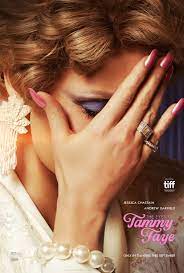
“The Eyes of Tammy Faye” Film Review

The Eyes of Tammy Faye will penetrate to your soul. You may think you know Tammy Faye’s story, but go beyond the tabloids in Michael Showalter’s (The Big Sick) heartfelt, hilarious, honest film that paints a humanizing portrait of the ridiculed and often parodied Tammy Faye Bakker. You will undoubtedly be blown away by Jessica Chastain’s jaw-dropping performance as the “Queen of Eyelashes” in this powerful rise, fall, and redemption story. Tammy’s eyelashes may be fake, but there is nothing fake about this candid portrait of the late television icon. Playing the mastermind of the PTL Network scandal is Andrew Garfield in a showcase performance that will have you despising Jim, but praising the uncanny portrayal. The film highlights Tammy Faye’s genuine love for God and her love for people–everyone! Even in the 1980s, when the LGBT community had little to no voice, especially amongst fundamental evangelicals, she was a loving voice for them. While it would have been so easy for the film to have been devoid of genuine levity, audiences will find there are some hilarious scenes that work as fantastic humanizing elements, especially early on when Jim and Tammy Faye engage their lustful adolescent interests as hormonally charged young adults and newlyweds. Showalter, Chastain, and Garfield deliver a fresh perspective on Jim and Tammy Faye Bakker that depicts human beings, not one-dimensional caricatures of televangelism.

In the 1970s, Tammy Faye Bakker and her husband, Jim, rise from humble beginnings to create the world’s largest religious broadcasting network and theme park. Tammy Faye becomes legendary for her indelible eyelashes, her idiosyncratic singing, and her eagerness to embrace people from all walks of life. However, financial improprieties, scheming rivals and a scandal soon threaten to topple their carefully constructed empire.

I already want to see it again! And it’s definitely becoming an addition to my physical media collection. This narrative film is based on the award-winning documentary by the same name, directed by Fenton Bailey and Randy Barbato, and I suggest watching it as a companion piece. In many respects, the storytelling structure of The Eyes of Tammy Faye parallels the approach Craig Gillespie took in I, Tonya. In addition to the awards-talk around the performances, I would look to see this film in other conversations such as makeup, screenplay, and perhaps directing and picture. Showalter’s film explores the world of Tammy Faye, as seen through her unmistakable eyes; furthermore, he treats the character (the person) of Tammy Faye with respect as a flawed but loving woman rather than the heavy-makeup-wearing satirical and parodied caricature that many remember from the tabloids. Perhaps the thousands of times she said “God loves you” may have came across as insincere; but the truth is, she wanted the world to know that God and Tammy both love them.

Showalter’s candid picture gives Tammy Faye and Jim the full treatment as he takes audiences on a journey through their story, including the scandal that rocked a nation, whilst treating them with dignity and respect as they are–as we all are–flawed humans. This biographic drama seeks to understand (mostly Tammy Faye, but a little of Jim too) the Bakkers, not mock them or their work. Tammy Faye is a breath of fresh air in an environment polluted by stale, lifeless, and downright rotten individuals. From the beginning of the film, you learn that her faith in God and love of Jesus was not going to be defined by her circumstances or what people thought of her. If you told her she couldn’t, she would prove to you that she could. That is a trait that she could continue through her entire life, even after her scandalous fall from grace. You also learn that while she lived an opulent lifestyle, she was never defined by her material possessions. Oh don’t get me wrong, she loved her signature clothing style and trademark makeup and hair, but those things did not define her or her faith. Well, except for her eyes. She said “if you remove my [fake] eyelashes, I wouldn’t be me.”

While her husband was pulling the strings, she was doing everything she could to reach people for Christ; however, it was also clear that she loved the performance, the camera, and the microphone. If she hadn’t gone into televangelism, she very well could have been a Broadway star with her larger than life showmanship and personality. We also learn that Tammy Faye was likely unaware of the dishonest and illegal dealings of her husband, even though she at times suspected he wasn’t being honest. Chalk it up to extreme naivety. Despite no reports of Jim being physically abusive to Tammy Faye or their two kids, he was shown to be psychologically and emotionally abusive to Tammy Faye. Even to the extent that he used Tammy’s minor indiscretion with a Nashville music producer against her, to humiliate her on international television in an effort to raise more money because of her testimony. Tammy’s flirtation with the an elicit affair goes to show that we are all flawed individuals that toy with or fall victim to the same temptations, in whatever form they take. But we understand how and why Tammy Faye was tempted to search for love elsewhere; she was not appreciated as a person by Jim, but only as a tool to get more money out of PTL’s “partners.” Even when the reality of Jim would peak through, she never let that detour her from spreading the love of God to everyone in her signature style.

While we ostensibly watch the events of the rise and fall of the Bakkers through Tammy Faye’s eyes, in a similar fashion we did in I, Tonya, we also get glimpses of the story through Jim’s perspective when it serves to advance the emotional journey of the characters, especially when it comes to his complicated relationship with the then and now unlikable Pat Robertson and Jerry Falwell. For example, I did not know that it was Jim and Tammy Faye that started the 700 Club. But when the innovative Christian talk show became a popular program on the fledgling CBN Network, Pat Robertson placed them on a maternity/paternity sabbatical, but was actually steeling their show in a jealous power-grab. The Bakkers then started what would become the TBN Network, but were ran off from there too. Finally, they began the PTL Club (later massive, worldwide PTL Satellite Network), and the success of that venture would eventually spawn a 24-hour network, neighborhoods, and a theme park that would become the third most visited in the country after Disneyland and Disney World.

While PTL was growing by leaps and bounds, Robertson and Falwell were seething with jealously at the success of Jim and Tammy Faye, a motive that comes into play when they discover the payment of PTL funds for the hush-money regarding Jim’s affair. Little did Tammy Faye know that Jim surrounded himself with a conniving mafia-like group of “Christians” that sought to take down the power couple after they departed from the Robertson-Falwell fundamentalist agenda. This mafia-like mentality is most apparent when Tammy Faye televises the emotional interview with a gay AIDS patient, also a Christian pastor, on her show. She ends the interview with reminding the viewers that Christians are called to love as Jesus loved. It was shortly after that, that Robertson and Falwell actively looked for ways to dethrone the king and queen of televangelism. Of all the examples of Christians in the film, amongst the lead and supporting characters, Tammy Faye is the best example of how a Christian should love and act.

Chastain has instantly shot to the front of the Best Actress in a Leading Role category, and Garfield may find himself in the Best Actor conversations as well. Chastain disappears behind the trademark Tammy Faye makeup and delivers a larger than life performance! And since Tammy Faye, herself, was the definition of camp and larger than life, it’s an incredibly authentic, sincere performance. It’s easy to see how the LBGTQ community was drawn to the person of Tammy Faye then and now, because the LGBTQ community often greatly admires women who remain strong in the face of adversity. But Chastain’s performance of the person of Tammy Faye will undoubtedly inspire and win the admiration of all kinds of people from all walks of life. While Chastain is brilliantly portraying the character of Tammy Faye, we learn in the film (and in the documentary, the interviews, and PLT flips that many will undoubtedly pour through after leaving the film) that Tammy Faye wasn’t a character at all but one of the most genuine, sincere loving people that ever walked the planet. Chastain captures every nuance of Tammy Faye with uncanny precision.

Even the indelible Cherry Jones as Tammy Faye’s love-to-hate mother that was so often Tammy Faye’s harshest critic may be in the supporting actress conversations. She’s a scene steeler herself, much like Allison Janney was as LaVona Harding in I, Tonya. All the lead and supporting performances are perfectly executed, and the hair/makeup on everyone leaves an uncanny resemblance between the actors and the real-life people that are being portrayed. If Tammy Faye was still alive, I feel strongly that she would appreciate the film. Her son Jay appears to like the film from what I’ve read of his comments.

I’d be remiss not to mention, what is perhaps the most telling scene of who Tammy Faye was. Months or perhaps years after the collapse of the PTL Empire and all her fine things were sold (and house actually burned to the ground), and she’s driving a crappy Honda Accord and living in a rundown apartment, she pulls into her parking spot one day. And she gets out, she hears a few of the neighborhood punk teens making fun or her. She walks over to them, and graciously says, “if you’re going to talk about me, since I am your neighbor, you should at least shake my hand and meet me first; hi, I’m Tammy Faye” (or something to this effect).

What we have here is a brilliantly produced biographical drama that works as trifecta comprised of a cautionary tale, a redemption story, and film that provides social commentary on topics such as politics, religion, and patriotism as our country is becoming increasingly polarized on these subjects.

This image has an empty alt attribute; its file name is profile_pic.jpg

Ryan teaches American and World Cinema at the University of Tampa. If you like this article, check out the others and FOLLOW this blog! Interested in Ryan making a guest appearance on your podcast or contributing to your website? Send him a DM on Twitter or email him at RLTerry1@gmail.com! If you’re ever in Tampa or Orlando, feel free to catch a movie with or meet him in the theme parks!

Follow him on Twitter: RLTerry1

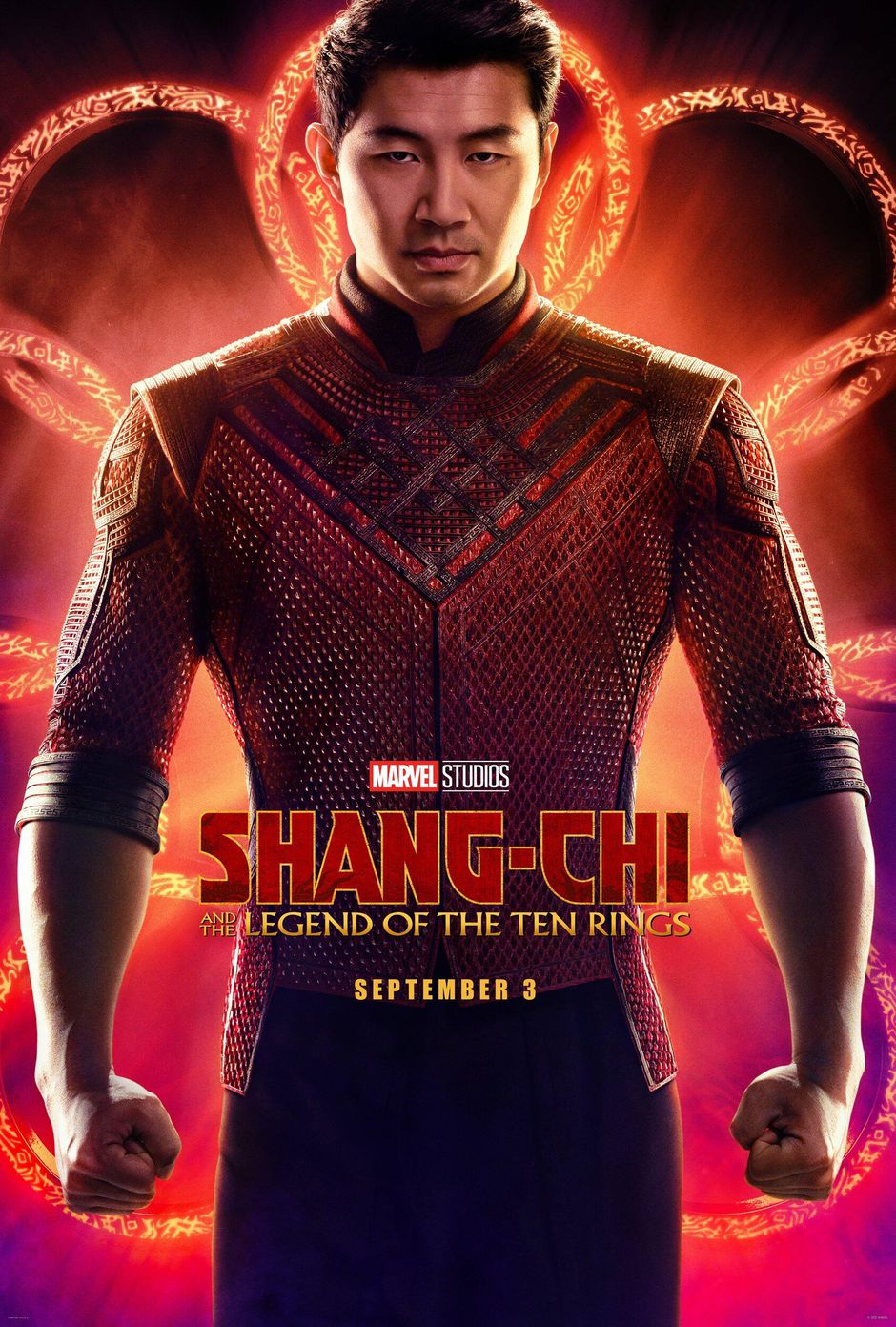
Shang-Chi (2021) Review

An action-packed reimagination of the classic kung-fu movie that is equally enjoyable as a stand-alone movie or MCU world-building installment that is best experienced on the BIG SCREEN. It’s no secret that I can take or leave the MCU, same with the DCEU. I’ll be up front and say that I like a select few superhero movies (Batman Returns, 89, Wonder Woman, all the X-Men movies), Batman Returns being my favorite (and I still argue the best comic book movie ever); however, all that said, I thoroughly enjoyed Shang-Chi! From beginning to end, it’s filled with explosive action and properly seasoned with moments of hilarity. Whether you are watching it because you are a Pavlovian MCU fan boy or girl that simply salivates over anything Marvel (or Disney) or you are seeking to be entertained in a cinematic escape for a couple of hours, then this film fits the bill.

Even though there are some cliche extreme wide landscape shots at the beginning that are working hard to convince you that the best place for the movie is on the BIG SCREEN, that’s not why you want to experience it in that ideal environment. You want to experience it on the BIG SCREEN because of the big action moments, mind-blowing fight choreography, intimate character-development scenes, and laughter and cheers from the audience!

Shang-Chi: and the Legend of the Ten Rings boasts a great cast that includes a key supporting role played by the indelible Michelle Yeoh. Our lead Shaun/Shang-Chi is played by the handsome Simu-Liu and his best friend played by the popular Awkwafina. These actors are supported by a well-written screenplay that not only delivers plenty of adrenaline-pumping sequences, one-liners and zingers (mainly from Awkwafina), but never loses focus on the external goal and internal needs. Simple plots with complex characters make some of the best movies!

While there are times that the mystical elements of the movie do seem a bit over-the-top, even for a superhero movie, the superpowers (be they derived from nature or from a weapon), don’t cross the threshold between suspension of disbelief and utter ridiculousness. The movie lays out the rules of its worlds in the first act, so you are willing to accept whatever is thrown at you. Writing tip: you can get away with nearly anything if you properly set it up. We learn everything we need to follow the story at the beginning of the movie.

If you’re seeking to be entertained by a solid high-concept movie, then you don’t want to miss seeing Shang-Chi and the Legend of the Ten Rings on the BIG SCREEN. Seriously, you can go into it the movie, not being that familiar with the preceding MCU movies, and still be able to thoroughly enjoy your time. If you are an MCU geek and love all the nods, Easter eggs, and world-building details, then you will also be happily satisfied. I hope this movie is an indication of the types of movies we are to witness in the next stage(s) of the MCU.

This image has an empty alt attribute; its file name is profile_pic.jpg

Ryan teaches American and World Cinema at the University of Tampa. If you like this article, check out the others and FOLLOW this blog! Interested in Ryan making a guest appearance on your podcast or contributing to your website? Send him a DM on Twitter or email him at RLTerry1@gmail.com! If you’re ever in Tampa or Orlando, feel free to catch a movie with or meet him in the theme parks!

Follow him on Twitter: RLTerry1