“IT” (2017) film review

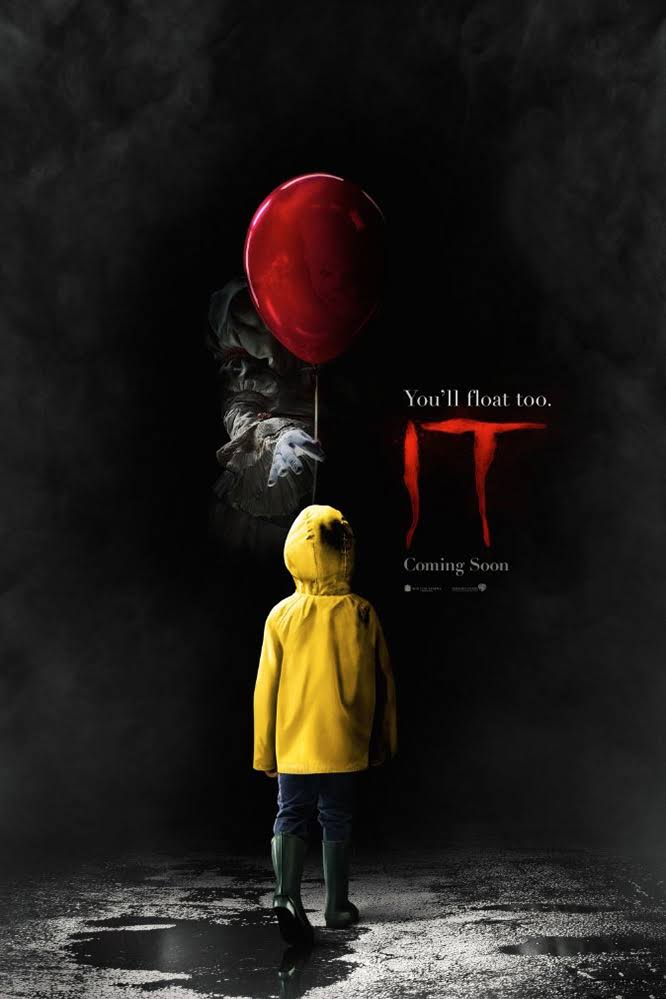
IT’s hauntingly fantastic! From the first to the last scene, the Stephen King adaptation directed by Andres Buschietti is nothing less than a horror masterpiece that does both the original novel and the TV mini series (1990) justice. The brilliance behind the adaptation is found in the excellent cast. So organic, so relatable. A common trope in King novels (and by extension the movie adaptation) is the tried and true narrative structure of the “coming of age” story. Although Stand By Me typifies the “coming of age” subgenre, IT may serve as a horror film for shock value on the outside; but beneath the nightmare-inducing exterior, beats the heart of a heavy drama with a great message about growing up, friendship, teamwork, and facing one’s fears. Few horror films reach iconic status, but this one is surely destined to be counted among films like: The Shining, Friday the 13th, Nightmare on Elm Street, Halloween, Texas Chainsaw Massacre and others. For all the previous King adaptations, Buschietti may have directed the best adaption we have ever seen. Kubrick’s The Shining may still win the award for most artistic and cinematic; however, 2017’s IT takes the words from the pages and successfully translates them to the silver screen along with impressive set design, special/practical effects, and a blood curdling score.

Derry, Maine may seem like a picturesque idealistic version of Americana, but it has a problem. Every couple of decades, children and teenagers vanish without a trace. After Georgie disappears while playing with a paper boat in the rain, his brother Billy (Jaeden Lieberher) becomes determined to solve the mystery and find his brother. Met with opposition from his father, Billy teams up with his long-time friends Eddie (Jack Dylan Grazer), Richie (Finn Wolfhard), Stanley (Wyatt Oleff), and new friends Beverly (Sophia Lillis), Mike (Chosen Jacobs), and Ben (Jeremy Ray Taylor) to unravel the mystery surrounding the town of Derry. In their wildest nightmares, no one could have anticipated the evil that lies beneath the streets, in the dank sewers of the Maine hamlet. When faced with what terrifies each of them the most, the group of young people must band together in order to conquer their fears and destroy Pennywise, the evil dancing clown (Bill Skarsgard).

The local movie theatre’s marquee displays Wes Craven’s A Nightmare on Elm Street 5; and the fact it is that particular film serves a more important purpose than simply to establish the period (which it does brilliantly, by the way). That particular movie is quite symbolic, and in many ways, parallels the events that unfold in Derry, Maine. Both Nightmare and IT take place in small towns; and furthermore, the ensemble cast is comprised of young people who must face fears and band together in order to conquer the evil that threatens their very lives. Although this version of Pennywise is a little less playful than the iconic original Tim Curry Pennywise, the dancing killer clown has a very Freddy Kruger quality about him. Many of the qualities that aid in (in my opinion) making Freddy the most terrifying of all the classic slashers and icons, is his playful attitude followed by moving in for the kill in a very showman way. Both Pennywise and Freddy are born out of and prey upon deep childhood fears and quite literally become the manifestation of the evil in the world. As such, there are many reasonable ways for IT: Chapter 1 to spawn several sequels in the same way that A Nightmare on Elm Street did.

As nightmarish as the majority of the movie is, it does struggle here and there to connect all the scenes together whilst maintaining a solid rhythm. The overall sense of dread is carried through for the most part, but there are times that the film fails to increase the level of anxiety which could have been accomplished by spending more time in Derry’s history and the traumas and secrets that were buried over the decades. I would have liked to have seen the sewers that the kids search through be more symbolic of the very plumbing that transports the deep seeded fears that are ignored or flushed away by the people of Derry. IT certainly accomplishes its goal of being a high quality horror film but it falls short of going as deep as it could have. The overall experience of the film rivals that of other great horror films that have gained iconic status. Greatly contributing to this success is the balance between establishing nostalgic connections between it, the original IT, and the audience members, and the excellent 21st century hair-raising effects. The relatable cast seems to have been taken right out of Netflix’ Stranger Things, and will work wonders for attracting a younger audience who may not be familiar with the novel or original mini series.

There are two films in IT: the horror film and dark drama. Both are well executed but have a few flaws in the nearly perfect recipe. It’s both a nostalgic coming-of-age story and a Wes Craven Freddy-like slasher. Having an ability to be a dark drama masquerading around as a horror film will do very nicely at the box office. Perhaps if this film were a little more like Nightmare and we saw a little less of Pennywise, he would be more terrifying. As it stands, the more we see Pennywise, the less scary he becomes. Still, he is pretty terrifying! Buschietti may not wind up with the same cache as Kubrick, Hitchcock, or Craven, but he has emulated much of what the aforementioned masters of suspense, terror, and horror pioneered many years ago.

One thing’s for sure, this is a great way to kick off the Halloween season of films! After a mostly lackluster August, I am glad that the cinema is bustling with great films to see. IT this week, Mother next week, followed by the remake of Flatliners, September is shaping up to be a terrifyingly brilliant month for films. Should you choose to venture to Derry, Maine this weekend, you won’t be disappointed with the remake of a classic. If you really want to have some fun, bring along a friend who has a phobia of clowns.

“It Comes at Night” movie review

The Doore of Red Death. A24’s highly anticipated horror film It Comes at Night by writer-director Trey Edward Shults looks beautiful and beckons for attention, but fails to live up to the storytelling and payoff of A24’s The Green Room. Another A24 film in the vein of It Comes at Night is 2016’s The Witch, which was ultimately a failed attempt to capture the magic of a horror/mystery film and leave audiences with too many unanswered questions. The only “terrifying ambiguity” (to quote The Huffington Post), in this film, is just how terrifying it is to realize you just dropped money on a film that works better for Netflix, and the ambiguity comes from the plethora of underdeveloped plot elements. Essentially, It Comes at Night reminds me of a bad M. Night Shyamalan film (before he made his outstanding comeback with The Visit and Split) and after the successes of The Sixth Sense and Lady in the Water. Like the aforementioned era of ehh Shyamalan films, the wind up is excellent but the delivery lacks any emotional impact and you’re left with realizing that you never truly cared about any one of the characters. Character development is lacking, and the third act is incredibly weak. However, there is something in particular that I find very interesting; and after reading other reviews, it seems to be something that has escaped most (if not all) the critics at this point. That is the striking similarities between this film and the timeless classic short story The Masque of Red Death by the brilliant Edgar Allan Poe. From the painting on the walls of the house depicting the bubonic plague to the ominous red door, there are quite a few parallels between It Comes at Night and The Masque of Red Death.

Nestled deep in the woods is a secluded boarded up house belonging to a family of three seeking refuge from an unknown threat. Whatever has caused this family to live off the grid and fend for their very survival is tasteless and odorless. Forced to wear gas masks whenever venturing out into the woods and even around their own home, the family is forced to take drastic measures to ensure there ability to avoid coming into direct contact with the disease. With only now way in or out of the house guarded by a red door, the family has stopped at nothing to protect themselves. One night, the family’s house is broken into and they must decide what to do with the man and his family. Having dispensed with courteousness and generosity in order to guard against any and all possible threats, the family must decide whether to listen to the man or kill him right then and there. Their decision will spark a fire that spreads into their deepest fears.

*spoiler alert* But, the analysis is fascinating.

Okay, now I know that the preceding paragraph describes what should be a brilliant horror film, but the problem lies in the greatly flawed poor storytelling, development, and realization. Lack of connection to any one of the characters is also partly responsible for the lackluster experience of watching this horror-thriller with a hint of mystery and dystopia. The only saving grace the film has is the connection to elements of Poe’s Masque of Red Death. For starters, the camera draws the audience’s (and diegetic POV) attention to a painting of a depiction of the bubonic plague (or black death). At first, I was puzzled as to why this painting. Then as I go through the movie, I realize why. Between the constant reference to and runtime spent on talking about and showing the red door, it hit me that this film reimagined Poe’s short story and set it in a dystopian or post-apocalyptic time and place. If you are unfamiliar with The Masque of Red Death, then I encourage you to read it or watch it on YouTube. It is allegory on the inevitability of death no matter how  hard you protect yourself, how much money you have, or how powerful you are. It also contains allusions to the seven deadly sins and the fate of those who party in the wake of mass death among a lower class of people. Although I find the short short to be a stronger narrative than Shults’ variation on this reimagination of the classic tale.

Both the short story and this film contain people hiding out in a fortress. Whereas The Masque of Red Death‘s Prince Prospero is held up ins abbey with his wealthy and noble friends while the red death is killing off the rest of the kingdom, A24’s It Comes at Night features a typical American family living off the land and secured in their rather tutor-looking mountain lodge. Like in Red Death, the family in It Comes receives an uninvited guest one night. Here’s where we see some difference. In Poe’s story, the guest is dressed to attend the masquerade ball and in this film, the guest attempts to break into the home. Although both stories take different approaches to the second act, once thing is in common. And that is the taking in of an outsider. All through the second act, there are hints at something not being right–a constant uneasiness. That apprehension and anxiety regarding the unknown works in the respective stories favors. The emotional impact and psychological payoff differs between the short story and film. Yes, the endings are very similar but feel incredibly different. You’ll just have to read The Masque of Red Death and watch It Comes at Night to know for yourself.

If you’re searching for a thriller to watch this weekend, as it is rain in many parts of the country, then perhaps you should watch Universal Pictures’ The Mummy instead. However, if you are curious about how well It Comes at Night parallels Poe’s short story, this definitely check it out. Not entirely sure why it’s rated R, but in case that’s important to you. To quote Dr. Ian Malcolm, “well, there it is.”

“Alien: Covenant” movie review

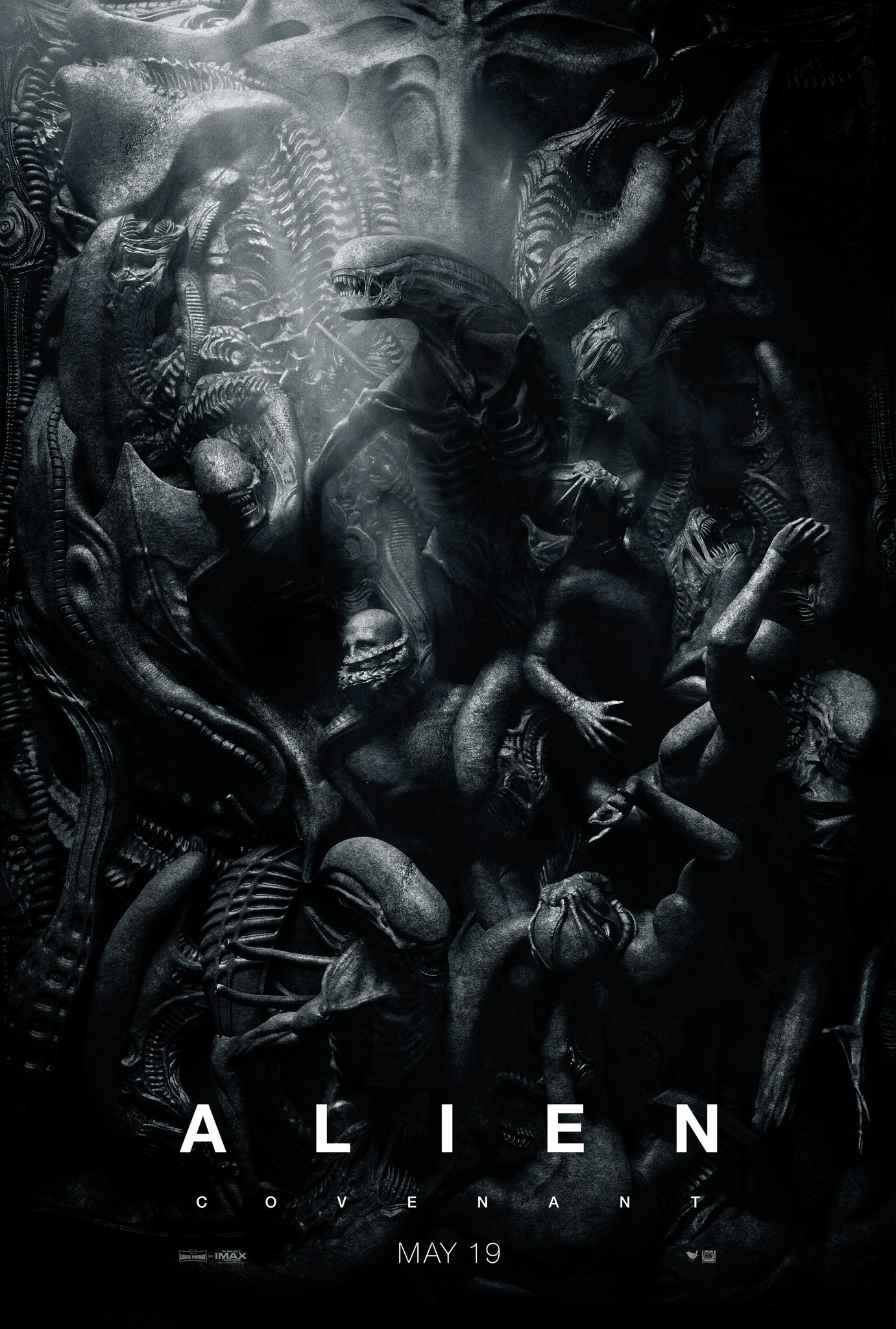
Alien: Covenant returns to its roots in horror. In 1979, Ridley Scott convinced audiences around the world that “in space, no one can hear you scream.” And the newest film in the line of prequels leading up to the terrifying events aboard the Nostromo, attempts to make up for the rejection of 2012’s Prometheus as a true prequel to Alien. Fortunately for fans of the franchise, Alien: Covenant is mostly successful at delivering what audiences loved about the original and missed in the subsequent Cameron and Fincher movies–the trademark horror of the xenomorph and facegrabbers. Starting off like Prometheus and finishing more like the original Alien, the newest film in the nearly 40-year-old franchise will have you screaming, cringing, and completely immersed in blood-curdling terror. That is, until you realize that only some questions from Prometheus are answered, and all new questions about events in this movie are generated and left unanswered. That appears to be Ridley Scott’s Achilles heal: always leaving more questions unanswered than providing closure or exposition, thus prohibiting the movie from being as great as it certainly had the potential to be. With one more film between this current installment and 1979’s Alien, perhaps there will be far fewer unanswered questions and provide the history for which fans are looking.

On a colonization mission, the complement of the Covenant is traveling into deep space towards a new planet that earth’s humans hope to make a new home. After encountering some severe spacial turbulence enroute to the destination, the crew of the Covenant intercept a transmission from an uncharted planet that, according to the sensors, appears to be a complete paradise. After some deliberation, it’s decided to head for this new planet. Most of the time, when something is too good to be true, it usually is. Led by the new captain Oram (Crudup) and first officer Daniels (Waterson). After an attack from an alien species, the crew is rescued by David (Fassbender), a synthetic android-like human, who is the only remaining survivor of the Prometheus expedition from some years earlier. Unbeknonst to the crew and scientists of the Covenant, they are about to come face to face with the most terrifying nightmare imaginable–make that–an unimaginable fight for survival when paradise turns to hell.

One of the first technical elements that fans of Alien will notice is the opening title sequence. It is reminiscent of the manner in which the opening credits and title of the original were revealed in the emptiness of space on screen. I appreciated this homage to the original because it set me up to prepare for an Alien movie and not a second Prometheus. Perhaps that does not seem important to non-fans; but to make a long story short, while Scott was in the conceptual phase of a sequel to Prometheus (prequel to Alien), he was told by the studio that audiences didn’t want another Prometheus–they wanted Ridley Scott’s Alien. And now the rest is history. In order to best understand the flaws of Alien: Covenant it’s necessary to understand the similar flaws of Prometheus. One of the many diegetic and technical problems with Prometheus was the fact that there was little direct connection to Alien and it felt like a whole new franchise and not an extension of the original. This lack of connection is best represented by the number of unanswered questions dwarfing the answered ones. Essentially, audiences only learned about David’s origin and, to a lesser extent, why that particular planet. But enough about Prometheus, we are here to talk Alien: Covenant.

Although vastly improved, Covenant also leaves audiences with many unanswered questions; albeit, it is successful at making up for many of the diegetic flaws of the preceding film. To get into the questions would reveal too much about the film and perhaps hint at some spoilers, so I won’t go into specifics. But enough about the flaws of this otherwise exciting and well-produced film–just know that the writing is weak but hopefully will be better in the next installment. The most impressive elements of the movie are related to the cinematography, editing, and visual effects. From the sweeping landscape shots to intimate closeups of the xenomorph and its victims, Covenant is absolutely visually stunning. There is even a mild romantic encounter between David and a member of the Covenant crew that was shot incredibly well and strategically placed in the narrative. Where the story is weak, Scott makes up for in creating an impressive cinematic experience for long-time and new fans alike. There are even shot sequences that are taken directly out of Alien. Often times, I am extremely critical of computer-generated effects and characters versus practical effects and animatronics–and for good reason–nothing can replace the way real light bounces off real objects and is really captured by the glass lenses on a camera. Furthermore, it’s rare that a character react in genuine fear to an object, villain, or murderous alien that is not really present on set. However, the combination of CGI and practical effects in Covenant is breathtaking and convincingly real. You will almost feel the facegrabber latching onto you and the xenomorph’s wet acid-breath on your skin.

Aside from the unanswered questions still residing in the minds of those who have seen the film, Covenant fails to live up to Alien in another rather conspicuous way. For everything that this film did right and make up for (in respect to Prometheus), it lacked any memorable crew members–more specifically–this film differs from Alien by not developing Dani(els) to be the strong female character that she had the potential to be. Dani could have been Covenant‘s answer to Sigourney Weaver’s Ripley in Alien. One of the diegetic elements that is most talked about and is often the topic of horror film humanities classes is the breaking of gender roles and heteronormative expectations by Ripley in Alien. Perhaps that is why Alien is almost avant-garde in the cinematic experience whereas Covenant is impressive but does not typify the art of cinematic storytelling nor contributes to groundbreaking character-types. Beyond strong female lead, the film simply fails to leave the audience with any one memorable character period. No one will be talking about any one particular character years from now. Both the unanswered questions and the lack of memorable significant characters can be traced by to one root cause: flawed writing.

If you loved the original Alien, then you will mostly enjoy Alien: Covenant. The experience is equally terrifying as it is beautiful. Whether you have seen Prometheus or not will not affect your enjoyment factor in this film. If you have seen Prometheus, then I would suggest watching the Ridley Scott short film The Crossing because it ties Prometheus to Alien: Covenant. Think of it as an extended prologue. This short film helps audiences to make the connection between the two films in hopes that it does answer some otherwise unexplained circumstances and events. After watching this film, I have an urge to rewatch the original in order to begin making those direct connections between this one and Alien. With one more film to release to finalize the events between Prometheus and Alien, I am eager to have my remaining questions answered. Bottom line: Alien: Covenant demonstrates Scott’s newfound commitment to return audiences to the space horror that makes the original so iconic.

“LIFE” movie review

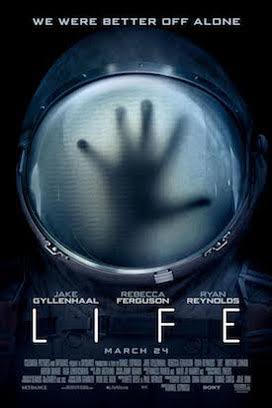
Chilling! In space, no one can hear you scream. Although that tagline is associated with Ridley Scott’s groundbreaking space-horror Alien, director Daniel Espinosa’s LIFE delivers an intensely dark thriller that will have you screaming and cringing from the moment life on Mars is discovered. In the same vein as AlienLIFE is a science-fiction horror that may look like Gravity and might even have the strong orchestral sounds of Interstellar, but provides audiences with an entirely different experience. Borrowing from Alien and Gravity, Sony and Columbia Pictures craft a new space-horror narrative that can sufficiently serve as a standalone film–and be great in that–but also has potential for a sequel or two. Interestingly, there are parallels to Ridley Scott’s Alien beyond the premise; LIFE also features the same number of crew members and other more subtle elements. That being said, LIFE is definitely not a knockoff Alien nor is it trying to be Ridley Scott’s critically claimed film as it does not contain the social commentary on gender, sex, and family. However, imitation is the highest form of flattery, and LIFE pays both homage to the film that likely inspired it but delivers a comprehensive science-fiction horror experience that provides ample twists, turns, and even some emotional connection along the way.

A group comprised of engineers and researchers on board the International Space Station (ISS) are on the brink of one of the most important discoveries in human civilization: life on Mars. Rory Adams (Ryan Reynolds), David Jordan (Jake Gyllenhaal), Miranda North (Rebecca Ferguson), Sho Murkami (Hiroyuki Sandana), Hugh Derry (Ariyon Baker), and Ekaterina Golovkina (Olga Dihovichnaya) represent several different counties, all working in cooperation on this groundbreaking mission. After the satellite, carrying the Martian sample, is retrieved from spiraling out of control towards the ISS is secured, the group of astronauts are faced with the crisis and task of retrieving it. After a daring retrieval, what should be a joyous discovery–something out of a scientists dreams–soon becomes a living nightmarish game of hide and seek. When the specimen from Mars begins to grow rapidly and become more and more intelligent, it stops at nothing to continue to feed the alien’s insatiable appetite and its goal to find a new home.

Initial impressions of LIFE leave you with noticing just how much like Alien it feels. It’s been nearly forty years since the Ridley Scott cinematic masterpiece, but in that time, no other science-fiction/horror film has come this close to delivering a similar (note: not as high on the cinematic totem pole as its predecessor) experience to that which first terrified audiences in 1979. One of the primary differences between Alien and LIFE is just how much closer to home this horrifying experience occurs. Whereas with the former, the alien encounter takes place hundreds of lightyears away, the latter’s narrative takes place just outside of our atmosphere on the ISS. Not that LIFE feels more intimate than Alien–it doesn’t–but the proximity of this story might add a little something more to the edge that you’re already sitting on as the horrific events unfold on the space station. Pacing is similar to Alien in that LIFE has a slow burn during the first act. To balance this slow burn or to keep audiences from thinking that it’s taking forever for the movie to really get started, the film begins with the “big event” right at the very beginning. The “big event” being the apprehension of the satellite carrying the Martian specimen. But for all it’s similarities, this movie provides a different experience that can certainly stand on its own. LIFE may have been inspired by Alien, but it is certainly not a ripoff.

I’ve been quite critical of the CGI-effects of films in more recent years, but the brilliance of the alien life form in LIFE is the degree to which it feels organic. In the beginning, the life form is little more than a single-celled organism; however, as the plot thickens, the organism begins to take a more chilling form and shape. Eventually, the alien develops a frightening grin and a mysterious-like form. One of the scariest parts of Ridley Scott’s Alien was the degree to which the Xenomorph feels so real that, even in your seat, you could feel the acidic slime and your body likely felt the excruciating pains of that iconic moment when the alien shoots out of the stomach. Part of that can be attributed to the use of pneumatics, animatronics, miniatures, and other practical effects standards. Yes, the alien life form in LIFE is computer-generated, but it also has a very real nature to it. Instead of focussing on how to make the alien as impressive as possible, it would appear that the special effects artists (whose work can be seen in the Transformers movies) focussed more on the small details that ordinarily give a CGI character away. Just like with the brilliant visual effects work in Ex Machina, the visual effects of the alien are flawless.

There is an inherent level of unpredictability in LIFE even after the unavoidable similarities to AlienLIFE plays around with the final girl trope and the killings have a strategy or method to their madness. Conspicuously missing from the characters of LIFE in a comparison to Alien is a Ripley-like character. Does the film portray strong female characters? Certainly. But LIFE keeps you guessing because the order of the deaths do not follow any predictable pattern. Do not allow yourself to fall into the trap of being predisposed to the order of the killings to be based up on star billing. Speaking of the characters, effectively managing an ensemble cast is always difficult. So often, some characters in the ensemble get lost or do not receive nearly as much development as the more obvious leaders. Not true with LIFE. True that there is not a large degree of character development all the way around, but each of the characters is treated with equal screen time and emphasis. That is, until death occurs. The excellent handling of this ensemble gives LIFE an extra dynamic that lacks in other ensemble cast films, thus helping this science-fiction horror to stand out from others that are similar in premise or plot. This movie has a “life” of its own.

2017 seems to be shaping up to be a year of excellent movies! We are just about to finish the first quarter of the year, and already there have been some great motion pictures. Furthermore, 2017 seems to be the year of the horror film because so many have made the theatrical distribution circuit. For those who love a good science-fiction thriller, you will not be disappointed with LIFE. Albeit the film may not be able to sustain the magic and horror for the entire runtime, it successfully delivers a terrifying experience for most of the film. If you don’t mind some cringeworthy moments and the dark tone of the film, then this is definitely one to see this weekend.

PS. I saw Power Rangers this week as well, and it was a delightful film! Yeah, it’s a little campy, but that’s to be expected. Definitely the best Power Rangers motion picture. All-in-all, it sufficiently pays homage to the 90s show but provides audiences with a new story. Go-go see it too!

Written by R.L. Terry

Edited by J.M. Wead

“Get Out” movie review

getoutThe epitome of the American horror film. Jordan Peele’s Get Out is an outstanding work of horror cinema, in that the American horror film is the best genre for creatively commentating on the various social, economic, and psychological constructs of life in such a way that can be visually thought-provoking. And the best part about this film is Peele does not pull out any of the usual horror tropes or clichés until the showdown. Before you begin to think that Universal Pictures and Blumhouse are pulling a bait-n-switch–selling you a psychological thriller when the film is really a heavy drama–think again. Get Out is every bit a horror film as its more traditional counterparts. In terms of its contribution to the library of horror films, the movie is flawless. From the writing to directing to acting and even the score, editing, and cinematography, Get Out is a film that you should definitely “get out” to watch. With a current 100% on Rotten Tomatoes, this film is certain to grab prolific attention from movie patrons, film studies, and social studies professors alike. It’s a brilliant film to discuss in future American horror film classes. Never before has a film been used in such a creative and visceral way to comment on how one culture appropriates the best of another for purposes of exploitation or simply because it has something that you want, and then attempt to change, assimilate, or remove altogether because that which you want is seen as wasted on the originator. “A mind is a terrible thing to waste.”

Most romantic relationships between two people enter the anxious “meet the parents” stage, and Chris (Daniel Kaluuya) and Rose’s (Allison Williams) 5-month relationship is no different. Rose takes Chris out of the city to visit her parents’ lavish country home along a peaceful lake. Rose’s parents Missy (Catherine Keener) and Dean (Bradley Whitford) are eager to meet their daughter’s boyfriend and welcome them with open arms, hugs, and tea. When her parents begin to be overly accommodating, Chris begins to think that there is a little more than meets the eye at Rose’s parents’ place. Whereas Chris’ first impression of Rose’s family and friends was just their nervous attempt to work through Chris and Rose’s interracial relationship, now he dreads that there is something unsettling going on. After encountering an old acquaintance of his who has changed to be quite peculiar, Chris’ goal is to get himself and his girlfriend to safety. During his investigation into her family and the uncomfortable actions of the hired help, Chris could never have imagined what he comes to find out. Truth can be scarier than fiction.

It is difficult to explore some of the themes and subtext of this film without giving too much away, but I’m going to try my best to analyze what I can without spoiling anything for those who plan to see the movie. The first element I took note of in the film was the choice of music. Not so much a score (although, there is a score to the film), the music selections in the film serve as an allusion to the overall message and theme in the film. For those who know a little something about music history, you may pick up on the strategic selection and placement of the various songs and musical scores used throughout the film. There are moments in which the music does not seem to match up with the mood or tone of the film–at least, at face value. However, as you delve deeper into the film, you will realize that the music fits in all too well with the plot. I’ll give you this: think about the origins of the music in the film when you watch it. Before music, such as jazz and hiphop, became popular amongst a predominantly white society, it originated amongst the black community.

Another aspect of the film that hints at the big reveal in the turning point just before the third act is the physique, athletic talent, and sexual stereotypes of black males. You’ll notice that clues are dropped here and there, albeit subtly, at the relationship between Rose’s family & friends and members of the black community. The worship of Chris’ body by many of Rose’s family friends makes for an incredibly uncomfortable sequence of encounters at the outdoor picnic. The unsettling weird encounters between Chris and all the people he meets at Rose’s family home each work to grow the level of tension and terror in the film–the fear of something dreadful looming on the horizon. Without relying upon a proliferation of jump scares and visceral horror, Peele successfully increases the level of anxiety to terrifying levels in the film. Reminiscent in the ways that Hitchcock or Kubrick may have directed this film–in terms of relying upon the fear of something not visible to the naked eye–Peele incorporates the feeling of uneasiness every moment he can without over saturating the plot. Perfect amount of all the elements that make up the American horror film can be found in this deeply disturbing narrative.

**Spoiler Alert** (you can skip to the last paragraph to avoid it)

In an effort to truly appreciate this brilliance of this film, it is necessary to disclose information that could potentially spoil the big reveal. Early in the film when Chris asked Rose if she ever dated a black guy before, she said that he was her first. This was in preparations for the trip to meet Rose’s parents. While on the tour of the home, Rose’s father mentioned a story of his dad losing in the Berlin Olympics to now famous Jesse Owens and commenting on how a black man beat a white man. Chris finds the commentary a little peculiar. Furthermore, during the first night there, Rose’s mom hypnotizes Chris to quit smoking–this sets up a plot device used later. Just before the third act, as tensions are extremely high (oh but don’t worry, they get higher), Chris stumbles across a box of photos of what look to be Rose and previous people she dated. He was not the first black guy she dated. Piecing together the fact that one of the picnic guests was an acquaintance of his from back in Brooklyn who no longer looked or acted the same way–much more white now–Chris urges Rose to leave with him.

Skipping ahead. Chris finds himself strapped to a chair and watching a video that is clearly meant to brainwash him. Many years ago, Rose’s family discovered a way to neurologically alter individuals to take what they want and leave that which was undesirable: malicious appropriation of bodies in order to serve as a vessel for individuals who saw themselves as elite. This is social commentary on how back males are often exploited for economic gain in areas such as football, basketball, track, and even music and fashion too. So, Peele was using this horror film to comment on how many in the white community have stolen from or appropriated elements from the black community in order to further their own gain or develop ways of entertaining the masses without proper acknowledgement, formal recognition, or even payment. For example, the jazz music at the beginning of the film. That style of music came out of black culture before it was rebranded high class white music for nightclubs, shows, and weddings. Further evidence of this social commentary can be found in other areas of talent that many want to steel for their own and then reprimand the black community or not being ‘more white.’ I could go on and on. Fascinating stuff!

**End Spoiler Info**

If you enjoy psychological thrillers that do not rely upon the usual tropes found in horror films similar to this one–on the surface level anyway–then “get out” to see Get Out this weekend. Although the runtime is a little longer than typical horror films (2hr 10min), the time will fly right by as you are glued to the seat and mesmerized at the combination of horror and deep sociological theming. Thought provoking, this film will prompt hours of discussions between friends and family who choose to go to the film together. As it is a horror film, do not plan to see it alone. Horror is the one genre that is best experienced in a group setting.

Written by R.L. Terry

Edited by J.M. Wead