
“On Cinema and Theme Parks” (part 7)

My Book

In the current business model of theme parks, the park itself serves as an instant and rapid income generator for the larger parent corporation. “Immediate profits are made in much the same ways as in other mass entertainment industries, such as movies, rock concerts, and mass sports events” (Davis, 1996, p402).  However, the theme park differs from the amusement park because it depends on a narrative around which to build the rides, shows, shops, and restaurants (Herwig, 2006). And this is where the movie studio branches of these large corporations come into play. The movie (usually an epic, horror, or adventure) provides the narrative for the theme park (Herwig, 2006). Instead of the amusement park concept of hiring random performers, “the theme parks, by contrast, specialize in experiential homogeneity (Bristol, 1996). Simply stated, the theme park carefully crafts the types of performers that will be there. Ordinarily, the performers are in live shows directly associated with a work of cinema [e.g. Beauty and the Beast: Live on Stage (Walt Disney World), Beetlejuice Graveyard Revue (Universal Studios), or Grinchmas (Universal Islands of Adventure)]. While, midway performers and carnival workers or the golden age of the circus or roller-coaster parks are a hodgepodge of different ideas, the theme park is centrally produced and conceptualized for an experience that transcends from the superficial down to the core (Block, 2012).

If a theme park is designed well, the park guests can easily describe the theme. For instance, Disneyland’s theme would be the Magic Kingdom of Disney fantasy; the guests at Universal Studios can easily understand the theme is the movies. Not all parks are able to draw on a vast film heritage (e.g. Six Flags, Cedar Point, SeaWorld Parks and Entertainment). However, the parks with a direct connection to the cinema have consistently out performed their respective counterparts (IAAPA, 2014). There are exceptions to this rule of thumb, though. SeaWorld Parks and Entertainment does not have direct access to a vast film heritage (like Universal or Disney), but it perfected how to capitalize on theming from a historical perspective (as did Busch Gardens Williamsburg) and from a zoological perspective (as did SeaWorld Parks and Busch Gardens Tampa Bay) (Davis, 1996). However, in recent years, SeaWorld Parks and Entertainment has tapped into the franchises of DreamWorks Pictures and Sesame Street because of the instant association with cinema and television entertainment (Niles, 2013).

Before tackling this paper’s over-arching concept of analyzing the convergence of theme parks and movies, the question of “why media conglomerates” needs to be explored. It is important to note that in her article entitled The Theme Park: a Global Industry, author Susan G. Davis (1996) tackles this very subject. She suggests that the short answer is the simple fact that well-produced and directed theme parks are extremely profitable in the short-run. But, the fact they are highly profitable quickly does not take away from the fact that they are a massive financial expenditure for years prior to opening the gates to audiences turned guests. Once up and running, these mass entertainment behemoths provide an extraordinary source of virtually endless income for the media conglomerates. This income is used to produce the movies that will eventually wind up in the parks, and are also used for park improvements as technology and public taste or opinion changes (1996).

The acquisition of an existing or development of a new park is a perfect way for media conglomerates to enter into the tourism industry, thus providing a greater array of diversification. By gaining access to the tourism industry, media conglomerates can not only continue to make the movies they want, but can license or operate cruise ships, golf courses, restaurants, hotels, and resorts. In effect, by entering into the tourism industry, the media conglomerate can essentially create an entire entertainment district that acts as the fabled goose that laid the golden egg.

You can always find out what you missed by buying my book on Amazon.

To go back to the beginning of the series, click HERE.
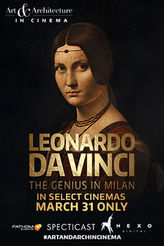
“Leonardo da Vinci: the Genius in Milan” documentary review

DaVinciGrab your passport and prepare to be whisked away to Leonardo’s Milan. Arts & Architecture in Cinema (AAIC) and Fathom events present a remarkable look into the  genius of Milan. Experience the works and legacy of Leonardo da Vinci like never before–that is, unless you have had the privilege of traveling to Leonardo’s Milan, Florence, Rome, and France. Go beyond the Mona Lisa and The Last Supper and witness a rare 4K glimpse into the life and times of the world’s most famous Renaissance man. Combining interviews with Da Vinci scholars along with actors portraying Leonardo’s subjects, pupils, and contemporaries, this film will open your eyes to the Leonardo that you never knew. Although there clearly lacks a story in the traditional or cinematic narrative sense, there IS definitely a story here. Like with art itself, the story is left up to interpretation by the viewer. Perhaps your story interpretation will be one of inspiration or maybe a new clairvoyance into yours or someone else’s life. Either way, there is something for any art or architecture lover.

The first element of the documentary film that I noticed was simply the fact that the entire film is in Italian; albeit apropos, it definitely served as a minor distraction from my ability to concentrate on the stunning visuals in the documentary. Never having traveled abroad before, I was very excited to feel this close to such renown works as The Mona LisaThe Last Supper, and more. The beautiful imagery outshines the highest resolution coffee table art books. That is largely in part due to the giant screen and 4K cameras that were used in this production. Now, I am not accustomed to watching foreign films, so it is entirely possible that what I found to be a distraction is not as distracting for those who watch foreign films. However, it would have been greatly beneficial for the distribution company to have dubbed the the film in English. Granted, it would have lost a degree of authenticity in the true Milan experience, but I would have probably learned a little more than I did. That being said, I still found the documentary film to be full of fascinating information and insight into Leonardo.

One of the predominant themes in the film was the reoccurring message (sometimes direct and other times indirect) that Leonardo did not consider himself a painter; paining is what he did to “pay the bills,” so to speak. Not unlike aspiring visual and performing artists of today, it appears that Leonardo had a day job in order to support his love of dreaming, designing, science, research, and architecture. Yes, even Leonardo was at times sloppy, lazy, and lacked interest in painting. Some of his most famous sketches and paintings are unfinished because he decided to move on. He loved science and engineering more than anything else; and although his flying machine and other inventions have been found to be impossible or impractical, it doesn’t take away from his genius. While we may have referred to Leonardo (as well as many of his contemporaries in the arts and sciences) as a man of the future, the scholars in the film point out that he was a man of the now. However, due to his nearly unparalleled level of curiosity, he indirectly inspired countless artists and scientists to pursue what they love and find interesting.

A man of the present, future, and a man of mystery. Leonardo loved mysteries, enigmas, and puzzles. And no, I am not referring to his code. Just like he was intrigued and mesmerized by natural mysteries or breaking barriers of gravity or even the celestial realm, he left mysteries behind. True, it is due to his reputation as a man of mystery that author Dan Brown developed his Angels and Demons and Da Vinci Code. But it goes way beyond the creative fictitious codes Brown attributed to the Renaissance man. Leonardo wanted to make sure that no one could copy his work. In fact, he kept a very small staff of pupils around him in order to have control over his visions of paintings, frescos, architecture, and engineering. According to the scholars and his contemporaries in the documentary, Leonardo found the inspiration for his enigmas and mirror writing from nature itself. The inclusion of actors portraying historic individuals from Leonardo’s day was an brilliant element in the film. Speaking from a historic point of view but including information from today, the characters were able to help bridge the gap between the world of Leonardo and ours. It added a fantastic dimension to the documentary that greatly enhanced the experiential factor.

Ordinarily, this is where I point out what may prompt you to see the film, but this documentary was a one-night event. That being the case, it is likely that you may have to wait for it to be released on Netflix, RedBox, or on BluRay. But, if you enjoy history, art, and architecture, I encourage you to remain on the lookout for this title to appear in your queue.