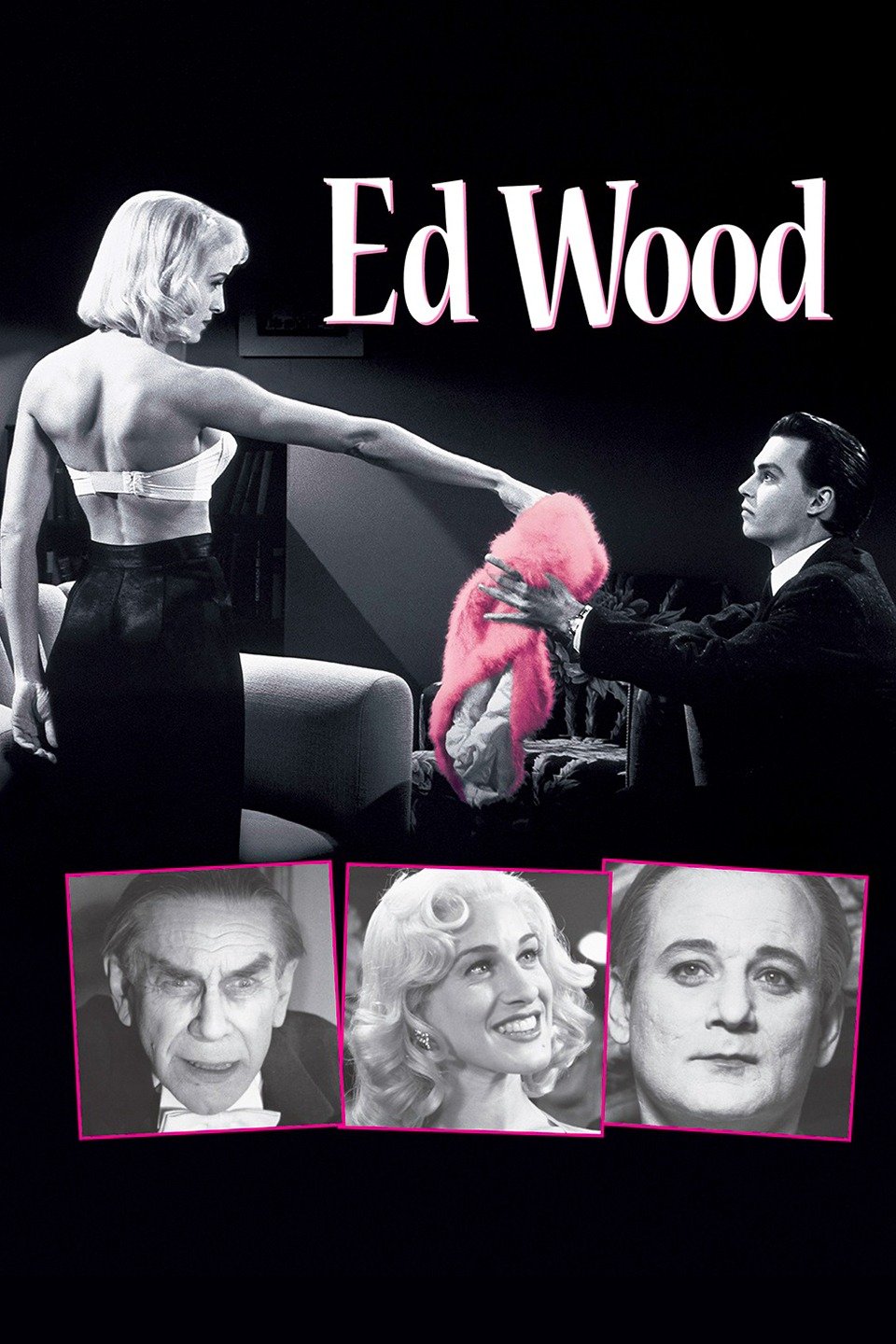
Tim Burton’s “Ed Wood” (1994) Film Review

Catch a falling star and put him in your movie. “What a picture.” As many horror and horror-adjacent movies I’ve seen over the years, I am still finding those that I am familiar with–yet–have never taken the time to watch. And Ed Wood is one of those movies. Even if you know the story, and have even seen clips of the movie in your cinema studies class, believe me, you want to seek out this brilliant motion picture about the dark side of show business. There is perhaps no greater example of posthumous notoriety and success in cinema than the late filmmaker Edward D. Wood, Jr., most famously known for Plan 9 from Outer Space and casting the great Bela Lugosi in his final screen appearance. While his Z-grade movies were laughed at during their day, these movies provide inspiration to artists everywhere that you can pursue your dreams even when your harshest critics and financiers dismiss you. Ed Wood was a creator with a passion for bringing joy through entertainment into people’s lives. Perhaps his films were poorly produced, written, directed, and virtually everything else, but what this films demonstrate is a love of filmmaking and respect for great talent that flew in the face of a “town that chews you up and spits you out.” Ed Wood was in motion pictures for the art and love, not for the business. Tim Burton’s quasi biographical film about the production of Glen or Glenda and Plan 9 from Outer Space, and the relationship between Bela Lugosi and Wood is a beautiful portrait of love and respect. Of all the fantastic performances in this film, Martin Landau’s Bela Lugosi is a command performance that rightly earned him an Oscar for Supporting Actor. If you’ve ever had a dream, this film serves as inspiration and provides darkly comedic anecdotes that shine a light on the lengths independent filmmakers have to go in order to find a way to finance and produce films. This film is a sort of ode to all the misfit creatives out there, and probably the most sincere and personal film that Burton has ever made.

Because of his eccentric habits and bafflingly strange films, director Ed Wood (Johnny Depp) is a Hollywood outcast. Nevertheless, with the help of the formerly famous Bela Lugosi (Landau) and a devoted cast and crew of show-business misfits who believe in Ed’s off-kilter vision, the filmmaker is able to bring his oversize dreams to cinematic life. Despite a lack of critical or commercial success, Ed and his friends manage to create an oddly endearing series of extremely low-budget films. (IMDb)

From a visionary director, i

All the technical elements scream classic Tim Burton! From the moment the movie opens, even if you did not know that this was a Burton film, you would instantly identify the stylistic opening as quintessentially Burton. And not just the choice to make the movie grayscale, but the production design has a gothic poetry to it. Burton was able to successfully capture the look and feel of 1950s Hollywood. He was careful to recreate the world of Ed Wood, all the way down to the character blocking in the movies within the movie. For example, you can compare the recreated Ed Wood movies within this biopic to the real deal, and many are practically carbon copies. I appreciate this because it makes the filmmaking we see in the movie feel all the more real when what’s being shot in the movie is the same as was shot in real life. Perhaps Burton didn’t shut down Hollywood Boulevard like QT did for OUATIH, but he painstakingly transports the audience of the then 90s and even today’s audience to an era of independent film production that produced movies that look like they belong on an old UHF station.Most of the scenes are set in dank, warehouses or the empty streets of a nondescript section of the city. Other scenes are simply in a humble home. The filmmaker Ed Wood never shot a frame that he didn’t like; moreover, this practice was so extreme that he would ignore complete technical blunders and horrendous acting that was so bad that it achieved a kind of grandeur or cult status that can be appreciated decades later because Wood’s love of movies and movie making shines through in every frame of his masterful disasters.

Just as Ed Wood loved every frame of everything he ever made, the visual design of this film has got to be loved by Burton. His signature is on every scene. No mistaking it, there is more to the reasons for recreating Ed Wood’s Hollywood than just making an accurate biopic. Much like Norma Desmond took audiences on a journey into the life of a faded once-great(est) star of the silent era, It’s in these very dark corners and abandoned places where the true love of motion picture making lives, where the only reward for wrapping a picture is the love of the work itself and the cheers of those whom stood by you and helped take the idea from concept to screen. Ed Wood represents geek culture of the 1950s, future icons of horror and science-fiction are featured as unappreciated in their time. Fortunately today, geek culture is alive and well, and even celebrated. Yeah, there are obnoxious stans out there, but most of us movie and horror geeks simply love the medium and enjoy having fun with movies that still capture our imaginations. The director Ed Wood was not unlike many of us; he had a dream, and stopped at nothing to realize it. While I do not care much for Burton’s work after the 80s and 90s, he is a filmmaker that showed audiences through BeetlejuiceBatman Returns, Nightmare Before Christmas, Edward Scissorhands, Mars Attacks, and Ed Wood that he loves the art of motion pictures. When you went to a Burton picture in the 80s and 90s, you knew that you would witness the hand of the artist. In both Ed Wood’s and Tim Burton’s films, there is an effervescent life, a joy in their films that technically and critically “better” pictures only wish they had.

We cannot talk about Ed Wood without spending some on Landau’s Oscar-winning performance as Dracula himself Bela Lugosi! I was blown away by how sincere the performance was. What we saw Renee Zellweger do with Judy Garland in last year’s Judy, Landau did with Lugosi in Ed Wood. If I didn’t know any better, I would have said that I was watching Lugosi in this film. Both vocally and physically, Landau transforms into the famous Hungarian actor. From the moment we first see him laying in the coffin (creative latitude on Burton’s part), Landau captures our imaginations. Landau delivers a performance of a faded film star that Gloria Swanson would be proud of. In many respects, the characters of Bela Lugosi and Norma Desmond are similar. While Norma wasn’t living in near poverty, she was living in a world in which the parade of fans long sense passed her by; likewise, Lugosi fell into such obscurity that even people in the business thought he was dead. Landau embodies the mind and soul of someone that feels completely abandoned by the world and the fans that once loved to see his pictures. And it wasn’t the fame or money that Lugosi missed per se, but bringing joy to millions and simply the feeling of being wanted or needed is what Lugosi missed most. While Landau received negative criticism from the family and friends of Lugosi because his family said that Lugosi never used profanity or slept in coffins, there is no doubt that this is one of the finest performances of Landau’s career and in biopics.

Everything about this motion picture works brilliantly! I’m only disappointed that it took me this long to finally make time to watch it. Even though there is something in this movie for everyone, I feel that it impacts cinephiles and filmmakers the most. Though, there is a high degree of relatability for anyone that has ever had a dream and stops at nothing to continue to pursue it. Amid the recreation of all the tacky filmmaking and notoriously bad acting, there is a warmth and charm that will stick with you long after the credits role.

Ryan teaches screenwriting at the University of Tampa. If you like this article, check out the others and FOLLOW this blog! Interested in Ryan making a guest appearance on your podcast or contributing to your website? Send him a DM on Twitter or email him at RLTerry1@gmail.com! If you’re ever in the Tampa area, feel free to catch a movie with him!

Follow him!

Twitter: RLTerry1

Instagram: RL_Terry
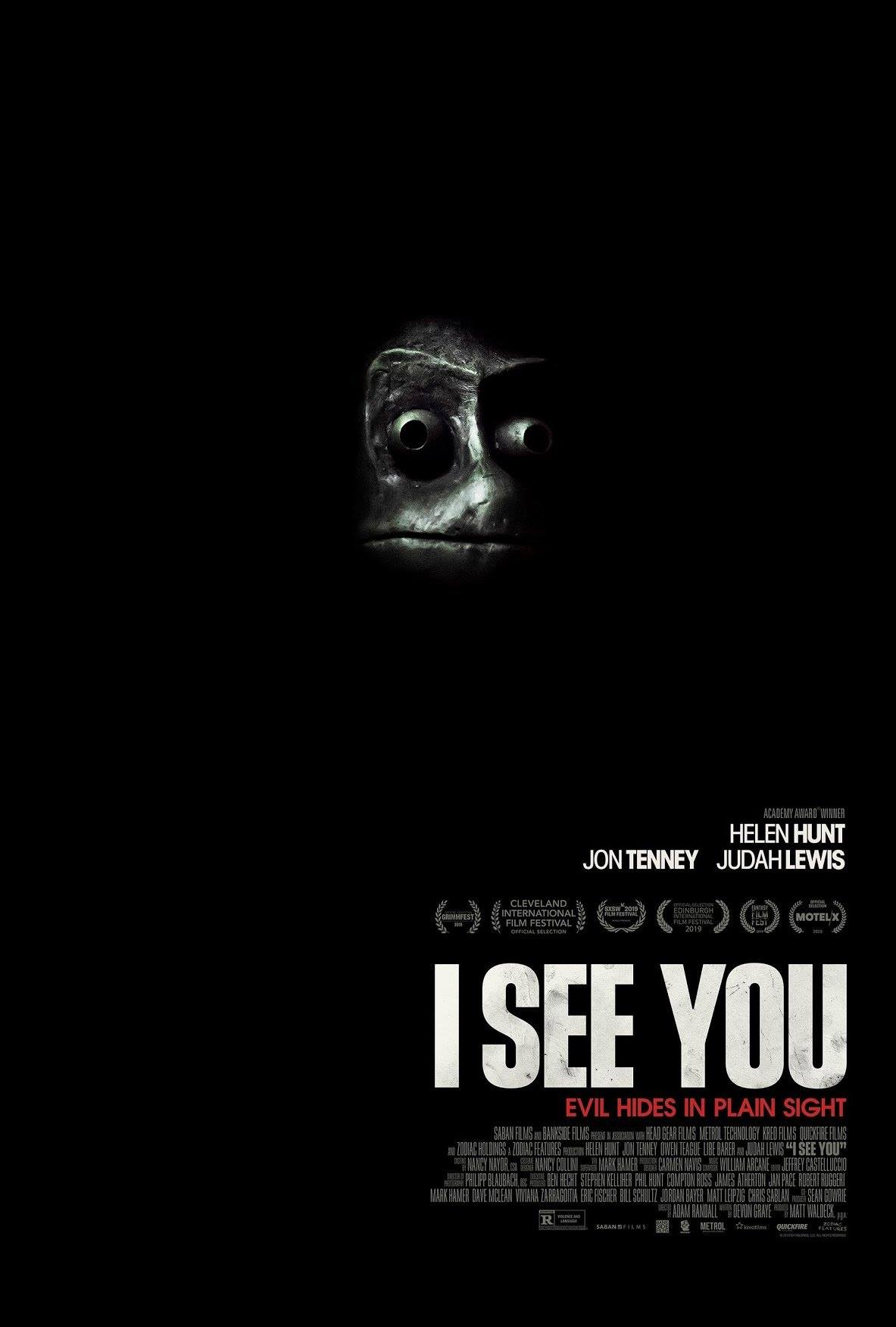
“I See You” (2019) Movie Review

See this spellbinding enigma! I See You is a beautifully and cleverly crafted horror-adjacent psychological thriller that combines the horror of a People Under the Stairs urban legend with the police procedural stylings of SE7EN and Along Came a Spider with Lynchian influences. An official selection at last year’s South By Southwest Film Festival, this movie is now included with Amazon Prime and available on other streaming services. Even since movie theatres had to close in the wake of COVID-19, I have been struggling to identify films to watch for purposes of a formal review. While selecting rewatches and select new watches for pure entertaining and passing the time has also been a struggle, I meet with a paralyzing indecisive quandary when browsing VOD selections for a film to review. Perhaps I am in the minority on this, but I depend on theatrical releases for structural, filter, and priority purposes. But after not releasing a new article last week, I knew that I needed to watch and review something. At the recommendation of a friend of my sister’s, I checked out I See You, and I am glad that I did! Starting out in a very Lynchian fashion with sweeping birds eye view camera shots over a sleepy, yet affluent hamlet, the seemingly supernatural tedious first act gives way to terrifying reality told through an enigmatic nonlinear narrative device in the second and third acts. To get into plot specifics would deprive you of the thrill of a first-time watch, but don’t believe everything you think you see in the film. Playing around with points of view, trauma, and the breakdown of a family, this film delivers the twists and turns you desire from a psychological thriller while concurrently delivering a depiction of what happens when trauma festers in the mind and soul without a constructive way of resolving it. In retrospect, some of the logic of the plot doesn’t quite make sense, and there are some elements that you simply have to chalk up to the suspension of disbelief. But the rollercoaster of a showdown finishes in a brilliant crescendo that feels like something that Wes Craven and David Lynch would have written together.

Strange occurrences plague Greg (Jon Tenney), a small town detective, and his family as he investigates the disappearance of a young boy whom appears to be the victim of a copycat serial killer. With the specter of a man sent to prison that may have been innocent, Greg is also dealing with the recent affair of his wife Jackie (Helen Hunt) and the unbridled anger exhibited by his son Connor (Judah Lewis) over his mother’s affair.

The nonlinear plot of I See You employs Hitchcockian misdirection with subjective vantage points and audience expectations versus reality. Quite the brilliant combination for a psychological thriller. After the diegetic catalyst of a young boy being violently ripped from his bicycle–literally thrown into the air–sets the melancholy, ominous tone for the movie, the first and second acts of the film tell the same story, but from two different perspectives. The malevolent force witnessed in the opening scene seems to follow audiences to the unnerving confines of the Harper house that is spatially large, but an ominous presence takes the palatial house and makes it feel like a prison. In retrospect, the breadcrumbs are all too obvious; however, many of these conspicuous clues go unregistered by the audience because of the more exciting prospect of a supernatural force at work. I appreciate how the main action and subplot compliment the themes of reconnecting with estranged family members, guilt, resentment, and trauma. Moreover, the search for the missing boy parallels Jackie’s search for her estranged son whilst dealing with her ideal family image hiding dark secrets.

During the first act, we receive a great deal of exposition; fortunately, the subplot backstory of Jackie’s transgression (which we learn is a recent affair for which she is genuinely remorseful) is delivered primarily through dramatic character reaction and supplemented with dialogue. While the familial drama provides a tantalizing subplot, it’s the search for the missing boy believed to be the victim of a sadistic pedophillial copy cat serial killer that is the main action plot of the film. And the backstory for the action plot is creatively delivered through the police procedural headed by Greg. We learn everything that we need to know in order to understand the plot in the first few scenes. While some of what we learn is intentionally designed to misdirect our attention–think of it as a magician focusing our attention on his right hand while it’s the left hand that is creating the magic–it is still valuable information that will all come together in the end. After the big reveal in the epilogue, everything that unfolded throughout the movie becomes even more sinister.

Over all, you’ll find strong performances by the three lead cast. The top-billed Helen Hunt, while starting out as the central character, quickly becomes a chief supporting character to Tenney and Lewis. However, she delivers the strongest performance out of the three. Not that the other two do not command the screen, Lewis is able to showcase his acting chops that provide evidence that he is shaping up to be a diverse actor capable of the young adult comedy of The Babysitter and the shocking anger of his character in this film. Screenwriter Devon Graye and director Adam Randall demonstrate an outstanding comprehension of story craft that simultaneously embraces horror/thriller tropes and subverting the genre expectations. Creatively expressing the story for the screen is the stylistic cinematography that effortlessly switches modes from subjective to objective without disorienting the audience. The editor takes a page out of the David Fincher color pallet and technique to showcase the neo-noir tone of the film. Editing is one of the most undervalued technical elements in a film–undervalued by the general public–because the best editing is the kind that doesn’t become a spectacle but supports the narrative by communicating the plot and emotion of the story. Communicating the unsettling tone and shocking moments in the film is first-time composer William Arcane. From the writing to acting to the technical elements, this film provides a highly entertaining, and at times terrifying, story!

I See You may not be for everyone, but the intended audience will definitely enjoy it! The types of people that will enjoy this most are those whom already enjoy the non-supernatural Lynch, Craven, Hitchcock, and Craven movies. With the nonlinear storytelling, there was such a possibility of failing in the execution, but director Randall crafts an excellent thriller that will have you wanting to rewatch it to see all the clues you missed before. Even though it is definitely rewatchable once, I do not feel that it is the kind of movie that will be continually rewatchable through the years. However, it is certainly a solid selection for your enjoyment, especially if psychological thrillers are your thing.

Ryan teaches screenwriting at the University of Tampa. If you like this article, check out the others and FOLLOW this blog! Interested in Ryan making a guest appearance on your podcast or contributing to your website? Send him a DM on Twitter or email him at RLTerry1@gmail.com! If you’re ever in the Tampa area, feel free to catch a movie with him!

Follow him!

Twitter: RLTerry1

Instagram: RL_Terry
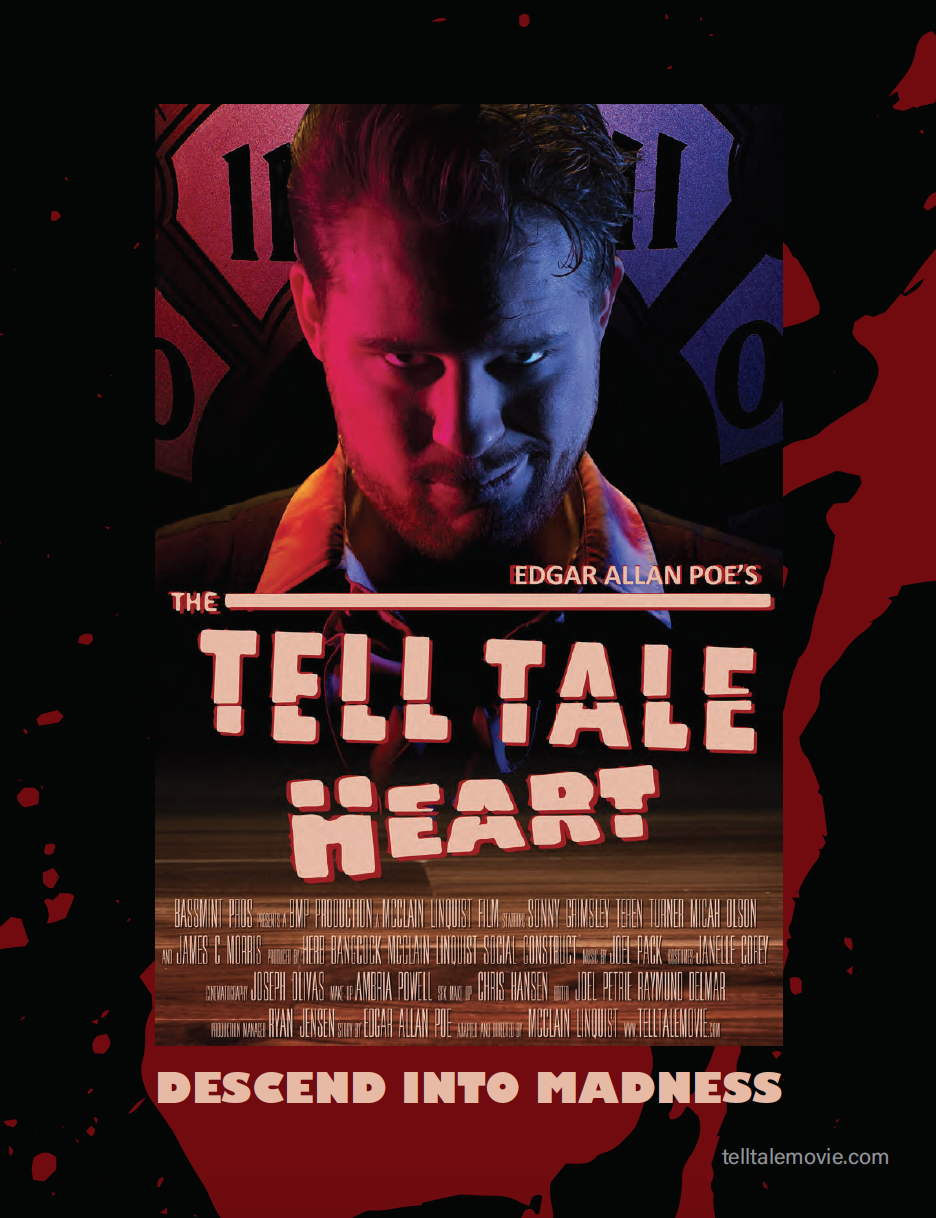
“The Tell-Tale Heart” (2020) Horror Short Film Review

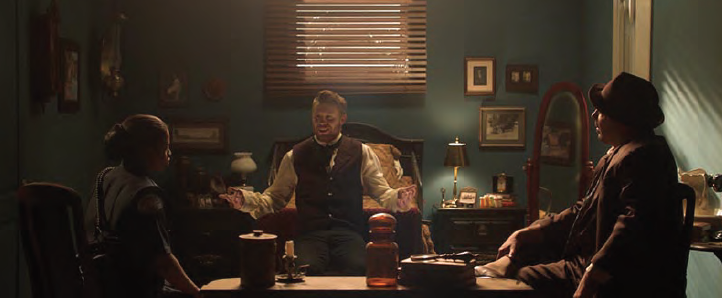
Tell-tale signs of outstanding cinematic talent right here! I don’t often choose to write a formal review of short films for which I receive screeners. Usually, I Tweet my thoughts on the film when I receive a request from an eager filmmaker who’s interested in what Professor Horror, as I’ve come to be known on #FilmTwitter, has to say about his or her motion picture endeavor. Writer-Director McClain Lindquist crafts a wholly original expression of the familiar macabre tale. While there have been many adaptations of Edgar Allan Poe’s The Tell-Tale Heart, this is arguably one of the best and freshest interpretations of the masterful storytelling of Poe. I appreciate this adaptation for its fresh take on a familiar story whilst delivering the visceral horror and intellectually-driven elements of the bizarre tale of murder. Every nuance of Poe’s short story is depicted with sheer reverence for the source material, while delivering an original expression of the timeless literary work.

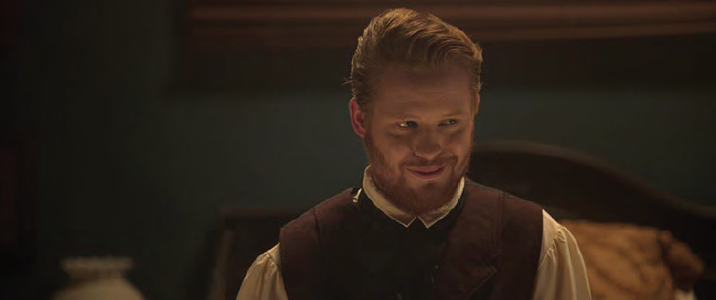
Lindquist reimagines this story through the lens of a David Lynchian approach (with the color pallet of David Fincher), delivering vibes of Muholland Drive. While there are clearly some cracks in the veneer related to the time period in which this story takes place, these cracks are insignificant enough not to detract from the overall cinematic experience. Lindquist should have selected either a modern or gothic period in which to set his adaptation. Actor Sonny Grimsley (what a great last name for horror) not only brings the words of The Narrator to the screen, but he talks to the audience with such incredible sincerity that the utter madness of it all is visualized beautifully. One of the points I hammer in my screenwriting class is dramatize don’t tell. Dramatizing means more than showing the audience the story, it means finding the conflict in every beat of every scene. Fortunately for this adaptation, Grimsley brilliantly dramatizes every word spoken in such a manner that you will be completely enveloped in the twisted tale to which he beckons you to listen.

Both the cinematography and stylistic editing are on point, and compliment the tone wonderfully. Although there are a number of standout moments from the film, I want to highlight how the duality of the narrator was expressed dramatically through the use of costuming and set design as well as a mirror. It would be all too easy for The Narrator to express his duality through verbal exposition (as this is taken from a short story), but the creative choice to couple the words of Poe with these striking images shows a strong knowledge of how to effectively go from page to screen. Often short films suffer from poorly executed technical elements, but I am pleased to report that all technical elements demonstrate an exemplary understanding of the art and science of cinematic storytelling. In addition to the technical elements is the haunting and unsettling score by Joel Pack. Lacking a true score is all too commonplace in many short films; not so with Lindquists’s The Tell-Tale Heart, Pack’s score is a character in and of itself. However, it never steals the scene, which allows the audience to become fully wrapped up in everything The Narrator says and does. I love seeing practical effects in all films, but especially horror. Thankfully, there are plenty of gruesome special makeup effects in this film for even the most insatiable appetite for gore, which never falling into the gratuitous category.

Lindquist certainly knows how to capture the madness in The Tell-Tale Heart. In many of Poe’s works, madness is often represented a lack of sufficient reasoning for committing murder or some other undesirable behavior. Lindquist illustrates The Narrator’s madness through the unreasonable rationale he uses to justify the murder of his roommate. Not only do we hear about the attempt at rationalization, it is dramatized for the screen. The only reason the narrator provides, in an attempt to justify the murder, is the simple fact that the roommate’s blind eye covered with a murky blue film bothers him a great deal–haunts him, even. He goes onto explain that he feels that he is being watched all the time. Being angered by the man’s eye is such a petty reason for the narrator to murder him, which proves that he is mentally unstable. Developing his plan for over a week, his madness is further represented through the meticulous premeditation of the method of murder. Furthermore, when The Narrator initially proposes that the “vulture eye” is his motive for murdering his roommate, he is not even fully certain that this was indeed his reason for committing the murder. And through the direction of Lindquist and the impeccable performance by Grimsley, we get into the mind of a madman in terrifying ways that are sure to induce nightmares.

Lindquist’s The Tell-Tale Heart is evidence of a future successful career as a horror filmmaker. I am eager to follow his filmography as he will hopefully use this short film as a springboard to write and direct original content, because we need more original storytellers in this sea of remakes and reboots.

The Tell-Tale Heart plans to release on select streaming platforms Fall 2020. Checkout the trailer!

  • Director: McClain Lindquist
  • Cinematographer: Joseph Olivas
  • Editors: Joel Petrie & Raymund Delmar
  • Sound Effects: Jacob Proctor
  • Makeup Effects: Ambira Powell
  • Music: Joel Pack

Social Media for The Tell-Tale Heart (2020)

Ryan teaches screenwriting at the University of Tampa. If you like this article, check out the others and FOLLOW this blog! Interested in Ryan making a guest appearance on your podcast or contributing to your website? Send him a DM on Twitter or email him at RLTerry1@gmail.com! If you’re ever in the Tampa area, feel free to catch a movie with him!

Follow him!

Twitter: RLTerry1

Instagram: RL_Terry

“The Resurrected” (1991) Horror Film Review

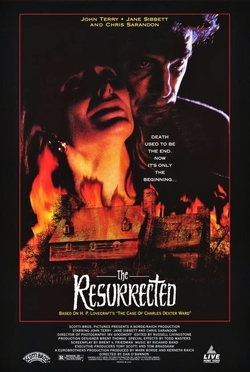
Not the Easter resurrection that many of us celebrate this weekend, but the brilliant Lovecraftian horror film that you’ve likely never heard of, much less seen! Often when it comes to holidays, I enjoy reviewing films that fit the theme of the special day. And with Easter coming up on April 12th, what better film to review than one actually entitled The Resurrected? I don’t know about you, but until this past weekend, I’d neither seen nor heard about this film. After watching it, I am blown away as to how such an outstanding horror film got left to obscurity. Attempting to understand how this became a forgotten film, I came up with a combination of a couple reasons (1) it was straight-to-VHS and (2) there was another little horror film that you may be aware of from 1991 that took the world by storm (and still mesmerizes and terrifies us today). Ever hear of the film called The Silence of the Lambs??? Because of the critical and audience success, not to mention winning the Big 5 Academy Awards, it’s entirely possible that the success of SOTL cast a big shadow on The Resurrected (aka Shatterbrain). Now, I am not claiming that the latter is on the same critical level as the former, SOTL is the superior motion picture; however, with SOTL being a horror film, I believe that it stole attention away from The Resurrected. Perhaps the following review will inspire people to seek out this film. The Resurrected was Dan O’Bannon’s first feature length film following his directorial debut his of Return of the Living Dead. If his name sounds familiar, that because you either know Return of the Living Dead or perhaps his work on the greatest sci-fi horror of all time Ridley Scott’s Alien, for which he wrote the original screenplay. With such horror and cinematic pedigree, it’s no wonder why The Resurrected was such a fantastic entry into the horror library! 

As the title suggests, this film deals with the return of what was dead, or what Freud calls the uncanny. From the German word unheimlich, meaning unholy, the return of the repressed, or the appearance of that which should have remained hidden, audiences encounter a Dr. Frankenstein like character whose obsessive experiments have taken a turn for the mad and macabre. Fixated on and fascinated with bringing the dead back to life, Charles Dexter Ward (Chris Sarandon) builds an unsettling laboratory in an old family estate where he shuts himself off to his wife and the world so he can work uninterrupted as he dabbles in a combination of witchcraft and science to reanimate the dead. When his wife Claire (Jane Sibbett) suspects that her husband may be up to something far more sinister than the “science” he claims he’s working on, she hires private investigator John March (John Terry) to look into her husband’s research. When March discovers that Charles Dexter Ward may not be whom he claims to be, all hell breaks lose—almost quite literally.

Between Return of the Living Dead and The Resurrected, I am astonished as to why O’Bannon never returned to the director’s chair. Perhaps it’s because MGM did not believe in this film enough to give it a theatrical release. Since MGM also released Ridley Scott’s Thelma and Louise that year, maybe its resources were tied up in that film’s road to the Oscars; therefore, it didn’t care enough about O’Bannon’s second film. It’s a shame because he has a stylistic approach that’s both poetic and shocking. Fortunately, his direction is stylized in ways that enhance the audience experience without detracting from the story and becoming an attraction for the sake of being stylized. Stylization with substance, that is O’Bannon. Instead of including shocking visual material for purposes of being mere gimmicks, he uses these moments to drive the plot and character development forward; everything in the film is intentional designed to move the story forward. I love seeing the hand of the director in a movie, and The Resurrected is oozing with evidence that O’Bannon cared about every frame of every moment in his sophomore film. What this film is, is the combination of what O’Bannon learned from working with Ridley Scott on Alien and what he learned from his freshman film Return of the Living Dead. Every screenplay needs a writer who cares, and every film need a director who cares. 

While it’s unfortunate that this film is seldom part of horror discussions, it certainly isn’t the first 90s horror film that seems to have fallen off the radar. The way The Resurrected flew under the radar reminds me of John Carpenter’s In the Mouth of Madness. Fortunately for the latter, it has found a cult following in recent years, but the former still hasn’t received the attention form horror audiences that it both deserves and earned. Which is unfortunate because this movie offers the kind of genre charm that was quintessentially 80s/90s.

What a screenplay! Everything about this story works so incredibly well. There are three genres at work in Brent V. Friedman’s screenplay for The Resurrected: neo-noir, science-fiction, and supernatural. While successfully crossing genres can be dangerous, with a risk of not delivering on any of them, Friedman proves that he is a master visual storyteller that can create the stuff of nightmares without relying simply on shock or gore. In fact, the moments of visceral horror are very few. But when they hit, they HIT! The A story is the traditional detective meets gorgeous client with an unusual request, the B story is about a mad scientist, and the C story is where we get into the supernatural. Each of these stories weave in and out of one another beautifully to create a truly outstanding work of poetic horror. Fans of direct or inspired adaptations of H.P. Lovecraft horror, will absolutely love the storytelling in this film. In fact, I may recommend this film to all horror fans, but feel that it is required watching for Lovecraftian horror fiends! Friedman’s screenplay works so well, that you will feel that O’Bannon write it himself. One of the common areas of weakness in late 1980s-early 90s horror is pacing. Lots of great practical effects, production design, and even performances, but the writing can be poorly paced and vapid. Not so with this film! So between O’Bannon’s excellent direction and a gripping screenplay, The Resurrected will hook you from the very first scene and hold your attention hostage for the entire film.

Beyond the strong direction and writing, perhaps my favorite park of the movie is the spinechilling practical and special effects! No CGI could ever look nearly as dimensional as all the practical effects generated by modeling, stop motion, miniatures, fake blood, prosthetics, and more! Nowadays, I find it difficult to buy into an actor interacting with something that isn’t really there. Oh we see it after the motion graphic artists and editors work their magic, but no amount of quality of CGI can authentically replicate the way real light bounces off real objects, then into the camera lens. The special effect artists did things that are mindblowing even by today’s standards for visual effects. While my area of expertise is not the mechanics and optics of special effects, I can usually extrapolate a good idea of how something was accomplished, but I am at a loss for words with the effects I witnessed in The Resurrected. One moment in particular that I want to mention, as I don’t want to give away all this movie has to offer, has to do with the reanimated remains of a human body that are dissolving into some grotesque creature that is violently growling and gnashing its teeth. An incredible feat of cinematic proportions! And that’s only one of the most elaborate practical effect scenes; strategically places throughout the movie are glorious moment of special effects that immerse the audience into the macabre Lovecraftian story, and prove that something real, dimensional, tanglible to interact with will always be far more convincing than actors interacting with chroma-green abstract objects on set.

This really is one of the best horror movies that you’ve never heard of, much less seen. While you cannot currently stream it anywhere, except through more nefarious means, you can buy the Blu-Ray on Amazon and other retail outlets. Whether you prefer genre or more complex horror, you will find something to love about this movie.

Ryan teaches screenwriting at the University of Tampa. If you like this article, check out the others and FOLLOW this blog! Interested in Ryan making a guest appearance on your podcast or contributing to your website? Send him a DM on Twitter or email him at RLTerry1@gmail.com! If you’re ever in the Tampa area, feel free to catch a movie with him!

Follow him!

Twitter: RLTerry1

Instagram: RL_Terry

Review of “Star Trek Picard” Season 1

For the full audio review and discussion with the Besotted Geek Podcast, click HERE.

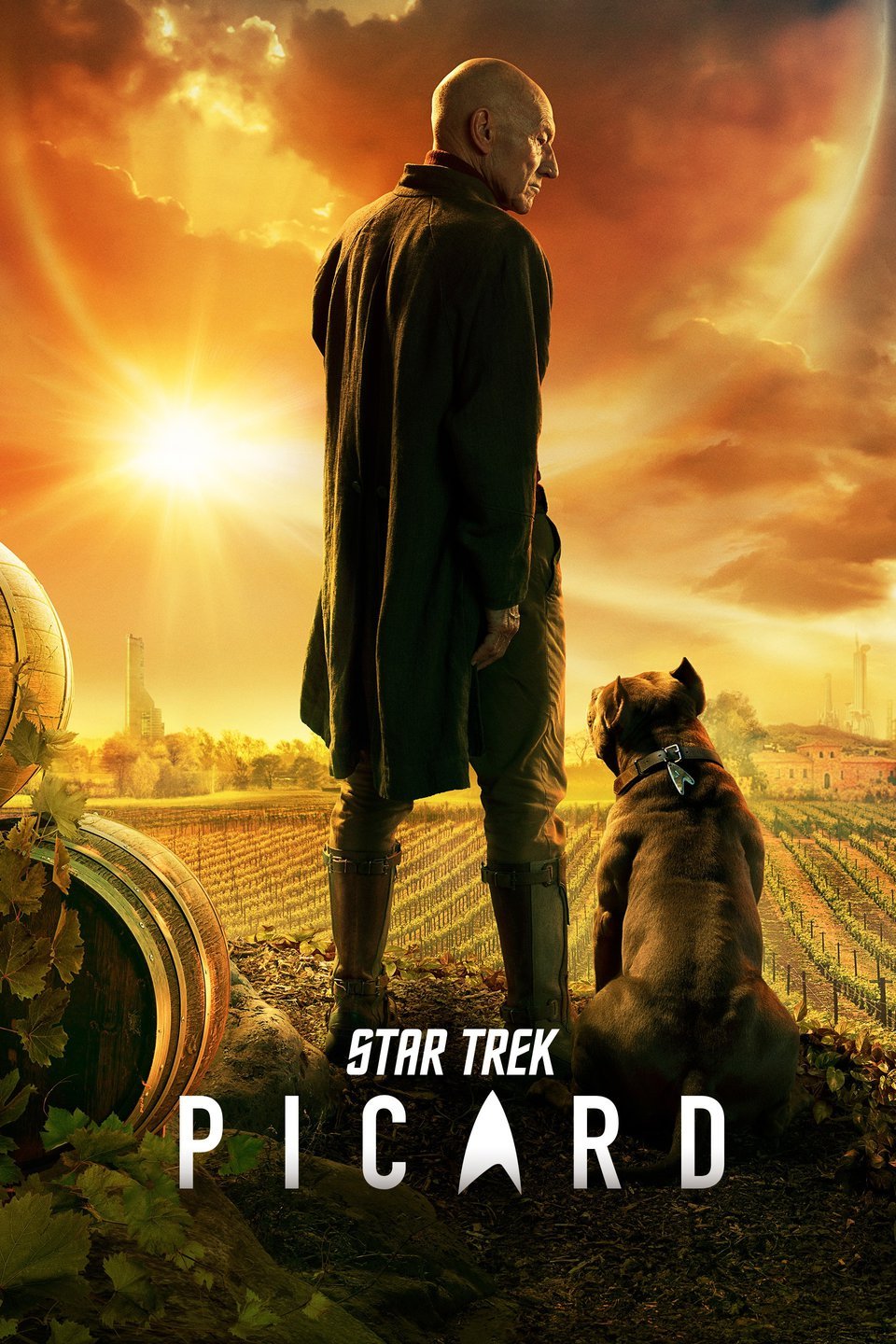
Engage! Captain Jean Luc Picard is back in CBS All Access Star Trek Picard! The premiere season wrapped up this past week, and I absolutely loved every minute of it. And it’s not just getting to see the definitive captain of the Enterprise or a handful of familiar, beloved characters from Next Generation and Voyager; this show has the warp core of TNG whilst delivering a fresh story, perfect for 2020. What separates Star Trek from Star Wars is the former’s character-driven exploration of humanity at the core of every episode. While there may be action and adventure in most episodes, the action elements are serving as a conduit through which the characters explore what it means to be human–whether organic or synth. When the show was formerly announced by Sir Patrick Stewart, he made a point that Jean Luc Picard would not be the captain that you remember from TNG, that the events of Star Trek Nemesis greatly impacted Picard. And he was right. At least, in part. However, he is still very much Captain Picard, just a version whom has been disillusioned by Starfleet that has lost its way and carrying the burden of losing a close friend due to self-sacrifice.

We sometimes remark that we may have the weight of the world on our shoulders, but Picard quite literally has the weight of the galaxy on his shoulders. Throughout the TNG series, Captain Picard gave his officers and crew, and by extension the audience, the impression that he was consistently as strong as a mountain, even though we still got glimpses into his softer side on occasion. The Picard we follow in Star Trek Picard is a relatable, believable Picard that that has withstood decades of psycho-social trauma, but in his heart, he remains the Picard we have known and loved since his first took command of the Enterprise D. This first season of Picard follows our title character as he is on his journey to rediscover the self that made him great.

Without getting into spoilers, retired Admiral Picard finds himself caught in the middle of a war between synthetic humanoids and the vile, calculating Romulan Empire after encountering a young lady he believes to the the daughter of Data whom is later assassinated by Romulan covert operatives. When a Starfleet synth researcher at the Daystrom Institute informs Picard that Data’s daughter may have a twin, Picard sets out to find her and stop the Romulan covert operation. When Starfleet refuses to temporarily reinstate Picard, he takes matters into his own hands, and finds a crew and ship for one last mission. Along his mission to find out why the Romulans are attacking Synths and to find Data’s other daughter, he encounters Star Trek Voyager’s Seven of Nine (who later becomes a regular on the show), Will Riker and Deanna Troy, and other familiar characters. While the series is incredibly thrilling, it manages to still drive home the philosophical ideas that have always been at the foundation of Star Trek.

When developing a series based upon a beloved one that is so incredibly engrained in popular and geek culture, there is a risk that it may either pay too much fan service in order to appease lifelong fans, sacrificing a truly original story; or it may do the opposite and sacrifice what fans love in exchange for taking a familiar IP in new directions to attract new fans. Thankfully, Star Trek Picard falls somewhere in the middle, skewing a little towards the former more so than the latter. But ultimately, it is on brand with TNG (and a little STV). In the beginning, I didn’t particularly like Picard because I was looking for the captain that I remember; but therein lies what makes this series deep. Audiences are rediscovering Captain Picard as he is doing very much the same. It took most of this season for him to remember who he truly is. And little by little, I began to get glimpses of the captain that we all respect and love. Just as time, in real life, changes, so does time in a TV series. Starfleet is not the same as we remember, but that is to be expected after nearly 20 years since we last saw it. Some of the moments that may make longtime friends have tears in their eyes is when we see the Enterprise D and Picard in his TNG uniform. Won’t lie, there are moments that this series did bring tears to my eyes.

I can only imagine that in the series’ development, the writers and producers thought of which past characters to include in this new series as regulars or one-offs. And it’s of no surprise that Voyager’s Seven of Nine was likely at the top of their lists. She is inarguably the most popular fan favorite out of Star Trek Voyager. In many ways, she was STV’s answer to Data and Spock, and truly brought the former series into its own after she was introduced in Season 3. Like Picard, she too has changed over the nearly 20 years since we last saw her. But she is, at her core, still the Seven we respected and loved from Voyager. I can liken Picard to Voyager in that the introduction of Seven was the missing element from the cast and plot in order for it to feel fully fleshed out. She still challenges authority when the logic doesn’t compute but seeks to understand what it means to be human and a team player throughout her return to the Star Trek universe. Something that I don’t particularly care for with the return of Seven, she is much more of an action hero than engineering genius or intellectual as she was on Voyager. I miss her oddly precise moral compass and inquisitive nature from Voyager; but, it’s not a big deal. I will chalk it up to one of those stubborn fan ideals. Even as much as I appreciate and enjoyed Star Trek Picard, even I have things that I miss about the old series and would have liked to have seen.

I am excited for the second season of the series! I approached this new series with cautious optimism, and it mostly met, and even exceeding my expectations a few times. Yeah, there are elements with which I am disappointed, but that is naturally the case whenever an older series is reimagined more than twi decades since the TV series ended to make way for the movies. All in all, I am not disappointed in anything that keeps me from enjoying season one and looking forward to season two. After an interview with Sir Patrick Steward on The View, we learn that Whoopie Goldberg will be reprising her role as Guinnan in season two. I hope we also get John de Lancie back as Q! Outside of my favorite TNG character of Picard, Q is right up there! Every episode of TNG and even the 2-3 STV episodes he was on were crowd favorites because his chemistry with Picard (and to a lesser extent Janeway) was priceless. At the heart of this series is what has long since given Star Trek greater depth than Star Wars, and that is the blending of social commentary with what it means to be human. Those same philosophical questions are alive and well in Star Trek Picard, and if you’re a fan of TNG and STV, I’ve a feeling that you will mostly likely enjoy this new series as much as I did.

Don’t miss the two-part discussion on the season finale and a recap of the whole series on the Besotted Geek Podcast, where I sit down with Stork and Peacock.

Ryan teaches screenwriting at the University of Tampa. If you like this article, check out the others and FOLLOW this blog! Interested in Ryan making a guest appearance on your podcast or contributing to your website? Send him a DM on Twitter or email him at RLTerry1@gmail.com! If you’re ever in the Tampa area, feel free to catch a movie with him!

Follow him!

Twitter: RLTerry1

Instagram: RL_Terry