
BLUE BEETLE superhero movie review

High energy! Blue Beetle is a charismatic superhero movie that delivers vivacious action, laughs, and heart. Undoubtedly, Blue Beetle will become a fan-favorite superhero in the coming years ahead. However, the full potential of this movie to forge new frontiers for heroes and characters we haven’t had on the big screen before is ultimately curbed by some character choices and recurring thematic expressions.

Jaime Reyes suddenly finds himself in possession of an ancient relic of alien biotechnology called the Scarab. When the Scarab chooses Jaime to be its symbiotic host, he’s bestowed with an incredible suit of armor that’s capable of extraordinary and unpredictable powers, forever changing his destiny as he becomes the superhero Blue Beetle.

Before you begin thinking that if you’ve seen one superhero origin story, you’ve seen them all, Blue Beetle manages to make fresh a familiar plot to keep audiences entertained. The strength of Blue Beetle is in the casting, lesser so the characters themselves. That’s not to suggest that none of the characters are crafted and developed well, but there are some odd character/screenwriting choices that mitigate the full impact the movie could have had.

Susan Sarandon and Xolo Mariduēna are the standout performances and characters in the movie. Sarandon’s villain and Xolo’s hero are a perfect match for one another. She was cleverly fiendish and he was humble and strong. For me, it’s these two characters and cast members that made the movie for me. I cannot think of two other actors that could have brought these characters to life as well as these two. It’s also incredibly poetic: a screen legend and a relatively newcomer to the big screen. The chemistry and narrative poetry between our hero and villain was excellent. Anytime I get to enjoy Sarandon’s performances on the big or small screen is a good day!

While the plot for this origin story is fairly standard, the method of expression and the character choices give it an air of originality. But it’s in some of the expression of themes and characters that the movie falters, curbing the full potential of the story. Specifically, this is witnessed in the comedic stylings of George Lopez and the recurring commentary and themes borne out of postcolonial theory. While Lopez’ character was intended to be the comedic relief, the method of expression of his comedy became obnoxious and even exhausting. Moreover, his character plays right into negative stereotypes that the movie could have easily avoided.

Likewise, there is conspicuous, recurring imagery and commentary on postcolonial theory that mitigates the positive affects of the movie. It’s as if the screenwriter was message first and plot second. Even when filmmakers desire to exhibit their personal interpretation of a worldview, it is important that the filmmaker employs more clever means of expressing these opinions.

To bring us around to a more positive note, there is a wonderful depiction of a father-son (and father-family) relationship, and I highly respect the movie for this. Far too seldom do we get movies that spotlight healthy relationships between fathers and their families (in this case, the focus is on the father-son relationship). It’s so very important in narrative storytelling to remind the world of the important role a father plays in his family. Does that mean mothers cannot provide the same emotive dimension? Of course not. But there are many more movies that depict healthy, constructive mother-family relationships. This was a brilliant opportunity to spotlight the love a father has for his family and the love the family has for him.

Blue Beetle represents an MCU type of storytelling in a DC movie, but DC still manages to make this expression of a superhero their own. I really like Jaime/Blue Beetle, so I hope that I see him on the big screen again.
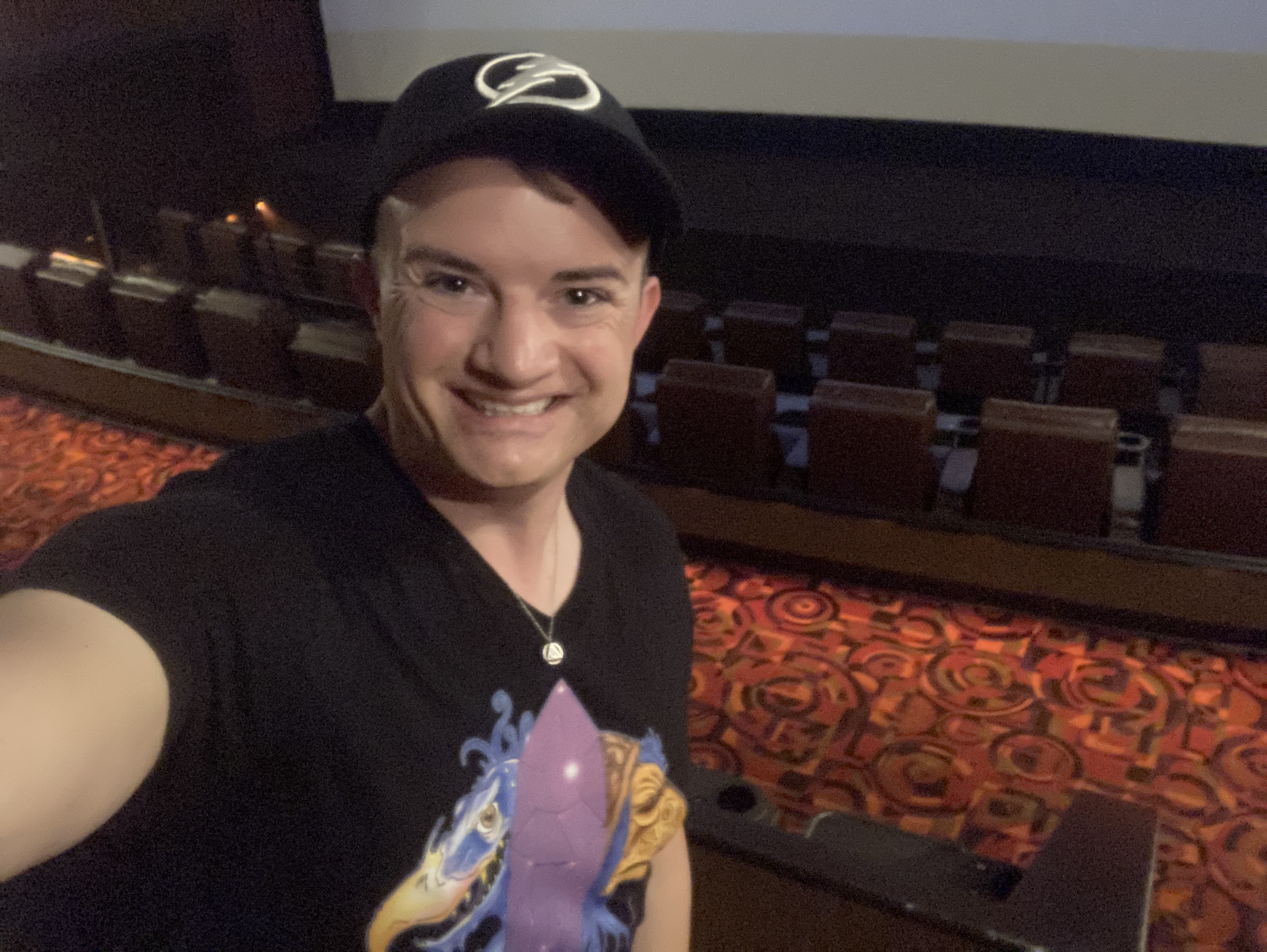
Ryan teaches Film Studies and Screenwriting at the University of Tampa and is a member of the Critics Association of Central Florida and Indie Film Critics of America. If you like this article, check out the others and FOLLOW this blog! Interested in Ryan making a guest appearance on your podcast or contributing to your website? Send him a DM on Twitter. If you’re ever in Tampa or Orlando, feel free to catch a movie with him.
Follow him on Twitter: RLTerry1 and LetterBoxd: RLTerry

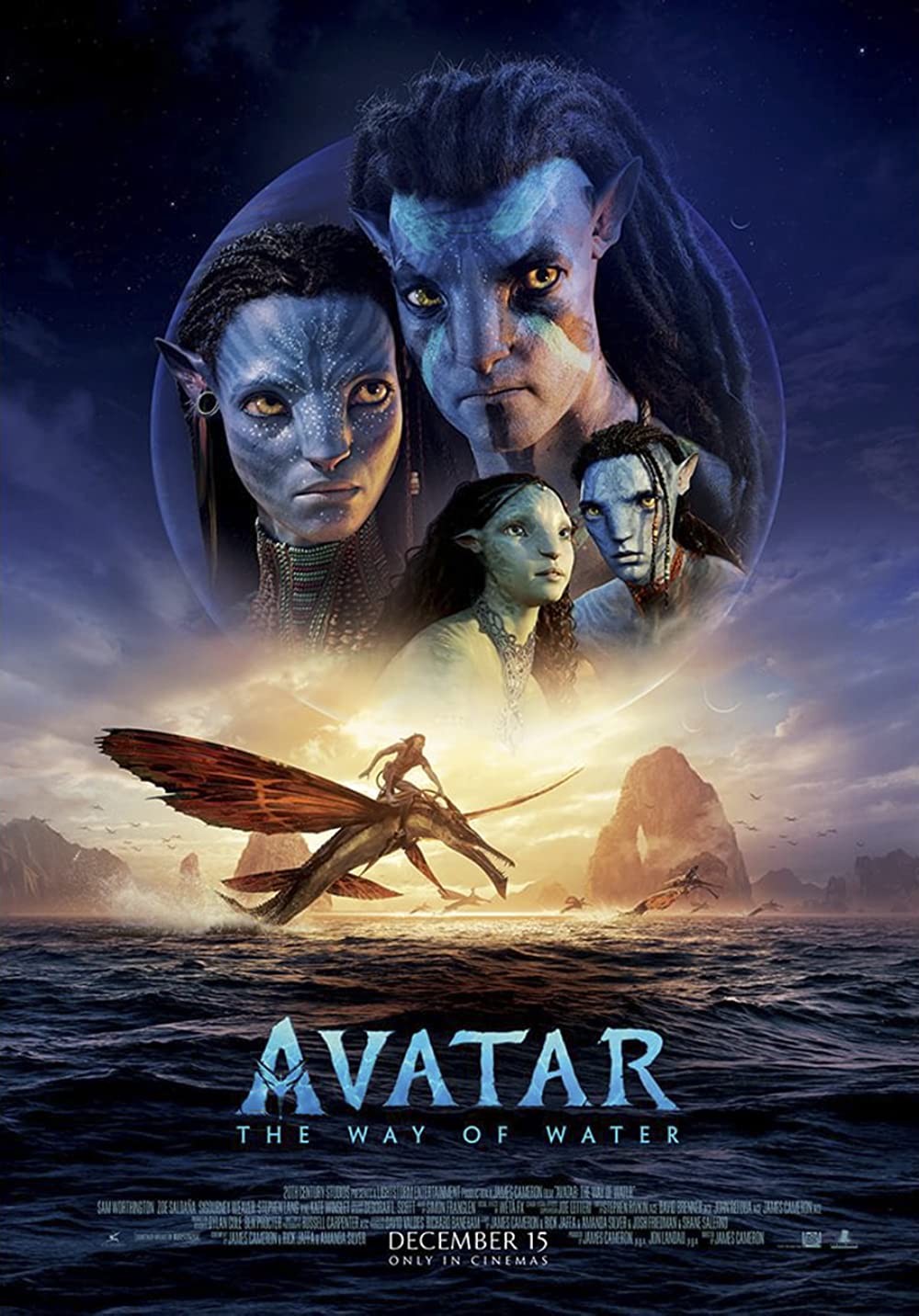
AVATAR: THE WAY OF WATER movie review

AKA The Way of Woker. James Cameron’s highly anticipated followup to Avatar (2009) is an ambitious world-building visual effects extravaganza that is a predictable, poorly paced and plotted movie, which is plagued by many problematic elements in both substance and form. Moreover, it’s a 3-hour movie that feels like a 3-hour movie, for which no amount of impressive visual displays can compensate. Often times, a filmmaker’s ideology can be interpreted through a critical analysis (or close reading), but the blatantly anti-west (or pro applied postmodernism) sentiment is right there on the surface of this troublesome movie. Suffice it to say, all the themes can be summarized as the destruction of modernity, which is manifested in various motifs. From beginning to end, Cameron’s Avatar: the Way of Water is anti-military (literally uses Marines “semper fi”), anti-western medicine, and propagates postcolonial theory (which I write about in my review of Black Panther: Wakanda Forever). It’s one thing to critique or question a societal observation; it’s another to actively work to completely deconstruct and shame entire groups of people and cultures. Cinema is a powerful tool because film is a reflection of life and can help us better understand the human experience; however, Cameron’s latest movie is a reflection of his disdain for the west (by extension, modernity), and wielded more like an offensive weapon than clever storytelling tool. The themes, reeking of applied postmodernism, aren’t the only problematic issues plaguing this 3-hour epic, but the story structure itself suffers from poor pacing and a proliferation of subplots that fail to work together to craft a compelling narrative.

Jake Sully and Ney’tiri have formed a family and are doing everything to stay together. However, they must leave their home and explore the regions of Pandora. When an ancient threat resurfaces, Jake must fight a difficult war against the humans.

Overstuffed with one-dimensional characters devoid of character arcs, Cameron appears to be more concerned with his ideology than creating thoughtful characters. Heroes that are projected as nearly flawless and invincible seldom connect with audiences because it is often our flaws, failings, and lessons-learned that connect us to one another. When villains fail to display any likable qualities, the villain fails to connect with audiences, thus erasing any possible entertainment value. More specifically, central and opposition characters should share similar goals; however, what makes villains and heroes different is HOW they express their methodologies to reach the goal(s). The most interesting characters of opposition are those with human dimension and characteristics that can be appreciated; likewise, the most interesting central characters are those with flaws and weaknesses that make them relatable. Our heroes are flawless and our villians utterly detestable. That is NOT a good character mix or balance.

Moreover, the film’s characters demonstrate a gross representation problem. Nearly all the human characters are white men–not one person of color and only one prominent female character. In a day and age in which reasonable, fair representation in media is important (again, as film is a reflection of life, it should look like real life), Cameron ignores fairness in representation. While some may find this to be a coincidence, it is not. Every diegetic element of the mise-en-scene montaged into a film is intentional. Because of the clear manifestation of postcolonial theory, this can be read as Cameron’s method for perpetuating the sentiment that white people (particularly men) are toxic by nature. Before you say I am extreme in this interpretation, in a recent interview, Cameron stated, “testosterone is a toxin that must be worked out of the system.” Not only is this a shameful statement, it’s grossly inaccurate. Neither testosterone nor estrogen are problems that need solved. Both are biology, plain and simple. Each respectively amoral.

Cameron’s anti-military sentiment is the most provocative of all his themes concerning the complete destruction of modernity (the goal of applied postmodernism). Where he crosses the line, is referencing the para-military presence as Marines, and evoking the rallying cry of semper fi. Undoubtedly, this is not going to sit well with the U.S. military and general public (nor should it). Ostensibly painting one’s country/military in a negative, inaccurate light is inexcusable. Again, it’s one thing to critique, it’s another to actively shame and attack. If he wanted to use a para-military force, he would have been better off crafting this one to be FORMER military that have been privatized for exploratory and extraction purposes. Sell swords as Game of Thrones would put it. Even that may have painted the military in a negative light, but it wouldn’t have been so blatant and aimed at a particular branch of the U.S. armed forces.

With all the themes, symbols, and motifs Cameron includes in the movie, the plotting is insufficient to support such a mess of ideas and stories. Perhaps he should revisit the screenwriting tenants of writing lean or starting a scene as close to the end as possible, and ending it as soon as possible. These tenants of screenwriting help to prevent a bloated, fatty screenplay. As it stands, the storytelling in Avatar: the Way of Water is clunky and forced. Often times the reason for something happening is simply because the plot needed it. This makes for a predictable story, one that is devoid of anything remotely constructive, fun, or inspirational.

Lastly, I’d be remiss if I failed to mention the many references to Flight of Passage in the World of Pandora at Disney’s Animal Kingdom. Many of the creatures from the flagship attraction and surrounding area are found within this movie. I rather enjoyed identifying elements that were lifted from the hugely popular and impressive attraction. If you do see this movie and have been to Pandora, then look to see if you can find some of the land and sea creatures from the attraction.

At the end of the day, this movie is a reminder that spectacular visual effects does not a great movie make.

Ryan teaches Film Studies and Screenwriting at the University of Tampa and is a member of the Critics Association of Central Florida. If you like this article, check out the others and FOLLOW this blog! Interested in Ryan making a guest appearance on your podcast or contributing to your website? Send him a DM on Twitter. If you’re ever in Tampa or Orlando, feel free to catch a movie with him.

Follow him on Twitter: RLTerry1