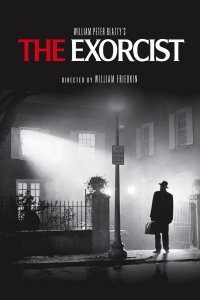
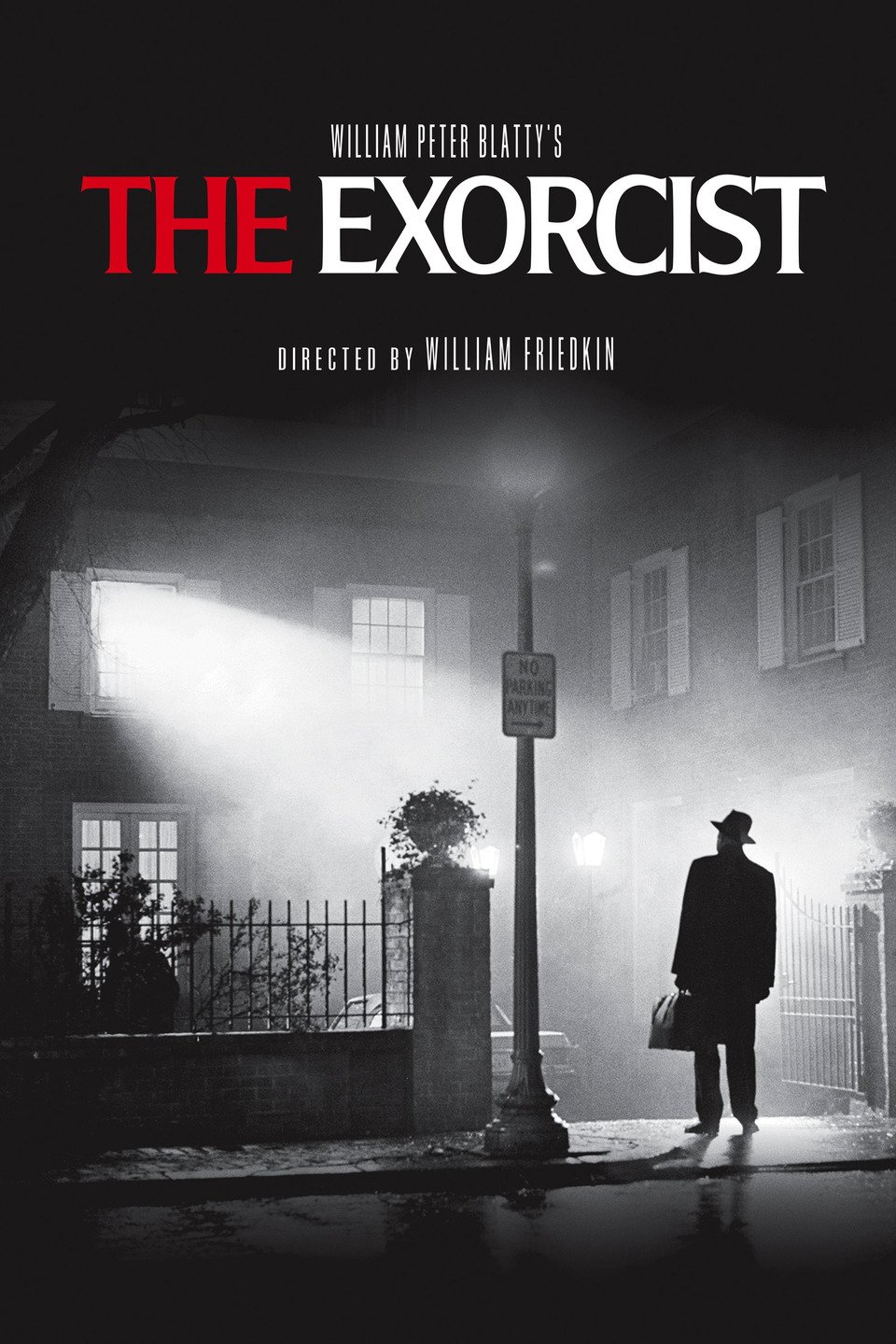
 Pea soup anyone? Not only one of the most profitable horror films of all time, William Friedkin’s The Exorcist remains timeless. Celebrating its 45th anniversary last year, this truly is the definitive possession horror film. Thematically, it takes the concept of the external “monster” and moves it into the mind and body (of a little girl). In many ways, Linda Blair’s Regan takes the psycho-social horror of Psycho and combines it with a classic monster and adds in a Rosemary’s Baby spin. This trifecta of excellence works together in order to provide the plot and characters of The Exorcist with substance. Much like Psycho was the first modern horror film and proto-slasher, The Exorcist is widely regarded as the first modern possession film. There are elements of possession in Rosemary’s Baby, but I don’t technically consider it a possession film. This film also takes the idea of the “home invasion” to the next level by having the innocent Regan’s body invaded. There are many past horror films that were once viewed as terrifying, but over the course of time, do not evoke the same degree of fear in contemporary times; however, this is a film that remains nightmare-inducing for many who are brave enough to watch it. Furthermore, adjusted for inflation, it remains among the top 10 highest grossing films of all time.
For more than 40 years, this was highest grossing horror film of all time (until 2017’s IT), this is the one that started the possession film sub genre of horror. A visiting actress (Ellen Burstyn) in Washington, D.C., notices dramatic and dangerous changes in the behavior and physical make-up of her 12-year-old daughter 9Linda Blair). Meanwhile, a young priest (Jason Miller) at nearby Georgetown University begins to doubt his faith while dealing with his mother’s terminal sickness. When the little girl begins to spiral violently out of control, lashing out at her mother and everyone in the Georgetown manner, and even levitating, her worried mother seeks medical help, only to hit a dead end. The young priest, however, thinks the girl may be possessed by a demon. The priest makes a request to perform an exorcism, and the church sends in an expert (Max von Sydow) to help with the difficult job.
While many films prior to The Exorcist depicted the occult, few (if any) have endured like this icon of horror has. Perhaps what frightens us most about this film is the fact of how close to home it hits. The MacNeil family could be our own or our neighbors. By default, the very setting and atmosphere of the film is relatable and realistic. There is a high degree of vulnerability on display. Not only can our homes be invaded, but our bodies can too. Whereas some may only see the effects of the demonic possession and focus on them (the vomiting, masochistic behaviors, or focussed vulgar profanity), these are all incidental. The point of The Exorcist is to provide social commentary on dehumanization and how evil forces and behaviors can affect us in such a way that we feel like animals unworthy of God’s love. But no matter how dark times get, redemption is possible. Whereas demonic possessions are not a daily part of our lives, by extension, this can be explored as a metaphor for the dehumanization witnessed today such as sexual assault, physical/emotional abuse, and other ways in which people are devalued.
There are few films that I would say this about–The Exorcist is a perfect film. Other examples are Alien, Psycho, Sunset Boulevard, and The Shining. Compared to the schlock-fest horror movies that we often get today (until more recently with films such as Hereditary, Midsommar, and Us), this is a beautiful, bold work of cinema that pushed the envelop then, and even pushes the boundaries by today’s standards. There is a sense of prestige about this film; and not just a classy for the sake of pretense–there is a sense of purpose in this motion picture. Do all horror films need to mean something deep or provocative? Certainly not. Some have the purpose to simply entertain, frighten us, or even make us laugh. But The Exorcist is a special horror film in that there is immense depth to the story that takes us to incredibly dark places–to the point of no return if you will. Then in a brilliant fashion, turns it into a story of sacrifice and redemption. Not only was this one of the most frightening movies of all time when it was release din 1973–commonplace as possession movies may seem now–this was groundbreaking back then, it was also nominated for multiple Academy Awards including Best Picture! This was the first time that a horror film had ever been nominated for this most prestigious award. Furthermore, there are few other films that come with such an infamous status inspiring legends, curses, and more. Much like with Poltergeist, this film has also spawned macabre rumors. Everything about this film: direction, screenwriting, cinematography, cast, set design, score, and the editing work flawlessly to combine to become one of the greatest films ever made.
In screenwriting, there are two types of plots: action-driven and character-driven. That isn’t to suggest that an action movies don’t have great characters (Die Hard certainly has great characters) nor does a character movie lack gripping action (Nightcrawler has great action sequences), but the principle focus is on one or the other. Look to see wherefrom the conflict is derived. In a character-driven film, the conflict is derived primarily from characters, whereas in an action-driven movie, the conflict is primarily derived from the action. The characters of The Exorcist are utterly fascinating and relatable. We might remember Regan the most from the movie, but the other lead and supporting characters are also incredibly interesting. Part of the reason why this film resonates with us so, and is the material of nightmares, is because of how realistic it is, despite the supernatural element; this realism is brought to life by the incomparable performances. There is so much more to this movie besides the spinning head, spiderwalk (in the director’s cut), and the famous pea soup scene. Those scenes, and others, contribute to the overall experience of the film, but it’s the character-driven conflict and relationships that keep us coming back. Not only do we come back to the film over and over for the character, but we were able to experience memorable scenes and action sequences for ourselves at Halloween Horror Nights 26 at Universal Orlando.
Before we talk about the most famous character from the film Regan, let’s analyze the other two leads and chief supporting character: Regan’s mom Chris MacNeil (Ellen Burstyn), the young priest Damian Karras (Jason Miller), and the exorcist Father Merrin (Max von Sydow). Both Burstyn and Miller were nominated for Academy Awards for their respective performances.
Chris MacNeil is first and foremost a mother, but her acting career is also important to her. But when her daughter needs her, she is willing to put her career to the side to go to great lengths to help her. Beyond her role as a mother, she represents a person whom does not have faith in God. She is also faced with the life crisis of growing frustrated with her divorce and career as a mainstream actress. Father Karras is a highly educated man of faith, but his faith is strained because of his mom’s illness and death, causing a crisis. He is struggling with what many of us struggle with: if God is love, then why do bad things happen to good people? Furthermore, he represents the qualities of self-sacrifice and redemption, as well as personifies the empathy of psychiatry and a pragmatic priesthood. By extension, Father Karras can also be read as someone whom exemplifies that “science” and “faith” are not independent of nor negate one another. Lastly, Father Merrin is not only the very silhouetted image that is engrained in your mind when you think of this movie, but he is the inverse of Father Karras in that–whereas Karras is a pragmatic priest, Father Merrin is a zealous priest. Because Merrin was unable to defeat the demon Pazuzu (the one that possesses Regan), he is faced with his own redemption story. He is also going through the life crisis of failing health.
All three adults are each faced with their own respective crises that are explored through the possession of this little girl whom is also facing her own biological life crisis of puberty. Without knowing much about any of these characters during the first act of the film, we know that each one is vulnerable and doubts their own abilities and the direction they are going in life.
Central to The Exorcist is Regan (played by Linda Blair). Regan is both our central character and our character of opposition. Technically the character of opposition is Pazuzu, but the demon is manifested in Regan. Much like with her adult counterparts, Regan is also facing a crisis. She is experiencing what every young person goes through (to a greater physiological extent, girls)–puberty. As we know, at that stage in life, the human body undergoes what can be equated to psychological and physiological trauma. This trauma is manifested in the behaviors that we witness on screen from Regan’s explicit language and masochistic sexual assault. Regan can also be read as a home that has been invaded by an external monster, but this monster has not only defiled a home but has gone further, and more intimate to defile an innocent girl. Essentially, we’ve taken the idea of the external monster and placed it in the mind and body to exponentially increase the level of trauma and terror. Through another lens, we can witness the conflict that exists between parents and adolescents in which parents may view their kid(s) as a monster that has taken over the previously agreeable, obedient child, and how both parties must work through the conflict in order to emerge healthier and closer.
From page to screen, the cinematic excellent continues. The Exorcist is full of nightmare-inducing special effects that stick with you for the rest of your life. Not only does the very image of the transformation terrify the eyes of the audience, the minds of the audience are also confronted with the frightening realization of what the demon is doing to Regan’s body. From swearing at the central characters every chance it gets to displaying severe traumatizing masochistic behavior, the brutality is intense as you have sympathy for this young girl that you established a connection with from the beginning of the movie. One of the elements that I find particularly interesting, given the extent to which special effects are used, is just how real the movie feels. The supernatural elements of the story could have very easily pushed the film into the unbelievable category (like many others), but William Friedkin’s cinematic masterpiece stays grounded in reality. Looking to the characters themselves, the performances are so genuine that you feel that you are going through the very same crises that are on display. For those whom believe possession is real, it hits scarily close to home; and for those whom are skeptical, it is an equally terrifying possibility.
The showdown and realization of the film are just as deep as the first and second acts by playing around with the externalization of that which was internalized and the physical and mental journeys of the characters. Not only is duality and possession shown through the context of demon possession, but the film also comments that internalized physical and psychological trauma can be a powerful force that ostensibly takes control on ones body. And that is another reason why it still terrifies audiences to this day.
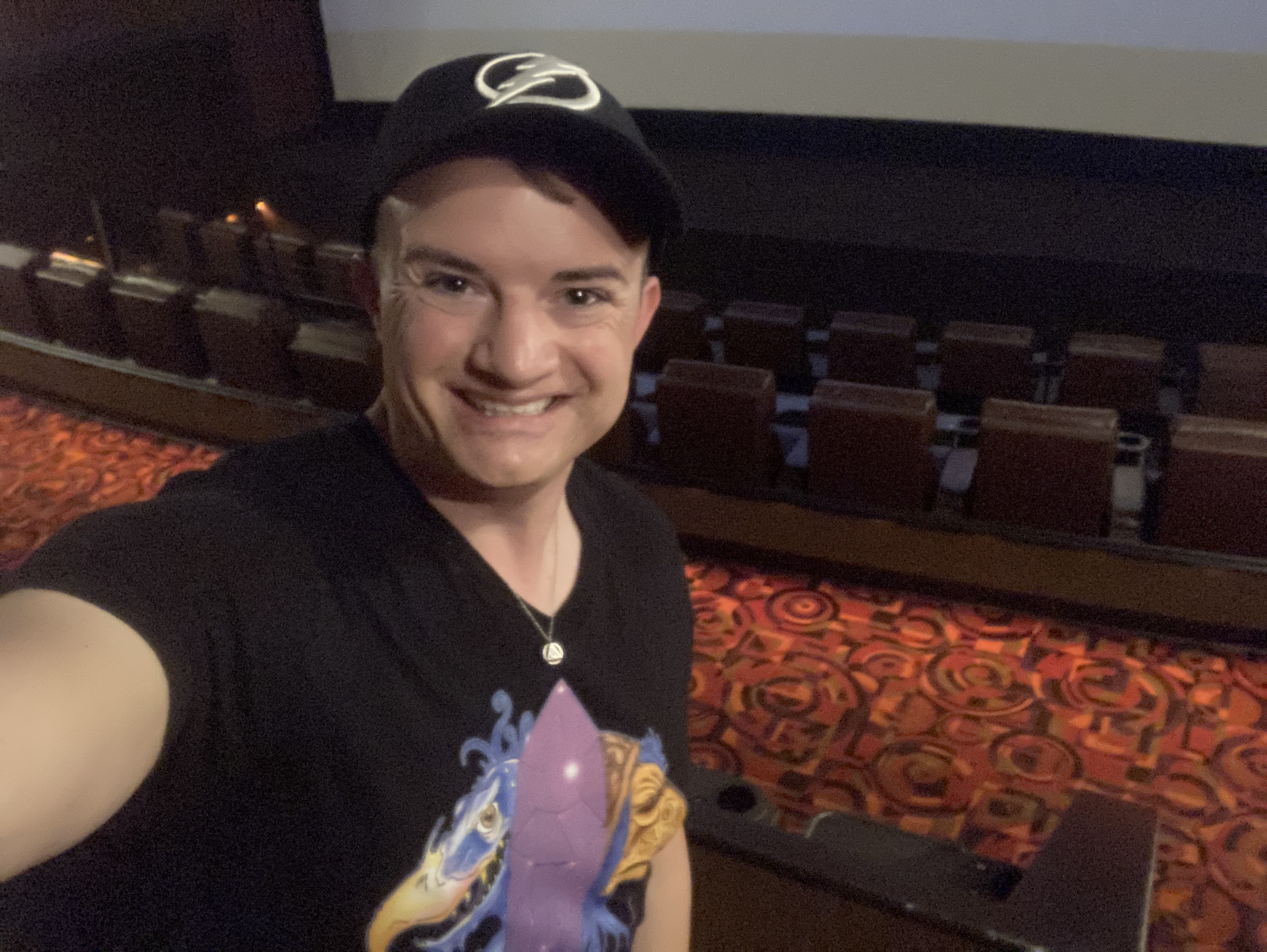
You can catch Ryan most weeks at Studio Movie Grill Tampa, so if you’re in the area, let him know and you can join him at the cinema.
Ryan teaches screenwriting at the University of Tampa. If you like this article, check out the others and FOLLOW this blog! Interested in Ryan making a guest appearance on your podcast or contributing to your website? Send him a DM on Twitter!
Follow him!
Twitter: RLTerry1
Instagram: RL_Terry


 R.L. Terry ReelView