Epic! Everything you want in a James Bond movie!! Treat yourself to the premium format in your cinema forthe final chapter in Daniel Craig’s Bond saga. With gripping action and ample espionage, No Time to Die is a wildly entertaining throwback in the vein of Golden Eye, but even better! Return to the Cold War era espionage in which the Russians are the baddies and operating out of secret bunkers, vodka martinis are shaken not stirred, the one-liners, and the Aston Martin has machine-gun headlights. Oh–yeah there is a song by Billie Eilish, but enough said about that. From sweeping establishing shots of exotic destinations far and wide to intimate character moments, the camera paints a beautiful portrait of Craig’s sendoff as our Bond for the last fifteen years.
Recruited to rescue a kidnapped scientist, globe-trotting spy James Bond finds himself hot on the trail of a mysterious villain, who’s armed with a dangerous new technology.
Is the plot melodramatic? Of course, but aren’t most of these movies??? Even though the plot is motivating the actions of the characters more than the internal needs and desires of the characters, there is a great relationship between the action plot and emotional drives. The film is larger than life, but never campy or goes to ridiculous proportions that take you out of the story. All the foundational elements that make a Bond movie a Bond movie are here, and will hook you from beginning to end. This final chapter in Craig’s journey as 007: James Bond is handled with immense care, and serves up all the touchstones that will tug at your emotions. Don’t wait for this to be on-demand, you want to see this on the biggest screen, in the best format possible in your area for the full cinematic experience. No Time to Die is a perfect blend of the best of the Connery, Brosnan, and Craig years, all wrapped up into one outstanding chapter in the franchise that has been entertaining us for over fifty years.
While I feel that Skyfall still has slightly more rewatchability and is the better film. No Time to Die is a close second to it, and was just as enjoyable as Golden Eye. Many consider Golden Eye to be among the best Bond films because of the classical approach to Bond it takes, yet delivers a story that is familiar and fresh simultaneously. Yes, the Brosnan Bonds go downhill from there (except Tomorrow Never Dies is a solid installment), but Golden Eye reintroduced a new generation to the character of 007: James Bond and everyone’s favorite Agent M, Dame Judi Dench (and she makes a cameo in this film–in the form of a portrait, but still). I appreciate when franchises retain the foundation of what made the original great, but build a new structure. And that is what we have here, hence why it checks all the boxes that you want in a 007 movie. These homages to classic Bond in no way feel campy, but rather feel like an old familiar blanket that you can wrap yourself in to feel comforted.
Of everything the film did incredibly well, I wouldn’t be doing my job if I didn’t mention that the plotting is a little on the weak side. Although you won’t feel lost, there are times that you will find yourself a little confused as to all the relationships between characters and how the sequence of events unfolds. We aren’t talking TENET confusing, but it is a little muddled in places where it feels like there was a transitional scene that got cut out as the theatrical release was being assembled.
Despite the mostly melodramatic plot, there are some great character moments that help to setup how a character may be used in the future or just a little more about their personal life that helps them to be more relatable and believable. While we do not know who our next James Bond will be, we may have been given a hint as to the characters that will be included in future installments. And for anyone that is worried that future 007 movies will not have James Bond, without detracting away from the present story, this film lays the groundwork that 007 is a designation and James Bond is the name of a real person. Furthermore, the studio is searching for the next James Bond next year, so James Bond isn’t going anywhere. That said, we do have a fantastic supporting character that will surely make a great spy for MI6 in the future, regardless of her designation. But I won’t get into details, because it is slightly spoiler-ish.
Do yourself a favor and watch 007: No Time to Die on the biggest screen and most premium format you can find in a cinema near you. It’s a BIG SCREEN adventure that deserves to be watched on the big screen.
Ryan teaches American and World Cinema at the University of Tampa. If you like this article, check out the others and FOLLOW this blog! Interested in Ryan making a guest appearance on your podcast or contributing to your website? Send him a DM on Twitter or email him at RLTerry1@gmail.com! If you’re ever in Tampa or Orlando, feel free to catch a movie with him.
Melodrama: the Musical! Dear Evan Hansen, based on the Tony award winning musical by the same name, is a movie for people who have struggled with social anxiety or depression, like musicals in general, or were unpopular in high school. So, pretty much everyone who was a member of the Drama Club. One of the most highly anticipated movies of 2021, this landmark Broadway musical loses much of its pizzaz once adapted for the screen. Every decade, there comes a time when Broadway musical adaptations are all the rage, but some stories simply work better on stage than screen. Not having seen the stage production, I cannot comment on elements that were lost, but it strikes me as a story that simply works better when performed live than captured on celluloid. Dear Evan Hansen is an emotionally manipulative derivative movie musical in the vein of 13 Reasons Why. But I have to say, even the dialogue in the aforementioned titular young adult TV series was more thoughtful. For all the film’s desperate desire to depict a socially-relevant, tough subject matter, it plays off as superficial virtue signaling whose veneer is merely two-dimensional.
Evan Hansen is an anxious, isolated high-school student who’s aching for understanding and belonging amid the chaos and cruelty of the social media age. He soon embarks on a journey of self-discovery when a letter he wrote for a writing exercise falls into the hands of a grieving couple whose son took his own life.
Much of the talent from the Broadway musical is carried over into the film. Most notably, actor Ben Platt, who plays the title character Evan Hansen. Let’s get the obvious out of the way. There’s been some skepticism and hate surrounding the movie ever since the trailer dropped, mainly because Ben Platt (27) is playing a high school student. Is it distracting? Very. But once you get past it, he does deliver a good performance. Obviously, he knows this character well, much better than the movie knows itself. Moreover, Julianne Moore and Amy Adams also deliver great performances as the mothers of Evan and Connor (the deceased boy), respectively. In addition to our lead and supporting actors, the film pulled from film industry talent as well in front of and behind the camera.
Also on board is Stephen Chbosky, director of acclaimed coming of age films The Perks of being a Wallflower and Wonder but he doesn’t bring that same level of thoughtfulness to this movie. Which was perhaps an insurmountable task not only because of the hype from the musical, but also because it’s such a heavy subject to touch upon. There are some interesting visual choices and innovative techniques like the way it portrays the internet but the emotions don’t always hit right. This film rides a fine line between drama and comedy and sometimes overshoots by having some scenes be too sappy and over dramatic and other scenes that make light of sensitive subjects like suicide, which might be off putting to some people.Perhaps he was strong-armed by the Broadway producers to execute scenes a particular way, but we can only speculate as to why he doesn’t seem to care as much about these characters as he did with his other young adult/coming of age films.
The well-known songs from the musical were certainly the highlight for audiences. Fortunately, the director chose to provide sufficient space between songs in order to allow for an emotional reset. Whereas the show-stopping numbers are usually performed with gusto, these songs were much more subtle. And like musical numbers should, each piece sufficiently moved the melodramatic plot forward. The amount of musical numbers isn’t a whole lot and none are these big showy sequences with choreography, but I like that. I’m not sure if the stage performance is like that, but the lowkey nature of those numbers fits well.
The film also threads a fine line between drama and comedy which makes it engaging but might also be off putting for some because it at times makes light of sensitive subjects like suicide. The characters are not completely surface level but seem to represent the high school stereotypes of the 2010s (and 2020s so far); basically what the typical jocks, nerds, etc. were to generations past. Furthermore, this movie tries to paint a picture of the 2010s high school landscape, similar to what films like Mean Girls did for generations past, but ultimately falls short. The characters are not entirely two dimensional and different from those familiar archetypes of previous decades and certainly more “diverse.” For example, the popular, successful girl is shown to have some depth and the protagonist nerdy not really-friend makes an off hand remark which tells us he is gay they still mostly come off as a new set of stereotypes to populate the Gen Z high school.
All in all this movie still tries to tell a somewhat original story with memorable songs and performances. And it delivers a positive message about connection, which is something that everybody, not just young people, needs. This is especially true in these times. So, if this films sounds like something you’d enjoy then go see it; if it doesn’t, then don’t.
This review was written by Leon Zitz, German contributor to the R.L. Terry ReelView.
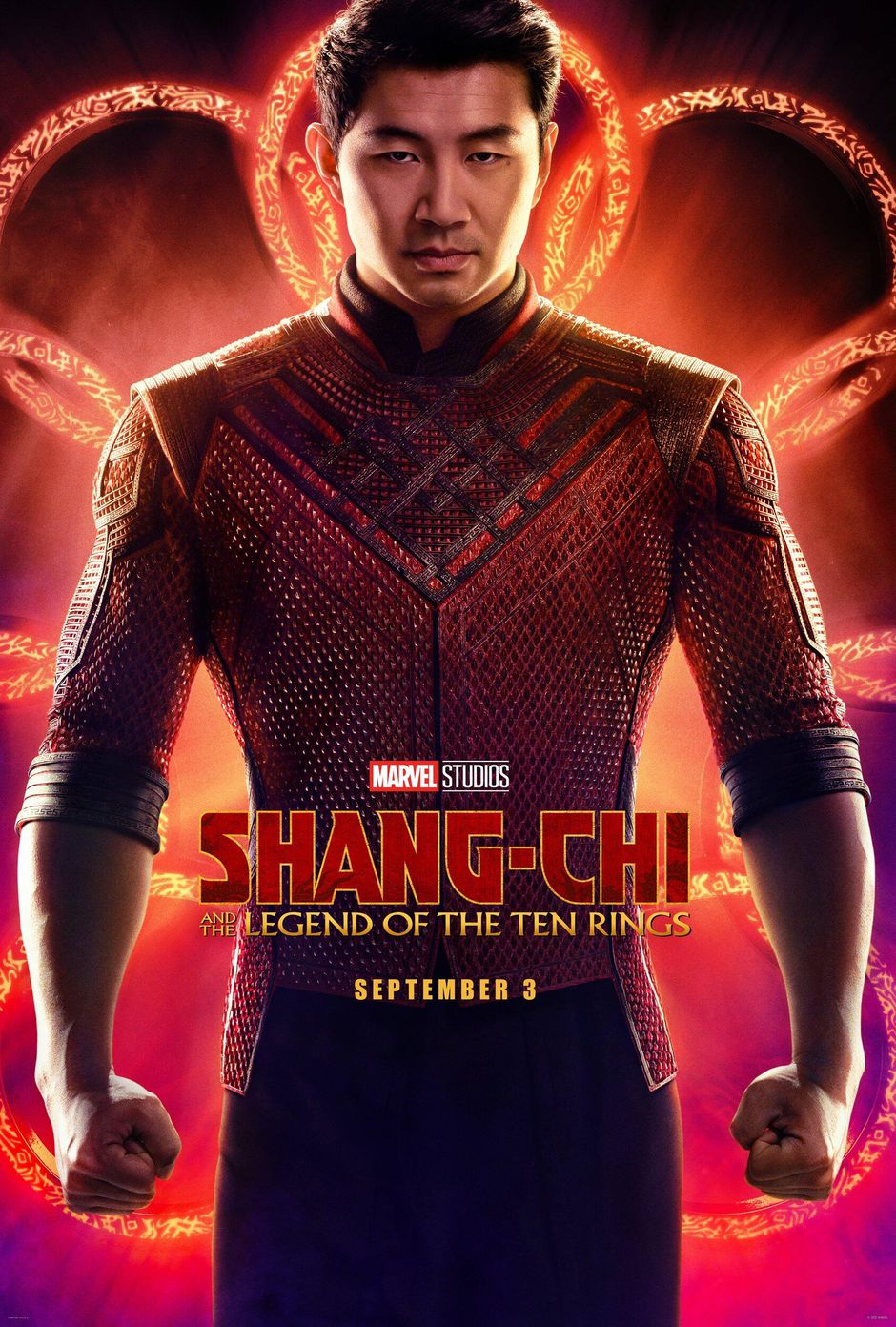
An action-packed reimagination of the classic kung-fu movie that is equally enjoyable as a stand-alone movie or MCU world-building installment that is best experienced on the BIG SCREEN. It’s no secret that I can take or leave the MCU, same with the DCEU. I’ll be up front and say that I like a select few superhero movies (Batman Returns, 89,Wonder Woman, all the X-Men movies), Batman Returns being my favorite (and I still argue the best comic book movie ever); however, all that said, I thoroughly enjoyed Shang-Chi! From beginning to end, it’s filled with explosive action and properly seasoned with moments of hilarity. Whether you are watching it because you are a Pavlovian MCU fan boy or girl that simply salivates over anything Marvel (or Disney) or you are seeking to be entertained in a cinematic escape for a couple of hours, then this film fits the bill.
Even though there are some cliche extreme wide landscape shots at the beginning that are working hard to convince you that the best place for the movie is on the BIG SCREEN, that’s not why you want to experience it in that ideal environment. You want to experience it on the BIG SCREEN because of the big action moments, mind-blowing fight choreography, intimate character-development scenes, and laughter and cheers from the audience!
Shang-Chi: and the Legend of the Ten Rings boasts a great cast that includes a key supporting role played by the indelible Michelle Yeoh. Our lead Shaun/Shang-Chi is played by the handsome Simu-Liu and his best friend played by the popular Awkwafina. These actors are supported by a well-written screenplay that not only delivers plenty of adrenaline-pumping sequences, one-liners and zingers (mainly from Awkwafina), but never loses focus on the external goal and internal needs. Simple plots with complex characters make some of the best movies!
While there are times that the mystical elements of the movie do seem a bit over-the-top, even for a superhero movie, the superpowers (be they derived from nature or from a weapon), don’t cross the threshold between suspension of disbelief and utter ridiculousness. The movie lays out the rules of its worlds in the first act, so you are willing to accept whatever is thrown at you. Writing tip: you can get away with nearly anything if you properly set it up. We learn everything we need to follow the story at the beginning of the movie.
If you’re seeking to be entertained by a solid high-concept movie, then you don’t want to miss seeing Shang-Chi and the Legend of the Ten Rings on the BIG SCREEN. Seriously, you can go into it the movie, not being that familiar with the preceding MCU movies, and still be able to thoroughly enjoy your time. If you are an MCU geek and love all the nods, Easter eggs, and world-building details, then you will also be happily satisfied. I hope this movie is an indication of the types of movies we are to witness in the next stage(s) of the MCU.
Ryan teaches American and World Cinema at the University of Tampa. If you like this article, check out the others and FOLLOW this blog! Interested in Ryan making a guest appearance on your podcast or contributing to your website? Send him a DM on Twitter or email him at RLTerry1@gmail.com! If you’re ever in Tampa or Orlando, feel free to catch a movie with or meet him in the theme parks!
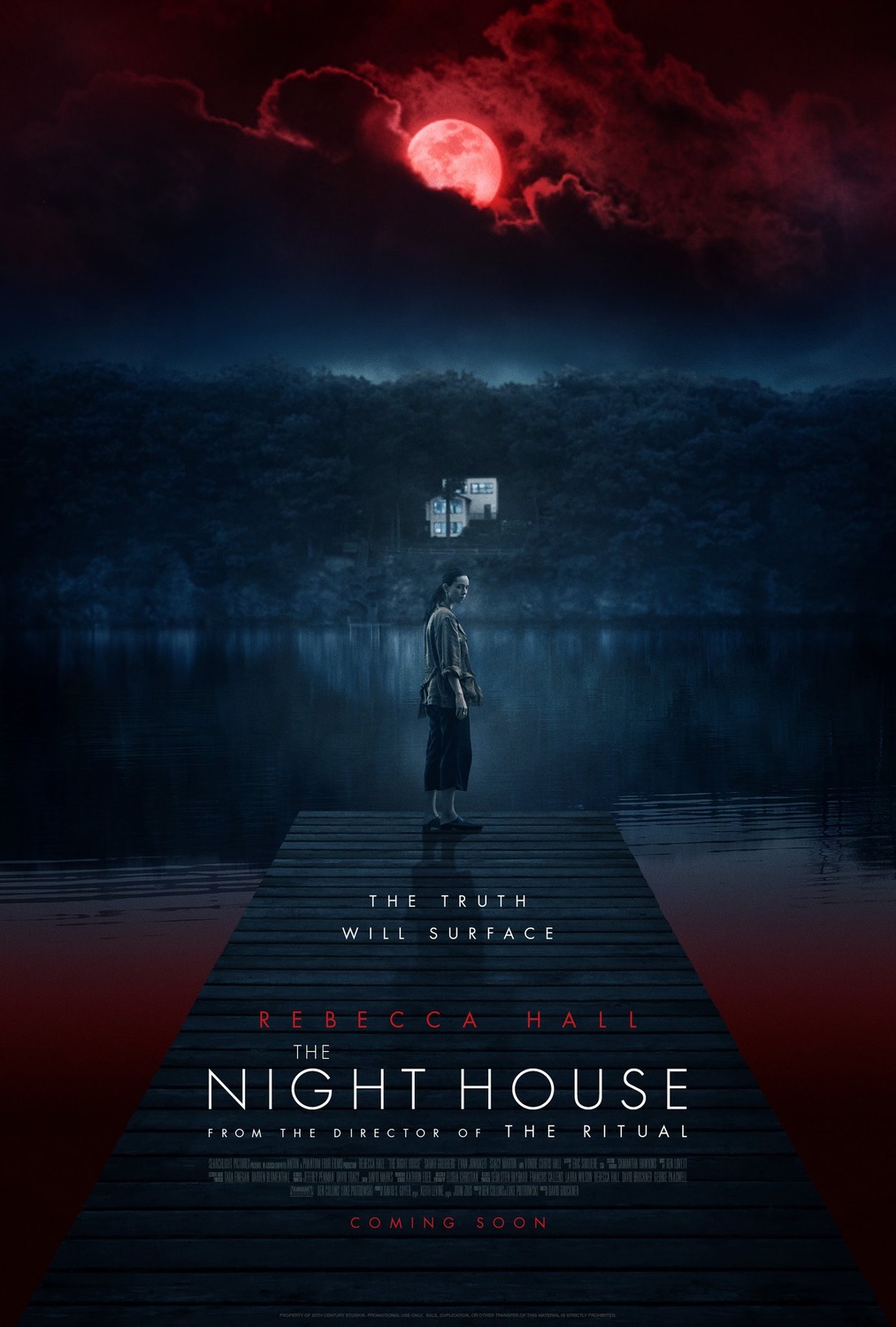
Plot and story take a backseat to the technical and performative elements of the mise-en-scene. The Night House represents a trend in horror that began as an emerging art house cinematic form championed by studios like A24 in the mid 2010s, continuing today. Many of the films that fall into this category are highly stylized through overtly artistic approach (artistic in that the hand of the auteur is clearly visible) or a minimalist approaches. While many of these films DO have a strong story told though established narrative conventions, some of them (and an increasing number) place so much emphasis on the look and feel of the film, that the filmmakers forget that they also need to tell a good story with a beginning, middle, and end that makes sense within the world that has been established on screen.
This house looks gorgeous, but the bones are weak. The Night House certainly delivers a haunting and unnerving atmosphere, excellent production design, fantastic editing, and a tour de force performance by Rebecca Hall, but its labyrinth-like plot and meandering story ultimately lead to “nothing.” If nothing else, this film works as a showcase for Hall in her one-woman show! And no mistaking it, her performance is outstanding–nearly Toni Collette Hereditary levels. Further notable elements in the film are the exquisite editing and cinematography that help to generate the ominous feeling of dread that you will feel the entire time. All of the aforementioned sounds like an incredibly effective mise-en-scene, doesn’t it? The problem with The Night House isn’t in the mise-en-scene as much as it is in the bones of the house itself, or the screenwriting.
My problem with films like The Night House, The Lighthouse, (am I sensing a trend here?) and others is the trend to ostensibly convince audiences, through the thoughtful craftsmanship of the mise-en-scene, that the film is more important than it is, that it has something substantive to deliver, or that the filmmaker is elevating horror (a term I despise because horror has always been the most truthful and progressive of all the genres). When this happens, the plotting suffers greatly. Why? Because the filmmaker considers themselves an artist that is above established conventions because there is a clear attempt to be unconventional, to be be a nonconformist, to rage against the system, if you will. So because they do not feel that they should abide by the guidelines or conventions of screenwriting or image montage (montage is French for assembly), they expect audiences to be so impressed by the gorgeous imagery on screen that the story or plot is of little consequence. Or there is the idea that these films aren’t for everyone or they are used as fuel for the pretentious you just don’t get it conversations on #FilmTwitter. Oh, many cinephiles just love that one, because they can elevate themselves.
Now, you are probably wondering if I think all films need to follow conventional filmmaking approaches. And the answer is NO. What?!? Did I just contradict everything I just wrote? Again, no. It’s when the filmmaker crafts a motion picture that they’ve clearly positioned to give the pretense that it’s more important than it actually is and fail to deliver the story that is so clearly attempting to be told. That is where I find fault with the filmmaker or screenwriter. Does that mean narrative/fictional films can’t be poetic in their form? Certainly not. One of my favorite horror films is Dario Argento’s Suspiria. And, even though I include this masterful work of cinema in my World Cinema class, I will also be the first to tell you that the plot is not very good. But, the beauty of Suspiria isn’t in the story, but in the euphoric experience of watching Argento create cinematic art with this violent, technicolor world accompanied by the mesmerizing score. The difference between Suspiria and The Night House is the simple fact that Argento did not create Suspiria to tell an important story. It’s a film that has grown in importance through the decades because we can find meaningful expression in the mise-en-scene. But that film didn’t hit cinemas to tell an important or thoughtful story. It hit cinemas to provide an experience!
What we have here is spectacle vs narrative. A subject I covered in my academic book On the Convergence of Cinema and Theme Parks. In the book, I look at the storytelling approached in themed entertainment when it intersects cinema. Without going too deep into that subject, I explore the idea of cinema of attractions. And films that do not tell a plot-driven story, are more about the attraction or experiential factors, not unlike a theme park attractions. With the increase in IP (intellectual property) based attractions (think: attractions based on movies), attractions have integrated story elements that aim to take the physiological experience and add the dynamic of story to it. A good example of this is found in Universal Orlando’s Hagrid’s Magical Creature Motorbike Adventure in the Wizarding World of Harry Potter: Hogsmeade at Islands of Adventure. Universal coined the term story-coaster. But I digress. When I evaluate a film, I often look at the implied attempt by the director (and marketing agency or distribution company), and I ask myself questions like: does the film give the impression that it is more important than it actually is? Is there an attempt to have a thoughtful message or some social commentary on dominant or emerging ideologies, and the film form takes precedence over the actual story? Are the films technical elements and acting so impressive that it hopes you don’t notice that the plot or story are weak?
While I have established that there is rightly a place amongst the greats for films that are visually stunning that don’t necessarily follow a traditional story structure (ie. Suspiria), the best films are often those that have a simple plot and complex characters. A simple plot forms the solid foundation and structure of the house (the bones, if you will), while the film form is everything that you see with the naked eye. It starts with the firm foundation and strong structural elements. Everything else is window dressing–important–but ultimately meaningless if the narrative is’t sound. What good is the building material of the walls, the paint, the type of windows, or kitchen cabinetry if the foundation or structure are weak??? I appreciate the intimate feel of the trend to release films that look artful so we can witness the cinema stylo of the auteur, but the filmmakers also need to remember the importance of plotting, pacing, and structure.
Ryan teaches American and World Cinema at the University of Tampa. If you like this article, check out the others and FOLLOW this blog! Interested in Ryan making a guest appearance on your podcast or contributing to your website? Send him a DM on Twitter or email him at RLTerry1@gmail.com! If you’re ever in Tampa or Orlando, feel free to catch a movie with or meet him in the theme parks!
Sweet on the outside, sour on the inside. Avisually impressive attempt to provide a thoughtful exploration on duality and identity, is overshadowed by heavy-handed ideology. Nia DaCosta delivers audiences a spiritual sequel to the cult horror film Candyman (1992) that is grounded in much of the lore of the original, yet forges a new frontier that simultaneously serves as a vehicle for horror legend Tony Todd to pass the hook onto Yahya Abdul-Mateen II. DaCosta is joined by writer-producer Jordan Peele and screenwriter Win Rosenfeld to “tell everyone” who dares to look in a mirror and call out his name five times. Admit it, even in our most rational state, we are still a little apprehensive to stare at our reflection and call out Candyman, Candyman, Candyman, Candyman, Candym–. That’s the power of horror films! These fictional stories on screen have their mystical ways of affecting the collective conscious in such a manner that we change or question our behavior. Another great example of this effect is the iconic highway scene in Final Destination 2. And challenging audiences was certainly what the three screenwriters had in mind when writing the story for Candyman (2021). Unfortunately, the agenda-driven message steels the focus away from the stunning visuals, and ultimately fails to effectively paint a portrait of reality that invites all to engage in the important conversations the film is trying to have, instead, alienating audience members that don’t share the filmmakers’ opinions. Suffice it to say, this film is Peele for the course.
In present day, a decade after the last of the Cabrini towers were torn down, rising star artist Anthony (Abdul-Mateen II) and his partner move into a loft in the now gentrified Cabrini. A chance encounter with an old-timer exposes Anthony to the true story behind Candyman (Todd). Anxious to use these macabre details in his studio as fresh grist for paintings, he unknowingly opens a door to a complex past that unravels his own sanity and unleashes a terrifying wave of violence. (IMDb)
If you’ve never seen the original Candyman, don’t worry. While having seen the original will certainly help audiences to appreciate world-building and backstory elements, there is enough context given to help those that may be unfamiliar. Following the screening I attended, I heard individuals negatively critique the retconning of plot elements in the original; truth is, the parts of the original that were reimagined to fit the backstory of 2021’s Candyman were thoughtfully adapted.
While I have my reservations with the film, I would be remiss to not highlight the excellent direction, cinematography, editing, costuming, production design, and even the performances! Visually, the movie is stunning! All the mise-en-scene elements work together to create a BIG SCREEN experience. And talk about outstanding performances. Back in the heyday of the slashers (late 70s through the 90s), we did not expect to be impressed by the performances of the cast. And while there are notable exceptions of horror films WITH brilliant performances, usually it’s not expected. Over the last 7–10 years, horror films have been stepping up their performance game. The lead and most of the supporting cast will all captivate you. Unfortunately, there are useless characters like Brianna’s (Anthony’s girlfriend’s) brother and his boyfriend. Having no real affect on the plot, this interracial gay couple was little more than a token that could be removed from the movie, and the movie still play out the same way. However, if it weren’t for these two characters, the movie would be lacking ANY humor. So I suppose that was their purpose, to add humor.
There are so many beautifully crafted shots and shot sequences in this film. From juxtapositions of the old meeting with the new to geometric shapes and lines, there are many excellent compositions. The production and set design and lighting, of this film, are used in similar ways that the designs in expressionism are used. Expressionism uses the design of buildings, costumes, lighting, and camera angles to externalize emotions, psycho-social states of being, and ideas. And with expressionism being part of the formula of horror (expressionism+surrealism+Poe+Freud), it makes sense how and why there would be this care shown in the mise-en-scene.
All the backstory elements are communicated through the brilliant use of shadow puppets. The shadow puppet sequences are perhaps my favorite recurring diegetic device used in the film. Not only do these shadow puppets provide exposition, they also move the plot forward in action and subtext.
The idea of shadow puppets as a storytelling device is best explored in Plato’s Cave. French film theorist Jean-Louis Baudry likened the movie theatre to Plato’s famous allegory Plato’s Cave found in Plato’s Republic. But since we’re not all film or philosophy theorists, here is a quick explanation of Plato’s Cave:
The allegory states that there exists prisoners chained together in a cave. Behind the prisoners is a fire, and between the fire and the prisoners are people carrying puppets or other objects. This casts a shadow on the other side of the wall. The prisoners watch these shadows, believing them to be real. Essentially, what Plato is exploring is the concept of “belief vs knowledge.” The prisoners (or audience) in this analogy believe the images on the wall as reality; when in actuality, it is only the puppeteers version of reality. The analogy goes on further to describe a prisoner breaking free and venturing from the cave out into the real world. Two things happen (1) the newly freed prisoner completely rejects the imagery in the cave and returns to warn the prisoners of their one-dimensional view of reality, and risk being killed for a radical view, or (2) the freed prisoner fears or cannot reconcile actual reality and retreats back into the cave, where there is comfort in the surroundings, to warn the prisoners not to leave. Therefore, this highlights how a lack of knowledge leads to blind belief.
Despite being centuries old, the allegory is appropriate for filmmaking. After all, the audience watches images on a screen. We’re meant to believe it to be real, but we know it’s false. Only when we step out of the theater back into reality can we take what we’ve learned in the cinema and apply it to our lives. In a literal sense, a movie is just a series of images. But digging deeper, they present unique ideas and themes that we can take with us into the real world. Numerous movies utilize this concept in their plots and themes. You have probably seen films where a character believes one reality and then becomes exposed to another, greater reality and is never the same. In the case of 2021’s Candyman, DaCosta, Peele, and Rosenfeld have metaphorically trapped the audience in an ideological cave to present their versions of our reality that exists outside the cinema’s doors.
The movie has some great kills! But it highlights a moral problem plaguing this movie. From the art gallery to the critic to the girls at the prep school, the only victims, to meet their gruesome demise ON screen, are white characters. While there are a couple of off-screen deaths of black characters, the only ones in the visible mise-en-scene to meet with Candyman’s iconic hook are white. Had this movie been directed and/or written by a white writer-director and only killed and disparaged black characters, there would already be a #cancel campaign on Twitter. In my five years as a film professor and seven years as an active critic, I cannot ever recall a horror movie (in particular, a slasher movie) that ONLY killed black characters and disparaged the black community in virtually every scene from the opening to the closing. So if that would not be tolerated by the public–and for good reason, a movie released like that in 2021 (or ever) would be in incredibly poor, despicable, disrespectful taste–then the inverse should not be acceptable here.
I get what DaCosta, Peele, and Rosenfeld are trying to do with this horror movie. From the time of Cabinet of Dr. Caligari and Nosferatu, horror has been used to comment on societal observations to either warn of an impending dangerous ideology, to provide allegorical material that can be used as a framework to better understand marginalized groups, or even to challenge systems or institutions. Which is why horror is often far more truthful than a straight drama. Of course, one can make the argument that this is a fictional film in a fictional Chicago, which is not untrue; however, the problem therein is that little (if anything) in this fictional Chicago sets it apart from the real world, except for the supernatural character of Candyman, because these filmmakers have a point to make. But the problem here is that the very people that these writers want to challenge are the very people that are being unfairly represented in the movie. How is any of that constructive to the conversations of race relations and policing??? Short answer: it’s not.
The symbolism I did appreciate in the film are the moments that we explore the duality in ourselves and our environments. This is represented through literal and metaphoric reflection. Mirrors (or reflections) are regularly used to communicate duality. One of the best examples in recent years, in how mirrors are an effective cinematic device, is the mirror scene in I, Tonya. Just before her final competition in the film, as Tonya is applying her high contrast makeup, we witness in the mirror the internal struggle. On the outside, she is this accomplished figure skater (probably the best athlete the sport has ever seen) but on the inside she is tormented by her mother, her abusive marriage, and what she did or didn’t know about the incident. Likewise, in Candyman we explore the history and identity of Anthony and his neighborhood. Anthony has a secret in his past that has been painted over, that is trying to resurface, and his neighborhood of Cabrini Green has a sordid history that it has tried to cover and hide behind a fresh coat of paint. History is always there. It cannot be erased. And if it’s not dealt with, it can become a specter and haunt you and your environment. The mirrors and other reflective surfaces of Candyman are brilliantly used to communicate this idea of duality.
It is clear that DaCosta is a gifted director, but I hope that she works with different writers in the future that can find that balance of commenting on or raising awareness of something important, but also finding the ways to bring everyone to the table for a thoughtful discussion. The power of cinema, and in particular horror films, is that it can bring diverse groups of people together from all walks of life to both be entertained and challenged through screams, jumps, and laughter.
Ryan teaches American and World Cinema at the University of Tampa. If you like this article, check out the others and FOLLOW this blog! Interested in Ryan making a guest appearance on your podcast or contributing to your website? Send him a DM on Twitter or email him at RLTerry1@gmail.com! If you’re ever in Tampa or Orlando, feel free to catch a movie with or meet him in the theme parks!