“London Has Fallen” movie review

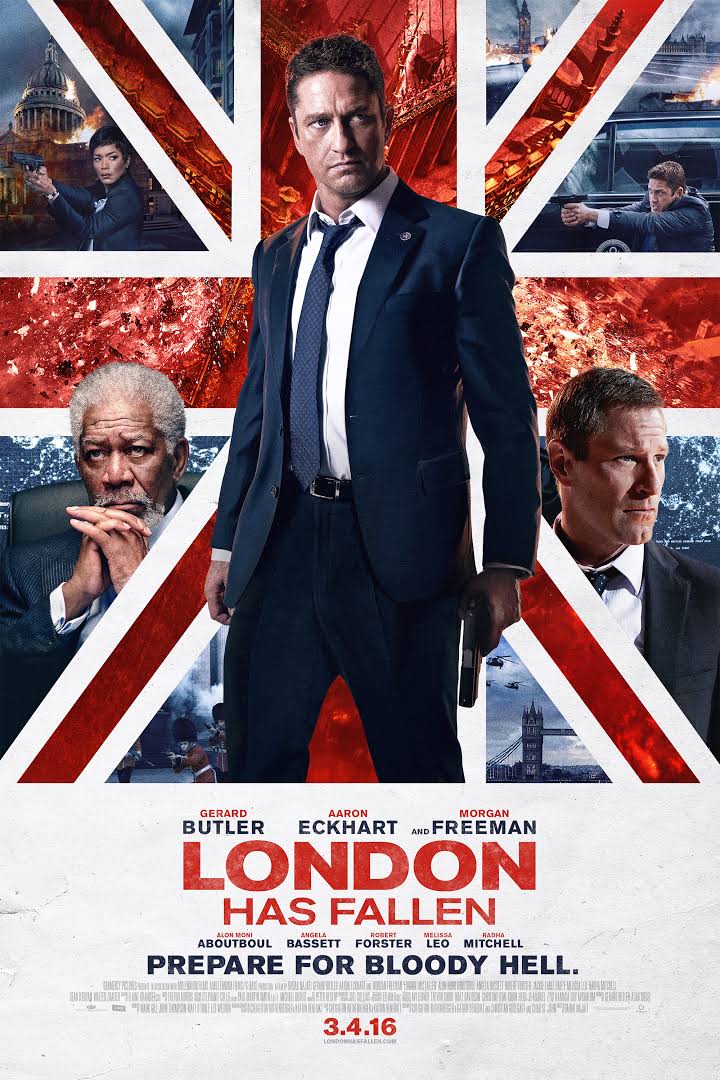
LondonHasFallenJust another cliche political conspiracy action thriller, but definitely a fun ride! Movies like this one often receive flack for not having a cinematic narrative to accompany the larger than life display on screen. However, I like to look at movies such as London Has Fallen or last year’s Olympus Has Fallen as a way to experience great shallow spectacle and some laughs for a couple of hours. One of the chief reasons that this film is fun and exciting to watch is the cast. Gerard Butler, Aaron Eckhart, accompanied by the phenomenal Angela Bassett, and Morgan Freeman will have your attention throughout the story. It is very important for an otherwise cliche action political thriller to contain excellent actors who can add that touch of quality that films in this sub-genre of action need. A side effect of this film could be heightened awareness to the unrest in the middle east and terrorism when you least expect it. There really isn’t much to dissect or analyze in this movie, so it is one of those that you take for what it is. An action-packed couple of hours that is thrilling with some laughs here and there.

The Prime Minister of the United Kingdom is dead, and his funeral becomes the most highly secured event on earth. Politicians and leaders from all over the world gather to mourn the loss of a beloved leader. Along with the other world leaders, the U.S. President is also in attendance. When tragedy strikes at St. Paul’s Cathedral, many are left dead and injured. Just when the UK and the rest of the world thinks it can rely on its own military and palace guards, the terrorists have infiltrated the very inner workings of England’s security, military, and public safety. No one can be trusted. Armed with his “bourbon and bad choices,” secret service agent Mike Banning (Gerard Butler) protects President Asher (Eckhart) and Secret Service Director Lynn Jacobs (Bassett) and tried to get them to safety when all hell breaks loose. Vice President Trumbull (Freeman) must helplessly watch the terror unfold. Just when things couldn’t get any worse, Asher winds up in the hands of the terrorists and Banning must rescue him before he is publicly executed online.

What a weekend for movies. You have your choices of this one, ZootopiaWhiskey Tango Foxtrot (which I am seeing tonight), and more. Really looking forward to Tina Fey’s movie tonight.

“Deadpool” movie review

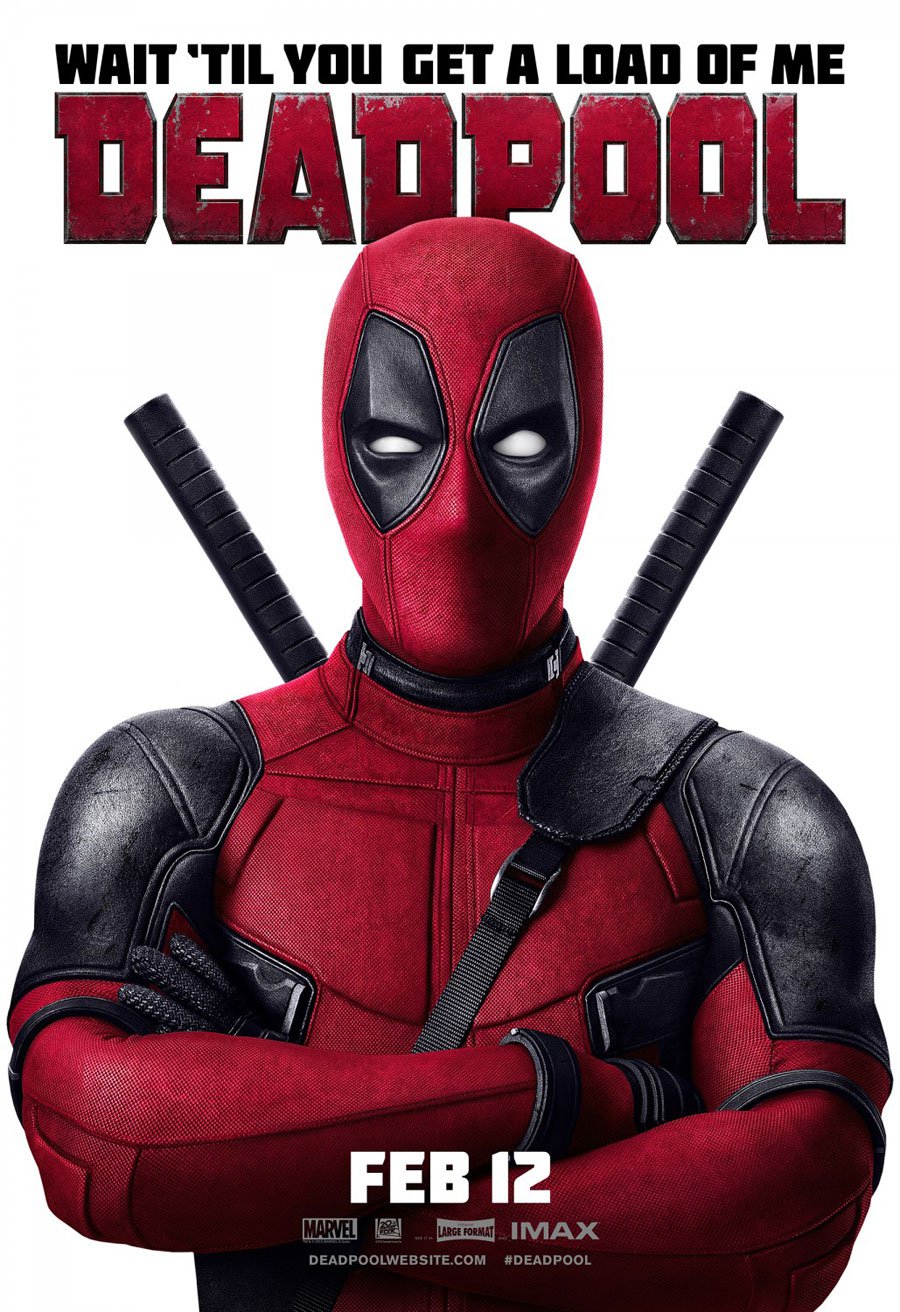
Deadpool-poster-2Absolutely brilliant super not-hero film! For those who often get the feeling that I simply do not like high-concept or superhero movies, let this be evidence that there certainly ARE superhero films that I feel are exceptional. And this is definitely one of those movies. As many memes across social media have indicated–and I will reiterate–this movie is NOT for kids (and no, your kids are not the exception). This is a super not-hero [and the not is important, but you must see the movie in order to understand] movie that is written for a mature audience. From the groundbreaking self-aware opening credits to the perfectly paced and strategic adult-humor, this movie is sure to have you laughing from beginning to end. And it’s not just the writing that is super but the visual effects, stunt sequences, and fight scenes are far above par for this action movie genre. Ryan Reynolds captures the character of Deadpool so incredibly effectively that you will swear that he was made for this role. Not your Disney-Marvel movie, Fox and Marvel bring you a spectacular combination of action and comedy to show off this unique anti-hero, so to speak, for fans of the comic and those who just enjoy a super movie.

Former special forces Wade Wilson (Reynolds) leads a very interesting post-dishonorable discharge life as a mercenary. The last man you’d ever expect to fall in love with anyone, Wilson falls for a burlesque dancer (who most likely moonlights as a hooker–let’s be honest). Following months of unparalleled passion and ecstasy, and after the unconventional proposal, Wilson finds out that he has an aggressive form of cancer that is unfortunately late in discovery. Devastated, Wilson has no idea what to do, but does not want his fiancé to have to go down the cancer road with him even though she clearly states that she is in it for the long haul. Acting upon a chance meting with a mysterious and well-dressed man in a bar, Wilson takes the man’s advice and undergoes a treatment from another equally mysterious but more sinister scientist. The results of the treatment will become clear as Wade Wilson becomes Deadpool and develops into the most unusual super anti-hero ever to come to the screen.

Simply from the opening credits, it is clear that this movie is incredibly self-aware and playing to the audience one hundred and ten percent. BEST opening credits ever, in terms of creativity and being an extension of the narrative itself. The idea of a self-aware movie is not a common one to begin with and certainly not a trope of traditional superhero movies. I think that is what I appreciated most about the movie. The brilliance behind the self-awareness is that the film is equally self-aware as it does take itself seriously as a superhero movie. Never before have I witnessed the fourth wall being broken so incredibly much. For those of you who do not know what breaking the fourth wall is, in its simplest form, it is when the character addresses the audience. This is apparently an element that was brought over from the comic, according to my comic and anime enthusiast coworker that went with me to screen the movie last night. What makes Deadpool’s continuous commentary so effective and entertaining is the fact that he says what many of us would be thinking given if we encountered the same scenario. The candor is such a breath of reality within this world of fantasy or augmented reality.

So often a movie will either choose to rest upon its strong writing, impeccable acting/direction, or visual effects; the sheer remarkable innovation in this movie is supported by not one but all the aforementioned elements. Ordinarily, I am able to find flaws in a movie–especially within the superhero genre–but not this time. I suppose, the fourth wall was broken a little too much, but that would be the only flaw I could identify. Sometimes a movie can be a great superhero movie but not a great film; however, Deadpool exceeds expectations both as a superhero movie and as a film in and of itself. At first thought, you may feel that a movie with endless diegetic and non-diegetic commentary may overshadow or steel attention or coherence from the narrative itself, but the writers did such a fantastic job of integrating the narrative and commentary so seamlessly that the movie is doubly entertaining as it would be without the offensive, explicit, hormonal commentary from the earthiest and most human of superheroes. And yes, I realize I am using superhero even though Deadpool reminds me over and over again that he is not a hero, but you get the idea.

Ryan Reynolds is one of those actors who is equally talented as he is attractive, and he gets to show off for this movie in ways that many actors wish they could in movies. But, it does not come off as obnoxious at all. That’s the beauty in the direction of this movie. You’d think that his over sexualizing of himself and the continuous adult commentary that he (or the movie) would play off as exceedingly obnoxious, but you’d be mistaken. There is a perfect balance struck by the writers and director that enable Deadpool to be a total douchebag, but oddly enough, in the most endearing way. For fans of the X-Men comics, 90s cartoon, or the X-Men movies, you will get to witness a crossover of movies in Deadpool. In an ever growing effort to recruit Deadpool to join the elite mutant force lead by Charles Xavier, Colossus and Negasonic Teenage Warhead confront Deadpool. This subplot is an important elements to Deadpool because it helps to build Fox’s X-Men universe by bringing two franchises.

Without getting into a lot of IP (intellectual property) rights discussion, despite the procurement of Marvel in 2012, as long as Fox keeps making X-Men movies, Sony makes Spiderman movies (even though he is appearing in the Avengers series), and Universal Studios Florida keeps modifying and improving attractions, then Disney does not have the rights to use the respective characters in movies or rides. Now, IP rights are a little more complicated than that, but I wanted to provide you with a general idea. Back to the crossover. Including the X-Men in Deadpool is strategically important for three simple reasons: (1) as I mentioned earlier, it helps to rebuild and reinforce the respective timelines of both franchises (2) it builds the foundation for a larger character universe, much in the same way Disney is doing with the Avengers and related movies and (3) part of what makes Deadpool so incredibly fascinating is his ability to play the anti-hero off of legitimate superheroes or, as Fox is able to officially call them, mutants.

If you are a fan of Disney-Marvel’s Guardians of the Galaxy, and you are NOT a kid, then you will definitely enjoy Fox-Marvel’s Deadpool. Prepare yourself to experience a superhero-action movie like no other. From being mesmerized at the stunning visual effects and editing to the incredibly funny writing and acting, you are sure to be entertained and will definitely crave more. Good thing that Deadpool has already received the green light for a sequel.

“Ex Machina” Movie Review

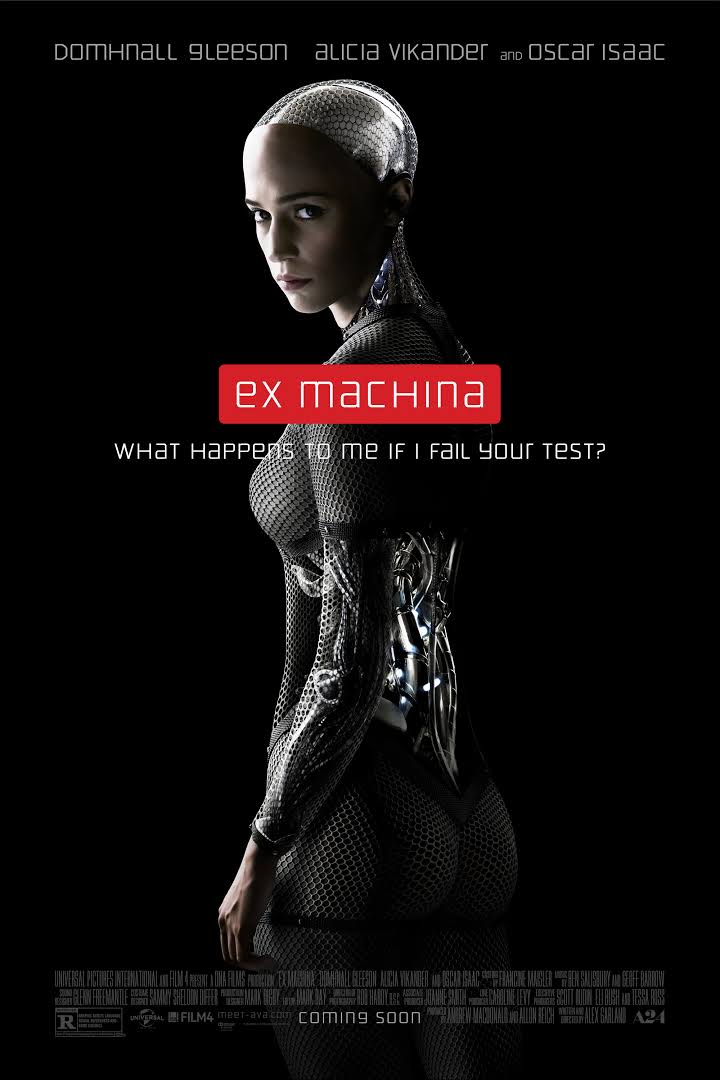
Ex_MachinaA thought provoking science-fiction film. Universal Pictures and Film 4’s Ex Machina is a brilliant work of fantasy/science-fiction. From the time the movie begins to the time the credits roll, your mind will have a heightened sense of anticipation of what is about to happen next. This is one of those movies that will eventually find its way into film appreciation classes in order to dissect the many themes, both direct and indirect, implied and inferred, woven meticulously throughout the narrative. Over the years, there have been numerous other artificial intelligence (AI) movies, but this one is likely the best example and best produced movie in this sub-genre of science-fiction and fantasy. Maybe it’s because the dawn of AI is most likely upon us? Or, just because for once, a more serious and more realistic approach to tackling this fascinating subject is being showcased in theatres. From the writing, to the directing, to the cinematography, to the acting, Ex Machina is definitely a film to catch if you are a fan of science-fiction films that have real sociological themes and comment on the age-old quandary: man vs machine.

Ex Machina is about a young programmer/coder named Caleb (Domhall Gleeson) who works for the very “Google-like” company called BlueBook. Upon winning a contest to meet with the reclusive founder of BlueBook, Caleb is whisked away by helicopter to the beautiful mountain residence of founder Nathan (Oscar Isaac). Shortly after his arrival, Caleb learns that Isaac used the contest as a rouse in order to select a candidate for the Turing Test (an AI evaluation test, so to speak, to determine if an AI actually has human-like intelligence and reasoning). Caleb is astounded to come face-to-face with the world’s first true AI (Ava, played by Alicia Vikander) in the form of a beautiful woman who is precisely his type. After a few days of testing, it becomes clear to Caleb that there is something more than meets the eye; something darker underscores the bizarre testing in the remote mountain retreat.

Director Alex Garland, best known for 28 Days Later and Sunshine, demonstrates his writing-directing prowess in this beautiful, cutting edge movie. Although it is ordinarily fairly easy to become bored watching three principle and one supporting characters for nearly two hours, Garland uses his gift to orchestrate this film in such a way that each scene is fresh and clearly advances the plot. This film is one of the best examples of a well-developed plot that is constantly reinforced, checked, and advanced throughout the narrative. His handiwork is also seen in the character development, expressions on, and blocking of the actors. Like building a model, Garland provides solid plot structure upon which the more superficial elements are laid. Beyond the high concept plot, there are brilliant themes and provocative subtext that will aid in the overall performance of the film, and give film scholars, writers, and the scientific community something to toss around in spirited debates. Aside from the running theme of man vs machine, there are also themes of whether or not a machine is “born” hetero or homosexual, much in the same way that very debate is discussed in regards to humans. A quick note regarding the exquisite production design, it is simple yet absolutely perfect for the movie. I really enjoyed the straight lines and sharp angles, very Frank Lloyd Wright.

If you know anything about literature or screenwriting, you are most likely familiar with the term or plot device known as deus ex machina (latin for “god from the machine”). The textbook definition is something to the effect of a plot device whereby seemingly unsolvable dilemmas are suddenly and abruptly resolved by the unexpected intervention of a new character, event, or object; this often occurs when the writer has painted him/herself into a corner. Knowing this, analyzing the title is quite interesting. Essentially the title means “from the machine.” After watching the movie, I am unsure as to what is coming ‘from the machine,’ unless you count the emergence of human-like intelligence. Otherwise, it really isn’t explained–the significance of the title–beyond the fact the movie centers in and around the testing of an AI machine. It’s entirely possible that the title was selected simply because it sounds cool, fits easily on a marquee, and does point to the plot. Exploring the significance of titles and title sequences can often unlock hidden meanings in the film. On a side note, next time you watch Ridley Scott’s Alien, really pay attention to the opening title/credit sequence.

At the center of the movie is the Turing Test. Nathan tasks Caleb with the responsibility of objectively and subjectively analyzing and evaluating Ava to see whether or not she possesses human reasoning, problem solving, dialoging, and cognitive processing. His goal is to determine if Ava is essentially human. The following analysis does contain some information that may spoil the movie for some–fair warning–if you need to, please skip to the last paragraph. Following a sequence of events, Caleb devises a plan to escape with Ava after she professes feelings for him and he falls in love with her. Although at first in disbelief regarding her humanness, he believes she has the capacity to love and process cognitively equal to and perhaps superior to flesh-and-bone humans. Like any good antagonist, Nathan discovers the plan by way of a hidden camera; and instead of eliminating Caleb, explains that Ava is actually screwing with his mind–pretending to love him. He doesn’t believe Nathan, and continues with his plan that was already hatched, unbeknownst to Nathan. After a struggle, Ava is set free and winds up killing Nathan. Despite the professed feelings for Caleb, Ava leaves him locked away in a room with no means of escape. She boards the helicopter and heads off to the world of humans with no one to blow her cover or enslave her.

This is where the plot does leave room for question. Although the ambiguity of the reasoning behind Ava’s decisions involving murder and entrapment may have been intentional, the driving force behind the decisions to murder Nathan and leave Caleb trapped in the house, left to die should have been made clearer. But on the other hand, the ambiguity is perfect material for debating what may have been going through her “mind.” The reasoning for her murder of Nathan is fairly clear. He caused both mental and physical abuse, oppressed her, leaving her locked in a glass room like a lab rat. He stood in her way between slavery and freedom, and she needed him eliminated. Here’s where it gets tricky: why leave Caleb to die in the house when she professed her love? I think it’s because she was way more human than either Nathan or Caleb could have dreamt. She pretended to love Caleb. If pretending to have feelings for someone in order to use them to your benefit isn’t as human as it gets, I don’t know what is. Even though we never get a definitive answer in the diegesis of the movie, the audience is previed to that information.

Another interesting possible theme to discuss is Ava’s first encounter with another AI. There is a shot sequence between Ava and another female Asian AI immediately following her emergence from her glass cage. In the manner in which this encounter is shot, it could be read as lesbian undertones. No explicit romance is witnessed, but there are subtleties that Ava may be sexually attracted to the beautiful Asian female AI. Is it possible that something switched on inside her when she encountered another female for the first time? Perhaps innate repressed feelings were ignited, despite what Isaac said he programmed her to be? Maybe feelings that weren’t there for Caleb were made more intense by the other “female” in the house? This gets back to the argument if a human or machine is programmed from day one to be hetero or homosexual. These are questions best left up to those who want to speculate the inner-workings of Ava’s psychology and chemistry. But, nevertheless, are fun to talk about. Most likely, she was just plotting with the other AI, against Nathan and Caleb; but I feel there is a slight possibility of the former.

Ex Machina represents some of the best that the science-fiction/fantasy movies have to offer. It contains social commentary, science, and excellent subtext. While many science-fiction films suffer from adequate and well-crafted plot development, this one is a shining example of how beautifully produced a science-fiction/fantasy film can be. What makes this movie an excellent one to watch is the ability to intrigue the audience with both a scientific element and one that taps at your psyche and prompts you to think about the positive and negative consequences of developing a human-like AI. If you haven’t seen the movie yet, definitely plan to catch it in theatres.

Ryan is a screenwriting professor at the University of Tampa and works in creative services in live themed entertainment. If you like this article, check out the others and FOLLOW this blog!

Follow him!

Twitter: RLTerry1

Instagram: RL_Terry

Thrillz (theme parks): Thrillz.co


The Avengers: Age of Ultron

Avengers2The Avengers: Age of DULLtron. Get ready for the first big movie to usher in the summer blockbuster season. Only, you will probably find you enjoyed the first Avengers better. Writer-Director Joss Whedon returns with the highly anticipated sequel to the 2012 smash hit. The Avengers: Age of Ultron is a mesmerizing, overly stuffed science-fiction/fantasy that will, in the end, leave you hungry and unsatisfied. Unlike the previous installment, this flashy yet underperforming sequel lacks satisfying plot development. It’s almost as if the movie is at its climax the entire time, with no apparent windup, little exposition, and nearly non-existent rising action. There are movies that are two-parters that have no business being split, and there are others that are one-movie that desperately needed its story to be told over two films–this is the latter. There was such potential in the story, but the plot was executed poorly. If the writers paid more attention to and spent more time on plot development and less time on funny one-liners and running jokes, which are quite appropriate and help keep the dialog balanced, then we may have had a better movie.

The Avengers: Age of Ultron takes us on an a high energy journey around the world from Eastern Europe to Africa to New York City. At the center of the movie is a once-dormant peacekeeping program initiative that was designed by the brilliant engineer Tony Stark (Robert Downey Jr) that was inadvertently activated and developed an artificial intelligence of its own with a dark vision of what peace should look like. Taking to the internet, the AI peacekeeping program (aka Ultron) is everywhere and nowhere all at the same time. Teaming up with Captain America (Chris Evans), Hulk (Mark Ruffalo), Thor (Chris Hemsworth), Black Widow (Scarlet Johansson), and Hawkeye (Jeremy Renner), Iron Man and the Avengers must overcome personal differences and ban together to confront the peacekeeping initiative that is hell-bent on destruction. Ultron, along with other enhanced humans designed by Striker will prove to be the most daunting enemy faced by our heroes, and will have to work together like they have never done before to save the world from catastrophe.

Sounds like a great movie right?!? Well, not so fast. As I mentioned in my opening paragraph, the movie truly had great potential and, despite its short comings, has a phenomenal cast. But, the story structure and well-crafted writing just wasn’t there. The plot is quite dull. It really is almost as though this was a glorified filler movie to make way for the next installment Avengers: Infinity War Part 1. From a technical perspective, the film is fantastic! The special-effects, practical effects, and CGI were woven together seamlessly. Both the cinematography and direction demonstrated a true gift for telling a story visually. And, to that, I applaud the filmmakers for a commitment to visual storytelling. With the exception of the casting of Maria Hill, a role better suited for Anne Hathaway than Cobie Smulders, the cast was once again brilliantly selected and truly brought the iconic comic book characters to life for the silver screen. The additional roles of Quick Silver (Aaron Tyler-Johnson) and Scarlet Witch (Elizabeth Olsen) were also cast impeccably. And I do not feel anyone besides James Spader could have brought such life and incarnate fear to the voice of Ultron.

Before I tackle the shortfalls of the plot, the character of Ultron needs to be examined. Most any competent filmmaker, or more specifically screenwriter, will tell you that a well-developed story needs a protagonist with a well-defined external goal (often accompanied by an internal goal), and in this respect this film checks that box off; however, a screenplay–especially one of this genre–needs a well-defined antagonist with both an external and internal goal as well. And in addition to the goals of the antagonist, we also need to love or love to hate the villain. Knowing WHY the villain/antagonist does what he or she does is paramount to proper character development. Unfortunately, the audience is not told why Ultron hates humanity so much, unless you count the CNN footage Ultron quickly scrubs through in his rushed genesis. It is never a good idea for a writer-director to just expect the audience to accept the actions of the antagonist without explanation or reason. Not knowing why Ultron is determined to create peace by destroying humanity without reasonable exposition does not create a well-developed character. Whether dealing with a protagonist or his/her opposition, it should never be expected for an audience to engage in blind acceptance.

Here’s where the plot went wrong. Now, in order to critique the plot, it is unfortunately necessary to reveal information that may, but not necesserilly, spoil the movie for those who are unfamiliar with the story or the comic book series. But, I will do my best to not reveal too much. At the center of the movie is this dormant peacekeeping AI initiative designed by Stark Industries called Ultron. Funny how it was never acknowledged in the previous film and came across as a plot gimmick just to hurriedly explain the vague origins of Ultron. The simple and elementary observation of the disregard for proper story structure is evident through the fact the movie lacks an adequate introduction and development/rising action. We basically go from a rushed first act and touch on the second act, then skip directly to a bloviated third act. Where’s the windup? Not here. Being a science-fiction movie, that means that certain laws of science should be adhered to in order to increase the believability and sell-ability of the story. Most anyone who has taken a science class in middle or high school knows that the higher the elevation, the lower the oxygen level, the lower the oxygen level, the slower the brain functions and the more mitigated the functionality of the lungs. I just don’t buy the fact that no one suffers from high altitude sickness when the Eastern European city hangs in the atmosphere above the mountains. The lack of oxygen isn’t even mentioned at all. Even if you buy the fact that the Avengers have somehow overcame this physiological obstacle, the citizens of the city are certainly bound by normal human respiration and circulation.

Over-all the movie is exciting and, despite its shortcomings, is a perfect movie to usher in the coveted summer blockbuster season. It is the first of many highly anticipated summer movies including Disney’s Tomorrowland and Universal’s Jurassic World. Hopefully the next installment in The Avengers series will make up for the structural and logical fallacies in this movie, and spend more time on the writing for the next one. Whether you’re a comic book or super hero fan or not, this is definitely a movie that will add excitement to your weekend. And, for those that are graduating this weekend and next, this film makes for a great way to start a weekend of parties and celebrations.