
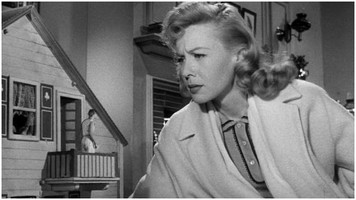
 Every once in a while, I make observations of trends in entertainment and media that I like to explore in hopes of encouraging further discussion; this is one of those topics: The portrayal of white heterosexual men in media has definitely changed since the days of Father Knows Best, Silver Spoons, Andy Griffith, and Leave it to Beaver. Just so we are clear, I am neither condemning nor condoning this changing portrayal in television and advertising. I am merely highlighting an element of the media based on both empirical and anecdotal evidences that, if for no other reason, is simply interesting to think about. Media should aim to be fair to all races, ethnicities, sexual orientations, religious beliefs, and genders in terms of their respective narrative portrayals. Of course, there is nothing wrong with stereotyping for comedic or dramatic effect; but, it should not become the norm or the status quo. But I digress; you could call the white heterosexual male in media the vanishing man because of how he has been treated over the years, especially in the last 20. The title I selected for this article is a play on of one of Hitchcock’s earliest film titles The Lady Vanishes.

Lucille Ball in some of her most famous roles in the series.
During the early days of entertainment media (both radio and television, and to some extent movies), the traditional male stereotype was one of strength, intelligence, rationale, and leadership; whereas the stereotype of women was unfairly characterized as ditzy, homebodies, less intelligent, overly emotional and mainly concerned with house chores and child rearing. Note: Lucille Ball’s character in I Love Lucy definitely doesn’t fit the aforementioned stereotype–and thankfully so–she did so much for the portrayal of women in media and gave us one of the most iconic characters that became such a part of Americana. Perhaps that’s why the show is still relevant today. On a side note, I watch it every morning at Planet Fitness while I use the elliptical. Anyway, over time, the stereotypes of men and women (and for the most part, unless otherwise stated, this article is referring to white heterosexual men and women) have shifted greatly. In recent decades, the past traditional female stereotypes have been rightly criticized for being unfair to women.

Cast of “Married with Children”
But, in an effort to be more fair to women, have men been dealt an unfair blow? In the past 10-20 years–mostly concentrated in, but not limited to, sitcoms–men are now almost regularly portrayed as unintelligent, irrational, disconnected, bumbling, and child-like; however, women are now shown as the grownups, leaders, intelligent, rational, and practical. This new type of man is seen in shows like The Simpsons, Married with Children, Home Improvement, and most any Disney Channel or Nickelodeon show. When men are now shown in traditional roles, they are often portrayed as buffoons, clueless, and in need of guidance, often times by a woman or their kids. On the other hand, female characters in the media, like Progressive’s Flo, have evolved over time to be highly intelligent and superior to any male in the commercial. [Please note that I absolutely adore Flo, and find her commercials to be as entertaining as a typical television show.]
Throughout the media, we are seeing a greater diversity of players and representations of various groups such as gay men, in popular entertainment media; we are also seeing different roles for straight men. Mixed race couples can be seen, single parents are no longer regularly shown to be helpless, and non-traditional and extended family units can be found regularly. But in this effort to do good, the scales may have tipped in the opposite direction too much. Among other attributes mentioned earlier, the role of the father in the home is often devalued if existent at all; and men/partners/husbands are often seen as ineffectual and incompetant. A recent example of this can be seen in the Gogurt commercials where the father is preparing his kid’s lunch and the wife “busts his balls,” so to speak, for not packing a well-balenced lunch, which, for purposes of the commercial, means a Gugurt. Another example is the Allstate commercial where the couple is sitting in a cafe and the female driver receives the safe driving bonus check where as her husband or boyfriend does not. That is a common theme in many Allstate commercials. Interestingly enough, this vanishing man dilemma appears to be mostly limited to white men, while black men are usually portrayed as strong, masculine, and leaders in the house. However, in movies, black men are still more often portrayed as the villain and the white guy as the hero–a discussion for another time.

The cast of “Will and Grace.” From left: Will, Jack, Karen, Grace
Switching gears for a moment, the portrayal of gay males (mostly white) in the media has also changed over the last decade. Traditionally when portrayed, if portrayed at all, they were portrayed as silly, goofy, socially awkward, and the side-kick. But a lot has happened since the days of Will and Grace, which is arguably the launchpad of positive portrayal of a principle gay cast in a popular show. Generally speaking, gay [mostly white] males are now shown in a very positive light with characteristics from the silly to the serious in ads, television, and movies. A good example of this would be ABC’s Modern Family or the cancelled NBC show The New Normal, Smash, Project Runway, and Glee are also examples of recent shows that feature prominent gay characters in a very positive/normal light, as opposed to the exaggerated characters of gay males in past shows.
Critically examining the media, it becomes clear that white heterosexual men are being systematically stereotyped as week, stupid, immature; and, it appears as though they are the only demographic group being portrayed that way on a regular basis. The desire not to offend gay men and heterosexual women has caused heterosexual men to be on the short end of the stick. In an effort to balance the scale of the representation of white men versus all other demographic groups/minorities, the media has tipped the scale in favor of the minority groups and not thought of how the portrayal is affecting men over the long run. In real life, there are gay, straight, black, white men of all personality types from the serious and responsible to the silly and ill-driven. So when we see only one side of that picture, the media just isn’t portraying a realistic portrait of men as they are today. In both television and movies, it appears as though women are being appealed to by making fun of men and showing them as ineffectual lovers and incompetent. This is increasingly witnessed in sitcoms because dramas have to be more serious and realistic, and not as regularly portrayed in works of cinema.
Not only in narrative television do you find this depiction of men, but you can increasingly find it in advertising as well. Advertisers have always known they need to write the commercials for the one in the family (or household) who does the shopping. Since a growing number of women are the keepers of the purse strings, it makes since for advertisers to gear advertisements toward women because it increases the probability that the product will be purchased. In the past, advertisements showed women how they could please their men by purchasing the right products and services. But now, we see advertising appealing to women by making fun of men. And, this is often combined with the topics that often come up during a girls night out. So, you will often see commercials highlight the incompetent father. In recent studies, research shows that 2/3 of younger men (teens, 20s, and 30s) enjoy shopping. Furthermore, with the numbers of married or partnered couples dwindling and young professionals staying single much longer than in the last generation, it will become necessary for advertisers of household items to appeal to both men and women. And if they are to sell to men, advertisers will need to ease up on how men have been portrayed in household item commercials. Again, this is a generalization because obviously there are commercials that are either neutral or appeal to the men of the house.
By making fun of men in order to appeal to women, are producers and advertisers accomplishing their goal? And, does this actually affect women’s attitudes toward produces, services, and entertainment? Perhaps this is a backlash to being looked down upon for such a long time. Many may see it that way. But, it still does not make it right or fair. Whatever the case, societal norms are changing and men and women are finding themselves in new roles. And, the American idea of masculinity is evolving rapidly as there is a wide range of stereotypes of male in the media ranging from the abusive to the grotesque and from the serious to the silly. In these roles, men are portrayed from only being able to solve problems through brut force to the gay male who relies upon sensitivity and creativity to the metrosexual (straight/effeminate) male. And in that realm of confusion, that may explain why we see these more negative representations of heterosexual males.

Striking a balance in the portrayal of genders in the media is a game
Hopefully, highlighting this issue will open the door for communication and discussion in terms of gender roles in todays’ society and how various groups of people are represented in the media. Perhaps, maybe this will help producers and advertisers to show all types of people in a more realistic light and not stereotype one group more negatively than another. Due to children being probably more porous than ever, and shaping their world view of men by how they view males in the media, perhaps this will encourage the creators of content not to paint men in such a negative way because there are plenty of examples of wonderful fathers, husbands, and boyfriends out in the world. Research shows that kids’ perceptions of men on television are not positive. And this is a dangerous slope. Many children see men on television as stupid and inept and women are portrayed as effective and intelligent. However, more recent commercials and shows have made an effort to show men in a more favorable light, and we could be seeing the pendulum swing back to a more neutral position.
One thing is for sure, it is up to the parent(s) to guide children as to what is real and not real. And, that males and females in television may not always exhibit characteristics that are desirable in the real world. It is important to stress that stereotypes do not represent reality, but merely a creative twist or embellishment on reality. At the end of the day, characters are created to sell a show. But, it is important to recognize that men may be being dealt a bad hand by the media, and creators should step back to see that the very thing that happened to women and gay males in the past is effecting the portrayal of heterosexual men today.

Ryan teaches Film Studies and Screenwriting at the University of Tampa. If you like this article, check out the others and FOLLOW this blog! Interested in Ryan making a guest appearance on your podcast or contributing to your website? Send him a DM on Twitter or email him at RLTerry1@gmail.com! If you’re ever in Tampa or Orlando, feel free to catch a movie with him.
Follow him on Twitter: RLTerry1
References
- Abernathy, M., Professor of Communication Studies, Indiana University
- Lucas, S., Professor of Sociology and Anthropology, Lake Tahoe Community College
- Gender Ads Project, Accessed from http://www.genderads.com
- Basow, S.A., Stereotypes and Roles, Thomson/Brooks Cole, 1992
- Reeves, B., Children’s Perceptions of TV Characters, Human Communication Research, Vol 3, Issue 2






 R.L. Terry ReelView